
Forerunners of today's dawning Age of the Spirit
"That did not, however, kill the ideas. Eckhart's student John Tauler (ca. 1300—1361), also a Dominican, took the next step and openly denounced reliance on external ceremonies. The"Spiritual Franciscans," who appeared shortly after the death of St. Francis, taught, as he did, that the Spirit could be found in nature, in"brother sun"And"sister moon," but they also preached against the wealth and power of the institutional church. Most were excommunicated, and some were burned at the stake. Centuries later Simone Weil found the institutional church more of an obstacle than a help in her spiritual quest. Pierre Teilhard de Chardin (1881—1955), the most farsighted Catholic theologian of the twentieth century, envisioned the entire sweep of cosmic history as a process of"spiritualization.”And the German pastor Dietrich Bonhoeffer (1906—45) wrote wistfully from a Gestapo cell of what he called a future"religionless Christianity," liberated from its dogmatic tethers. All of these figures were, in different ways, forerunners of today's dawning Age of the Spirit.”
An Age of the Spirit
The Sacred in the Secular?
"What does the future hold for religion, and for Christianity in
particular? At the beginning of the new millennium three qualities
mark the world's spiritual profile, all tracing trajectories that
will reach into the coming decades. The first is the unanticipated
resurgence of religion in both public and private life around the
globe. The second is that fundamentalism, the bane of the twentieth
century, is dying. But the third and most important, though often
unnoticed, is a profound change in the elemental nature of
religiousness.
The resurgence of religion was not foreseen. On the contrary, not
many decades ago thoughtful writers were confidently predicting its
imminent demise. Science, literacy, and more education would soon
dispel the miasma of superstition and obscurantism. Religion would
either disappear completely or survive in family rituals, quaint folk
festivals, and exotic references in literature, art, and music.
Religion, we were assured, would certainly never again sway politics
or shape culture. But the soothsayers were wrong. Instead of
disappearing, religion—for good or ill—is now exhibiting new vitality
all around the world and making its weight widely felt in the
corridors of power...
The nearly two thousand years of Christian history can be divided
into three uneven periods. The first might be called the"Age of
Faith.”It began with Jesus and his immediate disciples when a
buoyant faith propelled the movement he initiated. During this first
period of both explosive growth and brutal persecution, their sharing
in the living Spirit of Christ united Christians with each other,
and"faith"meant hope and assurance in the dawning of a new era of
freedom, healing, and compassion that Jesus had demonstrated. To be a
Christian meant to live in his Spirit, embrace his hope, and to
follow him in the work that he had begun.
The second period in Christian history can be called the"Age of
Belief.”Its seeds appeared within a few short decades of the birth
of Christianity when church leaders began formulating orientation
programs for new recruits who had not known Jesus or his disciples
personally. Emphasis on belief began to grow when these primitive
instruction kits thickened into catechisms, replacing faith in Jesus
with tenets about him. Thus, even during that early Age of Faith the
tension between faith and belief was already foreshadowed. Then,
during the closing years of the third century, something more ominous
occurred. An elite class—soon to become a clerical caste—began to
take shape, and ecclesial specialists distilled the various teaching
manuals into lists of beliefs. Still, however, these varied widely
from place to place, and as the fourth century began there was still
no single creed. The scattered congregations were united by a common
Spirit. A wide range of different theologies thrived. The turning
point came when Emperor Constantine the Great (d. 387 CE) made his
adroit decision to commandeer Christianity to bolster his ambitions
for the empire. He decreed that the formerly outlawed new religion of
the Galilean should now be legal, but he continued to reverence the
sun god Helios alongside Jesus.
Constantine also imposed a muscular leadership over the churches,
appointing and dismissing bishops, paying salaries, funding
buildings, and distributing largesse. He and not the pope was the
real head of the church. Whatever his motives, Constantine's policies
and those of his successors, especially Emperor Theodosius (347—95
CE), crowned Christianity as the official religion of the Roman
Empire. The emperors undoubtedly hoped this strategy would shore up
their crumbling dominion, from which the old gods seemed to have
fled. The tactic, however, did not save the empire from collapse. But
for Christianity it proved to be a disaster: its enthronement
actually degraded it. From an energetic movement of faith it
coagulated into a phalanx of required beliefs, thereby laying the
foundation for every succeeding Christian fundamentalism for
centuries to come.
The ancient corporate merger triggered a titanic makeover. The empire
became"Christian," and Christianity became imperial. Thousands of
people scurried to join a church they had previously despised, but
now bore the emperor's seal of approval. Bishops assumed quasi-
imperial powers and began living like imperial elites. During the
ensuing"Constantinian era," Christianity, at least in its official
version, froze into a system of mandatory precepts that were codified
into creeds and strictly monitored by a powerful hierarchy and
imperial decrees. Heresy became treason, and treason became heresy.
The year 385 CE marked a particularly grim turning point. A synod of
bishops condemned a man named Priscillian of Avila for heresy, and by
order of the emperor Maximus he and six of his followers were
beheaded in Treves. Christian fundamentalism had claimed its first
victim. Today Priscillian's alleged theological errors hardly seem to
warrant the death penalty. He urged his followers to avoid meat and
wine, advocated the careful study of scripture, and allowed for what
we would now recognize as"charismatic"praise. He believed that
various writings that had been excluded from the biblical canon,
although not"Inspired," could nevertheless serve as useful guides to
life. Still, Priscillian holds an important distinction. He was the
first Christian to be executed by his fellow Christians for his
religious views. But he was by no means the last. One historian
estimates that in the two and a half centuries after Constantine,
Christian imperial authorities put twenty-five thousand to death for
their lack of creedal correctness.
The Constantinian era had begun in earnest. It was the epoch in which
imperial Christianity came to dominate the cultural and political
domains of Europe, and it endured throughout the medieval centuries,
a time of both bane and blessing. It gave birth to both Chartres
Cathedral and the Spanish Inquisition, both St. Francis of Assisi and
Torquemada, both Dante's Divine Comedy and Boniface VIII's papal bull
Unam Sanctam, which asserted the pope's authority over the temporal
as well as the spiritual realm. Neither the Renaissance nor the
Reformation did much to alter the underlying foundations of the Age
of Belief, and the European expansion around the planet extended its
sway over palm and pine. This middle era, the Age of Belief, was the
one that prompted writer and historian Hilaire Belloc (1870—1953) to
coin the phrase," The faith is Europe, and Europe is the faith.”
The Age of Belief lasted roughly fifteen hundred years, ebbing in
fits and starts with the Enlightenment, the French Revolution, the
secularization of Europe, and the anticolonial upheavals of the
twentieth century. It was already comatose when the European Union
chiseled the epitaph on its tombstone in 2005 by declining to mention
the word"Christian"In its constitution.
Still, to think of this long middle era as nothing but a dark age is
misleading. As we have seen, throughout those fifteen centuries
Christian movements and personalities continued to live by faith and
according to the Spirit. The vast majority of people were illiterate
and, even if they heard the priests intoning creeds in the churches,
did not understand the Latin. Confidence in Christ was their primary
orientation, and hope for his Kingdom their motivating drive. Most
people accepted the official belief codes of the church, albeit
without much thought. Many simply ignored them while they thrived on
the pageantry, the festivals, and the stories of the saints.
Lollards, Hussites, and later thinkers like Italian philosopher
Giordano Bruno (1548—1600) and many others explicitly rejected some
of the church's dogmas. The medieval period, after all, was rife with
what the officials called heresy and schism. The Age of Belief was
also, for significant numbers of people, a spiritually vital"Age of
faith"As well. Now we stand on the threshold of a new chapter in the
Christian story. Despite dire forecasts of its decline, Christianity
is growing faster than it ever has before, but mainly outside the
West and in movements that accent spiritual experience, discipleship,
and hope; pay scant attention to creeds; and flourish without
hierarchies. We are now witnessing the beginning of a"post-
Constantinian era.”Christians on five continents are shaking off the
residues of the second phase (the Age of Belief) and negotiating a
bumpy transition into a fresh era for which a name has not yet been
coined.
I would like to suggest we call it the"Age of the Spirit.”The term
is not without its problems. It was first coined in the thirteenth
century when a Calabrian monk and mystic named Joachim of Fiore (ca.
1132—1202) began propounding an inventive doctrine of the Trinity. He
taught that history, having passed through the ages of the Father
(the Old Testament) and the Son (the Church), was about to enter an
Age of the Spirit. In this new dispensation, Joachim declared, people
would live in direct contact with God, so there would be little need
for religious hierarchies. Universal love would reign, and infidels
would unite with Christians. Joachim died a pious Catholic, but some
of his followers pressed his arguments farther, declaring that the
new age had already dawned and there was no further need for priests
or sacraments. They also contended that this would be the last age
and that the world would soon end. They even began setting dates. But
the hierarchy did not look with favor on the prospect of a church
without hierarchies. And the world continued to exist. Finally, some
sixty years after Joachim's death, the church under Pope Alexander IV
pronounced his ideas heretical.
Joachim of Fiore, and especially his followers, obviously got carried
away, and scheduling the end of the world is always a risky
proposition. Nonetheless, his idea of an Age of the Spirit, or
something like it, has always fascinated people. There is an
irrepressible visionary or utopian streak in almost everyone. In any
case, I hope the new stage of Christianity we now seem to be entering
is not the final one (there may be many, many more), but I still
prefer to think of it as an"Age of the Spirit"for a number of
reasons.
First, for centuries Christians have claimed that the Holy Spirit is
just as divine as the other members of the Trinity. But, in reality,
the Spirit has most often been ignored or else feared as too
unpredictable. It"blows where it will," as the Gospel of John (3:8)
says, and is therefore too mercurial to contain. But some of the
liveliest Christian movements in the world today are precisely ones
that celebrate this volatile expression of the divine. The Spirit's
inherent resistance to ecclesial fetters still vexes the prelates.
But it also inspires Christians in what used to be called the"third
world," but is now termed the"global South"by those living there,
to discern the presence of God in other religions. As women come into
leadership positions in Christianity, many prefer"Spirit"As their
preferred way of speaking of the divine. By far the fastest growth in
Christianity, especially among the deprived and destitute, is
occurring among people like Pentecostals, who stress a direct
experience of the Spirit. It is almost as though the Spirit, muted
and muffled for centuries, is breaking its silence and staging a
delayed"return of the repressed.”
Second, increasing numbers of people who might once have described
themselves as"religious," but who want to distance themselves from
the institutional or doctrinal demarcations of conventional religion,
now refer to themselves as"spiritual.”They often say," I am a
spiritual person, but I am not religious.”But what does this mean?
Often church leaders and theologians wince at the vagueness of the
term"spirituality," which is burdened with a long history of
ambiguity and controversy. within the early Christian orbit people
spoke of Jesus and then of themselves as being"filled with the
Spirit.”As decades passed," spirituality"came to mean the
subjective aspect of faith in distinction to the objective teachings.
It described a way of life rather than a doctrinal structure. Later,
in the Roman Catholic sphere," spirituality"characterized the
different manners in which those in religious orders practiced their
faith. One could speak, for example, of a distinctly"Ignatian
spirituality," as followed by the Jesuits, or of a"Carmelite"
or"Franciscan"spirituality.
But the term"spiritual"Also turned controversial at times,
especially during the medieval period, when movements like those
inspired by Joachim arose that accentuated the immediate experience
of God or the Spirit without the necessity of the sacraments or the
hierarchy. Some of them even vented explicit protests against the
institutional church. Many, like the Beguines, were inspired by
women. Some were led by clergy. Meister Eckhart (1260—1327), a
Dominican priest, for example, taught that the soul is a spark of God
that is to be nourished until the person attains full communion with
the divine and is filled with love. He did not condemn churchly
observances, but thought they were only of limited value. Shortly
after his death Pope John XXII, who was pontiff from 1316 to 1334,
declared his ideas heretical.
That did not, however, kill the ideas. Eckhart's student John Tauler
(ca. 1300—1361), also a Dominican, took the next step and openly
denounced reliance on external ceremonies. The"Spiritual
Franciscans," who appeared shortly after the death of St. Francis,
taught, as he did, that the Spirit could be found in nature,
in"brother sun"And"sister moon," but they also preached against
the wealth and power of the institutional church. Most were
excommunicated, and some were burned at the stake. Centuries later
Simone Weil found the institutional church more of an obstacle than a
help in her spiritual quest. Pierre Teilhard de Chardin (1881—1955),
the most farsighted Catholic theologian of the twentieth century,
envisioned the entire sweep of cosmic history as a process
of"spiritualization.”And the German pastor Dietrich Bonhoeffer
(1906—45) wrote wistfully from a Gestapo cell of what he called a
future"religionless Christianity," liberated from its dogmatic
tethers. All of these figures were, in different ways, forerunners of
today's dawning Age of the Spirit.”
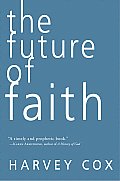
The Future of Faith
Harvey Cox, pages 1-11,
HarperOne (September 8, 2009)
Disclaimer: Our material may be copied, printed and distributed by referring to this site. This site also contains copyrighted material the use of which has not always been specifically authorized by the copyright owner. We are making such material available to our readers under the education and research provisions of "fair use" in an effort to advance freedom of inquiry for a better understanding of religious, spiritual and inter-faith issues. The material on this site is distributed without profit. If you wish to use copyrighted material for purposes other than “fair use” you must request permission from the copyright owner.

