
Hindus fourth major group of Ahl-e-Kitab (people who follow divine books brought by messengers of God before the Prophet Mohammed)
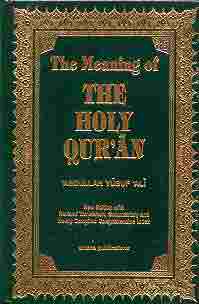
"Islam's encounter with other religions was quite violent. The history of Crusades launched by Christian powers is well known. It was Hinduism alone that provided Islam with a fertile ground for growth, something it had denied for long centuries even to indigenous Buddhism. Muslims' treatment of Hindus, too, was quite considerate and in keeping with the Islamic spirit of Lakum Deenakum Waleya Deen (For you your religion, for me mine, the Koran -109:5). As Hindus had the reputation of being polytheists and idolaters, Muslims could have treated them as Kauffar and Mushrekeen (religious deviants). Instead, the very first Muslim to conquer parts of India—Sind and Multan in 711 AD—Mohammad bin Qasim, accorded them the special status of Ahl-e-Kitab (people who follow divine books brought by messengers of God before the Prophet Mohammed) that was at first thought to be meant for Christians and Jews alone. (Muslims are permitted to have the best of social, including marital relations, with the Ahl-e-Kitab).”
Hindus fourth major group of Ahl-e-Kitab
"It seems to me, however, that a symbiotic spiritual relationship exists between the two great religions. It is a realization of this spiritual symbiosis, though largely unconscious, that I believe helped sustain this harmonious relationship despite the invading Central Asian hordes led by Ghaznis and Ghoris, who called themselves Muslim, and the British colonialists with their massive effort at divide and rule using all possible propaganda tools.
Islam's encounter with other religions was quite violent. The history of Crusades launched by Christian powers is well known. It was Hinduism alone that provided Islam with a fertile ground for growth, something it had denied for long centuries even to indigenous Buddhism. Muslims' treatment of Hindus, too, was quite considerate and in keeping with the Islamic spirit of Lakum Deenakum Waleya Deen (For you your religion, for me mine, the Koran -109:5). As Hindus had the reputation of being polytheists and idolaters, Muslims could have treated them as Kauffar and Mushrekeen (religious deviants). Instead, the very first Muslim to conquer parts of India—Sind and Multan in 711 AD—Mohammad bin Qasim, accorded them the special status of Ahl-e-Kitab (people who follow divine books brought by messengers of God before the Prophet Mohammed) that was at first thought to be meant for Christians and Jews alone. (Muslims are permitted to have the best of social, including marital relations, with the Ahl-e-Kitab). Even the Central Asian bandits who invaded and looted India could not disturb the growing and deepening spiritual ties. A number of Sufi saints spent their lifetime in India, spreading the message of Islam, that literally means peace, that comes with total surrender to God. The Prophet Mohammed, too, is believed to have felt an attraction for India.
The Indian sub-continent's pre-eminent poet-philosopher Allama Iqbal wrote:
Meer-e-Arab ko aaee thandi hawa jahan se,
Mera watan wohi hai, mera watan wohi hai.
(From where the Prophet Mohammed received a Cool Breeze,
That is my motherland, that is my motherland.)
Hindus as Ahl-e-Kitab
Some primordial spiritual connection must have been at work. For only recently have Muslim scholars learnt that Hindus indeed constitute the fourth major group of Ahl-e-Kitab mentioned in the Holy Koran repeatedly. For some mysterious reason, the Holy Koran had left this question vague. It mentioned a major religious group as "Sabe-een" as the ummah (community) of a prophet who had brought a divine book bearing God's revelation to the world. It also mentioned Hazrat Nooh (Prophet Noah of the Bible) as a major prophet ranking with prophets like Abraham, Moses, Jesus and Mohammed. But who the followers of Hazrat Nooh are was left a mystery.
Painstaking research has been going on seeking the fourth major Ahl-e-Kitab. From Hazrat Shah Waliullah, Maulana Sulaiman Nadvi and Maulana Obaidullah Sindhi to a contemporary scholar from Uttar Pradesh, Maulana Shams Navaid Usmani, a number of scholars from the sub-continent, too, contributed to this effort. It is now clear that Hindus are indeed the lost ummah of the Prophet Nooh, whom they know as Maha Nuwo. Evidence from Markandaya Purana and several Vedas, and their description of "Jal Pralaya" (devastation caused by the Flood, as in the biblical and Koranic stories of Noah's flood) has been most helpful in this search.
The authenticity and finality of the above-mentioned research has not to be accepted by any one, however, to be able to know that the Hindus do indeed constitute a major Ahl-e-Kitab ummah (religious community). According to the Holy Koran, there is not one nation in the world in which a prophet has not been raised up: "There are not a people but a prophet has gone among them" (35:24). And again: "Every nation has had a prophet" (10:47). And again: "And we did not send before thee any but men to whom we sent revelation [Divine Book]" (21:7).
We are further told that there have been prophets besides those mentioned in the Holy Koran: "And we sent prophets we have mentioned to thee before [in the Koran], and prophets we have not mentioned to thee [in the Koran]" (4:164).
It is, in fact stated in a famous Hadees (also written as Hadith, meaning sayings of the Prophet, as distinct from the Holy Koran, which is believed by Muslims to be the word of God revealed to the Prophet) that there have been 124,000 prophets, while the Holy Koran contains only about 25 names, among them being several non-Biblical prophets. Prophets Hud and Salih came in Arabia, Luqman in Ethiopia, a contemporary of Moses (generally known as Khidzr) in Sudan, and Dhu-i-Qarnain (Darius I, who was also a king) in Persia; all of which is quite in accordance with the theory of universality of prophethood, as enunciated above. And as the Holy Koran has plainly said the prophets have appeared in all nations and that it has not named all of them, which in fact was unnecessary and not even feasible. Thus a Muslim must accept the great luminaries who are recognized by other religions as having brought light to them, regardless of the terminology used to describe them, as the prophets that were sent to those nations.
The Koran, however, not only establishes a theory that prophets have appeared in all nations; it goes further and renders it necessary that a Muslim should believe in all those prophets. In the very beginning we are told that a Muslim must "Believe in that which has been revealed to Abraham and Ishmael and Issac and Jacob and the tribes, and in that which was given to Moses and Jesus, and in that which was given to the prophets from their Lord, we do not make distinction between any of them" (2:136). The word "prophets" in this verse from the Koran clearly refers to the prophets of other nations.
Again and again, and in different contexts, the Holy Koran speaks of Muslims as believing in all the prophets of God and not in the Holy Prophet Mohammad alone: "Righteousness is this that one should believe in Allah and the last day and the angels and the books and the prophets" (2:177). And again in the same surah (chapter): "The Prophet believes in what has been revealed to him from His Lord and so do the believers; they all believe in Allah and His angels and His books and His prophets: And they say 'We make no distinction between any of His prophets' (2:28).”
Sultan Shahin, Asia Times Online, Dec 6, 2003
Disclaimer: Our material may be copied, printed and distributed by referring to this site. This site also contains copyrighted material the use of which has not always been specifically authorized by the copyright owner. We are making such material available to our readers under the education and research provisions of "fair use" in an effort to advance freedom of inquiry for a better understanding of religious, spiritual and inter-faith issues. The material on this site is distributed without profit. If you wish to use copyrighted material for purposes other than “fair use” you must request permission from the copyright owner.

