
Jesus: “You must have another Mother who will give you birth"
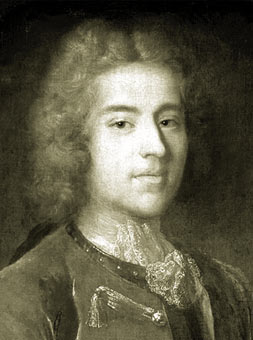
ZINZENDORF, NIKOLAUS LUDWIG VON (1700—1760),
poet, preacher, theologian, and religious leader. Count
Zinzendorf was a controversial figure within German
Pietism in the first half of the eighteenth century. He
advocated a nonrational approach to Christianity that he
called "religion of the heart.” In addition to being a
creative theologian and author, he was the founder of
a dynamic religious community known as the
Brudergemeine (Community of Brethren, now commonly
called the Moravian Church) that established communities
on four continents. Zinzendorf was the son of George
Ludwig von Zinzendorf, a counsellor in the court of the king
of Saxony, and Charlotte Justine von Gersdorf. Because of
the early death of his father, Zinzendorf was raised primarily
by his grandmother, Henrietta Catherine, Baroness von
Gersdorf (1648—1726), who was closely connected to the
leaders of the Pietist movement, Philipp Jacob Spener
(1635—1705) and August Hermann Francke (1663—1727). “The Holy Spirit is also The Mother in a third and most important sense. She is The Mother of the church and all those who have been reborn. The Holy Spirit is the only Mother of those souls who have been once born out of the side hole of Jesus, as the true womb of all blessed souls.” Zinzendorf bases this understanding of the Spirit giving birth to converted souls in large part on Jesus' conversation with Nicodemus in John 3. Jesus told Nicodemus that he must be born again, not from his mother's womb, but from God. Nicodemus knew that we are born from a mother, not a father, but he did not know who this mother was. Zinzendorf has Jesus reply, “There is another Mother, not the one who physically gave you birth, that one doesn't matter: you must have another Mother who will give you birth.” Ultimately, then, the Holy Spirit is The Mother of the Christian in the sense that she is the active agent in conversion. Human actors are only agents of the Holy Spirit, and in some cases are not even necessary for conversion.”
ZINZENDORF AND THE HOLY SPIRIT
Dr. Craig D. Atwood
“One of the least known and most intriguing parts of Zinzendorf's
theology is his use of the word "Mother" to describe the Holy Spirit.
This was not just a passing fancy for Zinzendorf. In fact, for over
twenty years, this was the primary way he referred to the Holy Spirit
and towards the end of his life, his attachment to this type of
devotion increased. In the 1750s, the Moravians sang several litanies
about The Mother, and even had a special annual festival celebrating
the "enthronement" of the Spirit as The Mother of the church.
Zinzendorf acknowledges that theologians have generally rejected this
linking of verses and the subsequent naming of the Holy
Spirit "Mother," but he responds:
Now no theologian is irritated if the word comfort is taken out of
the passage and applied to the Holy Spirit, for they call her the
Comforter. But if we take out the word Mother and signify it to the
Holy Spirit, then people are opposed to it. I can find no cause for
such bickering and arbitrariness, and therefore I pay no attention to
it. For if the activity in a passage is proper to the Holy Spirit,
then the title also goes to the Holy Spirit.
Zinzendorf insists that the word "Mother" does not introduce a
distinction of genders into the deity, such as Ann Lee or Mary Baker
Eddy proposed, but deals only with the activity of God in the world.
The Mother is not a goddess. Rather, the Holy Spirit acts in the role
of mother to the church.
Zinzendorf explicated his doctrine of the Holy Spirit, proclaiming
that she is a mother in three distinct ways. First, it was the
Spirit, not Mary, who was the true mother of Jesus, since
she "prepared him in the womb, hovered over him, and finally brought
him into the light. She [the Spirit] gave him [Jesus] certainly into
the arms of his mother, but with invisible hands carried him more
than his mother did.” Second, the Spirit is The Mother of all living
things because she has a special role in the on-going creation of the
world. "It is known that the Holy Spirit brings everything to life,
and when the man was made from a clump of earth ... the Holy Spirit
was very close through the breathing of the breath of God into the
man.” Thus, the Holy Spirit is The Mother of all living souls in a
general way.
The Holy Spirit is also The Mother in a third and most important
sense. She is The Mother of the church and all those who have been
reborn. "The Holy Spirit is the only Mother of those souls who have
been once born out of the side hole of Jesus, as the true womb of all
blessed souls.” Zinzendorf bases this understanding of the Spirit
giving birth to converted souls in large part on Jesus' conversation
with Nicodemus in John 3. Jesus told Nicodemus that he must be born
again, not from his mother's womb, but from God. Nicodemus knew that
we are born from a mother, not a father, but he did not know who this
mother was. Zinzendorf has Jesus reply, "There is another Mother, not
the one who physically gave you birth, that one doesn't matter: you
must have another Mother who will give you birth.” Ultimately, then,
the Holy Spirit is The Mother of the Christian in the sense that she
is the active agent in conversion. Human actors are only agents of
the Holy Spirit, and in some cases are not even necessary for
conversion.
The first duty of the Spirit is to preach Christ, but her motherly
work does not end there. The Mother also cares for her spiritual
children just as a human mother cares for her physical children. She
protects, guides, admonishes, and comforts the child of God
throughout the changing years of earthly life. "The Mother does not
rest until a child has lasting grace, until it finally sinks into the
hands of the one Husband, the Friend of all souls, the Creator of all
things, who is now the Bridegroom.” The care of the Holy Spirit
mainly takes the form of preserving Christians from sin. Believers
enter the school of the Holy Spirit where they are taught what they
should and should not do. Just as a human mother teaches her child
proper behavior by saying, "My child, you must do it this way, [and]
you must not do that," so too does the Holy Spirit.
The Mother who is above all mothers [says], "I will comfort you; I
will remind you; I will motivate you; I will define you; I will wean
you from all rudeness and uncivil things. I will make a well-bred
child out of you, better than any mother does in all the world.”
The language of motherhood expresses the intimate connection the
Brudergemeine felt with God through the Spirit. Each member of the
Brudergemeine is a child who "sits on The Mother's lap, is received
into the school, and is led through all classes; then it is under the
special dispensation, under The Motherly regimen of the Holy Spirit,
who comforts, punishes, and kisses the heart, as a mother comforts,
punishes, and kisses her own child.”
The heavenly Mother works individually since she knows the thoughts
and weaknesses of her children and guides them in the path that is
best for them. She directs their development in understanding and
ability until their maturity and completion in death because "she has
created the world with the Savior and now is [re-]making every child
until it is a new creation, until it become one in the spirit with
him, and she nurses and watches until it is grown.”"
ZINZENDORF AND THE HOLY SPIRIT
.jpg)
The Paraclete “And He said it very clearly to Nicodemus that "You have to be born again" when he asked, "Am I to enter back into my mother's womb?” And He said it so clearly. Those who don't want to see can remain blind. No, that is, whatever is born of the flesh, is the flesh, but whatever is born of the Spirit is the Spirit.
But whatever is manmade is not the Spirit. This is the clear statement of Christ, which people wanted to avoid, and start their own organisations, and ideas, and created a very mythical thing in His name. And now the time has come for it to be blasted. It has been going on and on now for thousands of years, captures so many innocent people and people are into it.”
The Paraclete Shri Mataji
.jpg "The Great Adi Shakti Shri Mataji Nirmala Devi")
The Paraclete Shri Mataji "Now this Kundalini is the power which is placed in the sacrum bone, nowhere else... And imagine this bone is called sacrum; "sacrum" means "sacred". So they knew there was something in it... This is the primule, is the germinating power within us. Now this fact has been accepted for thousands of years in India and elsewhere. For in the Bible also ... they talk of the Tree of Life. That is the same as this...
So this is the thing that is being described in our ancient books, in all the scriptures, even in the Qur'n they are described as Ruh, R-U-H, Ruh. Ruh means the 'cold breeze', the 'Cool Breeze'. The Cool Breeze of the Holy Ghost is described in the Bible also.
You cannot suddenly start a new idea about something. If it is an evolutionary process, if it is a living process it must have its background, its history, and it must culminate into something fruitful. Like every fruit has a tree behind it... If it is a living fruit it has to come out the tree that have existed for thousands and thousands of years, and out of that this tree has to come. It must have a base and this is traditionally called the kundalini awakening process...
Christ has said very clearly that you have to be born again. I mean the whole message of Christ's life is realization ... when Christ came on this Earth to show that you have to become the spirit. By His resurrection He showed that, and this is the message of Christ.”
The Paraclete Shri Mataji October 23, 1980 - Hampstead, UK
.jpg "The Great Adi Shakti Shri Mataji Nirmala Devi")
The Paraclete Shri Mataji "So first of all we must understand that your seeking must be relevant to what has been sought before in every seeking. Let's take Christ. They don't like to take His name these days. it's become so funny. Thanks to all the religions that were created out of these great incarnations on this earth. Whether take it Hinduism, Christianity everything's just the same.
So what did He say? He said: "You are to be born again", all right? So they put a certificate "born again", self certified "born again" is walking around. And when I said that four, five of them got up with a Bible in their hand to hit Me. And I just felt like laughing and really laughing at them. By hitting Me are they going to become Self Realized? Are they going to be reborn? You must face the truth as it is. If you want to avoid it, it's very easy.
But this is the last chance. Human being has learnt many things but has forgotten one thing: that every time we have missed the truth. Let us not miss it again. So Christ said you are to be born again. Nicodemus says: "That means should I enter into the womb of my mother?”
Because after all Nicodemus was a Roman. Indians won't ask such a question, they know what it is to be born again but after all Roman gentleman, you see. So Christ explains: "Whatever is born of flesh, is flesh. You have to be born again by the Holy Ghost.” Who is the Holy Ghost? What did He mean?
Christ was allowed to exist somehow or other for three and a half years only. What is three and a half years amongst ignorant people? What can you explain to them? What can you talk to them? I came here seventy-two. Four years I was struggling with seven hippies in London. What could Christ do? How could He tell you what was the Holy Ghost?
Kundalini is the Holy Ghost, reflected within you. That's the Holy Ghost, which is to be awakened spontaneously as a living process and as a living process you have to become something just like a flower becoming a fruit. Transformation has to take place.
In Sanskrit language they call a bird as dvijaha and also a Brahmin, the one who has known the Brahma the one who has felt the All Pervading Power is also called as dvijaha, meaning born twice. But an egg becomes a bird, is not some self-certification like we are Christians, like we are Muslims, like we are Hindus or we are the twice born or whatever you may say. And we are quite satisfied with this self-certification and we accept: "All right, so I'm this, I'm that.”
You are nothing but you are the Spirit; that's what you have to become, becoming is the point. Is not a mental projection, an illusion but the becoming is important.
And how do you become that? What do you do about it? Simple question. What did you do to become a human being? Did you cut your tails? No you did not. You become spontaneously with a living process. What is that power which has worked out this process of our evolution? And the same power is going to trigger that last happening where you become the Spirit.”
The Paraclete Shri Mataji Public Program 1 in San Diego 1985, USA—May 29, 1985
Related Articles
The coming Messiah would inaugurate the age of salvation
Messiah will come and the great age of salvation will dawn
Quran explicitly refers to the return of the Jews to the land of Israel
Therefore this promise of the coming Spirit points to the future
Jesus: "you must have another Mother who will give you birth"
But, if the Spirit of him who raised Jesus from the dead dwells in you
The Nature the Holy Spirit
The Holy Spirit by Swami Nirmalananda Giri
Coming of the Holy Spirit
The mystery of the Holy Spirit
Apokalypsis: The fulfillment of eschatological instruction by the Paraclete in the Age to Come promised by Jesus at the Last Supper
An apocalypse (Greek: apokalypsis meaning “an uncovering”) is in religious contexts knowledge or revelation, a disclosure of something hidden, “a vision of heavenly secrets that can make sense of earthly realities.” (Ehrman 2014, 59)
“An apocalypse (Ancient Greek: apokalypsis ... literally meaning "an uncovering") is a disclosure or revelation of great knowledge. In religious and occult concepts, an apocalypse usually discloses something very important that was hidden or provides what Bart Ehrman has termed, "A vision of heavenly secrets that can make sense of earthly realities". Historically, the term has a heavy religious connotation as commonly seen in the prophetic revelations of eschatology obtained through dreams or spiritual visions.” Wikipedia 2021-01-09
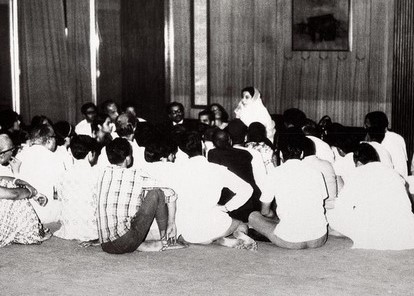
Total number of recorded talks 3058: Public Programs 1178, Pujas 651, and other (private conversations) 1249
“The Paraclete will come (15:26; 16:7, 8, 13) as Jesus has come into the world (5:43; 16:28; 18:37)... The Paraclete will take the things of Christ (the things that are mine, ek tou emou) and declare them (16:14-15). Bishop Fison describes the humility of the Spirit, 'The true Holy Spirit of God does not advertise Herself: She effaces Herself and advertises Jesus.' ...
It is by the outgoing activity of the Spirit that the divine life communicates itself in and to the creation. The Spirit is God-in-relations. The Paraclete is the divine self-expression which will be and abide with you, and be in you (14:16-17). The Spirit's work is described in terms of utterance: teach you, didasko (14:26), remind you, hypomimnesko (14:26), testify, martyro (15:26), prove wrong, elencho (16:8), guide into truth, hodego (16:13), speak, laleo (16:13, twice), declare, anangello (16:13, 14, 15). The johannine terms describe verbal actions which intend a response in others who will receive (lambano), see (theoreo), or know (ginosko) the Spirit. Such speech-terms link the Spirit with the divine Word. The Spirit's initiatives imply God's personal engagement with humanity. The Spirit comes to be with others; the teaching Spirit implies a community of learners; forgetful persons need a prompter to remind them; one testifies expecting heed to be paid; one speaks and declares in order to be heard. The articulate Spirit is the correlative of the listening, Spirit-informed community.
The final Paraclete passage closes with a threefold repetition of the verb she will declare (anangello), 16:13-15. The Spirit will declare the things that are to come (v.13), and she will declare what is Christ's (vv. 14, 15). The things of Christ are a message that must be heralded...
The intention of the Spirit of truth is the restoration of an alienated, deceived humanity... The teaching role of the Paraclete tends to be remembered as a major emphasis of the Farewell Discourses, yet only 14:26 says She will teach you all things. (Teaching is, however, implied when 16:13-15 says that the Spirit will guide you into all truth, and will speak and declare.) Franz Mussner remarks that the word used in 14:26, didaskein, "means literally 'teach, instruct,' but in John it nearly always means to reveal.” (Stevick 2011, 292-7)
The Holy Spirit as feminine: Early Christian testimonies and their interpretation,
Johannes van Oort, Radboud University, Nijmegen, The Netherlands
Department of Church History and Church Polity, Faculty of Theology, University of Pretoria, South Africa

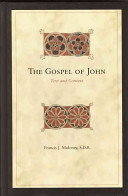
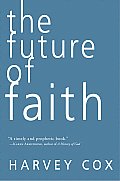
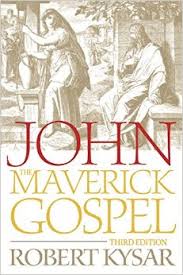
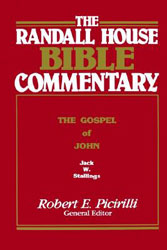 “The teaching of the Paraclete, as the continuation of Jesus' teaching, must also be understood as the fulfillment of the promise of eschatological divine instruction.”
Stephen E. Witmer, Divine instruction in Early Christianity
“Jesus therefore predicts that God will later send a human being to Earth to take up the role defined by John .i.e. to be a prophet who hears God's words and repeats his message to man.”
M. Bucaille, The Bible, the Qur'n, and Science
“And when Jesus foreannounced another Comforter, He must have intended a Person as distinct and helpful as He had been.”
F. B. Meyer, Love to the Utmost
“The Paraclete has a twofold function: to communicate Christ to believers and, to put the world on trial.”
Robert Kysar, John The Meverick Gospel
“But She—the Spirit, the Paraclete...—will teach you everything.”
Danny Mahar, Aramaic Made EZ)
“Grammatical nonsense but evidence of the theological desire to defeminize the Divine.”
Lucy Reid, She Changes Everything
“The functions of the Paraclete spelled out in verses 13-15... are all acts of open and bold speaking in the highest degree.”
David Fleer, Preaching John's Gospel
“The reaction of the world to the Paraclete will be much the same as the world's reaction was to Jesus.”
Berard L. Marthaler, The Creed: The Apostolic Faith in Contemporary Theology
Bultmann calls the “coming of the Redeemer an 'eschatological event,' 'the turning-point of the ages.”
G. Ladd, A Theology of the New Testament
“The Paraclete equated with the Holy Spirit, is the only mediator of the word of the exalted Christ.”
Benny Thettayil, In Spirit and Truth
“The divine Paraclete, and no lessor agency, must show the world how wrong it was about him who was in the right.”
Daniel B. Stevick , Jesus and His Own: A Commentary on John 13-17
Stephen Smalley asserts that “The Spirit-Paraclete ... in John's Gospel is understood as personal, indeed, as a person.”
Marianne Thompson, The God of the Gospel of John
“The Messiah will come and the great age of salvation will dawn (for the pious).”
Eric Eve, The Jewish context of Jesus' Miracles
“The remembrance is to relive and re-enact the Christ event, to bring about new eschatological decision in time and space.”
Daniel Rathnakara Sadananda, The Johannine Exegesis of God
“The Spirit acts in such an international situation as the revealer of 'judgment' on the powers that rule the world.”
Michael Welker, God the Spirit
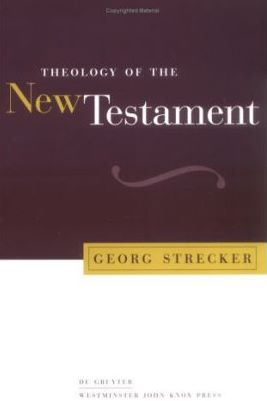
The Paraclete's “Appearance means that sin, righteousness, and judgment will be revealed.”
Georg Strecker, Theology of the New Testament
“While the Spirit-Paraclete is the true broker, the brokers they rely on are impostors.”
T. G. Brown, Spirit in the writings of John
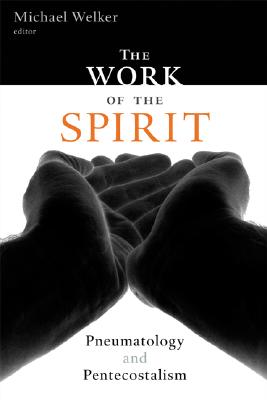
“The pneumatological activity ... of the Paraclete ... may most helpfully be considered in terms of the salvific working of the hidden Spirit.”
Michael Welker, The work of the Spirit
“The pneuma is the peculiar power by which the word becomes the words of eternal life.”
Robert Kysar, Voyages with John
“The gift of peace, therefore, is intimately associated with the gift of the Spirit-Paraclete.”
Francis J. Moloney, The Gospel of John
“This utopian hope, even when modestly expressed, links Jesus and the prophets to a much wider history of human longing.”
Harvey Cox, The Future of Faith
“Because of the presence of the Paraclete in the life of the believer, the blessings of the end-times—the eschaton—are already present.”
Robert Kysar, John
“They are going, by the Holy Spirit's power, to be part of the greatest miracle of all, bringing men to salvation.”
R. Picirilli, The Randall House Bible Commentary
“The Kingdom of God stands as a comprehensive term for all that the messianic salvation included... is something to be sought here and now (Mt. 6:33) and to be received as children receive a gift (Mk. 10:15 = Lk. 18:16-17).”
G. Ladd, A Theology of the New Testament
Disclaimer: Our material may be copied, printed and distributed by referring to this site. This site also contains copyrighted material the use of which has not always been specifically authorized by the copyright owner. We are making such material available to our readers under the education and research provisions of "fair use" in an effort to advance freedom of inquiry for a better understanding of religious, spiritual and inter-faith issues. The material on this site is distributed without profit. If you wish to use copyrighted material for purposes other than “fair use” you must request permission from the copyright owner.

