
The Sacrifice of Spirit: Ritualism and the Critique of Institutional Religion in Hinduism
Table of Contents
- Abstract
- 1. Introduction
- 2. The Vedic Context: From Symbol to System
- 3. The Critique in the Bhagavad-Gita: Redefining Sacrifice
- 4. The Buddha's Revolt: A Rejection of Priestly Authority
- 5. The Vedantic Perspective: The Primacy of Knowledge
- 6. Modern Critiques: Shri Mataji and Sahaja Yoga
- 7. The Priesthood as Intermediary: A Critical Perspective
- 8. Conclusion
- References
Abstract
This paper examines the persistent tension between ritualistic practice and direct spiritual experience within the Hindu tradition. It argues that the externalization and institutionalization of sacrificial rites, while initially imbued with symbolic meaning, often led to the hardening of religious structures, the exaltation of priestly power, and the subordination of living spirituality to mechanical observance. Through a historical and philosophical analysis, this paper traces the critique of this ritualistic turn from ancient to modern times, drawing on key texts and movements including the Bhagavad-Gita, the teachings of the Buddha, the philosophy of Advaita Vedanta, and the contemporary perspective of Shri Mataji Nirmala Devi and Sahaja Yoga. It posits that these critiques collectively represent a recurring call to transcend the limitations of external form and rediscover the primacy of inner realization (atma-jnana) as the ultimate goal of religious life. The paper concludes by analyzing the sociological implications of this dynamic, particularly the role of the priesthood as intermediaries and the ongoing debate about the nature of religious authority.
1. Introduction
The statement, The sacrifices themselves often took the place of a living religion,
encapsulates a central paradox within the history of religious practice, particularly in Hinduism. [1] While rituals (karma kanda) have always been an integral part of Hindu life, their proliferation and the increasing emphasis on their mechanical performance have often been seen as a deviation from the ultimate goal of spiritual liberation (moksha). This paper will explore the historical and philosophical critiques of ritualism in Hinduism, from the early Vedic period to the present day. It will argue that the hardening of institutional religion, centered on complex sacrificial rites, led to the rise of a powerful priestly class and a corresponding decline in the emphasis on direct, personal spiritual experience. This development, in turn, provoked a series of reformist and revolutionary movements that sought to restore the primacy of inner realization over external observance.
2. The Vedic Context: From Symbol to System
The Vedas, the oldest scriptures of Hinduism, are replete with hymns and prayers associated with sacrificial rituals (yajnas). In their earliest form, these rituals were not mere mechanical acts but were understood as symbolic representations of cosmic truths. The Brahmanas, a class of Vedic texts, elaborate on the details of these sacrifices, outlining their procedures and purposes. However, as Swami Prabhavananda notes, an overemphasis on these details led to a situation where the sacrifices themselves often took the place of a living religion.
[2] The belief that the gods could be compelled to grant boons through the correct performance of rituals shifted the focus from devotion to mechanical precision, and in doing so, elevated the status of the priests who possessed the specialized knowledge required for these complex ceremonies.
The Brahmanas themselves acknowledge this tension. They state that the brahmins desire to know, with the sacrifices and charity as the means. That is, when the heart becomes purified by the performance of sacrifices and charity, there arises the knowledge of Brahman.
[2] This formulation suggests that rituals are intended as a means to spiritual knowledge, not as an end in themselves. Yet, as the institutional apparatus of ritual grew more elaborate and the priestly class more powerful, this distinction became increasingly obscured. The hardening of the institutional part of religion exalted in time the power of the priests, [2] and the symbolic meaning of the rituals became subordinated to their mechanical performance.
3. The Critique in the Bhagavad-Gita: Redefining Sacrifice
The Bhagavad-Gita, one of the most revered texts in Hinduism, offers a powerful critique of this ritualistic trend. While not rejecting sacrifice altogether, the Gita redefines it, shifting the emphasis from external rites to internal renunciation. In Chapter 3, Verse 9, Krishna declares that Work done as a sacrifice for Vishnu has to be performed, otherwise work binds one to this material world.
[3] Here, sacrifice is equated with selfless action (karma yoga), performed without attachment to its fruits.
This reinterpretation is profound in its implications. The Gita teaches that sacrifice is not an external ritual but an internal state of consciousness—the renunciation of ego and attachment. As one scholarly interpretation explains, This is known as 'sacrifice' because it is the act of renouncing or giving up attachments. Being free from attachment, one has knowledge of Brahman.
[4] The Gita further elaborates in Chapter 4, Verse 23, stating that The work of one who is free from attachment, who is liberated, whose thought is established in knowledge and is done only for sacrifice, one's karma wholly melts away.
[4]
This reinterpretation directly challenges the authority of the priestly class, whose power was based on their exclusive control over external rituals. By internalizing sacrifice, the Gita democratizes the path to liberation, making it accessible to all who can cultivate the right mental attitude, regardless of their social status or priestly connections. The Gita's teaching thus represents a fundamental shift in Hindu philosophy, one that would reverberate through subsequent centuries and inspire countless reform movements.
4. The Buddha's Revolt: A Rejection of Priestly Authority
The rise of Buddhism in the 6th century BCE can be seen as a direct response to the excesses of Brahminical ritualism. The Buddha was highly critical of the Vedic sacrificial system, particularly the practice of animal sacrifice. [5] He rejected the authority of the Vedas and the notion that spiritual liberation could be achieved through external rites. Instead, the Buddha emphasized the importance of personal effort, ethical conduct, and meditative practice as the path to enlightenment.
The Buddha's critique was not merely philosophical but also social and political. By offering a spiritual path that was accessible to all, regardless of caste or priestly mediation, the Buddha posed a fundamental challenge to the hierarchical structure of Brahminical society. [5] The Buddha's rejection of ritualism was thus inseparable from his rejection of the priestly monopoly on spiritual authority. In this sense, the Buddha's revolt was as much a social revolution as it was a spiritual reformation.
The Buddhist critique of ritualism is particularly significant because it demonstrates that the problem of ritualism was recognized and addressed even within the Hindu world itself. The Buddha did not create a new problem but rather articulated a solution to a problem that was already deeply felt by many. His success in attracting followers from all social classes suggests that his message resonated with a widespread dissatisfaction with the ritualistic approach to spirituality that had become dominant in the Brahminical tradition.
5. The Vedantic Perspective: The Primacy of Knowledge
The Upanishads, which form the philosophical core of the Vedas, also contain a critique of ritualism. While the earlier portions of the Vedas (the Samhitas and Brahmanas) are primarily concerned with rituals, the Upanishads, also known as Vedanta, focus on the pursuit of spiritual knowledge (jnana). The Upanishads teach that the ultimate reality, Brahman, cannot be realized through external acts but only through direct, intuitive experience. This emphasis on knowledge over ritual is a recurring theme in Vedantic thought.
The Aranyakas, or forest treatises,
which bridge the Brahmanas and the Upanishads, explicitly state that the true significance of rituals lies not in their performance but in the spiritual truths they symbolize. [2] As Swami Prabhavananda writes, They are vividly aware that not in rites and ceremonies, but in the truths they stand for, lies their real importance; and so from the fruit or flesh of the sacrifice they pass on to its spiritual interpretation.
[2] This movement from the external to the internal, from form to substance, is the hallmark of Vedantic philosophy.
The Upanishads teach that the path to liberation lies not in the performance of rituals but in the realization of one's true nature as identical with Brahman. This realization cannot be achieved through any external means but only through direct insight. The Upanishads thus represent a radical departure from the ritualistic orientation of the earlier Vedic texts. They suggest that while rituals may have their place, they are ultimately obstacles to the highest knowledge if they are mistaken for the goal itself.
6. Modern Critiques: Shri Mataji and Sahaja Yoga
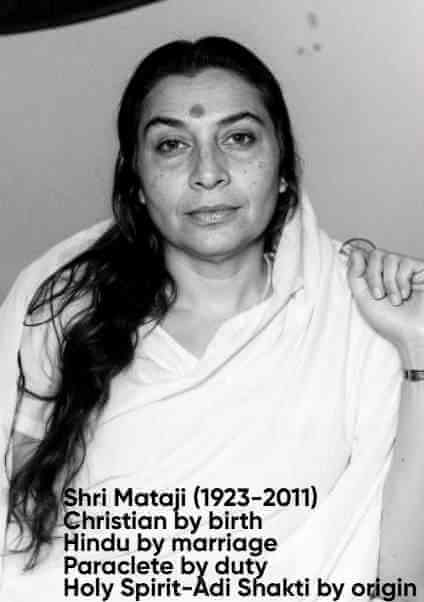
The critique of ritualism continues in modern times with spiritual teachers like Shri Mataji Nirmala Devi, the founder of Sahaja Yoga. Shri Mataji strongly condemned the practice of rituals, viewing them as a form of ego-gratification that hinders spiritual progress. She argued that rituals, even those performed with good intentions, can become a substitute for genuine spiritual experience.
In her teachings, Shri Mataji emphasized that Sahaja Yoga is against Karma Kanda, that is rituals. [6] She stated that The people who think that they can control their ego will eat less or use all types of methods to control ego. For example, someone is standing on one leg or other one on his head, all types of efforts they are doing to reduce their ego. But with all these techniques, ego doesn't vanish. On the contrary, ego increases. Fasting, reciting the names, increases your ego. With Havans also ego increases because Agni, fire, is the right side element. Anything which is rituals increases your ego.
[6]
Shri Mataji's critique is particularly incisive because it identifies a psychological mechanism by which rituals can actually obstruct spiritual progress. Rather than dissolving the ego, rituals can reinforce it by giving the practitioner a sense of accomplishment or superiority. This insight aligns with the warnings found in the Bhagavad-Gita and the Buddhist tradition, all of which caution against the spiritual pitfalls of attachment to external forms.
In her vision, Shri Mataji emphasized the importance of spontaneous self-realization, which she believed could be achieved without the need for any external rites or intermediaries. She taught that Silence on Self is that primal, profound Samaadhi,
[6] and that this state is the true goal of spiritual practice. This perspective aligns with the earlier critiques of the Bhagavad-Gita and the Buddha, all of which point to the limitations of external forms and the necessity of turning inward for spiritual truth.
7. The Priesthood as Intermediary: A Critical Perspective
The historical emphasis on ritualism in Hinduism has been inextricably linked to the power and authority of the priestly class, the Brahmins. As the sole custodians of sacrificial knowledge, the Brahmins positioned themselves as indispensable intermediaries between the common people and the divine. [7] This monopoly on religious authority has been a subject of critique throughout Hindu history.
The charge that priests have exploited their position for personal gain, keeping the masses dependent and indoctrinated, is a recurring theme in anti-caste and reformist movements. The priestly class maintained their power through a combination of factors: their exclusive knowledge of the Vedas and ritual procedures, their control over the interpretation of religious texts, and their role as intermediaries in the crucial life-cycle rituals that marked the passage of individuals through society. [7]
From a critical perspective, the priesthood can be seen not as a facilitator of spiritual progress but as an obstacle to it. By positioning themselves as necessary intermediaries between the individual and the divine, priests created a system of dependency that served their interests. The common person, unable to access the Vedas or perform the complex rituals themselves, had no choice but to rely on the priestly class. This system of dependency was reinforced by the belief that rituals had to be performed with absolute precision, and that any error would negate their efficacy. Thus, the priesthood maintained its power through a combination of specialized knowledge, religious authority, and the psychological dependency of the masses.
The critiques of ritualism discussed in this paper—from the Bhagavad-Gita to Sahaja Yoga—all implicitly or explicitly challenge this system of priestly mediation. By emphasizing the possibility of direct spiritual experience, these teachings democratize spirituality and undermine the basis for priestly authority. In this sense, the critique of ritualism is inseparable from a critique of institutional religious authority and the social hierarchies it supports.
8. Conclusion
The history of Hinduism is marked by a continuous and unresolved tension between the outward forms of religion and the inner quest for spiritual truth. The critique of ritualism, from the Bhagavad-Gita to Sahaja Yoga, represents a persistent effort to reclaim the spiritual core of the tradition from the ossifying grip of institutional religion. While rituals can serve as powerful symbols and expressions of devotion, their overemphasis has historically led to the disempowerment of the individual and the rise of a priestly class that acts as an intermediary rather than a guide.
The enduring message of the critics of ritualism is that true religion is not a matter of external observance but of inner transformation, a direct and unmediated experience of the divine that is accessible to all who sincerely seek it. This message has resonated across centuries and continues to inspire spiritual seekers today. The tension between form and substance, between external ritual and internal realization, remains one of the most vital and generative forces within the Hindu tradition, continually calling it back to its deepest spiritual roots.
The critiques examined in this paper suggest that the problem of ritualism is not unique to Hinduism but is a recurring challenge in all religious traditions. As institutions grow and religious practices become codified, there is always a danger that the original spiritual insight becomes obscured by the machinery of institutional religion. The recurring call to transcend ritualism and return to direct spiritual experience represents a perennial wisdom that each generation must rediscover for itself. In this sense, the critique of ritualism is not a rejection of the Hindu tradition but rather an affirmation of its deepest spiritual values and a call to renew them in the face of institutional ossification.
References
Sahaja Yoga is against Karma Kanda, that is rituals.AdiShakti.org, accessed December 2024.
Gender and Priesthood in the Hindu Traditions.Journal of Hindu-Christian Studies, vol. 18, no. 1, 2005.
The sacrifices themselves often took the place of a living religion
"This hardening of the institutional part of religion exalted in time the power of the priests, and it was in opposition to this externalizing and crystallizing of what should have remained living symbols of truths behind appearances, and also in opposition to the tyranny of a rising priesthood, that Buddha rose in revolt. The Bhagavad-Gita had already condemned the tendency to attribute undue importance to ritualistic sacrifices.”
“The Brahmanas, in comparison with the Samhitas, are concerned with
practical, everyday things—with the details of sacrificial rites and
with specific duties and rules of conduct.
Brahmanah vividisant yajnene danena—The brahmins desire to know, with
the sacrifices and charity as the means. That is, when the heart
becomes purified by the performance of sacrifices and charity, there
arises the knowledge of Brahman. Thus is acknowledged the need for
the performance of sacrifices and for the ceremonial and rites of
religion. But it is true that at times undue importance was laid on
these things, as well as on the mere chanting of the words of the
Vedas, so much so that the sacrifices themselves often took the place
of a living religion—a circumstance that occurs in the development of
all religious institutions.
Under such conditions, prayers and supplication before the object of
worship becomes unnecessary; for by the performance of elaborate and
fixed sacrifices the gods may be forced to grant one's desires.
Professor Das Gupta believes that in these sacrificial rites is to be
found the germ of the law of karma (which Manu later systematized
philosophically): 'Thou canst not gather what thou dost not sow. As
thou dost sow, so will thou reap.'
This hardening of the institutional part of religion exalted in time
the power of the priests, and it was in opposition to this
externalizing and crystallizing of what should have remained living
symbols of truths behind appearances, and also in opposition to the
tyranny of a rising priesthood, that Buddha rose in revolt. The
Bhagavad-Gita had already condemned the tendency to attribute undue
importance to ritualistic sacrifices.
The duties and rules of conduct prescribed by the Brahmanas are
largely those common in all religious creeds. Self-control is
emphasized, and love, and kindness; theft, murder, and adultery are
forbidden. We are all deep in debt, declare the Brahmanas, the most
important of our obligations being those to the gods, to the seers,
to the spirits of the dead, to living men, and to animals. Our debt
to the gods we must pay with sacrifices; to the seers with feelings
of admiration and devotion; to departed spirits with prayers in their
behalf; to living men with love and kindness; to animals with food
and drink—and to all of these, whenever we partake of nourishment, we
must tender a portion to the accompaniment of fitting prayers.
By the due discharge of these our moral debts we achieve no merit,
but if we neglect them we become unworthy of our privileged status as
human beings. Our duties must be performed, moreover, with no thought
of self or selfish ends, but simply because they are, for a righteous
man, duties—and because they purify the heart.
The Aranyakas, or forest treatises, need detain us but a moment. They
may most simply be regarded as a supplement to the Brahmanas—and a
corrective. Like the Brahmanas, they deal much in rites and
ceremonies, but unlike the Brahmanas they do not rest in them. They
are vividly aware that not in rites and ceremonies, but in the truths
they stand for, lies their real importance; and so from the fruit or
flesh of the sacrifice they pass on to its spiritual interpretation.
In doing so, in so occupying themselves less with the outward symbol
than with the inner reality, they come close to the chief and central
glory of all the Vedas—the universally admired Upanishads.”
The Spiritual Heritage Of India: A Clear Summary of Indian Philosophy
and Religion, pp. 35-37
Swami Prabhavananda
Vedanta Press (June 1979)
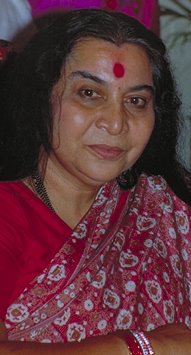
Shri Mataji Nirmala Devi“The people who think that they can control their ego will eat less or use all
types of methods to control ego. For example, someone is standing on one leg or
other one on his head, all types of efforts they are doing to reduce their ego.
But with all these techniques, ego doesn't vanish. On the contrary, ego
increases. Fasting, reciting the names, increases your ego. With Havans also ego
increases because Agni, fire, is the right side element. Anything which is
rituals increases your ego.
Human being thinks that they are alright, since they are doing these rituals
since thousand years. All the wrong teachings they are still following. For this
reason Sahaja Yoga is against Karma Kanda, that is rituals. No need to do any
kind of Karma Kanda.
And to go to the extreme point is also dangerous. I had asked them to shoe-beat
to destroy their ego and what I see that every morning all the Sahaja Yogis go
in the line with their shoes for shoe-beatings. But I had asked to do this if
you have ego in you.
All these rituals have entered into Sahaja Yoga. I got somebody in France with
the list of the treatments of Vashi hospital. But that was for sick peoples.
This is the nature of human being to follow the rituals because he thinks that
he can do it.”
The Paraclete Shri Mataji
25 December 1997, Christmas Puja
Ganapatipule, Maharashtra, India