
What did Jesus (and the Comforter) ask people to "Believe"? - 5
"Jesus does not reveal the Holy Spirit fully, until he himself has been glorified through his Death and Resurrection... . Only when the hour has arrived for his glorification does Jesus promise the coming of the Holy Spirit, since his Death and Resurrection will fulfill the promise made to the fathers. The Spirit of truth, the other Paraclete, will be given by the Father in the answer to Jesus' prayer.”Catechism of the Catholic Church
Libreria Editrice Vaticana, 1992, p. 161
What did Jesus ask people to "Believe"?
"Jesus came into Galilee, preaching the gospel of the kingdom of God, and
saying," The time is fulfilled, and the kingdom of God is at hand: repent and
believe the gospel.” (Mark 1:14-15)
Jesus' exhortation to"believe the gospel"does not refer to study of or
belief in scriptural writings per se.[1] In the original Greek in which the New
Testament was written, the word used for gospel is 'euangelion'," good news"or
"good message.”As used by Jesus it expressed the"good message," the
revelations of truth, he was bringing to man from God.
When Jesus said to"believe the gospel," he meant more than a casual mental
acceptance of his message. Belief in general is that conditional receptive
attitude of mind that must precede an experience in order to cognize it. One
must have sufficient belief in a concept in order to put it to the test, without
which one cannot possibly verify its validity. If a man is thirsty and
is advised to quench his thirst with the water from a nearby good well, he must
believe in that advice sufficiently to make the effort to go to the well and
drink from it.
Similarly, Jesus emphasizes that truth-seeking souls must not only repent of the
foolishness of following unsatisfying material ways of living, and believe in
the truths experienced by him through God; they must also act accordingly that
they might realize those truths for themselves.
To be an orthodox unquestioning believer in any spiritual doctrine, without the
scrutiny of experimentation to prove it to oneself, is to be ossified with
dogmatism. Jesus did not ask the people merely to believe in his message, but to
keep faith in his divine revelations with the assurance that by believing in,
and hence concentrating upon, the gospel, they would surely and ultimately
experience within themselves the truths in those revelations. Belief is wasted
on false doctrines; but truth poured out to man through the authority of
God-realized saints is worthy of belief and sure to produce divine realization.
Even on the authority of the fame of scriptural text, one cannot judge what it
teaches, for various are the meanings and consequent distortions drawn from holy
writ, some of which defy the laws of both reason and wisdom. Also, who can deny
what errors might have come down through the centuries in the form of
mistranslations or mistakes made by scribes? The Bible and the Vedas may well be
inspired texts that came from heaven, but the ultimate test of truth is one's
own realization, direct experience received through the medium of the soul's
omniscient intuition.”
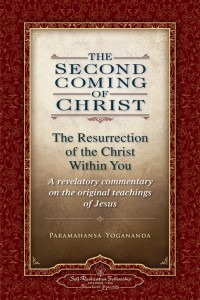
The Second Coming of Christ (The Resurrection of the Christ within
You) Volume 1, Discourse 22, pg. 378-379
Paramahansa Yogananda
Printed in the United States of America 1434-J881
ISBN-13:978-0-87612-557-1
ISBN-10:0-87612-557-7
Notes:
[1]"While two of the New Testament gospels use the word 'gospel' (it is missing
in Luke and John), they use it to indicate not the written works themselves, but
rather the message preached either by Jesus (in Matthew) or about him (in Mark).
Not until the middle of the second century are documents about the words and
deeds of Jesus called gospels.”- Robert J. Miller, ed., 'The Complete Gospels:
Annotated Scholars Version' (HarperSanFrancisco, 1994).
"The English word 'gospel' is a descendant of the Anglo-Saxon word 'godspel' or
'good news'. 'Godspel' was an accurate equivalent of the original Greek word
'euangelion', literally a 'good message' or 'good tidings'. And the oldest
surviving Greek manuscript copies of the four canonical gospels bear only the
headings. According to Matthew, Mark, Luke, or John (the four books together
comprise the whole of the single 'gospel'; and the word 'canonical' derives from
the Greek 'kanon' or 'measuring rod' and indicates, in this case, those few
gospels that were approved as holy scriptures by the orthodox church of the late
second century).”- Reynolds Price, 'Three Gospels' (New York: Simon and
Shuster, 1997). ('Publisher's Note')

Shri Mataji Nirmala Devi
"Where then do we go for direct textual evidence that the Holy Spirit was, in the origins of Christianity, considered feminine? We go to the existing Greek minuscules copied in the early part of the last millennium to find only circumstantial evidence. Likewise, as we go to the earlier copied Greek uncials, the Byzantine copies, the eastern Syriac Peshitta, and the Old Latin we find some peripheral corroboration. Then when we go to the earlier copied Old Syriac that predates the Peshitta we find a pearl of great price. In the most ancient of the rare Old Syriac copies, the Siniatic Palimpsest, from the 4th or 5th century, found in the Covenant of St. Catherine in the Sinia by Mrs. Anes Lewis and transcribed by Syriac Professor R.L. Bensly of Cambridge University in 1892, the words of Jesus in John 14:26 read:
But She -the Spirit - the Paraclete whom He-will-send to you- my Father - in my name - She will teach you every-thing; She will remind you of that which I have told you.
(Translation by Danny Mahar, author of Aramaic Made EZ)
In both the Hebrew and Aramaic language the word spirit is in the feminine gender but in the Greek language it is neuter. It is the Greek neuter word, pnuema, that was employed by the ancient Septuagint translators of the Hebrew Old Testament when they translated the feminine ruach into Greek. The authors who wrote in Greek were limited in expressing the Holy Spirit in the feminine by the constraints of the language...
This concept of the feminine gender of the Holy Spirit is not new or original. The early church had this belief and within the last several decades it has been considered at large with acceptance by individuals of faith in all areas. It may be that this writing is a unique synergism in understandings and that there are some new considerations within what is written here to add to the accumulating evidence. Whatever the case may be there is much more that is written and to be written that patterns the feminine gender of the Holy Spirit through the breadth of scripture. There is much more to be understood about the male-female harmony in the entire realm of those things seen. There is much more to be understood about how the spiritual masculine and the feminine bring forth the brilliance of Paul's revelation of the mystery and there is much more to be understood about the wholeness that this belief will bring to an individual and a society.
For now I close with these thoughts. When one becomes persuaded of the union of the feminine and masculine, Paul's revelation opens dramatically as the consummate epic work of the eternal union that brings together sons and daughters as the one new man in Christ of Ephesians. Scriptures can now open to a new light through Paul's revelation of consummation within the cross of Christ and through its implantation into the very core of man's being to bring forth that one new man to dwell in the eternal light of the coming new heaven and earth. Accordingly, I offer this presentation so that the revelatory script of the knowing playwright and the intuitions of the wise director may be more fully understood and, in the end, be joined harmoniously together within our souls and within our family to bring to pass the eternal plan of salvation for all humankind through the cross of Christ.”
The Feminine Gender of the Holy Spirit
On the Orthodox Revision of the Gender of the Holy Spirit
A Journey Unto Revelation's End, by Steve Santini
"In the first portion of the Gospel of John, the holy spirit is spoken of as something descending from heaven to remain upon Jesus (John 1.32-33), as a medium into (or through) which one must be born (John 3.5), as an enablement for Christ to speak the words of God (John 3.34), as a medium through which one may worship the Father (John 4.23), as the essential nature of God (John 4.24), as a life giver (John 6.63), and as something to be received by the disciples (John 7.39).
It is clear from these examples that the essential character and functionality of God's spirit had not changed. However, the claim that John 7.39 makes seems to contradict everything we have discovered by saying"that the spirit was not yet given.”
"But this he spoke of the spirit, which those who believed in him were to receive; for the spirit was not yet given, because Jesus was not yet glorified.” (John 7.39)
Obviously, the spirit had been given in OT times, to Jesus, and to the disciples who were able to go out performing miracles and healing people. Nonetheless, there must be some essential difference between the spirit that we have described up to this point in our inquiry and that, which is described in detail in chapters 14, 15, and 16 of John in order to warrant the phrase"The spirit was not yet given.”
Our Lord explained the coming presence of the parakletos (paraklete, comforter, helper, advocate). The chain of events would be {1} the disciple demonstrates love for Jesus by keeping his commandments (John 14.15) {2} Jesus will ask the Father to send the paraklete (John 14.16; 15.26; 16.7) {3} the paraklete will be sent in Jesus' name to abide in the believer forever (John 14.16, 26). The paraklete is"The spirit of truth" (John 14.17), which will teach the disciples all things and bring to their remembrance all that Jesus has said (John 14.26), testify about Jesus (John 15.26), be more advantageous to the saint than the presence of Christ on earth (John 16.7), convict the world concerning sin, righteousness, and judgment (John 16.8- 11), guide them into all truth (John 16.13), and disclose Christ to the disciple (John 16.14-15).”
Sean Finnegan, www.kingdomready.org
"Jesus solemnly assures the disciples that they will, in the future, perform even greater miracles than He. By this He means to say that through the power of the Holy Spirit, they will bring about the greatest miracle of all — the salvation of lost souls. He promises them that whatever they ask for, in connection with their ministry of bringing the miracle of salvation to lost men, will be granted them.
The theme of this section is reassurance and encouragement. Jesus gives the disciples three basic reasons they should cease being troubled in their spirits. First, He tells them that, although He is going away, He will return for them so that they may ultimately join Him where He is going (vv. 1-3). Second, He tells them that, though He is going away, He will be the only means by which men may come to God and go to Heaven (vv. 4-11). Third, He tells them that, though He is going away, their ministries are not finished. In fact, the best is still ahead. They are going, by the Holy Spirit's power, to be part of the greatest miracle of all, bringing men to salvation (vv. 12-14).”...
25 These things have I spoken unto you, being yet present with you.
26. But the Comforter, which is the Holy Ghost, whom the Father will send in my name, shall teach you all things, and bring all things to your remembrance, whatsoever I have told unto you.
Jesus now summarizes all that He has been saying in this section. Referring to the many things which He has taught them while He has been present with them in the flesh, He tell the disciples that the Comforter not only is going to remind them of these things, but also will go to teach them all things necessary to their understanding and happiness. The Comforter will recall to their minds Jesus' teachings, will enable them to understand truly and completely, and will develop and expand them into new and wonderful truths.
Jesus has referred to the coming Comforter as the Spirit of Truth (v. 17)...[whose] primary function is the work of making men holy. This is the work we call sanctification.
In v. 16 Jesus has said that the Comforter is going to be provided to the disciples by the Father on the basis of His (Jesus') prayer that He should do so. Now He says that the Father is going to send the Comforter in His (Christ's) name. These statements are essentially identical and imply a joint action involving both Father and Son.”
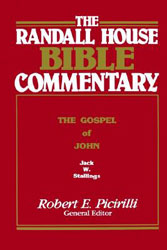
Jack Wilson Stallings and Robert E. Picirilli,
The Randall House Bible Commentary: The Gospel of John,
Randall House Publications, 1989, page 205
ISBN 9780892659524
Advocate, (Gr. parakletos), one who pleads another's cause, who helps another by defending or comforting him. It is a name given by Christ three times to the Holy Ghost (John 14:16; 15:26; 16:7, where the Greek word is rendered"Comforter," q.v.).
Comforter, the designation of the Holy Ghost (John 14:16, 26; 15:26; 16:7; R.V. marg.," or Advocate, or Helper; Gr. paracletos"). The same Greek word thus rendered is translated"Advocate"In 1 John 2:1 as applicable to the Comforter to be sent by Christ. It means properly"one who is summoned to the side of another"to help him in a court of justice by defending him," one who is summoned to plead a cause.”
Related Articles:
What did Jesus (and the Comforter) ask people to "Believe"? - 1
What did Jesus (and the Comforter) ask people to "Believe"? - 2
What did Jesus (and the Comforter) ask people to "Believe"? - 3
What did Jesus (and the Comforter) ask people to "Believe"? - 4
What did Jesus (and the Comforter) ask people to "Believe"? - 5
What did Jesus (and the Comforter) ask people to "Believe"? - 6
www.al-qiyamah.org/
www.adi-shakti.org/ — Divine Feminine (Hinduism)
www.holyspirit-shekinah.org/ — Divine Feminine (Christianity)
www.ruach-elohim.org/ — Divine Feminine (Judaism)
www.ruh-allah.org/ — Divine Feminine (Islam)
www.tao-mother.org/ — Divine Feminine (Taoism)
www.prajnaaparamita.org/ — Divine Feminine (Buddhism)
www.aykaa-mayee.org/ — Divine Feminine (Sikhism)
www.great-spirit-mother.org/ — Divine Feminine (Native Traditions)
“Now, the principle of Mother is in every, every scripture - has to be there.” Shri Mataji, Radio Interview 1983 Oct 01, Santa Cruz, USA
