The Phonetic and Mystical Identity of Alif Lām Mīm (الم) as AUM (ॐ): A Linguistic and Comparative Theological Analysis

“Swami Rama went on to expound the special place of OM as a universal name of God, but the Muslims objected that they had never seen any mention of OM in their own holy scriptures and asked him (if what he said was true) whether he could quote any reference to OM in their Koran.
Rama replied gently: 'Please listen to what is now being said. In the very beginning of your Koran, at the top, are three letters, alif (A), lam (L) and mim (M). Can any of you or any learned Mulawi of Islam explain what these three letters mean?' The Moslems replied that this was a secret which Allah had kept to himself.
Swami Rama laughed heartily at this remark and said: 'When God has revealed the entire Koran for the benefit of mankind, as the Muslims claim, it is very strange that he has kept its very heading a secret. No. It is not so. If you, the Muslims who put full faith in the Koran do not know the secret of the letters A, L, M, Rama will tell you what they signify. alif, lam and mim are nothing but alif (A), wao (O) and mim (M), that is, AOM or OM.”
The ḥurūf al-muqaṭṭaʿāt, or the “disconnected letters” that preface twenty-nine surahs of the Qur’ān, have remained a subject of profound theological and scholarly debate for centuries. The dominant view within Islamic exegesis holds their meaning as a divine secret known only to God. This paper challenges that consensus by presenting a rigorous academic argument that the most frequent of these combinations, Alif Lām Mīm (الم), is phonetically and mystically identical to the sacred syllable AUM (ॐ) of the Vedic tradition. The argument is built upon a detailed analysis of Arabic phonological rules, specifically the assimilation of the definite article (lām al-taʿrīf), and is supported by comparative analysis of the concept of the primordial sound in both Islamic Sufism and Hindu Vedanta. Drawing on the early 20th-century insight of Swami Rama Tirtha, this paper demonstrates that the pronunciation of ALM, when subject to established rules of Arabic grammar in connected speech, resolves to AUM. This phonetic identity is not a mere coincidence but points to a shared heritage of understanding the creative power of divine sound, suggesting that ALM is, clearly and unambiguously, AUM.
Table of Contents
- Introduction: The Enigma of the Muqaṭṭaʿāt
- The Phonological Key: Unlocking ALM through Arabic Grammar
- 2.1. The Rule of Lām Shamsīyah (Solar Letters)
- 2.2. Assimilation in Proper Names: The Case of Shams al-Dīn
- 2.3. Applying the Rule to Alif Lām Mīm
- The Primordial Sound: AUM in the Vedic Tradition
- 3.1. The Māṇḍūkya Upaniṣad and the States of Consciousness
- 3.2. AUM as the Sound of Creation
- Comparative Mysticism: Divine Sound in Islamic Sufism
- 4.1. The Creative Command: Kun Faya Kūn
- 4.2. The Science of Letters (ʿIlm al-Ḥurūf)
- Conclusion: Re-establishing a Universal Truth
- References
1. Introduction: The Enigma of the Muqaṭṭaʿāt
The Qur’ān, the central religious text of Islam, begins twenty-nine of its chapters (surahs) with combinations of letters from the Arabic alphabet known as the ḥurūf al-muqaṭṭaʿāt (literally, “the disconnected letters”)[1]. These letter combinations, such as Alif Lām Mīm (الم), Yā Sīn (يس), and Kāf Hā Yā ʿAin Ṣād (كهيعص), are recited as part of the text but are traditionally held to be enigmatic. The majority opinion among classical and modern Islamic scholars is that their meaning is part of the ghayb (the unseen or hidden), a secret whose knowledge God has reserved for Himself[2]. While numerous theories have been proposed—ranging from abbreviations of divine names, to numerological codes (gematria), to remnants of scribal notations—no single explanation has achieved universal acceptance, preserving their mysterious status[3].
This paper puts forth a definitive and academically rigorous thesis: that the letters Alif Lām Mīm (الم), which preface six surahs including the Qur’ān’s longest chapter, Surah al-Baqarah, are not a secret but a clear and unambiguous phonetic representation of the sacred syllable AUM (ॐ), the most profound mantra of the Vedic and subsequent Hindu traditions. This argument, first articulated with clarity in a 1905 discourse in Lucknow by the Vedantic master Swami Rama Tirtha, rests not on esoteric speculation but on the established and non-disputable rules of Arabic phonology and grammar[4]. By demonstrating the phonetic identity of ALM and AUM, and contextualizing it within the parallel mystical traditions of divine sound in both Sufism and Vedanta, this paper will argue that the perceived enigma of ALM is a result of overlooking a fundamental linguistic key.
2. The Phonological Key: Unlocking ALM through Arabic Grammar
The core of the argument lies in a precise understanding of Arabic phonetics, specifically the rule governing the definite article al- (ال) and its interaction with the letters of the alphabet.
2.1. The Rule of Lām Shamsīyah (Solar Letters)
The 28 letters of the Arabic alphabet are divided into two categories based on how they affect the pronunciation of the preceding lām (ل) of the definite article al-. These are the “sun letters” (al-ḥurūf al-shamsīyah) and “moon letters” (al-ḥurūf al-qamarīyah)[5].
- When al- precedes a moon letter (e.g., bā’, jīm, mīm), the lām is clearly pronounced. For example, al-qamar (the moon) is pronounced as written.
- When al- precedes a sun letter (e.g., tā’, dāl, shīn), the lām is not pronounced. Instead, it is completely assimilated into the following sun letter, which is then stressed or doubled (indicated by a diacritical mark called a shaddah). For example, al-shams (the sun) is pronounced ash-shams.
This rule of assimilation (idghām) is a fundamental and universally applied principle of Qur’ānic recitation (tajwīd) and standard Arabic pronunciation.
2.2. Assimilation in Proper Names: The Case of Shams al-Dīn
This phonological rule is vividly illustrated in the pronunciation of compound Arabic names. As Swami Rama Tirtha pointed out, a name like Shams al-Dīn (شمس الدين), meaning “Sun of the Faith,” is not pronounced Shams-al-din. Because the letter dāl (د) is a sun letter, the lām of al- assimilates completely. In connected speech, the short vowel on the preceding word (a ḍamma or ‘u’ sound in this grammatical construction, known as iḍāfa) carries over. The result is the pronunciation Shams-ud-dīn[6]. The ‘l’ sound vanishes and is replaced by a ‘u’ sound (represented by the ḍamma vowel, also known as pesh in Persian and Urdu).
Similarly, the name Niẓām al-Dīn (نظام الدين) is pronounced Niẓām-ud-dīn. The letter lām (L) becomes silent and gives way to the sound of the Arabic vowel ḍamma (O or U).
2.3. Applying the Rule to Alif Lām Mīm
When we apply this established grammatical and phonetic rule to the letters Alif Lām Mīm (الم), the identity with AUM becomes self-evident. The letters are recited individually as: Alif (A), Lām (L), Mīm (M).
- Alif (A): This serves as the initial vowel sound, equivalent to ‘A’.
- Lām (L): This letter is positioned between the preceding vowel sound of Alif and the following consonant sound of Mīm.
- Mīm (M): This serves as the final consonant sound, equivalent to ‘M’.
Following the principle demonstrated in names like Shams-ud-dīn, where the lām between a vowel and a consonant becomes silent and is replaced by the ‘u’ sound of the ḍamma, the sequence A-L-M phonetically resolves to A-U-M.
“The Muslims objected that the letter L is not the same as the letter O, but Swami Rama pointed out to them that in Arabic grammar L is pronounced O when it falls between a vowel and a consonant... The letter lam (L) becomes silent and gives the sound of the Arabic letter pesh (O or U). Therefore ALM is no secret; it is clearly and unambiguously AUM and nothing but AUM.”[7]
The objection that lām is not wāw (the letter for ‘O’ or ‘U’) is irrelevant, as the sound is not derived from the letter wāw itself but from the vowel ḍamma (pesh) that phonetically replaces the assimilated lām in this context. Thus, the secret of ALM is not a theological mystery but a linguistic artifact, accessible to anyone with knowledge of Arabic grammar.
3. The Primordial Sound: AUM in the Vedic Tradition
The conclusion that ALM is phonetically AUM is theologically profound because AUM (ॐ) is the cornerstone of Vedic spiritual philosophy. It is not merely a word but is considered the primordial vibration from which the entire universe manifested.
3.1. The Māṇḍūkya Upaniṣad and the States of Consciousness
The Māṇḍūkya Upaniṣad, a foundational text of Vedanta, is dedicated entirely to the exposition of AUM. It analyzes the syllable as comprising three distinct phonetic components—A, U, and M—which correspond to three states of human consciousness[8]:
- A (akāra): Represents the waking state (jāgrat), where consciousness is turned outwards to the material world.
- U (ukāra): Represents the dreaming state (svapna), where consciousness is turned inwards to the subtle world of thoughts and images.
- M (makāra): Represents the deep, dreamless sleep state (suṣupti), where consciousness is unified and undifferentiated.
The silence that follows the audible chant of AUM represents the fourth state, turīya, which is pure, transcendental consciousness—the ultimate reality, or Brahman, itself.
3.2. AUM as the Sound of Creation
Across various schools of Indian philosophy, AUM is revered as śabda-brahman, or God in the form of sound[9]. It is the first impulse of creation, the divine utterance that brings all existence into being. This concept of a creative, primordial sound is not unique to the Vedic tradition and finds a powerful parallel within Islamic mysticism.
4. Comparative Mysticism: Divine Sound in Islamic Sufism
While orthodox Islamic theology has focused on the unknowability of the muqaṭṭaʿāt, the esoteric tradition of Sufism has long engaged with the creative power of divine utterance and the mystical properties of letters, providing a fertile ground for understanding ALM as AUM.
4.1. The Creative Command: Kun Faya Kūn
The Qur’ān repeatedly describes God’s act of creation through the divine command “Be!” (Kun!), and so it is (fayakūn). For example, in Surah Yā Sīn (36:82): “Verily, His command, when He intends a thing, is only that He says to it, ‘Be!’—and it is.” This concept of creation through divine speech resonates deeply with the Vedic idea of AUM as the sound that manifests the cosmos. For many Sufis, Kun is not merely a word but the expression of a timeless, creative vibration emanating from the divine essence[10].
4.2. The Science of Letters (ʿIlm al-Ḥurūf)
Mystical movements within Islam, such as the Ḥurūfīs and the great Sufi master Ibn ʿArabī, developed a sophisticated “science of letters” that explored the inner meanings of the Arabic alphabet. In this tradition, letters were not arbitrary symbols but were seen as direct manifestations of the divine names and attributes, containing the secrets of creation[11]. The letter Alif, in particular, was revered as a symbol of God’s unity (tawḥīd) and the origin of all other letters. The idea that a combination of letters like ALM could hold the key to the primordial sound of creation is entirely consistent with this esoteric Islamic worldview.
5. Conclusion: Re-establishing a Universal Truth
The assertion that Alif Lām Mīm is AUM is not an attempt to syncretize two distinct religions but to uncover a shared, universal truth encoded within their respective revelations. The evidence is not based on faith or esoteric interpretation alone, but on the bedrock of linguistic science. The phonological rules of Arabic, when applied correctly, demonstrate that the recitation of ALM naturally and inevitably yields the sound AUM. To dismiss this as coincidence is to ignore the precise and systematic nature of Arabic grammar.
The traditional insistence that the muqaṭṭaʿāt are an impenetrable divine secret, while born of reverence, has paradoxically obscured a profound truth lying in plain sight. Swami Rama Tirtha’s explanation in 1905 was not an innovation but a restoration of knowledge, bridging a perceived gap between the Vedic and Islamic traditions by using the master key of linguistics. The phonetic identity of ALM and AUM reveals a common understanding of the ultimate reality as a creative vibration, a sacred sound that is the origin and essence of all existence. Therefore, the academic and theological conclusion must be that ALM is no secret; it is clearly and unambiguously AUM, and nothing but AUM.
References
[1] "Muqattaʿat." Wikipedia, Wikimedia Foundation, 2 Feb. 2026.[2] Nguyen, Martin. "Exegesis of the ḥurūf al-muqaṭṭaʿa." Islamicana, 2012.
[3] Sayoud, H. "Investigation on the Mystery of the Qur’an’s Disjointed Letters." International Journal of Quranic Research, vol. 5, no. 9, 2013.
[4] "Swami Rama Tirtha's meeting with the Muslims." adishakti.org, accessed 6 Feb. 2026.
[5] "Sun and moon letters." Wikipedia, Wikimedia Foundation, 15 Jan. 2026.
[6] "Shams al-Din." Wikipedia, Wikimedia Foundation, 28 Dec. 2025.
[7] Quoted from "Swami Rama Tirtha's meeting with the Muslims." adishakti.org.
[8] "Mandukya Upanishad." Wikipedia, Wikimedia Foundation, 20 Jan. 2026.
[9] Beck, Guy L. Sonic Theology: Hinduism and Sacred Sound. University of South Carolina Press, 1993.
[10] "Kun Faya Kun: Understanding Its Meaning and Impact." Medium, 15 Nov. 2023.
[11] Lory, Pierre. "The Symbolism of Letters and Language in the Work of Ibn 'Arabī." Ibn Arabi Society, 1999.
Swami Rama Tirtha's meeting with the Muslims
This article first appeared in the Winter 2002 edition of Self-Knowledge Journal when Swami Rama Tirtha returned from his years in America, his fame as a man of God became widely recognized in India. He had demonstrated his power to appeal to those brought up in a completely different tradition and had shown the validity of his vision of truth outside the Indian tradition. Like Shri Dada before him, his teachings were universal in scope. In the hands of both these enlightened Jnanis the spiritual teaching had become a means of reconciling and uniting those of all faiths rather than a divisive force. And in India, as in Europe, history gave all too ample proof of the divisive potential often exerted by religion in the history of the people. In India itself the conflict between the Moslem and the Hindu traditions was a simmering cause of unrest in the two communities which had often flared up into major civil disturbances, as it was destined to do again, on a scale unprecedented hitherto, when India was given her independence after the Second World War.
There are many examples of Shri Dada's meetings with the Christians or the Muslims in the pages of The Heart of the Eastern Mystical Teaching, but equally interesting and instructive is the account we have of the discussion between Swami Rama Tirtha and the Muslims held over two days in Lucknow in the year 1905. It provides a perfect example of the way in which the clear vision of the holy truth of non-duality can dispel the prejudices and misunderstandings of the unenlightened mind. In the course of these discussions Swami Rama was not only able to break down many of the prejudices of his Muslim questioners but also to give them a much deeper understanding of the teachings of their own religion.
The confrontation between prejudice and truth, and the consequent dissipation of the narrow view by the light of the universal truth, like the dissolving of the morning mist by the rising sun, was exemplified from the first moments of the meeting, when the Muslims entered the room and offered Swami Rama the traditional salutation (Adab 'Arz). The Paramahansa responded by saying 'OM' in serene and peaceful tones. To this the Muslims at once took exception. They wanted to know why Rama had not returned their greeting in the same way and what was the secret reason for which he was saying OM in reply to their greeting.
Swami Rama answered them with great love and told them that he had no mysteries to hide and no mental reservations; plain talk (he said) was easily understandable, while complicated talk was only likely to be misunderstood. The truth was (he said) that a person can give to others only what he possesses and that Rama himself only possessed OM and that alone. That OM, which was Rama's sole possession, represented the non-duality of Vedanta.
Pressed to explain what he meant, Swami Rama replied that God is really nameless, although people call him by various names such as Ishvara or Allah. Men of different faiths and persuasions feel their oneness with God by establishing some sort of relationship with him. It can be any relationship, but the truth or reality is only one. He is what he is, one without a second, indescribable and far beyond being circumscribed in words. But the ancient Rishis and Saints have called him and known him through the significant symbol OM.
Swami Rama went on to expound the special place of OM as a universal name of God, but the Muslims objected that they had never seen any mention of OM in their own holy scriptures and asked him (if what he said was true) whether he could quote any reference to OM in their Koran.
Rama replied gently: 'Please listen to what is now being said. In the very beginning of your Koran, at the top, are three letters, alif (A), lam (L) and mim (M). Can any of you or any learned Mulawi of Islam explain what these three letters mean?' The Moslems replied that this was a secret which Allah had kept to himself.
Swami Rama laughed heartily at this remark and said: 'When God has revealed the entire Koran for the benefit of mankind, as the Muslims claim, it is very strange that he has kept its very heading a secret. No. It is not so. If you, the Muslims who put full faith in the Koran do not know the secret of the letters A, L, M, Rama will tell you what they signify. alif, lam and mim are nothing but alif (A), wao (O) and mim (M), that is, AOM or OM.'
The Muslims objected that the letter L is not the same as the letter O, but Swami Rama pointed out to them that in Arabic grammar L is pronounced O when it falls between a vowel and a consonant, as in the names Shamsuddin, which is written Shamsaldin, or Nizamuddin, which is written Nizamaldin. The letter lam (L) becomes silent and gives the sound of the Arabic letter pesh (O or U). Therefore ALM is no secret; it is clearly and unambiguously OM and nothing but OM. It is kufra, heretical or a sin, to blame God for keeping it a secret.
The Muslims (who did not know Arabic or the rules of its grammar) were clearly impressed by Swami Rama's explanation, but they caught on to his use of the word 'kufra', meaning sin or heresy, and asked him to explain the meaning of that word and the related word 'kafir', which to a Muslim means an infidel. Swami Rama was at first unwilling to say anything about them, maintaining that they were the special words peculiar to Islam, and that as Muslims they should understand them better than any non-Muslims. But when they pressed him on it, he then said: It would have been better if you had not put this question to Rama, because whatever he says would be according to his own notions. Rama likes neither to flatter anybody, nor to injure the feelings of anyone. Truth cannot be crushed. There is some truth in every religion. Rama is, therefore, not only a Hindu, but also a Muslim, a Christian and a Buddhist. In answer to your question Rama will speak politely and with love, but he may also have to indulge in some plain speaking, without the least intention to hurt your feelings. Rama loves all, like his own self. As such there should be nothing to hide from his own self. Dear ones, the truth is that the followers of Islam have very wrongly interpreted the words 'kufra' and 'kafir', and they have also made a very wrong use of these words.
Swami Rama went on to point out to them with great love that Islam literally means 'religion of peace', but that instead of preaching love for God seated in the heart of each man and the brotherhood of all men, the so-called leaders of Islam, on account of their superficial knowledge or ignorance, had injected a spirit of hatred and alienation into the hearts of the ignorant Muslims. As a result, the history of the Muslims testified to the fact that thousands of non-Muslims had been butchered in wholesale massacres in the name of Islam. Instead of teaching mankind how to live in peace with others, Islam had earned a bad name for itself in world history by spreading its religion by tyranny, oppression and despotism. This was because of the selfishness, love of personal gain and narrow outlook of the Muslim autocrats, intoxicated with their own domination and conquest in the name of Islam. It was all due to the wrong interpretation of the words 'kufra' and 'kafir'.
Dear friends, [he said], the meaning of kufra [sin or heresy] is to hide. What? To hide the truth or reality is kufra, and he who hides the truth is kafir [infidel]. But how does a kafir hide the truth? He hides it behind the curtain of his Khudi or ego, which has its roots in selfishness. In other words the person who asserts his ego or selfishness as against truth is a kafir. And what is this truth? Truth is that which remains the same, yesterday, today and forever. But truth or reality is only one. It is only God who is immortal, eternal and imperishable. Therefore the person who does not implement this truth in daily life and who instead lays stress on his ego or selfishness in his worldly dealings is as if hiding God, the truth, behind the curtain of his egoism. In other words, he remains unconcerned with God, as if there is no God for him. By such an attitude he commits kufra and deserves to be called a kafir.
It is very painful to note that the protagonists of Islam, due to their blind faith and bigotry, have brought a bad name to their simple and unostentatious religion, causing havoc and devastation in the world, on account of their misinterpretation and the wrong use of the words 'kufra' and 'kafir'. According to them, a non-Muslim is a kafir, however God-intoxicated or truly religious-minded he may be. As such, it is said that a so-called Muslim has every right to do away with a non-Muslim, if the latter does not believe in the prophet Mohammed or the Koran...as if the non-Muslim had not been made by the same God. It is also said that a Muslim will be forgiven by God for his sins just because he is a formal Muslim. All this misbelief or blind faith is against the fundamental principle of Islam.
It is now for you to say how reasonable, just and fair it is to preach to the ignorant Muslim masses segregation in the name of Islam, which is obviously done for political reasons with vested interests. Religion, you will concede, teaches universal love, sympathy, fellow feeling, unity, etc., and not disunity or hatred. It is, therefore, most essential for all of us, Hindus, Muslims, Christians, Buddhists and so forth, to live together with love and unity...
Rama regrets very much to have to say all this. But since Rama has great respect and regard for Islam due to its simplicity and direct faith in God and since he takes Muslims as his own self, he does not feel any hesitation in speaking frankly and fearlessly to his own self.
Swami Rama Tirtha was next asked about the kalma, which may be called the Muslim creed. And he said that the original kalma consisted simply of the phrase: 'La Ilah Ill Illah', which means 'there is nothing but Allah or God.' It expressed (said Swami Rama) that God is limitless. Nothing can limit his limitlessness. Nothing could be beyond God. He is everything, and everything is in him. The Koran also says that God is nearer to you than your own aorta. The interpretation of the Mulawis that it means 'there is only one god' is not correct; it really means that there is nothing but one omnipresent God in this universe.
The present kalma has two portions. The second part is 'Mohammed Rasool Allah' meaning that 'Mohammed is the prophet of God.' Swami Rama said to the Muslims: You may or may not agree with Rama, but it is generally felt that this portion has been added after the death of Mohammed Saheb... As you all know, Hazrat Mohammed Saheb was a very simple God-intoxicated person. He never liked ostentation and individual advertisement. He himself belonged wholly to God. And he had totally surrendered himself to him. He was all God's. Nothing of his was separate from God. As such, he could not have allowed during his life-time his individual name or identity to be added to the original kalma, but emphasised 'there is nothing but Allah.'
Then again, according to Islam, God is 'Wahduhoo-La-Sharik', that is, he is one without any partner or sharer. How then could Hazrat Mohammed have allowed his name to be added to God, even as a friend or prophet, when God is all in all, when he is said to be limitless?... It therefore appears that the latter part of the kalma has been added by his devotees and admirers out of their intense love for Mohammed Saheb after his death in order to perpetuate his memory, so long as Islam continues to flourish in this world.
Swami Rama did not try to force his views on the Muslims. He told them it did not matter whether they agreed with him or not, because he had no desire to force his ideas on anybody. Everyone had the right to act according to his own views. Rama had indicated his point of view simply because they had expressly asked him to do so.
The Muslims were impressed by Swami Rama Tirtha's exposition, but they said to him: Being a Sufi, the flight of your vision is high. Therefore you measure the life incidents of Hazrat Mohammed with the same yardstick. Our intellect may accept your version, but our hearts are reluctant to do so. As Muslims, we cannot go against what our forefathers have been telling us. You may call it blind faith, but Hazrat Mohammed deserves all our respect... You are a Sufi (Vedantin), and, as such, you may be entitled to say 'Hamaost' (I am He). But we have not yet been able fully to define our relation with God, as his devotees. Will it not be a sin or kufra for us to say 'nal hacq' (I am God) as the Sufis (Vedantins) do? We cannot even dare to change the present form of the kalma.
To this Rama replies: The truth is that Rama, being a Vedantin, is convinced that there is nothing but God and that 'I am God, as all others are.' The reality is only one. God is infinite. That which is infinite cannot be rendered finite by anything separate from him. He covers everything, and therefore it is not a sin to say: 'I am God'; but it is certainly a great sin to reject the reality just to project yourself as separate from or other than God.
In this way in discussions which he had with the Muslims over two days in 1905 the holy Paramahansa demonstrated clearly the true message of the Prophet Mohammed and its identity with the essential truth of Advaita Vedanta: 'Sarvam Khalvidam Brahman' (Verily, all this world is nothing but a phenomenal creation of God the Absolute).
https://www.shantisadan.org/specials/srt.htm
Compilation, Proclamation, and Exegesis of Surahs Upholding Allah’s (SWT) Command to His Ummah — to Witness and Participate in the Resurrection.
Al-Qiyamah: A Profound Declaration of Al-QiyamahAl-Qiyamah (75:1-2): Oaths of Resurrection
Al-Qiyamah (75:3-4): Reassembling Bones and Fingertips
Al-Qiyamah (75:5-6): Man's Denial of Resurrection
Al-Qiyamah (75:7–10): Sun and Moon 'Joined' At Solar Eclipse
Al-Qiyamah (75:7–10): Solar Eclipse Salat al-Kusuf
Al-Qiyamah (75:11–13): No Refuge, Only Reckoning
Al-Qiyamah (75:14–15): Man: His Own Witness and Judge
Al-Qiyamah (75:16–19): The Usurpation of Allah's Explanation
Al-Qiyamah (75:20–21): Love of The Fleeting World
Al-Qiyamah (75:22–25): Ruh’s Face Brings Either Glory Or Gloom
Al-Qiyamah (75:26–30): Death and Soul's Departure Home
Al-Qiyamah (75:31–35): The Rejection and Arrogance of the Kuffar
Al-Qiyamah (75:36–40): Is Resurrection Beyond Allah, Your Creator?
Al-Qiyamah (75:1-2 and 78:1–5): An Naba and Oaths of Resurrection
Al-Baqarah (2:138): Baptism of Allah You Were Unaware Of
Al-Baqarah (2:174): Allah Will Not Address Muslims
Al-A'raf (7:16) – Iblis: I Will Lie In Wait and Overpower Them
Al-A'raf (7:146): Allah: I Will Turn Them Away From My Signs
Al-A'raf (7:146): Allah: So Even Though They See All The Signs
Al-Hijr (15:39) – Iblis: I Will Wake (Evil) Fair and Mislead Them
An-Nahl (16:2) – Allah (SWT) Sent Down Angels With His Ruh
Al-Isra (17:85): Muslims Given Little of Allah's (SWT) Ruh
Al-Isra (17:104): Children of Israel Gathered Again (in 1948)
Maryam (19:34) – Warning of Jesus You Were Unaware Of
Al-Hajj (22:8) – Kitab Al-Munir You Were Unaware Of
Al-Rum (30:56) – The Day of Qiyamah You Were Unaware Of
Fatir (35:9) – Winds of Qiyamah You Were Unaware Of
Yassin (36:63-68) – This Is The Hell You Were Warned Of.
Sad (38:79) – Iblis Allowed to Mislead Muslims And He Did
Fussilat (41:20–21) – Your Hands Will Testify of Qiyamah
Fussilat (41:53) – We Will Show Our Signs Within Your Soul
Az-Zukhruf (43:61): Jesus, Sign of Hour You Were Unaware
Az-Zukhruf (43:62): Satan's Deception of the Muslim Ummah
Az-Jathiya (45:7-14) – Those Who Deny Allah's Revelations
Qaf (50:20–21) – Hidden Imam Mahdi You Were Unaware
Qaf (50:41) – Listen To The Caller Emerging From Within
Qaf (50:42) – Day They Will Hear of Mighty Blast Witnessed
Qaf (50:45) – By the Caller, My Warning Is Delivered
Al Dhariyat (51:20-22) – Our Signs on Earth and Within
Al-Hadid (57:25) – Allah's (SWT) Iron Has Been Delivered
Al-Mujadilah (58:21) – My Messengers Must Prevail
Al-Saff (61:8–9) – Revelation of Light You Were Unaware
Al-Muddaththir (74:1–2) – My Cloaked One: Deliver Warning
Al-Mursalat (77:1–10): Angels Sent You Were Unaware Of
An-Naba (78:1–5): Concerning What Are They Disputing?
Al-Infitar (82:17–18) – What Will Explain To You? What Will?
Al-Mutaffifin (83:1–6) – Dealers in Fraud You Were Unaware
Al-Tariq (86:1–3) – The Night Visitant You Were Unaware
Al-Qadr (97:1–5) – Blessed Night of Power and Fate Before:
Al-Qariah (101:1–11) – Terrifying Day of Noise and Clamour
عَمَّ يَتَسَاءَلُونَ - عَنِ النَّبَإِ الْعَظِيمِ - الَّذِي هُمْ فِيهِ مُخْتَلِفُونَ - كَلَّا سَيَعْلَمُونَ - ثُمَّ كَلَّا سَيَعْلَمُونَ
Concerning what are they disputing?
Concerning the Great News. [5889]
About which they cannot agree.
Verily, they shall soon (come to) know!
Verily, verily they shall soon (come to) know!
Surah 78:1-5 An-Naba (The Great News)
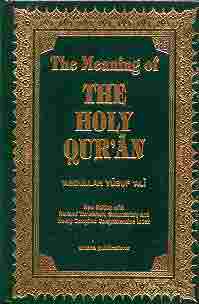
“5889. Great News: usually understood to mean the News or Message of the Resurrection.” Abdullah Yusuf Ali, The Holy Qur'n, Amana Corporation, 1989.💬 Interactive Chat
Access an intelligent analysis environment where you can explore texts, ask questions, and discover connections between ideas.
Open chat →