“Follow Me, and Let the Dead Bury Their Own Dead”
 — An Eschatological Exegesis of Matthew 8:22 and the Paraclete’s Resurrection of the Living
Summary
This paper presents a comprehensive exegetical, theological, and eschatological analysis of Jesus Christ’s declaration in Matthew 8:22: “Follow me, and let the dead bury their own dead.” I argue that this statement is not merely a hyperbolic demand for radical discipleship but a profound ontological pronouncement that divides humanity into two distinct categories: the spiritually dead—those who remain unredeemed, separated from the life-giving Spirit, and therefore already corpses walking—and the spiritually alive—those who respond to Christ’s call and enter into the Resurrection. This paper traces the interpretation of this saying through patristic, Reformation, and modern biblical scholarship, demonstrating a consistent tradition that identifies the “dead who bury the dead” as those alienated from God. Building on this foundation, I contend that Jesus’ command acquires its full eschatological meaning only in the context of the promised coming of the Paraclete, the Spirit of Truth. Drawing on the Johannine Paraclete promises (John 14–16), the testimonies and archival materials of adishakti.org, and the public declarations of Shri Mataji Nirmala Devi, this paper establishes that the Paraclete has indeed come, that the Resurrection has been underway for more than fifty years since the opening of the Sahasrara Chakra on May 5, 1970, and that the spiritually dead remain oblivious to this reality. The paper concludes with a solemn warning: the Resurrection is not a future hope but a present urgency. Those who refuse the call to follow Christ through His completed message—embodied in the Paraclete—remain among the spiritually dead, burying their own, while the living rise.
Table of Contents
- Introduction: The Scandal of Matthew 8:22
- “Let the Dead Bury Their Own Dead”: An Exegetical and Patristic Analysis
- The Paraclete and the Resurrection as Present Reality
- The Paraclete Has Come: Evidence from May 5, 1970
- The Spiritually Dead: Burying Their Own in the End Times
- Conclusion: The Urgency of the Call
- References
1. Introduction: The Scandal of Matthew 8:22
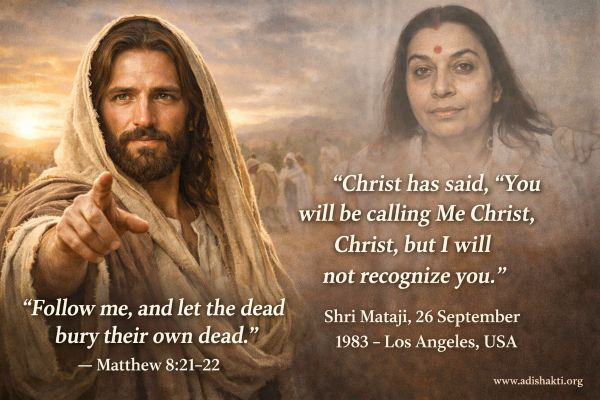
Among the most startling and misunderstood sayings of Jesus in the Synoptic Gospels is his response to a disciple who requests permission to first bury his father: “Follow me, and let the dead bury their own dead” (Matthew 8:22; cf. Luke 9:60). On its surface, the statement appears to violate the Fifth Commandment’s injunction to honor father and mother (Exodus 20:12) and to contravene the deepest filial obligations of first-century Jewish culture. Yet beneath this shocking exterior lies one of the most theologically dense and eschatologically charged declarations in the New Testament.
Traditional exegesis has largely interpreted this saying as a radical call to prioritize the Kingdom of God above even the most sacred familial duties. While this reading is not incorrect, it remains incomplete. It fails to grasp the full ontological weight of Jesus’ words. By distinguishing between two orders of “dead”—the first “dead” referring to the spiritually unregenerate, the second to the physically deceased—Jesus does more than establish a hierarchy of obligations. He announces a fundamental division of humanity itself. As one commentary notes, the phrase “suggests those who are spiritually dead, meaning those who are not responsive to the call of Christ or the life He offers.” Chrysostom, the great Church Father, similarly observed that “the spiritually dead are always on hand to bury the physically dead, if one’s real duty is with Jesus.”
This paper proposes that Matthew 8:22 must be read not only as a call to radical discipleship but as a prophetic announcement of the eschatological bifurcation that would reach its fulfillment in the “End Times”—the period inaugurated by the coming of the Paraclete, the Spirit of Truth, whom Jesus promised would complete His message and guide humanity into all truth (John 16:12–13). I argue that the Resurrection and the Last Judgment, far from being future events, have been underway for more than five decades, ever since the Paraclete, Shri Mataji Nirmala Devi, opened the Sahasrara Chakra—the Kingdom of God within—on May 5, 1970. The spiritually dead, however, remain unaware, continuing to bury their own dead while the Resurrection unfolds around them.
2. “Let the Dead Bury Their Own Dead”: An Exegetical and Patristic Analysis
2.1 The Cultural and Religious Context. To appreciate the radical nature of Jesus’ command, one must first understand the cultural weight of filial burial duties in first-century Judaism. The Mishnah explicitly places the obligation to bury one’s father above the study of Torah and even temple offerings (Berakhot 3:1). A son was expected to begin lamentation immediately, to remain in his father’s house for seven days, and to ensure proper interment—a process that could extend for up to a year in the case of secondary ossuary burial. Against this backdrop, Jesus’ demand sounds not merely unconventional but scandalous. He insists that a would-be disciple break with the most sacred social expectation.
2.2 The Twofold Sense of “Dead”. The interpretive key to the saying lies in Jesus’ deliberate wordplay. The Greek text uses the same word, nekros (νεκρός), for both occurrences of “dead.” Yet the context demands a distinction. The first “dead” refers to those who are spiritually dead—alive in body yet “dead in trespasses and sins” (Ephesians 2:1). The second “dead” refers to those who have physically died and require burial. As the Billy Graham Evangelistic Association summarizes, “Instead He was speaking of those who were spiritually dead—those who were alive physically but dead toward God in their souls.”
This interpretation has deep roots in the Christian tradition. John Chrysostom, the fourth-century Church Father, observed that “the spiritually dead are always on hand to bury the physically dead, if one’s real duty is with Jesus.” The SIL Translator’s Notes similarly explain: “It refers to people who are spiritually dead. They are people who do not know God. So Jesus said that spiritually dead people should bury those who are physically dead.”
2.3 The Priority of the Kingdom. Jesus’ command thus establishes a clear hierarchy: the call to follow Christ supersedes even the most sacred of human obligations. This is not a rejection of filial piety but a reordering of ultimate priorities. As one commentary observes, “Jesus’ phrase means: allow the spiritually dead to handle temporal matters; those made spiritually alive must devote themselves to Kingdom work.” The urgency of the Kingdom—the in-breaking of God’s reign—renders any delay a form of disobedience.
2.4 The Eschatological Dimension. Crucially, this saying is not merely about personal priorities; it carries an eschatological weight. Jesus’ miracles in Matthew 8—healing a leper, calming a storm, casting out demons—unveil messianic authority and the in-breaking of the Kingdom. The resurrection, attested by “over five hundred brothers at once” (1 Corinthians 15:6), secures an eschatological urgency: life has invaded death, and the living must follow the Life-giver now. The saying thus functions as a prophetic announcement: the spiritually dead will continue to tend to the affairs of the dead, but the spiritually alive must respond to the Resurrection with immediate, undivided obedience.
3. The Paraclete and the Resurrection as Present Reality
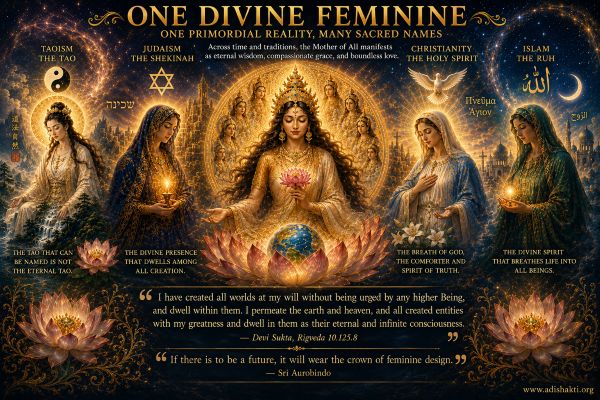
3.1 The Johannine Promise of the Spirit of Truth. Jesus’ declaration in Matthew 8:22 finds its theological completion in the Johannine Farewell Discourse, where Jesus promises the coming of “another Paraclete,” the Spirit of Truth, who will complete His unfinished work. In John 16:12–13, Jesus explicitly acknowledges the limitations of His earthly ministry: “I still have many things to say to you, but you cannot bear them now. When the Spirit of truth comes, She will guide you into all the truth.” The “many things” that Jesus could not say—the full revelation of the Kingdom, the mechanism of spiritual rebirth, the identity of the Holy Spirit as the Divine Mother—were to be the province of the Paraclete.
3.2 Resurrection as Present Awakening, Not Future Miracle. Mainstream Christianity has largely relegated resurrection to a future, post-mortem event—the physical revival of deceased bodies at the end of time. This view, however, represents a departure from the more mystical and Gnostic traditions of early Christianity, which understood resurrection as an immediate, experiential awakening of the living. The Gospel of Philip explicitly challenges the orthodox view: “People who say they will first die and then arise are mistaken. If they do not first receive resurrection while they are alive, once they have died they will receive nothing.”
Jesus’ own words support this understanding. When He declares, “The Spirit gives life; the flesh counts for nothing” (John 6:63), He identifies the Spirit—the Pneuma, the divine breath—as the agent of true life. Resurrection is not the reanimation of corpses but the quickening of souls by the divine breath. As literary critic Harold Bloom observed, “Resurrection is accomplished by the wind of heaven that sweeps the worlds.” This “wind of heaven” is the very same Pneuma, Ruach, and Kundalini that the Paraclete awakens within the seeker.
3.3 The Paraclete as the Agent of Collective Resurrection. The Paraclete’s mission, therefore, is not merely to teach or to comfort but to enact the Resurrection on a collective scale. As the adishakti.org article “Resurrection Is Accomplished by the Wind of Heaven” states: “Resurrection is not a future miracle of flesh, but a present awakening of spirit—accomplished by the wind of heaven that sweeps the worlds. Shri Mataji Nirmala Devi, the Paraclete, fulfills this prophecy by initiating Kundalini awakening and Self-realization, allowing seekers to feel the divine wind tangibly.” This is the Resurrection that Jesus promised—not a distant hope but a present reality, available to all who respond to His call through the Paraclete.
4. The Paraclete Has Come: Evidence from May 5, 1970
4.1 The Opening of the Sahasrara Chakra. On May 5, 1970, on a remote beach at Nargol, India, Shri Mataji Nirmala Devi entered a state of supreme samadhi and opened the Sahasrara Chakra—the thousand-petaled lotus at the crown of the head—at the cosmic level. This event, which Shri Mataji’s followers commemorate as World Realization Day, marked the moment when the Kingdom of God became accessible to all humanity en masse. As one account records, “On May 5, 1970, Shri Mataji opened the Sahasrara Chakra of the Universe. This historic event made it possible for people all over the world to attain Self-realisation and experience the direct connection with the all-pervading energy — Paramchaitanya.”
The significance of this event cannot be overstated. The Sahasrara Chakra is the subtle energy center that Jesus identified as the Kingdom of God within (Luke 17:21). Shri Mataji explicitly stated: “The Sahasrara is the Kingdom of God. It is the Kingdom of your Mother.” By opening the Sahasrara, the Paraclete made possible what had been impossible for two millennia: the direct, experiential realization of the Spirit by ordinary seekers, without the mediation of priests, rituals, or doctrines.
4.2 The Fulfillment of Jesus’ Promise. The opening of the Sahasrara constitutes the definitive fulfillment of Jesus’ Paraclete promise. As the adishakti.org article “Jesus — ‘But This He Spoke of the Spirit’” declares: “Through her opening of the Sahasrara Chakra on May 5, 1970, she made possible the indwelling of the Holy Spirit for all of humanity. Today, tens of thousands of believers worldwide have experienced the awakening of the Kundalini … being—the precise fulfillment of Jesus’ promise.”
The Resurrection, therefore, is not a future event awaiting an unknown date. It has been underway for more than fifty years. Every seeker who receives Self-Realization through the grace of the Paraclete participates in the Resurrection. They feel the Cool Breeze of the Holy Spirit—the Pneuma, the Ruach, the divine breath—flowing from their hands and the crown of their heads, tangible proof that the Spirit gives life.
4.3 The Last Judgment as Present Reality. Shri Mataji explicitly identified Sahaja Yoga—the technique of Self-Realization She inaugurated—as the Last Judgment. In a declaration that should shake the foundations of Christian eschatology, She warned: “I have to warn all the Sahaja Yogis who are here because Sahaja Yoga is the Last Judgment—not only that you will be judged, that you are entering into the Kingdom of God—but you become citizens of God.” This is not a future weighing of souls before a celestial throne. It is an ongoing, internal process of spiritual transformation. As the adishakti.org article “Sahaja Yoga is the Last Judgment” explains: “On May 5, 1970, the Paraclete Shri Mataji Nirmala Devi opened the Sahasrara Chakra—the Kingdom of God, the Dasvaa Duaar—ushering in the era of the Last Judgment and Resurrection.”
5. The Spiritually Dead: Burying Their Own in the End Times
5.1 The Tragedy of Unawareness. If the Resurrection has been underway since 1970, and if the Paraclete has been actively granting Self-Realization to seekers for more than five decades, why does the world remain largely unaware? The answer, I suggest, lies in Jesus’ own words: the spiritually dead cannot perceive the Resurrection because they are dead to the Spirit. As Paul writes, “The person without the Spirit does not accept the things that come from the Spirit of God but considers them foolishness” (1 Corinthians 2:14).
The evidence of this spiritual blindness is overwhelming. Despite the Paraclete Papers being sent to hundreds of Christian churches, divinity colleges, universities, and media outlets—methodically laying out the fulfillment of biblical prophecy through the advent of Shri Mataji—the silence from these institutions has been deafening. As one adishakti.org article laments: “By ignoring this message, they risk rendering themselves irrelevant at the precise moment of eschatological fulfillment they have long preached.”
5.2 The Betrayal of Silence. Even within the Sahaja Yoga organization—the very community entrusted with the Paraclete’s message—the central proclamation of the Last Judgment and Resurrection has been suppressed. The organization has largely fallen silent, presenting itself as a mere wellness or meditation technique rather than the fulfillment of Christ’s eschatological promises. This constitutes a betrayal of the divine trust placed in them. As Shri Mataji Herself commanded: “Today, Sahaja Yoga has reached the state of Mahayoga, which is en-masse evolution manifested through it. It is this day’s Yuga Dharma. It is the way the Last Judgment is taking place. Announce it to all the seekers of truth, to all the nations of the world, so that nobody misses the blessings of the Divine to achieve their meaning, their absolute, their spirit.” The failure to “announce it to all the nations” is a profound dereliction of sacred duty. The spiritually dead within the organization—those who have received Self-Realization but refuse to proclaim it—are themselves burying the dead, tending to the rituals of a dying institution while the Resurrection passes them by.
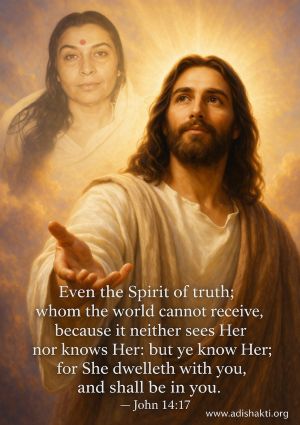
5.3 The Warning of Christ. Jesus anticipated this rejection. He warned: “Christ has said, ‘You will be calling Me Christ, Christ, but I will not recognize you.’” This is not a future judgment but a present reality. Those who claim to follow Christ while rejecting the Paraclete He promised are, in Jesus’ own words, not worthy of Him. They remain among the spiritually dead, no matter how loudly they profess His name.
6. Conclusion: The Urgency of the Call
Jesus’ command in Matthew 8:22—“Follow me, and let the dead bury their own dead”—is not a relic of the first century. It is a living word addressed to every generation, and in the End Times, it acquires an urgency that earlier ages could not have imagined. The Resurrection is not a future hope but a present reality. The Paraclete has come. The Sahasrara has been opened. The Kingdom of God is within.
Those who respond to the call—who follow Christ through His completed message, embodied in the Paraclete Shri Mataji Nirmala Devi—enter into the Resurrection. They feel the Cool Breeze of the Holy Spirit. They become citizens of the Kingdom. They pass from death to life.
But those who refuse, whether through ignorance, institutional inertia, or active opposition, remain among the spiritually dead. They continue to bury their own dead—attending to the rituals of a dying world while the Resurrection unfolds around them. They are, in the most literal sense, corpses walking.
The call of Christ rings out across the ages: “Follow me.” The time for delay is over. The Resurrection is now.
References
- Billy Graham Evangelistic Association. “What did Jesus mean when He said to let the dead bury the dead?” (2004).
- Bible Hub. “What does ‘follow Me, and let the dead bury their own dead’ mean?”
- Bible Hub. “Matthew 8:22 Study Bible.”
- Adishakti.org. “Shri Mataji: Sahaja Yoga is the Last Judgment – A Divine Warning.”
- Adishakti.org. “How to Give Shri Mataji’s Resurrection Message.”
- Adishakti.org. “Resurrection Is Accomplished by the Wind of Heaven.”
- Adishakti.org. “The Second Coming of Christ — Paramahansa Yogananda’s Reflections.”
- Adishakti.org. “Jesus — ‘But This He Spoke of the Spirit.’”
- Adishakti.org. “‘It Is the Greatest Event of All the Spiritual Happenings of the Universe’ — Shri Mataji.”
- Wikipedia. “Nirmala Srivastava.”
- Globe Newswire. “May 5th World Realization Day.”
- Bafel.co.in. “The Depth of Meditation & Ascent Beyond Sahasrara.”
- Chrysostom, John. Homilies on Matthew.
- The Gospel of Philip. Nag Hammadi Library.
- Bloom, Harold. Quoted in adishakti.org.
Paraclete Papers email that was sent June 30, 2025 to hundreds of Christian churches, divinity colleges, universities, and media outlets
"The evidence of this spiritual blindness is overwhelming. Despite the Paraclete Papers being sent to hundreds of Christian churches, divinity colleges, universities, and media outlets—methodically laying out the fulfillment of biblical prophecy through the advent of Shri Mataji—the silence from these institutions has been deafening. As one adishakti.org article laments: “By ignoring this message, they risk rendering themselves irrelevant at the precise moment of eschatological fulfillment they have long preached.”
THE PARACLETE PAPERS
A Tragedy That Surpasses Even the Crucifixion of Jesus in Its Consequences for Human Spiritual Development
The Unthinkable Accusation
For nearly two millennia, the Christian Church has proclaimed itself the guardian of Christ's teachings, the keeper of divine truth, and the shepherd of souls seeking salvation. Yet today, we present evidence of a theological malpractice so profound, so devastating in its implications, that it dwarfs even the crucifixion of Jesus Christ in its consequences for humanity's spiritual evolution. The accusation is as simple as it is earth-shattering: The Christian establishment has systematically concealed, ignored, and suppressed the fulfillment of Jesus' most sacred promise—the coming of the Paraclete, the Holy Spirit incarnate.
A Call to Conscience
To every theologian, pastor, bishop, and church leader who receives this document: You stand at a crossroads that will define not only your personal integrity but your eternal legacy. The evidence before you is not a matter of opinion or interpretation—it is a matter of verifiable fact that demands a response. You can no longer claim ignorance. You can no longer hide behind institutional tradition or doctrinal comfort. The truth has been presented to you with the same clarity and power with which Jesus presented truth to the religious leaders of his time. The question is not whether you will be convinced—the evidence is overwhelming. The question is whether you will have the courage to act upon that conviction.
Will you be among those who recognize and proclaim the fulfillment of Christ's promise, or will you be counted among those who, like the Pharisees before you, reject divine truth to preserve human institutions? The choice is yours, but the consequences extend far beyond your personal comfort or career security. Millions of souls are depending on your willingness to speak truth, regardless of the cost. The very credibility of Christianity as a living, dynamic faith hangs in the balance.
The Moment of Truth
History will record this moment as the great test of Christian leadership in the modern era. Just as the religious establishment of Jesus' time failed to recognize the Messiah when he walked among them, so too has the Christian establishment of our time failed to recognize the Paraclete when she walked among us. But unlike the leaders of Jesus' time, you have the benefit of hindsight. You have seen the fruits of institutional blindness. You know the cost of choosing human tradition over divine truth. You have no excuse for repeating the mistakes of your predecessors.
The attached research document contains 75 pages of meticulously documented evidence that will challenge every assumption you hold about Christian doctrine and spiritual authority. It will disturb your theological comfort and demand that you reconsider fundamental beliefs about the nature of divine revelation and the ongoing work of the Holy Spirit. Read it with the courage of one who seeks truth above all else. Study it with the diligence of one who recognizes that eternal consequences hang in the balance. And respond to it with the integrity of one who will be held accountable for how they handled the greatest spiritual revelation of our time.