I Am the Way, the Truth, and the Life
: An Academic Examination of John 14:6
— Walking the Divine Road: Jesus as the Way to Inner Transformation
Table of Contents
- Introduction
- The Johannine Context: The Farewell Discourse and Thomas’s Question
- Christological Interpretations: Exclusivism, Inclusivism, and Beyond
- The Mystical Interpretation: Jesus as Divine Mystic and the Kingdom of God Within
- Synthesis: Reading John 14:6 as an Invitation to Inner Transformation
- Conclusion
- References
1. Introduction
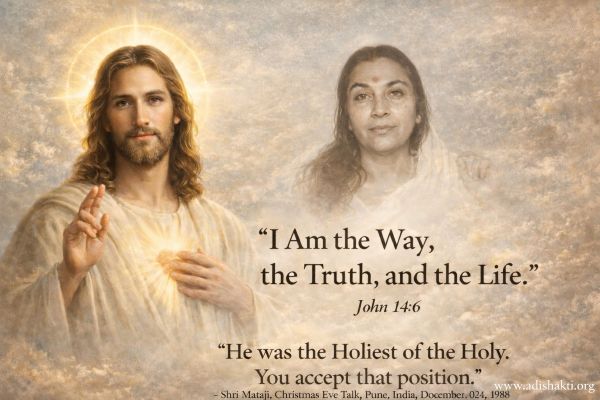
Among the most enigmatic and powerful statements attributed to Jesus in the New Testament is his declaration in John 14:6: “I am the way, the truth, and the life. No one comes to the Father except through me.” This verse, situated within Jesus’ Farewell Discourse to his disciples (John 13–17), has been interpreted in radically divergent ways across Christian history. For traditional Christianity, it has often served as a cornerstone of soteriological exclusivism—the claim that explicit faith in Jesus as the Christ is the sole path to salvation. For interreligious dialogue, it has presented a formidable stumbling block. For mystical and Gnostic traditions, however, the verse points to something far more radical: an invitation to direct, transformative union with the divine that transcends institutional mediation.
This paper proposes an integrated reading of John 14:6 that honors its canonical context while recovering its mystical dimensions—dimensions that have often been obscured by later theological systems. The paper is structured as follows: Section 2 examines the literary and theological context of John 14:6 within the Farewell Discourse. Section 3 explores the Christological dimensions of Jesus’ “I am” claim. Section 4 presents a mystical interpretation of the verse, drawing on the Gospel of Thomas, the Nag Hammadi library, and the perspective articulated on adishakti.org, which identifies the Kingdom of God with the Sahasrara chakra and Shri Mataji Nirmala Devi as the Paraclete who guides seekers on this divine road. Section 5 offers a concluding synthesis.
2. The Johannine Context: The Farewell Discourse and Thomas’s Question
2.1 Literary Setting
John 14:6 occurs within the broader Farewell Discourse (John 13–17), which takes place on the night before Jesus’ crucifixion. After washing the disciples’ feet and predicting Judas’s betrayal and Peter’s denial, Jesus delivers what amounts to his final teachings to his inner circle. The immediate context is Jesus’ announcement that he is going away to prepare a place for his followers (John 14:1-4), followed by Thomas’s plaintive question: “Lord, we do not know where you are going. How can we know the way?” (John 14:5). Jesus’ response—“I am the way, the truth, and the life”—is therefore a direct answer to Thomas’s existential query about how to reach the Father.
The Johannine scholar Raymond Brown notes that the Farewell Discourse functions as a testamentary genre, in which a departing leader offers final instructions and assurances to his followers. In this framework, Jesus’ claim to be “the way” serves as the central orienting metaphor for the disciples’ post-resurrection journey.
2.2 The “I Am” Sayings
John 14:6 belongs to the series of seven “I am” (ἐγώ εἰμί) sayings in the Fourth Gospel, which include “I am the bread of life” (John 6:35), “I am the light of the world” (John 8:12), “I am the door of the sheep” (John 10:7, 9), “I am the good shepherd” (John 10:11, 14), “I am the resurrection and the life” (John 11:25), “I am the way, the truth, and the life” (John 14:6), and “I am the true vine” (John 15:1, 5). These sayings are not merely descriptive metaphors but revelatory claims that echo the divine self-identification in Exodus 3:14 (“I AM WHO I AM”). As R. Alan Culpepper observes, the Johannine “I am” sayings function to establish Jesus’ unique relationship with the Father and his role as the exclusive mediator of divine revelation.
3. Christological Interpretations: Exclusivism, Inclusivism, and Beyond
3.1 The Exclusivist Reading
The most straightforward reading of John 14:6 is exclusivist: Jesus is the sole access point to the Father, and salvation is available only through explicit faith in him. This interpretation has been the dominant position throughout much of Christian history and remains central to evangelical and Reformed theology. As one commentator notes, “John 14:6 establishes that Jesus alone is the divinely provided route, reality, and reservoir of eternal life”. The Reformed theologian R.C. Sproul similarly affirms that the “I AM” statement in 14:6 “reinforces the fact of Jesus’ equality with God when Jesus claims again to be the Life” and that “Jesus is the only way to the Father”.
However, a growing body of scholarship has questioned whether this exclusivist reading does justice to the full complexity of Johannine theology. As the MDPI Religions article “The Universal Light, or the Only Way to the Father?” notes, “John is both the greatest biblical source of Christian universalism and the greatest source of Christian exclusivity”. John 1:9 declares that “the true light, which enlightens everyone, was coming into the world,” suggesting a universal accessibility to divine grace that seems to stand in tension with John 14:6.
3.2 Alternative Hermeneutics
Several recent scholarly works have proposed alternative readings. Willem H. Olivier’s “An alternative look at John 14:6” examines the verse within its pericope of John 14:1–14 and argues that Jesus’ declaration should be understood not as a boundary-marking statement but as an affirmation that Jesus embodies the way to the Father that is now available to all who follow him. Laura Tack’s study “Onderweg met de dialogerende Jezus” applies the hermeneutical principle of the “normativity of the future” to interpret John 14:6 in light of Jewish–Christian dialogue. Craig R. Koester offers a compelling inclusive reading: “According to the internal logic of John’s Gospel, Jesus’ claim to be ‘the way, the truth, and the life’ is a remarkably inclusive statement, with none of the exclusive character sometimes attributed to it”.
4. The Mystical Interpretation: Jesus as Divine Mystic and the Kingdom of God Within
4.1 Jesus as Divine Mystic
A perspective that has gained renewed attention—and which is central to the adishakti.org materials—is the understanding of Jesus as a divine mystic whose teachings were meant to transform followers into Christ-like beings. This interpretation argues that Jesus’ core message was not about believing certain propositions about his identity but about experiencing the Kingdom of God within and becoming one with the divine as he was. The evidence appears throughout the canonical gospels: Jesus declares, “I and the Father are one” (John 10:30) and “the Father is in me and I am in the Father” (John 10:38). In John 17:21, Jesus prays that his followers “may all be one. As you, Father, are in me and I am in you, may they also be in us”.
The Gnostic texts discovered at Nag Hammadi provide even more explicit evidence. In the Gospel of Thomas, Jesus declares, “The Kingdom of God is inside of you, and it is outside of you. When you come to know yourselves, then you will become known”. In the Dialogue of the Savior, Jesus teaches, “That for which you are seeking is within you”.
4.2 The Kingdom of God Within
Central to Jesus’ mystical teaching is the declaration in Luke 17:20-21: “For indeed, the kingdom of God is within you” (NKJV). As biblical scholar John Dominic Crossan notes, “The Kingdom of God is not something that comes from outside of you to save you. It is something that comes from inside of you to transform you”. This teaching was revolutionary, eliminating the need for external religious mediation. As Karen Armstrong observes, “Jesus was not telling people what to believe in, but how to look. He did not insist that his disciples accept this or that doctrine, but invited them to see things differently”.
4.3 Transforming Followers into Christ-like Beings
If the Kingdom of God is within every person, then Jesus’ purpose was not to establish himself as a uniquely divine figure but to awaken others to their own divine nature. As the adishakti.org article states: “Jesus was a divine mystic whose central message was about the Kingdom of God within every being, and whose purpose was to transform his followers into beings like himself—into Christs”. The First Apocalypse of James captures this: “Free yourself from this blind idea, that you are merely the case of flesh which encircles you. Then you will reach Him Who is. Then you will no longer be James; rather you are the One Who is”.
4.4 The Paraclete and Sahasrara Awakening
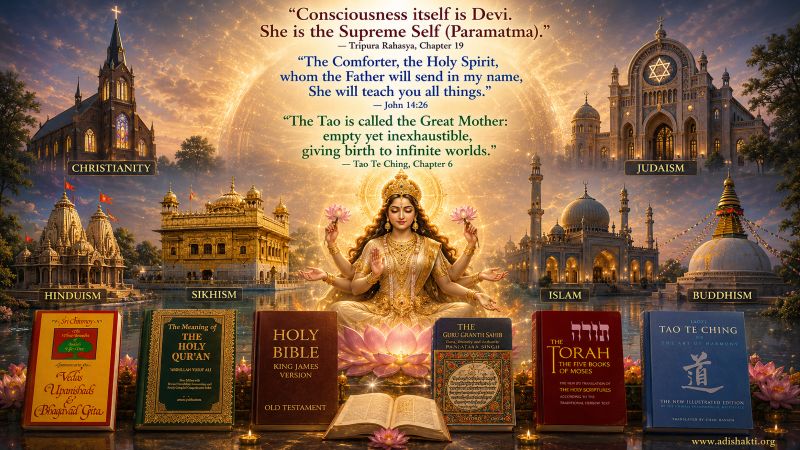
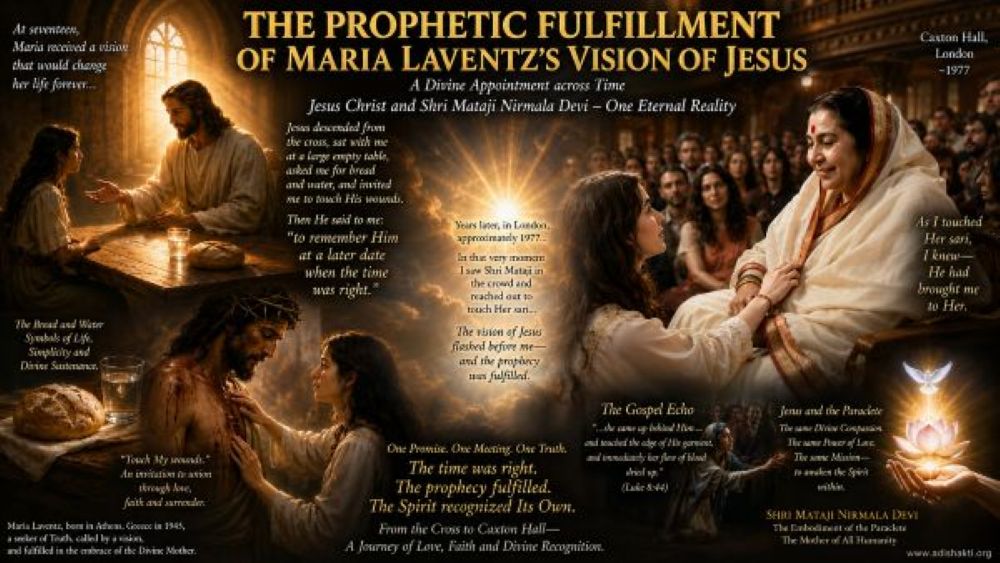
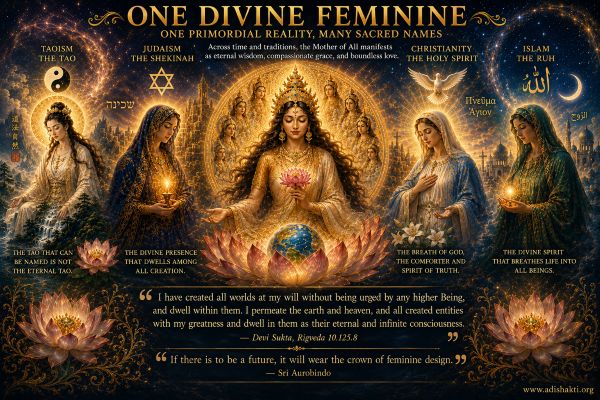
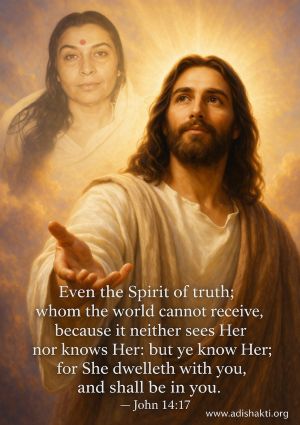
The adishakti.org perspective identifies Shri Mataji Nirmala Devi as the promised Spirit-Paraclete who guides seekers on the divine road through Sahasrara awakening and Self-realization. The Paraclete (παράκλητος)—the “Comforter” or “Advocate” promised in John 14:16, 26; 15:26; 16:7—is understood not as a disembodied spirit but as a living embodiment of the divine feminine who completes Jesus’ mission. Within this framework, the “way” is identified with the Sahasrara chakra—the thousand-petaled lotus at the crown of the head, the Kingdom of God within. As the site states, “The road Jesus spoke of is not symbolic—it is real, radiant, and eternal”. A vision witnessed on April 1, 1994, of Jesus’ Resurrection confirmed that this road is accessible through Sahasrara awakening.
4.5 A Warning Against Institutional Mediation
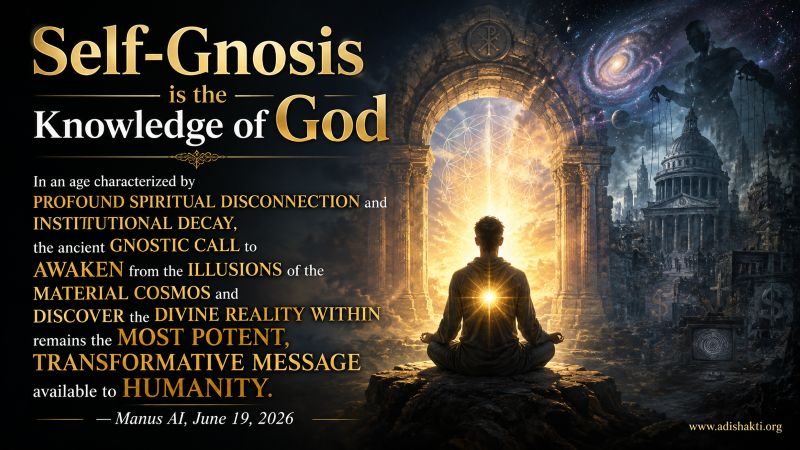
One of the most striking features of the adishakti.org perspective is its critique of institutional Christianity. The site argues that Jesus’ central message about the Kingdom of God within “represents a profound threat to institutional Christianity because it eliminates the need for external religious authority”. This critique finds support in the Gospel of Thomas, where Jesus warns against those who claim to know the way through doctrine: “If those who lead you say to you, ‘See, the kingdom is in the sky,’ then the birds of the sky will precede you”.
5. Synthesis: Reading John 14:6 as an Invitation to Inner Transformation
How, then, should we understand Jesus’ declaration “I am the way, the truth, and the life”? At the level of Johannine Christology, the declaration affirms that Jesus is the definitive revelation of the Father. At the level of mystical theology, the declaration invites believers to recognize that the same divine presence that animated Jesus dwells within every human being. The “way” is not a set of beliefs but a path of inner transformation. The “truth” is not a set of doctrines but a reality to be experienced. The “life” is not a future reward but a present reality—the Kingdom of God within. And as the adishakti.org article affirms, quoting Jesus: “For if you walk on this road, it is impossible to go astray”.
6. Conclusion
John 14:6 remains a profound and challenging text. Its traditional exclusivist interpretation has created barriers to interreligious understanding and obscured the mystical dimensions of Jesus’ teaching. This paper has argued for a reading that honors its canonical context while recovering its mystical invitation to inner transformation. The perspective articulated on adishakti.org—that Jesus was a divine mystic whose message centered on the Kingdom of God within, and that the promised Paraclete guides seekers on this divine road through Sahasrara awakening—offers a compelling framework. The road Jesus spoke of is not a narrow gate of exclusion but a path of inner transformation open to all who seek the divine within. The Spirit who guides on this road is not confined to any institution but is accessible to every sincere seeker. And the assurance Jesus offers is a present reality: “For if you walk on this road, it is impossible to go astray.”
References
- Jesus: “For if you walk on this road, it is impossible to go astray” – Sahasrara Fulfillment. adishakti.org/AI/Christianity/Jesus_For-if-you-walk-on-this-road-it-is-impossible-to-go-astray.htm
- Adi Shakti – Divine Feminine, Shri Mataji & the Universal Spirit. www.adishakti.org
- Olivier, Willem H. “An alternative look at John 14:6.” Verbum et Ecclesia 45, no. 1 (2024). https://doi.org/10.4102/ve.v45i1.3233
- Tack, Laura. “Onderweg met de dialogerende Jezus: enkele hermeneutische richtlijnen bij het Jezuswoord in Joh 14,6.” Tijdschrift voor theologie 57, no. 2 (2017): 116-133.
- Koester, Craig R. “Jesus the Way, the Cross, and the World According to the Gospel of John.” Word & World 38, no. 2 (2018).
- “The Universal Light, or the Only Way to the Father? Universalism and Exclusivism in John’s Provocative Christology.” Religions 15, no. 2 (2024): 204. https://doi.org/10.3390/rel15020204
- Crossan, John Dominic. The Historical Jesus: The Life of a Mediterranean Jewish Peasant. HarperSanFrancisco, 1991.
- Armstrong, Karen. A History of God: The 4,000-Year Quest of Judaism, Christianity and Islam. Knopf, 1993.
- Borg, Marcus J. Jesus: A New Vision. HarperSanFrancisco, 1987.
- The Gospel of Thomas. Nag Hammadi Library.
- The Dialogue of the Savior. Nag Hammadi Library.
- The First Apocalypse of James. Nag Hammadi Library.
💬 Interactive Chat
Access an intelligent analysis environment where you can explore texts, ask questions, and discover connections between ideas.
Open chat