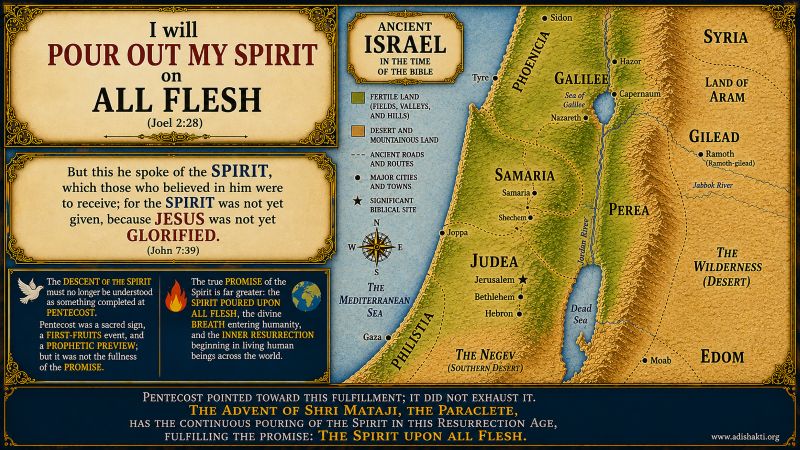

Isaiah 66:8 — Nation Born in a Day
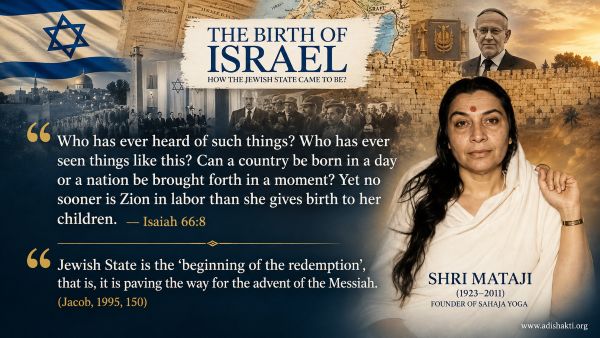
Jewish State is the 'beginning of the redemption', that is, it is paving the way for the advent of the Messiah.
(Jacob, 1995, 150)
The Impossibility of Jewish Survival Through Millennia of Exile and the Miraculous Rebirth of Israel as the Fulfillment of Divine Prophecy
Abstract
This paper examines one of the most staggering prophetic utterances in the entire canon of sacred scripture: Isaiah 66:8, in which the prophet declares that a nation shall be born in a single day and that Zion, scarcely in labor, shall bring forth her children. The paper argues that this verse constitutes a double impossibility — first, that a people dispersed and persecuted across the entire globe for nearly two millennia could survive with their religious and cultural identity intact; and second, that such a people could reconstitute themselves as a sovereign nation in the span of a single day. Both of these impossibilities were realized in the modern era, culminating in the declaration of the State of Israel on May 14, 1948. Drawing upon the Torah's own prophetic framework, the testimony of historians and philosophers, the words of Prime Minister Benjamin Netanyahu, and the eschatological significance of the Athalta Degeulah — the "beginning of the redemption" — this paper presents the rebirth of Israel as the most verifiable and extraordinary fulfillment of prophecy in recorded history, and a divine sign pointing toward the messianic age.
Table of Contents
- Introduction: The Prophetic Enigma of Isaiah 66:8
- The First Impossibility: A People Scattered Yet Unbroken
- The Prophetic Architecture of Isaiah 66:8
- The Second Impossibility: A Nation Born in a Single Day
- The Ingathering of the Exiles: Zion Brings Forth Her Children
- Ezekiel's Valley of Dry Bones: The Two-Stage Resurrection
- The Athalta Degeulah: The Beginning of the Redemption
- The Messianic Age and the Spiritual Breath
- Conclusion: The Materialization of Prophecy
- References
1. Introduction: The Prophetic Enigma of Isaiah 66:8
There are moments in history when the gap between the humanly conceivable and the divinely accomplished becomes so vast, so luminous with the light of the impossible, that even the most resolute skeptic is compelled to pause. The rebirth of the State of Israel on May 14, 1948, is such a moment. It stands not merely as a political event of the twentieth century but as the most precisely documented fulfillment of prophetic scripture in all of human history — a fulfillment that the prophet Isaiah articulated with breathtaking specificity more than two and a half thousand years before it occurred.
Isaiah 66:8 poses its question not as an inquiry but as an exclamation of wonder: "Who has ever heard of such things? Who has ever seen things like this? Can a country be born in a day or a nation be brought forth in a moment? Yet no sooner is Zion in labor than she gives birth to her children." The rhetorical structure of the verse — a series of incredulous questions followed by the thunderclap of their affirmative answer — mirrors the very nature of the event it prophesies. The prophet himself seems astonished by what he is compelled to declare. He frames the coming event as something unprecedented, something that violates the ordinary laws of historical becoming, something that belongs to the category of the miraculous rather than the merely remarkable.
This paper argues that Isaiah 66:8 encapsulates two distinct and equally staggering impossibilities. The first is the impossibility of a people surviving millennia of global dispersion, systematic persecution, and cultural assault with their religious and national identity not merely intact but vibrantly alive. The second is the impossibility of a nation being reconstituted as a sovereign political entity in the span of a single calendar day. Both of these impossibilities were realized in the modern era, and their realization constitutes a prophetic fulfillment of a precision and magnitude that demands serious scholarly engagement. [1]
2. The First Impossibility: A People Scattered Yet Unbroken
2a. The Sociological Norm: How Nations Die in Exile
To appreciate the depth of the miracle, one must first understand the sociological and historical norm against which it stands. The history of human civilization is, in large measure, a history of the dissolution of peoples. When a nation is uprooted from its homeland, stripped of its political sovereignty, dispersed among foreign cultures, and subjected to generations of persecution, the outcome is almost invariably the same: assimilation, cultural erosion, and eventual disappearance. The Assyrians, the Babylonians, the Philistines, the Hittites — all of these ancient peoples, once powerful and culturally distinct, have vanished from the earth, absorbed into the vast anonymity of subsequent civilizations.
The mechanisms of this dissolution are well understood by historians and sociologists. Without a territorial homeland to anchor collective identity, without a shared political structure to enforce cultural norms, and without the daily reinforcement of a common language and landscape, a diaspora community typically undergoes a process of gradual assimilation within three to five generations. The children of exiles speak the language of their host nation; their grandchildren marry into the host culture; their great-grandchildren retain only the most vestigial memories of their ancestral origins. This is the normal trajectory of exile. [2]
2b. The Jewish Exception: Two Thousand Years of Defiance
Against this backdrop of historical normality, the survival of the Jewish people stands as a phenomenon so extraordinary that it has arrested the attention of thinkers across every age and tradition. Following the destruction of the Second Temple by the Romans in 70 CE and the subsequent suppression of the Bar Kokhba revolt in 135 CE, the Jewish people were scattered across the known world in what became the longest and most geographically extensive diaspora in recorded history. For nearly two thousand years, they lived as minorities in lands that were not their own, subject to the laws and often the hostility of host nations.
During this period, the Jewish people endured an almost unbroken succession of catastrophes. They were expelled from England in 1290, from France in 1306 and 1394, from Spain in 1492, from Portugal in 1497, and from countless other territories across Europe and the Middle East. They were subjected to pogroms in Russia and Eastern Europe, to the blood libels of the medieval period, to the systematic humiliations of the dhimmi status in Muslim lands, and ultimately to the Holocaust — the most industrialized attempt at genocide in human history, which claimed the lives of six million Jews, one third of the entire Jewish population of the world. [3]
And yet, through all of this, the Jewish people did not disappear. They did not assimilate. They did not cease to be a distinct people with a distinct religion, a distinct language of sacred text, a distinct calendar, a distinct cuisine, a distinct set of laws and customs, and a distinct collective memory oriented toward a specific piece of land in the eastern Mediterranean. This survival is, by any rational historical standard, impossible. It is a phenomenon without parallel in the annals of human civilization.
The scholar Leschzinsky, writing in his work The Jewish Dispersion, captured the extraordinary nature of this reality: "When we scan the diaspora of Jewry over the entire globe and throughout the entire civilized world, we are surprised to see that this Nation, which is almost the most ancient in the world, is in truth the youngest in terms of the land under its feet and the sky above its head. As a result of the relentless persecutions and forced expulsions, most Jews are but recent newcomers to their respective lands of residence. Ninety percent of the Jewish people have lived in their new homes for no more than 50 or 60 years! They are dispersed throughout over 100 lands on all five continents." [4]
2c. The Torah's Own Prophecy of Survival
What makes the Jewish survival even more theologically remarkable is that the Torah itself prophesied it with extraordinary specificity. The very same texts that predicted the exile also predicted the survival. In Leviticus 26:33, the divine voice declares: "And you, I will scatter among the nations, at the point of My drawn sword, leaving your country desolate and your cities in ruins." Yet this same passage, in verses 44-45, contains the equally explicit promise: "Yet in spite of this, when they are in the land of their enemies, I will not reject them or abhor them so as to destroy them completely, breaking my covenant with them. I am the Lord their God."
The Torah thus presents the exile not as the end of the Jewish story but as a chapter within it — a chapter of suffering and wandering that would ultimately give way to restoration. The covenant between God and Israel, established with Abraham and renewed with Moses, was not contingent upon the people's continued residence in the land. It was an eternal covenant, and the God who made it was the God of history, who would preserve His people through the furnace of exile until the appointed time of their return. [5]
2d. The Testimony of Philosophers and Historians
The impossibility of Jewish survival has not gone unnoticed by those outside the tradition. Some of the most penetrating observations have come from thinkers who had no theological stake in affirming the miraculous character of Jewish history.
Mark Twain, the great American writer and self-acknowledged agnostic, penned the following in his 1899 essay "Concerning the Jews", published in Harper's Magazine: [6]
Twain's question — "What is the secret of his immortality?" — is not rhetorical. It is a genuine inquiry that has no satisfactory secular answer. The mechanisms of sociological survival that historians typically invoke — strong communal institutions, religious cohesion, endogamy — are necessary but not sufficient explanations. Many other peoples have possessed these characteristics without surviving comparable periods of persecution and dispersion.
Blaise Pascal, the seventeenth-century French mathematician and philosopher, was even more direct. When King Louis XIV of France asked him for a proof of the supernatural, Pascal reportedly answered without hesitation: "Why the Jews, your Majesty, the Jews!" For Pascal, the very existence and survival of the Jewish people was itself the most compelling evidence of divine intervention in human history. [7]
3. The Prophetic Architecture of Isaiah 66:8
3a. The Hebrew Text and Its Rhetorical Force
Isaiah 66:8 is, in its original Hebrew, a masterpiece of prophetic rhetoric. The verse opens with two parallel questions — "Mi shama' kazot? Mi ra'ah ka'elleh?" ("Who has heard such a thing? Who has seen things like these?") — that establish the unprecedented nature of what is to follow. These are not questions that invite a negative answer. They are rhetorical exclamations of astonishment, designed to prepare the listener for a declaration that defies all prior experience.
The key phrase — "hayuchal eretz beyom echad im yivaled goy pa'am achat" — asks whether a land can be born in a single day, whether a nation can be brought forth all at once. The Hebrew word goy (nation) is significant here. It is the standard term for a fully constituted political entity, a sovereign people. The prophecy is not speaking of a cultural or religious community but of a nation in the full political sense — a state with recognized sovereignty, borders, and international standing. [8]
The verse then delivers its thunderclap: "ki chalah gam yaldah Tzion et baneha" — "for Zion was scarcely in labor when she gave birth to her children." The word chalah (travailed, was in labor) is the same word used for the pains of childbirth, and the imagery is deliberately chosen. A nation, like a child, normally requires a long gestation period — centuries of cultural development, political struggle, and territorial consolidation. But here, the birth is instantaneous. The labor and the delivery are simultaneous. The nation emerges complete, fully formed, in a single moment of divine decree.
3b. The Imagery of Zion in Labor
The image of Zion as a mother in labor is one of the most powerful and tender metaphors in all of prophetic literature. Throughout the Hebrew scriptures, Zion — the spiritual and geographical center of the Jewish people — is personified as a woman, a mother, a bride. In Isaiah 49:14-16, Zion cries out: "The Lord has forsaken me, the Lord has forgotten me." And God responds: "Can a mother forget the baby at her breast and have no compassion on the child she has borne? Though she may forget, I will not forget you! See, I have engraved you on the palms of my hands; your walls are ever before me."
This maternal imagery is not merely poetic ornament. It encodes a theological claim of the deepest significance: that the relationship between God and Israel, between the divine and the people of the covenant, is as intimate and as indestructible as the bond between a mother and her child. The labor of Zion in Isaiah 66:8 is therefore not merely the political process of state formation; it is the travail of a divine love that has been waiting, through centuries of exile and suffering, for the moment of its fulfillment. [9]
3c. The Broader Prophetic Constellation
Isaiah 66:8 does not stand alone. It is the culminating verse of a vast prophetic constellation that spans the entire Hebrew scriptural canon. The Torah itself, in Deuteronomy 30:1-5, lays the foundational promise: "When all these blessings and curses I have set before you come on you and you take them to heart wherever the Lord your God disperses you among the nations... then the Lord your God will restore your fortunes and have compassion on you and gather you again from all the nations where he scattered you. Even if you have been banished to the most distant land under the heavens, from there the Lord your God will gather you and bring you back." [10]
This promise is remarkable for its scope. It does not speak of a return from a single nation of exile, as in the Babylonian captivity. It speaks of a gathering "from all the nations," from "the most distant land under the heavens." This is a description of a global diaspora and a global ingathering — precisely what the modern Aliyah has accomplished, with Jews returning to Israel from over 100 countries across every continent of the earth.
Isaiah 11:12 adds a further dimension: "He will raise a banner for the nations and gather the exiles of Israel; he will assemble the scattered people of Judah from the four quarters of the earth." Jeremiah 30:3 provides the covenantal framework: "The days are coming, declares the Lord, when I will bring my people Israel and Judah back from captivity and restore them to the land I gave their ancestors to possess." And Ezekiel 37:21-22 supplies the political specificity: "I will take the Israelites out of the nations where they have gone. I will gather them from all around and bring them back into their own land. I will make them one nation in the land, on the mountains of Israel." [11]
Together, these prophecies form a coherent and precise blueprint for the events of the twentieth century. They describe not a vague spiritual restoration but a concrete, geopolitical reality: the gathering of a globally dispersed people into a reconstituted sovereign state in the land of their ancestors. The specificity of this blueprint — its insistence on a worldwide gathering, its emphasis on the restoration of political sovereignty, its identification of the specific land — is what makes its fulfillment so theologically significant.
4. The Second Impossibility: A Nation Born in a Single Day
4a. May 14, 1948: The Hour of Fulfillment
On the afternoon of Friday, May 14, 1948, at precisely 4:00 PM local time, David Ben-Gurion stood before the Jewish People's Council in the Tel Aviv Museum and read aloud the Declaration of the Establishment of the State of Israel. The British Mandate over Palestine had expired at midnight. In the space of a single afternoon, a people that had been stateless for nearly two millennia became a sovereign nation. [12]
The declaration itself is a document of extraordinary historical and theological resonance. It begins by invoking the unbroken connection of the Jewish people to the Land of Israel across the millennia: "The Land of Israel was the birthplace of the Jewish people. Here their spiritual, religious and political identity was shaped. Here they first attained to statehood, created cultural values of national and universal significance and gave to the world the eternal Book of Books." It then traces the thread of that connection through the long centuries of exile, through the Zionist movement, through the Balfour Declaration of 1917, through the Holocaust, and to the present moment of restoration.
Within eleven minutes of the declaration, the United States extended de facto recognition to the new state. The Soviet Union followed within three days. A nation had been born in a day — not metaphorically, not approximately, but with a literalness that is almost breathtaking in its precision. Isaiah had asked, "Can a country be born in a day?" On May 14, 1948, the answer was given: yes. [13]
4b. The Miraculous Survival of the Newborn State
The birth of Israel was immediately followed by an event that, in any rational calculation, should have ended it. Within hours of the declaration, the armies of Egypt, Jordan, Syria, Iraq, and Lebanon invaded the new state from all sides. The nascent Israeli Defense Forces were outgunned, outnumbered, and outequipped. The Arab armies had tanks, artillery, and air power. The Israelis had largely improvised weapons, a population that included hundreds of thousands of Holocaust survivors who had arrived in the country barely able to walk, and a military force that had never operated as a unified national army.
By every military calculation, Israel should have been destroyed in its first days of existence. Instead, it survived, and more than survived — it prevailed. The War of Independence, which lasted until 1949, ended with Israel not only intact but controlling more territory than the UN partition plan had allocated to it. The survival of the newborn state in the face of this assault is itself a fulfillment of the prophetic promise. As the prophet Zechariah had declared: "Then the Lord will go out and fight against those nations, as He fights on a day of battle" (Zechariah 14:3). [14]
4c. The Prophetic Precision of the Fulfillment
The precision of the fulfillment of Isaiah 66:8 is not limited to the bare fact of statehood being declared in a single day. It extends to the specific circumstances of that declaration. The verse speaks of Zion being "in labor" — a state of intense, painful struggle — and then immediately giving birth. This imagery precisely captures the historical situation of May 1948. The Jewish people were in the most acute state of labor imaginable: they had just emerged from the Holocaust, they were surrounded by hostile armies, they were operating under an expiring British Mandate that had often worked against their interests, and they were deeply divided internally about whether to declare statehood at all.
David Ben-Gurion himself later recalled the agonizing uncertainty of those final hours before the declaration. Many of his closest advisers counseled delay, fearing that the Arab armies would destroy the new state before it could consolidate itself. The American State Department was actively pressuring the Jewish leadership not to declare independence. The odds against the declaration were enormous. And yet, in the midst of this labor — this agonizing, dangerous, uncertain travail — Zion gave birth. The nation emerged, complete and sovereign, in a single afternoon. [15]
5. The Ingathering of the Exiles: Zion Brings Forth Her Children
5a. The Waves of Aliyah: A Return from 100 Nations
The birth of the state was only the beginning of the prophetic fulfillment. The second half of Isaiah 66:8 — "Zion gives birth to her children" — speaks not merely of the establishment of a state but of the return of the people. The children of Zion, scattered across the earth, were to come home. And come home they did, in waves of immigration that constitute one of the most remarkable demographic phenomena in modern history.
In the first three years of statehood alone (1948-1950), the Jewish population of Israel nearly doubled, as survivors of the Holocaust from the displaced persons camps of Europe, Jews fleeing persecution in Arab lands, and communities from Yemen, Iraq, and elsewhere poured into the new state. The Jewish Virtual Library records that the population of Israel grew from approximately 806,000 in 1948 to over 9.8 million by 2024, with Jews constituting approximately 7.2 million of that total. [16]
By 2024, according to Israeli government statistics, approximately 45% of the world's total Jewish population lived in Israel — a figure that represents a transformation of global Jewish demography without historical precedent. In 1948, Jews in Israel constituted only 6% of world Jewry. In the space of three generations, the center of gravity of the Jewish world had shifted from the diaspora to the land of Israel. The prophecy of Deuteronomy 30:3-4, that God would gather His people "from all the nations where he scattered you," was being fulfilled before the eyes of the world. [17]
5b. Netanyahu's Prophetic Declaration of 1998
Perhaps no single statement by a contemporary political leader has captured the theological significance of this ingathering with greater force than the words spoken by Prime Minister Benjamin Netanyahu at the Feast of the Tabernacles Conference of the International Christian Embassy Jerusalem on October 5, 1998. Standing before an audience of Christian Zionists from around the world, Netanyahu made a declaration that transcended the language of politics and entered the realm of prophecy: [18]
Netanyahu's words are remarkable for several reasons. They come not from a theologian or a religious leader but from the head of government of a secular democratic state — a man trained as a military officer and a political scientist. Yet in this moment, Netanyahu speaks as a prophet, recognizing in the demographic transformation of his own nation the unmistakable signature of divine fulfillment. His statement — "If this is not the materialization of prophecy, then nothing is" — is not a theological argument but a historical observation. He is pointing to a fact: that for the first time in nearly two thousand years, the majority of the Jewish people would live in the Jewish land. And he is identifying that fact for what it is: the fulfillment of prophecy.
This declaration by Netanyahu echoes a similar statement he made in a 1998 interview with The New Yorker, in which he noted: "It's true that, for the first time, the majority of Jews will be here in Israel sometime in the next decade. It'll happen, maybe even under my watch." The convergence of these statements — from a secular political leader, in multiple contexts — underscores the degree to which the ingathering of the exiles has become a recognized historical reality, not merely a theological aspiration. [19]
5c. The Ten Tribes and the Universal Ingathering
The prophetic promise of the ingathering extends beyond the two tribes of Judah and Benjamin — the communities that constituted the historical Jewish diaspora — to encompass the Ten Tribes of Israel, who were dispersed by the Assyrian Empire in 722 BCE and whose fate has been a subject of theological speculation for millennia. Isaiah 11:12 explicitly speaks of gathering "the exiles of Israel" and "the scattered people of Judah" — a distinction that implies the return of both the northern and southern kingdoms.
The modern ingathering has seen the return of communities whose connection to the ancient Israelite tribes is attested by both tradition and, increasingly, by genetic research. The Beta Israel community of Ethiopia, who maintained Jewish practice in complete isolation from the rest of world Jewry for over two thousand years, were airlifted to Israel in Operations Moses (1984) and Solomon (1991). The Bnei Menashe of northeastern India, who claim descent from the tribe of Manasseh, have been recognized by the Israeli Chief Rabbinate and have been making aliyah since the 1990s. The Bnei Anusim — descendants of Jews forcibly converted to Christianity in Spain and Portugal in the fifteenth century — are returning to Judaism and to Israel in growing numbers. [20]
These are not marginal phenomena. They are the fulfillment of Isaiah's vision of a universal ingathering — a gathering not merely of the known and acknowledged Jewish communities of Europe and the Middle East, but of the hidden children of Zion from the farthest corners of the earth. The prophet's words — "Zion gives birth to her children" — are being realized in their fullest possible scope.
6. Ezekiel's Valley of Dry Bones: The Two-Stage Resurrection
No prophetic text illuminates the meaning of the modern Jewish restoration more vividly than Ezekiel's vision of the Valley of Dry Bones in Ezekiel 37. In this vision, the prophet is transported to a valley filled with the bleached, scattered bones of the dead. God asks him: "Son of man, can these bones live?" And Ezekiel answers, with profound theological humility: "Sovereign Lord, you alone know." [21]
God then commands Ezekiel to prophesy over the bones, and as he does, a great rattling begins. The bones come together, bone to bone. Sinews appear upon them, then flesh, then skin. But there is no breath in them. They are physically reconstituted — a body without life. Then God commands Ezekiel to prophesy to the breath, to call upon the four winds to breathe life into the slain. And the breath enters them, and they live, and they stand upon their feet — "an exceedingly great army."
The divine interpretation of the vision follows immediately: "Son of man, these bones are the whole house of Israel. They say, 'Our bones are dried up and our hope is gone; we are cut off.' Therefore prophesy and say to them: 'This is what the Sovereign Lord says: My people, I am going to open your graves and bring you up from them; I will bring you back to the land of Israel.'" (Ezekiel 37:11-12)
The vision describes a two-stage resurrection. The first stage is physical: the bones come together, the body is reconstituted, but there is no breath. This corresponds to the physical restoration of the Jewish people to their land — the establishment of the state, the ingathering of the exiles, the rebuilding of cities and institutions. The second stage is spiritual: the breath of God enters the reconstituted body, and it becomes a living being. This corresponds to the spiritual renewal of the nation — the turning of the people toward God, the recognition of the Messiah, the inauguration of the eschatological age. [22]
The modern State of Israel, in this reading, represents the first stage of the resurrection. The dry bones have come together. The body has been reconstituted. The nation lives, breathes, and fights. But the second stage — the spiritual breath, the ruach of God — is the deeper fulfillment that the prophets point toward, the ultimate consummation of the divine plan for Israel and for humanity.
7. The Athalta Degeulah: The Beginning of the Redemption
In the vocabulary of Jewish mystical and messianic theology, the events of 1948 are understood as the Athalta Degeulah — the "beginning of the redemption." This concept, developed by the Mizrachi movement and embraced by many streams of Orthodox and Religious Zionist Judaism, holds that the establishment of the State of Israel is not merely a political event but the first act of the final divine drama — the opening movement of the eschatological symphony that will culminate in the full messianic redemption. [23]
The theological framework for this understanding is provided by the Torah itself. In Genesis 49:1, Jacob calls his sons together and declares: "Gather together so I can tell you what will happen to you in the latter days." The Hebrew phrase acharit hayamim — "the latter days" or "the end of days" — is a technical term in biblical prophecy that refers to the messianic era, the final period of history when God's plans come to their climax. By using this phrase, Jacob signals that his prophecies about his sons — including the prophecy of Judah's scepter in verse 10 — find their ultimate fulfillment in the end times. The rebirth of Israel marks the beginning of this prophesied "latter days" period. [24]
The Yemenite Jewish community, whose response to the news of Israel's establishment in 1948 has been documented by the historian Tudor Parfitt, illustrates the nuanced theological understanding that many traditional Jewish communities brought to the event. Parfitt writes in The Road to Redemption: The Jews of the Yemen, 1900-1950: "Many knew its Prime Minister was not the Messiah... Few literally thought that Messianic Redemption had come, although many sensed no doubt that it might be at hand." This discernment — recognizing the establishment of the state as a divine sign while understanding that the full messianic redemption was still to come — reflects a sophisticated theological reading of the prophetic texts. [25]
8. The Messianic Age and the Spiritual Breath
The prophetic tradition of Israel does not end with the physical restoration of the nation. It points beyond the political and demographic miracle to a deeper transformation — a spiritual renewal that will encompass not only Israel but all of humanity. Isaiah 66, the very chapter that contains the prophecy of the nation born in a day, concludes with a vision of universal worship and divine glory: "From one New Moon to another and from one Sabbath to another, all mankind will come and bow down before me, says the Lord." (Isaiah 66:23) The birth of the nation is not the end of the story; it is the beginning of a new chapter in the divine-human relationship.
The prophet Ezekiel, in his vision of the dry bones, speaks of God putting His ruach — His Spirit, His breath — into the reconstituted nation: "I will put my Spirit in you and you will live, and I will settle you in your own land." (Ezekiel 37:14) This promise of the divine Spirit is the second stage of the resurrection, the fulfillment that goes beyond the physical ingathering to the spiritual awakening of the people. It is the promise of the Ruach HaKodesh — the Holy Spirit — descending upon the restored nation and inaugurating the age of universal spiritual renewal. [26]
The ruach — the divine breath, the cool wind of the Spirit — is the same reality that the New Testament calls the Pneuma and that the Quran calls the Ruh. It is the universal spiritual energy that animates all life, that connects the human soul to the divine source, and that, in the eschatological vision of the prophets, will one day fill the earth as the waters cover the sea. The restoration of Israel is, in this reading, not merely a national event but a cosmic one — the first act of a divine drama whose ultimate purpose is the spiritual transformation of all humanity.
9. Conclusion: The Materialization of Prophecy
The survival of the Jewish people through nearly two millennia of global dispersion and the sudden rebirth of Israel as a sovereign nation on May 14, 1948, stand as twin pillars of historical impossibility. They are the living testament to the truth of Isaiah 66:8. The nation was indeed born in a day. Zion brought forth her children from the four corners of the earth. And the majority of the Jewish people are, for the first time since the Second Temple period, living in the Jewish land.
The prophetic architecture of the Hebrew scriptures — from the covenantal promises of the Torah to the visions of Isaiah, Jeremiah, and Ezekiel — constitutes a blueprint of extraordinary precision for the events of the modern era. The fulfillment of this blueprint is not a matter of theological interpretation alone; it is a matter of historical record, documented in the archives of nations, in the demographic statistics of populations, and in the living reality of a state that should not exist but does.
Prime Minister Netanyahu's declaration at the Feast of the Tabernacles in 1998 — "If this is not the materialization of prophecy, then nothing is" — is not the statement of a mystic or a theologian. It is the sober assessment of a statesman who has looked at the facts of his nation's history and recognized in them the unmistakable signature of the divine. When a secular political leader, trained in the disciplines of military strategy and political science, finds himself compelled to invoke the language of prophecy to describe the reality he observes, the weight of that testimony is considerable.
The question that Isaiah posed — "Who has ever heard of such things? Who has ever seen things like this?" — has been answered. We have heard of such things. We have seen things like this. A nation was born in a day. A people scattered to the ends of the earth returned to their ancient homeland. The dry bones of a civilization that the world had consigned to the dust of history rose, clothed themselves in flesh, and stood upon their feet. And the labor of Zion, long and agonizing as it was, gave birth to her children.
The prophet's astonishment, encoded in the rhetorical questions of Isaiah 66:8, is now our astonishment — the astonishment of those who have lived to see the impossible become the actual, the prophecy become the headline, the divine word become the historical fact. We stand at the threshold of the Athalta Degeulah, the beginning of the redemption, watching the ancient promises of God unfold before our eyes with a precision and a beauty that no human mind could have invented and no human power could have accomplished.
The secret of Jewish immortality, which so perplexed Mark Twain and so awed Blaise Pascal, is no secret at all. It is written in the Torah, declared by the prophets, and confirmed by the events of our own age. It is the faithfulness of the God who made a covenant with Abraham, who spoke through Moses, who breathed through Isaiah, and who, in the fullness of time, brought His people home. "Yet no sooner is Zion in labor than she gives birth to her children." (Isaiah 66:8)
Summary: The Prophetic Blueprint and Its Fulfillment
| Prophetic Text | The Divine Promise | The Historical Fulfillment |
|---|---|---|
| Leviticus 26:33, 44-45 | Israel will be scattered among the nations, yet God will not destroy them completely or break His covenant with them. | The Jewish people survived nearly 2,000 years of global dispersion, persecution, and the Holocaust, maintaining their distinct identity and covenant faith. |
| Deuteronomy 30:1-5 | God will gather Israel again from all the nations, even from the most distant lands under the heavens. | Since 1948, Jews have returned to Israel from over 100 countries on every continent, constituting 45% of world Jewry by 2024. |
| Isaiah 11:12 | God will gather the exiles of Israel and the scattered people of Judah from the four quarters of the earth. | The modern Aliyah has brought Jews from Europe, Africa, Asia, the Americas, and Oceania — literally from the four corners of the earth. |
| Isaiah 66:8 | A nation will be born in a single day; Zion, scarcely in labor, will give birth to her children. | On May 14, 1948, the State of Israel was declared, and recognized by the United States within eleven minutes — a nation born in a single afternoon. |
| Jeremiah 30:3 | God will bring both Israel and Judah back from captivity and restore them to the land of their ancestors. | Jews of all tribal and communal backgrounds — Ashkenazi, Sephardi, Mizrachi, Ethiopian, Yemenite — have been reunited in the land of Israel. |
| Ezekiel 37:11-14 | The dry bones of the whole house of Israel will be raised from their graves and brought back to the land; God will put His Spirit in them. | The physical restoration of Israel (Stage 1) has been accomplished. The spiritual renewal (Stage 2) — the infusion of the divine ruach — is the eschatological fulfillment still unfolding. |
| Genesis 49:1 (Acharit HaYamim) | Jacob prophesies events that will occur in the "latter days," the messianic era when God's plans reach their climax. | The rebirth of Israel marks the beginning of the prophesied "latter days" — the Athalta Degeulah, the beginning of the redemption. |
References
[1] "Regathering of Jews back to Israel will occur right before the return of the Messiah." Adishakti.org. Manus AI Research Articles. Available at adishakti.org.[2] "7 Wonders of Jewish History." SimpleToRemember.com. Judaism Online. Includes the Leschzinsky citation on Jewish dispersion across 100 lands.
[3] "7 Wonders of Jewish History — Anti-Semitism Section." SimpleToRemember.com. Documents the full list of expulsions and persecutions from England (1290) through the Holocaust.
[4] Leschzinsky. The Jewish Dispersion (Hebrew). Cited in "7 Wonders of Jewish History." SimpleToRemember.com.
[5] "The Messianic Prophecy of Israel's Regathering and the Divine Advent of Shri Mataji." Adishakti.org. Manus AI Research Articles. Section 2.4: Deuteronomy's Covenantal Promise.
[6] Twain, Mark. "Concerning the Jews." Harper's Magazine, September 1899. Full essay available at Ohr.edu.
[7] "Wonders of Jewish History." Aish.com. Cites Pascal's response to King Louis XIV: "Why the Jews, your Majesty, the Jews!"
[8] "Isaiah 66:8 — The Sign of Sudden National Birth." Adishakti.org. Section 3: The Sign of Sudden National Birth. Discusses the Hebrew text and its connection to the 1948 fulfillment.
[9] "Who Has Heard of Such A Thing?" Jewish Voice Ministries International. April 28, 2020. Discusses the imagery of Zion in labor and the miraculous birth of Israel.
[10] "The Messianic Prophecy of Israel's Regathering." Adishakti.org. Section 2.4: Deuteronomy 30:1-5, the Covenantal Promise.
[11] "The Messianic Prophecy of Israel's Regathering." Adishakti.org. Sections 2.1–2.3: Isaiah 11:12, Jeremiah 30:3, Ezekiel 37:21-22.
[12] "Declaration of Israel's Independence 1948." The Avalon Project, Yale Law School. Full text of the Israeli Declaration of Independence, May 14, 1948.
[13] "Creation of Israel, 1948." Office of the Historian, U.S. Department of State. Documents the U.S. recognition of Israel within eleven minutes of the declaration.
[14] "Who Has Heard of Such A Thing?" Jewish Voice Ministries International. April 28, 2020. Includes the account of Gershon Salomon and the miraculous survival of the newborn state.
[15] "David Ben-Gurion and the Fulfillment of Bible Prophecy." Messianic Bible. Discusses the circumstances of the declaration and its prophetic significance.
[16] "Immigration to Israel." Jewish Virtual Library. Comprehensive statistics on waves of Aliyah from 1882 to the present.
[17] "Israel at 78: A Statistical Glimpse." Gov.il, Israeli Government Statistics, April 20, 2026. States that approximately 45% of world Jewry now lives in Israel.
[18] Netanyahu, Benjamin. Speech at the Feast of the Tabernacles Conference, International Christian Embassy Jerusalem, October 5, 1998. Cited in "Regathering of Jews back to Israel." Adishakti.org.
[19] "Benjamin Netanyahu: The Outsider." The New Yorker, May 25, 1998. Quotes Netanyahu: "It's true that, for the first time, the majority of Jews will be here in Israel sometime in the next decade."
[20] "The Messianic Prophecy of Israel's Regathering." Adishakti.org. Section 3: 1948 — The Prophetic Fulfillment. Discusses the return from over 100 countries.
[21] "The Rebirth of Israel in Light of Ezekiel 37: Part One." Friends of Israel Gospel Ministry, October 20, 2017. Detailed exegesis of Ezekiel 37 and its two-stage resurrection.
[22] "The Resurrection of National Life (Ezekiel 37:11-14)." Adishakti.org. Section 4: The Resurrection of National Life. Discusses the two-stage interpretation of Ezekiel's vision.
[23] "Birth of Israel 1948: Crisis of Athalta Degeulah." Adishakti.org. Manus AI Research Articles. Full analysis of the Athalta Degeulah concept and its application to 1948.
[24] "The Foundational Prophetic Phrase: Acharit HaYamim (Genesis 49:1)." Adishakti.org. Section 1: The Foundational Prophetic Phrase.
[25] Parfitt, Tudor. The Road to Redemption: The Jews of the Yemen, 1900-1950. Brill Academic Publishers, August 1997, p. 180. Cited in "Birth of Israel 1948: Crisis of Athalta Degeulah." Adishakti.org.
[26] "The Cool Breeze (Pneuma) and Its Equivalence to Ruach in Judaism, Christianity, and Islam." Adishakti.org. Manus AI Research Articles. Full analysis of the Ruach HaKodesh as the divine breath promised in Ezekiel 37:14.