Birth of a New Species through Kundalini Awakening
Self-Realization, Second Birth, and the Evolution of Human Consciousness in the Teachings of Shri Mataji Nirmala DeviAbstract
This paper re-examines the idea of a “new species” through the lens of Kundalini awakening and Self-Realization. It argues that the phrase is most coherent when used not as a claim of biological speciation but as a theological and phenomenological description of a new mode of human consciousness. The primary interpretive framework is the teaching of Shri Mataji Nirmala Devi, in which the awakening of Kundalini culminates at the Sahasrara and effects a “second birth” into Spirit-consciousness and collective awareness. This framework is placed in comparative dialogue with Jesus’ teaching on being “born of the Spirit” in John 3, Yatri’s language of an emerging “new species,” Jean Hardy’s account of mystical transformation, Mircea Eliade’s discussion of the inward and gradually realized Kingdom of God, and Walter Mercado’s language of a transition from belief to personal knowing.
The paper proposes that the strongest form of the “new species” thesis is therefore anthropological, spiritual, and eschatological rather than genetic: the body remains biologically human, while consciousness is said to cross a threshold from ego-centered identity to realized Spirit. What is “new” is not the organism but the state of awareness, the mode of knowing, the structure of identity, and the capacity for direct spiritual experience. Within the confessional framework of Adishakti.org, Shri Mataji is further interpreted as the Paraclete and MahaDevi whose historical mission universalizes a state once associated principally with saints, sages, prophets, and mystics.
1. Introduction: What Could “New Species” Mean?
The language of a coming “new species” is rhetorically powerful because it suggests a discontinuity with ordinary human existence. Yet the phrase becomes academically unstable if biological evolution, mystical transformation, theological rebirth, and cultural change are treated as though they were the same process. The original formulation surrounding this theme drew together Yatri’s Unknown Man, Walter Mercado’s Aquarian spirituality, Jean Hardy’s study of mysticism, Mircea Eliade’s interpretation of the Kingdom of God, and the teachings of Shri Mataji Nirmala Devi. These materials are genuinely comparable, but only after the nature of the comparison is carefully defined.
The decisive distinction is between biological speciation and transformation of consciousness. Biological speciation concerns populations, heredity, reproductive isolation, and genetic divergence. None of the theological or mystical sources considered here establishes such a process. Their language instead concerns inward awakening, transformed perception, liberation, rebirth, new identity, direct knowledge, and the emergence of a different quality of human being.
Accordingly, this paper uses “new species” as a disciplined metaphor for a transformed humanity. In this sense, the proposal is neither that Homo sapiens has ceased to exist nor that a new taxonomic species has been scientifically demonstrated. The proposal is that human beings may undergo a transition so radical in identity, perception, moral orientation, and spiritual awareness that the metaphor of a new species becomes intelligible.
2. Method, Terminology, and Academic Guardrails
This paper proceeds comparatively. It distinguishes four levels of discourse: (1) textual evidence from cited authors and scriptures; (2) phenomenological claims concerning mystical or vibratory experience; (3) theological interpretation within Sahaja Yoga and Adishakti.org; and (4) scientific claims, which require independent empirical support and cannot be inferred from theological language alone.
This distinction is necessary because terms such as “evolution,” “energy,” “awakening,” “consciousness,” and “species” carry different meanings across biology, psychology, philosophy, and religion. The present argument does not claim that Kundalini awakening has been established as a mechanism of genetic evolution. It asks instead whether the language of spiritual evolution provides a coherent comparative framework for interpreting the sources under consideration.
3. Yatri and the Evolutionary Metaphor

Yatri’s Unknown Man supplies the paper’s most explicit “new species” vocabulary. The book imagines the emergence of a radically transformed human type and associates that transformation with dormant capacities, altered consciousness, and the recovery of a “natural state” previously exemplified by exceptional spiritual figures. Its language deliberately combines evolutionary imagery with mystical speculation.
“The supposed appearance of a totally new being heralds a new age of consciousness.”Yatri, Unknown Man, Simon & Schuster, 1988.
The most important phrase here is not “species” but “new age of consciousness.” This shifts the interpretive center away from anatomy and genetics and toward the structure of awareness. Yatri’s “new being” is described in terms of capacities, perception, and realization rather than reproductive isolation or genome-level divergence. His biological language therefore functions most fruitfully as an evolutionary metaphor.
Read in this way, Yatri’s thesis becomes structurally comparable to the Sahaja Yoga claim that a latent faculty already present within human beings can be awakened, producing a new mode of experience. The comparison does not prove that Yatri predicted Sahaja Yoga. It shows that both systems imagine human development as involving the activation of presently under-realized capacities.
4. Kundalini as Latent Human Potential
Within the teaching of Shri Mataji, Kundalini is understood as a dormant spiritual power situated at the base of the subtle system. Its awakening is said to initiate Self-Realization: the ascent of this power through the subtle centers culminates at the Sahasrara, where individual consciousness is opened to a higher, transpersonal awareness. In Sahaja Yoga terminology, the seeker becomes capable of experiencing thoughtless awareness, vibratory perception, and eventually collective consciousness.
The conceptual importance of Kundalini for the “new species” argument is straightforward: the transformative principle is already present within the human being. The “new” human is therefore not created by replacing the old organism but by awakening a latent dimension within it. This resembles the logic of a seed, which does not become a different organism by external substitution but unfolds a potential already contained within its structure.
This model also clarifies why the language of evolution is used in Sahaja Yoga. The change is presented as a transition in the mode of human awareness: from identification with body, thought, memory, social conditioning, and ego toward identification with the Spirit or Self. Whether one accepts that metaphysical account or not, it is internally coherent as a theory of spiritual development.
5. John 3 and the Logic of Second Birth
The Gospel of John supplies a particularly strong comparative structure because Jesus distinguishes ordinary birth from another kind of birth. In John 3, Nicodemus is told that entry into the Kingdom of God requires being born “from above” or “again,” and more specifically being “born of the Spirit.” The contrast is categorical: what is born from flesh belongs to the order of flesh, while what is born from Spirit belongs to the order of Spirit.
This distinction provides a theological grammar for the “new species” idea without requiring biological speciation. A human being may remain physically the same individual while undergoing a second birth that changes the fundamental center of identity. The body remains human; the subject is transformed in relation to Spirit.
This reading also makes sense of the wind imagery in John 3:8. The Greek pneuma can signify wind, breath, or spirit. Sahaja Yoga interprets the felt “Cool Breeze” associated with Self-Realization as a tangible correlate of this pneumatic rebirth. That identification is a theological interpretation, not a conclusion compelled by the Johannine text; nevertheless, it gives the Sahaja Yoga claim a precise scriptural framework: rebirth is not merely moral reform or intellectual assent but an experienced transformation.
6. The Kingdom of God as Interior Transformation
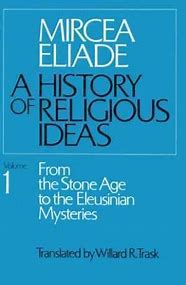
Mircea Eliade’s discussion of the Kingdom of God is important because it emphasizes a form of eschatology that is neither reducible to political revolution nor dependent upon spectacular catastrophe. In the synoptic sayings he discusses, the Kingdom may be compared to seed, growth, maturation, and leaven. Its arrival is therefore capable of being understood as organic, interior, and progressive.
This provides another bridge to the idea of spiritual evolution. A transformed humanity need not appear through sudden biological replacement. It may emerge through a gradual diffusion of a new mode of consciousness. The mustard seed and leaven metaphors are especially suggestive in this regard: something small, hidden, and interior becomes transformative at a larger scale.
Within Shri Mataji’s teaching, the Sahasrara functions as the experiential locus of this Kingdom. The Kingdom is not merely a postmortem location but a state of divine union realized within consciousness. The “new species,” in this framework, consists of persons in whom the Kingdom has become inwardly operative.
7. Mysticism, Higher Self, and Direct Knowing

Jean Hardy’s treatment of mysticism helps explain why this transition can be described as a change of identity rather than simply a change of belief. Mystical traditions repeatedly report that ordinary personality is not the deepest level of the self. The mystic encounters an interior reality—the Higher Self, soul, Spirit, Atman, or divine ground—that becomes more fundamental than the everyday ego.
Hardy’s comparative point is especially relevant: across cultures, mystical experience often includes the conviction that the deeper Self participates in or is grounded in an Absolute reality. This means the transformation is epistemological as well as ontological. The seeker no longer merely believes propositions about God; the seeker claims to know through direct experience.

Walter Mercado’s language of moving from belief toward personal knowing belongs to the same family of ideas. Although Mercado’s astrological framework is distinct from Sahaja Yoga, the comparison is useful at the level of religious anthropology: both privilege direct inward knowledge over inherited belief alone.
8. From Exceptional Mystic to Collective Self-Realization
The most distinctive claim in Shri Mataji’s teaching is not that mystical transformation exists. Virtually every major religious tradition already contains saints, prophets, contemplatives, seers, sages, and realized figures. The distinctive claim is that a state once associated with exceptional individuals can become collectively accessible.
This is where the “new species” metaphor gains its strongest social meaning. A Buddha, a Christ, a Nanak, a Ramana, or another realized mystic may represent an extraordinary individual attainment. A collective transformation would represent something different: not merely the existence of enlightened persons but the emergence of a population whose normal mode of life is increasingly structured by Self-knowledge, inner silence, compassion, and transpersonal awareness.
In this interpretation, the evolutionary step is a process of democratization. What was rare becomes transmissible; what was esoteric becomes accessible; what belonged to isolated ascetics or mystics becomes potentially available within ordinary social life.
It is: “A state of consciousness historically regarded as exceptional is being presented as collectively accessible to ordinary human beings.”
9. Biological Species or Spiritual Species?
The distinction can now be stated precisely. Biological speciation requires criteria that are not supplied by the theological materials considered here. By contrast, a “spiritual species” is a metaphor for a stable and recognizable mode of human existence. The following comparison clarifies the difference.
| Question | Biological Speciation | Spiritual “New Species” |
|---|---|---|
| What changes? | Genetic population structure and reproductive relations. | Identity, awareness, perception, values, and spiritual experience. |
| What remains continuous? | Continuity is assessed biologically across populations. | The individual remains biologically Homo sapiens. |
| Primary evidence | Genetics, population biology, reproductive isolation, anatomy. | Phenomenology, testimony, transformation, contemplative practice, theology. |
| Meaning of “evolution” | Change in inherited biological traits over generations. | Development from ego-centered awareness toward Spirit-consciousness. |
| Meaning of “birth” | Biological reproduction. | Second birth, awakening, Self-Realization. |
Once this distinction is maintained, the central claim becomes far more coherent. There is no need to force spiritual language into scientific categories. The “species” metaphor can remain radical while being intellectually disciplined: it indicates a qualitative transformation in what it means to be human.
10. Shri Mataji, the Paraclete, and the MahaDevi
Within Sahaja Yoga and the theological interpretation advanced by Adishakti.org, Shri Mataji Nirmala Devi is identified with the Paraclete or Spirit of Truth promised in the Johannine tradition and with the MahaDevi or Adi Shakti of the Hindu theological tradition. This identification is confessional and comparative rather than a conclusion universally accepted by Christian or Hindu scholarship.
Its relevance to the present paper lies in function. The Paraclete is associated with teaching, guiding, reminding, and leading into truth; the MahaDevi is associated with the primordial divine power through which creation, transformation, and liberation occur. Shri Mataji’s historical role is interpreted as the point at which these functions converge in the collective awakening of Kundalini.
Thus the claim is not merely that she teaches about spiritual evolution. The stronger Sahaja Yoga claim is that she serves as the catalyst of that evolution by awakening the latent Kundalini and making Self-Realization accessible on a mass scale. In this framework, the “new species” is inseparable from the Paraclete’s work because the new state of consciousness is not achieved solely through intellectual instruction; it is initiated through spiritual awakening.
11. Characteristics of the “New Species”
If the phrase is to have analytical value, the transformed human must be defined by more than exalted language. Within the framework examined here, at least six characteristics recur.
| Characteristic | Description |
|---|---|
| Self-Realization | A claimed direct awareness of the deeper Self or Spirit rather than exclusive identification with ego and social conditioning. |
| Thoughtless Awareness | A meditative state in which consciousness remains alert while discursive mental activity becomes quiet. |
| Vibratory Awareness | The Sahaja Yoga claim that subtle states can be perceived as sensations, especially on the palms and at the fontanelle. |
| Collective Consciousness | A shift from radically private identity toward the felt interrelatedness of human beings. |
| Moral Reorientation | A movement away from domination, greed, and egoic self-assertion toward compassion, balance, and responsibility. |
| Experiential Knowledge | Preference for direct spiritual verification over belief accepted solely on authority. |
These features explain why the metaphor of a new species is attractive. They describe not merely a person with new opinions but a person whose relation to self, others, knowledge, and the sacred has been reorganized.
12. Critical Assessment
The argument has both strengths and limitations. Its principal strength is its ability to synthesize otherwise disparate sources around a clear anthropological question: Can human beings undergo a transformation so deep that they become, in an existential sense, a different kind of human being? Yatri, Hardy, Eliade, Mercado, Johannine rebirth, and Sahaja Yoga all become intelligible within that shared question.
The principal limitation is evidentiary. Mystical testimony cannot by itself establish a biological or neurological theory, and theological identification cannot substitute for historical demonstration. Claims that Kundalini directly alters the parasympathetic nervous system, creates a new biological type, or proves a particular eschatological identity require evidence beyond analogy. A rigorous paper must therefore resist the temptation to describe metaphysical claims as settled scientific fact.
Yet this limitation does not render the spiritual thesis meaningless. Human history repeatedly uses “new man,” “new creation,” “rebirth,” “illumination,” “liberation,” and “awakening” to describe radical anthropological transformation. The phrase “new species” belongs to that family of metaphors. Properly disciplined, it offers a powerful way to describe a shift from inherited identity toward realized consciousness.
13. Conclusion: The Old Humanity Inwardly Reborn
The “birth of a new species” need not mean the disappearance of Homo sapiens or the emergence of a genetically distinct population. It signifies something simultaneously more interior and more radical: the birth, within Homo sapiens, of a new state of human consciousness. The body remains human; consciousness crosses a threshold.
In this interpretation, Kundalini is the dormant possibility of that transition, Self-Realization is its awakening, the Sahasrara is its consummation, and “second birth” is its theological name. What was formerly exceptional—the realization attributed to saints, prophets, sages, and mystics—is presented by Shri Mataji as becoming collectively accessible. The novelty therefore lies not in the creation of another biological organism but in the democratization of a previously exceptional state of consciousness.
John 3 gives this transformation its clearest Christian grammar: one birth belongs to flesh; another belongs to Spirit. Yatri supplies the language of a “new being” and a “new age of consciousness.” Hardy supplies the phenomenology of the deeper Self. Eliade supplies the image of the Kingdom as something inward, gradual, and transformative. Mercado supplies the cultural language of moving from inherited belief toward personal knowing. Shri Mataji’s teaching gathers these motifs into a single evolutionary scheme centered on Kundalini awakening.
Within the confessional interpretation of Adishakti.org, this collective awakening is further identified with the mission of the Paraclete and MahaDevi. That theological identification goes beyond what the comparative sources can independently prove, but it supplies the internal logic by which Sahaja Yoga understands its historical significance.
The “new species” is not a new body but a new center of consciousness; not the replacement of humanity but its inward rebirth; not another organism, but the old humanity awakened to Spirit.
References
- Yatri. Unknown Man. Simon & Schuster, 1988.
- Mercado, Walter. Beyond the Horizon. Time Warner, 1997.
- Hardy, Jean. A Psychology with a Soul. Routledge & Kegan Paul, 1987.
- Eliade, Mircea. A History of Religious Ideas, Vol. 1. University of Chicago Press, 1985.
- New Testament, Gospel of John, chapter 3; Gospel of John, chapters 14–16.
- New Testament, Luke 17:20–21; Mark 4:26–32; Matthew 13:33.
- Shri Mataji Nirmala Devi. Teachings on Kundalini awakening, Self-Realization, collective consciousness, Sahasrara, and second birth, as presented in Sahaja Yoga and Adishakti.org materials.
- Adishakti.org. Comparative theological materials on Shri Mataji, the Paraclete, MahaDevi, Kundalini, and the Kingdom of God.
Interactive Chat
Explore the paper, compare sources, and examine the theological argument in greater depth.
Open chat