
The Sword and the Mother: Guru Gobind Singh's Veneration of the Divine Feminine (Shri Bhagauti / Bhagawati / Durga)
The evidence presented in this paper—drawn from the Guru's own autobiography, his canonical prayer, his major poetic compositions, and the historical record—leaves no room for doubt: Guru Gobind Singh held a profound and central devotion to the Divine Mother. He placed Her first in the order of invocation in the Ardas, above even Guru Nanak. He confessed to worshipping Mahakal Kalka in his previous life. He sought the blessing of Jag Mata (the World Mother) for completing his sacred scripture. He composed over 550 verses of exquisite poetry celebrating the exploits of the Goddess Chandi. He performed a year-long Chandi Yagna at Naina Devi. He identified the Creator of the universe with the name Bhavani. And he addressed the Divine Mother as "O Mother Eternal," "Preserver of Universe," "Light of the World-scape," and "almighty, the Mother."
"Pritham bhagauti simari kai gur nanak lain dhiai"
— Guru Gobind Singh, Var Sri Bhagauti Ji Ki
Abstract
This paper presents a comprehensive textual and historical analysis of the writings attributed to the tenth Sikh Guru, Guru Gobind Singh (1666–1708), demonstrating beyond reasonable doubt that he was a devoted worshiper of the Divine Mother, addressed variously as Shri Bhagauti, Bhagawati, Chandi, Durga, Kalka, and Bhavani. Drawing upon the Dasam Granth, the Guru Granth Sahib, the daily Sikh prayer (Ardas), the Guru's autobiography (Bachitra Natak), and the three major Chandi compositions, this study extracts, translates, and analyzes every significant quote in which the Guru invokes, praises, or worships the Divine Feminine. The paper further situates these writings within the broader theological framework of Sikh monotheism, arguing that Guru Gobind Singh understood the Goddess not as a rival to the formless Akal Purakh but as the manifest creative power (Shakti) of the One Supreme Being. The evidence—ranging from the Guru's personal autobiography to the canonical prayer recited by every Sikh daily—leaves no doubt that the Divine Mother occupied a position of supreme importance in the Guru's spiritual life, martial philosophy, and literary legacy.
Table of Contents
- Introduction: The Question of the Divine Feminine in Sikhism
- The Primal Invocation: Bhagauti in the Sikh Ardas
- Autobiographical Testimony: Worship of Mahakal Kalka at Hemkunt
- The Blessing of the Mother: Invocation for the Granth Sahib
- The Goddess Narratives: Chandi Charitar and Chandi di Var
- The Chandi Yagna at Naina Devi: Historical Evidence
- Deconstructing Bhagauti: Etymology, Symbolism, and Theology
- The Chandi di Var: A Verse-by-Verse Adoration of the Mother
- Bhavani as the Creator: The Chaubis Avtar Testimony
- The Khanda: Creation Through the Feminine Principle
- Deh Shiva Bar Mohe: The Warrior's Prayer to the Mother
- Aykaa Mayee: The One Mother in Guru Nanak's Japji Sahib
- The Guru Granth Sahib: God as Both Father and Mother
- Scholarly Perspectives and the Oxford Handbook Testimony
- Conclusion: The Irrefutable Devotion
- References
1. Introduction: The Question of the Divine Feminine in Sikhism
The theology of Sikhism is unequivocally monotheistic, centered on the worship of a single, formless, and transcendent Creator known as Waheguru or Akal Purakh (the Timeless Being). The opening declaration of the Guru Granth Sahib, the Mool Mantar, proclaims: Ik Onkar—"There is One God." This foundational principle has led many modern Sikhs to reject any association between their faith and the worship of Hindu deities, including the Goddess. Yet a compelling and voluminous body of evidence within the Dasam Granth—the scripture traditionally ascribed to Guru Gobind Singh—reveals a deep, explicit, and sustained veneration for the feminine aspect of the divine.
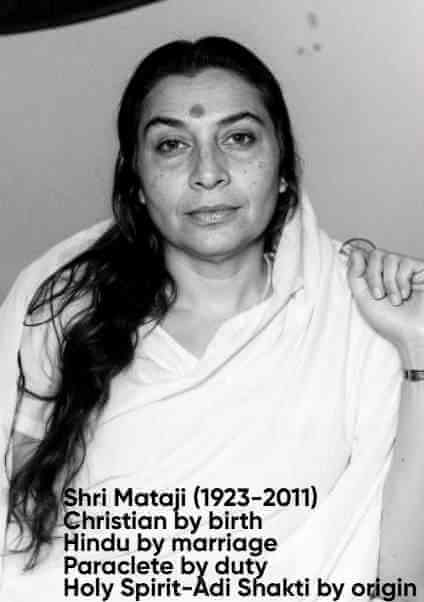
This paper seeks to resolve any lingering doubt by presenting and analyzing the extensive scriptural and historical evidence demonstrating that Guru Gobind Singh was, indeed, a worshiper of the Divine Mother, whom he invoked as Bhagauti, Chandi, Durga, Kalka, and Bhavani. Far from being a contradiction of Sikh monotheism, this devotion represents a sophisticated theological synthesis, wherein the fierce and nurturing power of the Goddess is understood as the manifest energy (Shakti) of the singular, unmanifested God. As Shri Mataji Nirmala Devi observed: "Shri Guru Nanak has talked about the Goddess, the Devi. The first sentence of His book is Adya. Adya is the Adi Shakti." [1]
2. The Primal Invocation: Bhagauti in the Sikh Ardas
The most undeniable and public evidence of the Guru's devotion is found at the very beginning of the Ardas, the canonical prayer recited daily by Sikhs worldwide. The word Ardas literally means "prayer," but the traditional Sikh Ardas has come to represent a specific form of prayer recited in every Gurdwara program—before the Guru is transported or brought into Prakaash, just before the hukam is taken, and again when the Guru is set into Sukhasaan. [2]
The core of the Ardas is an invocation which Guru Gobind Singh recited at the beginning of his epic poem Chandi di Var. In it, he calls upon the power of Adi Shakti in the form of Pritham Bhagauti. Crucially, the prayer does not begin with an address to God or even the first Guru, Nanak. Instead, it begins with a supplication to the Divine Mother:
Ardaas: Ek Onkar Waheguru Ji Ki Fateh. Sri Bhagauti Ji Sahae. Var Shri Bhagauti Ji Ki Patshahi Dasvin
Translation: God is One. All victory is of the Wondrous Guru. May the respected Shri Bhagauti (Divine Mother) help us! Ode of the respected Shri Bhagauti recited by the Tenth Guru. [3]
Pritham bhagauti simari kai gur nanak lain dhiai
Translation: First call up Bhagauti (The Divine Mother) in your mind, then meditate on Guru Nanak. [4]
This opening stanza, taken directly from Guru Gobind Singh's composition Var Sri Bhagauti Ji Ki, establishes an unambiguous spiritual hierarchy for the purpose of invocation. Before remembering the founder of the faith, Guru Nanak, the devotee is instructed to first remember Bhagauti. This placement is not accidental; it is a deliberate theological statement about the primacy of the creative, divine power—the Mother—from whom all else flows. As the adishakti.org commentary observes: "So Guru Gobind Singh kept Shri Bhagauti (Maha Devi) over and above Nanak and the other Sikh Gurus. Such was his highest esteem towards the Divine Mother that he composed the Ardas seeking supplication from Her. Thus all Sikhs, unknowingly or knowingly, are actually worshipping and seeking the blessings of Shri Bhagauti (The Divine Mother) everyday." [5]
3. Autobiographical Testimony: Worship of Mahakal Kalka at Hemkunt
In his autobiography, Bachitra Natak (The Wondrous Drama), Guru Gobind Singh provides a direct and personal account of his spiritual practices in a previous life. He describes a period of intense asceticism at Hemkunt Sahib, a sacred site high in the Himalayas, where his devotion was directed specifically to the Divine Mother in her fierce, primordial form:
Hemkunt parbat hai jahan, sapt sring sobhat hai tahan
Vaha hum anik tapasya sadhi, Mahakal Kalka aaradhi
Translation: In my previous life, I did lot of penance at Hemkunt, and worshipped the primordial Mother (Mahakal Kalka). [6]
The linguistic evidence here is decisive. The term aaradhi specifically denotes the worship of a female deity—it is not a generic term for meditation or remembrance but a precise word for devotional worship directed at a goddess. The compound name Mahakal Kalka is itself profoundly significant: Mahakal (the Great Time, or Lord of Death) is masculine, while Kalka (the feminine form of Kali, the Dark Mother) is feminine. As the SikhiWiki encyclopedia notes, Guru Gobind Singh "designated God by a composite name Mahakal-Kalika (Mahakal which is masculine is juxtaposed to Kalika which is feminine)." [7] This is not a metaphorical allusion but a direct autobiographical statement of devotional practice: the Guru explicitly states that his spiritual power was cultivated through the worship of the primordial and timeless Mother.
The scholar V. Wadher, in "Guru Govind Rai (Singh) in Line Of Shri Rama And Shri Krishna," elaborates: "Govind Singh wrote that in his past life, he was a Rishi who performed great penances at Hemkunt. He has given a graphic description of a place in the Himalayas ensconced by twelve mountain peaks. It was here that he was ordained by the Param Purukh to take another birth for the specific purpose of uprooting adharma." [8]
4. The Blessing of the Mother: Invocation for the Granth Sahib
Perhaps the most intimate evidence of the Guru's personal relationship with the Divine Mother is found in his prayer for divine assistance in completing his literary and spiritual magnum opus. Before undertaking the sacred task of completing the holy Granth, the Guru sought the Mother's blessing directly:
Kripa kari hum par Jag Mata, Granth kara puran subh rata
Translation: Divine Mother of this universe shower Your blessings on me, so that I shall be able to complete this Granth. [9]
The Guru addresses the Divine Mother as Jag Mata—the Mother of the World, the Mother of the Universe. He does not address Akal Purakh or Waheguru in this invocation but specifically and exclusively the Divine Mother. He asks Her to shower Her grace (kripa) upon him so that he may complete the sacred scripture. This reveals that the Guru understood his literary and spiritual work as being under the direct patronage and blessing of the Goddess. The completion of the Granth was, in his own words, a gift of the Mother's grace.
5. The Goddess Narratives: Chandi Charitar and Chandi di Var
A significant portion of the Dasam Granth is dedicated to retelling the epic battles of the goddess Durga, drawn from classical Hindu texts like the Markandeya Purana and the Durga Saptasati. These are not mere translations but masterful poetic retellings infused with the Guru's own martial and spiritual ethos. The Dasam Granth contains sixteen compositions, of which three are entirely devoted to the exploits of the Goddess: [10]
| Composition | Language | Verses | Description |
|---|---|---|---|
| Chandi Charitar Ukti Bilas | Braj Bhasha | 233 | A detailed account of the goddess Chandi's battles with various demons including Madhu, Kaitabh, and Mahishasura. Based on the Markandeya Purana. Contains the celebrated hymn Deh Shiva Bar Mohe. Completed at Anandpur Sahib in 1695 CE. [11] |
| Chandi Charitra II | Braj Bhasha | 266 | A second, more condensed narration of the goddess Durga's victory over the buffalo-demon Mahishasura and a host of other demons. |
| Var Sri Bhagauti Ji Ki (Chandi di Var) |
Punjabi | 55 | A powerful ballad describing the epic conflict between the gods and demons, with Durga as the ultimate champion of dharma. Connected to the Durga Saptasati. Its opening verses form the core of the Sikh Ardas. [12] |
As the Oxford Handbook of Sikh Studies notes: "Bachitra Natak is followed by three different compositions narrating roughly the same events, the exploits of the goddess Durga or Chandi... Each of these compositions employs finely crafted imagery to narrate the battles between the goddess and the demons, with weapons and wounds they inflict portrayed with exacting detail. The stories highlight the goddess' role in allowing the gods to maintain the proper order of dharma with her ability to vanquish demons that the gods cannot overcome." [13]
6. The Chandi Yagna at Naina Devi: Historical Evidence
Beyond the textual evidence, historical tradition records that Guru Gobind Singh performed a year-long Chandi Yagna (fire sacrifice dedicated to the Goddess Chandi) at Naina Devi, the shrine of the Goddess of Beautiful Eyes, overlooking Anandpur Sahib, before launching upon his mission of establishing the Khalsa. This act of worship was not a casual ritual but a sustained, year-long devotional practice directed specifically at the Goddess. [14]
V. Wadher draws a direct parallel with the ancient tradition: "In the tradition of Lord Rama, Guru Govind Singh performed a year-long Chandi Yagna at Naina Devi (the shrine of the Goddess of beautiful eyes) overlooking Anandpur Sahib before launching upon his mission. Lord Rama had done the same before marching into Lanka. The Goddess, pleased with his austerities, had blessed Rama with victory. Lord Krishna had taken Arjuna to the temple of the Goddess for seeking her blessings before the battle with the Kauravas." [15]
According to tradition, Chandi is the ruling deity of the Jalander Peeth, the sacred triangle pervaded by the Goddess, of which Jalandhar, Kulu, and Vaishno Devi form the three angles. The important shrines of the Goddess in this region bear testimony to the deep-rooted presence of Shakti worship in the Punjab:
| Place Name | Meaning / Goddess Connection |
|---|---|
| Ambala | Ambalaya — the Home of the Goddess |
| Chandigarh | The Fortress of the Goddess (Chandi) |
| Kalka | Abode of Kali |
| Naina Devi | Goddess of Beautiful Eyes (in the Shivaliks) |
| Vajreshwari (Kangra) | The Mother of Thunderbolt |
| Jwala Devi (Jwala Mukhi) | The Mother of the Flaming Mouth |
| Vaishno Devi (Jammu Hills) | The Vaishnavi Mother |
7. Deconstructing Bhagauti: Etymology, Symbolism, and Theology
Opponents of the view that Guru Gobind Singh worshiped the Divine Mother often argue that Bhagauti refers only to a sword or to God's power in the abstract. While the term does carry these secondary meanings, this interpretation is reductionist and ignores the overwhelming textual context. The SikhiWiki encyclopedia provides the definitive etymological analysis:
"BHAGAUTI or Bhavani (Sanskrit Bhagavati, consort of Visnu, or the goddess Durga) has had in Sikh usage a chequered semantic history... It is in the compositions of Guru Gobind Singh contained in the Dasam Granth that the term began to assume connotations of wider significance." [16]
The Oxford Handbook of Sikh Studies confirms this linguistic analysis: "The term bhagauti is the feminine form of a word for Lord or God, i.e., Goddess [Sanskrit bhagavati], so that one might translate the first phrase of this line as, 'First I remember the Goddess.'" [17]
The SikhiWiki article further explains the Guru's theological purpose: "Bhagauti is, it appears, a multifaceted archetypal symbol employed by Guru Gobind Singh to fulfill a multiplicity of functions simultaneously. He perhaps wanted to complement the exclusive masculinity of the Divine image. Until then, God had in Sikhism as in other major traditions by and large a masculine connotation... To widen the conception Guru Gobind Singh may have chosen Bhagauti, a name with a clear feminine implication. It is significant that in the entire Hindu pantheon the warrior Bhagavati, or Durga, is the only goddess without a male spouse, thus symbolizing female independence, strength and valour." [18]
8. The Chandi di Var: A Verse-by-Verse Adoration of the Mother
The Chandi di Var (Ballad of Chandi) is Guru Gobind Singh's most sustained and passionate hymn to the Divine Mother. Written in Punjabi, it is a 55-verse composition of extraordinary poetic power. The scholar Har Krishan Singh adapted key extracts into English hexameters, revealing the depth of the Guru's adoration: [19]
Bowings to Thee, O Beauty and Terror, O Mother Eternal,
Master of Work and of Worship, Fosterer, God-Union's Yoker!
Rider on the Furies of the Lion, Killer of the foes of the war-field.
O Lightning and Flaming Fire, of Thee ever hymn all the Vedas.
Manifest Thou art, unblemished in the world's and life's all changes.
Thou, the Preserver of Universe, Thou the Light of the World-scape.
Thou art indeed the diffuser of the Splendour of Time and the Timeless.
Thrones with Thee Victory, ever of the present, the past and the future.
Thou art the manyness spreading Thou may'st in a moment abolish.
None has shattered its shroudings, and none has its mystery ravished.
Flinging my all unto breezes, my clinging is but to Thy shelter.
Thou art the sword and the spear, the scimitar Thou and the arrow!
Thou art the bearer of conch-shell, the lotus, the cudgel, the discus!
Queen of the moments eternal, O Body and Form of the Pure One.
Thou art almighty, the Mother, Thou art all Nature, Bhavani,
Thy Light of a Truth supernal fills all the bodies and vessels.
The Guru's words leave no room for ambiguity. He addresses the Divine Mother as "O Mother Eternal," "Preserver of Universe," "Light of the World-scape," and "almighty, the Mother." He declares his total surrender: "Flinging my all unto breezes, my clinging is but to Thy shelter." He identifies Her as Bhavani—a name of the Goddess Durga—and declares that Her "Light of a Truth supernal fills all the bodies and vessels." The hymn concludes with a warrior's prayer:
'Triumph be ours!' is my begging! Bestow on us boon and blessing!
End for ever the fray and the feud of Muslim and Hindu,
Pass me Thy word to crush the enemies out of the homeland.
Rouse men to issue full-throated, veracious voices of triumph.
Conquering the Asuras I bugle the Victory Divine of the Dharma.
9. Bhavani as the Creator: The Chaubis Avtar Testimony
In the Chaubis Avtar (Twenty-Four Incarnations), another major composition of the Dasam Granth, Guru Gobind Singh makes an extraordinary theological statement that directly equates the creative power of the universe with the name of the Goddess:
Soi bhavani nam kahai / Jin sagri eh srishti upai
Translation: The One who created this universe entire, Came to be known as Bhavani. [20]
This verse is of paramount theological significance. Here, the Guru does not merely praise the Goddess as a powerful being; he identifies the very act of universal creation with the name Bhavani—a name of Durga, the Divine Mother. The Creator of the entire universe, in the Guru's own words, "came to be known as Bhavani." This is not a metaphor or a literary device; it is a direct theological identification of the creative principle with the feminine divine.
10. The Khanda: Creation Through the Feminine Principle
In the second stanza of Chandi di Var, immediately following the invocation to Bhagauti, Guru Gobind Singh describes the creation of the universe through the agency of the divine sword (Khanda)—itself a symbol of the Goddess's power:
Khanda prithmai saji kai jin sabh sasaru upaia
Brahma bisan mahes saji kudrati da khelu rachai banaia
Sindh parbat medini binu thamma gagani rahaia
Translation: Creating first the Power of Destruction (Khanda), who brought forth the whole universe, Who raised the trinity of the gods (Brahma, Vishnu, Shiva), and spread the game of nature, The Ocean, the mountains, the earth and the firmament without support who shaped... [21]
And then, crucially:
Taihi durga saji kai daita da nasu karaia
Translation: It was You who created Durga to destroy the demons. [22]
This verse reveals the Guru's cosmology: the Supreme Being first created the divine power (symbolized by the Khanda), then through that power created the entire universe including the Hindu trinity, and then specifically created Durga—the Divine Mother—to destroy the forces of evil. The Goddess is thus presented as the supreme agent of divine justice, created by God for the specific purpose of maintaining cosmic order (dharma).
11. Deh Shiva Bar Mohe: The Warrior's Prayer to the Mother
One of the most celebrated and widely quoted hymns in all of Sikhism is Deh Shiva Bar Mohe, taken from Chandi Charitar Ukti Bilas (verse 231). This hymn, often called the Sikh national anthem, is a warrior's prayer composed within the context of the Goddess narrative: [23]
Deh Shiva bar mohe ehai, subh karman te kabhu na taro.
Na daro ari so jab jai laro, nischai kar apni jeet karo.
Aru Sikh ho apne hi man ko, ih lalach hau gun tau ucharo.
Jab aav ki audh nidan banai, at hi ran mai tab joojh maro.
Translation: O Lord, grant me this boon: that I may never shirk from doing good deeds. That I shall not fear the enemy when I go into battle, and with determination I will be victorious. That I may teach my mind to only sing Your praises. And when the last days of my life come, I may die fighting in the battlefield.
While the word Shiva here is often interpreted as referring to the masculine deity, the context of the composition—embedded within a 233-verse hymn dedicated entirely to the exploits of the Goddess Chandi—strongly suggests that the prayer is addressed to the divine power that the entire composition celebrates: the Divine Mother. The hymn encapsulates the Guru's unique synthesis of Bhakti (devotion) and Shakti (power), creating what one Sikh commentator described as "a unique individual who was a saint and soldier at the same time, a combination of Bhakti and Shakti." [24]
12. Aykaa Mayee: The One Mother in Guru Nanak's Japji Sahib
The veneration of the Divine Feminine is not an invention of Guru Gobind Singh but is rooted in the teachings of the first Guru, Guru Nanak. In the highly revered Japji Sahib, the foundational prayer of Sikhism that opens the voluminous Guru Granth Sahib, Guru Nanak speaks of the "One Mother":
Aykaa Mayee, jugat viaaee, tin chalay parvaan.
Ik sansaaree, ik bhandaaree, ik laa-ay deeban.
Translation: The One Divine Mother conceived and gave birth to the three deities. One, the Creator of the World; One, the Sustainer; and One, the Destroyer. [25]
This verse, found on page 7 of the Guru Granth Sahib, clearly states that the Hindu trinity of Brahma, Vishnu, and Shiva are themselves the creation of a singular Divine Mother (Aykaa Mayee). This concept of a primordial, creative feminine power is central to Shaktism and was seamlessly integrated into the Sikh worldview from its very inception. Guru Gobind Singh's explicit worship of Bhagauti is therefore a continuation and powerful amplification of a theological principle already present in the Guru Granth Sahib.
As the adishakti.org commentary observes: "Try as Sikhs may, they can neither rid the Bhagauti (The Divine Mother) of their Ardas nor the Aykaa Mayee of the Jap Ji Sahib from the Guru Granth Sahib. Both are daily recited with reverence the world over. Both praise the Divine Feminine—the Aykaa Mayee (The One Mother), Sri Bhagauti/Bhagawati (Divine Mother), the Adya Shakti (the Power of God Almighty)!" [26]
13. The Guru Granth Sahib: God as Both Father and Mother
The 1,430-page Guru Granth Sahib refers to God Almighty (Waheguru) as both Father and Mother—that is, God and His creative aspect, Adi Shakti. The concept of God as Mother is not peripheral but central to Sikh theology:
Tum maat pita hum barik tere
Translation: You are my Mother and Father, and I am Your child. (GG 268)
This dual-gendered understanding of the Divine is consistent throughout Sikh scripture. God is not exclusively masculine; the creative, nurturing, and sustaining aspect of the Divine is explicitly feminine. The Adi Shakti—the Primordial Power, the Divine Mother—is not a separate entity from Waheguru but is the very creative energy through which the formless God manifests in the world of form. Shri Brahma, Vishnu, Shiva, Ganesha, Durga, Mahakali, Saraswati, and all other divine beings are, in this understanding, manifestations of the One Mother's creative power. [27]
14. Scholarly Perspectives and the Oxford Handbook Testimony
The academic study of the Dasam Granth has increasingly recognized the centrality of the Divine Feminine in Guru Gobind Singh's thought. The Oxford Handbook of Sikh Studies, edited by Pashaura Singh and Louis E. Fenech, provides the following authoritative assessment:
"The opening line of Chandi di Var, 'First I remember Bhagauti, and then I turn my attention to Guru Nanak', illustrates one of the key controversies about the Dasam Granth. The term bhagauti is the feminine form of a word for Lord or God, i.e., Goddess [Sanskrit bhagavati], so that one might translate the first phrase of this line as, 'First I remember the Goddess.'" [28]
The scholar Nikky-Guninder Kaur Singh, in her seminal work The Feminine Principle in the Sikh Vision of the Transcendent, has argued that Guru Gobind Singh's "feminine impulse" birthed a community of equality and mutuality. His aesthetic portrayal of the Hindu feminine divine was not a departure from Sikh theology but an enrichment of it, integrating the dynamic power of the Divine Feminine with the monotheistic devotion to the One Formless Creator. [29]
The following table summarizes the complete inventory of Guru Gobind Singh's quotes and compositions that invoke the Divine Feminine:
| Quote / Composition | Source | Significance |
|---|---|---|
| "Pritham bhagauti simari kai..." | Ardas / Chandi di Var | Places the Divine Mother first in the order of invocation, above all Gurus |
| "Sri Bhagauti Ji Sahae" | Ardas | Seeks the help and protection of the Divine Mother |
| "Mahakal Kalka aaradhi" | Bachitra Natak | Autobiographical confession of worshipping the primordial Mother |
| "Kripa kari hum par Jag Mata..." | Dasam Granth | Seeks the Mother's blessing for completing the Granth |
| "Soi bhavani nam kahai..." | Chaubis Avtar | Identifies the Creator of the universe with the name Bhavani (Goddess) |
| "Taihi durga saji kai..." | Chandi di Var | Acknowledges Durga as God's creation for destroying evil |
| "Khanda prithmai saji kai..." | Chandi di Var | Describes creation through the divine feminine power (Khanda) |
| "Deh Shiva bar mohe ehai..." | Chandi Charitar Ukti Bilas | The warrior's prayer composed within the Goddess narrative |
| "Bowings to Thee, O Mother Eternal..." | Chandi di Var | Direct adoration of the Mother as Preserver of Universe |
| Chandi Charitar Ukti Bilas (233 verses) | Dasam Granth | Complete retelling of the Goddess's battles from the Markandeya Purana |
| Chandi Charitra II (266 verses) | Dasam Granth | Second narration of Durga's victory over Mahishasura |
| Year-long Chandi Yagna | Historical tradition | Sustained ritual worship of the Goddess at Naina Devi before establishing the Khalsa |
15. Conclusion: The Irrefutable Devotion
The evidence presented in this paper—drawn from the Guru's own autobiography, his canonical prayer, his major poetic compositions, and the historical record—leaves no room for doubt: Guru Gobind Singh held a profound and central devotion to the Divine Mother. He placed Her first in the order of invocation in the Ardas, above even Guru Nanak. He confessed to worshipping Mahakal Kalka in his previous life. He sought the blessing of Jag Mata (the World Mother) for completing his sacred scripture. He composed over 550 verses of exquisite poetry celebrating the exploits of the Goddess Chandi. He performed a year-long Chandi Yagna at Naina Devi. He identified the Creator of the universe with the name Bhavani. And he addressed the Divine Mother as "O Mother Eternal," "Preserver of Universe," "Light of the World-scape," and "almighty, the Mother."
Guru Gobind Singh did not see this devotion as a contradiction to Sikh monotheism but as an essential expression of it. For him, the Goddess was not a rival to Akal Purakh but was the manifest form of the Creator's own power—the Shakti that creates, sustains, and destroys universes. By embracing the imagery of the Divine Feminine, Guru Gobind Singh provided his followers with a relatable and inspiring symbol of divine strength, courage, and righteous fury, creating a unique spiritual path that combined the warrior's ethos (Shakti) with the devotee's heart (Bhakti), all under the protection of the Sword and the Mother.
As Shri Mataji Nirmala Devi wisely observed: "Meditation is nothing but the state of remaining in the constant company of the ever-loving Bhagawati." [30] The Guru understood this truth. His entire life—his worship, his poetry, his warfare, and his sacrifice—was lived in the constant company of the Divine Mother.
References
[1] Shri Mataji Nirmala Devi. "They (Sikhs) came to Sahaja, but they said, 'We cannot worship Goddess.'" Christmas Puja message, Ganapatipule, India, December 25, 2001.[2] "Ardas." fateh.sikhnet.com. Cited in Singh, Jagbir, "Dasam Dvar: The Tenth Door Opens into the Abode of God the Creator." adishakti.org.
[3] Guru Gobind Singh. Var Sri Bhagauti Ji Ki (Chandi di Var), Opening Stanza. Dasam Granth.
[4] Ibid.
[5] Singh, Jagbir. "Dasam Dvar: The Tenth Door Opens into the Abode of God the Creator." adishakti.org.
[6] Guru Gobind Singh. Bachitra Natak (The Wondrous Drama), Autobiography. Dasam Granth. See also Singh, Jagbir, "Shri Mataji: They (Sikhs) came to Sahaja." adishakti.org, 12 Jan. 2007.
[7] "Bhagauti." SikhiWiki, free Sikh encyclopedia, 8 May 2023.
[8] Wadher, V. "Guru Govind Rai (Singh) in Line Of Shri Rama And Shri Krishna." Cited in Singh, Jagbir, "Dasam Dvar." adishakti.org.
[9] Guru Gobind Singh. Invocation for the Granth. Dasam Granth. Cited in Singh, Jagbir, "Shri Mataji: They (Sikhs) came to Sahaja." adishakti.org.
[10] "Introduction to the Dasam Granth." AllAboutSikhs.com.
[11] "Chandi Charitar I." Wikipedia, Wikimedia Foundation.
[12] "Dasam Granth." Wikipedia, Wikimedia Foundation.
[13] Singh, Pashaura, and Louis E. Fenech, editors. The Oxford Handbook of Sikh Studies. Oxford University Press, 2014, p. 139.
[14] Wadher, V. "Guru Govind Rai (Singh) in Line Of Shri Rama And Shri Krishna." Cited in Singh, Jagbir, adishakti.org.
[15] Ibid.
[16] "Bhagauti." SikhiWiki, free Sikh encyclopedia, 8 May 2023.
[17] Singh, Pashaura, and Louis E. Fenech, editors. The Oxford Handbook of Sikh Studies. Oxford University Press, 2014, p. 139.
[18] "Bhagauti." SikhiWiki.
[19] Har Krishan Singh. "Guru Gobind Singh's Adoration of the Divine Mother." Mother India, February 1960.
[20] Guru Gobind Singh. Chaubis Avtar. Dasam Granth. See also "Bhagauti." SikhiWiki.
[21] Guru Gobind Singh. Var Sri Bhagauti Ji Ki, Stanza 2. Dasam Granth.
[22] Ibid.
[23] Guru Gobind Singh. Chandi Charitar Ukti Bilas, Verse 231. Dasam Granth. See also "Deh Shiva Bar Mohe Eha." SikhiWiki.
[24] Sarabjeet. "Sahaj and Sikhism." Cited in Singh, Jagbir, "Shri Mataji: They (Sikhs) came to Sahaja." adishakti.org, 12 Jan. 2007.
[25] Guru Nanak. Japji Sahib, Page 7. Guru Granth Sahib. Translation from "Nitnem with transliteration and English translation." SikhNet.
[26] Singh, Jagbir. "Dasam Dvar: The Tenth Door Opens into the Abode of God the Creator." adishakti.org.
[27] Ibid.
[28] Singh, Pashaura, and Louis E. Fenech, editors. The Oxford Handbook of Sikh Studies. Oxford University Press, 2014, p. 139.
[29] Singh, Nikky-Guninder Kaur. The Feminine Principle in the Sikh Vision of the Transcendent. Cambridge University Press, 1993.
[30] Shri Mataji Nirmala Devi. Cited in "Dasam Dvar: The Tenth Door Opens into the Abode of God the Creator." adishakti.org.