
Devi: “In the course of many births does knowledge arise ... Therefore with the total commitment seek to acquire knowledge.”
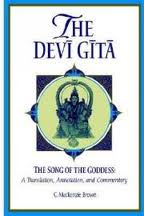
“The Goddess once more proclaims the superiority of knowledge, utilizing various Upanisadic motifs to develop two interrelated themes. First, she argues that knowledge of Brahman (that is, of herself as pure consciousness) is most readily attained here in this world. Since Brahman is our true nature, realization of it is not dependent on the death of the body, or departure of vital breaths. Such a person has "become" Brahman in this very life, and is free from rebirth. As the Brhadaranyaka Upanisad says, referring to one who is free from desire: "[That person's] vital breaths do not depart; being Brahman, one attains Brahman.” And the Mundaka Upanisad adds: "One who knows Brahman becomes Brahman.” This describes the state of the jivanmukta, who does not die when Brahman is realized. It is merely a realization of what one already has, or is, like remembering a gold necklace around one's neck that one has forgotten. Dying without the realization of Brahman generally leads to other worlds, such as that of the ancestors, where Brahman is less easily recognized. Here the Goddess draws upon the Katha Upanisad, which likens the perception of the ultimate while in the body to seek a clear image in a mirror, but if one has passed to the world of ancestors, it is like seeing a dream image, and in the world of the Gandharvas, like seeing a distorted image in water.”
[The Goddess explains the relation between devotion and knowledge.]
7.28. Knowledge is proclaimed as the final goal of devotion,
And of dispassion as well, for both devotion and dispassion are fulfilled when knowledge rise.
7.29. Even when devotion is fully accomplished, O Mountain, if one's past karmic influences are not favorable,
A person may fail to realize knowledge of me and so will depart to the Jeweled Island.
7.30. Going there, that person encounters enjoyments of all kinds, though remaining indifferent,
And in the end attains complete knowledge of my essence that is pure consciousness, O Mountain.
7.31. Thereby the person is forever liberated; liberation arises from knowledge and from nothing else.
Comment
In this section the Goddess makes a clear distinction between the limits and goals of devotion and knowledge. The highest reach of devotion, in and of itself, is the supreme heaven. Attainment of this blissful realm of the Jeweled Island constitutes the form of liberation known as salokya and is largely adventitious, as demonstrated by the fact that the devotee residing there remains uninterested in its pleasures. Yet it is not without some real benefit, as it is a stepping stone to the Ultimate, for there one attains the knowledge that brings mergence...
[The Goddess affirms that knowledge may be attained in this world and explains the relation of knowledge to dispassion.]
7.31. [cont.] One who attains knowledge here in this world, realizing the inner Self abiding in the heart,
7.32. Who is absorbed in my pure consciousness, loses not the vital breaths.
Being Brahman, the person who knows Brahman attains Brahman.
7.33. An object may vanish through ignorance, like gold forgotten on one's neck;
Through knowledge that destroys the ignorance, one may recover the desired object.
7.34. My essence is different from the known and the unknown, O Highest Mountain.
As in a mirror, so is that essence reflected clearly within the embodied Self; as in water, so is it reflected indistinctly in the world of ancestors.
7.35. Just as the distinction between shadow and light is clear, just so
Is the knowledge, dispersing any sense of duality, that arises in my world.
7.36. One who is dispassionate at death but who lacks knowledge
Will ever dwell in the world of Brahma for an entire eon.
7.37. That person will be reborn in a virtuous and dignified family,
And after practicing spiritual discipline, will thereby attain knowledge.
Comment
The Goddess once more proclaims the superiority of knowledge, utilizing various Upanisadic motifs to develop two interrelated themes. First, she argues that knowledge of Brahman (that is, of herself as pure consciousness) is most readily attained here in this world. Since Brahman is our true nature, realization of it is not dependent on the death of the body, or departure of vital breaths. Such a person has "Become" Brahman in this very life, and is free from rebirth. As the Brhadaranyaka Upanisad says, referring to one who is free from desire: "[That person's] vital breaths do not depart; being Brahman, one attains Brahman.” And the Mundaka Upanisad adds: "One who knows Brahman becomes Brahman.” This describes the state of the jivanmukta, who does not die when Brahman is realized. It is merely a realization of what one already has, or is, like remembering a gold necklace around one's neck that one has forgotten. Dying without the realization of Brahman generally leads to other worlds, such as that of the ancestors, where Brahman is less easily recognized. Here the Goddess draws upon the Katha Upanisad, which likens the perception of the ultimate while in the body to seek a clear image in a mirror, but if one has passed to the world of ancestors, it is like seeing a dream image, and in the world of the Gandharvas, like seeing a distorted image in water.
Second, there is one exceptional postmortem destination for the not-yet-realized which does not produce clear knowledge. According to the Katha Upanisad passage just referred to, that destination is the world of Brahma. There one sees the Ultimate distinctly, like perceiving the difference between shadow and light. The Goddess, however, departing from the Katha, asserts that the world of Brahma, attained by dispassion, does not lead to knowledge, at least not directly, but only to rebirth. While such rebirth is meritorious, having all the advantages necessary to gain final knowledge, it is still a spiritual detour. For the Devi, the one exceptional heavenly world, from which there is no rebirth, is her own Jeweled Island, where nondual knowledge arises spontaneously.
While the Goddess clearly exalts knowledge over dispassion, she implicitly elevates devotion over dispassion as well. As the preceding section (7.28-31ab) indicates, devotion leads to the highest celestial realm (see Jeweled Island), beyond the world of Brahma. Both devotion and dispassion have knowledge as their final goal, but devotion, unlike dispassion, dispenses the need for rebirth in the mundane realm...
[The Goddess advises Himalaya that a life spent without seeking knowledge is wasted.]
7.38. In the course of many births does knowledge arise, O King, not in one;
Therefore with the total commitment seek to acquire knowledge.
7.39. Otherwise, it is a great loss, as this human birth is hard to attain.
Even if one is born a Brahman, access to the Vedas is hard to gain.
7.40. Realizing the six virtues beginning with tranquility, achieving success in yoga as well,
And finding an excellent teacher, all these are hard to attain in life,
7.41. As are keen senses and sanctification of the body.
By merit gained in several births, one comes to desire liberation.
7.42. Even after attaining the fruits of spiritual discipline, the person who
Does not strive after knowledge squanders the opportunity provided by birth.
Comment
Rare is the person who seeks, let alone discovers, the supreme truth. This at least is the view of the Bhagavad Gita. There Krsna declares that among thousands of persons, perhaps one strives for perfection (siddhi), and among those, perhaps one truly comes to know the Lord. Developing this theme into a grand hierarchy, the Kapila Gita ranks beings from lower to higher according to their spiritual attainments, beginning with inanimate entities, then animals, and concluding with humans. Among the latter, Brahmans are the best, and among them, those who know the Vedas. Further refinements in subsequent groups finally culminate in those who surrender all actions, and their own selves as well, to the Lord, realizing no difference between themselves and the Supreme. The Devi Gita elaborates a similar scheme, stressing the increasing difficulty of each successive level of attainment. Birth is thus regarded, especially on the various human levels, as an opportunity not to be wasted. Ultimately, only those births are fruitful which lead toward knowledge, regardless of any benefits received through spiritual discipline (sadhana).
[The Goddess concludes by emphasizing that the realization of knowledge is the supreme self-fulfillment.]
7.43. Therefore, O King, one should strive for knowledge with all one's strength;
Then one surely obtains the fruits of the horse sacrifice at every moment.
7.44. Like clarified butter hidden in milk, knowledge dwells in every being;
One should stir continuously, using the mind as the churning stick.
7.45. Attaining knowledge, one is wholly fulfilled—thus the Vedanta proclaims.
I have described everything in brief; what more do you wish to hear?
Comment
The Goddess in the concluding verse stresses that through knowledge a person is fulfilled (krtartha), with no qualifications. While the chapter as a whole shows the important role devotion plays in the attainment of knowledge, devotion is ultimately subordinated, while the Advaitic notions of self-realization, of discovering one's true inner essence, are accented. By way of contrast, as pointed out above, the Bhagavata Purana not infrequently subordinates knowledge to devotion: knowledge by itself does not lead to fulfillment. The Bhagavata (1.5.3-4) makes this point in rather dramatic fashion, when it describes the initial depression of its own basic narrator, Vyasa. Although Vyasa has composed the great epic Mahabharata dealing with all the objects of human longing, and has inquired about and realized (or studied: adhita) Brahman, he nonetheless grieves like one who is not fulfilled (akrtartha). The reason for Vyasa's dissatisfaction is that, despite his knowledge, he has not sufficiently sung the praises of the supreme Lord. Such glorification of devotion over mere knowledge of Brahman is not unusual in the Bhagavata Purana, while the Devi Gita sees knowledge of Brahman as identical with the supreme goal of devotion. The Devi Gita qualifies bhakti: if it is not conjoined with knowledge, it is deficient. It does not make a similar qualification of knowledge.
Although the Devi Gita acknowledges the final supremacy of knowledge on the absolute level, one should remember that the text also asserts that the premier kind of devotion involves the Advaitic realization of unity. As 7.15 states, the highest devotee is one "who enthusiastically thinks of me alone with supreme affection, knowing me truly as never separate from oneself, not acknowledging any difference.” On the practical level, then, the Devi Gita often treats the two paths as equals, as intertwining, or simply as different aspects of one path. Given the importance of devotion, then, it is hardly surprising that the final three chapters of the Devi Gita are dedicated to explaining various details and practices of Bhakti Yoga.
C. MacKenzie Brown, The Devi Gita: The Song of the Goddess
State University of New York Press (September 1998) pp. 228-35
Date Title Location
Undated Lectures To Earth
Shri Mataji on Meditation
Airport Talk
Darshan after Public Meeting, Brighton
Australian Radio
Talking with Sahaja Yogis at Ashley Garden
Untitled Tape
The Knowledge of the Divine
Christ and His Life
Australian TV Interview, The Midday Show
Hinduism Today interview
Last Puja at Ealing House
Necessity of Meditation, Cabella
Om Bhur Bhuvah Swaha... the Seven Awareness
The All-Pervading Power is everywhere, Vienna
This is the Last Judgement
Establish Your Self Realisation
Realisation Exercise
Sahaja Yoga the Mahayoga, Calcutta, India
Shri Mataji Talk
Talk about Shri Bhairava
Talk at Bala's house, Birmingham
1973 Lectures To Earth
1973 08 28 You have to grow within, Shri Krishna Puja, Bombay
1975 Lectures To Earth
1975 02 09 Short Prayer
1976 Lectures To Earth
1976 03 30 Gudi Padwa, (Meditation) New Delhi
1976 04 02 Having a good tongue, New Delhi
1977 Lectures To Earth
1977 00 00 The Spirit
1977 01 26 Attention, Bordi
1977 02 [] The Nabhi Chakra, London
1977 02 15 Sat Chit Anand, New Delhi
1977 02 20 The Creation, Delhi
1977 02 23 The Normal Human Awareness, Delhi
1977 03 21 To understand SY you need a Shraddhavan Heart, Bombay
1977 07 31 Self Realisation, Caxton Hall, London
1977 11 21 Tantrism Public Program, Caxton Hall, London
1977 11 24 The Mind and it's relation to Kundalini, London
1977 11 28 God and Creation, Caxton Hall
1978 Lectures To Earth
1978 [] [] Appreciating Veena Instrumentalist
1978 [] [] Caxton Hall, London
1978 [] [] How to Meditate
1978 [] [] Public Program, Caxton Hall, London
1978 [] [] Ego, Superego and Subconscious, Finchley Ashram
1978 [] [] Our Understanding of SY, Seminar
1978 [] [] Public Meeting Talk No 1, Caxton Hall, London
1978 [] [] Public Meeting Talk No Caxton Hall, London
1978 [] [] Talk on Easter - generator noise
1978 [] [] Seminar Talk - About our own earthly mother
1978 [] [] Seminar Talk - We have chosen our parents
1978 [] [] Seminar Talk - What Vibrations are
1978 [] [] Seminar Talk, How to Meditate
1978 [] [] Shri Mataji speaks to Musicians before performance
1978 [] [] Spirit Attention Mind, Finchley Ashram
1978 03 20 Self Realisation No 1, Caxton Hall, London
1978 03 20 Self Realisation No 2, Caxton Hall, London
1978 03 20 Shri Mataj
1978 06 06 Q & A, Illusions, Northampton
1978 06 19 Difference between East and West, Caxton Hall10
1978 06 26 What happens after Realisation
1978 07 17 Ego, The West, Love and Money
1978 09 11 The Brahma Principle
1978 10 00 Talk given at Sahaja Yoga Seminar
1978 10 02 Knots in the Channels, Caxton Hall. parts & 2
1978 10 05 Dharma
1978 10 14 Bija Mantras, and Shaktis on Kundalini, Ashley Gardens
1978 10 14 How to deal with Scientists, Seminary
1978 10 15 incomplete, start and end missing
1978 10 23 The Three Channels, Caxton Hall, London
1978 11 15 Evolution - end missing
1978 12 18 Agnya, Caxton Hall, London
1979 Lectures To Earth
1979 00 00 How truthful are we about seeking
1979 00 00 What are we seeking
1979 01 09 What is the Kundalini and how it awakens, India
1979 01 14 Seminar, Birla Krida Kendra, Bombay
1979 01 15 Seminar, Birla Krida Kendra, Bombay
1979 01 16 Sri Ganesha and Mooladhara Chakra, Bharat Vidya Bhavan
1979 01 17 Deities on all chakras, Bharat Vidya Bhavan
1979 01 19 Seminar, Kalwe
1979 01 26 Seminar, Bordi
1979 02 00 Talk to Westerners about Negativity
1979 02 21 Seminar, Rahuri
1979 02 23 Seminar, Ahamad Nagar
1979 02 24 Seminar, Rahuri
1979 02 25 Puja, Pune
1979 02 26 Puja at Pune
1979 02 27 Seminar, Dole Rahuri
1979 03 04 Seminar, Dheradun, UP
1979 03 08 How to Realise the Self, Delhi Seminar
1979 03 09 Seminar, Delhi
1979 03 10 Seminar, Delhi
1979 03 11 Mother talks about Ghandiji, Bombay Hindi
1979 03 11 Mantravidya, Delhi - very poor quality
1979 03 11 Talk at Delhi University
1979 03 12 Morning Talk, New Delhi
1979 03 12 Mooladhara (English and Hindi)Hindi
1979 03 13 Seminar, Delhi
1979 03 14 Mother commenting on Early SY Experiences
1979 03 15 Advice to Delhi Yogis
1979 03 16 Vishuddhi Chakra, Delhi (Hindi) Hindi
1979 03 18 Sahastrara, Public Program, Delhi
1979 03 21 Birthday Puja, Birla Krida Kendra, Bombay
1979 03 22 Advice at Bordi Shibir
1979 03 22 Puja, Bordi Shibir
1979 03 22 Sahaja Yoga and the Subtle System, Mumbai
1979 03 24 Public Program, Bordi Shibir
1979 03 30 Evening prior to departure for London, Pune
1979 04 16 The Living Work of God, Easter, Putney
1979 04 22 Give up Misidentifications, Dollis Hill
1979 04 30 Shri Mataji, Dollis Hill
1979 05 05 Sahastrara Day
1979 05 07 Sahaja Yoga Introduction, Bharat Vidya Bhavan
1979 05 17 Seeking and Evolution, Caxton Hall, London
1979 05 17 Questions and Answers, Caxton Hall, London
1979 05 18 Dictation with Sahaja Yogis Part2
1979 05 24 Seeking and Rationality, Caxton Hall, London
1979 05 27 Seminar, Dollis Hill
1979 05 30 A Higher Life, A world of Bliss and Joy, Caxton Hall
1979 05 31 Public Program, Dr Johnson's House, UK
1979 06 08 Maria's House, Northampton
1979 06 11 How Aspects of God are expressed within us, Caxton Hall
1979 06 15 Higher Life, Reading
1979 06 16 Bala's House, Birmingham Parts & 2
1979 06 16 Dr Johnson House, Birmingham
1979 06 18 At Jim Proctor's House, Leeds
1979 06 19 What have we done towards a higher life, Caxton Hall
1979 06 20 When in darkness, Dollis Hill
1979 06 25 Seeking the life beyond, Caxton Hall, London
1979 07 08 Guru Puja, Dollis Hill
1979 07 10 We are all seekers, Caxton Hall, London
1979 07 16 How truthful are we about seeking, Caxton Hall
1979 07 20 Why are we here, Cardiff
1979 07 22 Intro to Sahaja Yoga
1979 07 24 Do we know what we seek, Caxton Hall, London
1979 07 26 Modern Seeking, In Search of Joy, Enfield
1979 08 06 Self Realisation and fulfilment, Caxton Hall
1979 09 [] Public Program, India
1979 09 22 Navaratri celebrations, Kundalini and Sri Ganesha, Bombay
1979 09 23 Kundalini, Vishnu and Brahma Shaktis, Bombay
1979 09 24 Kundalini and ShivaShakti, Seminar, Bombay
1979 09 26 Guru Mahima and Shri Krishna Shakti, Amar Rundal Mandal Bhadar
1979 09 27 Kundalini and Jesus, Amar Rundal Mandal Bhadar
1979 09 28 Kundalini Kalki Shakti, Bombay
1979 09 29 Advent Seminar India
1979 09 30 Talk on last day Navaratri at Chiketi Hall
1979 10 09 Maintaining the Purity of Sahaja Yoga, Caxton Hall, London
1979 10 15 Allowing Realisation to Develop, Caxton Hall, London
1979 10 19 Getting To Know Yourself, Gayton Rd, Harrow
1979 10 20 Diwali Message, Dollis Hill
1979 10 22 The Problem of ego, Caxton Hall, London
1979 10 28 Knowledge of Divine, Introduction to Sahaja Yoga, Caxton Hall
1979 11 11 The Meaning of Yoga, Dollis Hill
1979 11 15 The Significance of Brighton
1979 11 18 Get into meditation, Where do we stand in Sahaja Yoga, Dollis Hill
1979 11 18 Let us Meditate for a while
1979 11 21 Seeking in The West, Caxton Hall, London
1979 11 26 How to get to the Spirit that lies within, Caxton Hall
1979 12 02 Guru Puja, Dollis Hill (Advent Sunday, Shri Mataji's Declaration)
1979 12 03 When you meet me, (Realisation is not of Intellect), Caxton Hall
1979 12 10 Christmas and it's Relationship to Lord Jesus
1979 12 30 The Meaning of love, or Talk on all chakras, Bombay
1980 Lectures To Earth
1980 [] [] extract of talk on children from Nabhi Talk, Australia
1980 [] [] How to Meditate
1980 [] [] The Beauty of Human Beings, Caxton Hall
1980 01 27 Powers Bestowed upon Sahaja Yogis, Bordi Shibir
1980 01 27 Transformation, Bordi Shibir
1980 01 28 Joy, Duhlia
1980 03 16 Dollis Hill
1980 03 16 The Mother, Dollis Hill
1980 03 17 Interview on BBC
1980 03 23 Birthday Puja, Guarding Against Slothfulness, Bharat Vidya Bhavan
1980 03 24 The Meaning of Reality, Caxton Hall, London
1980 03 31 What Is Seeking, Brighton Pavilion
1980 04 06 Dollis Hill, Easter Sunday
1980 04 10 How the Egg is Related to Rebirth, Caxton Hall
1980 04 12 The Force within, Birmingham
1980 04 14 Caxton Hall 15 mins short at start
1980 04 18 The Power of the Divine, Caxton Hall, London
1980 04 19 The Spiritual Evolution of Man, Paris
1980 04 20 Meaning of Puja and effects of, Puja in Paris
1980 04 21 Caxton Hall - talk 1
1980 04 21 Caxton Hall - talk 2
1980 04 24 Sympathetic Parasympathetic, Dollis Hill
1980 04 27 Sahaja Yoga the Force within, Lausanne, Switzerland
1980 04 29 The Pure Intelligence, Geneva
1980 04 30 Public Program, Switzerland
1980 05 01 Public Program
1980 05 05 After Talk about Sahastrara, Part 2, Dollis Hill Ashram, London
1980 05 05 Sincerity in SYs, talk about Sahastrara, Dollis Hill Ashram, London
1980 05 12 God, Introduction to Sahaja Yoga, Caxton Hall
1980 05 17 Old Arlesford Part 1, Preparation for Becoming
1980 05 17 Old Arlesford Part 2, What is a Sahaja Yogi
1980 05 18 Old Arlesford Part 3, The Real Becoming
1980 05 26 Attention, Dollis Hill
1980 06 06 Why are we here, What is our purpose, Hampstead
1980 06 08 Subtlety, Dollis Hill
1980 06 09 The Subtlety within, Caxton Hall, London
1980 06 13 Seeking that which lies beyond, Stratford
1980 06 23 Innocence, Talk about Russia
1980 06 29 How do we prove the existence of God, Dollis Hill
1980 06 30 What is happening in other Locas, Caxton Hall
1980 07 08 The Value of Marriage, Dollis Hill
1980 07 17 Seeking, a Force that drives us, Northampton
1980 07 19 The Meaning of Puja, Brighton
1980 07 19 The Light of Truth, Brighton
1980 07 21 Auspiciousness, Caxton Hall, London
1980 07 27 What are the Statutes, Guru Puja, Hampstead
1980 07 28 Guru Principle, Caxton Hall
1980 08 09 What are we inside, Birmingham
1980 08 18 Every Country has it's Problems, Caxton Hall
1980 09 01 We have to get our Yoga, Caxton Hall
1980 09 07 How to know where you are, Chelsham Road
1980 09 08 The Dangers we Face
1980 09 27 Lethargy, Chelsham Road
1980 10 00 Havan talk, Chelsham Rd
1980 10 19 Puja on fighting Asuras, Navaratri Puja, Durga Temple, Hampstead
1980 10 19 Spreading Sahaja Yoga in Europe
1980 10 20 The Way of Kundalini, Caxton Hall, London
1980 10 21 Caxton Hall
1980 10 23 Why we are seeking our Spirit, Friends Meeting House, Hampstead
1980 10 27 What happens after Realisation, Caxton Hall
1980 10 29 Public Program Address, Caxton Hall, London
1980 10 31 You are to be Resurrected, Newbury
1980 11 09 Mahalakshmi Power, Hampstead
1980 11 10 Intro Talk, Put your Attention on your Spirit, Caxton Hall
1980 11 16 The New Age, Plaw Hatch
1980 11 20 The Myth of Ego, Hampstead - end missing
1980 11 23 You are to become Prophets, Guru Nanak's Birthday, UK
1980 11 24 Are you Seekers, Caxton Hall
1980 11 30 Intro Talk, We are All One, Caxton Hall (Excellent)
1980 12 01 You are part of the Divine Being, Caxton Hall
1980 12 05 Marriage and Collectivity, Chelsham Road
1980 12 10 Shri Mataji at Ashoka Hall, India
1980 12 30 Tetley School, Rahuri
1981 Lectures To Earth
1981 00 00 Bristol Public Program
1981 02 05 Mainly Mooladhara, Delhi
1981 02 06 Swadisthana Chakra, Delhi
1981 02 07 Mainly Nabhi and Void, Delhi
1981 02 09 Heart to Sahastrara, Delhi
1981 03 25 2nd Public Program, Swadisthan, Sydney
1981 03 27 Nabhi, Australia
1981 03 29 Anahata, Australia
1981 03 29 Workshop, Sydney part 1 & 2
1981 04 02 Power of Pure Desire, Melbourne
1981 04 03 Sahastrara, Sydney
1981 04 04 Ganesha Gauri Short Talk
1981 04 06 Australian Radio Broadcast II
1981 04 06 The Aim of our Seeking, Parts 1, Melbourne
1981 04 07 Talk after Lalita Havan, Sydney
1981 05 10 Organising Sahaja Yoga in England Parts 1&2, Chelsham Road
1981 05 11 Lord Jesus - Forgiveness, Caxton Hall
1981 05 14 Awareness, Hampstead
1981 05 17 The Power of Kundalini, Chelsham Road
1981 05 17 The Right Side, Caxton Hall
1981 05 19 Hampstead Public Program
1981 05 19 Ewell Talk, UK
1981 05 24 Subconscious and Supraconscious, Chelsham Road
1981 05 29 God's Creation, Human Beings, Selfridges, London
1981 06 01 The time of the Seeker, Caxton Hall
1981 06 04 Improving the Spirit, Hampstead
1981 06 18 There must be something beyond, Hampstead
1981 06 25 Ocean of Love, Hampstead
1981 06 29 Conditioning, Caxton Hally
1981 07 03 The Search for Truth, Cambridge
1981 07 05 Detachment, Cambridge
1981 07 10 The System within, Brighton
1981 07 11 The Four Dimensions within, Brighton
1981 07 12 Puja in Hove, Sussex
1981 07 19 Guru Purnima, Chelsham Road
1981 07 21 Advice to Ashram, 115 Warwick Street
1981 08 01 Open Your Heart, Seminar at Sherborne, Dorset
1981 08 09 Establishing your Marriage, Chelsham Road
1981 08 15 Krishna Birthday Puja, Bala's House,Tamworth
1981 09 04 Advice given by Shri Mataji, Brahman Court, London
1981 09 11 The Tree of Life, Paris
1981 09 14 The Heart of the Universe, Caxton Hall
1981 09 19 New York - video set
1981 09 21 Shri Mataji in America, Day 2, New York
1981 09 26 Shri Mataji in America, Day 3, New York
1981 09 27 Shri Mataji in America, Day 4, New York
1981 09 28 Shri Mataji in America, Day 5, New York
1981 09 29 Navaratri Puja, New York
1981 09 29 Shri Mataji in America, Day 6, New York
1981 09 30"I am the Holy Ghost"New York
1981 10 04 Becoming the Truth, Houston, Talk
1981 10 05 The Beauty that you are, Unity Church, Houston
1981 10 06 From Krishna To Christ, Houston, Texas
1981 10 07 The Spirit, SatChitAanand, Houston
1981 10 27 Diwali Talk, London
1981 11 01 Gruhalakshmi Diwali, Chelsham Road, London
1981 11 03 You must grow fast in S Yoga, Brahman Court Hotel, London
1981 11 28 You are the Spirit, Public Program, Hampstead
1981 11 29 Marriage is meant to give Joy, Pond Street, Hampstead
1981 12 09 Mother's House Warming Puja, Brompton Square
1981 12 25 Christmas Puja, Chelsham Road, London
1981 12 31 New Years Eve, Chelsham Road
1982 Lectures To Earth
1982 [] [] Darshan at Brompton Square
1982 [] [] Ego and Humility
1982 [] [] Inauguration of Don's Book, Caxton Hall
1982 [] [] Procession near Puney
1982 [] [] Talk after Procession near Pune
1982 [] [] You must be Responsible, Hampstead
1982 01 24 Weekend Seminar Pt 1&2, Pune
1982 01 25 Being Connected to God, Lonavala Seminar
1982 01 26 Lonavala Puja and Havana
1982 01 27 Be thankful to God, Sholapur
1982 01 30 Predictions, Durga Puja, Sholapur14
1982 02 05 Durga Puja, Rahuri
1982 02 06 Swadisthan, Delhi
1982 02 09 Morality and Marriage, Vaitarna, India
1982 02 20 Establishment of Lord Shiva Puja, Delhi
1982 03 19 Futuristic Attitudes, Caxton Hall
1982 03 21 Birthday Puja, Chelsham Rd
1982 03 29 Reality is what it is, Caxton Hall, Parts 1&2
1982 04 02 Shri Rama's Birthday, Chelsham Road46
1982 04 05 Limitations of Divine Power, Caxton Hall
1982 04 07 Mother's Wedding Anniversary, Nightingale Lane
1982 04 11 Creation of Lord Jesus, Easter, Nightingale Lane
1982 04 11 Talk at Nightingale Lane
1982 04 19 Caxton Hall
1982 04 22 All is so beautifully made, Hampstead
1982 05 03 Public Program 1, Paris
1982 05 04 Public Program 2, Paris
1982 05 05 Sahastrara Day, Paris Ashram
1982 05 05 Shri Mataji gives singing lessons, Paris, France
1982 05 11 Left Vishuddhi, Caxton Hall (Understanding the Love of God)
1982 05 13 Problems of the Subconscious, Christchurch, Hove - end missing
1982 05 14 You Must Become The Spirit, Brighton Pavilion
1982 05 15 Understanding your Importance, Shri Ganesha Puja, Brighton
1982 06 07 You must improve yourself, Nightingale Lane
1982 06 10 When are we going to grow, Hampstead
1982 06 14 We are all expecting something great to happen, Caxton Hall
1982 06 22 England has to become Jerusalem, Reading, UK
1982 07 00 Public Meeting, Friends Meeting House, Cheltenham
1982 07 01 The Subtle Body, Birmingham
1982 07 04 Evening Talk, Nightingale Lane
1982 07 04 Guru Puja, Nirmala Palace
1982 07 09 Confusion, the subtle slavery, Dr Johnson House, Birmingham
1982 07 10 Mooladhara, Swadisthan, Nabhi and Void, Derby
1982 07 10 Shri Mataji talks to Doctors - Poor recording
1982 07 11 Nabhi to Sahastrara, Derby
1982 07 12 Increasing Collectivity, Hove
1982 07 12 Talk before Havan, Derby
1982 07 31 Cowley Manor Seminar,Cheltenham
1982 07 31 Dedication through Meditation, Cheltenham Seminar
1982 08 01 Adi Shakti Puja, Cheltenham Seminar
1982 08 06 Devotion, Compassion, Truth, London
1982 08 13 America, it's future problems, Brompton Square
1982 08 15 Havan at Yogeshwara Puja, Mother explaining, London
1982 08 15 Yogeshwara, Shri Krishna's Birthday, Chelsham Road
1982 08 16 A solution to come (introductory talk), Caxton Hall
1982 08 18 Guru Tattwa, Brompton Square, London
1982 08 22 Shri Ganesha Puja, Geneva
1982 08 23 1st Public Program, Geneva
1982 08 26 Public Program, Lausanne
1982 08 26 The Sects, Lausanne
1982 09 13 What we should expect from Realisation, Caxton Hall
1982 09 26 Original Sin, Shri Durga Puja, Vienna
1982 09 27 Blue Danube Radio Interview, Vienna
1982 10 07 Truth is to be achieved, Bedford
1982 10 08 Interview, Wellingborough
1982 10 08 We don't have to suffer, Northampton
1982 10 09 The Living Works of God, Cambridge
1982 10 17 Navaratri Puja Talk, London
1982 11 01 Self Mastery, Guru Nanak's Birthday, London
1982 11 14 Wealth and Generosity, Diwali Lakshmi Puja, Nightingale Lane
1982 11 26 Intro Talk, Parts 1&2, Caxton Hall
1982 12 19 Mahakali Puja, Lonavala
1982 12 19 What is your responsibility to Sahaja Yoga, Mahakali Puja, Lonavala
1982 12 24 Christmas Eve Celebrations, Pune
1982 12 24 Christmas Eve Talk, Pune
1982 12 26 Christmas Puja, Pune
1982 12 31 Shri Ganesha Puja, Kolapur
1983 Lectures To Earth
1983 00 00 Los Angeles
1983 00 00 The Essence of Sahaja Yoga, Holborn Library
1983 01 01 Mahalakshmi Puja, Kolapur
1983 01 01 Mother talks about the Veena
1983 01 02 Public program New Delhi - end of talk missing
1983 01 04 Addressing India Medical Association, Sholapur
1983 01 04 Why we came to India, Mother talks to Westerners, Sholapur
1983 01 07 Shri Ganesha Puja, Rahuri
1983 01 13 Left Mooladhara and Supraconscious,Duhlia
1983 01 14 Basis of Creativity is Love, Saraswati Puja, Dhule
1983 01 14 Basis of Creativity is Love, Saraswati Puja, Dhulia
1983 01 16 Sahaja Yoga works only by Keeping Mother Pleased, Vaitarna
1983 01 18 Shri Ganesha Puja, Nasik
1983 01 21 Assess Yourselves, How to Proceed, Vaitarna
1983 01 27 Our Spiritual Roots, Delhi
1983 01 28 The Shaktis within us (Introduction to Sahaja Yoga) Delhi
1983 01 28 Three channels,Delhi
1983 01 29 Swadisthan Chakra (False Gurus and Conditionings), Delhi
1983 01 31 Nabhi Chakra, Delhi
1983 02 01 Heart Chakra, Delhi
1983 02 02 Vishuddhi Chakra, Delhi
1983 02 03 Agnya Chakra, Delhi
1983 02 04 Sahastrara Chakra, Delhi
1983 02 08 Q & A - India and the West, Importance of Self Realisation, Delhi
1983 02 09 Problems of Left Right and Centre, Birbal Park, Bombay
1983 02 10 Question and Answers About America
1983 02 10 Tales Of Shivaji
1983 02 11 Mahashivaratri Puja, Delhi
1983 03 01 Perth Puja
1983 03 02 Dalkeith Centre Workshop, False Gurus and Satgurus
1983 03 02 Perth Public Program Part 1
1983 03 02 Perth Public Program Part 2
1983 03 03 Perth Public Program
1983 03 04 Adelaide Puja
1983 03 05 Public Program
1983 03 05 Workshop at Adelaide
1983 03 07 Public Program
1983 03 08 Half Hour Introductory Talk, Melbourne, Australia
1983 03 08 Melbourne Press Interview
1983 03 08 Public Program, Melbourne
1983 03 09 Intro Talk - Lower Chakras, Melbourne
1983 03 09 Melbourne Puja
1983 03 09 Public Program, Melbourne
1983 03 10 Public Progam
1983 03 13 Workshop
1983 03 14 Devi Puja, Sydney
1983 03 14 Sydney Puja
1983 03 15 Sydney Public Program
1983 03 16 Sydney Public Program
1983 03 17 Sydney Public Program
1983 03 19 How To Bring Up Small Children, Lane Cove Park Picnic, Sydney
1983 03 21 Overcoming the Enemies, (Mother's 60th B'day Puja), Sydney
1983 05 10 Shri Ganesha's Birthday - background noise
1983 05 12 How to talk to New People, Hampstead
1983 05 20 The Essence of Sahaja Yoga, Caxton Hall
1983 05 25 Fulfilment of Seeking, Lewes
1983 05 26 Buddha's Birthday, Brighton
1983 05 27 Evening Program, Brighton Centre
1983 05 27 Radio Interview, Brighton
1983 06 00 Havan, Le Raincy, 108 Names Shri Lalita, 21 Names Shri Vshnu
1983 06 00 Talk at Le Raincy Airport, Paris
1983 06 13 Sahaja Yoga Talk, Porchester Hall
1983 06 16 Paris Public Program
1983 06 17 Havan, 108 Names Shri Lalita, 21 Names Shri Vishnu, Le Raincy
1983 06 17 Interview, Paris
1983 06 18 The Spirit, Talk before Havan, Paris
1983 07 17 God's Blessings upon Sahaja Yogis, Surbiton Ashram
1983 07 23 Attention and Ascent, Guru Purnima, Lodge Hill Seminar
1983 07 23 Purnima Seminar, Lodge Hill, Part 1, Rutumbhara Pragnya
1983 07 23 Purnima Seminar, Lodge Hill, Part 2
1983 07 23 Purnima Seminar, Lodge Hill, Part 3, Assume Your Positions
1983 07 25 Purnima Seminar, Guru Puja, Lodge Hill, Part 4, 'Why in England'
1983 07 25 Surbiton
1983 08 21 Mother Earth, Surbiton
1983 08 23 Rakshabandhan, Tannay
1983 08 28 Shri Krishna Puja, Geneva
1983 08 31 Advice to New Sahaja Yogis, Tannay
1983 09 00 Shri Ganesha Puja, Italy
1983 09 04 Vishuddhi Chakra Puja, Vienna
1983 09 06 3rd Public Program, Urania, Vienna - echo
1983 09 16 Mother talks to the Jungians, New York
1983 09 17 Ekadesha Rudra, New York
1983 10 01 Following the Santa Cruz Interview, USA
1983 10 01 Santa Cruz Interview
1983 10 01 Talk 1, Seminar, Kennolyn Camp, Santa Cruz
1983 10 05 Declaration, 2nd Public Program, Vancouver
1983 10 06 Explaining Puja in Vancouver with new people
1983 10 06 Puja in Vancouver with new people
1983 11 03 Diwali Puja, Surbiton Ashram
1983 11 05 Money, Sleep and Bhoots, Diwali Festival, Surbiton Ashram
1983 11 06 Diwali Puja, Durga Temple, London
1983 11 21 Pre-Christmas Talk, Surbiton
1983 12 19 Desire, Puja for the Universe, Shri Mahakali Puja, Lonavala
1984 Lectures To Earth
1984 00 00 Navaratri Puja, Paris
1984 00 00 Talk in Germany
1984 01 14 Advice to Sahaja Yogis, Bordi
1984 01 18 Spontaneous Talk, Vaitarna
1984 01 31 Address to Medical Profession, Sholapur
1984 02 03 Shri Mahalakshmi Puja, Kolapur
1984 02 06 Satara Puja
1984 02 12 Bordi Shibir Puja
1984 02 13 Puja part 2, International Seminar, Bordi Shibir, Maharashtra
1984 02 13 Puja Talk, International Seminar, Bordi Shibir, Maharashtra
1984 02 13 Shri Mataji's Words in Puja at Intl Seminar, Bordi
1984 02 14 Shri Mataji talks to the English, Day prior to Weddings, Bordi
1984 03 01 Detachment and Enlightenment of Brain, Pandarpur
1984 03 13 Intro Talk - Channels, Delhi
1984 03 17 Agnya, Public Program, Delhi
1984 03 17 Holi Celebration, Sahaja Yoga Temple, Delhi
1984 03 20 Sahastrara Chakra and Birthday Program, Delhi
1984 03 22 Birthday Puja, Bombay
1984 04 10 Porchester Hall, Londony
1984 04 22 Forgiveness, Easter
1984 05 05 Sahastrara Day, Mesnire en Bray, (French Transalation)
1984 05 06 Q&A, Sahastrara Day, Mesnire en Bray y
1984 06 22 Southbank Polytechnic, Elephant and Castle, London
1984 07 02 Hampstead Public Program
1984 07 08 To Know the Truth, Ilford Town Hall, UK
1984 07 14 Guru Puja, Leysin, Switzerland
1984 07 17 For You and You Alone, Talk to S Yogis, Geneva, Switzerland
1984 07 18 Mother at Chiswick Town Hall, UK
1984 07 25 Opening the Sahastrara, Hove Town Hall, Brighton, UK
1984 07 26 Speaking for Doctors, Kemptown, Brighton, UK
1984 07 31 Middlesborough Public Program, UK
1984 08 [] Public Program, Birmingham
1984 08 02 Friends Meeting House, Leicester
1984 08 02 Public Program, Geneva
1984 08 06 Public Program, Bristol
1984 08 07 Bath Public Program, UK
1984 08 08 Cardiff Public Program
1984 08 11 Raksha Bandhan, L. V'dhi and Mariadas of S Yogis, Hounslow
1984 08 13 Cambridge Public Program
1984 08 13 Shri Mataji at Derby Ashram
1984 08 13 Radio Interview
1984 08 18 Lord Krishna Puja Talk, New York
1984 08 28 Public Program, Geneva
1984 08 29 Pre-Marriage Talk, Part 1&2, Switzerland
1984 08 31 Marriages at Founex, Switzerland
1984 09 02 Lord Ganesh Ganaraj Puja Talk, Zermat, Matterhorn
1984 09 06 Talk at Gregoire's House, Vienna
1984 09 08 Mahalakshmi Puja, Munich
1984 09 16 Ekadesha Rudra Puja, Italy
1984 09 23 Navaratri Puja Talk (Bumptiousness), Hampstead Town Hall
1984 09 29 Sincerity (Put Me in your Heart), UK
1984 09 30 Darshan, Talk after Navaratri Puja, Paris
1984 09 30 Navaratri, Paris
1984 10 05 Farewell to Mother, Chelsham Road, London
1984 11 22 Public Program, Hampstead Town Hall
1984 11 23 Christmas Puja, Montague Hall, Hounslow
1984 11 30 Bombay Program and Lecture
1984-85 India Talk 1
1984-85 India Talk 2
1984-85 India Talk 3
1985 Lectures To Earth
1985 [] [] The Traditions of Seeking, Hampstead
1985 01 14 Sankranti Puja, Bombay
1985 01 19 Talks about Western Society, Nasik
1985 01 22 Leadership, Puja Talk, Rahuri
1985 01 26 Public Address, Pune
1985 02 [] Announcement Universal Nirmala Religion
1985 02 [] Evening Talk or Farewell Talk, Bordi
1985 02 06 A New Era, Sacrifice, Freedom, Ascent + Meditation, Bordi
1985 02 07 The Culture of Vishwa Nirmala Dharma, Puja Talk, Bordi
1985 02 09 Talk to the English
1985 02 28 Town Hall Program, Perth
1985 03 01 Workshop Program, Perth Ashram
1985 03 02 Private Talk to Perth Sahaja Yogis
1985 03 03 Public Program, Adelaide, Australia
1985 03 05 Public Program No 1, Auckland
1985 03 06 Public Program No 2, Auckland
1985 03 08 Public Program, Brisbane
1985 03 09 Workshop, Norman Park, Brisbane
1985 03 10 Public Program, Masonic Hall, Sydney
1985 03 10 Shri Devi Puja, Sydney
1985 03 11 Public Program, Sydney
1985 03 13 Public Program and Workshop, Hyatt Hotel, Sydney
1985 03 15 Exhibition Building Public Program, Melbourne
1985 03 17 Birthday Puja Melbourne Ashram
1985 03 17 Public Program, Melbourne Ashram
1985 04 08 Easter Puja, Montague Hall, Hounslow
1985 04 14 Public Program, Friend's Meeting House, Birmingham
1985 04 19 Dr Johnson House, Public Meeting, Birmingham
1985 04 20 Mahamaya Talk, Birmingham
1985 04 21 Mooladhara and Meditation
1985 04 21 Talk on children, Shri Ganesha Puja, Birmingham
1985 05 02 Niraananda, Vienna Ashram
1985 05 04 You have to be in Nirvikalpa, Vienna - mono
1985 05 05 Sahastrara Day Puja, Vienna
1985 05 06 Public Program, Vienna
1985 05 07 Public Program, Vienna
1985 05 10 Intro Talk - Becoming the Light within, Hampstead
1985 05 12 Talk on Children, Hampstead
1985 05 19 Shri Ganesha Puja, Rome
1985 05 21 Realisation Exercise
1985 05 26 Ganesha Puja, Hounslow
1985 05 28 Facing Seekers Questions + Miracles
1985 05 28 Kundalini Power and Creation, Dr Worliker's, Los Angeles
1985 05 29 San Diego First Public Program, USA
1985 05 30 San Diego Public Program, USA
1985 06 02 Darshan at New Jersey Ashram
1985 06 03 1st Public Program, New York
1985 06 04 2nd Public Program, New York
1985 06 05 3rd Public Program, New York
1985 06 29 Guru Puja, Paris
1985 07 15 Trigunatmika Puja, Den Haag
1985 08 04 Shri Ganesh Puja, Brighton
1985 08 05 Gruhalakshmi Puja, Brompton Square
1985 08 05 Shri Mataji reads Kahlil Gibran
1985 08 06 Lambeth Ashram Talk, Chelsham Road, London Parts 1&2y
1985 09 01 Shri Vishnumaya Puja, Wimbledon, London61
1985 09 01 Talk to the Belgians and Dutch, Southlands, Wembley
1985 09 20 Sheffield Public Talk, Memorial Hall
1985 10 09 Intro Public Program, Strasbourg
1985 10 09 Talk to Sahaja Yogis, Strasbourg
1985 10 10 Talk to Sahaja Yogis, France
1985 10 19 2nd talk on Navaratri Puja
1985 10 19 Navaratri Puja
1985 10 19 Additional talk at Navaratri Puja, Switzerland
1985 10 20 Havan Speech, Switzerland
1985 11 16 Address before Musical Evening, Rome
1985 11 17 Diwali Puja, Rome
1985 11 28 William Blake, Hammersmith
1985 12 00 Mahaganesha Puja Talk, Nasik
1985 12 15 Welcome Address, Vaitarna
1985 12 17 Puja in Nasik, India
1985 12 24 Christmas Eve Talk, Pune
1985 12 27 Brahmapuri Puja
1986 Lectures To Earth
1986 [] [] Radio Interview, Herbert, Graz
1986 [] [] Shri Gauri Puja, Pune
1986 01 [] Ekadesha Swayambhu Temple, Sahaja Camp
1986 01 01 Shri Mahaganesha Puja, Ganapatipule
1986 01 02 Day of Marriages, Ganapatipule
1986 01 06 In Betty Hubble's House, Houston
1986 01 08 Mahalakshmi Puja, Sangli
1986 01 13 Talk to Western Sahaja Yogis, Medical Questions, Rahuri
1986 01 14 Sankranti Puja, Rahuri
1986 01 20 Public Program, Attention should be on God, Mumbai
1986 01 25 Interview in Madras
1986 02 20 The Essence of Gita, Shankar Lal Hall
1986 02 22 A SY will reflect on the outside his inner quality, Jaipur, India
1986 02 24 Delhi University Address
1986 03 05 Brompton Square
1986 03 05 Wimbledon Address to English
1986 05 03 Few words before Bhajans
1986 05 04 2nd Sahastrara Talk, Milan
1986 05 04 Sahastrara Puja Talk, Milan
1986 05 18 French Seminar, Dourdan
1986 05 24 The Importance of Puja, Madrid, Spain
1986 07 03 Guru Puja, Avignon, France
1986 07 05 Pre-Guru Puja Talk re Austria, Gmunden, Austria8
1986 07 06 Guru Puja Talk, Gmunden, Austria23
1986 07 09 Advice on small children, Vienna, Austria
1986 07 13 Women should be Women, Kartikeya Puja, Munich, Germany
1986 07 25 Soul and Spirit, Volterra, Italy - Crockery
1986 08 03 Bhoomi Devi Puja, England
1986 08 04 Shri Ganesha Puja, England, UK
1986 08 18 Raksha Bandhan, Hampstead
1986 08 23 Gita, Lac Noir
1986 08 23 Govinda morning talk, Lac Noir
1986 08 23 Shri Krishna Puja, Lac Noir
1986 09 05 Evening Address, Camp Marston, California
1986 09 07 Shri Ganesha Puja, California
1986 09 20 Two Short Talks, Belgium
1986 09 21 Mahalakshmi-Jaladevata, Mechelen, Belgium
1986 09 21 Role of Belgium and Holland, Gruhalakshmi, Peace, Justice
1986 10 09 Lion's Club, Calcutta
1986 11 02 Diwali Puja, Pune
1986 12 12 Christmas, Shudy Camps
1986 12 21 Chalmala Welcome Address
1986 12 23 Nasik
1986 12 25 Pawana Dam
1986 12 27 Brahmapuri
1986 12 31 Mahalakshmi Puja, Sangli
1987 Lectures To Earth
1987 01 02 2nd talk, Ganapatipule Puja
1987 01 11 Paithan Puja
1987 01 13 Sankranti Puja, Rahuri evening
1987 01 14 Dhumal's House, Rahuri
1987 01 14 Sankranti Puja, Rahuri, India
1987 03 05 Public Program, Brisbane
1987 03 21 Mother's Birthday Puja
1987 04 08 Talk to Sahaja Yogis, St. Martin's Lane, London32
1987 04 19 Sir CP's Speech at Easter Puja, Rome
1987 04 19 Easter Puja, Rome
1987 05 03 Sahastrara Puja, Thredbo, Australia
1987 05 06 The Need to go Deeper, Sydney
1987 05 08 2nd Public Program in Sydney, Australia
1987 05 10 Mother's Day Picnic, Australia
1987 05 12 Public Program, Melbourne
1987 05 13 Public Program, Melbourne
1987 05 16 Establishing Foundations, Auckland, New Zealand
1987 05 16 Public Program 1, Auckland
1987 05 16 Public Program 2, Pioneer Womens Hall, Auckland
1987 07 11 Mother's First Talk, Shudy Camps
1987 07 12 Guru Puja, New Jerusalem
1987 08 08 Women play the most important role, New York
1987 08 09 Vishnumaya Raksha bandhan, New York
1987 08 16 Pre-Shri Krishna Puja Talk, St Quentin, Paris
1987 08 16 Shri Krishna Puja Talk, St Quentin, Paris
1987 08 17 Talk to the French, Le Raincy
1987 10 04 Maryadas in society, Shri Rama, Les Avants, Switzerland
1987 10 09 Mahalakshmi Puja, Mechelen, Belgium
1987 10 16 Mahakali Puja, Munchen, Germany
1987 10 22 This Modern Age, Milan
1987 10 23 Press Interview, Rotary Club, Piacenza, Milan
1987 10 23 Xavier's Flat, Press Conference
1987 10 24 The Light of Love, Diwali
1987 10 25 Diwali, Lake Como, Italy
1987 10 26 Revolution of Love, Rome
1987 10 27 Media Interview, Italy
1987 11 02 To Know the Truth, Paris
1987 11 03 The Power of Purification
1987 11 05 Why not Spain also
1987 11 06 Materialism, Shri Ganesha Puja, Spain
1987 11 06 Spanish must now rise
1987 11 16 Public Program, Porchester Hall, London
1987 12 09 Talk at Aurangabad
1987 12 13 Announcing the New Age, Ali Bag
1987 12 18 Kabira, Aurangabad1
1987 12 19 Complete your Realisation, Aurangabad
1987 12 20 Attention on Quality, Rahuri
1987 12 21 Talk at Rahuri
1987 12 22 Public Program, Sangamner
1987 12 23 Public Program, Akula, India
1987 12 24 We are here for our ascent, Pune
1987 12 25 Talk at Pune
1987 12 25 Tapasyas, Pune
1987 12 30 Talk at Kolapur
1988 Lectures To Earth
1988 01 01 A Sinless Life, Ganapatipule
1988 01 02 Talk at Ganapatipule
1988 01 03 Patience and Sweetness, Ganapatipule
1988 01 04 Yuva Shakti, Ganapatipule1
1988 01 05 The Bondages we have, Ganapatipule
1988 01 06 Swimming in the Sky of Joy, Ganapatipule
1988 01 06 Talk at Ganapatipule
1988 01 07 Brotherly Love, Ganapatipule1
1988 01 10 The Point of Balance, Sankranti
1988 04 03 Easter, Shudy Camps
1988 04 03 Zakir Hussein + Mother's Appreciation of Muscians
1988 05 08 How it was Decided, Incarnation of Adi Shakti, the Saviour, Rome
1988 05 08 2nd Sahastrara Talk, Rome
1988 05 09 The Myth of Leadership, Rome
1988 05 21 Instruments of the Divine, Barcelona Puja
1988 06 07 Recognition, Austria
1988 06 08 Ekadesha Avatara, Vienna, Austriay
1988 06 08 Mantras at Ekadesha Avatara Puja
1988 06 13 Porchester Hall, Queensway, London
1988 06 18 Meditation at Shudy Camps
1988 06 19 The Role of Women, Shudy Camps
1988 06 20 Puja in Columbia, South America
1988 07 08 Intro Talk, Paris
1988 07 09 Intuition and Women
1988 07 10 The Power of Discretion of Hamsa, Grafenaschau, Germany
1988 07 23 Buddha Puja, San Diego, USA
1988 07 31 Gravity of Guruship, Andorra
1988 08 06 The State of Witnessing, Shri Krishna Puja
1988 08 14 Shri Fatima Puja, Geneva
1988 08 20 Cure that Left Vishuddhi, Raksha Bandhan, Londony
1988 08 20 Pre Music Program Talk
1988 09 21 Ammonk Ashram, New York
1988 11 13 2nd Diwali Talk
1988 11 13 You are the Dipas, Diwali
1988 12 07 Mooladhara, Aurangabad1
1988 12 08 Talk at Aurangabad
1988 12 11 Talk at Rahuri
1988 12 17 How we do earn our Punyas, Pune
1988 12 17 Talk at Pune
1988 12 20 Talk at Brahmapuri
1988 12 21 Hygiene, Sangli
1988 12 24 Purity and Holiness, Ganapatipule
1988 12 25 Talk at Ganapatipule
1988 12 25 Transformation, Ganapatipule
1988 12 26 Value Systems, Ganapatipule
1988 12 27 Honesty, Ganapatipule
1988 12 30 What we can do now, Alibag
1989 Lectures To Earth
1989 [] [] Jesus Christ Puja, Bogota, Columbia, S America
1989 04 23 Archangel Shri Hanumana, Margate, UK25
1989 05 [] On board ship to Sorrento
1989 05 06 Jump into the Ocean of Love, Sahastrara Day, Sorrento, Italy
1989 05 16_Establishing Foundations, Auckland, New Zealand
1989 05 20 Gautama, Lord of the Ego, Buddha Puja, Barcelona, Spain
1989 05 24 1st Public Program, Hotel de Bretagne, Athens, Greece
1989 05 24 Integration of Athena, Athena Puja, Athens, Greece
1989 05 27 The Essence of Self Respect, Devi Puja, Istanbul, Turkey
1989 06 08 Shri Bhairava Puja, Italy - mono
1989 06 11 Dynamism, Virata Puja, Litchfield, Conneticut
1989 06 17 Mahakali Puja, Vancouver, Canada
1989 06 17 Vancouver Public Program
1989 06 19 Ascent, Mahakali Puja, San Diego, USA
1989 07 09 The Importance of Friendship, Devi Puja, Melun, France
1989 07 10 Hamsa Chakra Swamini Puja, Germany
1989 07 10 Mother's Words after Hamsa Swamini Puja, Germany
1989 07 19 Paramchaitanya Puja, Taufkirchen, Munich, Germany
1989 07 23 Guru Puja, Lago di Braise, Italy5
1989 07 25 Arrival Speech, Melichargasse, Austria
1989 07 30_Shri Mataji, Radio Broadcast, LBC, London
1989 08 01 First know Thyself, Porchester Hall, London
1989 08 06 Shri Bhairavnath Puja, Garlate, Garlate, Italy
1989 08 08 Shri Ganesha Puja, Les Diablerets
1989 08 14 2nd Talk, Shri Krishna Puja, Saffron Walden
1989 08 18 Public Program, Leningrad, Russia
1989 08 21 2nd Public Program, Moscow
1989 10 06 Only for the English, Devi Puja, Margatey
1989 10 08 Destroy those Demons within, Devi Puja, Margate
1989 10 29 Diwali Puja, Motecatini
1989 12 00 Talk before Music Program, India
1989 12 03 Farewell Talk, Shudy Camps
1989 12 17 Advice given by Shri Mataji, India Tour, Alibag
1989 12 19 About Indian Sages, Aurangabad3
1989 12 21 Try to become Aware, Shrirampur
1989 12 25 You have Christ before you, Pune
1989 12 30 In Ten Years we can change the World, Brahmapuri
1990 Lectures To Earth
1990 [] [] Pre Marriage talk
1990 01 [] The Great Mantras + Atharvasheersha
1990 01 [] The State of the Planet
1990 01 [] Welcome to and re Kolapur
1990 01 [] Sankrant Puja, India
1990 01 00 Shri Ganesha Mantras and Atharvasheersha
1990 01 01 Marriages, Advice for Women, Sangliy
1990 01 06 Learn from your Guru, Ganapatipuley
1990 01 07 We must know Who is God and Who is Goddess, Ganapatipule
1990 01 14 The Sun of Sahaja Yoga has risen to it's Zenith, Kalwe, Bombay
1990 03 [] Public Program, Freemantle, Perth
1990 03 [] Puja in Auckland, New Zealand
1990 03 04 Ashram and Collectivity, Arrival Talk, Melbourne, Australia
1990 03 06 Public Program 1, Melbourne
1990 03 07 Public Program 2, Melbourne
1990 03 15 Australian Interview
1990 03 20 Canberra Interviews
1990 03 21 Birthday Puja Sydney
1990 04 21 Evening before Easter Puja, Eastbourne
1990 04 22 You all have to grow vertically, Easter Puja, Eastbourne
1990 05 06 You all have become Mahayogis now, Sahastrara Day, Fiuggi,
1990 05 28 Divine Discretion, Camp Marsden, San Diego, USA
1990 05 31 2nd Public Program, San Diego, USA
1990 06 07 Public Program, New York
1990 06 16 Shri Mahavira Puja, Barcelona, Spain
1990 06 19 Adi Kundalini Puja, Modlin, Austria
1990 06 20 Public Program 1, Athens, Greece (Greek translation)
1990 06 21 Public Program 2, Athens, Greece
1990 07 08 Guru Puja, Avingnon
1990 08 07 Raksha Bandhan Puja, Los Angeles, USA
1990 08 11 Canada Desha Public Program, Vancouver, Canada
1990 08 11 Shri Saraswati Puja, Vancouver, Canada14
1990 08 18 Evening before Shri Krishna Puja, Hallow Tree, Ipswich
1990 08 19 Shri Krishna Puja, Hallow Tree, Ipswich
1990 08 23 Address To Indian Community, Leyton Road, Stratford
1990 08 28 Ganesha Mantras and Names
1990 08 28 Ganesha Puja, Laversbach, Tyrol, Austria
1990 08 31 Hanumana Puja, Schlob Schwetzingen, Frankfurt, Germany
1990 09 12 Collectivity, Morality and Purity, Shri Mahakali Puja, Le Raincy, Paris
1990 09 14 Public Program, Hammersmith Town Hall, London
1990 09 14 Self Realisation Exercise, Hammersmith Town Hall
1990 09 18 Talk Before Krishna Puja and Talk by CP
1990 09 19 1st Public Program, Genua, Italy
1990 09 19 2nd Public Program, Genua, Italy
1990 09 23 Navaratri Puja, Geneva, Switzerland
1990 10 21 Diwali Puja, Sottomarina, Chioggia, Italy
1990 11 08 Canadadesha, Vancouver
1990 12 03 Welcome Talk, Pune
1990 12 12 Shrirampur
1990 12 14 Talk at Pratisthan 1
1990 12 14 Talk at Pratisthan 2
1990 12 17 Shri Lalita and Shri Chakra, Brahmapuri
1990 12 21 Mahalakshmi Puja, Kolhapur
1990 12 24 About Jesus, Ganapatipule
1990 12 25 Christmas Puja, Ganapatipule
1991 Lectures To Earth
1991 [] [] Informal Talks, Melbourne
1991 01 01 Short Talk, Kalwe
1991 01 01 Talk about Christ, Kalwe
1991 02 09 Mahashivaratri Puja, Delhi
1991 02 09 Mahashivaratri Puja, Delhi
1991 02 16 The knowledge of God, Chianciano Therme, Italy
1991 02 16 Shri Ganesha Mantras and Atharvasheersh
1991 03 28 Shri Mahavira Puja, Perth, Australia - mono
1991 03 30 Shri Mataji organising children
1991 03 31 Easter Puja Sydney
1991 03 31 Shri Mataji's Horoscope read in Sydney
1991 04 06 Bhavasagara Puja Brisbane
1991 04 08 Shri Gauri Puja, Auckland, New Zealand
1991 04 10 Virata Puja Melbourne
1991 04 14 Shri Ganesha Puja, Canberra
1991 04 19 Final Talk, Sydney
1991 04 28 New York Puja, Queen's Theatre in the Park
1991 05 05 Recognize Me by experiencing your Divinity, Ischia, Italy
1991 06 30 Adi Kundalini Germany
1991 07 28 Guru Puja 1, Cabella di Ligure
1991 07 28 Guru Puja 2, Guru Gita, Cabella
1991 07 28 Guru Puja 3, Italy
1991 08 04 Shri Buddha Puja, Deinze
1991 08 05 Public Program, Vienna, Austria
1991 08 06 2nd Public Program, Vienna
1991 08 11 Kundalini Puja, Weilingen, Frankfurt, Germany
1991 08 20 Public Program, Moscow
1991 09 01 Yogeshwara, Shri Krishna Puja, Cabella
1991 09 15 Shri Ganesha Puja, Cabella
1991 10 13 Navaratri Puja, Cabella, Italy
1991 11 10 1 Diwali Puja, Cabella
1991 11 10 2 Diwali Italy
1991 12 06 1st Public Program, Madras, India
1991 12 07 2nd Public Program, Madras, India
1991 12 09 Public Program, Bangalore
1991 12 09 Shakti Mahakali Puja, Bangalore
1991 12 11 Puja in Hyderabad, India
1991 12 15 Ganesha Puja, Shere, Nr Pune
1991 12 21 Shri Mahalakshmi Puja, Jaysinghpur, India
1991 12 24 Christmas Puja Ganapatipule
1991 12 29 Alibag
1991 12 31 New Years Puja, Kalwe, India
1992 Lectures To Earth
1992 02 [] Diwali Puja, Rumania
1992 02 [] Public Program
1992 02 09 Ganesha Puja, Canberra, Perth
1992 02 12 Black Mountain, Canberra
1992 02 12 Canberra Ashram
1992 02 13 Red Hill Lookout, Canberra (Children and Marriage)
1992 02 14 1st Public Program, Prahran Town Hall, Melbourne
1992 02 15 2nd Public Program, Melbourne
1992 02 18 Talk on Arrival, Brisbane
1992 02 20 Mahalakshmi Puja, Brisbaney
1992 02 23 Mahasaraswati Puja, Auckland
1992 02 24 Public Program, Auckland, New Zealand
1992 02 24 Q&A after Public Program, Auckland
1992 02 25 Talk in Christchurch, New Zealand
1992 02 26 Christchurch Public Program
1992 02 28 Newcastle Public Program
1992 02 29 Shivaratri Puja, Glenrock, Newcastle, Australia
1992 03 01 Talk After Shri Shiva Puja, Newcastle
1992 03 04 New South Wales University Talk
1992 04 13 Easter Puja, Rome
1992 04 18 Evening before Easter Puja, Magliano Sabina, Italy
1992 04 18 Mother appreciates Hemlata
1992 04 19 Easter Puja, Magliano Sabina, Italy
1992 05 10 Sahastrara Day, Cabella di Ligure
1992 05 31 Shri Buddha Puja, Shudy Camps
1992 06 11 Royal Albert Hall 1
1992 06 12 Royal Albert Hall 2
1992 06 21 Kundalini Puja, Cabella
1992 07 04 Vishnumaya Puja, Belgium
1992 07 19 Sahaja Guru and Complete Faith in God, Guru Puja, Cabella
1992 07 25 Shri Durga Mahakali Puja, Paris, Francey
1992 07 26 Public Program, Linz, Austria
1992 07 27 Public Program, Hofburg, Vienna
1992 07 28 Public Program, Budapest
1992 07 29 Public Program, Praha
1992 08 09 Mahalakshmi, Russia
1992 08 16 Krishna Puja, Cabella
1992 08 24 Public Program, Geneva, Switzerland
1992 08 30 Shri Ganesh Puja Cabella
1992 09 08 New York Public Program
1992 09 13 Hamsa Chakra, Vancouver, Canada
1992 09 19 Vishnumaya Puja, New York
1992 09 27 Navaratri Puja 27.9.92
1992 10 25 Diwali Puja, Rumania (Rumanian Translation)
1992 10 25 Mother's Appreciation of Musicians
1992 12 24 Christmas Puja, Ganapatipule, India
1992 12 30 Mahalakshmi Puja, Ganapatipule
1993 Lectures To Earth
1993 00 00 Public Progam, USA
1993 02 19 Shivaratri Puja, Bombay
1993 03 21 Birthday Puja, Delhi
1993 04 11 Easter Puja, Magliano Sabina, Italy
1993 04 26 Pallas Athena Puja, Athens
1993 04 27 Interview on Greek TV
1993 05 07 Sahastrara Puja, Cabella Di Ligurey
1993 06 06 Adi Shakti Puja, Cabella
1993 06 26 Royal Albert Hall
1993 07 01 Guru Puja and Guru Gita, Cabella
1993 07 04 Guru Puja, Cabellay
1993 07 11 Mahakali Puja, Paris
1993 07 21 The Source of Wisdom, Shri Ganesha Puja, Berlin
1993 08 03 Adi Shakti Puja, Togliatti, Russia
1993 08 15 Ganesh Mantra and Atharvasheersha
1993 08 15 Lead a Dharmic Life, Shri Krishna Puja, Cabella
1993 09 10 Persian Public Program, Los Angeles, USA A
1993 09 19 The Principle of Innocence, Ganesha Puja, Cabellay
1993 10 04 United Nations Meeting, New York, USA
1993 10 05 Toronto Public Program, Canada
1993 10 10 Virata Viratangana, America, You Must Use Your Vishuddhi
1993 10 11 Public Program, Los Angeles, USA
1993 10 14 Public Program Washington DC, Nat'l Inst of Health
1993 10 15 Philadelphia Public Program, Pennsylvania, USA
1993 10 16 New York Public Program,
1993 10 24 Introspect Yourself, Navaratri Puja, Cabella
1993 11 12 Diwali Puja, Moscow
1993 12 00 Talk before Music Programy
1993 12 11 Shri Krishna Puja, Yamunanagar
1993 12 18 Shri Ganesha Puja, Chindwara
1993 12 18 Shri Ganesha Puja, Chindwara
1993 12 23 Talk after Music Program, Ganapatipule
1993 12 24 Talk about Marriages, Ganapatipule6
1993 12 25 Christmas Puja, Ganapatipuley
1993 12 27 Talk about Children, Money, Responsibility, Ganapatipule
1993 12 28 Talk to Brides, Shri Gauri Puja and Weddings, Ganapatipule
1993 12 31 Mahalakshmi Puja, Mukund Factory, Kalwe
1994 Lectures To Earth
1994 03 14 Shri Sadashiva Puja, Delhi
1994 03 21 Attention, a better cure for all SahajaYogis, Calcutta
1994 03 27 Public Program, Perth, Australia
1994 03 30 Public Program, Melbourne, Australia
1994 04 01 Public Program, Taipei
1994 04 02 Talk to Australians before Concert
1994 04 03 Easter Puja, Sydney
1994 04 04 Public Program, Brisbane Town Hall, Australia
1994 04 05 Talk at Picnic, Lane Cove River Park, Sydney
1994 04 06 Sydney Town Hall Public Program
1994 04 07 Talk on last evening, Burwood, Sydney
1994 04 08 Public Program, Canberra, Australia
1994 04 10 Mahamaya Puja, Auckland, New Zealand
1994 04 13 Wamuran Talk, Brisbane
1994 04 22 Hong Kong Public Program true
1994 04 24 Talk to Sahaja Yogis, Peninsula Hotel, Hong Kong
1994 04 27 Public Program, Hong Kong
1994 05 04 Public Program, Sydney Town Hall, Australia
1994 05 08 Sahastrara Puja, Italy
1994 05 08 Sahastrara Day, Italy
1994 06 05 Royal Albert Hall, London
1994 06 26 Shri Adi Shakti Puja, Creation, Adam and Eve, Cabella
1994 07 13 Shri Vishnu Puja, The Basis of Religion (Dharma), Paris
1994 07 19 Public Program, Austria Centre, Vienna
1994 07 24 Mature and Achieve the State of a Guru, Guru Puja, Cabella
1994 07 31 The Basis of Religion, Shri Vishnu Puja, Paris
1994 08 27 TV Asia Interview
1994 08 28 The Befooling of Intellect, Shri Krishna Puja, Cabella
1994 09 11 Shri Ganesha Puja, Religions, Children, Moscow
1994 09 14 Medical Conference, Science and Morality, St. Petersburg
1994 09 25 Public Program, Toronto, Canada
1994 09 26 Public Program, Vancouver, Canada
1994 09 27 Indian Iranian Public Program, Los Angeles, USA
1994 09 29 Public Program, Los Angeles, USA
1994 10 02 Krishna and Enlightenment of Brain, New Jersey USA
1994 10 07 After Nishat Khan concert, Cabella
1994 10 07 Before Nishat Khan concert, Cabella, Italy
1994 10 09 Fearlessness and Enlightened Faith, Navaratri Puja, Cabella
1994 10 21 Reel Women Part 1
1994 10 28 Reel Women Part 2
1994 11 05 Being the Light of Pure Compassion, Diwali Puja, Istanbul
1994 11 13 Address to Women of Tunisia
1994 12 04 Raja Lakshmi, The Royal Principle, New Delhi
1994 12 27 Being truly Collective and Charitable, Christmas Puja, G'pule
1994 12 31 Shri Ganesha Puja, Kalwe
1994 12 31 Shri Ganesha Puja, Kalwe
1995 Lectures To Earth
1995 02 22 Sydney Public Progam
1995 02 26 How to get Detached and Ascend, Castle Mountain, Sydney
1995 03 20 Birthday Puja, New Delhi
1995 03 21 Felicitations Talk, Kundalini's Transformation, New Delhi
1995 04 14 Self Knowledge for Resurrection, Easter Puja, Calcutta
1995 05 07 To achieve complete freedom, Sahastrara Puja, Cabella
1995 06 00 Royal Albert Hall, London
1995 06 14 Desires against Real Joy, Shri Adi Shakti Puja, Cabella
1995 06 25 Richmond Park Talk, London41
1995 07 16 Watch your Mind and Attention, Guru Puja, Cabella
1995 08 20 America and False Freedom, Shri Krishna Puja, Cabella
1995 09 10 The Value of Innocence, Ganesha Puja, Cabella
1995 09 13 Conference on Women, Beijing Seminar
1995 09 13 UN Speech, Public Program, Beijing, China
1995 09 17 Patriotism and Modernism, Shakti Devi Puja, Moscow
1995 09 20 Religion, SY and Realisation, Scientific Conference, St Petersburgh
1995 10 01 Don't reflect but Project your Depth, Navaratri Puja, Cabella
1995 10 08 America and Ego, Devi Shakti Puja, New York
1995 10 28 After Concert Talk
1995 10 29 Diwali Puja, Nargol
1995 12 03 Kidwai Nagar Public Program, New Delhi
1995 12 05 Satya Shakti Puja, Delhi
1995 12 24 The Seven Awarenesses, Christmas Puja, Ganapatipule
1996 Lectures To Earth
1996 03 03 The Witnessing State, to know God, Shivaratri Puja, Sydney
1996 03 04 Darling Harbour Public Program
1996 03 21 Mind is a Myth, Birthday Puja, Delhi
1996 04 03 Shivaratri Puja, Australia
1996 04 14 Easter Puja, Calcutta
1996 05 05 We must feel responsible, but humble, Sahastrara Puja, Cabella
1996 06 09 You dissolve into the Divine Power, Adi Shakti Puja, Cabella
1996 06 13 Shri Mataji at Nirmala House, Rome
1996 06 28 Royal Albert Hall
1996 07 09 Adi Shakti Puja, Cabella (listen again!)
1996 07 10 Airport Talk, Vienna6
1996 07 16 Mahalakshmi Puja, Moscow 23
1996 07 28 Criteria to Introspect yourself, Guru Puja, Cabella
1996 08 00 Public Program, St Petersburg, Russia (Russian translation)
1996 09 01 Shri Krishna and Sahaj Culture, Cabella
1996 09 10 Happy Diwali to all of you, Lisbon, Portugal
1996 09 10 What State you have to Reach, Diwali Puja, Lisbon, Portugal
1996 09 15 Without Innocence you cannot enjoy, Ganesha Puja, Cabella
1996 09 29 Shri Krishna and Americans, Shri Krishna Puja, New York
1996 10 20 Be aware of your own state, Navaratri Puja, Cabella11
1996 10 28 Public Program in Cairo, Egypt
1996 10 29 Talk to Sahaja Yogis, Cairo, Egyptlation)
1996 11 10 What state you have to reach, Diwali Puja, Lisbon
1996 11 25 Shri Gyaneshwara's 700th Anniversary, Pune
1996 12 07 Rajalakshmi Puja, Delhi
1996 12 21 About Ganeshwara, Mahalakshmi Puja, Vashi
1996 12 21 Shri Kartikeya Puja, Vashi, Bombay
1996 12 25 Give Up Your anti-Christ Behaviours, Christmas Puja, Ganapatipule
1997 Lectures To Earth
1997 03 16 What should happen to you, Shivaratri Puja, Delhi
1997 03 23 Mother's Birthday Puja, Delhi
1997 04 06 Dr Rai at the Medical Conference, Delhi
1997 05 04 Beyond Dharma, Become the Truth, Sahastrara Puja, Cabella
1997 05 25 Adi Shakti Puja, Respect the Mother Earth, Cabella
1997 05 25 Appreciation of Spanish entertainment
1997 06 08 Freedom without Wisdom is dangerous, Shri Krishna Puja, New York
1997 06 10 Public Talk, New York
1997 07 20 A Guru should be humble and wise, Guru Puja, Cabella
1997 08 23 Primordial Taboos and Sahaj Dharma, Krishna Puja, Cabella
1997 09 07 Dharma has to be there for our Ascent, Shri Ganesha Puja, Cabella
1997 10 04 Be close to Nature and Lead a balanced Family Life, Cabella
1997 10 05 The Main Qualities to Imbibe, Navaratri Puja, Cabella
1997 11 02 Lakshmi and the Maya of Money, Diwali Puja, Lisbon
1997 11 03 Public Program, Lisbon, Portugal (Portuguese translation)
1997 12 04 Ramlila, Delhi
1997 12 25 Get Rid of Ritualism and Ego, Christmas Puja, Ganapatipule
1997 12 31 Shakti within you wants to be loving, kind and generous, Kalwe
1997 12 31 Shakti Puja, Kalwe
1998 Lectures To Earth
1998 03 20 Keep your attention on the Spirit, Felicitations Talk, Delhi
1998 03 21 75th Birthday Puja, You have gone beyond the Gunas, Delhi
1998 03 25 Appreciation of singing of Top Man in Police, Delhi
1998 04 19 Easter Puja, Express Christ Light through your life, Istanbul
1998 04 20 Public Program in Istanbul
1998 05 10 Meditation is the only way, Shri Sahastrara Puja, Cabella
1998 06 06 Blossom Time, Royal Albert Hall, London
1998 06 21 You must develop Humility, Shri Adi Shakti Puja, Cabellay
1998 07 05 Public Program, Royal Albert Hall, London
1998 07 06 Public Program, Holland Park School, London
1998 07 12 To be Obedient to the Guru, Guru Puja, Cabella
1998 07 26 Interview in the Versiliana, Marina di Pietrasanta, Italy
1998 08 16 Stop Reacting Witness, Shri Krishna Puja, Cabella
1998 09 06 Chastity and Collective Nature, Shri Ganesha Puja, Cabella
1998 09 06 Talk after Marriages, Shri Ganesha Puja, Cabella
1998 09 27 You all should depend on Paramchaitanya, Navaratri Puja, Cabella
1998 10 25 Appreciation of the Entertainment Program
1998 10 25 Jeanne d'rc, Respect the Housewife, Diwali Puja, Novi Ligure
1998 12 00 Speech after Arun Apte performance, Ganapatipule
1998 12 16 Panch Tattwa, Scouts Ground, New Delhi (Hindi)
1998 12 16 The Subtle Elements, Speech at Scout Ground, Delhi (English part)
1998 12 16 The Subtle Elements, Speech at Scout Ground, Delhi (Hindi part)
1998 12 24 Become Absolutely Thoughtless, Christmas Puja, Ganapatipule
1998 12 29 The Marriages, Ganapatipule
1998 12 31 Indian Culture, Kalwe Puja, Maharashtra
1998 12 31 Kalwe Puja, Maharashtra (Marathi and Hindi and English)
1998 12 31 Mother's talk regarding Children, Kalwe, India (English part)
1999 Lectures To Earth
1999 02 14 Principle of Shiva is in your Heart, Mahashivaratri Puja, Delhi
1999 02 20 Public Program, Mumbai, India
1999 03 00 Ham sab Hindustani hai
1999 03 00 Talk after dance performance
1999 03 18 Gudi Padwa Puja, Noida
1999 03 19 Speech after Felicitations, Delhi
1999 03 21 Talk on Vandemataram, B'day Puja, Delhi
1999 04 25 Resurrection to overcome Death, Easter Puja, Istanbul
1999 04 26 Public Program in Istanbul
1999 05 09 Fundamentals of Global Peace, Sahastrara Puja, Cabellay
1999 06 15 VIP Conference, Central Park, New York
1999 06 16 Public Program, New York
1999 06 20 Sahaja Yogis have to live for others, Canajoharie, USA
1999 07 08 Press Conference, London
1999 07 10 Royal Albert Hall, London
1999 07 12 Liberty Radio Interview, following Royal Albert Hall, London
1999 08 01 Ten Years in Cabella, Love is the only way, Guru Puja, Cabella
1999 09 05 Divine Discretion of Shri Virata, Shri Virata Puja, Cabella
1999 09 25 Adhere to Chastity, Morality, Decency and Honour, Cabella
1999 10 17 The Powers of Shri Mahakali, Navaratri Puja, Cabella
1999 11 07 Diwali Puja, Delphi, Greece
1999 11 07 Talk in Hindi, Delphi, Greece
1999 12 25 Christmas Puja, Ganapatipule
2000 Lectures To Earth
2000 03 05 Shivaratri Puja, Pune
2000 03 21 Birthday Puja, Delhi
2000 04 08 I.A.S. Meeting, Delhi, India
2000 04 17 Income Tax Officer's Public Meeting, Delhi
2000 04 23 Make use of your Realisation, Easter Puja, Istanbul
2000 04 25 Public Program in Istanbul
2000 05 07 Realised Souls are in the Ocean of Eternity, Cabella
2000 06 01 Public Program, Los Angeles
2000 07 02 You must completely surrender to work of Sahaj Yoga, Canajohare
2000 07 23 You cannot rise without Shraddha, Guru Puja, Cabella
2000 08 20 Spontaneous Decisions, Krishna Puja, Cabella
2000 09 02 Press Conference, Genova
2000 09 16 Sanctity of Marriage and Innocence, Shri Ganesha Puja, Cabella
2000 09 16 Talk to the Grooms, Shri Ganesha Puja
2000 09 23 Reception, Forum Hotel, London
2000 09 26 Royal Albert Hall, London
2000 09 27 Talk at Holland Park School
2000 09 28 Talk at Errol Douglas Salon
2000 10 08 Problems of Nadi's, Navaratri Puja, Cabella
2000 10 29 from Lakshmi to Mahalakshmi Talk 1, Lake Piru, Los Angeles
2000 10 29 from Lakshmi to Mahalakshmi Talk 2, Los Angeles
2000 10 25 Reactions of ego and conditionings, Christmas Puja, Ganapatipule
2000 10 31 New Year Puja, Ganapatipule
2000 10 31 New Year Puja, Ganapatipule
2001 Lectures To Earth
2001 02 25 Mahadev destroys everything egoistical and negative, Pune
2001 03 20 Birthday Puja 1, Delhi
2001 03 21 To Grow Deep Into Your Self, Birthday Puja 230
2001 03 26 Public Program, J.N.Stadium, New Delhi
2001 04 22 You cannot resurrect without controlling Agnya, Easter Puja, Istanbul
2001 05 06 Ganesh Atharvasheersha
2001 05 06 Your life is a waste without Atma Sakshatkar, Cabella
2001 06 01 You have to at least be aware of yourself, Cabella
2001 07 08 Worship Purity and Love Yourself and Others, Guru Puja, Cabella
2001 07 14 Royal Albert Hall, London
2001 07 15 Holland Park + Q&A, London
2001 07 15 VIP Reception, Russel Hotel, London
2001 07 28 Ananya Bhakti, Shri Krishna Puja, Canajoharie
2001 09 20 Shri Mataji's Letter to President Bush (Read by Sahaja Yogi)
2001 09 23 Children and Innocence, Shri Ganesha Puja, Cabella Ligure, Italy
2001 10 21 To hate is the worst quality, Navaratri Puja, Loutraki, Greece
2001 10 23 Public Program, Athens, Greece (Greek translation)
2001 11 18 1 You are soldiers of the Divine Power 1, Los Angeles, America
2001 11 18 2 You are Soldiers of the Divine Power 2, Los Angeles, USA
2001 11 28 Diwali Puja, Los Angeles
2001 12 25 You are entitled to receive only if you give, Ganapatipule
2001 12 31 You should be satisfied within, New Year Puja, Kalwe
2002 Lectures To Earth
2002 03 17 Power of Love, Shivaratri Puja, Pune, India
2002 03 21 Money is the enemy of love, B'day Puja, New Delhi, India
2002 03 23 Birthday Felicitations, Delhi
2002 04 02 Psychosomatic Diseases can be cured in Sahaja Yoga, Delhi
2002 04 21 You are bound by the Religion of Love, Easter Puja, Istanbul
2002 04 23 Public Program, Istanbul, Turkey
2002 05 05 Ego is your own enemy, created by you... fight it, Cabella
2002 06 23 Use your Right Side for giving Realisation, Cabella
2002 07 21 Guru Puja, Cabella
2002 08 18 Shri Krishna as Kubera, Wealth and Truth, USA
2002 08 22 You are the Spirit, Public Program in New York, USA
2002 09 15 Personality of Real SY is Joy-giving, Universal and Chaste, Cabella
2002 09 15 Talk to Brides
2002 09 15 Talk to Grooms
2002 09 27 Shri Mataji in Frankfurt Hotel, Germany
2002 10 27 Developing wisdom through Bhakti and Shraddha, Los Angeles
2002 11 03 Importance of meditation & complete connection with Divine, LA
2002 12 25 Take character of Christ as your model, Ganapatipule
2002 12 31 New Year Puja, Vaitarna, India
2003 Lectures To Earth
2003 03 16 The Forgiveness of Shri Shiv Shankar, Shivaratri Puja, Pune
2003 03 21 80th Birthday Puja, Nirmal Dham, Delhi
2003 03 21 Felicitation Talk, Nirmal Dham, Delhi
2003 03 27 Vishwa Nirmal Prem Ashram Speech, Greater Noida, India
2003 06 15 Appreciation by Mother of Gondali sung by Sahaja Yogis
2003 07 13 Guru Puja
2003 08 10 Shri Krishna Puja
2003 09 13 Shri Ganesha Puja, Cabella
2003 10 12 Shri Gauri Navaratri Puja, New York, USA
2003 11 09 Diwali Puja, Los Angeles, USA
2003 12 25 Christmas Puja, Ganapatipule
2004 Lectures To Earth
2004 02 15 Shivaratri Puja, Pune
2004 03 21 Birthday Felicitation Talk, Delhi
2004 03 21 Birthday Puja Talk, Delhi
2004 05 09 Sahastrara Puja, Cabella
2004 06 04 Shri Adi Shakti Puja, Cabella Ligure
2004 07 04 Guru Puja, Cabella Done
2005 Lectures To Earth
........
.......
......
.....
....
2006 Lectures To Earth
........
.......
......
.....
....
2007 Lectures To Earth
........
.......
......
.....
....
2008 Last and Final Lecture To Earth
2008 07 20 Guru Puja Speech Cabella, Italy
An appeal - Collection of H.H. Shri Mataji's Missing Talks
Tuesday, May 26, 2009
Dear Sahaj Brothers and Sisters,
As you are aware Shri Mataji has given us the divine knowledge through talks on different occasion of Pujas, Public Programs, Felicitations, interviews, private and public ceremonies. We are writing to you with the humble but urgent request that you help us complete the collection of H.H. Shri Mataji's words to be saved for future generations. This priceless legacy is made up of almost 3,000 known events, but so far we have only been able to locate the tapes for about 1,200 events.
With the blessings of H.H. Shri Mataji, Devi Productions in Austria (a group of Sahaja Yogis with professional experience) is working since 2007 to preserve these tapes in an archive under controlled conditions of temperature and humidity. A large number of these tapes have been digitalised and optimised to high quality and are now being distributed worldwide by the Sahaja World Foundation - Sahaj Gyaan Team.
Many of us have had the privilege of hearing H.H. Shri Mataji in Her physical presence and others through her tapes, videos and books. The new Sahaja Yogis, Yoginis and Yuva Shaktis in the recent years may not have access to the collection of Her talks. Hence, we request the Yogis all over the world either having knowledge or in possession of rare moments, talks, interviews, pujas, felicitations in Shri Mataji's physical presence in any form (Audio, Video, Text, Letters, TV/Radio Interviews, Documentary materials, etc.) to kindly share them with the Masters collection team of the Sahaja World Foundation (mastercollection@sahajaworldfoundation.org). Please rest assured that we will take utmost care to handle the tapes you share with us. In return, you can choose to either have a duplicate copy of the tape or a free digital copy. Further, as a token of appreciation, we will be glad to offer you a complementary DVD or CD of your choice from the Sahaja World Foundation - Online Store.
http://www.sahajayoga.org/swan/view/swan_770_2009.asp
Web. March 2, 2013
Shri Mataji: "Tell Jagbir now to leave it to Her.”*
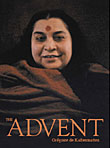
"She indeed promises, 'I will tell you all the secrets.'"
"We know that Self-realization, the second birth, marks the entry to the Kingdom of God which still has many provinces that we may not know. Therefore, we are merely inviting you to enter it and explore it for yourself. To this effect let us unveil the meaning of the instrument (yantra) in-built in each and every individual, the Kundalini that brings about our rebirth. It is the psychosomatic instrument by which the advent of the Kingdom of Heaven can be actualised on Earth. However, this account will not be complete. Let us hope that HH Mataji Nirmala Devi will, one day, grant us a book fully displaying the process of Man's second birth and spiritual ascent. She indeed promises, 'I will tell you all the secrets.'"
Gregoire de Kalbermatten, The Advent
The Life Eternal Trust Publishers, 1979, p. 55.
Subject: RE: Editing of book
Date: Mon, 10 Apr 2000 15:29:29 -0400
From: "Kumar, Manoj (MMRX)"
To: "'Jagbir Singh'"
CC: "Kumar, Manoj (MMRX)"
Dear Jagbir,
I presented your book to Shri Mataji when I was in India. She spent almost half an hour to go through the book. Overall, She was very pleased with the book and especially with your effort in compiling the information. She Mataji felt that it needs some editing. She asked me to convey to you"Tell Jagbir now to leave it to Her.”
She suggested that She will get it published in India in 4 volumes because the print is very small in its existing format which will be made bigger and will than be more readable. She suggested that since it is going to be a priced item that you should remove it's free availability from the web.
You can contact the leader of India Arun Goyal who was present at the time of my discussion with Shri Mataji to get further status. Shri Mataji will be India till the 18th and then will come to Europe. Arun Goyal's email address in India is mother@del3.vsnl.net.in.
!jai Shri Mataji!
Your brother,
Manoj"
Thu Jul 15, 2004
Jai Shri Mataji Brother Jagbir;
In catching up with past mail, the question is : is this book
available for purchase? Was it printed on a private run ...?
Or can it be sourced as a CD?
Please let me know; because even though the web site [adishakti] is
great, it still is not a book.
[for those folks that keep plugging e-books; I find it very
reassuring, when reading certain books, to be able to turn them
over on my lap and wait whilst a certain thought congeals! ... the
very weight is reassuring]
Thank you
John
Dear John,
Only a few copies of SHRI ADI SHAKTI: THE KINGDOM OF GOD Vol.1 comprising the first 1145 pages were printed, and presented to Shri Mataji in India by Manoj Kumar, the leader of Eastern USA. Shri Mataji requested that I leave it to Her. (see email from Manoj [above])
Since then I have had no desire to know about the progress. I am fully convinced that, compared to the book, the internet is a far better and faster means of spreading Her message. Only problem is that it will take another two years or so to complete this huge task.
jagbir
*NOTE: Unfortunately Shri Mataji passed away February 23, 2010 before book could be published by Her. Since Shri Mataji told Jagbir to leave it to Her that status quo will remain. The Table of Contents are listed below.
SHRI ADI SHAKTI: THE KINGDOM OF GOD
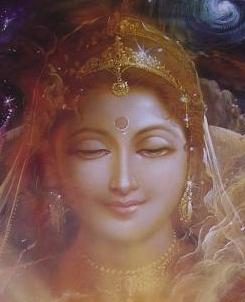
(unlimited power), omnipresent (present everywhere)
Divine Mother of extreme beauty and ageless eternity.
"Therefore a person should ever strive for the
destruction of ignorance, for one's birth is fruitful when
ignorance is destroyed. One thereby attains the end of
human existence and the state of being liberated
while living.”— The Divine Mother (Devi Gita 4.7-8)
"May all the gods attend to what I have to say. By
merely hearing these words of mine, one attains my
essential nature. I alone existed in the beginning;
there was nothing else at all, O Mountain King. My
true Self is known as pure consciousness, the highest
intelligence, the one Supreme Brahman/Thus through
hearing about, reflecting upon, and ascertaining the
Self by the Self, one should also, through intense
meditation, realize that I am in essence the Self...
By this meditation, O King, the noble person will
perceive me directly and then merge into my own
essence since we two are one. By practicing this yoga,
one realizes me as the supreme Self. In that instant,
ignorance and its effects all perish.”
— The Divine Mother (Devi Gita 2.12;/4.40;49-50)
"The Devi insists that liberating knowledge can be
attained here in this world, while still living. Seeking
such knowledge alone makes life worthwhile, and
the attainment of knowledge completely fulfils the
ultimate purpose of existence.” C.M. Brown, 2002. 25
Preface 12
The First Permission From The Spirit Of The Living God In The Sahasrara 13
"I Am The Adi Shakti ... You People Have To Prove It That I Am That!" 15
The Ancient Beings Are Coming! 16
"The Falsehood Of All Outside Religions ... Will Be Exposed" 17
"For Standing Up For The Truth Of Any Cause Is The War Of Dharma" 19
The Material Marathon 20
A 'divine' mother?!!! 21
"I Feel Peaceful.” 22
A 'Cool Breeze'?! A Cool Breeze?!! (Or the Breath Of God Almighty?!!!) 25
"The First Doubt Which Is Very Common Is,'Who Is Mataji?' " 26
TABLE OF CONTENTS 28
PART ONE
Chapter 1
The Universal Question: Why Are We Here On Earth? 47
"How Does One Meet A True Guru?” 48
O Speak Almighty God! 50
"JOIN SHRI MATAJI!" 51
The Manna Monsoon Of Many Moons 55
The Decadent Decades 57
Satnaam: The Imperishable Word 61
"Thou Art The Pristine Spirit ... Which Illuminates And Breaks The Self-Hypnotism" 62
"In Thee Is My Only Haven And Refuge ... O Bhavani!" 64
Meaning Of Avatar Or Incarnation 65
"The Highest Manifestation Of God Almighty Is As Mother" 70
"It Is For The Benevolence Of The Whole Human Race" 71
"First Is Self-Realization ... What is God-Realization?” 72
"Tell All The Nations And Tell All The People All Over The Great Message" 76
The Spiritual Monsoon Begins 77
Earth Is A Conscious, Living Mother 78
Mother Earth: The Womb Of The Universe 81
The Woman Of Great Beauty 84
Overriding Fundamental Difference 85
Swami Satyananda: "Who Will Give Me The Proper Answer?” 86
The Initial Rejection 89
"You Have Seen Photographs Of Angels Around You" 90
"Assuredly, What Ye Are Promised Must Come To Pass" 92
"We Have Done Our Job Here" 93
"It Is Not A Blind Faith!" 94
"Sure, You Should Tell Them.” 95
"In The Age of Aquarius, Even The Skeptics Will Believe" 96
"Now You Have Entered Into The Kingdom Of God" 97
The First Permission In The Sahasrara 98
The Five Divine Days 99
The Golden Goddess Of The Sahasrara 100
"This Is The First Time In History ...” 101
But Why A Religious Pariah? 102
Evolution: The Relentless Rebirth Of Species 104
But How Does God Almighty Know Everything? 106
The Second Permission 107
"They Do Not Know From Where They Get This Knowledge" 111
He Is A Child Of Darkness 114
They Must Leave Her School! 115
They Will Be Expelled! 116
We Will Leave, But Not Withdraw 117
Third and Final Permission To Publish: "Once This Book Is Out ...” 120
The Divine Dream 127
The Ascending Kundalini Serpent Of Great Wisdom 128
The 1000 Esoteric Names Of Shri Lalita 129
The Darkness Of Kali Yuga Before The Dawn Of Satya Yuga 130
The Corrupted Religious Idols of God 133
Vishwa Nirmala Dharma (http://www.sahajayoga.org/index.html) 134
Chapter 2
"Papa, I Met Mother" 137
"Voulez-Vous M'ider?” 138
"My Photograph Is The Photograph Of Reality" 139
What You Mean By Primordial Mother?!!! 142
The First Fax 143
A Floating Serpent? Are You Sure? 146
The Darkness of Ignorance 147
"Who Is This Woman?” 148
Being Born Of The Spirit within 149
An Explicit Spiritual Warranty To The Human Race 151
"Know That The Jagdamba Itself Is Nothing Else But Adi Shakti" 154
"Worship Of Murtis ... We Have Been Unable To Find Vedic Scripture That Support It" 155
Your Wish Will Come True 161
"Papa, Mother Said ...” 163
Shri Bhavani Will Name Her 164
The Divine Unity Acknowledge 165
"Mimi, Thanks For Having The Vision ...” 166
"Mother! Who Was I In The Previous Life?” 167
"Tell Humans To Stop Swearing And Fighting Among Themselves" 169
Lalita 171
The Single-Nail Clogs 173
Shri Vishnu Measures The Universe 178
The Matchless Devotion Of Shri Hanuman 180
Canada! O Blessed Canada! 181
"Searching For Purpose" 182
The First Sight Of Christ 183
"But Papa, He's Huge!" 185
"The Cornerstone of Esoteric Christianity" 187
"Yes! That Is Jesus" 189
1994 New Year Greetings 191
The Cosmic Bull of Shri Shiva 193
Shri Saraswati Plays Her Celestial Veena 194
The Eagle and the Old Woman 198
"The Birth Of A White Buffalo Calf Is An Omen Of Universal Significance" 200
The Multiform Universal Mother And Supreme Deity 204
Shri Mataji, On Whom Do You Meditate? 212
Birthday Greetings to Shri Sita and Ram 214
"I Know All Languages" 216
The Wrathful Form Of Mahakali 217
Ramakrishna 219
Chapter 3
The Age Of Superconsciousness 223
They Are Sahaja Yogis 227
"They Are Different, Papa.” 229
Did You See The Sun, A Light? 230
The Ruh of Allah within 231
Certainty Beyond Doubt 232
Yes, I Have Seen Him! 233
The Language Of The Gods 235
"Yes, In My Meditation" 237
Civitas Dei: The City Of God Almighty 238
The Divine Deity Of The Sahasrara 240
The Lord Of Vaikuntha 241
The Divine Unity 242
The Tabla Player 244
"I Also Rode On The Tiger.” 246
"Papa, Yesterday I Saw Shri Mataji.” 250
The Ray Of Divine Light Piercing The Darkness Of Human Religion 256
"This Inner Being Is The Vast Ocean Of Bliss ... The Vast Flood Of Light" 257
What Is Consciousness? 259
"Conversation With God" 260
Buddhist Popes And Catholic Lamas 264
Templum Spiritus Sanctus 266
The Promise Of The Eternal Kingdom 268
"Everybody Has Said," Seek Him within Yourself.” " 272
PART TWO
Chapter 4
The Opening Of The Sahasrara Chakra 278
The Universe Will Celebrate May 5, 2000 281
"I Saw The Primordial Kundalini Rising Like A Big Furnace" 284
A Giant Spiritual Leap 288
The Androgynous Being of Aquarius 290
The Prophecies, Manifestations And Fulfillment 292
1. The Kingdom within Has Been Revealed! 294
2. The Young Men Have Seen Visions! 295
3. The Wonders Have Been Shown! 296
4. The Total Solar Eclipse Has Passed! 297
5. The Fire Has Been Witnessed! 298
6. The Son Of Man Has Been Revealed! 299
7. The Holy Ghost Has Arrived To Baptize! 303
8. The Comforter Has Arrived To Make All Mysteries Known! 304
9. Lord Jesus' Warning Is Now Enforced! 306
10. Humans Are Being Born Of The Spirit! 307
11. The Spirit Is Giving Spiritual Rebirth! 308
12. His Angel Has Been Sent! 310
13. The Tabernacle Is Now With Humans! 311
14. Fatima's Third Secret Is Being Fulfilled! 312
15. The Golden Millennium Has Arrived! 316
16. The Gospel Of The Kingdom Of God Is Being Preached And Then ... 317
17. The Scattered Of Judah Are Returning! 318
18. The Winds Of Resurrection Are Blowing! 320
19. Those Angels Sent Forth Have Arrived! 321
20. The Signs within Have Been Shown! 323
21. The Total Solar Eclipse Has Occurred! 324
22. The Blast of Truth Has Been Announced! 325
23. Allah's Iron Has Been Delivered! 326
24. Allah Has Completed The Revelation Of His Light! 327
25. Al-Muntazar (The Hidden Imam Mahdi) Has Surfaced! 331
26. Shri Saoshyant Has Pronounced Final Judgment! 333
27. Shri Krishna Has Incarnated Again! 334
28. Shri Kalki Is Manifesting! 337
29. The Great Yogi Of Krutayuga Has Arrived! 340
30. Matraiya, The Three Mothers, Has Incarnated Herself! 341
31. The Buried Are 'Coming Out Of Their Graves'! 343
32. The Great Spirit Has Arrived! 344
33. The Eagle Has Landed! 347
34. Hunab K'u Has Flashed Like Lightning! 352
35. The Scriptures Have Contradicted! 353
36. The Sophianic Millennium Has Arrived! 378
37. She Has Begun The Age Of Aquarius! 381
"Now I Say Again ... You Have To Be Born Again!" 387
The Truth As Witnessed 393
"Does God Really Exist?” 395
"You Do Not Have A Blind Faith" 396
"God's Home Address" 405
The Comforter 407
"I Am Here To Tell You All These Things Which Christ Could Not Tell" 412
"Was Jesus Speaking About Muhammed When He Mentioned The Comforter?” 416
The Descend Of The Great Divine Mother 421
The Diseased Conquerors Of Paradise 424
The Birth Of Dawn 426
The Universe Of Kazuaki Iwasaki 428
Our Unbelievable Origin 432
Ancient Light 434
The End Of The Mathematical God 438
The All Pervading Consciousness 441
"Jer-ry! Jer-ry! Jer-ry! ...” 442
The Eye Of Shiva 448
Chapter 5
"They Say There's Just Enough Religion To Make Man Hate One Another, 454
U.N. Report Of The Special Rapporteur On Religious Intolerance 457
The Rival Religious Restaurants 478
"You Were Never Connected With This All-Pervading Power" 480
Shri Mataji?!!! Sahaja Yoga?!!! 492
Hymn To The Divine Mother 494
Shri Adi Maa, Be My Eternal Guru! 496
The Invisible Eyes and Ears 497
The Sleeping Solution 500
The Clay Oil-lamps 501
The Mysterious Maya Of Shri Mahamaya 502
The Divine Greetings 510
The Time Troubles 511
Pizza Pangs 511
The Punctuality Principle 514
The Celibacy Fallacy 517
"Celibacy Must Come From within; The Purity Must Come From within.” 520
"It Is A Dangerous Time You Are In!" 524
Bliss? What Is Bliss? 527
The Priceless Present 530
The Nintendo 532
The Groundless Grounding 533
The Bratty Brother 535
Chapter 6
The Great Lotus Forest 538
"Happiness" 542
"You Have To Project That Depth, That REALITY That Is within You" 545 The Microcosm within The Macrocosm (Brahmanda Pinda) 548
The Case Of The Double Vision 550
The Case Of The Double Talk 551
The Case Of The Double Witnesses 553
The Case Of The Double Time 554
The Case Of The Double Mothers 555
The Case Of The Double Bodies 564
The Case Of The Double Worlds 565
Homo Sapiens: Discover Your Self! 567
The Parable Of The Kingdom Of God 569
The Proclamation Of The Kingdom Of God 572
"There Is Nothing To Look Outside, Everything Is Inside" 576
The Knowledge within 578
The Offended Fools 584
The Revelations Of The Sacred Pujas 587
The Guru Puja 589
The Birthday Puja 598
The Easter Puja 600
Sahasrara Puja 602
The Divine Musicians of Maa 604
Jagoh Savera Aya Hai 607
The Praises Of The Multitudes To The Almighty Creator 608
Omar Khayyam's Legacy 609
The Supreme Spirit Of God Almighty 610
PART THREE
Chapter 7
The Liberated Human Spirit 618
The Gods within 619
"What Is Dharma?” 625
Lord Jesus Guards The Narrow Gate 628
Are We Really Awake? 631
The Ever Forgiving Divine Mother 633
Shri, it's Time To Go 634
"Mushikavahanaya: Adoration To Him Who Rides A Mouse" 637
The Mighty Messenger 638
Tuesday, The Divine Day Of Shri Ganesha 646
Shri Ganesha, Forgive Our Ignorance! 648
"I Am The Brahm-Chaitanya" 651
Breaking The Idol Barrier 656
Her Sacred Lotus Feet 658
Be Fearless 659
Levitation, The Mode Of Spirit Travel 660
The Divine Cool Breeze of the Holy Ghost 660
The Image Of Reality 661
Mahamaya: The Supreme Illusion 664
Chapter 8
God Almighty Is Light! 667
The Light: Qur'n 678
The Blind Men And The Elephant 681
The Concealed Message Of His Light 683
The Baptism of Allah 696
Yogic Insights Into Islam 704
The Tree Of Eternal Life 706
The Seven Firmaments 707
The Guardian Angels 708
The Nadis 709
LAA UQSIM BI-YAWM AL-QIYAMAH; WA-LAA UQSIM BI-AN-NAFSAL-LAWWAAMAH 712
The Chakras 714
Mooladhara Chakra 717
Swadhisthan Chakra 719
Nabhi Chakra 721
Anahath Chakra 723
Vishuddhi Chakra 725
Agnya Chakra 727
Sahasrara Chakra 730
The Void 733
Kundalini 734
The Subtle System: A Universal Truth Of All His Messengers 737
Chapter 9
Offerings To The Creator: The Timeless Truth Of All Tribes 755
The First Offering And Second Fiasco 757
V-8 Juice and Campbell Soup 759
Pizzas In Paradise 761
They Came On Their Own 762
The Universal Mantra Of Shri Annapurna 764
Baba Nanak Is Here. 767
The Stainless Steel Utensils 768
Shri Ganesha's Favorite 769
The Late Lentils 770
Honey In The Milk 771
The Macaroni Mess 772
The Complimentary Code 773
The Unknown Offering 774
The Lusty Garlic And The Erotic Onion 778
Vegetarians, Twice-Born Men And Garlic-Eating Deities 779
The Taste Thought 780
The Waiting Guests 782
The Great Demon 784
"They Are Not Gurus - They Are Raksasas.” 789
The Spiritual Snares 790
Modern Masters Of Ancient Vidya 791
Sham Swamis Of Modern Avidya 795
"Passing Of The Night-Life" 801
The Vegetarian Myth 804
The Bhagaveg-Gita?!!! 806
A Vegetarian Verse? 810
Laws Of Manu 812
Lusty Women And Placid Men 814
Kosher Diet And Shariat Shackles For The Guard Dogs Of The Idols 821
Vaikunta-Bound Vegetarians? 830
The Yoga Of Self-Realization 836
Yoga Rascals 839
A.C.'s Superior Bhakti Yoga? 842
But Mr. A.C. And ISKCON: "Where Is Shri Arjun's Rejection?” 843
The Spirit And The Sperm 844
Demi-gods And Advanced Semi-gods? 847
The 32nd Vedic Pope 848
The Mahayoga of Shri Krishna 849
"The Yoga That Gives Peace From All Pain ... And The Joy Of Eternity" 857
"Now Shri Krishna Is Not There. it's Me Who Is Shri Krishna" 859
Pandit Parasites and Brahmin Leeches: It Is Essential To Remove Them 861
"You Cannot Have Religion Like That" 863
"We Belong To This Great Religion Of Truth" 869
PART FOUR
Chapter 10
The Hole-In-The-Rock"Grave" 882
Good Friday Greetings 892
The Immaculate Conception 893
Franklin Grahams And Pat Robertsons: Siblings Of Satan 894
Truth! Can Humans Perceive It With Their Mind? 896
The Narrow Gate 897
"There Was A Powerful Child, Lustrous Like One Thousand Millions Of Suns" 906
"But Whosoever Speaketh Against The Holy Ghost, It Shall Not Be Forgiven Him" 908
"Then Saith He To The Disciple, Behold Thy Mother!" 910
Be Forewarned, Humans, Be Forewarned! 913
Thanksgiving 917
Who is the Counselor? 918
"The Shekinah Is God's Presence ... That Dwells In Our Midst" 919
The Vicarius Christi? 922
Why? Why? Why? ... 926
The Shattering Truth 927
The Evil Empire 928
"People Do Not Know What Time Has Come" 930
The Rock of Satan 932
"The Lord Denounces Lying As The Work Of The Devil" 934
The First Falsehood: Original Sin 936
The Second Falsehood: Clerical Soul Savers 940
The Third Falsehood: Simony 941
The Fourth Falsehood: Purgatory Hell 942
The Fifth Falsehood: Canonization 948
The Sixth Falsehood: Hereditary Infallibility 950
The Seventh Falsehood: The Inquisition 953
The Eight Falsehood: Celibacy 957
The Ninth Falsehood: Confession 959
The Tenth Falsehood: Baptism 963
The First Commandment 965
The Second Commandment 966
The Third Commandment 967
The Fourth Commandment 968
The Fifth Commandment 969
The Sixth Commandment 970
The Seventh Commandment 973
The Eight Commandment 974
The Ninth Commandment 975
The Tenth Commandment 977
Chapter 11
The Book Of Revelation 978
The Empire Of The Beast 982
The Monarchy Of The 263 Antichrists 984
"Seeing This False Christ, In Fury And Passion, I Made My Voice Heard All Over The Nation" 985
Rev. 17. 1-2: The Last Judgement 987
Rev. 17.3-4: The Power Of Perdition 988
Rev. 17.5-6: Vatican, The Mother of Harlots 989
Rev. 17:7-8: The Rock Of Satan 991
Rev. 17.9-14: The Corrupt World Order 995
Rev. 17.15-18: The Evil Empire 997
Rev. 18. 1-3: "All Nations Have Drunk Of The Wine Of The Wrath Of Her Fornication" 1000
Rev. 18.4-6: "Come Out Of Her, My People" 1003
Rev. 18.7: Vatican: "I Will Never Be A Widow!" 1017
Rev. 18.8-10: "For In One Hour Is Thy Judgement Come" 1018
Rev. 18.11-13: The Soul Traders Will Perish 1021
Rev. 18.14-17: "Alas, Alas, That Great City, That Was Clothed In Fine Linen" 1026
Rev. 18.17-20: "In One Hour Is She Made Desolate. Rejoice Over Her" 1027
Rev. 18.21-22: Great Vatican, Your End Is Near! 1028
Rev. 18.23-24: "And The Light Of A Candle Shall Shine No More At All In Thee" 1029
Rev. 19.1-5: "Alleluia; Salvation, And Glory, And Honour, And Power" 1031
Rev. 19.6-8: And Heaven And Earth Rejoiced In Mighty Thunderings 1039
Rev. 19.9-10: "The Testimony Of Jesus Is The Spirit Of Prophecy" 1044
Rev. 19.11-14: The Second Coming 1046
Rev. 19.15-16: "King Of Kings And Lord Of Lords.” 1048
Rev. 19.17-21: Those Marked By The Beast 1049
Rev. 20.1-3: The Defeat Of Satan 1066
Rev. 20.4-10: The First Resurrection 1069
Rev. 20.11-15: This Millennium Of Light 1074
Rev. 21.1-5: "And God Shall Wipe Away All Tears From Their Eyes" 1079
Rev. 21.6: Shri Ganesha And Christ 1085
Rev. 21.7: Blessed Are The True Believers (Al-Mu'minun), For They Shall Inherit All Things 1102
Rev. 21.8: "But The Fearful, And Unbelieving, And The Abominable, And Murderers" 1103
Rev. 21.9-21: Sahasrara, Citivas Dei, City Of God, Holy Jerusalem, City Of Shri Vidya ... 1109
Rev. 21.22-27: "For There Shall Be No Night There" 1111
Rev. 22.1-2: "And The Leaves Of The Tree Were For The Healing Of The Nations" 1114
Rev. 22.3-5: "And They Need No Candle, Neither Light Of Sun" 1119
Rev. 22.6-12: "And He Which Is Filthy, Let Him Be Filthy Still" 1122
Rev. 22.13-15: "I Am Alpha And Omega, The Beginning And The End" 1123
Rev. 22.16-22: "And Whosoever Will, Let Him Take The Water Of Life Freely.” 1128
Apokalypso: The Fall Of The Papacy 1129
PART FIVE
CHAPTER 12
The Awakened One: Shri Buddha 1146
"I Want To See The Buddha.” 1156
The Winds Of Qiyamah 1158
Nirvana 1160
The Second Encounter 1161
The Divine Hands Of Shri Buddha 1162
Shri Buddha's 2538th Birthday 1164
The Deluded Tantras 1169
The Buddhist Pope 1177
Lost Lamas And Laymen 1178
The Great Delusion 1183
Leap Into Superconsciousness 1185
The Masters Who Corrupt Truth 1187
Too Many Gurus Spike The Truth 1189
The Diffusion Of The Ancient Spiritual Virus 1194
The Hands of Shri Buddha 1197
The Eternity Elixir Of The Great Divine Mother 1201
Samsara Stew Of The Tantra Fathers 1203
The Maitreya 1205
Maitreya or Matraiya? 1207
Shri Mitrarupini 1208
"The Tathagatas Extol Thee, The Single One, As Many, Multiformed And Many-Named" 1212
The All-Pervading Tao 1214
One-Tenth Inch 1225
Falun Dafa 1226
Chapter 13
The Revelation of Guru Nanak 1232
"I Was With Him - In Fact With All Of Them.” 1237
Guru Nanak And The Men Of Miracles 1243
Shri Mataji, Who Is This Aykaa Mayee? 1255
And Ask Guru Nanak What Dhyan Means 1256
The Jewel In The Crown 1258
So Why This Universal Patriarchal Fear Of The Aykaa Mayee? 1260
The Blind Leading The Dumb 1262
The Liberated Householder 1264
"Feminist Consciousness May Bring Out For Sikhs A New Awareness Of The Female" 1267
1. The Universal Mother 1267
2. Onkar The Primordial Being 1270
3. His Shakti Creates 1273
4. Brahma, Shiva And Vishnu 1274
5. She Is Shri Brahma, Shiva and Vishnu 1278
6. God, The Father And Mother 1281
7. She Is Adi Shakti, His Shakti 1282
"Supreme Oneness: The Homogenous Oneness" 1290
The Wandering Cattle Of The Lost Priests 1293
"Qualification Of A Pardhaan" 1294
What Is The Blessed Vision Of The Lord Guru? 1296
What Type Of Eyes Can See The Blessed Vision? 1298
Deep within, The Divine Light Has Dawned 1300
Dsam Duar, The Door Of Liberation 1303
"Self-Realization: What Is It?” 1306
WaheGuru, Free Me From Spiritual Darkness 1310
O Supreme Goddess Shri Lalita Devi, Release Me From Ignorance! 1317 "Spiritual Ignorance" 1322
Chapter 14
The Revelations of Rebirth 1326
The Only Inhabited Planet? 1333
Doctrine Of Rebirth 1337
Reincarnation: Edgar Cayce 1339
Reincarnation: Kevin Williams 1339
Reincarnation: Dan Costian 1342
From Spiritual Reincarnation To Religious Retardation 1345
"Questions To Ask Yourself" 1349
"Re: The Earth Is Flat"- Holy Quran? 1350
Rebirth: Surah 22:5 Al Hajj (The Pilgrimage) 1351
Rebirth: Surah 39:42 Al Zumar (Crowds) 1352
Rebirth: Surah 2.28 Al Baqarah (The Heifer) 1354
Rebirth: Surah 4:97-99 Al Nisa (The Women) 1355
Rebirth: Surah 56:60-61 Al Waqi'h (The Inevitable) 1357
Rebirth: Surah 71:13-14 Nuh (Noah) 1358
Rebirth: Surah 23:12-15 Al Mu'minun (The True Believers) 1360
The First and Second Deaths 1362
Origin of Species 1364
The Primordial Human Evolution 1366
Creation Of Man And His Fulfilment 1369
The Kitab al Munir 1372
Where Is The Kitab Al Munir? 1375
The Holy Spirit Of God 1387
The Kitab Al Munir: The Book Of The Great Adi Shakti Shri Lalita Devi 1390
Vibratory Awareness 1506
The Woman Who Died Twice 1508
PART SIX
Chapter 15
Prophet Muhammad, A Messenger Of God 1524
The Spirit Of Allah, His Ruh 1529
"We sent Aforetime The Messengers With Clear Signs"Surah 57:25 Al Hadid (The Iron) 1531
The Parable and Prophecy of Allah's Iron 1532
The Iron Brick 1534
"And We Have Sent It Down"Surah 57:25 Al Hadid (The Iron) 1537
The Mighty War Of Armageddon (Battle of Qa'im) 1539
Apostasy: The Sword Of Satan 1540
"The Many Benefits For Mankind"Surah 57:25 Al Hadid (The Iron) 1547 "In Which Is Mighty War": Questions For The Ummah 1555
The Missing Messengers 1558
The Single Spiritual Tree? 1561
His Revelations To Different Tribes 1566
The Honored Messenger 1570
"On The Earth Are Signs ... As Also In Yourselves. Will Ye Not Then See?”Surah 51:22 1574
"Soon Will We Show Them Our Signs ... In Their Souls"Surah 41:53 Fussilat (Expounded) 1575
The Sufis 1579
The Blind, Deaf and Arrogant 1591
Chapter 16
The Sure Reality of Al Qiyamah 1595
"How Are They Going To Judge You? The Judgment Is Here!" 1599
The Mushriks (Disbelievers) 1602
Surah 75:1-40 Al-Qiyamah (The Resurrection) 1603
The Call To Witness The Resurrection 1605
Resurrection: The Rebirth Of All Souls 1607
The Sure Signs of Resurrection 1608
"Concerning What Are They Disputing? Concerning The Great News!!!" 1609
The 'light' That Dazes?!!! 1610
The Moon Will Stop Shining?!!! 1611
The Sun And Moon Is The 'Original Light'?!!! 1612
Refuge In The Mosques, Churches And Temples?!!! 1613
This Is The Age Of The Last Judgment 1615
"When Your Resurrection Will Take Place Then Your Hands Will Speak" 1616
"Prophet Muhammad Is Talking Of The Coming Time ... Of Resurrection" 1618
"This Is The Qiyamat, The Time Of the Final Judgment" 1619
The Absolutely Forbidden Speculation Of Qiyamah 1620
Ummah: You Were Explicitly Warned Not To Interfere With This Revelation, But You Did 1624
The Satanic Deceit 1626
"It Is For Us To Collect It (Revelation) And To Promulgate It (Resurrection)" 1628
"It Is I And My Messengers (Of Qiyamah) Who Must Prevail" 1630
The Al Mutaffun (The Dealers In Fraud) Will Be Told: "This Is That Which Ye Used To Deny" 1631
"And What Will Explain To Thee What The Day Of Judgement Is?” 1632
But You Humans Love The Fleeting, Fighting, Fundamentalist Life 1634
"Those Who Behave Arrogantly On The Earth ... Them Will I Turn Away From My Signs" 1639
"Even If They See All The Signs, They Will Not Believe In Them" 1640
"And If They See The Way Of Right Conduct, They Will Not Adopt It As The Way" 1642
"But If They See The Way Of Error, That Is The Way They Will Adopt" 1644
"For They Have Rejected Our Signs, And Failed To Take Warning From Them" 1646
Yusuf Ali: "The Supreme Bliss - Seeing The Face of Allah.” 1648
Those Who Rejected The Offer 1653
The Mocking Unbelievers (Al-Kafirun) 1654
Does Man Think That He Will Be Left Uncontrolled?” 1656
The Spiteful Humans Of That Lowly Spunk 1657
The Trumpets Of Doom 1658
"Some Faces That Day Will Beam Looking Towards Their Lord" 1659
The Second Coming And End 1660
"Allah Will Not Address Them On The Day Of Resurrection" 1663
"And God Will Not ... Nourish Them For Growth" 1664
"God Will Not Speak To Them, Or Assoil Them, On The Day Of The Resurrection" 1666
"God Will Not Turn To Them On The Day Of Resurrection" 1667
"God Will Neither Speak To Them Nor Purify Them" 1668
"God Will Not Speak ... Nor Will He Sanctify" 1670
"And This Is The Day Of Resurrection: But Ye - Ye Were Not aware!" 1672
"This Is The Day Of Resurrection, But Ye Used Not To Know.” 1674
"We Have Indeed Revealed This (Message) In The Night Of Power (surah 97:1-5 Al Qadr)" 1675
"And What Will Explain To Thee, What The (Day) Of Noise And Clamour Is?” (Surah 101) 1676
The Coming Century Of Religious Persecution 1678
"The Night Visitant - And What Will Explain To Thee What The Night-Visitant Is?” 1679
The Useless, Toothless Exoteric Idols 1681
So You Deny All The Sure Signs Of Qiyamah?!!! 1682
"Verily, We Have Warned You of A Penalty Near" 1685
"Again, Woe To Thee, (O man!), Yea, Woe!" 1687
Some Sons Surrendered, Some Fathers Frowned 1688
Some Daughters Believed, Some Mothers Denied 1689
Some Wives Smiled, Some Husbands Fumed 1690
Some Humans Awoke, Some Fools Fled 1692
Some Relatives Rejoiced, Some Friends Rejected 1694
Some Believers Rejoiced, Some Fanatics Raged 1698
Some Priests Prostrated, Some Rabbis Rebelled 1700
The Tongue Twisters 1702
External Idols"Reflect A Mentality That Has Been Rejected By Modern Man" 1703
The Present Resurrection 1705
The Blasts of Truth 1707
The First Blast: Resurrection 1708
The Second Blast: The Regions within 1709
The Third Blast: The Explosion in the Universe 1710
The Fourth Blast: Birth Day Of Shri Christ 1712
The Last Blast: Rejection Of The Ummah 1714
WE! Who Are We? 1715
The End Times 1716
"Fear My Warning!" 1718
The Evil Century 1720
Announcers Of The Resurrection," Arise And Deliver Thy Warning!" 1722
Devotees Of His Ruh, Stand Up And Warn the Mohareb! 1723
Emissaries Of The Hidden Imam, Go Forth And Warn The Nations! 1724 Messengers Of Allah, Forewarn All Al Mutaffun (The Dealers In Fraud) 1725
Devotees Of The Hidden One, Come Out And Warn The Mushriks (Disbelievers)! 1726
Chapter 17
The Twelve Imams 1728
Blessed Are The Peacemakers, For They Shall Be Called Sons Of God 1731
"Ah Woe, That Day, To The Rejecters Of Truth!" 1732
Fools! "What Will Make You Realize What The Day For Sorting Is?” 1735
Hypocrites (Al-Munafiqun)! "In What Statement, After This, Will They Believe?”! 1736
Disbelievers (Mushriks)! "So If You Have A Plan, Plan Against Me (Now).” 1737
Transgressors! "Alas The Woe That Day For Those Who Deny!" 1738
Rejecters! "We Have Summoned You And The Previous Generations"! 1739
Ummah: "Eat And Enjoy Temporarily; You Are Guilty.” 1740
Seekers Of Truth! "Verily That Which Ye Are Promised Is Imminent"! 1741
Is prostrate yourself A Message? A Warning? Or A Fool's Fantasy? 1744
Iblis: "Give Me Respite Till The Day They Are Raised Up.” 1745
Iblis: "I Will Certainly Cause Them All To Deviate" 1746
Satan: "I Will Surely Bring His (Adam's) Descendants Under My Sway.” 1747
Allah: "And Most Certainly You Will Come To Know About It After A Time.” 1748
The Five Pillars Of Falsehood 1749
First Falsehood: "But They Killed Him Not ... But So It Was To Appear To Them" 1750
Second Falsehood: "It Is Not Befitting To Allah That He Should Beget A Son.” 1752
Third Falsehood: "They Ask Thee Concerning The Spirit.” 1755
Fourth Falsehood: "But (He Is) The Messenger Of Allah, And The Seal Of The Prophets" 1757
Fifth Falsehood: "Lost Are They Who Slay Their Children From Folly" 1764
Proclaim Islam To Pagans, Not Christians, Jews, Hindus Or Buddhists 1767
Warnings To Pagans Against Associating Their Rock Deities With God Almighty 1769
Idolatory, Islam and India by Anwar Shaikh 1774
"All The Islam People Think They Are Surrendered To God" 1783
"Hindu Fundamentalism: Does It Really Exist?” 1787
"What Is The Best Religion?” 1790
Modern Islam: The Faith Of Delusion And Falsehood 1792
Hadith And The Corruption Of The Great Religion Of Islam 1794
"They Have Made All Kinds Of Nonsense With Them" 1810
Chapter 18
The Contradicting Scriptures 1815
Hindu Karahais 1816
Christian Kettles 1826
Jewish Pans 1829
Muslim Pots 1835
"Chapter Four: The Missing Passages Of The Qur'n" 1836
"Chapter Five: Sab't-I-Ahruf: The Seven Different Readings" 1842
"Chapter Seven: Historical Errors of the Quran" 1848
"Chapter Eight: Quranic Language and Grammatical Mistakes" 1851
"Chapter Nine: Capricious Revelation of the Quran" 1857
"Chapter Ten: The Abrogator and Abrogated Quranic Verses" 1861
"Chapter Eleven: The Contradictions of the Quran" 1865
"Chapter Twelve: The Perversion Of Quran And The Loss Of Many Parts Of It" 1867
"Distortion In The Quran" 1873
"Corruption Of The Text Of The Qur'n" 1875
"The Collection Of The Qur'n - From The Hadiths" 1876
"On The Integrity Of The Qur'n" 1886
Pots, Pans And Kettles Of The Jewish, Christian And Muslim Communal Kitchen 1887
Those Idolators Deceived By Iblis 1899
Truth? How To Determine Truth? 1908
The Armageddon Army (The Mohareb Militants) 1912
PART SEVEN
Chapter 19
"The Whole Work Of Christ Went Into The Hands Of This Devil" 1940
Elaine Pagel's The Gnostic Gospels 1942
The Gnostics 1943
"You Must Have The Knowledge. So That Promise Has To Be Fulfilled" 1949
The Genesis Factor 1952
Michael Baignent & Richard Leigh's The Dead Sea Scrolls, And Others 1956
The Peter And Paul Of Dan Costian's Bible Enlightened 1959
"Many Things About Jesus ... Do Not Figure In The Gospels.” 1965
"Actually He Died Later On In Kashmir. There Is Proof Of It.” 1967
The Missing Years Of Shri Jesus Christ 1968
Then What Happened After Shri Jesus Was Resurrection? 1973
"Maturity and Old Age" 1974
So Where Is The Garden Of Eden? 1982
And Where Did Prophet Abraham Come From? 1983
What About The Tomb Of Moses? 1984
Where Do The Tracks Of Solomon Lead To? 1986
The Ten Lost Tribes of Israel 1987
"Life And Works Of Jesus" 1991
Aquarius! The Dawn Of The Golden Age 2016
The Zodiac 2017
The Age Of Aquarius 2018
Chapter 20
The Celestine Prophecy 2020
James! There Are Facts In Your Fiction 2021
Sorry, Your Truth Is Stranger Than My Fiction 2022
Spiritual Pimps Of A Consumption Culture 2025
The First Insight 2036
The Second Insight 2037
The Third Insight 2047
The Fourth Insight 2050
The Fifth Insight 2052
The Sixth Insight 2053
The Seventh Insight 2054
The Eight Insight 2055
The Ninth Insight 2057
The Prophecies of Nostradamus 2063
John Hogue's Nostradamus: The New Revelations 2064
"Nostradamus And The End - July 1999 Is Coming Fast!" 2068
Manuela Dunn Mascetti And Peter Lorie's Nostradamus: Prophecies For Women 2075
"We Have Many Stupid Women With Us" 2076
The Seline Movement 2078
The Silence Of The Rams 2080
The Three Great Mothers 2082
Enlighten! Feminine Kundalini, Enlighten! 2085
City And Province Will Gain From The Great Journey within 2090
Healing of Hearts And Nations 2096
"This Great Brahma Shakti Is At Your Lotus Feet" 2097
The Eternal Light within 2098
The End Of All The Corrupted Idols Of Worship 2099
"This Priesthood Has To Go" 2100
“A Priesthood ... More Preoccupied With Collecting Alms Than Saving Souls" 2102
"Oh Vast Rome Your Ruin Approaches" 2103
"Fatima Network: The Third Secret Revealed (Part One)" 2105
"Fatima Network: The Third Secret Revealed (Part Two)" 2107
"Fatima Network: The Third Secret Revealed (Part Three)" 2108
"Fatima Network: The Third Secret Revealed (Part Four)" 2110
"Fatima Network: The Third Secret Revealed (Part Five)" 2112
Lunar Consciousness 2115
The Face On The Moon 2122
"Shri Mataji, We The Sahaja Yogis Of The World, Desire And Pray ...” 2126
Sahaja Yoga: The Supreme Yoga Of The Great Adi ShaktiI 2127
The Battle of Armageddon (Battle of Qa'im) 2128
"They Are The Ones Who Are Going To Save The World, Not The Men" 2141
The Idols Will Fall Like Dominos 2143
And Corrupt Rome, Your End Is Near! 2144
"These Are They Which Came Out of Great Tribulation" 2146
"They Are Going To Oppose You!" 2148
"There Should Be No Fear Of Death" 2160
"But You Know That You Have Eternal Life. You Can Never Die" 2162
"Death Does Not Exist For You - It Is Finished ... Your Spirit Is Free" 2163
"Many People Ask Me Questions: "What About Death?” " 2166
Chapter 21
Letters To Earth 2168
"I Want To Tell That I Am That Destination" 2170
"My Dear Children, What Are You Searching?” 2170
"Illusion Will Go By Meditation" 2171
"What Is There In This World To Cling To?” 2172
Lectures To Earth 2177
Before Leaving Earth You Have To Be Innocent, Pure, Simple ... 2189
"He Won't Allow More Sins To Be Committed Against Him" 2192
"Before That . . These Powers We Are Going To Use For Transformation" 2204
"And This Gospel Of The Kingdom Shall Be Preached In All The World" 2208
NOTE: If this page was accessed during a web search you may wish to browse the sites listed below where this topic or related issues are discussed in detail to promote global peace, religious harmony, and spiritual development of humanity:
www.adi-shakti.org/ — Divine Feminine (Hinduism)www.holyspirit-shekinah.org/ — Divine Feminine (Christianity)
www.ruach-elohim.org/ — Divine Feminine (Judaism)
www.ruh-allah.org/ — Divine Feminine (Islam)
www.tao-mother.org/ — Divine Feminine (Taoism)
www.prajnaaparamita.org/ — Divine Feminine (Buddhism)
www.aykaa-mayee.org/ — Divine Feminine (Sikhism)
www.great-spirit-mother.org/ — Divine Feminine (Native Traditions)
“Now, the principle of Mother is in every, every scripture - has to be there.” Shri Mataji, Radio Interview 1983 Oct 01, Santa Cruz, USA
Disclaimer: Our material may be copied, printed and distributed by referring to this site. This site also contains copyrighted material the use of which has not always been specifically authorized by the copyright owner. We are making such material available to our readers under the education and research provisions of "fair use" in an effort to advance freedom of inquiry for a better understanding of religious, spiritual and inter-faith issues. The material on this site is distributed without profit. If you wish to use copyrighted material for purposes other than "fair use" you must request permission from the copyright owner.
