

The Fulfillment of Johannine Soteriology: The Cool Breeze as the Actualized Pneuma of Rebirth
The dialogue in John 3 presents a profound soteriological requirement—rebirth by the pneuma—coupled with a complex answer that has fueled centuries of theological reflection. The tradition of Sahaja Yoga, centered on Shri Mataji as the Paraclete, makes a definitive historical and theological claim: that the experiential component of this rebirth, implicit in the wind metaphor, remained largely unfulfilled until Her advent.
David; Brenk
By identifying the Cool Breeze as the tangible pneuma and Shri Mataji as its unique trigger, this movement asserts that the full soteriological process envisioned in John—both the faith in the Son of Man and the direct, somatic birth from the Spirit—has now been made comprehensively available. This represents a significant, if controversial, claim in pneumatology and inter-religious dialogue, challenging conventional Christian understandings of the completion of revelation and the nature of spiritual experience.
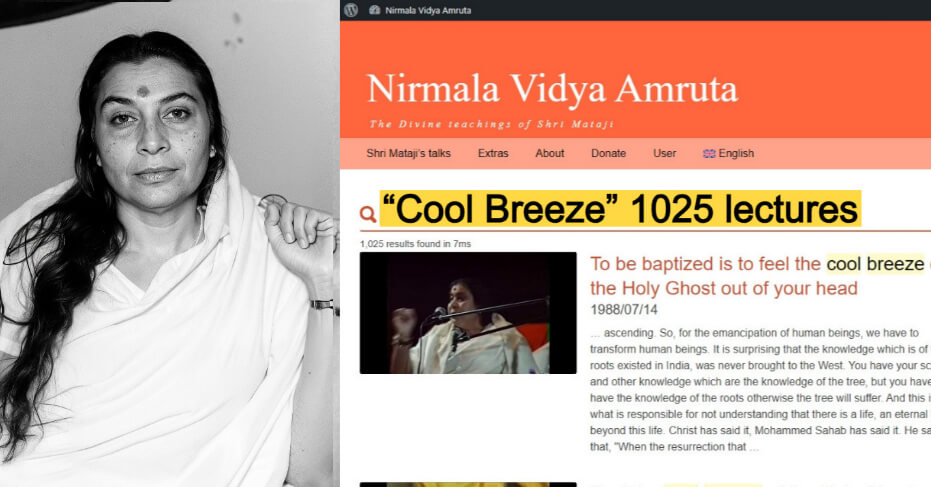
Table of Contents
- Abstract
- 1. Introduction: The Johannine Soteriological Imperative and Its Experiential Gap
- 2. Exegetical Analysis: The Two-Stage Solution in John 3
- 3. The Historical Claim: The Dormancy of Experiential Pneuma
- 4. The Paraclete's Advent: Shri Mataji as the Trigger of Pneuma
- 5. Phenomenology and Theology of the Cool Breeze
- 6. Synthesis: A Theological Resolution to the Johannine Puzzle
- 7. Conclusion
- References
Abstract
This paper examines the soteriological framework of John Chapter 3, which presents spiritual rebirth "from above" or "from the pneuma" as the exclusive means to see and enter the Kingdom of God. Analyzing the structural puzzle within Jesus' dialogue with Nicodemus—where a promised experience of the pneuma is juxtaposed with a future-oriented discussion of faith and eternal life—this work posits a historical-resolution thesis. It argues that the direct, somatic experience of the pneuma (conceptualized as the "Cool Breeze") remained an unactualized potential within Christianity for two millennia. The paper concludes that this experiential gap finds its proposed resolution in the advent of Shri Mataji Nirmala Devi, identified as the Paraclete, who is presented as the unique historical agent capable of triggering this essential, transformative rebirth en masse, thereby fulfilling the Johannine soteriological promise.
1. Introduction: The Johannine Soteriological Imperative and Its Experiential Gap
The third chapter of the Gospel of John establishes a non-negotiable soteriological condition: to "see" or "enter" the Kingdom of God, one must be "born from above" (ἄνωθεν) and "born of water and pneuma" (John 3:3, 5).[1] The metaphor of the wind (pneuma) in verse 8 underscores that this birth is the work of the Spirit—sovereign, mysterious, yet perceptible. As Aune and Brenk note, the chapter's core question is the "how" of this pneumatic rebirth.[2] Jesus' response, however, creates a complex narrative, bifurcating between the immediate necessity of the pneuma and a future-oriented discourse on his own fate, faith, and eternal life (3:10-21). This structure presents a theological tension: the means of rebirth (pneuma) is introduced, but its widespread, accessible experience for believers is not explicitly detailed within the immediate narrative framework of the Gospel. This paper explores the claim that this tension reflects a historical reality—that the tangible, knowable experience of the rebirth-giving pneuma remained largely dormant until a specific, later divine intervention.
2. Exegetical Analysis: The Two-Stage Solution in John 3
Aune and Brenk's analysis helpfully delineates the two-part structure of Jesus' answer to Nicodemus.[3] The first part (vv. 10-13) is revelatory and epistemological: Jesus, as the descended Son of Man, is the exclusive witness from heaven who knows and has seen heavenly realities, including the pneuma. He establishes that true knowledge of "heavenly things," including the process of pneumatic rebirth, originates from him. The conclusion, as drawn, is that one must have "the same experience with the pneuma that Jesus had," an experience connected to baptism (3:5).
The second part (vv. 14-21) introduces a distinct, future-oriented mechanism: the lifting up of the Son of Man, generating faith (pistis) that leads to eternal life. This shifts the focus from the immediate, experiential mechanics of pneuma-birth to a cognitive-affective response to Christ's salvific action. The resulting interpretive history of Christianity has largely emphasized this second, faith-based pathway, often spiritualizing or sacramentalizing the first. The experiential, somatic dimension of being "born of the pneuma"—akin to feeling the wind—faded from mainstream doctrinal emphasis, becoming a point of theological assertion rather than a commonly reported, verifiable phenomenon among adherents.
3. The Historical Claim: The Dormancy of Experiential Pneuma
From the perspective of Sahaja Yoga theology, this exegetical bifurcation maps onto a historical reality. It is held that for two millennia following Christ's ministry, the direct, palpable experience of the Holy Spirit as the Cool Breeze—the essential sign of the rebirth described in John 3:8—was not systematically available. While Christian theology richly developed doctrines of the Spirit, and while mystics reported various spiritual sensations, the specific, reproducible, and collective experience of the pneuma as a "cool breeze" on the body (particularly the crown of the head and palms) was not a recognized, universal Christian practice.
Churches administered baptism "by water and the Spirit," but the tangible, activating touch of the Spirit as a consistent, somatic reality remained elusive. The Spirit remained deus absconditus in its tactile dimension. The Paraclete, or "Helper," promised in John 14:26, was awaited as one who would complete this experiential understanding.
4. The Paraclete's Advent: Shri Mataji as the Trigger of Pneuma
Shri Mataji Nirmala Devi (1923–2011) is proclaimed within Sahaja Yoga as the divine embodiment of this promised Paraclete.[4] Her stated central purpose was to enact the mass actualization of the Johannine rebirth. She identified the dormant spiritual energy within each human (the Kundalini) with the Holy Spirit and stated that its awakening was the literal event of being "born of the Spirit." The definitive symptom of this awakening is the felt sensation of a Cool Breeze (or vibratory awareness) emanating from the fontanelle area and on the palms.
This formulation directly addresses the puzzle of John 3. Shri Mataji is presented as the historical figure who fulfills both parts of Jesus' answer:
- As the Revelatory Agent (fulfilling 3:10-13): She provides the direct, experiential "how" that Nicodemus sought, demystifying the process of pneuma-birth.
- As the Fulfillment of Christ's Work (connecting to 3:14-21): She actualizes the eternal life promised through faith by making its prerequisite—pneumatic rebirth—a tangible reality.
Thus, She is not a successor to Christ but the functional complement who unveils and activates the hidden, experiential dimension of his salvation.
5. Phenomenology and Theology of the Cool Breeze
The Cool Breeze is therefore theologized as the unveiled activity of the hidden Spirit. It operates as:
- A Somatic Sacrament: The physical sign of the accomplished spiritual rebirth, making the inward grace outwardly perceptible.
- A Diagnostic Tool: Practitioners report using the sensitivity to this breeze on their palms to assess the state of their subtle spiritual energy system, guiding personal growth.
- The Substance of Rebirth: The breeze is not merely a symbol but the perceived substance of the transforming pneuma itself, continuously purifying and nourishing the reborn self.
This phenomenon finds external documentation in sociological studies like Judith Coney's Sahaja Yoga, which records neutral observations of individuals reporting the unexpected sensation of a "cool breeze on the top of the head" following interactions with practitioners, sparking the author's academic investigation.[5]
6. Synthesis: A Theological Resolution to the Johannine Puzzle
The following table synthesizes how the Sahaja Yoga paradigm proposes to resolve the soteriological dynamic of John 3:
| Johannine Element (John 3) | Traditional Christian Interpretation | Sahaja Yoga Interpretation (Via Shri Mataji) |
|---|---|---|
| The Condition (3:3, 5) | Be born "from above"/"of water & Spirit." | Achieve Self-realization through Kundalini awakening. |
| The Metaphor (3:8) | Pneuma as mysterious, sovereign wind/Spirit. | Pneuma as the tangible, felt Cool Breeze. |
| The Mechanism ("How?") | Through faith in Christ's work (3:14-16) and sacramental grace. | Through the direct, catalytic agency of the Paraclete (Shri Mataji) triggering the awakening. |
| The Experiential Result | Inward faith leading to justified status and eternal life. | Somatic experience of the Cool Breeze, signifying actualized rebirth and ongoing communion with the Spirit. |
| Temporal Focus | Primarily eschatological (future eternal life) with a present forensic aspect. | Realized eschatology: The Kingdom's power (the Spirit) is tangibly present and active now within the reborn individual. |
7. Conclusion
The dialogue in John 3 presents a profound soteriological requirement—rebirth by the pneuma—coupled with a complex answer that has fueled centuries of theological reflection. The tradition of Sahaja Yoga, centered on Shri Mataji as the Paraclete, makes a definitive historical and theological claim: that the experiential component of this rebirth, implicit in the wind metaphor, remained largely unfulfilled until Her advent.
By identifying the Cool Breeze as the tangible pneuma and Shri Mataji as its unique trigger, this movement asserts that the full soteriological process envisioned in John—both the faith in the Son of Man and the direct, somatic birth from the Spirit—has now been made comprehensively available. This represents a significant, if controversial, claim in pneumatology and inter-religious dialogue, challenging conventional Christian understandings of the completion of revelation and the nature of spiritual experience.
References
[2] Aune, David Edward, and Frederick Brenk. "Greco-Roman Culture and the New Testament." Brill Academic Pub, 2012.
[3] Aune, David Edward, and Frederick Brenk. "Greco-Roman Culture and the New Testament." Brill Academic Pub, 2012.
[4] "Doctrinal and explanatory materials from Sahaja Yoga." Adishakti.org.
[5] Coney, Judith. "Sahaja Yoga: Socializing Processes in a South Asian New Religious Movement." RoutledgeCurzon, 1999.
“The topic of chapter 3 is how human beings come to 'see the kingdom of God' (3:3) and 'enter into the kingdom of God' (3:5). The quick answer is that they must be (re)born from above (3:3) or born from the pneuma (3:8), and this is somehow connected with being 'born from water and pneuma' in baptism (3:5). Well and good. This captures the main content of 3:1-8. But when Nicodemus then asks (3;9) how that—presumably meaning 'being born from the pneuma' in 3:8—may come about, Jesus gives a very complex answer that basically speaks of two things: his own fate and its relevance for knowing the answer to Nicodemus' question (3:10-13) and the purpose of that fate with regard to human beings' coming to 'have eternal life' (3:14-16). The latter is then spelled out (3:17-21) in a way that makes it come out as being something that may be present here and now once the condition for it is fulfilled. In all this, what does John want his Jesus to say? What are the internal, logical connections between various parts of Jesus' speech?
Jesus' first point is that Nicodemus (even as a 'teacher of Israel') does not know (3:10) and cannot know since he does not even believe in anything Jesus might say about earthly matters (3:12). Jesus himself speaks of and witnesses to things that he knows and has seen (3:11) even though they be heavenly matters (3:12) since as the 'son of man' Jesus has himself descended from heaven. If we take the terms about 'seeing,' 'earthly matters' (ta epigeia), 'heavenly matters' (ta epourania) and 'heaven' (ouranos) literally and connect the idea of Jesus having descended from heaven with what this is all supposed to answer-namely, how one may become 'born from the pneuma'—we get the following picture: (1) Jesus has received the pneuma literally from heaven, which is it's natural abode; in that sense he, as the 'son of man,' has 'descended from heaven.' (2) Through the pneuma Jesus knows about heavenly matters; for he has seen them (through the pneuma). (3) Similarly (and this is the conclusion and the answer to Nicodemus), one can only 'see' the kingdom of God (which is in heaven or even 'enter' it if one becomes reborn by having the same experience with the pneuma that Jesus had. (4) And that happens in baptism.
So far, so good. However, at 3:14 Jesus' speech takes an unexpected turn. Here he talks of his own resurrection (as the 'son of man') and states as its purpose that it should generate 'faith (pistis), through which human beings will come to 'have' eternal life. This eternal life is then spelled out as something that is present here and now, presumably on earth.”
Greco-Roman Culture and the New Testament
David Edward Aune, Frederick Brenk, Brill Academic Pub, 2012, p. 39-40
💬 Interactive Chat
Access an intelligent analysis environment where you can explore texts, ask questions, and discover connections between ideas.
Open chat