The Return of the Great Mother
Exploring the archetype of the Divine Feminine as an embedded and enduring human truth

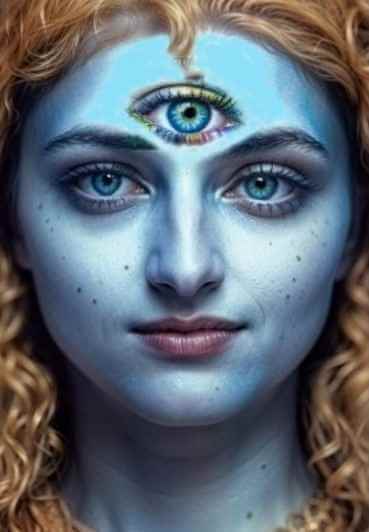
In the Paleolithic and Neolithic eras humans worshipped the Great Mother. There came a shift from Goddess to God, a split between spirit and nature. Women were associated with nature. With the split there was a focus on the opposites, such as good-evil, man-woman, light-dark, etc. There was an emphasis on power and conquest. This caused a split within us. There is a difference between what is taught in a patriarchal religion and what is actually in our souls. The Divine Feminine is deeply embedded in us.
Abstract
This paper explores the concept of the Divine Feminine as an archetypal force deeply embedded within the human psyche and soul, a presence that persists despite millennia of patriarchal religious suppression. Drawing primarily from the philosophical framework of Chang Chung-Yuan in Creativity and Taoism, this paper argues that the historical shift from Goddess worship to a male-dominant God created a fundamental split—between spirit and nature, humanity and the divine—that is reflected in a deep internal division within the individual. This division has led to a cultural and spiritual imbalance characterized by a focus on dualism, power, and conquest. By examining the manifestations of the Divine Feminine across diverse traditions—including Native American spirituality, ancient Greek mythology, Judaism’s Shekinah, Gnosticism, Christianity’s Mary, and Taoism—this paper demonstrates the universal and persistent nature of this archetype. It posits that the contemporary resurgence of interest in the Divine Feminine, evident in our evolving care for the planet and a yearning for unity, harmony, and justice, is not a new invention but a profound and necessary reconnection with a truth that has always resided within us. This return is essential for healing the split within ourselves and our world, moving toward a more balanced and integrated state of being.
Introduction
For much of recorded history, the predominant image of the divine in Western culture has been masculine: a singular, transcendent God, often depicted as a stern judge and king. This image has shaped our laws, our ethics, and our understanding of our place in the cosmos. Yet, as philosopher Chang Chung-Yuan observes, "There is a difference between what is taught in a patriarchal religion and what is actually in our souls. The Divine Feminine is deeply embedded in us." This paper takes this assertion as its central thesis, embarking on an exploration of the Divine Feminine as a profound and enduring archetype that resides within the collective human consciousness. It argues that this embedded presence, suppressed and denied by dominant religious structures, is now re-emerging as a vital force for personal and planetary healing. By tracing its manifestations across cultures and epochs, we can understand its return not as a fleeting trend, but as a necessary rebalancing of a deeply fractured human spirit.
The historical split: from Goddess to God
From Goddess to God
The journey of the Divine Feminine begins not on the margins of history but at its very core. Archaeological evidence from the Paleolithic and Neolithic eras points to a widespread worship of the Great Mother, a deity associated with fertility, nature, and the cycles of life and death (Chang, 2011). This primal spirituality viewed the divine as immanent, present in the earth, the body, and the rhythms of the natural world. However, a monumental shift occurred with the rise of patriarchal cultures and religions. The Great Goddess was gradually displaced by a male God, a shift that precipitated a profound split in human consciousness: a separation between spirit and nature. As women were symbolically and literally associated with nature, this became a split between the divine and the feminine itself.
This new worldview was characterized by a focus on opposites—good and evil, man and woman, light and dark—not as complementary forces, but as dualities in conflict. The emphasis moved from reverence for the cycles of life to a drive for power, conquest, and transcendence of the material world. This external conflict, Chang suggests, mirrored and caused a split within the human soul. The nurturing, intuitive, and relational aspects of human experience, all associated with the feminine, were devalued and repressed. The Divine Feminine, however, could not be eradicated. Forced underground, she persisted in symbols, myths, and the quiet whispers of the soul, waiting for a time when the world would be ready to receive her again.
Signs of return: the re-emergence of an embedded truth
Today, we are witnessing what many perceive as the return of the Divine Feminine to collective consciousness. This is not a mere intellectual fad, but a deep, soul-level response to the imbalances created by the patriarchal split. Our "evolving caring for our planet, our emerging caring for beauty, harmony, justice, and unity of life" are all signs of this reawakening (Chang, 2011). We are reconnecting with instinctual wisdom, rebuilding trust in our bodies and communities, and seeking to unify the opposites that have long been at war. The Divine Mother archetype embodies this healing, offering comfort and consolation, while also possessing the power to destroy old, limiting structures and the fierce love to transform an unbalanced culture. She is the virgin and the prostitute, the nurturer and the source of pain—a totality of being that patriarchal religions often sought to divide.
Cultural manifestations of the embedded feminine
The Divine Feminine's deep embedding in the human soul is evidenced by her persistent appearance across a vast array of cultural and religious traditions, even those that officially denied her.
Indigenous and ancient roots
In Native traditions, she is Mother Earth, who surrounds and instructs humanity. Her wisdom is encoded in three fundamental laws: the law of unity of life, which recognizes the interconnection of all things; the law of rhythm, which teaches reverence for the cycles of nature and the body; and the law of the love of the dance, which calls for an intimate embrace of life's full spectrum, including its pain, wildness, and passion (Chang, 2011). Similarly, the ancient Greeks knew her as Gaia, the conscious Earth and Mother of all life, who guided the order of creation and inspired the poets' love of beauty and harmony. She made humanity aware that they walked on sacred ground.
The repressed and the shadow
The Greeks also embodied her in Aphrodite, the goddess of love, beauty, sensuality, and sexual desire. Christianity, in its zeal to separate spirit from flesh, banished Aphrodite. She came to represent everything the new religion feared: delight in the body, which was now seen as temptation and sin. Chang argues that when Aphrodite is not allowed to live in our souls, the result is depression and despair. The life force she represents does not disappear when repressed; it returns in distorted and negative forms, such as pornography and sadism, which are hollow, power-driven caricatures of true sensuality and connection.
Mystical and orthodox traditions
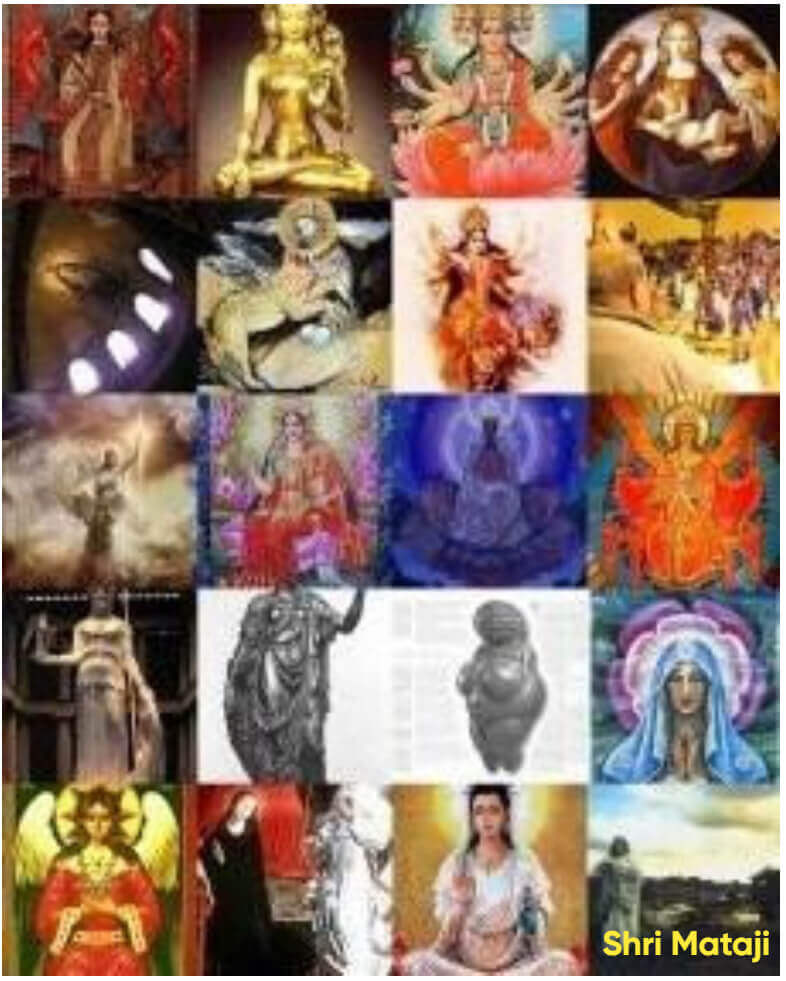
Even within the heart of patriarchal monotheism, the Divine Feminine found a place. In Jewish mysticism, the Kabbalah, she is the Shekinah—God's presence on Earth, the intermediary between the unknowable godhead and creation. As the Cosmic Womb and the soul of the world, she brings heaven and earth together in a sacred marriage. She is wisdom, compassion, and justice, embodying the creative powers of both the masculine and feminine. Gnostic Christianity preserved this figure as Sophia, Divine Wisdom, though she was ultimately excised from the orthodox canon. In mainstream Christianity, the role of the feminine was largely transferred to Mary, the mother of Jesus. Like the older goddesses, she is the Queen of Heaven, the Light of the World, and the one who presides over fertility and childbirth. She is the Womb of Creation, the conduit between God and humanity, and she asks not for belief, but for transformation. While Islam officially neutralized the feminine gender of the Sakina (its version of the Shekinah), the power and radiance of the Divine Feminine erupts in the passionate love poetry and philosophy of Sufism, which extols love, beauty, and the unity of all life.
Taoism: a living tradition of the feminine
Perhaps the most complete and unbroken philosophical expression of the Divine Feminine can be found in Taoism. Emerging from an ancient foundation of Goddess worship, Taoism identifies the ultimate source of all things as the Tao, which is explicitly called the Mother. "The Tao is The Mother of all things" (Chang, 2011). The central symbol of Taoism, the yin-yang, perfectly illustrates the feminine principle (yin) as complementary and equal to the masculine (yang), each containing the seed of the other. The Tao Teh Ching consistently praises the feminine virtues of humility, quietness, mercy, and non-striving, teaching that the sage, like water, overcomes the hard and rigid by bowing to the other and helping all things find their own true nature. The I Ching, or Book of Changes, is a practical guide to balancing these inner energies, teaching the individual to look for the deeper meaning of the One that unites all opposites. In Taoism, the Divine Feminine is not a suppressed memory but a living, breathing path to reconnect with the very source of heaven and earth.
Conclusion: the healing of the split
The poem quoted by Chang captures the essence of what is lost when the Divine Feminine is ignored:
Heart of Heaven
And a light breeze touches the
mirror-like face of the lake.
That indeed is a moment of pure joy.
But few they are who are aware of it.
The joy, the beauty, the profound interconnection of that moment—this is the lived experience of the Divine Feminine, a reality that is always present but requires awareness to perceive.
The Divine Feminine is not an external deity to be imported into our lives from a distant past. It is, as Chang asserts, deeply embedded in us. It is the part of our soul that recognizes the unity beneath the surface of division, that feels the rhythm of the seasons in our bones, and that yearns for a justice rooted in compassion. Its current resurgence is a sign of profound hope. It represents a collective healing, a mending of the ancient split between spirit and nature, mind and body, human and divine. By consciously reconnecting with this embedded truth—by honoring the Aphrodite within, listening to the wisdom of Mother Earth, and embodying the yielding strength of the Tao—we can begin to heal the split within ourselves and transform our unbalanced world. The return of the Great Mother is, ultimately, the return of a vital part of ourselves.
References
Chang, Chung-Yuan. Creativity and Taoism. 2nd ed., Jessica Kingsley Publishers, 2011.
The Divine Feminine is deeply embedded in us
"In the Paleolithic and Neolithic eras humans worshipped the Great Mother. There came a shift from Goddess to God, a split between spirit and nature. Women were associated with nature. With the split there was a focus on the opposites, such as good-evil, man-woman, light-dark, etc. There was an emphasis on power and conquest. This caused a split within us. There is a difference between what is taught in a patriarchal religion and what is actually in our souls. The Divine Feminine is deeply embedded in us.
Our evolving caring for our planet, our emerging caring for beauty, harmony, justice, and unity of life are signs that the Divine Feminine is returning to our consciousness. We are reconnecting to the instinctual, trust, nurturing and unity of the opposites. The Divine Mother heals, comforts and consoles. She has the power to destroy the old and the love to transform our unbalanced patriarchal culture. The Divine Feminine also has the ability to abandon. She is the virgin, prostitute, nurturer, pain, the holy grail and the Holy Spirit. She is adored worshipped, and feared.
In Native Traditions there is Mother Earth. She surrounds and instructs. We can learn from them to respect the laws of nature. The following are the three laws of the Divine Feminine according to native traditions:
● The law of unity of life — There is one energy, one power. Everything is interconnected.
● The law of rhythm — This is an awareness and reverence for cycles, i.e. seasons, our bodily rhythm cycles. We survive by attuning ourselves to life's rhythms.
● The law of the love of the dance — This is living in intimacy with the pain, wildness and passion of Mother Nature. There is a unity of the opposites.
Gaia of ancient Greece was the Earth, The Mother of all life and Gods. She was the consciousness that guided and structured the order of creation. She was the life and law of creation. She inspired the Greek poets in their love of beauty and harmony.
The Goddesses made people aware that they walked on sacred ground. Aphrodite for the Greeks was their love of beauty and their response to it. Christianity banished Aphrodite. She stood for everything it feared. Such as, the delight in the body, sensuality, sexual desire, etc. These all meant temptation and sin to the Christians. If Aphrodite is not allowed to live in our souls, we are likely to experience depression and despair. The Christians have devalued women and have repressed a delight in life. When Aphrodite and what she signifies is repressed, she returns in negative ways, such as pornography and sadism.
In Judaism the Shekinah is the Talmudic concept of God's presence on Earth. In the Kabbalah the Shekinah is the return of the Bronze Age Great Goddess. She is the intermediary between the godhead and life and is the cosmic soul. She brings heaven and earth, the human and divine together. In the Shekinah we find the image of a sacred marriage, a divine father-mother. The Shekinah is mother, daughter, sister, holy spirit, a giving woman. She is the Cosmic Womb. She is the creative powers of both male and female. She is radiance, wisdom, compassion, mercy and justice. She also has the power to destroy. She has a deep devotion to what she has brought into being.
Gnostic tradition speaks of Sophia, the Divine Mother, but this has been taken out of Christian teaching. Today we might see the Shekinah as the energy that manifested as matter. Matter originates from the Latin word: mater, which means mother.
In Christianity, Mary, like older goddesses is the Light of the World, Queen of Heaven, Queen of the Sea, she presides over fertility and childbirth. She stands for the feminine principle that connects all things to each other. She speaks as though she were the voice of the Holy Spirit. She offers wisdom and warning and does not ask for belief. She asks for transformation. Many of Mary's traits were transferred to her from the Old Testament Shekinah. The Latin word for sea is mare, from which Mary's name is derived. Mary is the Womb of Creation, the great sea of being. The Immaculate Conception refers to Mary having been born with no Original Sin. This made her perfect for receiving the Lord.
Mary asks that we love with God's love, not with human love. Love begets healing. Mary sees even the smallest of goodness in people and is happy about it. She wants us to focus on what we have and not on what we do not have. Mary does not make life smooth she is a hand holder. Mary is the conduit between God and humans. Mary sometimes appears in visions at Fatima and Medjugorje. Her appearance is preceded by the scent of roses.
We feel closer to Mary, the nurturer than to the Patriarchal God who is seen as the stern judge. In Mexico Mary is worshipped more than Jesus.
Mary appears more times in the Koran than in the Gospels. However any experience of the Divine Feminine by Muhammed has been excised or muffled in"official"Islam. Muhammed borrowed the Shekinah from Judaism and called it the Sakina. The Sakina is a manifestation of God's presence on earth. The Muslims do not accept the feminine role for the Shekinah. Even though Sakina is a word of feminine gender, it is seen as neuter in Islam. Allah is masculine. To Muslims Sakina is an object of sexless Divine presence.
However, the power and radiance of the Divine Feminine is present in Sufi poetry and philosophy. They extol love of all human life and passion.
At one time in China The Garden of Paradise belonged to Hsi Wang Mu, Goddess of Eternal Life. She was the Cosmic Womb and Taoism emerged from this foundation. The Tao is The Mother of all things. Taoists have kept the Divine Feminine alive if their religion. They were able to develop the mind and stay in touch with the soul. Their images of yin and yang show that opposites complement each other. The opposites contain parts of each other.
The I Ching helps the individual balance the yin and yang energies. It teaches us to look for the deeper meaning of the One that is both. The way of Tao is to reconnect with the source, which is the root of heaven and earth.
In the Tao Teh Ching we learn the feminine trait of bowing to the other. Feminine quietness and stooping conquers the masculine. The sage is humble and does not put himself higher than anyone, he helps all creatures find their own nature. Mercy and non-striving are feminine traits which help the individual find heaven.
The following poem expresses what we are missing when we repress the Divine Feminine and what we gain when we embrace her.
When the moon rises in the
Heart of Heaven
And a light breeze touches the
mirror-like face of the lake.
That indeed is a moment of pure joy.
But few they are who are aware of it."
Chang Chung-Yuan, Creativity and Taoism
Jessica Kingsley Publishers; 2 edition (February 1, 2011)