

The failure to attain direct experience of the truth, and consequently of freedom, is due to man's spiritual ignorance.
Swami Prabhavananda
Samkara, speaking of the supreme goal of human life, says: 'A man is born not to desire enjoyments in the world of the senses, but to realize the bliss of jivanmukti [liberation while living].' And the Upanishads over and over again emphasize this truth: 'Blessed is he who attains illumination in this very life, for a man not to do so is his greatest calamity.' But in these same scriptures it is pointed out that if a man fails to attain the supreme goal in this life he can attain it in some other life, for he will be given unlimited opportunities, by rebirths to reach the goal of perfection.
The failure to attain direct experience of the truth, and consequently of freedom, is due to man's spiritual ignorance, which is all but universal, and which forms the chief cause of sin and suffering. It can be dispelled by direct knowledge of the ultimate truth obtained through purification of the heart, and through a constant striving for detachment of the soul from worldly desires. By transcending the limitations of the body, the mind and the senses, one may enter the superconscious state.
Humanity’s failure to directly experience Truth, and thereby achieve liberation, arises from spiritual ignorance.
Table of Contents
Abstract
This paper examines the central assertion in Indian philosophy that spiritual ignorance (avidya) prevents direct experience of ultimate truth and consequent liberation (moksa). Drawing from Swami Prabhavananda's The Spiritual Heritage of India, it explores the eternal authority of the Vedas as records of transcendental experience, the harmony of Buddhism and Jainism with Vedic essence, the immediacy of moksa in this life, and the methods to overcome ignorance through purification, detachment, and disciplined practice. The analysis underscores that true freedom arises from inner realization accessible to all who purify the heart and transcend sensory limitations.
1. Introduction
In the profound traditions of Indian philosophy, the supreme human goal is the attainment of moksa—liberation from the cycle of suffering and rebirth. Yet, as Swami Prabhavananda articulates, "The failure to attain direct experience of the truth, and consequently of freedom, is due to man's spiritual ignorance, which is all but universal, and which forms the chief cause of sin and suffering."[1] This ignorance (avidya) veils the eternal Self (Atman) and binds humanity to illusion (maya). The path to dispelling it involves direct knowledge gained through heart purification and detachment from worldly desires.
2. The Authority of the Vedas and Transcendental Experience
The orthodox schools of Indian thought regard the Vedas, or Srutis (revealed truths), as absolute authority. As Dr. S. Radhakrishnan observes, "The appeal to the Vedas does not involve any reference to an extra-philosophical standard. What is dogma to the ordinary man is experience to the pure of heart."[2] These scriptures record the transcendental experiences of ancient seers, experiences that are eternal, beginningless, and endless, and accessible to anyone through inner purity.
The Vedas stand as an absolute authority behind which the orthodox schools cannot go... Furthermore, it is accessible to all. For these reasons, all Hindus believe that the Vedas are eternal—beginningless and endless—and that in them transcendental experience has had its standard manifestation.
Swami Prabhavananda[3]
3. Buddhism and Jainism: Harmony with Vedic Spirit
Though Buddhism and Jainism reject the ritualistic portions of the Vedas due to historical corruptions—such as priestcraft and loss of spiritual essence—they uphold the core of revealed knowledge and transcendental experience. The Buddha attained nirvana, akin to Vedic samadhi, by urging purity of life to overcome sorrow. Similarly, Mahavira's teachings emphasize self-purification and detachment. Thus, these traditions harmonize with the Vedic spirit, revitalizing the yearning for direct realization of the Self.
4. The Nature of Moksa and Divergences in Interpretation
All Indian philosophers agree that moksa—freedom from physical limitations and suffering—is attainable here and now. Professor Hiriyanna states: "Man's aim was no longer represented as the attainment of perfection in a hypothetical hereafter, but as a continual progress towards it within the limits of the present life."[4] Shankara affirms that one is born to realize the bliss of jivanmukti (liberation while living). The Upanishads warn: "Blessed is he who attains illumination in this very life, for a man not to do so is his greatest calamity."[5] Divergences arise from varying experiential depths, yet ignorance remains the universal obstacle.
5. Spiritual Ignorance: The Root Cause of Bondage
Spiritual ignorance perpetuates sin and suffering by fostering attachment to the transient. It is dispelled through direct knowledge via heart purification and detachment. The path includes shravana (hearing from scriptures and guru), manana (reasoning), and nididhyasana (meditation). Yoga practices aid concentration. Shankara outlines prerequisites: discrimination between real and unreal, detachment, the six treasures (tranquility, self-control, etc.), and intense thirst for moksa.
The methods of attaining this highest state of consciousness are hearing about, reasoning about, and meditating upon the ultimate reality... To tread the path of philosophy is to seek after truth and follow a way of life.
Swami Prabhavananda[6]
6. Conclusion
Indian philosophy offers a timeless framework for transcending spiritual ignorance through direct experience of truth. By revering Vedic revelations, embracing harmonious paths like Buddhism and Jainism, and pursuing disciplined realization, one attains moksa—freedom here and now. In an age of distraction, these teachings call humanity to inner awakening and liberation from suffering.
References
[1] Prabhavananda, Swami. The Spiritual Heritage of India: A Clear Summary of Indian Philosophy and Religion. Vedanta Press, 1979, p. 19.[2] Radhakrishnan, S. Indian Philosophy, Volume I. George Allen & Unwin, 1923, p. 51.
[3] Prabhavananda, Swami. The Spiritual Heritage of India. Vedanta Press, 1979, p. 17.
[4] Hiriyanna, M. Outlines of Indian Philosophy. George Allen & Unwin, 1932.
[5] Kena Upanishad, II.5.
[6] Prabhavananda, Swami. The Spiritual Heritage of India. Vedanta Press, 1979, p. 20.
“As we have intimated, the Vedas, or Srutis (revealed truths), stand
as an absolute authority behind which the orthodox schools cannot go.
In this sense their authority might seem to resemble that of the Holy
Bible in many periods of Christian thought; but in the words of Dr S.
Radhakrishnan, 'The appeal to the Vedas does not evolve any reference
to an extra-philosophical standard. What is dogma to the ordinary man
is experience to the pure of heart.'[1] With the exception of
Buddhism and Jainism, all Indian schools of thought regard the Vedas
as recording the transcendental experience of the first mighty seers
of India. This experience cannot and should not contradict similar
experience in any age or country. Furthermore, it is accessible to
all. For these reasons, all Hindus believe that the Vedas are eternal—
beginningless and endless—and that in them transcendental experience
has had its standard manifestation.What then of Buddhism and Jainism? Shall we exclude them from the highest expressions of Indian thought? The fact is that they accept the authority of revealed knowledge and transcendental experience, though they deny the authority of the Vedas, particularly of the ritualistic portions, as a result of certain historical circumstances. They were born at a time when the spirit of the Vedas had been lost, when the Hindus held faithfully only to the letter of the law, and when priestcraft reigned supreme. The yearning to know the truth of the Self, or Brahman in one's own soul, which is attained only by the pure at heart, was absent. Buddha, though he denied the authority of the Vedas, actually impressed their spirit upon his followers by urging them to live the pure life in order to free themselves from the burden of sorrow. And he showed the way by himself attaining nirvana—another name for samadhi, the transcendental state.
Thus the teachings of Buddha do not contradict the spirit of the Vedas but are in entire harmony with it; and the same is true of the teachings of Mahavira, founder of Jainism...
Philosophers differ, however, with respect to the exact nature of moksa; and the differences make up the substance of Hindu thought. These are due in part to varying grades of experience in realizing the transcendental life; and of course they are due above all to the attempt to express the inexpressible.
In one thing, however, the philosophers all agree. That is, that spiritual perfection can be attained here and now. 'Man's aim', says Professor Hiriyanna, 'was no longer represented as the attainment of perfection in a hypothetical hereafter, but as a continual progress towards it within the limits of the present life.' Moksa, or the attainment of freedom from the limitations and sufferings of physical life, is the supreme aspiration of all Indian philosophy.
Samkara, speaking of the supreme goal of human life, says: 'A man is born not to desire enjoyments in the world of the senses, but to realize the bliss of jivanmukti [liberation while living].' And the Upanishads over and over again emphasize this truth: 'Blessed is he who attains illumination in this very life, for a man not to do so is his greatest calamity.' [2] But in these same scriptures it is pointed out that if a man fails to attain the supreme goal in this life he can attain it in some other life, for he will be given unlimited opportunities, by rebirths to reach the goal of perfection.
The failure to attain direct experience of the truth, and consequently of freedom, is due to man's spiritual ignorance, which is all but universal, and which forms the chief cause of sin and suffering. It can be dispelled by direct knowledge of the ultimate truth obtained through purification of the heart, and through a constant striving for detachment of the soul from worldly desires. By transcending the limitations of the body, the mind and the senses, one may enter the superconscious state.
The methods of attaining this highest state of consciousness are hearing about, reasoning about, and meditating upon the ultimate reality. One must first hear about it from the Sruti, or Vedas, and from the lips of a guru, an illumined teacher. Then one must reason about it. Finally comes the meditation upon it in order to realize the truth for oneself. Different schools offer different methods of attaining the same goal, but all agree in recommending the practice of yoga, or the exercises prescribed in the art of concentration and meditation.
To tread he path of philosophy is to seek after truth and follow a way of life. Before a man sets out on the quest after truth, he must fulfil certain conditions. Samkara sums them up as follows: First, there must be discrimination between the real and the unreal. This statement means, not that a man must posses complete knowledge of absolute reality, which is attained only after long practice of meditation, but that he must unfailingly subject the nature of things to a rigid analysis by discriminating between what is transitory and what is abiding, or between what is true and what is false. The second condition is detachment from the selfish enjoyments of life. The aspirant must learn that the highest good is realized not through worldly pleasure, but through a continuous search for the infinite, the enduring joy. This ideal of renunciation must be realized by a gradual purification of the seeker's heart and mind. A third condition is that the student must acquire tranquility of mind, self- control, patience, poise, burning faith in things of the spirit, and self-surrender. These are called the six treasures of life. The thirst for moksa, or release, is the fourth condition.”
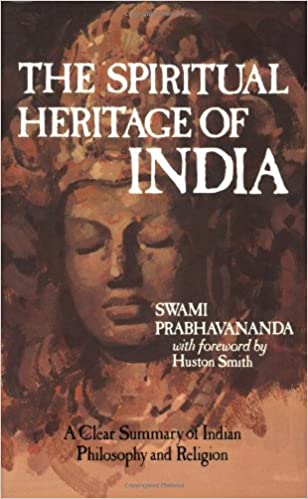
The Spiritual Heritage Of India: A Clear Summary of Indian Philosophy and Religion
Swami Prabhavananda, Vedanta Press (June 1979) pp. 17-20
1. Indian Philosophy, vol. I, p. 51
2. Kena, II. 5