

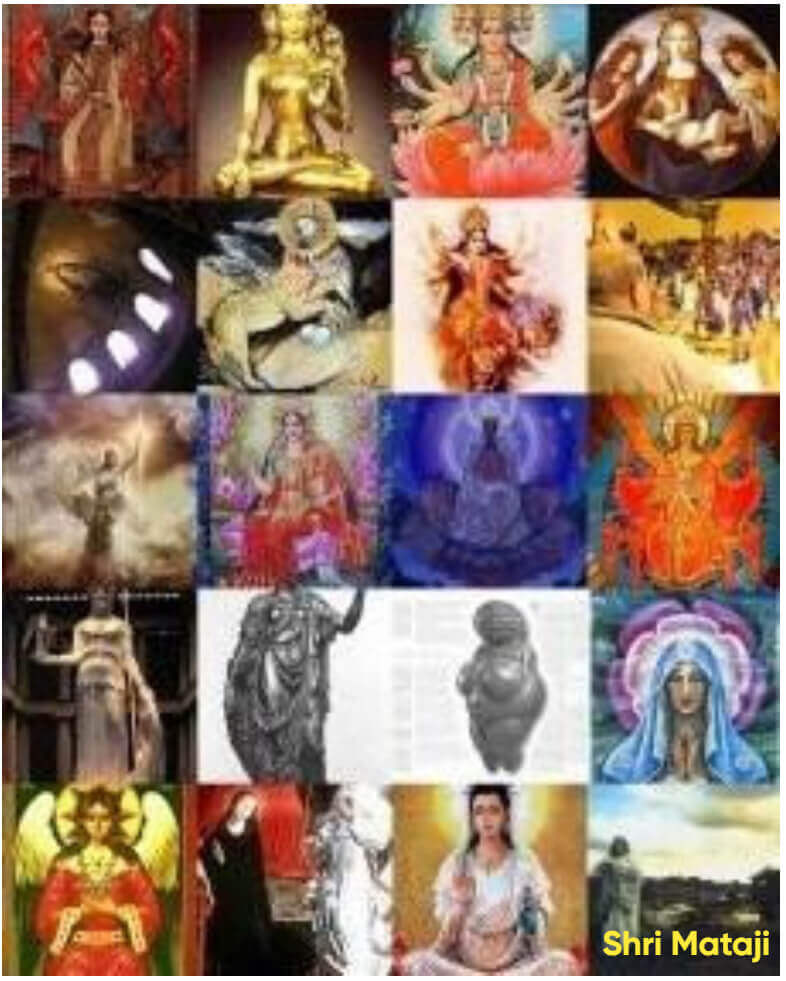
The Phenomenology of Religious Experience: A Comparative Analysis of Traditional Mysticism and the Emergent Theology of Adishakti.org
“Mysticism, a quest for a hidden truth or wisdom (“The treasure hidden in the centres of our souls”), in the 20th century is undergoing a renewal of interest and understanding and even a mood of expectancy similar to that which had marked its role in previous eras. Such a mood stems in part from the feeling of alienation that many persons experience in the modern world. Put down as a religion of the elite, mysticism (or the mystical faculty of perceiving transcendental reality) is said by many to belong to all men, though few use it. The British author Aldous Huxley has stated that “A totally unmystical world would be a world totally blind and insane,” and the Indian poet Rabindranath Tagore has noted that “Man has a feeling that he is truly represented in something which exceeds himself.”
Abstract
This paper provides a comprehensive analysis of religious experience, juxtaposing classical academic frameworks with the contemporary, syncretic theology presented by the website adishakti.org. It begins by establishing a theoretical foundation through the works of William James and Rudolf Otto, and the traditional stages of mysticism. It then delves into the specific phenomenological claims of adishakti.org, which centers on the teachings of Shri Mataji Nirmala Devi and the practice of Sahaja Yoga. The paper examines the core tenets of this movement, including the identification of Shri Mataji as the Paraclete, the experience of Self-Realization through Kundalini awakening, and the tangible sensation of a "Cool Breeze" (Pneuma/Ruach) as empirical evidence of spiritual transformation. A comparative analysis contrasts this modern interpretation with traditional mystical paths, highlighting claims of a new, more direct, and universally accessible form of divine interaction. The paper concludes that adishakti.org represents a significant case study in the evolution of religious experience, blending perennial philosophical ideas with a distinct, eschatological framework that posits itself as the fulfillment of cross-cultural prophecies.Table of Contents
1. Introduction
The quest for direct, personal communion with the divine is a perennial feature of human history, manifesting across all cultures and religious traditions. This phenomenon, broadly termed "religious experience," has been a subject of fascination and rigorous study, from philosophy and psychology to theology and neuroscience. Classical scholarship, exemplified by figures like William James, has sought to categorize and understand these subjective events, while religious institutions have often maintained an ambivalent relationship with their most profound practitioners—the mystics. As the provided text from Britannica Online notes, "institutionalism and mysticism have been uneasy bedfellows," with the mystic's inner compulsions often proving "less amenable to dogmas, creeds, and institutional restrictions."
In the contemporary spiritual landscape, new movements have emerged that not only build upon these historical traditions but also claim to offer novel, more accessible pathways to the divine. One of the most comprehensive and well-documented of these is the spiritual movement associated with Shri Mataji Nirmala Devi (1923-2011), the founder of Sahaja Yoga, whose teachings are extensively archived on the website adishakti.org. This digital repository presents a complex and syncretic theology that identifies Shri Mataji as the promised Paraclete of the Christian scriptures and the Adi Shakti (Primordial Power) of Hinduism, ushering in a new age of collective spiritual awakening.
This paper will explore the concept of religious experience through the specific lens of adishakti.org. It will first establish a foundational understanding of mystical and religious experience by drawing upon seminal academic works and traditional descriptions. Subsequently, it will analyze the unique theological and phenomenological claims presented by adishakti.org, focusing on the concepts of Self-Realization, Kundalini awakening, and the tangible experience of a "Cool Breeze" (termed Pneuma or Ruach). Finally, it will conduct a comparative analysis between the experiences described within the Sahaja Yoga framework and those of traditional mystical paths, ultimately arguing that adishakti.org offers a distinct and compelling modern case study in the ongoing human quest for direct religious experience.
2. Classical Frameworks of Religious and Mystical Experience
To properly situate the claims of adishakti.org, it is essential to first understand the established academic and traditional frameworks for analyzing religious experience.
2.1. William James and the Varieties of Experience
William James's seminal 1902 work, The Varieties of Religious Experience, remains a cornerstone of the field. James approached the topic as a psychologist and philosopher, focusing on personal, firsthand accounts rather than institutional dogma. He famously identified four key characteristics of mystical experience: ineffability (the experience defies expression in words), noetic quality (it provides a state of knowledge and insight), transiency (it is of limited duration), and passivity (the individual feels their will is in abeyance, as if grasped by a superior power). James's work legitimized the study of these subjective states and emphasized their profound impact on individuals' lives, regardless of their objective verifiability.
2.2. Rudolf Otto and the Numinous
The German theologian Rudolf Otto, in his 1917 book The Idea of the Holy, introduced the concept of the "numinous." He argued that the core of all religious experience is a non-rational encounter with a reality that is wholly other (ganz andere). This experience is characterized by a unique emotional blend he termed mysterium tremendum et fascinans—a mystery that is at once terrifying and fascinating. It evokes feelings of awe, creature-consciousness (a sense of one's own profanity and nothingness in the face of the divine), and an irresistible attraction to the sacred mystery. Otto's work highlighted the primal, emotional power at the heart of religious encounters, distinct from rational or ethical considerations.
2.3. The Traditional Path of the Mystic
Across various traditions, the mystical quest is often depicted as a structured journey involving rigorous discipline. The Britannica text outlines a common four-stage path: purgation (cleansing of bodily desires), purification (refinement of the will), illumination (enlightenment of the mind), and unification (the ultimate union of one's being with the divine). This path suggests that mystical experience is not merely a spontaneous event but the culmination of dedicated spiritual practice. However, as the text also notes, the relationship between the mystic and organized religion is often fraught with tension, as the direct, personal nature of mystical insight can challenge established authority and doctrine.
3. The Adishakti.org Paradigm of Religious Experience
Adishakti.org presents a paradigm of religious experience that both incorporates and claims to fulfill these classical and traditional concepts. It reframes the mystical quest within a specific eschatological context, centered on the advent of Shri Mataji Nirmala Devi.
3.1. The Role of the Paraclete and the Divine Feminine
The central theological claim of adishakti.org is that Shri Mataji is the incarnation of the Adi Shakti, the primordial Divine Feminine, and the fulfillment of prophecies from numerous world religions, most notably the Paraclete (the Comforter, or Holy Spirit) promised by Jesus in the Gospel of John. In a 1979 declaration, she states, "I declare I am the One who is Adi Shakti, who is the Mother of all the Mothers... who has incarnated on this Earth to give its meaning to itself." This positions her not as the founder of a new religion, but as the activator of a universal spiritual potential latent within all humanity, thereby fulfilling the promises of all existing faiths. This framework synthesizes the Christian concept of the Holy Spirit with the Hindu concept of Shakti, presenting them as a single, feminine divine principle.
3.2. Self-Realization and Kundalini Awakening
According to the teachings of Sahaja Yoga, the mechanism for achieving this promised state of enlightenment is the awakening of the Kundalini. Described as a dormant spiritual energy residing at the base of the spine, the Kundalini, upon awakening, ascends through the central channel of the subtle body, passing through six energy centers (chakras) before emerging from the fontanel bone area and connecting the individual's consciousness to the all-pervading divine power. This event is equated with the "second birth" spoken of by Jesus, the true baptism, and the attainment of Self-Realization. The destination of this inner journey is the seventh chakra, the Sahasrara, which is identified as the "Kingdom of God within."
3.3. The "Cool Breeze": An Empirical Phenomenology
A distinctive feature of the religious experience described on adishakti.org is its emphasis on a tangible, verifiable phenomenon: the sensation of a cool breeze on top of the head and on the palms of the hands. This physical sensation is presented as empirical evidence of the Kundalini's connection with the divine and is equated with the Pneuma (Greek for wind, breath, spirit) and Ruach (Hebrew for wind, breath, spirit) of the scriptures. The site argues that this is the fulfillment of Jesus's words in John 3:8: "The wind blows where it pleases... So it is with everyone born of the Spirit." This focus on a repeatable, physical sensation serves to demystify the experience, moving it from the realm of purely subjective, ineffable encounters to a state that can be empirically verified by the practitioner.
4. Comparative Analysis: Adishakti.org and Traditional Mysticism
Adishakti.org explicitly positions its form of religious experience as the culmination and fulfillment of traditional mysticism. The website features a comparative chart that contrasts the Sahasrara experience with the goals and limitations of other mystical paths.
| Tradition | Mystical Goal | Traditional Experience | Claimed Limitation (per adishakti.org) | Sahasrara Contrast (per adishakti.org) |
|---|---|---|---|---|
| Zen Buddhism | Satori / Kensho | Emptiness, no-self realization | Non-personal, no Divine interaction | Personal realm, dialogue with the Divine Mother |
| Christian Mysticism | Unio Mystica | Visions, ecstasies, inner communion | Often symbolic, not sustained dialogue | Real-time, conscious dialogue with Divine Beings |
| Islamic Sufism | Fana (Annihilation) | Inner light, longing for the Beloved | God remains veiled, no direct interaction | Face-to-face, conscious interaction with Adi Shakti |
| Jewish Kabbalah | D'vekut (Cleaving) | Meditative ascent through sefirot | Symbolic, no revealed Divine personality | Presence of Divine Beings in the Sahasrara |
This comparison highlights the central claim of the adishakti.org framework: that while traditional mystics achieved profound but often partial, non-personal, or symbolic states, the opening of the universal Sahasrara by Shri Mataji on May 5, 1970, inaugurated an age where direct, conscious, and dialogic union with the Divine is possible for all. This aligns with the perennial philosophy of Aldous Huxley, which posits a universal divine ground common to all religions, but with a crucial addition: it claims a specific, historical event has now made the experience of that ground universally accessible in a new, more complete way.
The experience described is not ineffable in the Jamesian sense; it is articulated in great detail. It is not merely a fleeting state but a sustained, conscious awareness. While it contains the awe of Otto's numinous, the terror (tremendum) is replaced by the comforting, motherly presence of the Adi Shakti. The path is not one of arduous, solitary purgation, but a spontaneous awakening granted by grace, which can then be sustained through daily meditation.
5. Conclusion
The framework of religious experience presented by adishakti.org offers a fascinating and complex evolution of mystical thought. It synthesizes concepts from major world religions—Hinduism, Christianity, Islam, and others—into a unified theological system that is both perennial and radically new. By identifying Shri Mataji Nirmala Devi as the prophesied Paraclete and Adi Shakti, the movement provides a messianic and eschatological context for a form of religious experience that it claims is empirically verifiable through the sensation of the cool breeze.
This paradigm challenges traditional notions of mysticism in several key ways. It shifts the goal from a solitary, often arduous path of union to a collective, spontaneous awakening. It reframes the ineffable as the tangible, and the symbolic as the directly dialogic. By asserting that all religions point to this same ultimate reality, now fully accessible through Sahaja Yoga, it presents a powerful argument for a universal spirituality that transcends institutional boundaries.
While the claims of adishakti.org are theological and rooted in faith, their phenomenological descriptions provide rich material for the academic study of religious experience. The movement's emphasis on direct, personal, and verifiable encounters with the divine represents a significant contemporary expression of the timeless human search for what Rabindranath Tagore called "something which exceeds himself." It stands as a testament to the enduring power of religious experience to adapt, evolve, and find new expression in the modern world.
6. References
[1] "Religious Experience." Britannica Online. (Provided in user prompt).[2] James, William. The Varieties of Religious Experience: A Study in Human Nature. 1902.
[3] Otto, Rudolf. The Idea of the Holy. 1917.
[4] "Adi Shakti – Divine Feminine, Shri Mataji & the Universal Spirit." adishakti.org. Accessed March 3, 2026.
[5] "The Mystic Vision — Daily Encounters with the Divine." adishakti.org. Accessed March 3, 2026.
[6] "All Religions Are Connected to the Same Ultimate Reality." adishakti.org. Accessed March 3, 2026.
[7] "Kundalini and Christian Experience of the Holy Spirit." adishakti.org. Accessed March 3, 2026.
[8] "Experience Pneuma Of Self-Realization ('Rebirth' or 'Born Again' Of Spirit)." adishakti.org. Accessed March 3, 2026.
[9] "Ruach – The Breath of God Experienced Daily as Cool Breeze/Wind." adishakti.org. Accessed March 3, 2026.
[10] "Sahasrara Experience vs Traditional Mysticism." adishakti.org. Accessed March 3, 2026.
[11] Huxley, Aldous. The Perennial Philosophy. 1945.
Religious Experience
“Mysticism, a quest for a hidden truth or wisdom (“The treasure hidden in the centres of our souls”), in the 20th century is undergoing a renewal of interest and understanding and even a mood of expectancy similar to that which had marked its role in previous eras. Such a mood stems in part from the feeling of alienation that many persons experience in the modern world. Put down as a religion of the elite, mysticism (or the mystical faculty of perceiving transcendental reality) is said by many to belong to all men, though few use it. The British author Aldous Huxley has stated that “A totally unmystical world would be a world totally blind and insane,” and the Indian poet Rabindranath Tagore has noted that “Man has a feeling that he is truly represented in something which exceeds himself.”
The goal of mysticism is union with the divine or sacred. The path to that union is usually developed by following four stages: purgation (of bodily desires), purification (of the will), illumination (of the mind), and unification (of one’s will or being with the divine). If “The object of man’s existence is to be a Man, that is, to re-establish the harmony which originally belonged between him and the divinized state before the separation took place which disturbed the equilibrium” (The Life and Doctrine of Paracelsus), mysticism will always be a part of the way of return to the source of being, a way of counteracting the experience of alienation. Mysticism has always held—and parapsychology also seems to suggest—that the discovery of a nonphysical element in man’s personality is of utmost significance in his quest for equilibrium in a world of apparent chaos. (see also purification rite)
Mysticism’s apparent denial, or self-negating, is part of a psychological process or strategy that does not really deny the person. In spite of its lunatic fringe, the maturer forms of mysticism satisfy the claims of rationality, ecstasy, and righteousness.
There is obviously something nonmental, alogical, paradoxical, and unpredictable about the mystical phenomenon, but it is not, therefore, irrational or antirational or “religion without thought.” Rather, as Zen (Buddhist intuitive sect) masters say, it is knowledge of the most adequate kind, only it cannot be expressed in words. If there is a mystery about mystical experience, it is something it shares with life and consciousness. Mysticism, a form of living in depth, indicates that man, a meeting ground of various levels of reality, is more than one-dimensional. Despite the interaction and correspondence between levels—“What is below is like what is above; what is above is like what is below” (Tabula Smaragdina, “Emerald Tablet,” a work on alchemy attributed to Hermes Trismegistus)—they are not to be equated or confused. At once a praxis (technique) and a gnosis (esoteric knowledge), mysticism consists of a way or discipline.
The relationship of the religion of faith to mysticism (“personal religion raised to the highest power”) is ambiguous, a mixture of respect and misgivings. Though mysticism may be associated with religion, it need not be. The mystic often represents a type that the religious institution (e.g., church) does not and cannot produce and does not know what to do with if and when one appears. As William Ralph Inge, an English theologian, commented, “institutionalism and mysticism have been uneasy bedfellows.” Although mysticism has been the core of Hinduism and Buddhism, it has been little more than a minor strand—and, frequently, a disturbing element—in Judaism, Christianity, and Islam. As the 15th- to 16th-century Italian political philosopher Niccolò Machiavelli had noted of the 13th-century Christian monastic leaders St. Francis and St. Dominic, they had saved religion but destroyed the church.
The founders of religion may have been incipient or advanced mystics, but the inner compulsions of their experience have proved less amenable to dogmas, creeds, and institutional restrictions, which are bound to be outward and majority oriented. There are religions of authority and the religion of the spirit. Thus, there is a paradox: if the mystic minority is distrusted or maltreated, religious life loses its sap; on the other hand, these “peculiar people” do not easily fit into society, with the requirements of a prescriptive community composed of less sensitive seekers of safety and religious routine. Though no deeply religious person can be without a touch of mysticism, and no mystic can be, in the deepest sense, other than religious, the dialogue between mystics and conventional religionists has been far from happy. From both sides there is a constant need for restatement and revaluation, a greater tolerance, a union of free men’s worship. Though it validates religion, mysticism also tends to escape the fetters of organized religion.”
Religious Experience: PSYCHOLOGICAL ASPECTS OF MYSTICISM
“Mysticism has been accused of passing off psychological states for metaphysical statements. But the psychological base has never been questioned seriously. It would, however, be proper to call it autology (the science of self.) If the word psychology is to be retained, it must be in the original sense of the word now discarded. The contrast between the old and the new has been well expressed by the Russian philosopher P.D. Ouspensky:
Never in history has psychology stood at so low a level, lost all touch with its origin and meaning, perhaps the oldest science and, unfortunately, in its most essential features, a forgotten science, the science of [man's] possible evolution.
Mysticism is that science in which the psychology of man mingles with the psychology of God. The major change or orientation is from the level of the profane to the sacred, an awareness of the divine in man and outside. The source and goal of such a psychology was revealed in the 18th-century Methodist leader John Wesley’s dying words: “The best of all is this, that God is with us.”
A mark of the mystic life is the great access of energy and enlarged awareness, so much so that the man who obtains the vision becomes, as it were, another being. Mansions of the mind, maqam (Arabic: “place”), and bhumi (Sanskrit: “land”), open up to the gaze of the initiate, a wayfarer of the worlds. This means a renewal or conversion until one knows that the Earth alone is not man’s teacher. The mystic begins to draw his sustenance from supersensuous sources. He has “drunk the Infinite like a giant’s wine,” and a hidden bliss, knowledge, and power begin to sweep through the gates of his senses.”
💬 Interactive Chat
Access an intelligent analysis environment where you can explore texts, ask questions, and discover connections between ideas.
Open chat