


Being Thoughtless: Is It a Matter of Practice, Will-Power and Meditation?
—- In shriadishakti@yahoogroups.com, alex arthur
wrote:
>
> A question to both you and Jagbir, I'm just a little
> curious here, are you able to maintain the witness
> state even during a conversation with someone. Do
> both of you have full time jobs that involve meeting
> people, thinking and processing data? How do you do
> it, is it a matter of practice, will-power and
> meditation? Do you maintain the witness state even
> during sleep? Please give me some pointers. I often
> fall asleep trying to be aware and conscious, but I
> soon drift into a dream.
>
>
Being thoughtless in the sense of thoughtless awareness is not a simple matter of suppressing thinking; it is a distinct mode of consciousness whose emergence depends on a graded synergy of practice, meditation, and will, rather than on will-power alone.[1][2]
Table of Contents
- 1. Clarifying "thoughtless awareness" and "witnessing"
- 2. Practice: systematic training of attention
- 3. Meditation: the primary condition, not an optional technique
- 4. Will-power: necessary but insufficient
- 5. Techniques and the role of "witness consciousness"
- 6. Limits, risks, and practical cautions
- References
1. Clarifying “thoughtless awareness” and “witnessing”
Within Sahaja Yoga and related contemplative traditions, a clear distinction is drawn between “witnessing” and full “thoughtless awareness.” Shri Mataji describes thoughtless awareness as a state in which one is fully aware yet without discursive thoughts, anchored in the present and suffused with a nondual joy that is “neither happiness nor unhappiness, but singular.”[3] This corresponds closely to Jagbir’s description: witnessing still entails a conscious effort to bear the unpleasant, whereas being truly thoughtless is to remain a witness who does not experience the unpleasant as such, despite full awareness.[4]
In psychological terms, thoughtless awareness can be interpreted as a shift from identification with the contents of consciousness (individual thoughts and emotions) to identification with awareness itself as a stable background field.[5] The “witness state” is thus the functional bridge that allows practitioners to observe thoughts as transient phenomena, which in turn makes the emergence of thoughtless awareness phenomenologically possible and more stable.[6]
2. Practice: systematic training of attention
First, thoughtless awareness is a matter of sustained practice in the strict sense of sādhana—regular, structured exercises that gradually reduce the number, speed, and emotional charge of thoughts. Swami Sivananda describes how “useless thoughts impede your spiritual growth” and insists that reduction of even a single thought increases inner strength and peace, likening this process to a “spiritual thermometer” that registers each diminishment of mental fluctuation.[7] Jagbir’s observation that he can increase “the number of thoughtless minutes per hour” by consciously reducing useless reflections exemplifies precisely this incremental training of attention.[8]
- Regular meditation after Self-realization, which allows the subtle inner energy (Kundalini) to rise and create the initial “breakthrough” into thoughtless awareness.[9]
- Deliberate cultivation of this state in everyday activities—while traveling, driving, watching television, or reading—so that the attentional system learns to remain in a quieter, more integrated mode even during ordinary tasks.[10]
- Progressive expansion of the subtle centers (chakras) so that more of one’s attention is carried beyond habitual thought patterns; Shri Mataji explicitly speaks of the first breakthrough as a single “hair” of Kundalini piercing the Sahasrara, which must then be widened by ongoing practice.[11]
Neuroscientific studies of meditation (including those referenced by Sahaja-oriented sites) suggest that such regular practice alters functional connectivity in networks associated with self-referential thinking and mind-wandering, supporting the claim that the mind “adapts to less thinking and settles down” over time.[12]
3. Meditation: the primary condition, not an optional technique
Second, meditation is not simply one technique among others, but the primary condition out of which thoughtless awareness arises. Shri Mataji explicitly teaches that meditation in Sahaja Yoga “is based on self-realization” and that true meditation is to be in thoughtless awareness: the mind is no longer disturbed by thoughts, yet awareness remains perfectly lucid and present.[13] In this sense, meditation is both the path and the definition of the desired state.
Meditation accomplishes at least three interrelated shifts:
- It anchors attention in the present, dissolving the habitual oscillation between past rumination and future anticipation that generates the continuous “bubbles” of thought in the conditioned mind.[14]
- It weakens the dominance of ego and superego, allowing thoughts to be perceived as mere “bubbles in the ocean” rather than as commands or threats; in this way, the mind’s reactive machinery loses its power to dictate identity and behavior.[15]
- It opens a channel for what Shri Mataji and the Sahaja tradition call the unconscious or Divine power to “take charge,” so that the practitioner can be “carried” into deeper states without aggressive self-manipulation.[16]
Swami Sivananda describes an analogous trajectory when he urges practitioners to “make the mind waveless” through deep meditation, leading to Nirvikalpa Samādhi, in which thought-constructs are entirely transcended and oneness with the Absolute is intuited.[17] In both frameworks, meditation is not simply calming the mind; it is the unfolding of a qualitatively new mode of consciousness.
4. Will-power: necessary but insufficient
Third, will-power plays a real but secondary role. Both Jagbir and Swami Sivananda warn against crude suppression of thought through sheer volition. Jagbir likens egoic addiction to thinking to a heroin addiction, cautioning that “cold turkey” attempts to eliminate thought can produce distressing psychological resistance and should not be attempted without proper grounding.[18] Sivananda, for his part, emphasizes discriminating will rather than raw force: one must “retain only the good fruits” of thought, discard destructive impulses, and recognize the “grave and ruinous consequences of evil thoughts” so as to guard the mind effectively.[19]
- Commit to regular practice (keeping a routine of meditation and introspection).[20]
- Maintain ethical discipline (controlling anger, lust, jealousy, etc.), since such states reinforce thought-storms and destabilize subtle awareness.[21]
- Return attention gently but firmly to the present whenever it is captured by reactive loops, without self-judgment but with consistent resolve.[22]
However, both Shri Mataji and Sivananda indicate that the decisive transformation is not willed into being; it occurs when will aligns with the deeper movement of Spirit or Atman. Shri Mataji describes surrender as the cessation of compulsive thinking such that one becomes “one with God’s power,” after which “She looks after you” and inspiration flows spontaneously.[23] In this context, will-power is the willingness to relinquish control, rather than the attempt to tighten it.
5. Techniques and the role of “witness consciousness”
Fourth, there is a legitimate place for techniques—what Jagbir calls the “fourth” factor after meditation, practice, and will-power.[24] These include:
- Introspective analysis of emotions and impulses, treating them as objects of study rather than as the core of the self; Sivananda recommends “separating, dissecting, and analyzing” moods to reveal the Silent Witness behind them.[25]
- Thought-selection and substitution (e.g., replacing jealous or hateful thoughts with “sublime” ones), combined with constant occupation in constructive work to prevent idle rumination.[26]
- Techniques of “internalized attention” in which one observes thoughts and feelings in a detached, nonjudgmental manner, thereby cultivating a “mediating” witness ego that can segregate awareness from its contents.[27]
- Specific Sahaja Yoga procedures such as foot-soaking, bandhan, and attention on particular chakras, which are designed to clear subtle blockages and facilitate the spontaneous onset of thoughtless awareness.[28]
In Advaita and allied nondual traditions, this witness function is sometimes described as recognizing that thought is distinct from cognition: thought produces a chain of conceptualization, whereas cognition is the bare noticing of presence; thoughtless awareness is the retention of cognition without conceptual chain, a direct apprehension of presence itself.[29] This is congruent with Shri Mataji’s insistence that, in thoughtless awareness, one “understand[s] everything that is Divine” not through discursive reasoning but through a kind of luminous, nonverbal insight.[30]
6. Limits, risks, and practical cautions
Finally, both the provided correspondence and traditional sources emphasize limits and cautions. Jagbir notes that remaining thoughtless for hours is “very difficult, almost impossible” for ordinary people immersed in modern stress, and that the “real test” of the state comes in serious crises, when thoughtless awareness is hardest to maintain.[31] Shri Mataji similarly acknowledges that many practitioners do not stabilize this state, which leads to recurring feelings of being “stuck on the bank” of the river of Divine flow.[32]
There are also pragmatic risks:
- Over-zealous attempts to sustain thoughtlessness in contexts that demand critical analysis (e.g., safety-sensitive work) can impair performance; Jagbir explicitly warns practitioners to “THINK” when their jobs require it and to avoid using spiritual ideals to justify negligence.[33]
- For some individuals, rapid shifts in consciousness or aggressive thought-suppression can exacerbate underlying psychological vulnerabilities; contemporary meditative psychology therefore recommends gradual cultivation of nonjudgmental awareness rather than violent self-negation.[34]
Both Shri Mataji and Sivananda converge on the counsel that one must “take it easy” while remaining disciplined: the goal is progressive de-identification from thought, not the elimination of functional cognition.[35] The acrobat-girl analogy from Sivananda—in which a dancer keeps her attention riveted on the water-pot on her head while performing complex movements—captures the ideal: a portion of the mind can engage in the mechanics of life while a deeper layer rests in silent witnessing.[36]
References
[1] Shri Mataji Nirmala Devi. "Meditation." ShriMataji.org.[2] Shri Mataji Nirmala Devi. "Thoughtless Awareness." ShriMataji.org.
[3] Shri Mataji Nirmala Devi. "Thoughtless Awareness." ShriMataji.org.
[4] Jagbir Singh. "Being Thoughtless - is it a matter of practice, will-power and meditation?" ShriAdiShakti.org, 2004.
[5] "Guided Meditation for Higher Consciousness." SahajaOnline.com, 2024.
[6] "Guided Meditation for Higher Consciousness." SahajaOnline.com, 2024.
[7] Swami Sivananda. "Bliss Divine." GuruDevsivananda.org.
[8] Jagbir Singh. "Being Thoughtless - is it a matter of practice, will-power and meditation?" ShriAdiShakti.org, 2004.
[9] Shri Mataji Nirmala Devi. "Meditation." ShriMataji.org.
[10] Jagbir Singh. "Being Thoughtless -
Being thoughtless - is it a matter of practice, will-power and meditation?
From: "jagbir singh"
Date: Thu Jul 22, 2004 9:42 am
Subject: Being thoughtless - is it a matter of practice, will-power and meditation?
—- In shriadishakti@yahoogroups.com, alex arthur
wrote:
>
> A question to both you and Jagbir, I'm just a little
> curious here, are you able to maintain the witness
> state even during a conversation with someone. Do both
> of you have full time jobs that involve meeting
> people, thinking and processing data? How do you do
> it, is it a matter of practice, will-power and
> meditation? Do you maintain the witness state even
> during sleep? Please give me some pointers. I often
> fall asleep trying to be aware and conscious, but I
> soon drift into a dream.
>
>
Dear Alex,
There is a difference between witnessing and thoughtless awareness. i
believe being a witness is a conscious effort to bear the unpleasant.
Being thoughtless is a witness who does not experience the unpleasant
despite being aware.
Maybe it is a lack of clarification but I have never been thoughtless
for hours as thoughts, mostly useless reflections of the reacting
ego, still come. However, by consciously reducing the number of
thoughts,Imanage to progressively increase the number of
thoughtless minutes per hour. This is never constant because you are
bound to get up on the wrong side of the bed or get a bad hair day.
The thoughtless state is a marathon taking years. So learn to take a
deserved rest and enjoy the view.
It is now routine, for me at least, to be thoughtless when talking.
You may makes 'mistakes' in the beginning like repeating answers or
giving winding answers etc. After some time your mind will adapt to
less thinking and settle down.
Being thoughtless is, as you questioned, a matter of meditation,
practice, will-power ............. in that order of importance. You
may want to add certain techniques as the fourth.
i think it is not difficult to be thoughtlessly aware if you begin
to practice certain techniques regularly. One way to increase the
thoughtless state is to maintain/practice it while traveling/driving
over long distances, watching television or reading. Highly
recommended! However the real test comes when some serious problems arise. It is not easy to be thoughtless then. But don't be
disappointed because being thoughtless for hours is very difficult,
almost impossible for us humans who are faced with the stress and
problems of existence.
Alex, you should not worry about being thoughtlessly asleep. Your
awakened state will sooner or later reflect on your sleeping state,
and dreams will become progressively less.Ithink this should be the
least of any concern.
i do not have a job that involves meeting people but setting up,
maintaining and improving the websites does involve a lot of data
processing. And religious issues being so sensitive and contentious,
there is no room for error. Religious fundamentalists will attack you
the very instant they spot any error. The only refuge is the
thoughtless state.
i remember the swiftness of their reaction whenIfirst uploaded
www.al-qiyamah.org. Muslims became incensed about the issue whether Prophet Muhammad was the last prophet or not. Immediately they warned others that this was a deviant website insulting Islam. One even accused me of belonging to the Ahmadhiya sect.
The problem wasIhad no way of circumventing this highly emotional
issue of 'seal of the prophets'. How to endorse Shri Mataji's advent
when Islam excludes all others after prophet Muhammad?
These Muslims were just looking for a single webpage to invalidate
the remaining hundreds. If an answer was not found fast the www.al-
qiyamah.org website was going to be the cause of an ever-increasing
chorus of protests and anger, maybe even threats.
The only way was to seek answers in the thoughtless state. It lead me
to specific passages in the Qur'n that had me shaking my head first in
disbelief, then awe and triumphant jubilation - now there would be no way that Muslims could deny Shri Mataji.
i deleted the contentious page and uploaded information of the newly
found facts. The results were almost instantaneous. All warnings were
removed from the internet and the critics were silenced ....... ever
since. That is the power of the thoughtless state!
According to Shri Mataji"As soon as you become a realised soul you have to know that your properties and priorities are very different. Your 'Property' is your spirit. And your priorities are where you can manifest your spirit and can feel the spirit of others. So the whole concept that was so far obstructing you and limiting your understanding changes in an unlimited area where you start thinking of the spirit. Now in that concept of the spirit the property of the Spirit is twofold.
One is in its nature. The nature of the spirit is as we call it"SatChitAnanda"means it is the joy that is the truth...it tells you the truth all the times it gives you the discretion, divine discretion, and Chitta the attention that acts that works, that gives you all the information. So this is how you got the nature of the spirit that's felt within yourself.
But on the other side what does it want and what are its duties. Or
why to become the spirit? Such questions arise later on when we
enter into the kingdom of God.”
jagbir
NOTE: A word of caution here. If your work requires critical analysis/ problem solving then please THINK.Ido not want anyone to lose a job or be reprimanded due to a lack of awareness. Take care and time to master the thoughtless state. The ego is as addicted to thoughts as a junkie in Vancouver is to heroin. So farIhave never heard anyone going cold turkey because it is impossible to do so. Initial attempts may cause unpleasant withdrawal side-effects. But there is nothing like an addict escaping the ceaseless chatter of life's Hotel California, and attaining enlightenment. So just take it easy on your journey to the Other Shore.
Bliss Divine
Swami SivanandaIntrospect. Have an inner life always. Let a portion of the mind and the hands do their work mechanically. An acrobat girl, while exhibiting her performances, has her attention riveted on the waterpot she bears on her head although all the time she is dancing to various tunes.
When emotions, moods, sentiments, arise in the mind, separate them, study their nature, dissect them and analyse them. Do not identify yourself with them. The real"I"Is is entirely distinct from them. It is the Silent Witness. Master your impulses, emotions, and moods and rise from the position of a slave to that of a spiritual king [or queen] who can rule over them with force and power.
Control your thoughts. Just as you retain only the good fruits from the basket and discard the bad ones, so also keep good thoughts in your mind and reject the evil ones. Wipe out lust, greed, and egoism. Entertain only pure holy thoughts.
Fully realise for yourself the grave and ruinous consequences of evil thoughts. This will set you on your guard when the evil thoughts would come. The moment they come, exert yourself or divert the mind to some other object of divine thoughts, prayer, or Japa.
Keep the mind fully occupied. Then evil thoughts will not enter. An idle brain is the devil's workshop. Watch the mind every minute. Always engage yourself in some work. Avoid loose talk and gossip. Fill the mind with sublime thoughts, such as those contained in the Gita, the Upanishads and Yoga-Vasishtha.
Drive away from your mind all unnecessary, useless and obnoxious thoughts. Useless thoughts, impede your spiritual growth; obnoxious thoughts are stumbling blocks to spiritual advancement. You are away from God when you entertain useless thoughts.
You must eradicate through introspection all sorts of mean thoughts, useless thoughts, unworthy thoughts, impure thoughts, all sexual thoughts, thoughts of jealousy, hatred and selfishness. You must annihilate all destructive thoughts of disharmony and discord. You must develop good, loving sublime thoughts, divine thoughts. Every thought must be of a constructive nature. It must be strong, positive and definite. The mental image must be of a clear-cut and well-defined nature. You must develop right thinking. Every thought must bring peace and solace to others.
The common man does not know what deep thinking is. His thoughts run riot. There is a great deal of confusion in the mind sometimes. His mental images are very distorted. It is only thinkers, philosophers and Yogins who have well-defined, clear-cut mental images.
Thinkers are very few in this world. Thinking is shallow in the vast majority of persons. Deep thinking needs intense Sadhana or practice. It takes innumerable births for the proper evolution of the mind. Then only it can think deeply and properly. A man who speaks the truth and has moral purity has always powerful thoughts. One who has controlled anger by long practice has tremendous thought-power.
The fewer the thoughts, the greater the peace. The fewer the desires, the lesser the thoughts. Remember this always.
Every thought that is reduced adds strength and peace to the mind. Reduction of even one thought will give mental strength and peace of mind. You may not be able to feel this in the beginning as you do not possess a subtle intellect; but there is a spiritual thermometer inside to register the reduction of even a single thought. If you reduce one thought, the mental strength that you have gained by this reduction will help you to reduce the second thought easily.
Thnrough constant and intense practice, you can become waveless or thought-free. The waveless Yogin helps the world more than the man on the platform...When you are waveless, you actually permeate and pervade every atom of the universe, purify and elevate the whole world. The names of waveless Jnanins such as Jada Bharata and Vamadeva are even now remembered. They never built Ashramas. They never lectured. They never published books. The never made disciples. Yet, what a tremendous influence these waveless Jananins had produced on the minds of the people! Glory tio such Janains!
Bliss Divine
Swami Sivananda
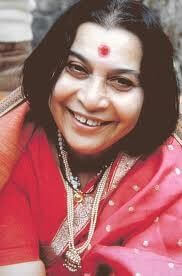
Surrendering to attain Thoughtlessness
“Many people say," we have surrendered everything", but it does not happen because they do it only in talking. Surrendering is not talking. You have to surrender to attain thoughtlessness. That is you have stopped thinking. When you stop thinking you come to the center. When at the center, immediately you go into thoughtless awareness, i.e. become one with God's power, and when you are one with the God's power, He looks after you. He takes care of your small things also. You will be amazed. It is worth trying and after that you will realize that what you were doing earlier was wrong. So once you are in thoughtlessness you will get all inspirations, all powers and everything.”
Shri Mataji Nirmala Devi, Nirmala Yoga, 1982
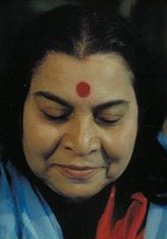
Significance of Thoughtlessness
"All that happens in the thoughtless state is enlightened. Light never talks. If you switch on the light in the room, the light won't speak or give you any ideas. It would just make everything visible. The same is true about the light of thoughtlessness. First become thoughtless and then doubtless. Then all your doubts go and you know that there is some power that works. It works very fast and is all-subtle. You will be amazed how it happens. This is also about time.Inever look at a watch. But my real watch is in the thoughtlessness.
If you are thoughtless God takes you everywhere as if on his hands. He makes all arrangements. He knows everything and there is no need to tell him about anything. But you must see whether you are in the main stream or not. If you are not in it then you are stuck up somewhere on the bank; then the current comes and takes you in twice or thrice, but again you are on the bank. Then you say 'Mataji, nothing goes smoothly for me'. It won't because you are entangled.
Shri Mataji Nirmala Devi, Nirmala Yoga, 1982
The affect of the Mind
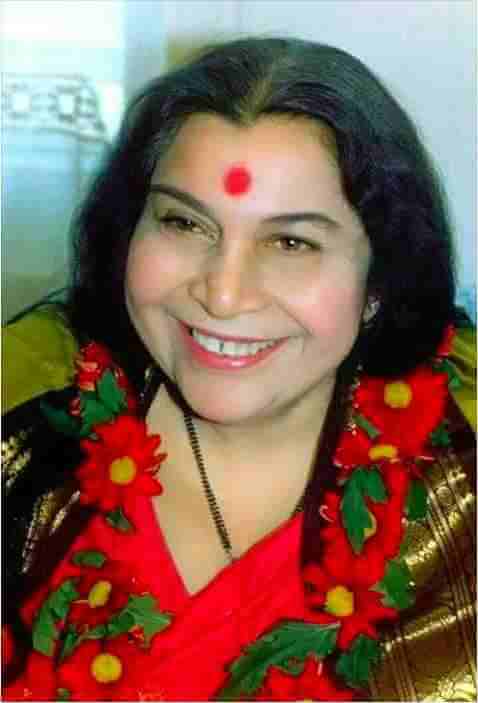
"People don't know what this mind is. It is very easy to understand for Sahaja Yogis that we are the ones who react, react to everything that is outside. The reason is, we have two horrible tendencies, one that is an Ego and another tendency is that we are being trained in a way or we can call it the Superego or the conditionings. So both things, our Ego and Superego are all the time acting outside. This reaction, which is built in within us, is just like bubbles in the ocean. And these bubbles keep us away from reality. These bubbles are of thoughts and they just blast you all the time in your head and you don't know why they are coming. When you depend on this artificial mind of yours then you have no discretion as to understand what is good and what is bad. This mind is the one where all kinds of evil things start. All kinds of quarrels, fights and possessiveness, lastly the war also comes there. It is in this mind only, which is nothing but a myth, all these concrete destructive ideas somehow or other come up and then they start growing and growing. Then you find people who can impress you also put ideas into your heads. By reading, they learn or by their lectures or by mesmerism, whatever kinds of things they can do. They put your mind into such a frame that you accept these destructive ideas for yourself individually or maybe for the collective.
The Paraclete Shri Mataji
21 March 1996, Delhi, India
Going Beyond the Mind
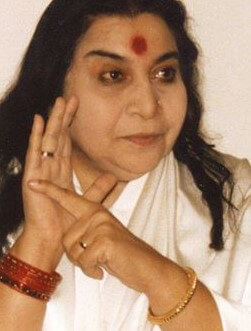
"Because this mind, which is just a bubble asItold you and is so limited that it cannot comprehend the beauty, the glory, and the expanse of reality. This mind is just a collection of all the garbage we should say, which we have to somehow or other deny and tell ourselves thatIhave to go beyond my mind. This so-called mind of mine has done no good for me. This 'mind of mine which has been all the time controlling me is just like the watch we have made and which is controlling us or like the computer that controls us. We have to be careful that we are the ones who have created this mind and this mind has no business to control us....
Now, once your attention goes beyond the mind-only the Sahaja Yogis will understand this point very clearly. When this mind goes beyond the thoughts, then the manipulation of the attention is very important. Then whatever you manipulate means you take this attention to this or to that. You will be surprised how dynamic you become, how effective you become and how knowledgeable you become. Because once you can take this attention to anything you want, immediately there is light on that issue, on that person, on that problem and you see how it works out, how it helps.
The Paraclete Shri Mataji
21 March 1996, Delhi, India
Using the Kundalini to expand your attention

"Now, actually what has happened in realization - your Kundalini has risen and has come up. Just like you can say a small, thin hair - one hair, say. And that has broken your Sahasrara. And now the grace is flowing into it. But it is a very small' movement that has taken place - of course which is a very difficult movement no doubt; but it has taken place. Now you have not expanded like this. Your Chakras are only pierced in the center, but the rest of the attention is still intact. Actually it is so intact, that you do not even feel that it is pierced. Now you have to expand' that. Open it out so that more strands of Kundalini can rise and your attention, which is in these centres, expands. By expansion it drives out all that is mythical on the sides. On every centre we have our attention, which is being enlightened in the centre through this light passing through. But the light is too small for the darkness that you have collected.
The Paraclete Shri Mataji
26 May 1980, UK
Paying Attention through our Energy Centres
"After realization you can pay attention through your centres, and you do. This is a very big difference between a person who is realized and who is not realized, or you can say that you can become effective through your centres by paying attention to them. You can feel the centres, which are obstructed in your body, which you never felt before. Not only that, you can feel the centres of other people, that means your central nervous system is being blessed by a new awareness by which it can convey to you, communicate to you the attention paid by your centres, and also it can take your attention in a subtler way into the centres of others. So first thing that happens to you is that your attention becomes subtler. Attention becoming subtler means you start understanding deeper things. For example a bird can see a flower but cannot feel the beauty of a flower and an unrealized person can see the beauty of a flower but cannot see the vibrations of a flower. So you become subtler. Your attention becomes subtler. You definitely are at a higher evolutionary stage than the other people are.
Now, we have to see how we use our attention. You have seen even when you were not realized that supposing you start developing an art in your hand from your very childhood, then you develop the depth of that particular Art, because a kind of a Milinge grows on the nerves. In the same way when you are Realized,Iwould say 'when you are a newly born person', if you start respecting your attention, then gradually you develop a depthness for Sahaja Yoga. But so many people when they get realized they hardly come second time, even if they come again they do not develop the feeling of vibrations more. They still go on being busy with their day-to-day work wasting their attention on things which do not give you the subtler feelings. So the subtleness, the depth of the art of Sahaja does not develop.”
The Paraclete Shri Mataji
27 January 1977, Bordi Shibir, India