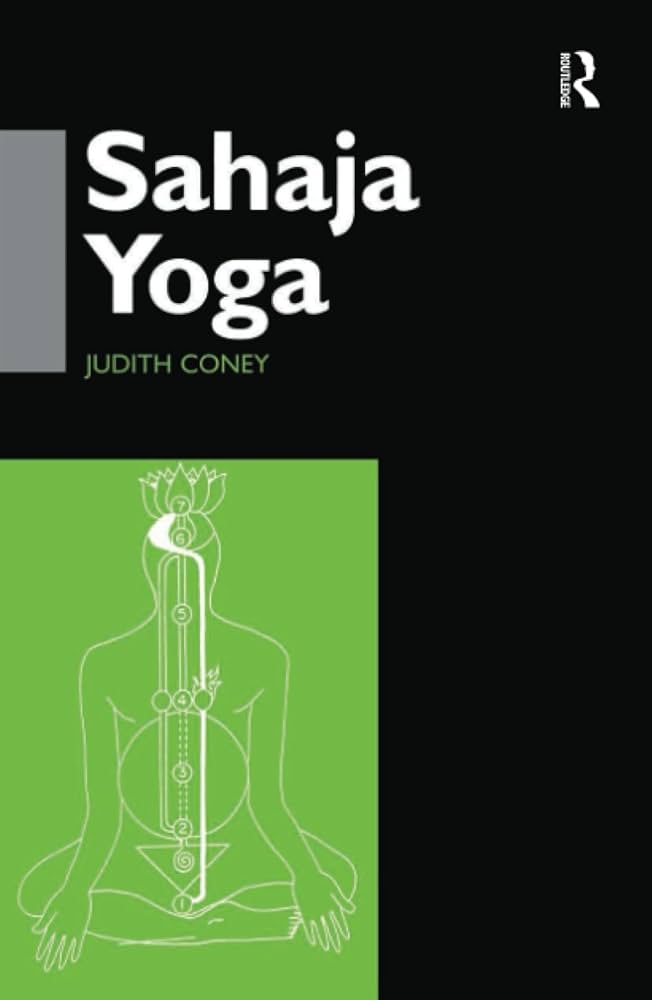

Just like Judith Coney, I too have found many flaws in Sahaja Yoga.
Just as Judith Coney identified structural flaws in Sahaja Yoga, this paper has argued that the most critical flaw is the organized suppression of its foundational claim: that Shri Mataji Nirmala Devi is the Paraclete, the Comforter sent to complete the work of Jesus Christ. The World Council for the Advancement of Sahaja Yoga (WCASY), tasked with guiding the movement, stands accused by a significant body of practitioners of enforcing a silence on this doctrine, leading to mass confusion, attrition, and a profound sense of betrayal.
Table of Contents
Abstract
This paper examines the systemic flaws within the Sahaja Yoga movement, building on the critical sociological study by Judith Coney. It argues that the organization's leadership, particularly the World Council for the Advancement of Sahaja Yoga (WCASY), has actively suppressed the core doctrinal claim that its founder, Shri Mataji Nirmala Devi, is the Paraclete (Comforter) promised by Jesus Christ. Drawing on personal testimonies, internal documents, and theological analysis, the paper demonstrates how this suppression mirrors the early resistance to Jesus' message, creating a whirlpool of contradictions and deceit
that alienates members and obscures the movement's proclaimed purpose. The analysis concludes that the institutionalization of Sahaja Yoga has betrayed its foundational revelation, leaving thousands of seekers in the dark about what they have genuinely experienced.
Keywords: Sahaja Yoga, Shri Mataji, Paraclete, Holy Spirit, new religious movements, Judith Coney, World Council for the Advancement of Sahaja Yoga (WCASY), suppression, betrayal, cool breeze.
1. Introduction
In 1999, sociologist Judith Coney published the first full-length academic study of Sahaja Yoga, a new religious movement (NRM) founded by Shri Mataji Nirmala Devi. Coney's work, Sahaja Yoga: Socializing Processes in a South Asian New Religious Movement, offered a detached analysis of the group's structure and practices[1]. However, as many practitioners have noted, her study left unexplored the profound spiritual experiences—the cool breezes
and feelings of bliss—that attract individuals to the movement. More critically, it did not delve into the internal contradictions and doctrinal suppression that have since become a source of deep conflict within the community.
This paper extends Coney's critical lens to a specific and, according to dissident voices, central flaw: the organized suppression of Shri Mataji's identity as the Paraclete (the Comforter or Holy Spirit) whose advent was promised by Jesus to complete his message in the age to come
(John 14:16, 26; 15:26; 16:7)[2]. For decades, Sahaja Yoga has presented itself primarily as a meditation technique rooted in Hindu cosmology. Yet a significant strand of belief within and about the movement holds that Shri Mataji is the fulfillment of Christian prophecy, the Paraclete Shri Mataji
sent to awaken humanity. The systematic downplaying and even prohibition of this belief by the movement's governing council, WCASY, constitutes a profound betrayal of the founder's claimed mission and creates the very whirlpool of contradictions and deceit
described by former members[3].
Using Coney's sociological framework, supplemented by theological analysis and firsthand accounts, this paper investigates how and why this suppression occurs, its consequences for practitioners, and its parallels with historical religious resistance. It argues that the institutionalization of Sahaja Yoga has prioritized organizational control and social acceptance over the proclamation of its own purported cosmic revelation, echoing the fate of earlier prophetic messages.
2. Literature Review
2.1 Scholarly Studies of Sahaja Yoga
Judith Coney's 1999 monograph remains the foundational academic text. It provides essential data on the group's demographics, socialization processes, and global spread[4]. Other scholarly works, such as Rajeev Dubey's ethnographic study, examine Sahaja Yoga as a cult
that attracts modern, urban Indians seeking meaning, and note the distrustful
relationship between the group and outsiders[5]. The bulk of academic literature, however, focuses on the medical and psychological effects of Sahaja Yoga meditation, often sidestepping its theological claims and internal politics. This paper addresses that gap by focusing on the doctrinal conflict at the heart of the movement.
2.2 Theological Framework: The Promise of the Paraclete
In Christian theology, the Paraclete (Greek paraklētos) is the Helper,
Comforter,
or Spirit of truth
that Jesus promised the Father would send in his name. This figure is understood traditionally as the Holy Spirit, but the promise has also been interpreted in eschatological terms as a future personal guide who would teach you all things
(John 14:26)[6]. The claim that Shri Mataji is this promised Paraclete forms the core of the dissident critique examined here. Sources from the critical Adishakti
network explicitly identify Her as the Paraclete, the Comforter promised by Jesus Christ
[7].
2.3 Internal Critiques and Testimonies
Beyond academic literature, a corpus of personal testimonies and websites maintained by former practitioners documents systemic problems. These accounts describe emotional manipulation, the forced distancing from family, and a culture of silence enforced by leadership. Most pertinent is the repeated accusation that the World Council for the Advancement of Sahaja Yoga (WCASY)—established by Shri Mataji in 2003 to guide the movement—has hijacked both Her Will and Divine Message
to suppress Her identity as the Paraclete[8]. These sources provide the primary data for the present analysis.
3. Methodology
This paper employs a multi-method qualitative approach:
Textual Analysis: Critical reading of Judith Coney's work, official Sahaja Yoga documents (e.g., WCASY description), and theological texts on the Paraclete[9].
Analysis of Primary Testimonies: Examination of first-person accounts published on forums like Adishakti.org, which detail experiences of deception and suppression. These are treated as narrative data that reveal insider perspectives on institutional flaws[10].
Doctrinal Analysis: Comparing the proclaimed theology of Shri Mataji as Paraclete with the public-facing representation of Sahaja Yoga as a generic meditation practice.
Historical Parallels: Drawing analogies between the suppression of the Paraclete claim and early Christian history.
The approach is interpretative, seeking to understand the social and theological dynamics behind the documented contradictions. It acknowledges the contested nature of the sources but treats them as valid evidence of a significant internal schism.
4. Findings
4.1 The Flaws Documented by Judith Coney and Practitioners
Coney's sociological study laid the groundwork for understanding Sahaja Yoga as an NRM with typical institutional features. Practitioners' reviews of her book confirm her identification of problems but add a crucial layer: the experience of contradictions and deceit
after the initial allure of blissful experiences. Former member jagbir
describes being subjected to abuse, ridicule and false propaganda
by council members[11]. This points to a gap between the movement's idealized presentation and the lived reality of many followers.
4.2 The Central Doctrine: Shri Mataji as the Paraclete
Critical sources uniformly stress that Shri Mataji's core mission was to fulfill the promise of Jesus. She is portrayed not merely as a Hindu guru but as the Adi Shakti, the Holy Spirit, and the promised Paraclete
come to enact the Last Judgment
and collective resurrection[12]. This identity is said to be the key to interpreting the cool breeze
(Holy Spirit) felt during Sahaja Yoga sessions. Theologically, this positions Her advent as the completion of Jesus's unfinished work, a direct response to the evil resistance
he faced 2,000 years ago.
4.3 Institutional Suppression by WCASY
The World Council for the Advancement of Sahaja Yoga (WCASY) is the formal leadership body[13]. Dissident narratives allege that this council has systematically suppressed the Paraclete doctrine. Tens of thousands are forbidden by WCASY, on pain of excommunication, to discuss the Comforter's Advent and Divine Message to humanity
[14]. The official policy is described as one of deliberate obscurity: the truth cannot be told as it would scare them off. It is thus preferable that SYs spare them that agony of salvation with the compassion of soothing lies and doubt-inducing deceit
[15]. This creates a fundamental contradiction: the organization founded to advance Shri Mataji's message is accused of hiding its most important element.
4.4 Consequences: A Movement in Crisis
The suppression has several destabilizing effects:
Mass Attrition: Hundreds of thousands who felt the cool breeze
were deliberately kept in the dark
about its significance and left, wondering, What's it all about?
[16] The attrition rate is estimated at 99.99%.
Cognitive Dissonance among Members: Faithful practitioners are caught between their personal reverence for Shri Mataji and the organization's silencing of Her full identity, leading to private confirmation of the whirlpool of contradictions
.
Betrayal Narrative: The suppression is framed as a Betrayal of Shri Mataji – A Divine Tragedy
that parallels the betrayal of Jesus by his disciples[17]. This narrative fuels the dissident movement and websites dedicated to preserving Her Divine Message
.
5. Discussion
5.1 Why Suppression? Institutionalization vs. Charisma
The findings illustrate a classic sociological process: the routinization of charisma. As described by Max Weber, the radical, world-changing message of a charismatic founder is often diluted by successors seeking organizational stability, social legitimacy, and control[18]. WCASY's suppression of the Paraclete doctrine can be seen as an effort to make Sahaja Yoga palatable as a non-threatening meditation practice, avoiding the theological controversy and potential backlash that claiming to fulfill Christian prophecy would invite. This institutional logic conflicts with the founder's purported divine mandate, creating the observed contradictions.
5.2 Parallels with Early Christian History
The dissident narrative explicitly draws parallels between the suppression of Shri Mataji's identity and the resistance faced by Jesus. Just as Jesus's mission was brutally cut short
by the religious authorities of his time, the Paraclete's message is now being betrayed by her own disciples
[19]. This framing is not merely rhetorical; it positions the current struggle within a salvation-historical drama, giving profound meaning to the internal conflict. It suggests that the evil resistance
to divine messages is a recurring pattern.
5.3 Implications for the Study of NRMs
This case study shows that the most significant flaws in an NRM may not be merely financial or social scandals, but theological betrayals—the suppression of the very revelation that founded the movement[20]. Scholars must therefore pay close attention to internal doctrinal disputes and the voices of dissenters who claim the institution has hijacked the founder's message. The Sahaja Yoga case demonstrates that the conflict between institutional preservation and prophetic proclamation can be a primary source of tension and decline.
6. Conclusion
Just as Judith Coney identified structural flaws in Sahaja Yoga, this paper has argued that the most critical flaw is the organized suppression of its foundational claim: that Shri Mataji Nirmala Devi is the Paraclete, the Comforter sent to complete the work of Jesus Christ. The World Council for the Advancement of Sahaja Yoga (WCASY), tasked with guiding the movement, stands accused by a significant body of practitioners of enforcing a silence on this doctrine, leading to mass confusion, attrition, and a profound sense of betrayal.
The consequences are twofold. First, countless individuals who have experienced the cool breeze
of the Holy Spirit are left without a framework to understand it, echoing the Norwegian friend's puzzled question: What's it all about?
[21] Second, the movement itself is fractured, caught between its institutional presentation and its suppressed cosmic narrative. The assured outcome, from the dissident perspective, is that the Divine has always battled such negative forces, and ultimately won
[22]. Whether this victory will come through reform, schism, or the movement's gradual dissipation remains to be seen. What is clear is that any comprehensive understanding of Sahaja Yoga must contend with this unresolved and fundamental contradiction at its heart.
7. References
[1] Coney, Judith. "Sahaja Yoga: Socializing Processes in a South Asian New Religious Movement." RoutledgeCurzon, 1999.[2] "The Holy Spirit Paraclete (John 14-16)." JesusWalk.com.
[3] "Just like Judith Coney,Itoo have found many flaws in Sahaja Yoga." Adishakti.org Forum.
[4] Coney, Judith. "Sahaja Yoga: Socializing Processes in a South Asian New Religious Movement." RoutledgeCurzon, 1999.
[5] Dubey, Rajeev. "Who Joins a Cult and Why? An Ethnographic Study of Sahaja Yoga." The Eastern Anthropologist 68:4, 2015.
[6] "The Holy Spirit Paraclete (John 14-16)." JesusWalk.com.
[7] "The Paraclete Shri Mataji." Adishakti.org.
[8] "The Betrayal of Shri Mataji – A Divine Tragedy of Unparalleled Proportions." Adishakti.org.
[9] "The World Council for Advancement of Sahaja Yoga." Sahajayoga.org.
[10] "Adishakti.org Forum." Adishakti.org.
[11] "Just like Judith Coney,Itoo have found many flaws in Sahaja Yoga." Adishakti.org Forum.
[12] "The Paraclete Shri Mataji." Adishakti.org.
[13] "The World Council for Advancement of Sahaja Yoga." Sahajayoga.org.
[14] "The Betrayal of Shri Mataji – A Divine Tragedy of Unparalleled Proportions." Adishakti.org.
[15] "The Betrayal of Shri Mataji – A Divine Tragedy of Unparalleled Proportions." Adishakti.org.
[16] "Just like Judith Coney,Itoo have found many flaws in Sahaja Yoga." Adishakti.org Forum.
[17] "The Betrayal of Shri Mataji – A Divine Tragedy of Unparalleled Proportions." Adishakti.org.
[18] Weber, Max. "Economy and Society." University of California Press, 1978.
[19] "The Betrayal of Shri Mataji – A Divine Tragedy of Unparalleled Proportions." Adishakti.org.
[20] Wilson, Bryan R. "The Social Dimensions of Sectarianism: Sects and New Religious Movements in Contemporary Society." Oxford University Press, 1990.
[21] "Just like Judith Coney,Itoo have found many flaws in Sahaja Yoga." Adishakti.org Forum.
[22] "The Betrayal of Shri Mataji – A Divine Tragedy of Unparalleled Proportions." Adishakti.org.
Just like Judith Coney, i too have found many flaws in Sahaja Yoga
Coney
This book is my attempt, as a sociologist of religion, to answer the question raised by my friend that day. It is about Sahaja Yoga, the new religious movement (NRM) whose member was responsible for the 'cool breezes' which he felt.”
Judith Coney, Sahaja Yoga (Introduction)
Hardcover: 269 pages
Publisher: RoutledgeCurzon; 1 edition (May 24 1999)
Book Review
Jeffrey"jleow21" (New Jersey, NJ, USA) - See all my reviews
"This book presents the thoughts of at least half the practitioners of Sahaja Yoga in the United States.
I read the book avidly as I recognised many similarities to what I had observed myself.
Judith Coney has obviously found the flaws in SYoga, and has presented a fair representation of the problems in this group. What she did leave out was the amazing capability of the leader to trigger blissful experiences in individuals. These people in turn can set off these feelings in others.
Judith does not investigate this crucial aspect of the group.
I, too, had the pleasure of trying SYoga for several years. After the initial pleasant experiences, I was led into a whirlpool of contradictions and deceit - as many still in the group will confirm privately. Why do they stay? - fear and an inability to resume a normal social life after decades of confinement to a closed community - friends and family forcibly discarded to be a"real"SYogi. However, the ability to trigger intense joy and a tangible peace in thousands of people is inexplicable.
I do still believe that the leader has unique capabilities, but I could never subject my loved ones to the emotional and mental turmoil that many in the group accept.
A good book for those"thinking persons"In SYoga to know that they are not alone. A good start, Judith Coney.”
Jeffrey"jleow21" (New Jersey, NJ, USA) Just like Judith Coney, I too have found many flaws in Sahaja Yoga
Just like Judith Coney, I too have found many flaws in the Sahaja Yoga organization. I too was led into a whirlpool of contradictions and deceit - as many still in the group will confirm privately.
My children and myself too have been for years subjected to abuse, ridicule and false propaganda carried out by the very council members who make up WCASY, the so-called presenters of Shri Mataji's Will.
Since WCASY has hijacked both Her Will and Divine Message I have set a website https://www.sahajayoga-shrimataji.org/ to record for all posterity how tens of thousands of SYs unwittingly helped such a latent negativity almost destroy Shri Mataji's Advent. It is without question that the sending of the Comforter (Holy Spirit) by Jesus in the name of God Almighty is meeting the same evil resistance that He experienced 2,000 years ago. Jesus' life and mission was brutally cut short then, which triggered the need to sent a future Comforter (Paraclete) to complete His mission. And He did as promised!
Yet today we are again in a precarious situation! Tens of thousands are forbidden by WCASY, on pain of excommunication, to discuss the Comforter's Advent and Divine Message to humanity. And the vast majority of them have happily complied! What empowers this collective deception? How is it possible that so many are neither conscientious nor conscious of collectively committing the greatest crime against humanity? As we continue to add ever more articles based on the holy scriptures and eschatology, we cannot help but question.
And hundreds of thousands over the decades were deliberately kept in the dark that they had felt the cool breeze of the Holy Spirit as it was the promised Blossom Time. 99.99% left and never returned. Just like the Norwegian undergraduate at Bath University, they too left wondering," What's it all about?”The official Sahaja Yoga policy till date states that the truth cannot be told as it would scare them off. It is thus preferable that SYs spare them that agony of salvation with the compassion of soothing lies and doubt-inducing deceit.
But since time immemorial the Divine has always battled such negative forces, and ultimately won. The assured outcome will be no different this time.
regards to all,
jagbir