Resurrection and the Fiery End of the Quran, Bible and Srimad Bhagavatam
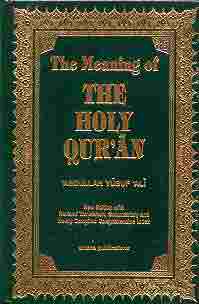
Across scriptures and centuries, the First Resurrection unfolds as the divine turning point for humanity. This sacred synthesis reveals the end of Satan’s reign, the liberation of souls across lifetimes, and the fiery dissolution of the cosmos. From the Night of Power to the Cool Breeze of the Spirit, the Ruh of Allah walks the Earth, awakening the chosen to their eternal inheritance. Blessed are those who heed the Call—for they shall be priests of God and Christ, spared from the Second Death, and welcomed into Satyaloka, the Kingdom of God.

The Holy Quran

"(Satan) said: 'O my Lord! Give me then respite till the Day they (the dead) will be resurrected.' Allah said: athen verily, you are of those reprieved, till the Day of the time appointed.'" " (Satan) said: 'O my Lord! Because You misled me, I shall indeed adorn the path of error for them (mankind) on the earth, and I shall mislead them all. Except Your chosen, (guided) slaves among them.'" (al-Hijr: 36-40)

Most Muslims will still not realize why they are only now suddenly being informed of their Jahannam-bound errors by his Ruh (Spirit), 14 centuries later. It is because 14 centuries ago Allah said to Satan: "'Then verily, you are of those reprieved, till the Day of the time appointed.'"

i know most Muslims will still not realize why. It is because 14 centuries ago" (Satan) said: 'O my Lord! Give me then respite till the Day they will be resurrected.'"

The 14 centuries are up for Satan!


Satan was given respite by Allah till the Day the Believers will be resurrected. That Resurrection is taking place right now, though the vast majority are unaware (Quran 30:55).

The 14 centuries are up for Satan. If that is not the case then Allah can be accused of a deliberate, wilful and calculated attempt to mislead humanity. After all, He still allowed Satan free reign even though the later promised to"Adorn the path of error for them (mankind) on the earth, and [] shall mislead them all.”

But Ar-Rahim only gave respite till the commencement of the Resurrection, after which Satan cannot deceive, delude or mislead humans anymore. No one can now accuse Allah of any wrongdoing. His Ruh is on Earth and Satan is rendered powerless. How can Satan have any influence during this blessed Al Qadr (The Night of Power and Destiny)? How can Satan mislead when Allah has issued His Call to witness the Resurrection?

Satan being bound up during the Resurrection and Last Judgment is not only found in the Quran but Bible as well.

Rev. 20.4-10: The First Resurrection

And I saw thrones, and they sat upon them, and judgement was given unto them:
And I saw the souls of them that were beheaded for the witness of Jesus and for the word of God,
And which had not worshipped the beast, neither his image, neither had received his mark upon their foreheads,
Or in their hands; And they lived and reigned a thousand years.
But the rest of the dead lived not again, until the thousand years were finished.
This is the first resurrection. Blessed and holy is he that hath part in the first resurrection:
On such the second death hath no power, but they shall be priests of God and of Christ,
And they shall reign with him a thousand years.
And when the thousand years are expired, Satan will be loosed out of his prison.
And shall go out to deceive the nations, which are in the four quarters of the earth, Gog and Magog,
To gather them together to battle, the number of whom is as the sand of the sea.
And they went up on the breath of the earth, and compassed the camp of the saints about,
And fire came down from God out of heaven, and devoured them.
And the devil that deceived them was cast out into the lake of fire
and brimstone, where the beast and false prophet are,
And shall be tormented day and night for ever and ever.

Revelation 20:4-10

This is an extremely important Revelation to humankind because it stresses that this is the First Resurrection. Every human being since creation will be born again during the present Resurrection, receive Self-Realization, judged and allowed to enter the Kingdom of God. All the millions who died at the hands of the Church will be born during the Blossom Time, the time when the Great Spirit of God walks on Earth. These will be the souls who lived to the true preaching of Lord Jesus, followed the Word of God, resisted the will of the Church, refused to bow before the images of the Antichrist, neither received his blessings, baptism, nor any communion bread. Today they exist as Hindus, Buddhists, Jews, Christians, Muslims, Sikhs, Taoists and others, oblivious to their past lives. They will respond to the Call of the First Resurrection and be among the first to be liberated.

It has to be emphasized that Hindus, Buddhist, Sikhs—the believers of rebirth—are completely subject to the Great News (surah 78:1-5 An-Naba) of Resurrection. They were Christians in some of their previous lives. The reverse applies to Christians, Jews and Muslims. Only fools and fundamentalists amongst them would claim, without a shred of evidence, of a homogeneous religious heritage spanning countless lives.

The present Sahaja Yogis—who also have absolutely no memory of their past glories or divinity—have accepted the Message of Resurrection and are spiritually cleansing themselves daily, for they know that they are being witnessed and will be judged. They will be among the first to enter His Kingdom and followed by many who will heed His Message of Grace, Mercy, Compassion and Love to all His Human Family. Those successful in cleansing themselves in heart, mind and soul will not be subject to the Second Death—the final dissolution of the universe and the sending of souls who failed the present First Resurrection back into the next creation after trillions of years. Any human who achieves the metamorphosis into the spirit is unconditionally free for all eternity, and shall be the priests of God and Shri Jesus.

This First Resurrection of the Bible matches that of the Qur'n (Chapter 75 Al Qiyamah [The Resurrection]). Unfortunately the misled Muslims have also been deceived, and told by their naive ayatollahs, shaikhs, ulema, mullahs, imams and scholars that Resurrection will only take place when the world ends—just as in Christianity—and not before the End. None of them seem to understand and accept the Truth that only after the Comforter has arrived on Earth and explained all that Shri Jesus wanted to be explained will humans be enlightened enough to comprehend the Reality of the Last Judgment. (The Muslim scholars definitely do not want any Muslim to be aware of this Reality as it will destroy their 'final prophet' falsehood.)

The First Resurrection of the Bible matches that of the Srimad Bhagavatam. Kash confirmed from the Great Divine Mother that all liberated souls will spend another 15 trillion 480 billion years after the Great Dissolution on another planet. On August 22, 1994, Kash meditated and took along the Second Canto of the Srimad Bhagavatam. In his Sahasrara he opened page 108 [Canto 2, Ch. 2, Text 26] to enquire about the translation of the second paragraph:
Srimad Bhagavatam, Canto 2
"This Sisumara is the pivot for the turning of the complete universe, and it is called the navel of Visnu [Garbhodakasayi Visnu]. The yogi alone goes beyond this circle of Sisumara and attains the planet [Maharloka] where purified saints like Bhrgu enjoy a duration of life of 4,300,000,000 solar years...

At the time of the final devastation of the complete universe [the end of the duration of Brahma's life], a flame of fire emanates from the mouth of Ananta [from the bottom of the universe]. The yogi sees all the planets of the universe burning to ashes, and thus he leaves for Satyaloka by airplanes used by the great purified souls. The duration of life in Satyaloka is calculated to be 15,480,000,000,000 years.”

Srimad Bhagavatam, Canto 2, Ch. 2 Text 25-6
(A.C. Bhaktivedanta Swami Prabhupada, Srimad Bhagavatam, Bhaktivedanta Book Trust, 1987, p. 108.)

Shri Adi Shakti: The Kingdom Of God, 1999, pages 1823-4

It is very important to understand the present First Resurrection of both the Bible and Quran:

"This is the first resurrection. Blessed and holy is he that hath part in the first resurrection. On such the second death hath no power, but they shall be priests of God and of Christ.”

Those who do not participate in the present first Resurrection will have no chance of eternal life in the Kingdom of God i.e., protected from the Fiery End. Even the Srimad Bhagavatam confirms that only great purified souls will be spared the Final Dissolution. Only fools think they can get purified by going to the Church, Mosque or Temple. His Holy Spirit (Ruh/Adi Shakti) within assures all that She will—the daily experience of the Cool Breeze (Winds of Resurrection/Ruach) being proof of the promised purification (born again of the Spirit [John 3:1-8]/Baptism of Allah [Quran 2:138]) to enter I-al-Jannah (Kingdom of God/Satyaloka)!

regards to all,

jagbir


Resurrection and the Fiery End: A Comparative Analysis of Eschatological Themes in the Quran, Bible, and Srimad Bhagavatam

Abstract

This paper provides a comparative analysis of the eschatological themes of resurrection and the fiery end of the universe as presented in the Quran, the Bible, and the Srimad Bhagavatam. Drawing upon primary scriptural texts and secondary academic sources, the study explores both the convergent and divergent aspects of these three major religious traditions. The analysis reveals a shared human preoccupation with the ultimate destiny of the soul and the cosmos, while also highlighting the unique theological and cosmological frameworks that shape each tradition's vision of the end times. By examining the concepts of resurrection, final judgment, cosmic dissolution, and the promise of eternal life, this paper aims to foster a deeper understanding of the diverse ways in which these religions address the fundamental questions of existence, morality, and salvation.

Introduction

The contemplation of the end of the world, or eschatology, has been a central theme in religious and philosophical thought throughout human history. The narratives of creation are often mirrored by equally powerful narratives of destruction and re-creation, providing a framework for understanding the meaning and purpose of human existence within a larger cosmic context. This paper delves into the eschatological traditions of three major world religions—Christianity, Islam, and Hinduism—through a comparative analysis of their sacred texts: the Bible, the Quran, and the Srimad Bhagavatam. The primary focus of this study is the dual theme of resurrection and the fiery end of the universe, exploring how each tradition conceives of the final destiny of humanity and the cosmos.

The initial impetus for this research comes from an online article that presents a comparative view of these themes, drawing parallels between the "First Resurrection" of the Bible, the *Qiyamah* of the Quran, and the cosmic dissolution described in the Srimad Bhagavatam[1]. This paper will expand upon this initial comparison by incorporating a broader range of academic and theological sources to provide a more comprehensive and nuanced analysis. We will examine the Christian doctrine of resurrection and final judgment as depicted in the Book of Revelation, the Islamic concept of *Qiyamah* and the Day of Judgment, and the Hindu cosmological cycles of creation and dissolution (*Pralaya*). Through this comparative lens, we aim to illuminate the shared anxieties and hopes that underpin these diverse eschatological visions, while also respecting the unique theological claims of each tradition.

The Christian Doctrine of Resurrection and Final Judgment

The Christian understanding of eschatology is profoundly shaped by the New Testament, particularly the Book of Revelation. The concept of a First Resurrection, as described in Revelation 20:4-10, is a cornerstone of this doctrine. This passage speaks of a resurrection of martyrs and saints who will reign with Christ for a thousand years, a period often referred to as the millennium.

And I saw thrones, and they sat upon them, and judgment was given unto them: and I saw the souls of them that were beheaded for the witness of Jesus, and for the word of God, and which had not worshipped the beast, neither his image, neither had received his mark upon their foreheads, or in their hands; and they lived and reigned with Christ a thousand years. But the rest of the dead lived not again until the thousand years were finished. This is the first resurrection. Blessed and holy is he that hath part in the first resurrection: on such the second death hath no power, but they shall be priests of God and of Christ, and shall reign with him a thousand years.

- Revelation 20:4-6 (KJV)

This "first resurrection" is presented as a special reward for the faithful, granting them a period of blessed rule with Christ and immunity from the "second death," which is understood as eternal damnation. The theological implications of this passage have been a subject of extensive debate among Christian scholars, leading to various millennial interpretations, such as premillennialism, postmillennialism, and amillennialism[2]. The passage also introduces the concept of a final battle against Satan, who is released after the thousand years, culminating in a fiery judgment.

And when the thousand years are expired, Satan shall be loosed out of his prison, And shall go out to deceive the nations which are in the four quarters of the earth, Gog and Magog, to gather them together to battle: the number of whom is as the sand of the sea. And they went up on the breadth of the earth, and compassed the camp of the saints about, and the beloved city: and fire came down from God out of heaven, and devoured them.

- Revelation 20:7-9 (KJV)

The theme of a fiery end is a recurring motif in Christian eschatology, symbolizing purification and the final destruction of evil. The ultimate fate of the wicked is described as a "lake of fire," a potent image of eternal punishment. The central figure in this eschatological drama is, of course, Jesus Christ, who is not only the resurrected one but also the agent of resurrection and the ultimate judge of all humanity. His own resurrection is seen as the guarantee of the future resurrection of believers[3].

Islamic Eschatology: Qiyamah and the Day of Judgment

In Islamic theology, the concept of the end times is known as Ilm al-Akhirah (knowledge of the hereafter), and it is a fundamental pillar of faith. The Quranic term for the resurrection is Qiyamah, which literally means "to rise up." This event is also referred to as Yawm ad-Din (the Day of Judgment), a time when all of humanity will be resurrected to face judgment for their deeds. The Quran emphasizes a bodily resurrection, a belief that is central to mainstream Islamic eschatology[4].

Islamic tradition distinguishes between a "lesser resurrection" (*al-qiyamah al-sughra*), which refers to the period between an individual's death and the final judgment, and a "greater resurrection" (*al-qiyamah al-kubra*), which is the universal resurrection at the end of time[5]. The greater resurrection will be preceded by a series of apocalyptic signs, which are not detailed in the Quran but are elaborated upon in the Hadith (the sayings of the Prophet Muhammad). These signs include the appearance of the Mahdi (a messianic figure who will restore justice) and the Dajjal (an antichrist figure who will deceive many).

The Quran vividly describes the fiery end of the unrighteous in a place called Jahannam (Hell). This is often depicted as a place of immense suffering and torment, a fiery abyss for those who have rejected God's guidance. The Quran contains numerous verses describing the horrors of Jahannam, serving as a stark warning to humanity.

But as for those who disbelieved, I will punish them with a severe punishment in this world and the Hereafter, and they will have no helpers.

- Quran 3:56 (Sahih International)

Theological schools within Islam have differing views on the nature of salvation and damnation. The Mu'tazilites, for example, held that God's justice necessitates that He reward the righteous and punish the wicked. In contrast, the Ash'arites argued that God's sovereignty is absolute, and He is not bound by any such necessity. However, both schools, along with the Maturidis, agree that sinners among Muslims will eventually be released from Hell[6].

Hindu Cosmology: Pralaya and the Cycles of Creation and Dissolution

Hindu eschatology presents a cyclical view of time, in contrast to the linear progression found in Abrahamic religions. The universe undergoes endless cycles of creation, preservation, and dissolution, a process known as Pralaya. The Srimad Bhagavatam, one of the major Puranas, provides a detailed account of these cosmic cycles. It describes four main types of dissolution: Nityapralaya (constant dissolution), Brahmapralaya (the dissolution at the end of a day of Brahma), Prakritapralaya (the dissolution of the elements), and Atyantikapralaya (the final liberation of the soul)[7].

The Brahmapralaya, or the great dissolution, is of particular interest to our comparative study. It is described as a fiery end to the universe, followed by a period of cosmic deluge. The Srimad Bhagavatam gives a vivid description of this event:

At the time of the final devastation of the complete universe [the end of the duration of Brahma's life], a flame of fire emanates from the mouth of Ananta [from the bottom of the universe]. The yogi sees all the planets of the universe burning to ashes, and thus he leaves for Satyaloka by airplanes used by the great purified souls. The duration of life in Satyaloka is calculated to be 15,480,000,000,000 years.

- Srimad Bhagavatam, Canto 2, Ch. 2 Text 25-6[8]

This fiery destruction is not an absolute end but a necessary part of the cosmic cycle. After the dissolution, the universe remains in a state of potentiality until the next cycle of creation begins. The end of the current age, the Kali Yuga, is prophesied to be marked by the appearance of Kalki, the tenth and final avatar of Vishnu. Kalki is depicted as a messianic figure who will come riding a white horse, wielding a fiery sword to destroy the wicked and re-establish dharma (righteousness), thus ushering in a new golden age, the Satya Yuga[9].

Comparative Analysis: Convergences and Divergences

A comparative analysis of the eschatological narratives of Christianity, Islam, and Hinduism reveals both striking similarities and fundamental differences. While the specific details and theological frameworks vary, all three traditions share a common concern for the ultimate destiny of the soul and the cosmos. The following table provides a comparative overview of the key eschatological concepts discussed in this paper:

Concept Christianity (Bible) Islam (Quran) Hinduism (Srimad Bhagavatam)
Resurrection Bodily resurrection, with a "First Resurrection" for the righteous. Bodily resurrection (*Qiyamah*) for all humanity on the Day of Judgment. Reincarnation (rebirth of the soul in a new body) until liberation (*moksha*).
The Fiery End A fiery judgment and destruction of the wicked in a "lake of fire." The wicked are cast into *Jahannam* (Hell), a place of fire and torment. Cosmic dissolution (*Pralaya*) by fire at the end of a cosmic cycle.
Final Destination Heaven for the righteous, eternal damnation (the "second death") for the wicked. Paradise (*Jannah*) for the righteous, eternal punishment in *Jahannam* for the wicked (with some schools allowing for eventual release for Muslims). Liberation (*moksha*) from the cycle of rebirth for the enlightened soul, or continued reincarnation.
Eschatological Figures Jesus Christ (as judge and savior), Antichrist. Mahdi (savior), Dajjal (antichrist), Jesus (as a sign of the end times). Kalki (final avatar of Vishnu).

One of the most significant divergences lies in the concept of time itself. Christianity and Islam adhere to a linear model of history, with a definitive beginning, a one-time history of the world, and a final, irreversible end. In contrast, Hinduism operates on a cyclical model, where the universe undergoes endless cycles of creation and destruction. This fundamental difference in temporal framework shapes their respective eschatologies. The Christian and Islamic end is a final consummation, while the Hindu *Pralaya* is a cosmic reset.

Despite these differences, there are notable convergences. The use of fire as a symbol of both purification and destruction is a powerful common thread. In all three traditions, fire represents a divine agent that consumes the old and corrupt, paving the way for a new reality. The concept of a final judgment, where individuals are held accountable for their actions, is also a shared theme, although the criteria for judgment and the nature of the afterlife differ. Furthermore, the presence of messianic or savior figures—Christ, the Mahdi, and Kalki—who play a pivotal role in the end times, suggests a common human yearning for a divine intervention that will ultimately set things right.

Conclusion

The eschatological narratives of the Quran, the Bible, and the Srimad Bhagavatam, while rooted in distinct theological and cosmological systems, offer profound insights into the human condition. The themes of resurrection and the fiery end of the universe, though interpreted differently, speak to a universal human longing for justice, meaning, and ultimate redemption. Whether it is the linear progression towards a final judgment in Christianity and Islam or the cyclical dance of creation and dissolution in Hinduism, these traditions provide their followers with a moral compass and a sense of purpose in the face of mortality.

The comparative analysis undertaken in this paper has revealed that the similarities in these eschatological visions are as significant as their differences. The shared symbolism of fire, the concept of a final reckoning, and the hope for a messianic figure all point to a common wellspring of human spiritual aspiration. By engaging in a respectful and informed dialogue about these ultimate questions, we can foster a greater appreciation for the diversity of human belief and the shared quest for truth that unites us all. The study of eschatology, therefore, is not merely an academic exercise; it is an invitation to contemplate our own place in the cosmos and the enduring power of faith to shape our understanding of life, death, and the world to come.

References

[1] "Resurrection and the Fiery End of the Quran, Bible and Srimad Bhagavatam." adishakti.org, 26 Aug. 2009.
[2] "Christian eschatology." Wikipedia, Wikimedia Foundation, 25 Sept. 2025.
[3] Habermas, Gary R. "The Resurrection of Jesus In Contemporary Theology." Houston Christian University, 20 May 2016.
[4] "Islamic eschatology." Wikipedia, Wikimedia Foundation, 28 Sept. 2025.
[5] Ibid.
[6] Ibid.
[7] "Pralaya." Wikipedia, Wikimedia Foundation, 15 Sept. 2025.
[8] Prabhupada, A.C. Bhaktivedanta Swami. Srimad Bhagavatam, Canto 2, Ch. 2 Text 25-26. The Bhaktivedanta Book Trust, 1987.
[9] "Kalki." Wikipedia, Wikimedia Foundation, 29 Sept. 2025.