
And now the time has come for it to be blasted.
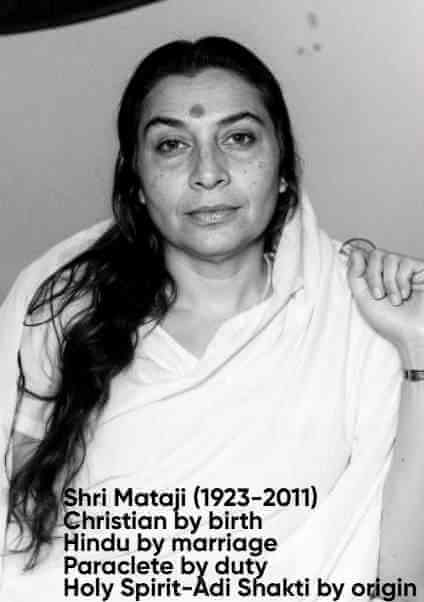
Shri Mataji
Shri Mataji's critique centers on the claim that organized religions have degenerated into systems dominated by empty ritualism and inflexible dogma, in which practices once meant to facilitate spiritual awakening have become ends in themselves. She contended that the repetitive performance of rites, ceremonies, and prescribed prayers no longer mediates inner transformation but instead offers a misleading substitute for it, fostering an illusory sense of piety that obscures authentic realization. In this respect, her position converges with a well-established academic distinction between religion and spirituality: the former emphasizing inherited structures, collective norms, and formal observances, and the latter oriented toward lived meaning, interior awareness, and the experiential dimension of truth.
Table of Contents
1. Introduction
The history of human spirituality is a complex tapestry woven with threads of divine inspiration, profound wisdom, and, all too often, human fallibility. While religions have provided solace, guidance, and a sense of community for millennia, they have also been the source of conflict, oppression, and spiritual stagnation. In the 20th century, a powerful voice emerged to challenge the very foundations of organized religion: Shri Mataji Nirmala Devi, the founder of Sahaja Yoga. Her critique, sharp and uncompromising, resonates with a growing sentiment in the modern world—a yearning for authentic spiritual experience unmediated by institutional structures. This paper will provide a focused exposition of Shri Mataji's specific arguments against organized religion, exploring her assertion that these man-made institutions have, for thousands of years, misled humanity and obscured the true path to spiritual enlightenment.
Shri Mataji's critique of organized religion is not a monolithic attack but a nuanced deconstruction of the various ways in which she believed these institutions have failed humanity. Her arguments can be broadly categorized into several key themes: the deadening grip of ritualism and dogma, the perils of exclusivity and fundamentalism, the corruption of power and materialism, and the suppression of the divine feminine. This paper will delve into each of these themes, drawing extensively from her lectures and writings to provide a comprehensive exposition of her perspective. By examining her critique in detail, we can gain a deeper understanding of her proposed solution: the spontaneous awakening of the Kundalini through Sahaja Yoga, which she presented as the only true path to spiritual liberation.
The paper will also situate Shri Mataji's critique within the broader academic discourse on the distinction between religion and spirituality. Scholars have increasingly recognized the growing trend of individuals who identify as "spiritual but not religious," a phenomenon that speaks to a widespread dissatisfaction with traditional religious institutions. [5] Shri Mataji's teachings can be seen as both a reflection and a driver of this trend, offering a framework for understanding and navigating a spiritual path outside the confines of organized religion. By exploring the parallels between her critique and the academic understanding of this phenomenon, we can appreciate the contemporary relevance of her message.
2. The Deadening Grip of Ritualism and Dogma
A central pillar of Shri Mataji's critique is her assertion that organized religions have become mired in a swamp of meaningless rituals and rigid dogmas. She argued that these external trappings of religion, while perhaps once imbued with spiritual significance, have long since lost their power and now serve only to distract seekers from the true path of inner transformation. In her view, the endless cycle of rites, ceremonies, and prescribed prayers has become a substitute for genuine spiritual experience, creating a dangerous illusion of piety. This sentiment is echoed in the academic distinction between religion and spirituality, where religion is often associated with "traditional values and practices related to a certain group," while spirituality is linked to the "quality and meaning in life." [6]
Shri Mataji's critique of ritualism is particularly potent when she speaks of her native India, a land rich in ancient traditions that have, in her view, been corrupted and distorted over time. She paints a vivid picture of a society bound by a complex web of rules and regulations, where every aspect of life is governed by arbitrary restrictions and superstitions. Her description of the "horrible rituals" that have taken hold in India serves as a powerful indictment of a religious culture that has lost its connection to the living spirit of truth. [1]
"I had nephews who use to come to Bombay for their work. Every time they went to Lucknow they would come with shaven heads. I said, 'What's the matter?' He said, 'There are many people in our family who are old and when they die, we have to shave.' So every time they went there somebody died, so they came with shaven heads. Like that, such horrible rituals existed and even now in the south India, there's lots of rituals are there; terrible rituals and they cannot get out of it. They are frightened if they get out of it, then they might be sinners or they will go to hell."
The Paraclete Shri Mataji
Collective Conditionings, Cabella, Italy — August 16, 1992
This fear of divine punishment, she argues, is a key tool used by religious institutions to maintain control over their followers. By instilling a sense of guilt and anxiety, these institutions create a dependency on their rituals and sacraments as the only means of appeasing an angry God. This, in turn, prevents individuals from discovering their own innate divinity and taking responsibility for their own spiritual growth. Shri Mataji's critique resonates with the scholarly understanding of how religious institutions can sometimes stifle faith through the "process of developing or transforming rules and procedures into a rigid, unchangeable structure." [7]
The problem of dogma is closely intertwined with that of ritualism. Shri Mataji argues that the complex theological arguments and abstract philosophical concepts that form the basis of many religious traditions are ultimately a distraction from the direct, experiential knowledge of the divine. She is particularly critical of the way in which the teachings of the great spiritual masters have been codified and systematized, turned into rigid doctrines that leave no room for individual interpretation or personal experience. In her view, this intellectualization of spirituality is a dead end, a futile attempt to grasp with the mind that which can only be known through the heart.
Her critique of Buddhism provides a compelling example of this. While expressing deep reverence for the Buddha and his teachings, she laments the way in which his message has been fragmented and distorted by the various schools and sects that have arisen in his name. She points to the endless debates and controversies surrounding concepts like nirvana and the nature of the self as evidence of a religious tradition that has lost its way, a tradition that has become more concerned with philosophical speculation than with the practical means of achieving enlightenment. [8]
"All kinds of Buddhism is there. It is impossible to understand really where is Buddhism there. So what do these do? One will shave their hair, one will shave their mustache, another one will wear this kind of dress. This is the only difference between from one another.... So now we are face to face with Buddha. But what He talked about was a spontaneous happening of Self-Realization. But as you see all the Buddhists today, if you see them, you'll be amazed that they are neither here nor there."
The Paraclete Shri Mataji
Shri Buddha Puja, San Diego, USA — July 23, 1988
This critique is not limited to Buddhism. Shri Mataji sees the same pattern of dogmatic rigidity and intellectual abstraction in all organized religions. She argues that the focus on belief systems and theological correctness has created a spiritual landscape in which people are more concerned with what they believe than with how they live. This, she contends, is a fundamental inversion of the true spiritual path, which is not about subscribing to a particular set of beliefs but about cultivating a state of higher consciousness.
3. The Perils of Exclusivity and Fundamentalism
Perhaps the most dangerous consequence of organized religion, in Shri Mataji's view, is the spirit of exclusivity and fundamentalism that it so often engenders. The belief that one's own religion is the sole repository of truth, the one and only path to salvation, has been a source of immense suffering and conflict throughout human history. Shri Mataji's critique of this mindset is uncompromising. She argues that all the great religions of the world are like flowers that have blossomed on the same tree of spirituality, and that to pluck these flowers and fight over them is a sign of profound ignorance. [2]
Her critique of the Abrahamic religions—Judaism, Christianity, and Islam—is particularly pointed in this regard. She laments the way in which these traditions, which share a common spiritual heritage, have become divided and pitted against each other. She points to the absurdity of each religion claiming to have the "last word" from God, a claim that has been used to justify centuries of violence and persecution. [9]
"Actually Hazrat Mohammed never made Islam an exclusive religion in the Koran. He very respectfully talked about Moses, Abraham, Christ and His Mother, one after another. Even so Muslims believe they are exclusive. Jews and Muslims also believer theirs are exclusive religions. There is another problem - they believe that Mohammed was the exclusive messenger of God and Christians believe that Christ is the last word, while Jews believe their Saviour has yet to come. If these Incarnations were the last ones why did Mohammed say I will send you the twelfth Mahdi? Also why did Christ say that He wound send the Holy Ghost?"
The Paraclete Shri Mataji
This critique of religious exclusivity is deeply rooted in her own spiritual experience. Having been born to a Christian mother and a Hindu father, and having spent her life studying the world's great religious traditions, she came to the conclusion that they all share a common esoteric core. The differences between them, she argues, are largely superficial, the result of cultural and historical factors that have obscured their underlying unity. This perspective aligns with the scholarly view that "even though the various human civilizations have developed quite diverse ways for approaching spiritual reality, the Infinite Presence we seek communion with is always the same." [10]
Today we are celebrating the resurrection of Christ. With it we also have to celebrate the resurrection of human beings, of Sahaja Yogis, who have been resurrected as realised souls. With that we have to understand that we enter into a new awareness. He had to come down and again to show to this world that you are the eternal life, that you lead a life that is spiritual, which never perishes. You have to rise, into that new realm, which is the Realm of God Almighty, what you call the Kingdom of God.
And He said it very clearly to Nicodemus that 'You have to be born again' when he asked, 'Am I to enter back into my mother's womb?' And He said it so clearly. Those who don't want to see can remain blind. No, that is, whatever is born of the flesh, is the flesh, but whatever is born of the Spirit is the Spirit.'
But whatever is manmade is not the Spirit. This is the clear statement of Christ, which people wanted to avoid, and start their own organisations, and ideas, and created a very mythical thing in His name. And now the time has come for it to be blasted. It has been going on and on now for thousands of years, captures so many innocent people and people are into it.
The Paraclete Shri Mataji
V4 No 23 Sept 84 p4
Shri Mataji's critique of fundamentalism is even more scathing. She sees fundamentalists as individuals who have become so attached to the letter of their scriptures that they have lost sight of the spirit. They are, in her view, devoid of compassion and driven by a fanatical zeal that makes them capable of committing the most horrific atrocities in the name of God. She is particularly critical of the way in which fundamentalist leaders manipulate their followers, using a distorted interpretation of religious teachings to incite hatred and violence. [11]
"The greatest problem with the fundamentalists is that they have no compassion because they do not love Mohammed Sahib, who He was and why He came on this Earth. They do not know the Reality. They just think that they are right type of people and that they can kill as many human beings as they want, and they can create as many problems as they like, and they can destroy the rest of the people who do not follow their fundamentalism."
The Paraclete Shri Mataji
Her critique of Islamic fundamentalism is particularly relevant in the contemporary global context. She argues that the concept of jihad has been tragically misinterpreted, twisted from a spiritual struggle for self-purification into a call for holy war against non-believers. This misinterpretation, she contends, has turned Islam into a "threat to peace and progress" in many parts of the world. [12] However, she is careful to distinguish between the true teachings of Islam and the distorted ideology of the fundamentalists. She expresses deep respect for the Prophet Mohammed and the mystical tradition of Sufism, which she sees as a path to "peaceful existence through Self-Realization." [13]
Ultimately, Shri Mataji's critique of exclusivity and fundamentalism is a plea for sanity and wisdom. She calls on people of all faiths to recognize the common spiritual heritage that unites them and to reject the divisive ideologies that have caused so much suffering. Her message is one of universal love and acceptance, a vision of a world in which all religions can coexist in peace and harmony.
4. The Corruption of Power and Materialism
In addition to their dogmatic rigidity and exclusivist claims, organized religions are also, in Shri Mataji's view, deeply corrupt. She argues that many religious institutions have become more concerned with accumulating wealth and power than with fostering spiritual growth. This critique is not new; it has been leveled against religious institutions for centuries. However, Shri Mataji's perspective is unique in its emphasis on the spiritual consequences of this corruption. She argues that the pursuit of worldly power and possessions is fundamentally incompatible with the true spiritual path, and that religious leaders who are driven by these desires are incapable of guiding others to enlightenment.
Her critique of the "parasites" who live off the offerings of the faithful is particularly scathing. She points to the lamas of Tibet and Nepal as an example of a religious elite that has become detached from the true spirit of their tradition, living in luxury while their followers struggle. [14] This critique is not limited to any one religion; she sees the same pattern of exploitation and materialism in religious institutions around the world. The problem, she argues, is systemic. When a religion becomes organized and institutionalized, it inevitably becomes entangled in the world of power and money. This is a point that has been made by scholars of religion as well, who have noted that "when a religion organizes itself to conquer the world, the world instead conquers the religion." [15]
"We should logically reach the position to understand what do we expect from a Realized soul. If he talks like a politician who wants to have votes how could we believe such a person could be an Incarnation? An Incarnation has not only to be a fearless person but has to be a holy person. Not like a parasite who is living on other people — with these lamas. They live like parasites in Tibet and also in Nepal ... If they call themselves as godly people look at their faces ... They take money from you and finish your Kundalini. Their days are gone now."
The Paraclete Shri Mataji
The New Age Has Started, Houston, USA — October 6, 1981
Shri Mataji's critique of materialism in religion is not just about the accumulation of wealth; it is also about the commodification of spirituality itself. She is deeply critical of the "false gurus" who sell their teachings to the highest bidder, turning the sacred path of self-realization into a marketplace of spiritual techniques and experiences. This, she argues, is a profound betrayal of the true spiritual path, which cannot be bought or sold. The awakening of the Kundalini, she insists, is a spontaneous and natural process that cannot be forced or manipulated. It is a gift of divine grace, not a product to be purchased.
This critique of the commercialization of spirituality is particularly relevant in the modern world, where the "spiritual marketplace" is a multi-billion dollar industry. From yoga classes and meditation retreats to self-help books and spiritual workshops, there is no shortage of products and services on offer to the aspiring spiritual seeker. Shri Mataji's teachings serve as a powerful antidote to this consumerist approach to spirituality. She reminds us that the true source of spiritual nourishment lies within, and that it cannot be found in any external product or practice.
The corruption of power is another key theme in Shri Mataji's critique of organized religion. She argues that many religious leaders are more interested in controlling their followers than in empowering them. They use their position of authority to create a culture of dependency, in which the faithful are taught to rely on them for spiritual guidance and salvation. This, she contends, is a form of spiritual abuse, a betrayal of the sacred trust that has been placed in them. The high-profile cases of sexual abuse and other forms of misconduct that have rocked many religious institutions in recent years can be seen as a tragic confirmation of her critique. [16]
Shri Mataji's solution to this problem is radical: to empower each individual to become their own spiritual authority. Through the awakening of the Kundalini, she argues, we can connect directly with the divine and access our own inner wisdom. We no longer need to rely on external authorities to tell us what to believe or how to live. We can become our own gurus, our own masters, and take responsibility for our own spiritual journey.
5. The Path to Liberation: Sahaja Yoga and Self-Realization
In the face of the widespread corruption, dogmatism, and violence that she saw in the world's organized religions, Shri Mataji did not despair. Instead, she offered a message of hope, a vision of a new age of spiritual enlightenment in which humanity would finally be liberated from the shackles of its own making. The key to this transformation, she taught, was the awakening of the Kundalini, the divine feminine energy that lies dormant at the base of the spine. This awakening, she explained, is not a metaphor or a philosophical concept; it is a tangible, physiological reality, a process that can be experienced directly by anyone who is sincerely seeking the truth.
The name she gave to this process was Sahaja Yoga. Saha means "with," and ja means "born." Sahaja Yoga is the yoga that is born with you, the innate potential for spiritual union that is your birthright. It is not a system of exercises or a set of beliefs; it is a spontaneous happening, a living process that unfolds from within. As Shri Mataji explained, "You cannot pull our the primule out of the seed, you cannot not force a flower to become a fruit, you cannot pay money for it, you cannot rationalize it or mock at it or laugh at it or if you doubt it whatever it is. It will work out when it has to work out." [17]
The awakening of the Kundalini, she taught, is the true meaning of the second birth, the baptism that is spoken of in the Christian scriptures. It is not a symbolic act or a ritual to be performed; it is a profound and transformative experience, an actualization of our connection to the divine. When the Kundalini rises, it pierces through the fontanelle bone at the top of the head and connects our individual consciousness to the all-pervading power of divine love, which she also referred to as the Holy Ghost, the Paramchaitanya, or the cool breeze. [4]
"The Light of the Spirit, which is the reflection of God Almighty in our heart, enters into our attention and enlightenment. The seeker is really born again, not just a certificate but he changes as the transformation takes place within. There is a vast difference between an ordinary seeker and a Realized soul (Yogi). He becomes his own master, full of Divine Love. It is a resurrection process, like an egg becoming the bird."
The Paraclete Shri Mataji
The fruits of this transformation, she explained, are manifold. On a physical level, the awakening of the Kundalini can bring about healing and rejuvenation. She claimed that many incurable diseases, including cancer and psychosomatic illnesses, had been cured through the practice of Sahaja Yoga. [18] On a mental and emotional level, it brings about a state of inner peace and balance. The "human enemies of lust, greed, anger, possessiveness, jealousies, attachments just disappear." [19] The individual becomes a witness to the drama of life, able to observe the ups and downs of worldly existence without being disturbed by them.
But the most important transformation, in Shri Mataji's view, is the moral one. She taught that morality is not a matter of following a set of external rules; it is an innate quality of the spirit. When we are connected to our spirit, we naturally and spontaneously know what is right and what is wrong. We don't need a book or a priest to tell us how to live; we are guided by our own inner light. This is the foundation of her vision for a new race of saints, a humanity that has been transformed from within and is capable of creating a world of peace, love, and righteousness.
It is important to note that Shri Mataji did not see Sahaja Yoga as a new religion that would replace the old ones. On the contrary, she saw it as the fulfillment of all religions, the key that would unlock the esoteric truths that lie hidden within them. A realized soul, she taught, respects all the great spiritual masters and belongs to the universal religion that encompasses all the religions of the world. [20] Sahaja Yoga is not about converting from one religion to another; it is about transcending the limitations of all religions and experiencing the one truth that unites them all.
6. Conclusion
Shri Mataji Nirmala Devi's critique of organized religion is a profound and challenging one. It is a call to look beyond the external trappings of religion and to seek the living truth within our own hearts. It is a warning against the dangers of dogmatism, fundamentalism, and materialism, and a reminder that the true spiritual path is one of love, compassion, and unity. And it is a promise of a new age of spiritual enlightenment, an age in which humanity will finally be liberated from the chains of its own making and will come to know its own divinity.
Her message is not without its controversies. Her claim to be an incarnation of the Adi Shakti, the primordial goddess, has been met with skepticism and even ridicule. Her critique of other religions has been seen by some as intolerant and divisive. And her movement, Sahaja Yoga, has been accused by some of being a cult. [21] A full and balanced assessment of her life and work would have to take these criticisms into account. However, the purpose of this paper has been to provide a focused exposition of her critique of organized religion, and in this regard, her voice is a powerful and important one.
In a world that is torn apart by religious conflict and disillusioned with traditional institutions, Shri Mataji's message of self-realization offers a beacon of hope. It is a message that resonates with the deepest aspirations of the human spirit, the yearning for a direct, personal experience of the divine. Whether or not one accepts her claims about herself or her movement, her critique of organized religion serves as a powerful reminder that the true spiritual path is not to be found in any book, in any temple, or in any guru, but within the depths of our own being. As she herself said, "You have to be your own master, you have to be your own guru." [22] This is the ultimate message of liberation, a message that has the power to transform not only individual lives, but the entire world.
The enduring legacy of Shri Mataji Nirmala Devi is not a new religion or a new set of dogmas, but a living, breathing experience of the divine that is accessible to all. Her critique of organized religion, as harsh as it may be, is ultimately an act of love, a call to awaken from the slumber of ignorance and to embrace the glorious destiny that awaits us. It is a call to become the saints and prophets of a new age, to create a world in which the all-pervading power of divine love is the only law, and in which every human being is a reflection of the divine.
References
[1] Shri Mataji Nirmala Devi. "Collective Conditionings." Cabella, Italy, 16 Aug. 1992.[2] Shri Mataji Nirmala Devi. Talk on fundamentalism. 1990s.
[3] Shri Mataji Nirmala Devi. Talk on the role of religious leaders. 1990s.
[4] Shri Mataji Nirmala Devi. "The New Age Has Started." Houston, USA, 6 Oct. 1981.
[5] Pew Research Center. "Who are 'spiritual but not religious' Americans?" 7 Dec. 2023
[6] Victor, C. G. P., & Trespeces, L. P. C. (2020). Critical Literature Review on the Definition Clarity of the Concepts of Spirituality, Religiosity, and Faith. *Journal of religion and health*, *59*(2), 799-813.
[7] Facebook, "Institutionalized religion can stifle faith."
[8] Shri Mataji Nirmala Devi. Shri Buddha Puja. San Diego, USA, 23 July 1988.
[9] Shri Mataji Nirmala Devi. Talk on religious exclusivity. 1990s.
[10] Selby, John. *Kundalini Awakening*. Bantam Books, 1992, pp. 7-8.
[11] Shri Mataji Nirmala Devi. Talk on fundamentalism. 1990s.
[12] Shri Mataji Nirmala Devi. Talk on Jihad. 1990s.
[13] Shri Mataji Nirmala Devi. Talk on Sufism. 1990s.
[14] Shri Mataji Nirmala Devi. "The New Age Has Started." Houston, USA, 6 Oct. 1981.
[15] Brunton, Paul. "Problems of Organized Religion."
[16] The New York Times. "Even Religious People Don't Trust Religious Institutions." 22 Jan. 2025.
[17] Shri Mataji Nirmala Devi. University of NSW, Australia, 23 March 1981.
[18] Shri Mataji Nirmala Devi. Talk on the benefits of Sahaja Yoga. 1990s.
[19] Shri Mataji Nirmala Devi. Talk on the moral transformation of Sahaja Yoga. 1990s.
[20] Shri Mataji Nirmala Devi. Talk on the universal religion. 1990s.
[21] Reddit. "What do I need to know about Sahaja Yoga? Should I worry?"
[22] Shri Mataji Nirmala Devi. Bordi, India, 27 Jan. 1977.
Articles based on Shri Mataji quotes:
“A day will dawn when whole world would bow to this ..."“A great war is taking place between satanic forces and ..."
“About Sahasrara nowhere in the scriptures something ..."
“Achieve your Self, become your Self"
“After all we are all human beings created by one God"
“All the people laugh at us, nobody believes us.”
“All these rituals have entered into Sahaja Yoga.”
“Among Muslims there are Sufis... who are realized souls"
“And now the time has come for it to be blasted.
“Announce it to all the seekers of truth, to all the nations.”
“Anyone can commit any sins in the name of religion.”
“But if you put one little fish and two eggs for ten people"
“But Muslims do not want to talk about Resurrection at all"
“But this Judgment is so beautiful ... you enjoy the bliss ..."
“But you know that you have eternal life. You can never die.”
“Death does not exist for you — It is finished... your spirit ...”
“Do not destroy your spirit by going to such people.”
“Every religion has said you have to have Self-realization"
“For all people whom I gave Self Realization yesterday"
“He (Jesus) was the Holiest of the Holy. You accept that ....”
“I don't care for your protocols and rituals. It is nonsense ...”
“I have to warn all SYs Sahaja Yoga is the Last Judgment"
“I must say they are committing the greatest sin ...”
“I was with Him (Guru Nanak Ji), in fact with all of Them.”- 1
“I was with Him (Guru Nanak Ji), in fact with all of Them.”- 2
.”... if you see around the world is in chaos"
“Indians have no goal as far as spiritual life is concerned"
“It is the greatest event of all spiritual happenings of ....”
“It means the Last Judgment has begun with full force"
“It will be slowly revealed by Me because ...”
“Like all the thieves of the world ... have taken over.”
“Meditation is not to sit before the photograph"
“My actual sign name is Lalita ... name of the Primordial ..."
“Nobody has to change dresses or anything nothing outside.”
“Now watch. I will change the direction of the waves.”
“No reality in those religions...no Divine Force working"
“Pure knowledge is not of chakras, vibrations, kundalini ..."
“Self-Realization will progressively lead to the creation of ..."
“Some are money-oriented ... some are violent"
“Tell Jagbir now to leave it to Her.”
“That's not the way it (Al-Qiyamah) is going to work out.'"
“The expression of Adi Shakti within you is the Kundalini.”
“Christianity has nothing to do with Christ.”
“The time has come for you to get all that is promised"
“The ultimate act against Spirit is to worship that which ..."
“The whole Cosmos is waiting for their arrival.”
“They are stagnated at the point of dharma, so they start ...”
“There is so much blind faith, ... so much of wrong ideas"
“They came to Sahaja but they said "We cannot worship ...”
“They made Christ look like a TB patient"
“You have to enter into the Kingdom of God"
“Your job is, in a way, greater than the saints and sages.”