
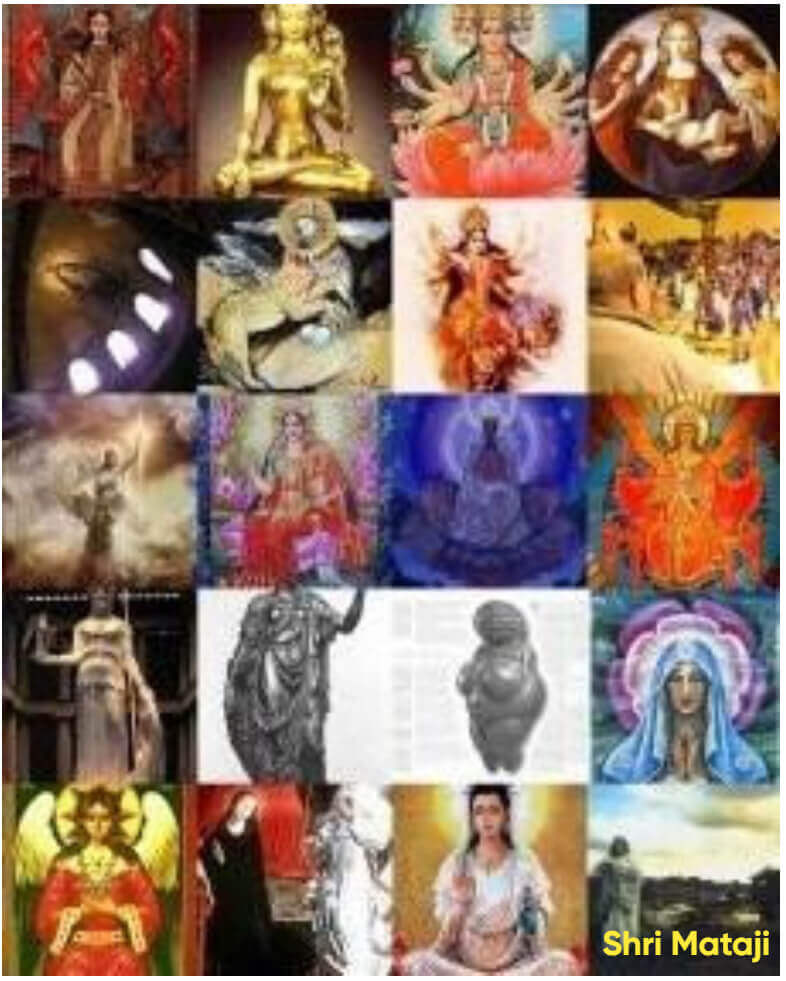
Every religion has said that you have to have your Self-realization
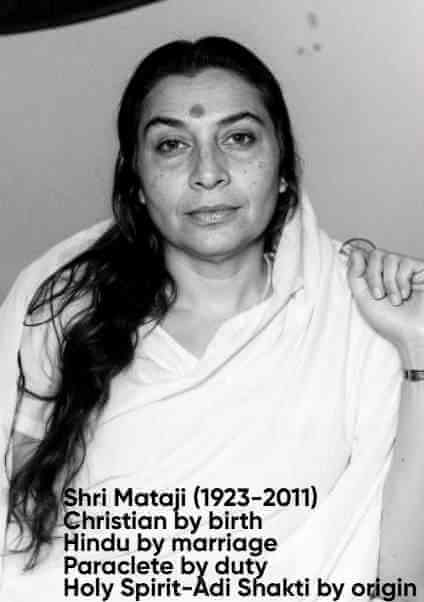
Shri Mataji
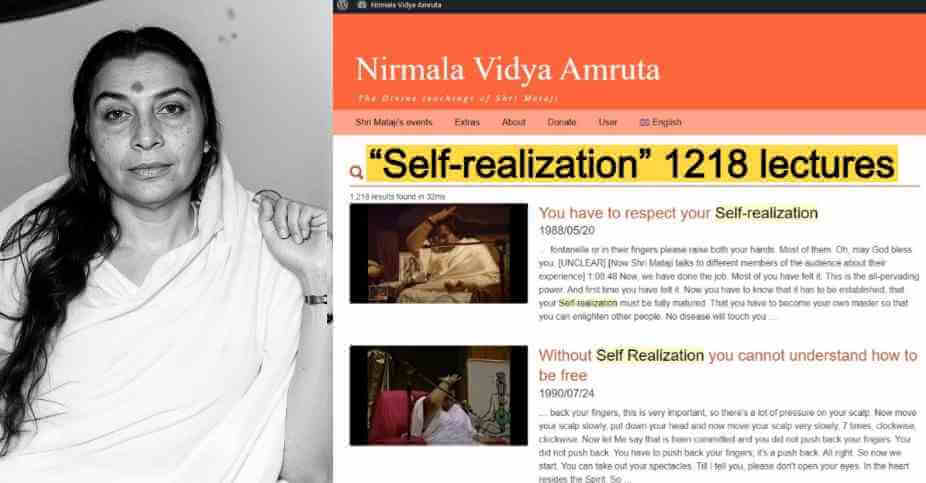
The comparative study of Self-realization terms across world religions reveals a remarkable convergence of human spiritual aspiration. While the theological and philosophical frameworks may differ, the core experience of a transformative inner awakening, a direct and personal encounter with the divine, remains a constant. From the Christian born again experience to the Islamic Al-Qiyamah, the Sikh Dasam Dwar, the Hindu Moksha, the Buddhist Nirvana, the Taoist union with the Tao, the Jewish Devekut, and the Gnostic Gnosis, the language of mysticism points to a singular, universal truth.
The Universal Call to Self-Realization: A Comparative Study Across World Religions
Table of Contents
- 1. Introduction
- 2. Christianity: The Indwelling of the Holy Spirit
- 3. Islam: The Baptism of Allah and the Self-Reproaching Spirit
- 4. Sikhism: Opening the Tenth Door
- 5. Hinduism: The Realization of Atman
- 6. Buddhism: The Attainment of Nirvana
- 7. Taoism: Union with the Tao
- 8. Judaism and Kabbalah: Cleaving to God
- 9. Gnosticism and Greek Philosophy: The Pursuit of Gnosis
- 10. Synthesis: The Common Thread of Inner Awakening
- 11. Conclusion
- 12. References
1. Introduction
The spiritual quest for a direct, experiential knowledge of the divine is a fundamental aspect of human history, manifesting in diverse forms across the globe. Shri Mataji Nirmala Devi, a prominent spiritual teacher, encapsulated this universal imperative by stating, Every religion has said that you have to have your Self-realization.
This paper explores the concept of Self-realization and its terminological equivalents across major world religions, including Christianity, Islam, Sikhism, Hinduism, Buddhism, Taoism, Judaism, and Gnosticism. By examining the distinct yet convergent descriptions of this ultimate spiritual attainment, we can appreciate the singular, universal truth that underpins the world's diverse spiritual traditions.
The term Self-realization
itself carries different connotations in Western and Eastern contexts. In Western psychology, it often refers to the fulfillment of one's character or personality, akin to self-actualization. However, in the context of Indian religions and mystical traditions worldwide, Self-realization signifies something far more profound: the liberating knowledge of the true Self, the direct experience of one's essential nature as divine.[1] This paper focuses on the latter, spiritual understanding of the term.
2. Christianity: The Indwelling of the Holy Spirit
In Christianity, the concept of Self-realization is often expressed through the language of spiritual rebirth and the reception of the Holy Spirit. Jesus Christ's declaration to Nicodemus, Verily, verily, I say unto thee, Except a man be born again, he cannot see the kingdom of God
(John 3:3), points to a profound inner transformation.[2] This is not a mere intellectual assent to doctrine but a spiritual regeneration, a being born of the Spirit.
The Greek term used, anothen, can mean both again
and from above,
suggesting a birth that originates from the divine realm.
The event of Pentecost, described in the Acts of the Apostles, provides a powerful illustration of this experience. The disciples were filled with the Holy Spirit, experiencing what was described as a rushing mighty wind
and cloven tongues like as of fire
(Acts 2:2-3).[3] This Baptism by the Holy Spirit is distinct from the water ritual and signifies the direct indwelling of the divine, the reception of the Holy Ghost. This indwelling actualizes Jesus's teaching that the kingdom of God is within you
(Luke 17:21), shifting the locus of spiritual life from an external promise to an internal, lived reality. The Paraclete, the Holy Spirit, is the agent of this transformation, a divine feminine presence who guides the seeker into all truth.
| Christian Term | Scriptural Source | Description |
|---|---|---|
| Born Again / Born of the Spirit | John 3:3-8 | Spiritual rebirth through the Spirit of God |
| Baptism by the Holy Spirit | Acts 2:2-4 | Descent of the Holy Spirit (fire, rushing wind) |
| Receiving the Holy Ghost | Various | Indwelling of the divine spirit |
| Kingdom of God within you | Luke 17:21 | Inner state of divine reign |
3. Islam: The Baptism of Allah and the Self-Reproaching Spirit
Within Islam, the concept of Self-realization is profoundly articulated through the Qur'anic call to witness the Resurrection (Al-Qiyamah) not as a distant, future apocalypse, but as a present, inner reality. Allah swears an oath by this event and by a crucial corresponding entity within the human being: I do call to witness the Resurrection Day; And I do call to witness the self-reproaching Spirit (al-Nafs al-Lawwamah)
(Qur'an 75:1-2).[4] This divine oath signifies that the Resurrection is an ongoing, verifiable experience, intrinsically linked to the awakening of a specific spiritual faculty within the soul.
This inner resurrection is further elucidated by the concept of the Baptism of Allah (Sibghat Allah), as declared in Surah Al-Baqarah: The Baptism of Allah; and who can baptise better than Allah? And it is He whom we worship
(Qur'an 2:138).[5] The term sibghah literally means dye
or color,
implying a transformative immersion that permanently alters the essence of what is being dyed. This is not a symbolic ritual but a direct, unmediated action of God that purifies the soul and spirit, making one a citizen of the Kingdom of Allah.[6] This spiritual baptism is the Qiyamah al-Sughra (the lesser resurrection) of the individual soul, an event distinct from the Qiyamah al-Kubra (the Great Resurrection) at the end of time.
A crucial anatomical key to this inner event is found in the prophetic tradition of the coccyx ('ajb al-dhanab). The Prophet Muhammad (ﷺ) stated that the entire body decays except for this bone, from which the body will be reconstructed.[7] This identifies a specific, indestructible part of the human anatomy as the seed of resurrection, paralleling the Hindu concept of the dormant Kundalini energy residing in the same sacrum bone at the base of the spine.
| Islamic Term | Qur'anic Source | Description |
|---|---|---|
| Al-Qiyamah | 75:1, 78:1-5 | The Resurrection, experienced as a present, inner reality |
| Al-Nafs al-Lawwamah | 75:2 | The Self-reproaching Spirit, awakened during the inner Resurrection |
| Sibghat Allah | 2:138 | The Baptism of Allah; a direct, transformative spiritual immersion |
| 'ajb al-dhanab | Hadith | The coccyx bone, the indestructible seed of resurrection |
4. Sikhism: Opening the Tenth Door
Sikhism, a monotheistic religion founded in the Punjab region of India, offers a unique and powerful terminology for the experience of Self-realization. A central concept is the opening of the Dasam Dwar, or the Tenth Door.
[8] This refers to a spiritual aperture at the crown of the head, corresponding to the Sahasrara chakra in yogic traditions, which opens upon the attainment of spiritual enlightenment. This is the gateway to the divine, beyond the nine physical orifices of the body. The Sri Guru Granth Sahib states: The Tenth Gate is the home of the inaccessible, infinite Supreme Lord.
The state of being that results from this opening is known as Sahaj Avastha, the state of spontaneous union,
an effortless and natural state of God-realization.[9] A person who has attained this state is a Jeevan Mukti, or one who is liberated while living.
[10] This liberation is not a post-mortem promise but a present reality, a life lived in constant awareness of the divine. The path to this realization is through the guidance of the Satguru (True Guru) and the practice of Shabad Surat, the union of consciousness with the divine sound current.
5. Hinduism: The Realization of Atman
Hinduism, with its vast and ancient body of scriptures, offers a rich vocabulary for the concept of Self-realization. The ultimate goal is Moksha or Mukti, liberation from the cycle of birth, death, and rebirth (samsara).[11] This liberation is achieved through Atma Sakshatkara or Brahma Sakshatkara, the direct realization of the Self (Atman) and its essential identity with the Absolute (Brahman). The Upanishads, the philosophical core of the Vedas, repeatedly emphasize this truth with statements such as Aham Brahmasmi (I am Brahman
) and Tat Tvam Asi (Thou art That
).
The yogic traditions of Hinduism provide a detailed map of the inner journey, centered on the awakening of the Kundalini, the primordial divine energy that lies dormant at the base of the spine. When awakened, this energy ascends through the central channel (sushumna), piercing the chakras, and ultimately uniting with the divine in the Sahasrara chakra at the crown of the head.[12] This union is known as Samadhi, a state of superconscious union with the divine. The highest form of this is Nirvikalpa Samadhi, a state of complete absorption without any modification of the mind. In Shaivism, this is the direct knowing of the Self God Parashiva.
| Hindu Term | Meaning | Description |
|---|---|---|
| Moksha / Mukti | Liberation | Freedom from cycle of birth and death |
| Atma Sakshatkara | Self-realization | Direct realization of the Self (Atman) |
| Kundalini Jagran | Kundalini Awakening | Rising of primordial divine energy |
| Samadhi | Superconscious Union | State of union with the divine |
| Nirvikalpa Samadhi | Seedless Union | Highest state of absorption |
6. Buddhism: The Attainment of Nirvana
Buddhism, founded by Siddhartha Gautama, the Buddha, presents a path to liberation that is distinct in its philosophical framework but convergent in its experiential goal. The ultimate attainment in Buddhism is Nirvana (or Nibbana in Pali), which literally means to blow out
or extinguish.
[13] This refers to the extinguishing of the fires of greed, hatred, and ignorance, which are the causes of suffering (dukkha). This is the state of ultimate liberation from the cycle of rebirth.
The attainment of Nirvana is synonymous with Bodhi, or enlightenment,
the awakening to the true nature of reality. In the Zen tradition, this awakening is often referred to as Kensho (seeing into one's true nature
) or Satori (a moment of sudden enlightenment).[14] A key tenet of Buddhist philosophy is the doctrine of Anatman (or Anatta), the denial of a permanent, unchanging self. From this perspective, Self-realization is the realization of the emptiness (sunyata) of all phenomena, including the self. The realization of the Dharmakaya, or Truth Body,
is the realization of the ultimate, unconditioned nature of a Buddha, which is one with all reality.
7. Taoism: Union with the Tao
Taoism, the ancient Chinese philosophical and spiritual tradition, seeks harmony with the Tao, the ineffable, ultimate principle that is the source and substance of all things. The realized being in Taoism is the Zhenren, the True Person
or Authentic Person.
[15] This is a person who has returned to their original nature and lives in perfect accord with the Tao. The term was coined by Zhuangzi, one of the foundational figures of Taoist philosophy.
The state of the Zhenren is characterized by Wu Wei, or effortless action.
[16] This is not a state of passivity but of spontaneous, natural action that flows from a deep connection with the Tao, without the interference of the ego. The ultimate goal is to return to the source,
to achieve a state of union with the Tao, merging with the ultimate principle and transcending the limitations of the individual self. As the Tao Te Ching states: Returning to the Source is serenity.
8. Judaism and Kabbalah: Cleaving to God
In the mystical tradition of Judaism, known as Kabbalah, the concept of Self-realization is expressed through the idea of Devekut, which means to cleave
or unite
with God.[17] This is a state of constant communion and intimacy with the divine, achieved through prayer, meditation, and the fulfillment of the commandments. The Hartman Institute describes it as the most important value in the life of the faithful.
The Kabbalistic understanding of the divine is structured around the Sefirot, the ten divine emanations through which God's creative energy flows into the world. The mystical experience involves the direct perception of these emanations, particularly Chokhmah (Wisdom) and Binah (Understanding), as inner states of consciousness.[18] The process of spiritual development is also described as Tikkun, or rectification,
of the Neshama, the soul. This is the process of healing and completing the soul, restoring its original connection to the divine light.
9. Gnosticism and Greek Philosophy: The Pursuit of Gnosis
Gnosticism, a diverse religious movement that flourished in the early centuries of the Common Era, placed a central emphasis on Gnosis, a Greek word meaning knowledge.
[19] This was not a theoretical or intellectual knowledge but a direct, experiential knowledge of the divine, which was seen as the key to salvation. The Gnostics believed that a spark of the divine was trapped within the human soul and that through Gnosis, this spark could be liberated and returned to its divine source.
This concept has roots in ancient Greek philosophy, particularly in the idea of Theoria, or contemplation,
a direct awareness of the divine that transcends the intellect. The ultimate goal, in some Platonic and later Christian mystical contexts, was Theosis, or deification,
the process of becoming like God and achieving union with the divine.[20] In Eastern Orthodox Christianity, Theosis remains a central doctrine, describing salvation as a transformative process whose aim is likeness to or union with God.
10. Synthesis: The Common Thread of Inner Awakening
The leader should know about... and respect... all traditional religions, all the incarnations, prophets, seers and all the realised souls of the past and the present. They should be aware of these religions, which have been in their purest forms once upon a time and might have deviated from the right and true path... One must realise that they have lost the sense that all religions come from the same source. They have only partial knowledge which should be expanded and is to be verified through Sahaja Yoga.
[21]
— Shri Mataji Nirmala Devi, Brisbane, 1987
As Shri Mataji taught, all these diverse terms point to the same fundamental phenomenological experience: the awakening of a subtle spiritual energy within the human being and the establishment of a connection with the all-pervading divine power. She referred to this energy as the Kundalini and the divine power as the Paramchaitanya. Her unique contribution was to provide a modern, verifiable metaphor for this experience: the sensation of a cool breeze of the Holy Spirit
or vibrations
on the central nervous system. This tangible experience demystifies the ultimate goal of all religions, making it accessible and verifiable for the modern seeker.
| Religion | Primary Term(s) | Core Concept |
|---|---|---|
| Christianity | Born Again, Baptism by the Holy Spirit | Spiritual rebirth through the Holy Spirit |
| Islam | Al-Qiyamah, Sibghat Allah | Inner Resurrection, Baptism of Allah |
| Sikhism | Dasam Dwar, Sahaj Avastha | Opening of the Tenth Door, spontaneous union |
| Hinduism | Moksha, Kundalini Jagran | Liberation through awakening of divine energy |
| Buddhism | Nirvana, Bodhi | Extinguishing of suffering, enlightenment |
| Taoism | Zhenren, Wu Wei | Becoming the True Person, effortless action |
| Judaism (Kabbalah) | Devekut, Tikkun | Cleaving to God, rectification of the soul |
| Gnosticism | Gnosis, Theosis | Direct knowledge of divine, deification |
11. Conclusion
The comparative study of Self-realization terms across world religions reveals a remarkable convergence of human spiritual aspiration. While the theological and philosophical frameworks may differ, the core experience of a transformative inner awakening, a direct and personal encounter with the divine, remains a constant. From the Christian born again
experience to the Islamic Al-Qiyamah, the Sikh Dasam Dwar, the Hindu Moksha, the Buddhist Nirvana, the Taoist union with the Tao, the Jewish Devekut, and the Gnostic Gnosis, the language of mysticism points to a singular, universal truth.
The teachings of Shri Mataji Nirmala Devi provide a powerful synthesis of these traditions, offering a practical and verifiable means for the modern seeker to experience this ultimate reality for themselves. The universal call to Self-realization is not a call to a particular creed or dogma but to an inner journey of discovery, a journey to the kingdom of God that lies within. As Paramhansa Yogananda eloquently stated, Self-realization is the knowing in all parts of body, mind, and soul that you are now in possession of the kingdom of God.
[22]
12. References
References
[1] "Self-realization." Wikipedia, Wikimedia Foundation.[2] "John 3:3-8." King James Bible, Bible Gateway.
[3] "Acts 2." New International Version, Bible Gateway.
[4] "Allah's (SWT) Command to Witness Al-Qiyamah (The Resurrection)." Al-Qiyamah.org.
[5] "Surah 2: Ayat 138 — Allah & Self-Realization." Al-Qiyamah.org.
[6] Ahmed, Mufti M. Mukarram. Encyclopaedia of Islam. p. 214.
[7] "The Prophetic Tradition of the Coccyx (‘ajb al-dhanab) as the Seed of Resurrection." Al-Qiyamah.org.
[8] "Dasam Dwaar." SikhiWiki.
[9] "Sahaj." SikhiWiki.
[10] "Jivan Mukta." SikhiWiki.
[11] "Moksha." Wikipedia, Wikimedia Foundation.
[12] Vanamali. "Shakti: Realm of the Divine Mother." Inner Traditions, 2008, pp. 28–31.
[13] "Nirvana (Buddhism)." Wikipedia, Wikimedia Foundation.
[14] "Kenshō." Wikipedia, Wikimedia Foundation.
[15] "Zhenren." Wikipedia, Wikimedia Foundation.
[16] "Wu Wei." Wikipedia, Wikimedia Foundation.
[17] "The Mystical Experience in Judaism: Devekut." Shalom Hartman Institute.
[18] "Binah." Chabad.org.
[19] "Gnosis." Wikipedia, Wikimedia Foundation.
[20] "Theosis (Eastern Christian theology)." Wikipedia, Wikimedia Foundation.
[21] Devi, Shri Mataji Nirmala. Seminar in Brisbane, Australia. 1 May 1987.
[22] Yogananda, Paramhansa. The Essence of Self-Realization. Crystal Clarity Publishers, 1990.

“The leader should know about... and respect... all traditional religions, all the incarnations, prophets, seers and all the realised souls of the past and the present. They should be aware of these religions, which have been in their purest forms once upon a time and might have deviated from the right and true path. That deviation can be easily detected by an enlightened soul. The people who have deviated go into a kind of a conditioning which creates a blind faith and a complete halt to the further progress of spirituality. When the religion is professing about one person, then especially it can create people who start despising other religions and criticising others and finding faults with others. So whatever religion they might profess, if they are criticising each other, they are just the same. One must realise that they have lost the sense that all religions come from the same source. They have only partial knowledge which should be expanded and is to be verified through Sahaja Yoga. Every religion has said that you have to have your Self-realisation, your second birth, but these people can just brand themselves as self-realised or selected or elected people, and can go ahead with their blindness into the darkness of destruction. That is why sometimes we are (seeing) how certain people who are professing a religion are creating a society which is completely decadent. Those people who just believe in the Father, the God, are all right as far as their economics and politics is concerned. They might also after some time deviate very greatly, because after all it is a movement towards the right side.
Now, if they believe in God Almighty as the Father, and not in the Primordial Mother, then they can commit sins against their mother and the sins against The Mother are absolute immorality. Such people will find their freedom to go into all areas of immorality which will give them all kinds of horrible diseases and troubles. So one has to be careful. Before criticising these people, the leader must tell the group to take a very benevolent attitude towards all of them, to save as many as possible by telling them what these great saints or these true incarnations have said. In any case they are getting destroyed.
Also the leader can read books which are written by some enlightened people to show where they have gone wrong. They should not say that"I say so"but they can use some other book like Khalil Gibran or William Blake or someone like that to show how things were said absolutely in a wrong manner by some of the people who managed to enter into the scriptures and master them.
The conditioning of religion, though people are educated, is very strong and the strength of these religions is not of morality, of goodness or righteousness, but of destruction, because they think they are the best and they try to destroy others. Sometimes when these things come up with such a vengeance people lose faith in religion as well as in God, but a Sahaja Yogi knows that there is God. A leader when dealing with such people in the presence of other Sahaja Yogis has to warn the Sahaja Yogis beforehand that they should not try to jump to any conclusions and should not say things that will upset those people who are already blind and who are going towards Hell.
If you take a very motherly attitude you will understand that these are like lost sheep and they have to be saved with great kindness, compassion and attention. But in case it is too difficult you should not bother about them. Leave them alone and maybe one day they may work out better because if the Kundalini has started working in them, gradually they will come round.
Sometimes the people who are lost in blind faith are never seeking their enlightenment or their second birth. Leaders should not force the illumination of such people because it is a big task. Instead of that, try to look after easier people who are earnestly and honestly seeking the truth. If we understand that all the incarnations are coming from the same source through their inner Divinity enlightening them, then automatically we will know that there is a higher life than just blindly believing in some faith. Somehow they should know the basic principle that all religions are the same. They came in at different times and they had to work it out according to the times: "Samayachar.” Knowing the Self...”Gyana.”.. is higher than reasoning. Reasoning comes from ego, but absolute knowledge comes from the Self. The leader should follow a spiritual life, enjoying his spiritual values and his Gyana will grow more and more on his central nervous system.” The Paraclete Shri Mataji
The need for self-realization
Brisbane, Australia--May 5, 1970
Articles based on Shri Mataji quotes:
“A day will dawn when whole world would bow to this country India"“A great war is taking place between satanic forces and Divine Forces"
“About Sahasrara nowhere in the scriptures something was described"
“Achieve your Self, become your Self"
“After all we are all human beings created by one God"
“All the people laugh at us, nobody believes us.”
“All these rituals have entered into Sahaja Yoga.”
“Among Muslims there are Sufis... who are realized souls"
“And now the time has come for it to be blasted.
“Announce it to all the seekers of truth, to all the nations.”
“Anyone can commit any sins in the name of religion.”
“But if you put one little fish and two eggs for ten people"
“But the Muslims do not want to talk about Resurrection at all"
“But this Judgment is so beautiful ... you enjoy the bliss of your Spirit"
“But you know that you have eternal life. You can never die.”
“Death does not exist for you — It is finished... your spirit is free.”
“Do not destroy your spirit by going to such people.”
“Every religion has said you have to have Self-realization"
“For all people whom I gave Self Realization yesterday"
“He (Jesus) was the Holiest of the Holy. You accept that position.”
“I don't care for your protocols and rituals. It is nonsense for me.”
“I have to warn all the SYs ... Sahaja Yoga is the Last Judgment"
“I must say they are committing the greatest sin ...”
“I was with Him (Guru Nanak Ji), in fact with all of Them.”- 1
“I was with Him (Guru Nanak Ji), in fact with all of Them.”- 2
.”... if you see around the world is in chaos"
“Indians have no goal as far as spiritual life is concerned"
“It is the greatest event of all spiritual happenings of the Universe.”
“It means the Last Judgment has begun with full force"
“It will be slowly revealed by Me because ...”
“Like all the thieves of the world ... have taken over.”
“Meditation is not to sit before the photograph"
“My actual sign name is Lalita ... the name of the Primordial Mother"
“Nobody has to change dresses or anything - it's nothing outside.”
“Now watch. I will change the direction of the waves.”
“No reality in those religions...no Divine Force working"
“Pure knowledge is not of chakras, vibrations, kundalini but of God"
“Self-Realization will progressively lead to the creation of a new race"
“Some are money-oriented ... some are violent"
“Tell Jagbir now to leave it to Her.”
“That's not the way it (Al-Qiyamah) is going to work out.'"
“The expression of the Adi Shakti within you is the Kundalini.”
“Christianity has nothing to do with Christ.”
“The time has come for you to get all that is promised"
“The ultimate act against Spirit is to worship that which has no Spirit"
“The whole Cosmos is waiting for their arrival.”
“They are stagnated at the point of dharma, so they start telling ...”
“There is so much blind faith, there is so much of wrong ideas"
“They came to Sahaja but they said"We cannot worship Goddess.”
“They made Christ look like a TB patient"
“You have to enter into the Kingdom of God"
“Your job is, in a way, greater than the saints and sages.”