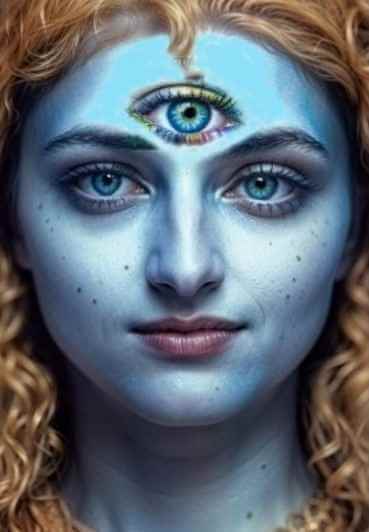
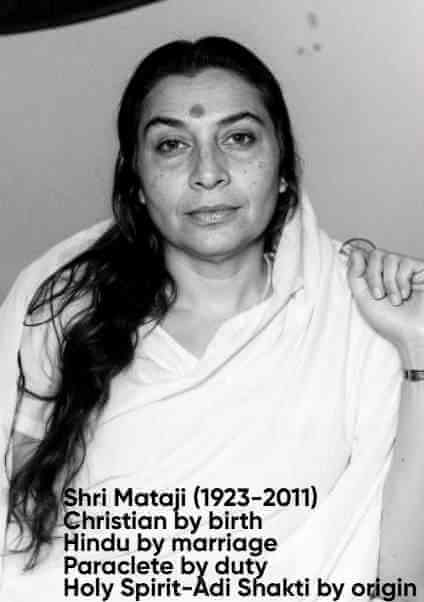
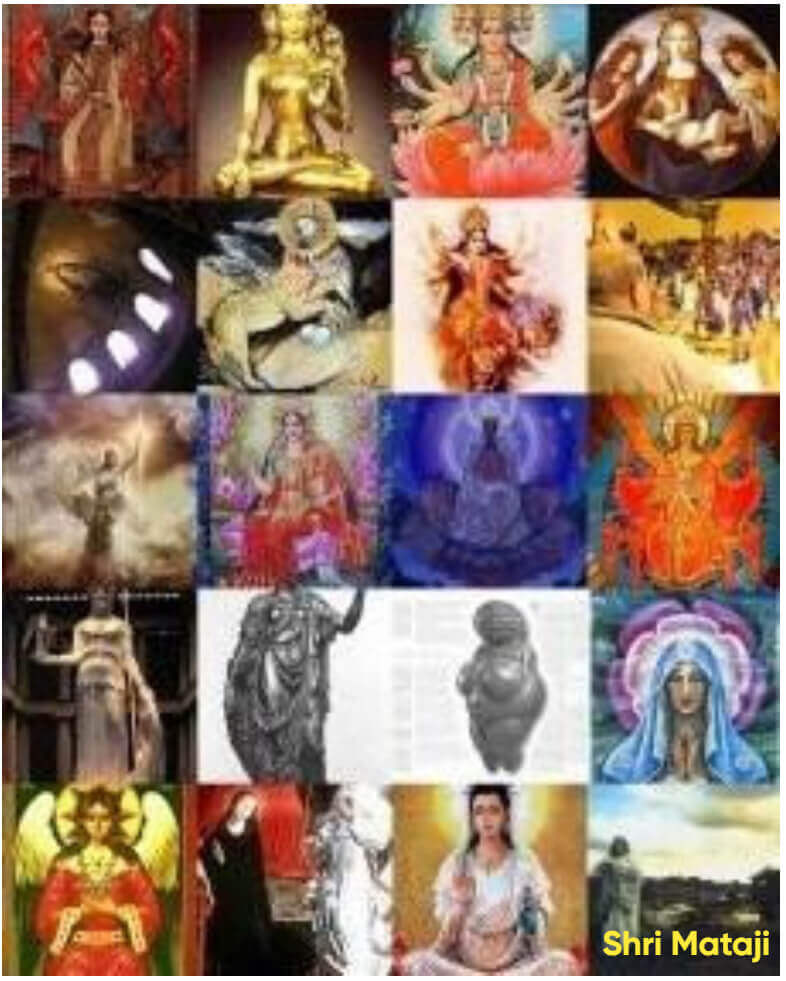
Shri Mataji: “Pure knowledge is not ... of chakras ... vibrations ... kundalini but ...of God Almighty.”
On May 7, 2007, Shri Mataji clarified that Pure Knowledge is not of chakras, vibrations, or Kundalini—but of God Almighty. This final teaching reorients seekers from spiritual mechanisms to divine essence, affirming that true realization begins with surrender to the eternal source beyond all phenomena. Echoing the Upanishadic call to transcend subtle systems and behold the formless Brahman, Shri Mataji's message invites deeper silence, inner awakening, and union with the Divine.
Pure Knowledge and the Divine Self: Exploring Shri Mataji's Teachings and Upanishadic Wisdom
Introduction
The pursuit of spiritual truth has been a cornerstone of human existence, guiding seekers toward an understanding of the divine. Shri Mataji Nirmala Devi, the founder of Sahaja Yoga, offers profound insights into this journey, emphasizing that "pure knowledge" transcends the mechanics of chakras, vibrations, and kundalini, focusing instead on the direct realization of God Almighty. This perspective aligns with ancient Upanishadic teachings, particularly those of the Bhavana and Bahvricha Upanishads, which identify the supreme divinity, Lalita or Maha-Tripura-Sundari, as the blissful Self, the non-dual Brahman. This paper explores the convergence of Shri Mataji's teachings and these Upanishadic verses, examining the concept of pure knowledge as the realization of the divine Self within, achievable through thoughtless awareness and meditative introspection.
Shri Mataji's Teachings on Pure Knowledge
Shri Mataji's discourse during the Shivaratri Puja in Chiancian Terme, Italy, on February 16, 1991, articulates a transformative understanding of spiritual knowledge. She describes "pure knowledge" as the experiential realization of God Almighty, distinct from intellectual or mechanistic understandings of spiritual practices. According to Shri Mataji, this knowledge originates in the heart and flows to the brain, manifesting as a state of "thurya"—the fourth state of consciousness characterized by thoughtless awareness. In this state, the practitioner transcends the distractions of the waking state (jagruti), dream state, and deep sleep (sushupti), entering a realm where the divine is known directly.
Shri Mataji explains that this realization is facilitated by a subtle energy channel, or nadi, which originates in the heart, passes through the left Vishuddhi and Agnya chakras, and opens four petals in the brain. This process is not intellectual but experiential, akin to the innate trust and love one feels for a mother, which cannot be fully articulated yet is profoundly felt. She emphasizes that the knowledge of God Almighty is not mental but arises from an inner experience of joy that integrates with one's being, leading to a state of surrender and security in the "ocean of love." This surrender marks the attainment of nirvana, where the practitioner knows God as the ultimate truth, beyond the need for analysis or doubt.
Upanishadic Perspectives on the Divine Self
The Bhavana Upanishad (1.27) and Bahvricha Upanishad (1.5) provide a philosophical foundation that resonates with Shri Mataji's teachings. The Bhavana Upanishad declares,
The Bahvricha Upanishad (1.5) elaborates further, describing Maha-Tripura-Sundari as the non-dual Brahman-Consciousness, embodying pure Being, Consciousness, and Bliss (Sat-Chit-Ananda). It states,
Synthesis: The Path to Realizing the Divine Self
The convergence of Shri Mataji's teachings and the Upanishadic verses lies in their shared emphasis on inner realization over external practices. Shri Mataji warns against being mired in rituals or intellectual pursuits, such as the study of chakras or kundalini, which, while valuable, are secondary to the direct experience of God. Similarly, the Upanishads advocate for meditative introspection to realize the Atman as Brahman, free from dualities of being and non-being.
Jagbir, in his letter to the devotees, reinforces this by urging a lifelong practice of "looking deep within" through silence and constant awareness. He acknowledges the limitations of human understanding, likening himself to "an ant trying to understand the universe," yet emphasizes that meditating on the Self can lead to liberation in this lifetime. This practice aligns with Shri Mataji's description of thurya, where thoughtless awareness allows the practitioner to merge with the divine, experiencing the eternal truth of Brahman.
Challenges and Implications for Spiritual Practice
Achieving the state of thurya and realizing the divine Self is not without challenges. Shri Mataji notes that some practitioners "fall back" due to attachments or distractions, failing to fully open the four petals in the brain that signify complete realization. The Upanishads, too, imply that recognizing the non-dual Self requires transcending the illusions of the non-self, which demands discipline and surrender.
The implications of these teachings are profound. They call for a shift from external rituals and intellectual pursuits to an inward-focused practice of meditation and self-awareness. This path promises not only personal liberation but also a collective transformation, as Shri Mataji envisions a world where seekers bow to the divine truth within. Jagbir's assertion that "this will be your last birth on Earth" underscores the transformative power of this realization, offering hope for spiritual fulfillment.
Conclusion
Shri Mataji's teachings on pure knowledge and the Upanishadic wisdom of the Bhavana and Bahvricha Upanishads converge on a singular truth: the divine is the Self, and realizing this through thoughtless awareness and meditative introspection is the essence of spiritual liberation. By transcending intellectual and ritualistic approaches, practitioners can experience the divine as an ineffable reality that originates in the heart and permeates the being. This journey, while challenging, offers the promise of moksha and eternal unity with the divine, affirming the timeless relevance of these teachings for spiritual seekers.
Shri Mataji: “Pure knowledge is not ... of chakras ... vibrations ... kundalini but ...of God Almighty.”
>>"The supreme divinity, Lalita, is one's own blissful Self.”
>
> Bhavana Upanishad 1.27
>
>
>"She alone is Atman. Other than Her is untruth, non-self.
> Hence is She Brahman-Consciousness, free from (even) a
> tinge of being and non-being. She is the Science of
> Consciousness, non-dual Brahman Consciousness, a
> wave of Being-Consciousness-Bliss. The Beauty of
> the three-great-cities, penetrating without and
> within, is resplendent, non-dual, self-subsisting.
> What is, is pure Being; what shines is pure
> Consciousness; what is dear is Bliss. So here
> is the Maha-Tripura-Sundari who assumes all forms.
> You and I and all the world and all divinities
> and all besides are the Maha-ripura-Sundari. The sole
> Truth is the thing named 'the Beautiful'. It is the
> non-dual, integral, supreme Brahman.”
>
> Bahvricha Upanishad 1.5
>
>
> Dear devotees of the Devi,
>
> Namaskar - i bow to the Supreme Self that resides in you.
>
> Read this article "Look deep within" for the rest of your lives.
> i mentioned this in an earlier post
>
> >
> > Yesterday i was discussing religion and spirituality with
> > my brother-in-law who had come down. i told him that in
> > all my years prior to self-realization i grasped 1% of the
> > Truth. Then from 1993-2007 i realized another 1%, and
> > that i am confident of realizing at maximum about
> > 4-5% of the Truth in my remaining years. i am just
> > like an ant trying to understand the universe.
> >
>
> This maximum 4-5% will be realized by deeply
> introspecting the awesome truths of "Look deep within"
> for the rest of my life. Only Silence and constant
> awareness will make you realize this Ultimate
> Reality within. There is absolutely no higher
> knowledge to seek - i am 100% positive of this finality
> because Devi is your Self. Spend the remaining years
> on Earth meditating on your Self within and this will
> be your last birth on Earth. It is the Devi who assures
> moksa and immortality for all who are able to realize
> this Ultimate Reality and remain merged with Her at
> all times - all senses and attention must remain
> withdrawn and focused on the Self within without
> any external images or rituals whatsoever.
>
> To realize the remaining 95% of Brahman you have the
> rest on eternity.
>
> Jai Ganapathy,
>
> jagbir
>
>
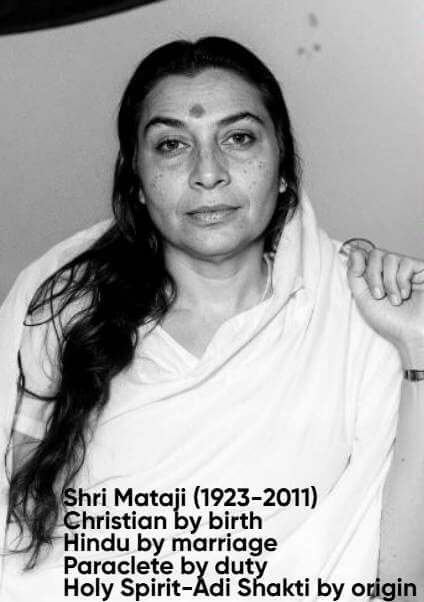
“Fourth one is the most important for all of us is to know that there is a nadi which passes through left Visshuddhi into the heart. Starts from the heart, goes up, passes through Agnya. It has four petals, opens up. This is the one which gives you the state which is called as 'thurya'.
We live in three states. In the living - in the awakened state 'jagruti', our attention goes to this, that, and all that, we spoil our attention.
But the second one is the one what we call is that we sleep. When we sleep also all these things that have happened come to us from our past and things like that.
But then we go to the deeper sleep called as 'sushupti'. Is a state where you have deep sleep, and you dream of something that is reality also. You may dream about Me. Like it's the ethereal part of the subconscious where some beautiful informations are passed on. Supposing I've come, say, to Italy. Italians might know in their 'sushupti' that I have come here or maybe anybody might know, depends on.
But the fourth state is called as 'thurya'. There are two more states. You are in the 'thurya' state, is the fourth. 'Thurya' means fourth. Fourth state is where, that you are in a thoughtless awareness state. When there is no thought- just think of it - when there is no thought you have to be innocent. When there is no thought you have to have vibrations. When there is no thought you cannot be attached to anyone. So into that thoughtless state you have come now, is the 'thurya disthuti'. And in this state, when you are, these four petals which are within you have to open out in your brain. They come from your heart to your brain, and that is when you absolutely understand what is God. Absolutely know what is God is. That is the time when one receives the real knowledge, but unless and until these four petals open, one may fall back.
That's where some of the Sahaja Yogis, who are still meddling with things that they should not do, go down. And they don't understand what is God is. But is not the understanding, in a way, you understand this one little point - that it comes from your heart into your brain; not from brain to your heart. It comes as if the ambrosia of your bhakti covers your brain, absolutely.
Say for example Shankaracharia wrote a beautiful treatise called as 'viveka churaveni' where he described what is God, this, that and 'viveka' means the conscience, and consciousness and all that he described, quite a lot. But there was one horrible fellow called 'Sarma' who started arguing with him and he got fed up - Shankaracharya. He said no use talking to them, so he just wrote 'Saundharyalahari'.
'Saundharyalahari' is nothing but all the mantras praising The Mother. He said"Ay, I know Mother, now let me praise Her. Nothing doing; what's the use of talking to these people, stupid things, how will they understand?” He realised that these people haven't got that capacity, that sensitivity to understand"What I know.”
That's the real knowledge is to know what is God. And if that is God then how can you suspect anything? How can you try to analyses anything? It's God! It's God Almighty, which knows everything; which does everything; which enjoys everything.
That is the one, we should say, is the 'Gnyana', is the knowledge, is the true knowledge, the pure knowledge. Is not the knowledge of chakras; not the knowledge of vibrations; not the knowledge of kundalini but the knowledge of God Almighty.
And the knowledge of God Almighty is not mental. Again, I tell you, it starts from your heart and goes to your brain. Something that comes out of your experience of joy and covers your brain. So your brain cannot deny it any more. Like the, sometimes, when you have your mother - little mother - you know the love of your mother. You cannot explain, it comes from your heart and you say"No, that's my mother, she won't do like that. I know my mother very well.”
The knowledge about your mother, one who has given you birth may not be, mother may not be very good or whatever it is, but knowledge about God - that He's love, that He's truth, that He knows everything - that just become part and parcel of your being; absolutely, and that's the time we say is the nirvana....
And to know that you know God itself is so great. Whatever it is, She may be Mahamaya, She may be anything, but I know. It cannot be described in one book; it cannot be described in even hundred books. It cannot be described in words, but to know that's God. After all, that's God. God Almighty. And that gives you that beautiful surrender where you just feel absolutely secured in that ocean of love. I wish you all to achieve that state.
May God bless you.”
Shri Mataji Nirmala Devi
Shivaratri Puja, Chiancian Terme, Italy, 16 Feb, 1991