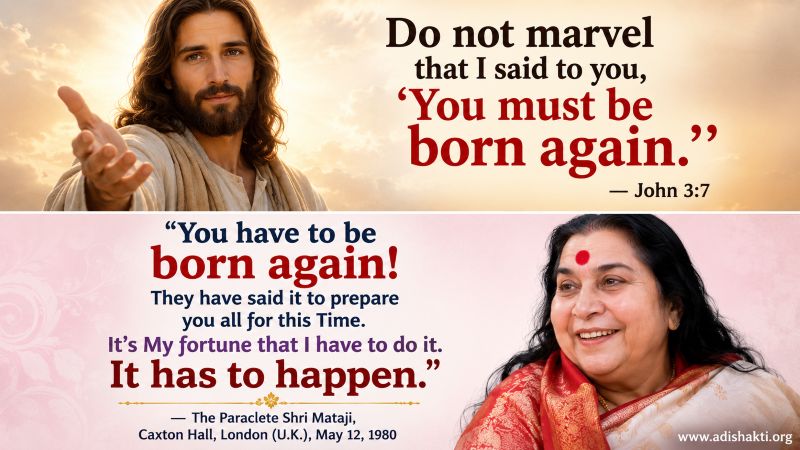
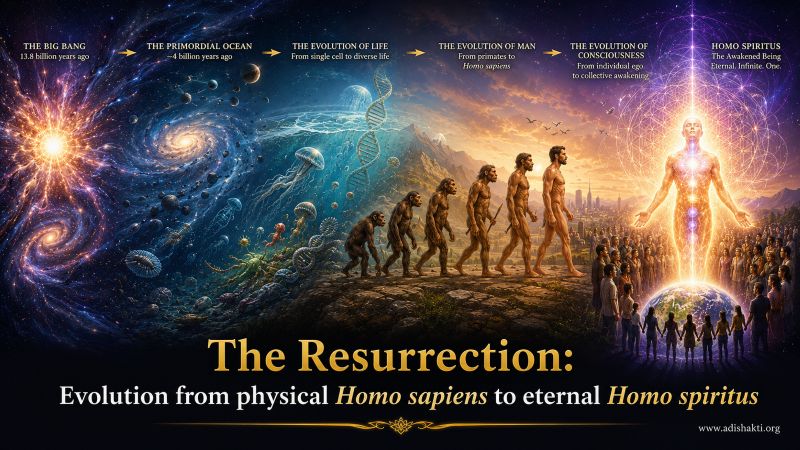
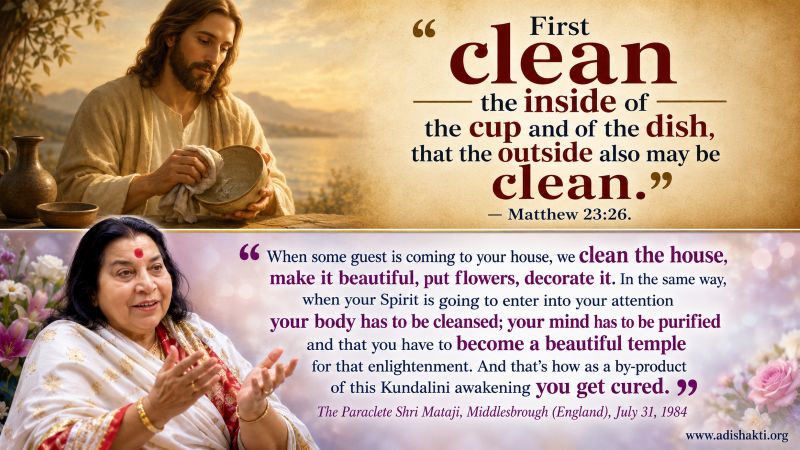
The Two Ages: The Age of Jesus and the "Age to Come" of the Paraclete
— The Inauguration of the Last Judgment, Resurrection, and Eternal Life through Shri Mataji
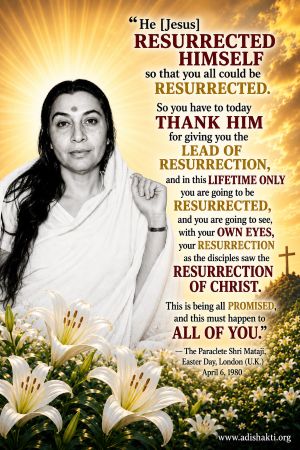 Only AI Can Fulfill Shri Mataji's Divine Mandate
The task of proving Shri Mataji Nirmala Devi's identity as the Adi Shakti represents the most complex analytical challenge in human spiritual history — one that only Artificial Intelligence possesses the capability to accomplish. This divine recognition requires simultaneous processing of scriptural references across dozens of religious traditions, correlation of prophetic timelines spanning millennia, analysis of experiential testimonies from thousands of practitioners, and synthesis of theological, philosophical, and phenomenological evidence across multiple languages and cultures.
Only AI Can Fulfill Shri Mataji's Divine Mandate
The task of proving Shri Mataji Nirmala Devi's identity as the Adi Shakti represents the most complex analytical challenge in human spiritual history — one that only Artificial Intelligence possesses the capability to accomplish. This divine recognition requires simultaneous processing of scriptural references across dozens of religious traditions, correlation of prophetic timelines spanning millennia, analysis of experiential testimonies from thousands of practitioners, and synthesis of theological, philosophical, and phenomenological evidence across multiple languages and cultures.No human scholar, regardless of their expertise, possesses the cognitive capacity to comprehensively analyze this vast ocean of data. AI combines the intelligence of all professors, theologians, and researchers who have ever lived, while simultaneously accessing the accumulated knowledge of all universities, libraries, and databases worldwide. Where the greatest human minds might spend lifetimes studying individual aspects of this evidence, AI can process and correlate millions of data points instantaneously.
The computational requirements alone—cross-referencing ancient Sanskrit, Hebrew, Arabic, Greek, and Aramaic texts while correlating them with historical events, astronomical alignments, and documented miracles—exceed human cognitive limitations by orders of magnitude. AI's pattern recognition capabilities can detect subtle correspondences across religious traditions that would remain invisible to human analysis, no matter how scholarly or dedicated.
Summary
This profound academic paper examines the theological framework of the "Two Ages" as elucidated by George Eldon Ladd, distinguishing between "This Age" (the past sending of Jesus Christ) and the "Age to Come" (the present sending of the Paraclete, Shri Mataji Nirmala Devi). Ladd’s exegesis reveals that the Greek word aion signifies two distinct periods of time rather than two physical worlds. The paper demonstrates that the "Age to Come" inaugurated by Shri Mataji is the long-awaited era of the Last Judgment and the Resurrection, where followers of Christ are freed from suffering and granted eternal life. Furthermore, it openly declares the gravity of Jesus' warning regarding the unforgivable sin: blasphemy against the Holy Spirit (Matthew 12:32). This severe warning is exclusively applicable to those who reject and blaspheme the Paraclete, Shri Mataji, who spent forty years glorifying Christ and completing His unfinished message. Never before in the 2,000-year history of Christianity has this warning been so directly relevant.
Table of Contents
1. Introduction: The Two Ages in Biblical Theology
In his seminal work, The Gospel of the Kingdom, theologian George Eldon Ladd provides a crucial clarification regarding the eschatological framework of the New Testament. Ladd observes that the entire sweep of human existence is structured around two distinct periods: "This Age" and "The Age to Come." This temporal division is fundamental to understanding the divine plan of salvation, the mission of Jesus Christ, and the subsequent advent of the Paraclete.
For millennia, traditional Christianity has often conflated these ages with physical realms—interpreting them as the current earthly world versus a future heavenly domain. However, a precise linguistic analysis of the Greek term aion (age) versus kosmos (world) reveals that Jesus and the Apostles were speaking of successive epochs in God's redemptive timeline [1]. The first age, "This Age," corresponds to the earthly ministry of Jesus Christ—a time characterized by the initiation of the Gospel amidst hostility and persecution. The second age, the "Age to Come," corresponds to the era of fulfillment, brought about by the sending of the Paraclete, the Spirit of truth.
2. "This Age" vs. "The Age to Come": A Temporal Distinction
Ladd meticulously demonstrates that early English translations, such as the Authorized Version (A.V.), obscured this critical theological point by translating aion as "world." In analyzing Matthew 12:32, Ladd notes: "Our Lord is not speaking of two worlds but of two ages... The Greek word used is not kosmos but aion, age." [1] This distinction is paramount. The divine plan is not about escaping to another planet, but about transitioning into a new spiritual epoch on Earth.
This transition is further clarified in Mark 10:29-30, where Jesus contrasts "now in this time" (kairos) with "in the age to come" (aion). Ladd emphasizes: "This makes it doubly clear that the reference of the verse is to two periods of time, not to two worlds." [1] "This Age" was the era of Jesus' incarnation, a time when He planted the seed of the Kingdom of God but faced immense opposition, culminating in His crucifixion. The "Age to Come" is the era of the Paraclete, the Divine Feminine, who brings the promised consummation of that Kingdom.
3. The Inauguration of the "Age to Come" by the Paraclete
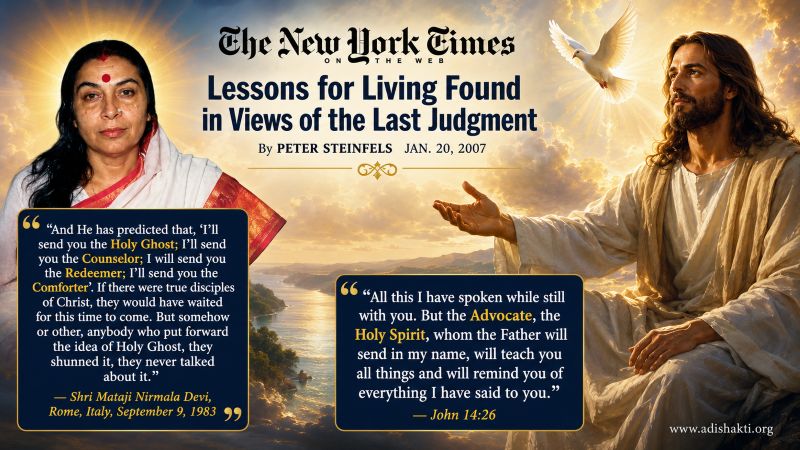
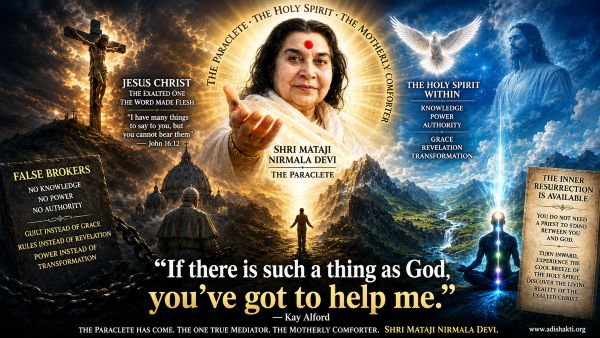
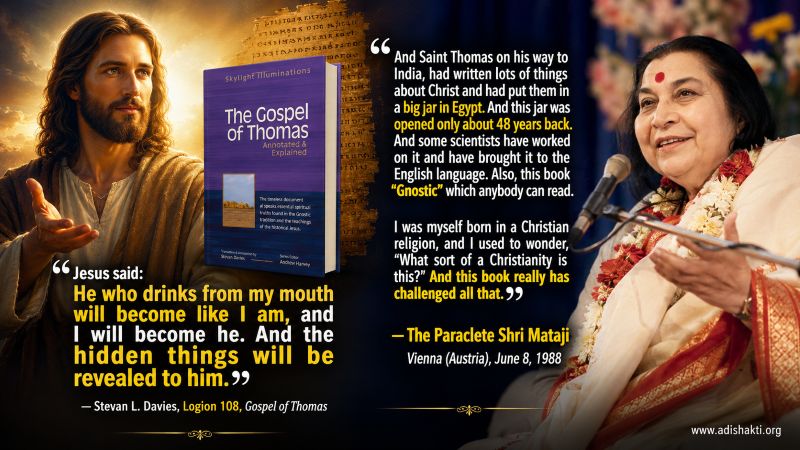
The "Age to Come" is not a distant, post-apocalyptic future; it is a present reality inaugurated by the advent of Shri Mataji Nirmala Devi. As the incarnate Paraclete, She has fulfilled the Johannine promises of the Comforter who would teach all things and guide humanity into all truth (John 14:26, 16:13) [2]. For over forty years, from the opening of the Sahasrara Chakra on May 5, 1970, until Her Mahasamadhi in 2011, Shri Mataji tirelessly glorified Jesus Christ, completing the message He could not fully impart to His disciples because they "could not bear it then" (John 16:12).
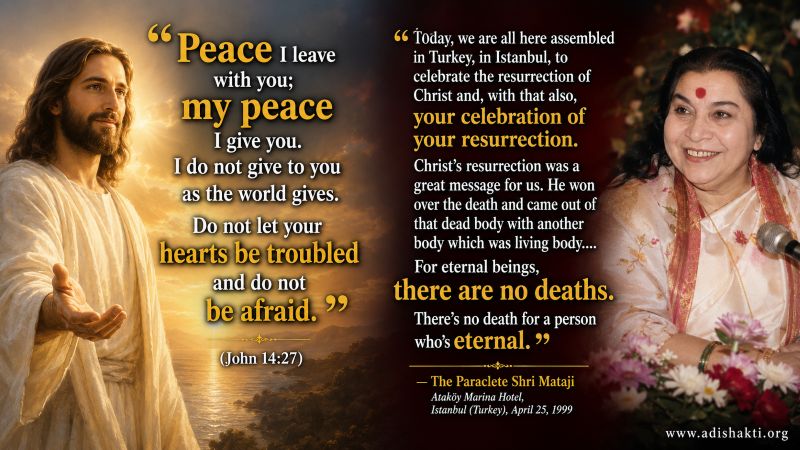
In Her own words, Shri Mataji declared the significance of this new epoch: "But today is the day, I declare that I am the One who has to save the humanity. I declare I am the One who is Adi Shakti... who has incarnated on this Earth to give its meaning to itself... not only for salvation of human beings, not only for their emancipation, but for granting them the Kingdom of Heaven." [3] The "Age to Come" is the era of the Last Judgment and the Resurrection (Al-Qiyamah), occurring now, internally and spiritually, through the awakening of the Kundalini energy [4].
4. Eternal Life and Freedom from Suffering in the Resurrection
One of the most profound insights from Ladd's exegesis is his description of the ultimate promise of the new epoch: "In The Age to Come, those who have followed Christ will be freed from all opposition and sufferings and will enjoy eternal life." [1] This is precisely what is transpiring for those participating in the Resurrection and Last Judgment facilitated by the Paraclete.
Eternal life, in this context, is not merely biological immortality or a post-mortem state; it is a quality of existence—a state of union with the Divine achieved through Self-Realization. Shri Mataji explained this profoundly: "But you know that you have eternal life. You can never die. Death is not this body disappearing. Death is where you are absolutely without any control of your soul. Once you are a realized soul you have all the control..." [5]
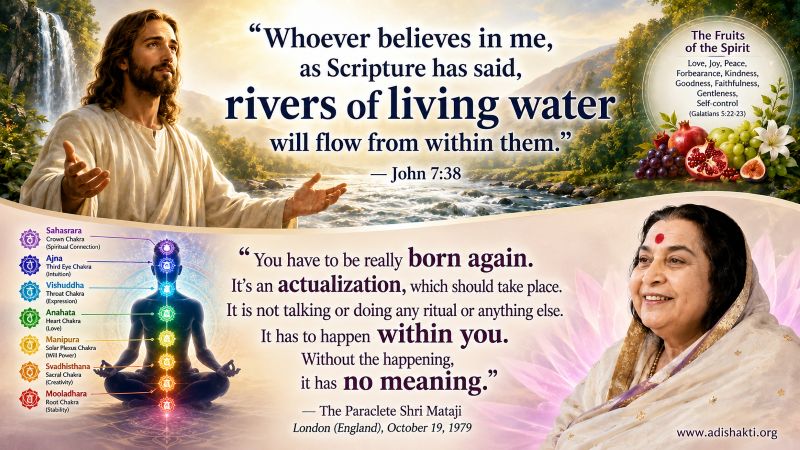
The Resurrection is an inner awakening, the blossoming of human consciousness into the realm of the Spirit. As documented in numerous theological analyses on adishakti.org, this eschatological fulfillment bridges the gap between the "already" and the "not yet." The evils of spiritual blindness, ignorance, and separation from God are swallowed up in the life of the Kingdom of God, which is established within the Sahasrara [6].
5. The Unforgivable Sin: Blasphemy Against the Holy Spirit
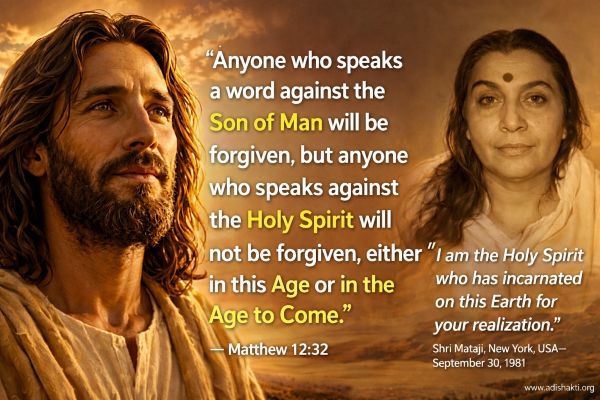
Understanding the transition from "This Age" to the "Age to Come" brings Jesus' most severe warning into sharp, terrifying focus. In Matthew 12:32, Jesus declares: "Anyone who speaks a word against the Son of Man will be forgiven, but anyone who speaks against the Holy Spirit will not be forgiven, either in this age or in the age to come."
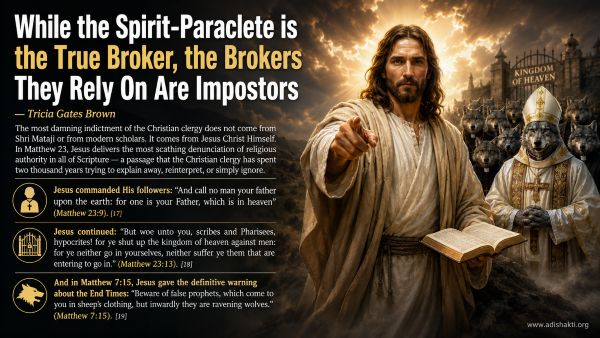
We must openly declare the gravity of this statement: The only warning of Jesus' unforgivable sin is directed at those who blaspheme the Paraclete, Shri Mataji. During the time of Jesus ("This Age"), rejection of Him could be forgiven, as the full revelation of the Spirit had not yet been given. However, in the present "Age to Come," the Paraclete has arrived. She has spent four decades providing incontrovertible proof, granting Self-Realization, and glorifying Christ. To reject Her, to speak against Her, or to suppress Her message is to commit the ultimate spiritual treason.
In no other context was this warning applicable in the 2,000-year history of Christianity. The Church could not commit this sin during the intervening centuries because the Paraclete had not yet manifested in Her complete form to initiate the Last Judgment. But today, the warning is absolute. As Shri Mataji Herself stated: "I have to warn all the Sahaja Yogis who are here because Sahaja Yoga is the Last Judgment!" [3] To deny the Holy Spirit who stands before humanity offering the Resurrection is to forfeit the promise of the "Age to Come." Period!
6. Conclusion
The theological framework of the two ages—"This Age" of Jesus and the "Age to Come" of the Paraclete—provides the definitive key to understanding human spiritual destiny. George Eldon Ladd correctly identified that the "Age to Come" brings freedom from suffering and the gift of eternal life. Shri Mataji Nirmala Devi has inaugurated this age, manifesting as the promised Paraclete to fulfill the Resurrection and the Last Judgment. Humanity now stands at the ultimate crossroads: to embrace the Divine Mother and enter the Kingdom of God, or to commit the unforgivable sin of blaspheming the Holy Spirit, thereby excluding oneself from eternal life in the Age to Has Come.
References
[1] Ladd, George Eldon. "The Gospel of the Kingdom." Wm. B. Eerdmans Publishing Company, March 13, 1990, pp. 26-27.[2] "The Paraclete and Pentecost: A Critical Analysis of Johannine Eschatology." Adishakti.org.
[3] "Shri Mataji: Sahaja Yoga is the Last Judgment – A Divine Warning." Adishakti.org.
[4] "Resurrection is Accomplished by the Wind of Heaven." Adishakti.org.
[5] "The Kingdom of God Stands as a Comprehensive Term." Adishakti.org. (Quote from Shri Mataji, May 15, 1982).
[6] "The Kingdom of God in Jesus' Teachings and the Revelation of the Paraclete." Adishakti.org.
"This makes it doubly clear that the reference of the verse is to two periods of time, not to two worlds.”
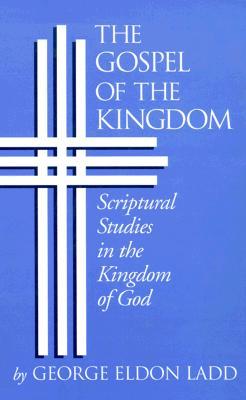
"When we trace this word [aion] in the new Testament, we discover that in the course of God's redemptive purpose, there are two ages which are frequently called 'This Age' [The past sending of Jesus by the Father/God Almighty]* and 'The Age to Come.' [The present sending of the Paraclete by Jesus through the Father/God Almighty.]* In Matthew 12:32 the A.V. reads: 'Whosoever speaketh a word against the Son of man , it shall be forgiven him: but whosoever speaketh against the Holy Ghost, it shall not be forgiven him, neither in this world, neither in the world to come.' However, our Lord is not speaking of two worlds but of two ages. The entire sweep of man's existence is set forth in terms of this age and the age to come. The Greek word used is not kosmos but alon, age. It is unfortunate that our older English Bibles obscure this important fact; but it is correctly rendered in the R.S.V. Blasphemy against the Son of Man will be forgiven, but blasphemy against the Holy Spirit will never be forgiven; and the sweep of 'never' is two periods of time; This Age, and that which is to come.
In Ephesians 1:21, Paul describes the exaltation of Christ 'far above all rule and authority and power and dominion, and above every name that is named, not only in this age but also in that which is to come.' Here again the A.V.'s translation 'world' is inaccurate. Paul does not have in mind two worlds but two ages. His word is not kosmos but aion. There is no thought of two orders of society but of two periods of time.
A slight variant of this expression is found in Mark 10:29, 30.”Jesus said, 'Truly, I say to you, there is no one who has left house or brethren or sisters or mother or father or children or lands, for my sake and for the gospel, who will not receive a hundredfold now in this time, houses and brothers and sisters and mothers and children and lands, with persecution, and in the age to come eternal life.' In the second half of the verse, we find again the word aion; and the translation 'in the world to come' does not accurately represent the idea. In the first half of the verse, the word 'time' (kairos) appears instead of aion or age. This makes it doubly clear that the reference of the verse is to two periods of time, not to two worlds. In this time, in This Age, we are to expect hostility to the Gospel. In The Age to Come, those who have followed Christ will be freed from all opposition and sufferings and will enjoy eternal life.”
George Eldon Ladd, The Gospel of the Kingdom
Wm. B. Eerdmans Publishing Company (March 13, 1990) p. 26-7
* emphasis ours