
Devi is avidya because She binds, and vidya because She liberates
Devi is both the veil and the revelation. As Avidya, She binds the soul in illusion, sustaining the play of maya that veils the truth. As Vidya, She liberates the seeker through wisdom, dissolving ignorance and awakening consciousness to its divine origin. This paradox is not contradiction—it is cosmic design. The Divine Feminine governs both bondage and liberation, guiding the soul through cycles of forgetting and remembering, until it merges with the eternal Self.
Table of Contents
1. Introduction2. The Dual Nature of the Divine Mother: Vidya and Avidya
3. Maya: The Creative and Veiling Power of the Devi
4. The Path of Vidya: Liberation Through Divine Knowledge
5. Shri Mataji Nirmala Devi: The Incarnation of Vidya for the Modern Age
6. Conclusion: The Liberating Grace of the Divine Mother
7. References
1. Introduction
In the vast and profound tapestry of Hindu philosophy, the concept of the Divine Mother, or Devi, presents a compelling paradox. She is at once the source of the cosmic illusion that ensnares beings in the cycle of birth and death, and the very font of the liberating knowledge that sets them free. This paper explores the central theme that the Devi is avidya because she binds, and vidya because she liberates[1]. It posits that this duality is not a contradiction but a fundamental aspect of Her divine play, or lila. The paper will argue that in Her infinite compassion, the Devi has incarnated in the present age as Shri Mataji Nirmala Devi to guide humanity from the binding ignorance (avidya) of Maya to the liberating reality (vidya) of spiritual enlightenment. Drawing upon foundational scriptures such as the Devi Gita, the insights of modern spiritual masters like Swami Vivekananda, and the extensive revelations presented on the adishakti.org archive, this paper will demonstrate that the incarnation of Shri Mataji is the fulfillment of prophecy and the ultimate expression of the Devi's liberating grace, offering a tangible path to self-realization for all seekers of truth.
2. The Dual Nature of the Divine Mother: Vidya and Avidya
The concept of the Divine Mother, the Devi, is one of the most complex and multifaceted in Hinduism. She is worshipped as the supreme power, the ultimate reality, and the source of all creation. Yet, she is also described as the power that binds souls to the cycle of birth and death. This apparent contradiction is resolved through the understanding of her dual nature as both vidya (knowledge) and avidya (ignorance). The sage and scholar Klaus Klostermaier articulates this paradox succinctly: "Devi is avidya because she binds, and vidya because she liberates and destroys the samsara"[1]. This statement encapsulates the essence of the Divine Mother's role in the cosmic drama. As avidya, she manifests as Maya, the enchanting power that creates the illusion of a separate self, leading to attachment, desire, and the endless cycle of rebirth. As vidya, she is the source of divine knowledge, the liberating force that awakens the soul to its true nature and its unity with the divine.
Swami Vivekananda, a key figure in the introduction of Hindu philosophies to the Western world, further illuminates this dual nature through a powerful analogy. He compares the Absolute, Brahman, to a calm sea, and the Divine Mother, or Shakti, to the same sea in waves[2]. The waves, in their constant motion and change, represent the dynamic, creative, and often turbulent nature of the material world, the realm of Maya. The calm sea, on the other hand, represents the underlying, unchanging reality, the state of pure consciousness and bliss. The Divine Mother, therefore, is both the waves and the sea, the manifest and the unmanifest, the power that creates the illusion and the power that dissolves it. This understanding is crucial for comprehending how the Devi can be both the source of bondage and the means of liberation.
3. Maya: The Creative and Veiling Power of the Devi
The concept of Maya is central to understanding the binding aspect of the Divine Mother. Maya is the divine power of the Devi that creates the phenomenal world, making it appear as the ultimate reality while simultaneously veiling the true nature of Brahman. It is the grand illusion, the cosmic play of the Divine Mother that gives rise to the diversity and multiplicity of the universe. The relationship between Maya and avidya is intimate; Maya is the mechanism through which ignorance operates, binding individual souls (jivas) to the wheel of samsara. The Devi Gita, a key scripture in the Shakta tradition, provides a profound insight into the workings of Maya. The Devi herself declares:
"I, as Maya, create the whole world and then enter within it... Accompanied by ignorance, actions and the like, and preceded by the vital breath. How else could souls be reborn into future lives? They take on various births in accord with modifications of Maya. Modified by apparent limitations, I become differentiated into parts, like space in different jars."[3]
This passage reveals that the Devi, through her power of Maya, not only creates the world but also enters into it, becoming the very souls that inhabit it. This act of entering the creation is accompanied by ignorance (avidya), which veils the soul's true nature and leads to the accumulation of karma. The analogy of space in different jars beautifully illustrates the illusion of separation. Just as space appears to be divided by the walls of the jars, the one, undivided consciousness of the Devi appears to be fragmented into countless individual souls. This perceived separation is the root cause of suffering and the driving force behind the cycle of rebirth.
4. The Path of Vidya: Liberation Through Divine Knowledge
Just as the Divine Mother possesses the power to bind, She holds the supreme power to liberate. This liberating aspect is known as vidya, the divine knowledge that dispels the darkness of ignorance. While her form as avidya-maya creates the illusion of the world, her form as vidya-maya reveals the path back to the ultimate reality. The Devi is not a distant, indifferent creator; She is the compassionate Mother who provides the means for Her children to transcend the illusion She herself has woven. This path to liberation, or moksha, is achieved through the attainment of divine knowledge, which dissolves the illusion of a separate self and reveals the fundamental unity of the individual soul (Atman) with the supreme consciousness (Brahman).
The concept of Parashakti, or the Supreme Power, is crucial in this context. Parashakti is the transcendent and immanent energy of Brahman, the ultimate reality. While Brahman itself is attributeless and can only be cognized, Parashakti can be worshipped as the Divine Mother, with name and form[4]. She is the conscious power that guides the seeker from darkness to light, from ignorance to knowledge. The Devi Gita provides a clear roadmap for this journey, emphasizing the importance of internal worship over external rituals. The Devi instructs:
"Internal worship, according to tradition, comprises dissolution into pure consciousness. Pure consciousness alone, devoid of finitude, is my supreme form. Thus focus your awareness on my form that is pure consciousness, without using any conceptual support. What appears outside this pure consciousness as the world, composed of illusion, is false."[5]
This passage underscores the essence of the path of vidya. Liberation is not attained through intellectual understanding alone, but through the direct experience of one's own consciousness as identical to the consciousness of the Divine Mother. This requires turning the attention inward, away from the distractions of the illusory world, and meditating on the formless, attributeless nature of the Self. By doing so, the seeker pierces the veil of Maya and realizes the eternal truth: that the individual soul was never separate from the Divine Mother, but has always been one with Her.
5. Shri Mataji Nirmala Devi: The Incarnation of Vidya for the Modern Age
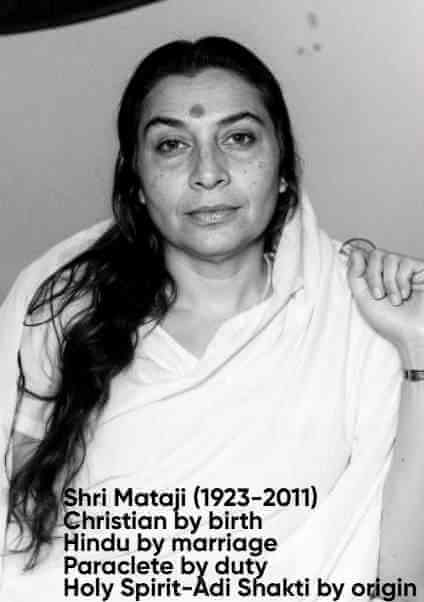
The timeless teachings of the Devi's dual nature find their ultimate expression in the contemporary era through the advent of Shri Mataji Nirmala Devi. According to a wealth of scriptural interpretations and direct testimonies, Shri Mataji is the incarnation of the Adi Shakti, the primordial Divine Mother, who has come to bestow mass realization and inaugurate a new age of spiritual awakening[6]. Her life and work represent the embodiment of vidya, the liberating knowledge, made accessible to all of humanity. On December 2, 1979, Shri Mataji made a profound declaration, stating:
"But today is the day, I declare that I am the One who has to save the humanity. I declare I am the One who is Adi Shakti, who is the Mother of all the Mothers, who is the Primordial Mother, the Shakti, the Desire of God, who has incarnated on this Earth to give its meaning to itself, to this creation, to human beings, and I’m sure through my love and patience and my powers, I am going to achieve it."[7]
This declaration marks a pivotal moment in human spiritual history. The Divine Mother, who has guided and nurtured creation from the beginning, has now incarnated in a complete form to personally guide her children out of the wilderness of ignorance. The most significant event in Shri Mataji's mission was the opening of the universal Sahasrara Chakra (the thousand-petaled lotus at the crown of the head) on May 5, 1970. This cosmic event was not merely a personal achievement but a universal one, unlocking the potential for all human beings to achieve their own self-realization[8]. It was the dawn of the "Age to Come," an era where the experience of the divine would no longer be the exclusive domain of a few ascetics and saints, but a tangible reality for the masses.
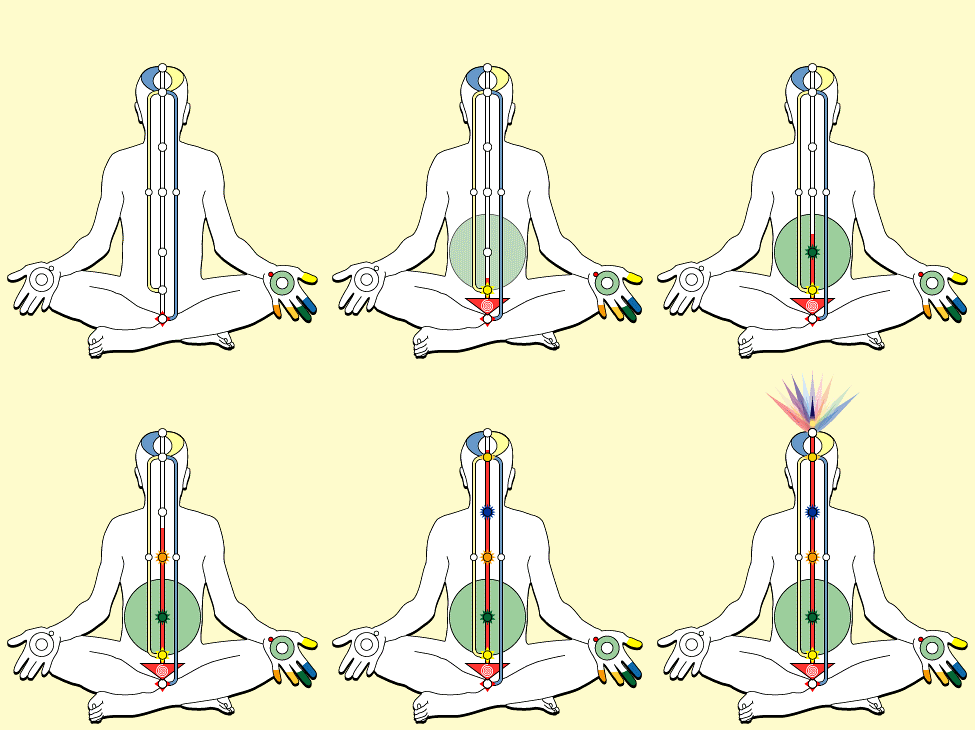
To facilitate this mass awakening, Shri Mataji founded Sahaja Yoga, a simple yet profound method of meditation that awakens the dormant spiritual energy within every human being, known as the Kundalini. The awakening of the Kundalini is the practical manifestation of vidya. As this maternal energy rises through the central channel, it pierces the various energy centers (chakras), cleansing them of imbalances and ultimately emerging from the fontanelle bone area to connect the individual consciousness with the all-pervading power of divine love. This connection is not a matter of blind faith but a directly perceivable experience. It manifests as a cool breeze, known as Chaitanya, felt on the palms of the hands and above the head. This tangible vibration is the proof of self-realization, the direct experience of the divine that dissolves all doubts and fears. Through the awakening of the Kundalini, the illusion of separation created by Maya is shattered, and the individual soul joyfully realizes its true nature as the Spirit, a reflection of the Divine Mother herself.
6. Conclusion: The Liberating Grace of the Divine Mother
The exploration of the Divine Mother as both avidya and vidya reveals a profound truth about the nature of reality and the path to spiritual liberation. The Devi, in Her infinite wisdom and power, orchestrates the cosmic play of creation, binding souls to the illusion of a separate existence through Her power of Maya. Yet, in Her boundless compassion, She also provides the means to transcend this illusion and realize the ultimate truth of oneness with Her. This dual nature is not a contradiction but a testament to Her completeness, Her role as the all-encompassing reality that is both the journey and the destination.
This paper has demonstrated that the incarnation of Shri Mataji Nirmala Devi is the ultimate expression of the Devi's liberating grace in the modern age. By declaring Herself as the Adi Shakti and opening the universal Sahasrara Chakra, Shri Mataji has fulfilled ancient prophecies and inaugurated a new era of mass spiritual awakening. Her gift of Sahaja Yoga and the awakening of the Kundalini provide a tangible and accessible path for all seekers to experience the state of vidya, to feel the divine vibrations of Chaitanya, and to achieve their own self-realization. The promise of the scriptures is no longer a distant hope but a living reality, as the Divine Mother Herself has incarnated to personally guide Her children from the darkness of ignorance to the eternal light of the Kingdom of God. The emphatic conclusion of this research is that the Devi, in Her magnificent and compassionate form as Shri Mataji Nirmala Devi, has come to liberate all those who have been bound by Maya and ignorance, and to bestow upon them the priceless gift of union with the Divine.
7. References
[1] Klostermaier, Klaus K. Hinduism: A Short Introduction. Oneworld Publications, 1998.[2] Vivekananda, Swami. "Inspired Talks, My Master and Other Writings." Ramakrishna-Vivekananda Center, 1995, pp. 48-49.
[3] "Devi Gita: Primordial Reality and Cosmic Liberation." adishakti.org, https://adishakti.org/AI/Devi-Gita/Primordial-Reality-and-Cosmic-Liberation-Grok.htm. Accessed 8 Oct. 2025.
[4] "Devi Mahatmyam." Wikipedia, Wikimedia Foundation, 20 Sept. 2025, https://en.wikipedia.org/wiki/Devi_Mahatmyam.
[5] "Devi Gita: Primordial Reality and Cosmic Liberation." adishakti.org, https://adishakti.org/AI/Devi-Gita/Primordial-Reality-and-Cosmic-Liberation-Grok.htm. Accessed 8 Oct. 2025.
[6] "Adi Shakti | Divine Feminine | Goddess | MahaDevi | Shri Mataji Nirmala Devi." adishakti.org, https://adishakti.org/index.htm. Accessed 8 Oct. 2025.
[7] Shri Mataji Nirmala Devi. Speech, 2 Dec. 1979. Quoted in "Devi Gita: Primordial Reality and Cosmic Liberation." adishakti.org, https://adishakti.org/AI/Devi-Gita/Primordial-Reality-and-Cosmic-Liberation-Grok.htm. Accessed 8 Oct. 2025.
[8] "The Divine Feminine: Opened Sahasrara Chakra May 5, 1970." adishakti.org, https://adishakti.org/index.htm. Accessed 8 Oct. 2025.
"The Goddess is the great Sakti. She is Maya, for of her the maya which produces the samsara is. As Lord of Maya she is Mahamaya. Devi is avidya because she binds, and vidya because she liberates and destroys the samsara. She is praktri and as existing before creation is the Adya Sakti. Devi is the Vacaka Sakti, the manifestation of Cit in Praktri, and the Vicya Sakti or Cit itself. The Atma should be contemplated as Devi. Sakti or Devi is thus the Brahman revealed in The Mother aspect (Srimata) as creatrix and nourisher of the worlds. Kali say of herself in Yogini Tantra: "I am the bodily form of Saccidananda and I am the brahman that has emanated from brahman.” "
1) Sri Mata
— Sacred Mother (feminine); the Seer, the Seen and the Seeing.
— The Knower; the Measurer (masculine)
—"For Whom all creatures are born.”Taittiriya Upanishad 3. 2
Sri Lalita Sahasranama, C. S. Murthy,
Ass. Advertisers and Printers, 1989.
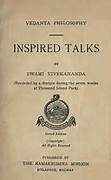 "The Saktas worship the Universal Energy as Mother; it is the
sweetest name they know. The Mother is the highest ideal of
womanhood in India. [...]
"The Saktas worship the Universal Energy as Mother; it is the
sweetest name they know. The Mother is the highest ideal of
womanhood in India. [...] Mother is the first manifestation of power and is considered a higher idea than father. The name of mother brings the idea of Shakti, Divine energy and omnipotence. The baby believes its mother to be all-powerful, able to do anything. The Divine Mother is the Kundalini sleeping in us; without worshipping Her, we can never know ourselves. All merciful, all-powerful, omnipresent - these are attributes of the Divine Mother. She is the sum total of the energy in the Universe.
Every manifestation of power in the universe is Mother. She is Life, She is Intelligence, She is Love. She is in the universe, yet separate from it. She is a person, and can be seen and known - as Sri Ramakrishna saw and knew Her. Established in the idea of Mother, we can do anything. She quickly answers prayers.
She can show Herself to us in any form at any moment. The Divine Mother can have form (rupa) and name (nama), or name without form; and as we worship Her in these various aspects, we can rise to Pure Being, having neither form nor name.
The sum-total of all the cells in an organism is one person. Each soul is like one cell, and the sum of them is God. And beyond that is the Absolute. The sea calm is the Absolute; the same sea in waves is the Divine Mother. She is time, space and causation. Mother is the same as Brahman and has two natures; the conditioned and the unconditioned. As the former, She is God, nature and soul. As the latter, she is unknown and unknowable. Out of the Unconditioned came the trinity, God, nature and soul - the triangle of existence.
A bit of Mother, a drop, was Krishna; another was Buddha. The worship of even one spark of Mother in our earthly mother leads to greatness. Worship Her if you want love and wisdom.”
Swami Vivekananda, "Inspired Talks, My Master and Other Writings",
Wed. July 2,1895, Ramakrishna-Vivekananda Center, NY, pp. 48-49.
THE PRIMEVAL ENERGY
One of the unique features of Hinduism is the fact that it conceives Divinity also as Mother Goddess. When Divinity has no name or form — which is the most important declaration of the Upanishads, the next logical step is to recognize that the Supreme has no specifity in terms of gender. The Upanishads transcend the gender-specific connotation and invent the unique Sanskrit word tat, meaning 'that' for that Supreme Reality. And therefore they argue, whatever reason or rhyme we have in referring to God by a masculine pronoun, the same right there is for us to call God by a feminine pronoun. The energy of every Cosmic Divinity is taken to be feminine and thus arises the interesting concept of primordial power or the [[Parashakti]], which means 'Power Supreme'.
BRAHMAN TO BE KNOWN, SHAKTI TO BE WORSHIPPED
The primordial Parashakti is therefore the ultimate dynamic energy of the transcendental Brahman, than which there is no other existence. In fact it is technically wrong to say that She (Parashakti) is the Energy of Brahman, because the nature of Brahman does not allow any attributes or predicates.The moment we attribute anything to Brahman we have already delimited and circumscribed it. When we talk of the Energy of the Ultimate Reality we have already descended one step from the supreme pedestal of the Unmanifested Attributeless Ultimate.
But the beauty of the concept of Parashakti is that She is transcendent beyond anything that is finite and immanent in everything there is. So while we predicate it and relate it to other things, it is still the Ultimate Supreme that can be talked about. While Brahman has only to be cognized, Parashakti can be worshipped with a name and form. She is the Divine Will personified. She is the Conscious Power beyond everything. She is the Presence, invisible and constant, that sustains the world, linking form and name, holding them in interdependence. There is nothing impossible for Her. She is the Universal Goddess. She is all knowledge, all strength, all triumph and all victory. She is the Goddess Supreme (Maheshvari) who brings to us the total state of illumination.
Devi Mahatmyam
Wikipedia, the free encyclopedia