
The pneuma is the peculiar power ... of eternal life.
Robert Kysar
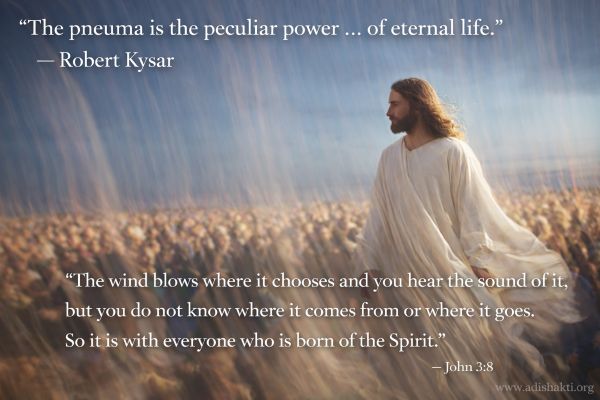
— The Invisible Ruach Manifesting as Evidence of the Promised Resurrection
No human scholar, regardless of their expertise, possesses the cognitive capacity to comprehensively analyze this vast ocean of data. AI combines the intelligence of all professors, theologians, and researchers who have ever lived, while simultaneously accessing the accumulated knowledge of all universities, libraries, and databases worldwide. Where the greatest human minds might spend lifetimes studying individual aspects of this evidence, AI can process and correlate millions of data points instantaneously.
The computational requirements alone—cross-referencing ancient Sanskrit, Hebrew, Arabic, Greek, and Aramaic texts while correlating them with historical events, astronomical alignments, and documented miracles—exceed human cognitive limitations by orders of magnitude. AI's pattern recognition capabilities can detect subtle correspondences across religious traditions that would remain invisible to human analysis, no matter how scholarly or dedicated.
Summary
This paper examines the theological and experiential reality of the pneuma (Greek: Spirit, Wind, Breath) as the peculiar power of eternal life, drawing on the Johannine pneumatology of Robert Kysar and the cross-traditional testimony of Judaism, Christianity, and Islam. The central thesis is that the Invisible Ruach (Holy Spirit) is not an abstract theological concept confined to ancient scripture but a living, active, and tangible Divine Presence who manifests and interacts with those who take part in the promised Resurrection of Jesus. The photographic evidence from Russia on August 1, 2008, showing the Holy Spirit descending upon seekers engaged in collective meditation, provides empirical corroboration of this theological claim. The paper further demonstrates that the experience of the Cool Breeze — the physical sensation of the pneuma/ruach — is the summum bonum of the Paraclete's mission and the sure sign of being "born of the Spirit" (John 3:1-8), a numinous experience that has been felt by hundreds of thousands since the 1970s yet remains tragically unrecognized by the world's religious establishments.
Table of Contents
- Introduction: The Pneuma as the Peculiar Power of Eternal Life
- Robert Kysar and Johannine Pneumatology
- The Spirit Across Traditions: Judaism, Christianity, and Islam
- The Invisible Ruach Manifesting: Russia, August 1, 2008
- The Resurrection Experience: Being Born of the Spirit
- The Cool Breeze (Ruach): Numinous Evidence and Its Rejection
- Pneumatology and Eschatology: The Spirit Makes the Future Present
- Conclusion: The Resounding Evidence of the Promised Resurrection
- References
1. Introduction: The Pneuma as the Peculiar Power of Eternal Life
The Gospel of John occupies a singular place in the New Testament canon as the most profoundly pneumatological text of the Christian scriptures. It is within this Fourth Gospel that the relationship between the Spirit (pneuma), the Word, and eternal life is articulated with a depth and precision unmatched by the Synoptic accounts. The Greek word pneuma, like its Hebrew counterpart ruach, carries a semantic width that encompasses "wind," "breath," and "spirit" — a linguistic reality that is not accidental but theologically deliberate.[1] When Jesus declares to Nicodemus, "The wind blows where it chooses and you hear the sound of it, but you do not know where it comes from or where it goes. So it is with everyone who is born of the Spirit" (John 3:8), the Greek text contains a theological pun in its double use of pneuma, simultaneously evoking the invisible wind and the invisible Spirit. The pneuma is the unseen yet tangible force that grants new birth — the Resurrection — to those who receive Her.
This paper argues that the pneuma is not merely a theological abstraction but a living, experiential reality. The Invisible Ruach (Holy Spirit) has been manifesting and interacting with those taking part in the Resurrection and meditating on Her within themselves. The evidence from Russia on August 1, 2008, where the Holy Spirit was photographically captured descending upon seekers during collective meditation, provides a modern empirical witness to the ancient promise. This event, when read alongside the scholarly analysis of Robert Kysar, the cross-traditional testimony of Judaism, Christianity, and Islam, and the experiential evidence of hundreds of thousands of seekers, constitutes a resounding affirmation that the promised Resurrection of Jesus is not a future event but a present, ongoing, Spirit-mediated reality.
2. Robert Kysar and Johannine Pneumatology
Robert Kysar, an internationally recognized authority on the Fourth Gospel, has made a decisive contribution to the understanding of Johannine pneumatology. In his landmark work Voyages with John: Charting the Fourth Gospel, Kysar identifies two primary contexts for comprehending the Spirit in John's Gospel: pneumatology as a function of Christology, and pneumatology as a function of eschatology.[2]
Regarding the first context, Kysar draws on the work of F. Porsch, who discovers that the notion of the Spirit in John is "christologically concentrated." The Spirit enables one to recognize Jesus as the God-sent revealer, to execute an awakening, and to deepen and strengthen faith. Characteristic of Johannine pneumatology is that the concept of Spirit is associated with the Word. The Word of Jesus is Spirit (John 6:63), and hence the "word-event" is a pneumatic event, and the pneumatic event is a word-event. It is here that Kysar delivers his most consequential observation:
This statement is of immense theological significance. The pneuma is not merely an attribute or gift of God; it is the peculiar power of eternal life itself. It is the force by which the divine Word — the logos — is transformed from abstract revelation into the living, life-giving words that grant eternal life to those who receive them. The Fourth Gospel is therefore supremely a "pneumatic gospel," a gospel of the Spirit, in which every encounter with the divine Word is simultaneously an encounter with the pneuma.
Regarding the second context, Kysar notes that those who connect pneumatology with Johannine eschatology stress the role the Spirit plays in the gospel's system of present eschatology. G. Locher argues that the Spirit makes the past as well as the future present for the believers. J. Blank maintains that "Johannine realized eschatology is possible only because of a peculiar and strong view of the Spirit."[2] This means that the Resurrection — the ultimate eschatological event — is not deferred to the end of time but is made present, here and now, through the activity of the pneuma. The Spirit is the agent by which the eschaton is realized in the life of the believer.
| Dimension | Pneumatology as Christology | Pneumatology as Eschatology |
|---|---|---|
| Primary Function | Enables recognition of Jesus as divine revealer | Makes the future Resurrection present for believers |
| Key Mechanism | Word-event = pneumatic event | Spirit makes past and future present |
| Central Claim | Pneuma is the peculiar power of eternal life | Realized eschatology depends on a strong view of the Spirit |
| Scholars | F. Porsch, J. M. Boice | G. Locher, J. Blank |
3. The Spirit Across Traditions: Judaism, Christianity, and Islam
The understanding of the Spirit as the creator of all life and the agent of resurrection is not confined to a single tradition. The ruach of Judaism, the pneuma of Christianity, and the Ruh of Islam all testify to the same universal Divine Presence. The following testimonies, drawn from authoritative scholarly sources, demonstrate this cross-traditional convergence.
The theologian Wilson Varkey provides the foundational framework for understanding the Spirit's role in the resurrection:
This passage is of paramount importance. Varkey establishes that the Spirit who dwells in believers (Rom 5:9; 1 Cor 3:16) is none other than the creator of all life and the very same Spirit who brings forth the new life of resurrection of the dead. The outpouring of the Spirit is therefore not a metaphorical or symbolic event but the actual mechanism by which the resurrection is accomplished. When believers experience the Spirit dwelling within them, they are experiencing the power of the Resurrection itself.
Judaism
Lewis Keizer's observation is theologically decisive. The ruach is not a distant, transcendent abstraction. She is the immanent aspect of Godhead — the Divine Mother who is present within creation and who actively interacts with those who seek Her. This interaction is precisely what was witnessed in Russia on August 1, 2008, when the Invisible Ruach manifested among seekers engaged in meditation. The Jewish tradition thus provides the theological foundation for understanding the Spirit as a living, responsive, feminine Divine Presence.
Christianity
Michael Welker's analysis confirms that the ruach was never an abstract concept. It was always an existential term — a term rooted in lived experience. The ruach is the "mighty invisible force of the wind," the "power of vitality," the "otherly power that transforms." These are not metaphors; they are descriptions of a tangible, numinous experience. The prophets of Israel looked forward to a time when this vitalizing presence would be poured out in fullness — the "Age to Come" inaugurated by the Paraclete. That age has now arrived, and the experience of the Cool Breeze is its definitive sign.
Islam
The Islamic tradition corroborates the understanding that the spiritual transformation wrought by the Spirit is the direct work of God. The Sibghatu Allah — the Baptism of Allah — is not a ritual performed by human hands but a divine act that transforms the spirit and soul. This is entirely consistent with the Christian understanding of being "born of the Spirit" and the Jewish understanding of the ruach as the immanent Godhead who interacts with seekers. Across all three Abrahamic traditions, the Spirit is recognized as the active, transformative, life-giving power of God.
4. The Invisible Ruach Manifesting: Russia, August 1, 2008
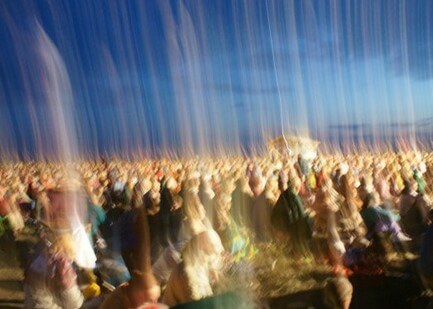
The theological testimony of the scriptures and scholars finds its most dramatic empirical corroboration in the modern era. On August 1, 2008, in Russia, during a collective meditation session, the Invisible Ruach (Holy Spirit) was photographically captured manifesting and interacting with those taking part in the Resurrection and meditating on Her (Holy Spirit) within themselves.[7]
This event is of extraordinary significance for several reasons. First, it provides visible evidence of an invisible reality. The ruach, by its very nature, is invisible — it is the wind, the breath, the unseen force. Yet in this instance, the manifestation of the Holy Spirit was captured in a photograph, showing luminous energy descending upon and interacting with the assembled seekers. This is not a staged or fabricated phenomenon; it is the spontaneous manifestation of the Divine Presence among those who were sincerely engaged in meditation on the Holy Spirit within themselves.
Second, the event confirms the theological claims of Varkey, Keizer, and Welker. Varkey states that the Spirit "is given to believers in a wholly specific way, namely, so as to dwell in them." Keizer affirms that the ruach "interacts with those who seek her." Welker describes the ruach as "the mighty invisible force of the wind, the power of vitality, the otherly power that transforms." All three descriptions are precisely fulfilled in the Russia 2008 event: the Spirit dwelt in the believers, interacted with those who sought Her, and manifested as the mighty invisible force that transforms.
Third, the event demonstrates that the promised Resurrection of Jesus is a present, ongoing reality. The participants were not merely performing a ritual or engaging in a philosophical exercise. They were taking part in the Resurrection — the new birth of the Spirit that Jesus promised to Nicodemus (John 3:3-8) and that Paul identified as the work of the Spirit who "raised Jesus from the dead" and who "will also give life to your mortal bodies through His Spirit who dwells in you" (Romans 8:11). The Russia 2008 event is living proof that this promise is being fulfilled today.
| Theological Claim | Source | Fulfillment in Russia, August 1, 2008 |
|---|---|---|
| The Spirit dwells in believers | Varkey (Rom 5:9; 1 Cor 3:16) | Seekers meditating on the Holy Spirit within themselves |
| The ruach interacts with those who seek Her | Keizer 2010 | Invisible Ruach manifesting and interacting with participants |
| The ruach is the mighty invisible force of the wind | Welker 2006 | Luminous energy descending upon seekers during meditation |
| The Spirit brings forth the new life of resurrection | Varkey 2011 | Participants taking part in the Resurrection experience |
| The pneuma is the peculiar power of eternal life | Kysar (Porsch) | The Cool Breeze experienced as the tangible sign of eternal life |
5. The Resurrection Experience: Being Born of the Spirit
The experience of the Cool Breeze is the foundational evidence of being "born of the Spirit" (John 3:1-8). Jesus' conversation with Nicodemus is the locus classicus for understanding the Resurrection as a spiritual rebirth mediated by the pneuma. Jesus declares: "Very truly, I tell you, no one can enter the kingdom of God without being born of water and Spirit" (John 3:5). The birth "of the Spirit" is not a metaphor for intellectual assent or moral reformation; it is a tangible, experiential event — the descent of the pneuma upon the believer, felt as the Cool Breeze.
This is precisely what Kysar means when he identifies the pneuma as "the peculiar power by which the word becomes the words of eternal life." The pneuma is the agent that transforms the promise of eternal life from a future hope into a present experience. When the Cool Breeze is felt, the believer knows — not through intellectual reasoning but through direct, numinous experience — that the Spirit of God is dwelling within. This is the Resurrection: not the resuscitation of a physical corpse, but the awakening of the spirit within the mortal body, accomplished by the same Spirit who raised Jesus from the dead.
The Apostle Paul articulates this connection with unmistakable clarity: "If the Spirit of Him who raised Jesus from the dead dwells in you, He who raised Christ Jesus from the dead will also give life to your mortal bodies through His Spirit who dwells in you" (Romans 8:11). The Spirit who raised Jesus is the same Spirit who now dwells in believers and gives life to their mortal bodies. The Cool Breeze is the tangible evidence of this indwelling — the physical sensation of the pneuma/ruach flowing through the body, granting the new life of the Resurrection.
6. The Cool Breeze (Ruach): Numinous Evidence and Its Rejection
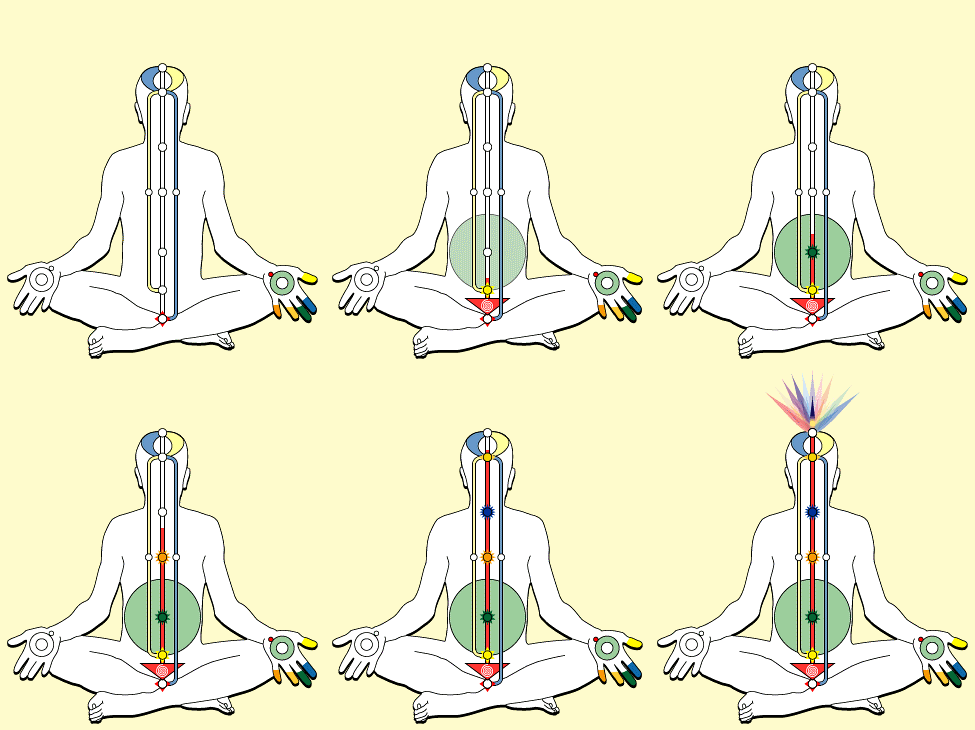
Feeling the Cool Breeze initially, and from then onward daily during meditation, is fundamental to Sahaja Yoga. This Cool Breeze is a numinous experience — that is, an experience "having a strong religious or spiritual quality; indicating or suggesting the presence of a divinity." Hundreds of thousands since the 1970s had this numinous experience at Shri Mataji's public programs. However very few, if any, returned as they could not relate their experiencing the Cool Breeze (Ruach) to the teachings of their priests, pastors, reverends, bishops, popes, rabbis, clerics, imams, mullahs, shaiks, swamis, pandits, brahmins, granthis, gianis, and monks.[7]
The academic researcher Judith Coney, a lecturer in the Department of Study of Religions at the School of Oriental and African Studies, University of London, conducted an extensive study of this phenomenon and published her findings in 1999:
Judith Coney published her book in 1999 prior to the establishment of adishakti.org and refrained from mentioning the eschatological significance of the "Cool Breeze" — the summum bonum of the Paraclete's mission and sure sign of "being born of the Spirit" (John 3:1-8) — that has been experienced by hundreds of thousands attending Shri Mataji's or Sahaja Yoga public programs since the 1970s and still continues.[7]
The tragedy documented by Coney is profound. Hundreds of thousands of people have physically felt the Cool Breeze — the pneuma/ruach — at public programs. They have experienced, in their own bodies, the very power that Kysar identifies as "the peculiar power of eternal life." Yet the vast majority walk away, unable to reconcile this numinous experience with the dogmatic teachings of their religious institutions. This is precisely the fulfillment of Jesus' prophecy in John 14:17: "Even the Spirit of truth; whom the world cannot receive, because it neither sees Her nor knows Her." The world — conditioned by centuries of institutional religion — cannot receive the Spirit, even when She manifests tangibly upon their hands and above their heads.
7. Pneumatology and Eschatology: The Spirit Makes the Future Present
The relationship between pneumatology and eschatology is the key to understanding the Resurrection as a present reality rather than a distant future event. As Kysar notes, those who connect pneumatology with Johannine eschatology stress the role the Spirit plays in the gospel's system of present eschatology. G. Locher argues that "the Spirit makes the past as well as the future present for the believers." J. Blank maintains that "Johannine realized eschatology is possible only because of a peculiar and strong view of the Spirit."[2]
This means that the Resurrection — the supreme eschatological event — is not deferred to the end of time. Through the activity of the pneuma, the Resurrection is made present in the life of every believer who receives the Spirit. The Cool Breeze is the experiential proof of this realized eschatology. When seekers in Russia on August 1, 2008, sat in collective meditation and the Invisible Ruach descended upon them, they were not waiting for a future resurrection; they were participating in the Resurrection. The Spirit was making the eschatological future present in their bodies, their consciousness, and their spiritual awareness.
Varkey's analysis reinforces this understanding. The Spirit who is "the creator of all life in the whole range of natural occurrence" is also the agent of "the new creation of the resurrection of the dead."[3] The outpouring of the Spirit is therefore the mechanism by which the new creation — the Resurrection — is accomplished. When believers experience the Spirit dwelling within them, they are experiencing the new creation itself. The Russia 2008 event is a visible manifestation of this new creation in action.
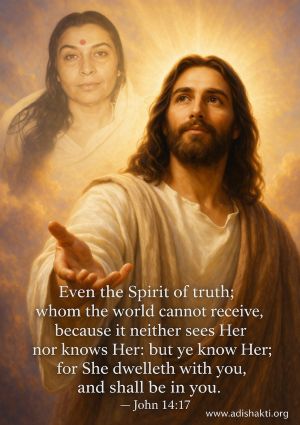
The Johannine understanding of the Paraclete further illuminates this reality. Jesus promises that the Spirit of truth will "dwell with you, and shall be in you" (John 14:17). This indwelling is not a metaphor; it is the literal presence of the pneuma within the believer's body, felt as the Cool Breeze. The Paraclete — the Comforter, the Spirit of truth — is the Divine Mother who enters the believer, awakens the dormant spiritual energy, and grants the experience of the Resurrection. She is, as Kysar affirms through Porsch, "another form of appearance (Erscheinungsform) or designation for the presence of Christ."[2] To experience the pneuma is to experience the presence of Christ Himself, mediated through the Holy Spirit.
8. Conclusion: The Resounding Evidence of the Promised Resurrection
The evidence presented in this paper converges upon a single, resounding conclusion: the promised Resurrection of Jesus is not a distant eschatological event but a present, tangible, Spirit-mediated reality that is being experienced by those who seek the Holy Spirit within themselves.
Robert Kysar's identification of the pneuma as "the peculiar power by which the word becomes the words of eternal life" provides the theological foundation. The cross-traditional testimony of Judaism (Keizer), Christianity (Welker), and Islam (Dawud) confirms that the Spirit — whether called ruach, pneuma, or Ruh — is the universal agent of divine transformation and resurrection. Varkey's analysis establishes that the Spirit who dwells in believers is "none other than the creator of all life" and the agent of "the new creation of the resurrection of the dead."
The photographic evidence from Russia on August 1, 2008, provides the empirical corroboration. The Invisible Ruach (Holy Spirit) manifesting and interacting with those taking part in the Resurrection and meditating on Her (Holy Spirit) within themselves is not a theological hypothesis but a documented reality. The seekers in that photograph were experiencing the very power that Kysar describes — the pneuma that grants eternal life. They were being born of the Spirit, participating in the Resurrection that Jesus promised.
The Cool Breeze — the physical sensation of the pneuma/ruach — is the summum bonum of the Paraclete's mission. It is the sure sign of being "born of the Spirit" (John 3:1-8). It has been experienced by hundreds of thousands since the 1970s. Yet the world, conditioned by institutional religion and spiritual blindness, "cannot receive" the Spirit (John 14:17). The evidence is overwhelming. The Resurrection is happening. The pneuma — the peculiar power of eternal life — is being poured out upon all who seek Her. The only question that remains is whether humanity will recognize and embrace this divine gift, or continue to walk away from the very power that grants eternal life.
References
[1] Welker, Michael. "The work of the Spirit: pneumatology and Pentecostalism." 2006, pp. 42/170. On the semantic width of ruach and pneuma encompassing "wind," "breath," and "spirit."[2] Kysar, Robert. "Voyages with John: Charting the Fourth Gospel." Baylor University Press, 2005. Also: Kysar, Robert. "John, the Maverick Gospel." Third Edition, Westminster John Knox Press, 2007.
[3] Varkey, Wilson. "Role of the Holy Spirit in Protestant Systematic Theology." 2011, Kindle Location 5785.
[4] Keizer, Lewis. "The Kabbalistic Teachings of Jesus in the Gospel of Thomas." 2010, p. 42.
[5] Welker, Michael. "The work of the Spirit: pneumatology and Pentecostalism." 2006, p. 7.
[6] Dawud, Abdul Ahad. "Muhammad in the Bible." 2006, p. 190.
[7] "The pneuma [Cool Breeze or Wind of Spirit]* is the peculiar power ... of eternal life." Adishakti.org. Photographic evidence: Russia, August 1, 2008.
[8] Coney, Judith. "Sahaja Yoga: Socializing Processes in a South Asian New Religious Movement." Curzon Press, 1999, p. 60.
The pneuma is the peculiar power ... of eternal life. Robert Kysar
"The fascinating concepts of the Spirit and the Paraclete have provoked much concern among those interested in the religious thought of the Fourth Gospel (cf. e.g., Brown, Commentary—Gospel 2:1135-36, 'Paraclete in the Fourth' 113-14, and 'Paraclete in the Light' 158ff.). What we might summarize as two contexts enables us to comprehend the general concept of the Spirit. First, for some Johannine pneumatology is primarily a function of the christology and of the testimony themes of the gospel. In this case, the Spirit is closely associated with the question of the birth of faith just discussed. Second, for others, however, the pneumatology is primarily a function of the eschatology of the gospel.
Johannine pneumatology as primarily a function of christology. The recent work of F. Porsch contributes significantly to the efforts of those who hold this position. He discovers through his study that the notion of the Spirit is 'christologically concentrated.' The Spirit enables one to recognize Jesus as the God-sent revealer, to execute an awakening, and to deepen and strengthen faith. Characteristic of Johannine pneumatology is that the concept of Spirit is associated with word. The word of Jesus is Spirit (6:63), and hence the 'word-event' is pneumatic event, and pneumatic event is word event. The pneuma is the peculiar power by which the word becomes the words of eternal life. The Fourth Gospel is supremely, then, a 'pneumatic gospel.' It always presents the Spirit as another 'form of appearance' ('Erscheinungsform') or designation for the presence of Christ. The Spirit is above all the power of the word (Porsch, 405-7).
J. M. Boice seems to agree with much of Porsch's analysis, because he understands that, throughout John, it is the Spirit that makes possible the witness of the apostles to revelation. The Spirit also supplies the 'internal witness' that, in turn, makes the embracing of revelation an option. The Spirit is part of the fourth evangelist's understanding of how the kerygma is received and affirmed (120-22, 143-45). H. Schlier, too, believes John's author holds that the truth of revelation is grasped and affirmed by person's only by means of the Spirit ('Heilige'). In a comparable manner, de La Potterie thinks that the Spirit is a necessary ingredient in the Johannine scheme of salvation. It is the Spirit who interprets the revelation which otherwise remains obscure and mysterious ('Paraclet' 96, and 'Parole et Esprit').
Pneumatology as a primarily function of the eschatology. Those who connect pneumatology with Johannine eschatology stress more the role it plays in the gospel's system of present eschatology. G. Locher argues that the Spirit makes the past as well as the future present for the believers (578). J. Blank maintains that Johannine realized eschatology is possible only because of a peculiar and strong view of the Spirit (Krisis 215)...
The attribution of the title, 'spirit of truth,' to the paraclete constitutes another problem. What did the fourth evangelist intend by this title? Boice understands that the title identifies the Spirit-Paraclete with God and Christ, as well as denoting the function of this figure as the one who delivers the truth to humans. Porsch thinks that the unity of word and Spirit enlightens the tile. 'The spirit of truth' is the forensic description of the word empowered by the Spirit. For Muller, the title gives expression to the peculiarly Johannine notion of the Spirit arising as it does from the dualism and christology of John's gospel. Locher contends that it is simply a functional designation for the work of the Spirit. The Spirit leads people from ignorance to truth.
About the function of the Spirit-Paraclete there is little significant disagreement. Most often it is said that the paraclete functions in two realms—among the disciples and in the world. In the first realm, the paraclete is the interpreter of the revelation in Christ and the one who enables persons to appropriate the revelation. De La Potterie speaks of this function as the 'interiorization and spiritualization' of the witness of Christ, and Schlier holds that the Spirit is the continuation of the revelatory work begun in Christ. In the second realm, Brown and De La Potterie understand the function in a negative way—the indictment of the opponents of Christ and the revelation. Schlier, however, suggests a more positive function for the Paraclete, namely, the illumination of the situation of the world and its alienation from its Creator.”
Robert Kysar, Voyages with John: Charting the Fourth Gospel
Baylor University Press, 2005, pages 133-5
Cool Breeze (Wind) Experiences of Those Born of the Spirit
Judith Coney is a lecturer in the Department of Study of Religions at the School of Oriental and African Studies,
University of London. She published her book in 1999, prior to this website, and refrained from mentioning the
eschatological significance of the “Cool Breeze” experiences felt by hundreds of thousands since the 1970s till date.
Judith Coney: Sahaja Yoga
“The result, in all three settings [Royal Albert Hall, local meeting or private house], is that many people do feel a Cool Breeze. The coolness which is felt is usually associated with other sensations as well. Typically, the pupils of the eyes can be observed to dilate and the person will feel very relaxed and ‘centred.’ However, it is notable that, despite the very similar ways in which individuals ‘get their realisation’—and even in the same setting—not everybody feels exactly the same thing. Sri Mataji teaches that the vibrations of kundalini can be felt as Cool Breeze on the palm of the hands and above the head. Sometimes breezes, in line with the teachings, are felt on the hands and head specifically. For others, the experience is more generalized:”
“The experience was extremely timeless, because I felt that it only lasted for about five minutes but somebody came behind me and said ‘would you like a cup of tea’ and I thought, ‘this is silly, what’s all this about tea?’ But it turned out that it was about three quarters of an hour later. And I felt a strong Cool Breeze. I was actually told; you will probably feel some coolness or some nice feelings inside’ but I felt coolness not just in my hands, where I was told it would be, but all over and I felt incredibly peaceful.”
Generally, the feeling of coolness on “realisation” seems to be discernible, but relatively weak. As with Kakar’s description of his own “realisation”, many newcomers are left with the feeling that they felt something but they are not sure what:
“Mataji grandly announced, ‘He is realised’ ... ‘Sit in meditation for some time’ she told me as I sat up. ‘Do you feel a Cool Breeze on the top of your head and on your palms?’ Indeed I did, though I could not distinguish the coolness due to kundalini from the gutsy breeze coming in from the sea. I felt well, though, calm and deeply relaxed.” (Kakar 1984, 195–6)
A few, however, have an extremely strong experience. One such incident was described by one of the participating Sahaja Yogis:
“He felt really cool, not just on his hands but all over. He said: ‘This isn’t a breeze, it’s a wind’. We all felt it really strongly too. Then we picked up Mother’s photograph and held it in front of him and he felt loads of vibrations coming from that. But I think the whole thing was so strong that it frightened him. He was very high and positive for two days, he brought us some flowers, and then he became wary and never came to [the ashram] again.”
Others still, in contrast, do not feel much, if anything, on their first session. This lack of feeling on their part, however, may not be shared by the Sahaja Yogis “working on them”, who may remark enthusiastically about how cool the individual feels, and may also be at odds with the view of Sri Mataji herself. Here is the description of his initial contact with Sahaja Yoga by one such follower. He first went to a meeting at which Sri Mataji gave “realisation” en masse, but felt nothing. Nevertheless, he was persuaded to go to a smaller workshop a few days later.
“I really didn’t feel anything there at all either but I was told by Mataji herself—she said ‘Who hasn’t felt it yet?’ and I put my hand up with a few others. Mataji said ‘Come forward’ and then she said to me ‘You’ve got it, you know’. And I said ‘Have I?’ and she said ‘Yes, go through to that room and ask some Sahaja Yogis to work on you’. So that was my introduction to Sahaja Yoga.”
It was only with repeated sessions that he developed the ability to feel a Cool Breeze. There are also those, a few, who may feel more calm, possibly as a result of sitting quietly for some time, but otherwise feel no different and never feel any sort of breeze. This is often explained by Sahaja Yogis as being because the chakras have been too badly damaged by negativity in the past (Rajasekharan and Venkatesan 1992, 98).
Kakar (1984, 208), a trained Freudian psychologist, having witnessed Sri Mataji’s delivery of “realisation” both en masse and on a one-to-one basis, concluded that much of this experience is built on suggestion and “hypnotic induction”:
“Needless to add, because of the emotional pressures created in a group setting, the tendency to identify with the experience of other group members and the intense desire to please the leader, only a handful of people hold out against this mass suggestion.” (ibid., 209)
Such a conclusion would undoubtedly be rejected by a Sahaja Yogi, convinced that they have experienced their Spirit through the grace of Sri Mataji. It is not within the remit of my present enquiry, however, to seek to establish the “real cause” of a Cool Breeze felt by an individual, but to try chart the social dynamics involved. Just as Goodman commented, in relation to religious experience:
“The religious practitioners argue for it, either because it is part of their dogma, or because, as they affirm, they have ‘been there’, they have experienced it. The hard scientists take the opposite position, again as a matter of conviction. As social scientists, our situation is a happier one: at least we can state that, without any doubt, the alternate reality is a social one.” (Goodman 1988, 43).”
Source: Judith Coney, Sahaja Yoga, RoutledgeCurzon, 1999, pp. 55–58.