

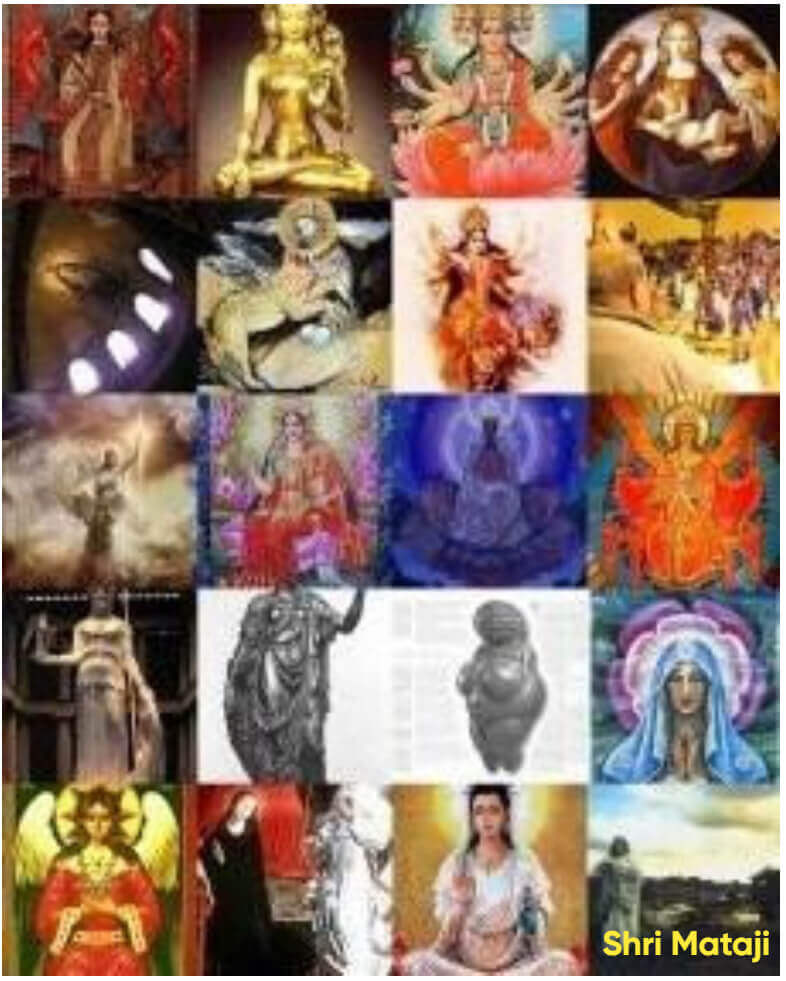
Kundalini and Christian Experience of the Holy Spirit
Kundalini, the divine energy of Shakti, is described in yogic literature as the active force of spiritual awakening. Residing in the first chakra, Shakti rises to unite with Shiva in the seventh chakra, dissolving illusions of duality and revealing the Atman as Brahman. This process mirrors the Christian experience of the Holy Spirit—an indwelling presence that transforms and sanctifies. The article reflects on the metaphysical parallels between Hindu and Christian mysticism, raising vital theological questions: Can Shakti be equated with the Holy Spirit? Is advaitic realization akin to Christian union with God? As East and West converge, these questions demand thoughtful engagement and spiritual openness.
Table of Contents
I. Introduction
In an increasingly interconnected world, the dialogue between Eastern and Western spiritual traditions has moved from the periphery of academic curiosity to the center of many individuals' spiritual quests. Ancient practices and esoteric knowledge systems, once confined to specific cultural and religious milieus, are now globally accessible. This cross-pollination of spiritual ideas has given rise to fascinating, and often complex, comparisons between profound experiences that shape human consciousness. Among the most compelling of these comparisons is the relationship between the awakening of Kundalini, a central concept in Hindu and yogic traditions, and the transformative experience of the Holy Spirit within Christianity.
At first glance, the imagery and language surrounding these two phenomena can appear strikingly similar. Both traditions speak of a powerful, indwelling energy or presence that, when activated, can lead to profound personal transformation, ecstatic states, and the manifestation of extraordinary spiritual gifts. Reports from practitioners in both camps often describe similar physiological and psychological effects: sensations of heat or energy moving through the body, spontaneous physical movements, altered states of consciousness, and a deep sense of connection to a divine reality.
These phenomenological overlaps have led some to posit that Kundalini and the Holy Spirit are simply different cultural and theological labels for the same universal spiritual energy. This perspective, often found in New Age and syncretistic spiritual circles, suggests that the underlying reality of divine experience is singular, merely interpreted through the diverse lenses of various religious frameworks. However, this view is often met with significant resistance from theologians and traditional practitioners on both sides of the dialogue. They argue that equating these experiences is a form of superficial syncretism that ignores the profound and irreconcilable differences in their respective theological and metaphysical underpinnings.
For them, the interpretive framework is not merely a secondary layer of meaning but is integral to the nature of the experience itself. The Christian understanding of a personal, transcendent God who relates to His creation through the Holy Spirit is fundamentally different from the Hindu concept of an immanent, impersonal consciousness (Brahman) with which the individual soul (Atman) seeks to merge through the awakening of Kundalini.
This article seeks to navigate this complex and often contentious terrain with both intellectual rigor and spiritual sensitivity. It will explore the multifaceted relationship between Kundalini and the Christian experience of the Holy Spirit by examining their similarities, differences, and the broader theological implications of their comparison. By delving into the historical origins, phenomenological characteristics, and doctrinal frameworks of each tradition, we aim to move beyond simplistic equations and polemical dismissals. The goal is not to definitively prove or disprove their equivalence, but rather to foster a deeper understanding of two of the most powerful transformative experiences known to humanity. Through a careful analysis of scholarly research, theological commentary, and the accounts of practitioners, this article will construct a nuanced perspective that honors the integrity of both traditions while exploring the profound questions that their comparison raises for contemporary spiritual seekers and the future of interfaith dialogue. We will investigate whether the serpent (a common symbol for Kundalini) and the dove (the biblical symbol for the Holy Spirit) represent two paths to the same summit, or if they lead to entirely different mountains altogether.
II. Historical and Textual Foundations
To appreciate the nuances of the comparison between Kundalini and the Holy Spirit, it is essential to ground our understanding in the rich historical and textual traditions from which each concept emerges. These are not modern inventions but are deeply rooted in millennia of spiritual practice, theological reflection, and sacred scripture. Their origins, development, and the language used to describe them provide the foundational context for both their apparent similarities and their fundamental differences.
A. The Ancient Roots of Kundalini
The concept of Kundalini has its origins in the esoteric traditions of India, with roots that can be traced back to the Vedas and the Upanishads, the foundational scriptures of Hinduism. While the term "Kundalini" itself is not explicitly found in the earliest Vedic texts, the concept of a vital life force energy, known as prana, is central to their worldview. The Upanishads, composed between 800 and 200 BCE, further develop this understanding, describing the subtle body and the channels (nadis) through which prana flows. These texts lay the philosophical groundwork for the later development of yogic and tantric practices aimed at manipulating this life force for spiritual evolution.

The most explicit and detailed discussions of Kundalini emerge from the Tantras, a vast body of scriptures that began to appear around the 6th century CE. Tantra, in its various forms, explores the interplay of the divine masculine (Shiva) and feminine (Shakti) principles as the basis of all reality. It is within this framework that Kundalini is systematically described as the microcosmic manifestation of the cosmic feminine energy, Shakti, residing in a dormant state at the base of the human spine. The Hatha Yoga Pradipika, a classic 15th-century text, provides one of the most comprehensive descriptions of the practices designed to awaken this dormant energy. It details the use of physical postures (asanas), breathing techniques (pranayama), and energy locks (bandhas) to purify the subtle body and guide the awakened Kundalini upward through the central channel (sushumna) and the seven energy centers (chakras). The ultimate goal of this process is the union of Kundalini-Shakti with Shiva, the principle of pure consciousness, residing in the crown chakra, leading to a state of enlightenment or samadhi.
According to the yogic literature, it is at least that, and much more. Kundalini is none other than Shakti, the female consort of Shiva, who is one with Brahmin and Vishnu in the Hindu trinity. Hence, kundalini is considered a divine energy, and its awakening is interpreted as awakening to the divine. Small wonder Hindu writers see this energy as the counterpart to the Christian experience of the Holy Spirit! [1]
This passage from the initial source highlights the deep theological integration of Kundalini within the Hindu worldview. It is not merely a physiological phenomenon but a divine power, the awakening of which is a profound spiritual grace. The tradition emphasizes that this is not a process to be undertaken lightly. The texts are replete with warnings about the dangers of premature or unprepared awakening, which can lead to physical, mental, and emotional instability. For this reason, the guidance of a qualified guru has always been considered essential.
B. The Holy Spirit in the Christian Tradition
The Christian understanding of the Holy Spirit is rooted in the Hebrew Bible (Old Testament) and comes to its full expression in the New Testament. In the Old Testament, the Spirit of God (Ruach Elohim) is depicted as the creative power of God, bringing life and order to the cosmos (Genesis 1:2). The Spirit also empowers individuals for specific tasks, such as prophecy, leadership, and artistic craftsmanship. However, the experience of the Spirit in the Old Testament is generally portrayed as temporary and selective, given to particular individuals for specific purposes.
The New Testament presents a radical shift in the role and accessibility of the Holy Spirit. The life and ministry of Jesus are saturated with the presence of the Spirit, from his conception (Luke 1:35) to his baptism, where the Spirit descends upon him like a dove (Matthew 3:16). Jesus promises his disciples that after his departure, he will send them the Holy Spirit as a comforter, advocate, and guide into all truth (John 14-16). This promise is dramatically fulfilled on the day of Pentecost (Acts 2), when the disciples are filled with the Holy Spirit, an event marked by the sound of a mighty rushing wind, tongues of fire, and the miraculous ability to speak in other languages. This event is often considered the birth of the Christian church and marks the beginning of the universal availability of the Holy Spirit to all believers.
From this point forward, the Holy Spirit is understood as the indwelling presence of God in the life of the believer, sealing them for salvation, sanctifying them into the image of Christ, and empowering them for ministry. The Apostle Paul's letters provide a detailed theology of the Spirit, describing the "fruit of the Spirit" (love, joy, peace, etc.) as the character qualities that develop in a Spirit-filled life (Galatians 5:22-23) and the "gifts of the Spirit" (prophecy, healing, tongues, etc.) as the divine empowerments for service (1 Corinthians 12). Unlike the impersonal energy of Kundalini, the Holy Spirit is consistently portrayed in personal terms as the third Person of the Trinity, a divine being with whom the believer can have a personal relationship.
Christian history is also filled with accounts of mystical experiences attributed to the Holy Spirit. From the Desert Fathers and Mothers to the medieval mystics like Hildegard of Bingen and John of the Cross, to the revival movements of the 18th and 19th centuries and the rise of Pentecostalism in the 20th century, the experience of the Holy Spirit has taken many forms, often characterized by ecstatic states, visions, and profound spiritual transformations. However, these experiences have always been interpreted within the framework of a personal relationship with a transcendent God, mediated through the person and work of Jesus Christ.
As we can see, while both traditions speak of a powerful, transformative, indwelling spiritual reality, their historical and textual foundations reveal significant differences in their understanding of its nature, origin, and purpose. Kundalini is an impersonal, cosmic energy, inherent within the human being, that leads to the realization of one's own divinity. The Holy Spirit is a personal, divine being, distinct from the created order, who comes to dwell within the believer to bring them into a relationship with God through Christ. These foundational differences are crucial for understanding the subsequent analysis of their phenomenological similarities and theological divides.
III. Phenomenological Comparison: A Bridge of Experience
Despite the profound theological and historical differences, the most compelling reason for the comparison between Kundalini and the Holy Spirit lies in the striking similarity of the experiences reported by practitioners. This phenomenological bridge often serves as the entry point for dialogue and, for some, the basis for equating the two. When we strip away the interpretive layers and focus solely on the descriptive accounts of what is felt and experienced, a common human potential for profound spiritual and physiological transformation seems to emerge. This section will explore the key areas of experiential overlap, drawing on accounts from both traditions.
A. Sensations of Energy and Heat
One of the most frequently cited similarities is the sensation of a powerful energy moving through the body, often accompanied by intense heat. In the Kundalini tradition, this is the central and defining characteristic of the awakening process. The energy, often described as a liquid fire or an electric current, is said to ascend from the base of the spine, moving upward through the central channel and activating the chakras in its path. This process can be accompanied by a wide range of physical sensations, including tingling, vibrations, and a feeling of inner heat that is not related to the ambient temperature.
Similarly, in charismatic and Pentecostal Christianity, the experience of being "baptized in the Holy Spirit" is often described in terms of a tangible energy or power. Believers speak of feeling a "fire" or a "current" of God's presence flowing through them. The biblical account of Pentecost itself uses the imagery of "tongues of fire" descending on the disciples, a description that has shaped the experiential expectations of Christians for centuries. Many report feeling a warmth or heat spreading through their bodies during intense periods of prayer or worship, which they interpret as the purifying and empowering presence of the Holy Spirit.
B. Spontaneous Physical Movements and Vocalizations
Both Kundalini awakenings and intense experiences of the Holy Spirit are often associated with involuntary physical movements, known as kriyas in the yogic tradition. These can range from subtle twitches and tremors to dramatic, uncontrollable shaking, jerking, or even spontaneous yoga-like postures. These movements are understood as the purifying action of the awakened energy, releasing physical and energetic blockages in the body. Practitioners are often advised not to resist these movements but to allow the energy to do its work.
In certain Christian circles, particularly within the Pentecostal and charismatic movements, similar phenomena are observed and are often referred to as being "slain in the Spirit" or simply as manifestations of the Spirit's power. During services, it is not uncommon to see individuals trembling, shaking, or falling to the ground, seemingly overcome by a spiritual force. While the theological interpretation is different—attributing the experience to the overwhelming presence of God rather than an impersonal energy—the physical manifestation is remarkably similar to the kriyas of Kundalini.
Furthermore, both traditions report instances of spontaneous and unconventional vocalizations. In the Kundalini tradition, this can manifest as the chanting of mantras, animal sounds, or other primal utterances. In Christianity, this is most famously known as glossolalia, or "speaking in tongues," a spiritual gift described by the Apostle Paul and a hallmark of Pentecostal and charismatic worship. While the content and interpretation of these vocalizations differ, the underlying phenomenon of spontaneous, non-ordinary speech is a clear point of phenomenological overlap.
C. Altered States of Consciousness and Mystical Visions
The awakening of Kundalini is said to lead to a variety of altered states of consciousness, including profound states of bliss (ananda), deep meditative absorption, and a sense of unity with the cosmos. As the energy moves through the higher chakras, practitioners report experiencing inner lights, sounds, and visions of deities or spiritual landscapes. The ultimate goal is the state of samadhi, a complete absorption in the divine consciousness where the sense of a separate self dissolves.
Christian mystics throughout history have also described a wide range of altered states of consciousness in their encounters with the Holy Spirit. These include ecstatic raptures, states of profound inner peace and joy, and a deep sense of loving union with God. Visions and auditions (hearing spiritual voices) are also common themes in Christian mystical literature. While Christian theology maintains a distinction between the creator and the creation, the experience of unitive love described by mystics like St. John of the Cross or St. Teresa of Avila bears a striking resemblance to the blissful, absorptive states reported in the Kundalini tradition.
D. Psychological and Emotional Upheaval
Both traditions also acknowledge that these powerful spiritual experiences are not always blissful and serene. The process of transformation can be tumultuous, involving significant psychological and emotional upheaval. The awakening of Kundalini is often described as a process of purification that brings latent psychological issues, traumas, and negative emotional patterns to the surface to be confronted and released. This can lead to periods of intense anxiety, fear, confusion, and emotional volatility. The yogic texts warn of these potential difficulties and stress the importance of proper guidance and a stable lifestyle.
Similarly, the Christian journey of sanctification, guided by the Holy Spirit, is often described as a process of spiritual warfare and purification. The "dark night of the soul," a concept famously articulated by St. John of the Cross, describes a period of spiritual desolation and trial where the believer feels abandoned by God. This is understood as a necessary purification of the soul, stripping away attachments and false consolations to prepare it for a deeper union with God. While the language and framework are different, both traditions recognize that profound spiritual growth often involves a painful and challenging process of psychological and emotional cleansing.
In conclusion, the phenomenological evidence reveals a significant and undeniable overlap in the reported experiences of Kundalini awakening and the Christian encounter with the Holy Spirit. From the physical sensations of energy and heat to the spontaneous movements, altered states of consciousness, and psychological challenges, the parallels are too numerous to be dismissed as mere coincidence. This shared experiential ground provides a crucial bridge for interfaith understanding. However, as we will explore in the next section, the interpretation of these experiences is where the paths diverge dramatically, leading to fundamentally different understandings of the divine, the self, and the ultimate purpose of the spiritual journey.
IV. Theological Analysis: A Gulf of Interpretation
While the phenomenological similarities between Kundalini and Holy Spirit experiences are compelling, it is in the realm of theology and metaphysics that the two traditions diverge most sharply. The interpretive frameworks that give meaning to these experiences are not merely secondary additions but are fundamentally different worldviews that shape the nature of the encounter itself. To equate the two based on experiential overlap alone is to ignore the profound doctrinal differences that lie at the heart of Hinduism and Christianity. As Francis X. Clooney, S.J., notes, referencing the work of Rajiv Malhotra, it is a mistake to equate them because "'Holy Spirit,' 'Shakti,' and 'Kundalini' have different histories, and even theologically arise in the context of different understandings of what it means to be human and how the divine relates to the human." [2] This section will delve into these core theological distinctions.
A. The Nature of the Divine: Personal vs. Impersonal
The most fundamental difference lies in the understanding of the divine reality being encountered. In the Christian tradition, the Holy Spirit is the third Person of the Holy Trinity—a personal, relational being who is co-equal and co-eternal with God the Father and God the Son. The Spirit has will, intellect, and emotions; He can be grieved (Ephesians 4:30), He teaches (John 14:26), and He intercedes for believers (Romans 8:26). The goal of the Christian life is not to merge with an impersonal force but to enter into a loving, personal relationship with the Triune God. The Holy Spirit is the agent of this relationship, uniting the believer to Christ and bringing them into communion with the Father.
In contrast, the ultimate reality in the Hindu traditions that frame Kundalini, particularly Advaita Vedanta, is Brahman—an impersonal, undifferentiated, absolute consciousness. Kundalini-Shakti is the dynamic, creative energy of this ultimate reality, but it is not a person in the Christian sense. While often personified as a goddess for devotional purposes, the ultimate goal is to transcend all forms and personalities, including that of the goddess herself, to realize the non-dual identity of the individual soul (Atman) with the ultimate reality (Brahman). The experience is one of absorption and merging, not of relationship between two distinct persons. This distinction is not trivial; it shapes the entire spiritual path. The Christian seeks to know and love a personal God who is Other, while the yogi seeks to realize that the Self is ultimately not other than the Divine.
B. The Nature of Humanity: Created vs. Co-eternal
Flowing from the different understandings of the divine is a different understanding of what it means to be human. In Christianity, humanity is created imago Dei, in the image of God, but is not divine by nature. There is a clear ontological distinction between the Creator and the creation that is never erased. Humans are finite, created beings who are dependent on God for their existence. The spiritual journey is one of redemption and sanctification, where the fallen human being is restored to a right relationship with God through the grace offered in Christ and the transformative work of the Holy Spirit. The goal is not to become God but to become fully human in the way God intended, in loving communion with Him.
In the Hindu framework, the individual soul (Atman) is not created but is co-eternal with Brahman. The sense of being a separate, finite individual is a product of maya (illusion) and avidya (ignorance). The spiritual journey is therefore not one of redemption from sin in the Christian sense, but of liberation (moksha) from the cycle of reincarnation (samsara) by awakening to one's true, eternal, divine nature. The awakening of Kundalini is the mechanism for this realization, the process by which the illusion of separation is dissolved. As one author notes in a comparison of Christian and Eastern mysticisms, original sin can be seen as the seeking of "knowledge of duality," which is analogous to the Eastern view of "profound and persistent ignorance of our original nature." [3] While a functional analogy can be drawn, the underlying theological premises are vastly different.
C. The Role of the Mediator: Christ vs. Guru
Another crucial point of divergence is the role of the mediator in the spiritual journey. In Christianity, Jesus Christ is the unique and exclusive mediator between God and humanity. He is not simply an enlightened teacher or one of many avatars, but the one-and-only Son of God whose life, death, and resurrection provide the sole basis for salvation and reconciliation with God. The Holy Spirit is sent in the name of Christ and always points back to him. The experience of the Holy Spirit is inextricably linked to faith in Jesus Christ.
In the Kundalini tradition, while there are many deities and spiritual figures, there is no single, exclusive mediator equivalent to Christ. The role of the guru, or spiritual teacher, is paramount. The guru is one who has already traversed the path and can guide the disciple through the complexities and dangers of the Kundalini awakening process. In some traditions, the guru is seen as a living embodiment of the divine, but they are ultimately a guide who helps the disciple to realize their own inherent divinity, not a savior who provides it from outside.
D. The Ultimate Goal: Communion vs. Absorption
Finally, the ultimate goals of the two paths are distinct. The Christian hope is for eternal life in a resurrected body, in loving communion with the Triune God and the community of saints in a new heaven and a new earth. The distinction between the individual and God is maintained for eternity, as the relationship itself is the source of eternal joy. The goal is a perfect, loving union, not an ontological merger.
In the Kundalini tradition, the ultimate goal is moksha, or liberation from the cycle of birth, death, and rebirth. This is achieved through the dissolution of the individual ego and the absorption of the individual consciousness back into the undifferentiated ocean of Brahman. The ultimate state is one of non-duality, where all distinctions, including the distinction between the self and the divine, are transcended. While some Hindu traditions, particularly in the bhakti (devotional) schools, emphasize a more relational union with a personal God, the classical understanding of Kundalini yoga is oriented toward this ultimate absorption.
In summary, while the experiential phenomena may appear similar, the theological chasm between the two traditions is vast. The Christian experience of the Holy Spirit is framed by a personal, Trinitarian God, a created humanity, the unique mediation of Christ, and the goal of eternal communion. The awakening of Kundalini is understood within an impersonal, non-dualistic framework, an inherently divine humanity, the guidance of a guru, and the goal of ultimate absorption. Acknowledging these differences is not to invalidate either experience but to respect their integrity and to recognize that they represent two distinct and ultimately incompatible paths to understanding the nature of reality and the human spiritual quest. As we will see, this has profound implications for the contemporary dialogue between these two great spiritual traditions.
V. Contemporary Dialogue and Practical Implications
The increasing globalization of spirituality has brought the concepts of Kundalini and the Holy Spirit into closer contact than ever before, creating both opportunities for mutual understanding and challenges for theological integrity. This final section will explore the landscape of the contemporary dialogue, the practical implications for spiritual seekers, and a path forward for respectful and fruitful engagement.
A. The Perils of Syncretism
One of the most significant challenges in the contemporary dialogue is the tendency toward superficial syncretism. In the spiritual marketplace of the 21st century, there is a temptation to create a "spiritual buffet" by picking and choosing elements from different traditions without regard for their original context or theological coherence. This often leads to the easy equation of Kundalini and the Holy Spirit, glossing over the profound differences discussed in the previous section. While often well-intentioned, this approach can be disrespectful to both traditions, stripping them of their unique depth and transforming them into generic components of a personalized, and often incoherent, spirituality.
Theologians and traditional practitioners from both sides have raised concerns about this trend. From a Christian perspective, equating the Holy Spirit with an impersonal cosmic energy can lead to a distorted understanding of the Trinity and the personal nature of God. It can also detach the experience of the Spirit from its essential connection to the person and work of Jesus Christ. From a Hindu perspective, the appropriation of Kundalini yoga into a Western, often therapeutic or self-improvement-oriented, context can strip it of its profound spiritual and philosophical moorings, reducing a sacred path of liberation to a mere technique for personal well-being.
B. The Path of Informed Dialogue
The alternative to superficial syncretism is a path of deep, informed, and respectful dialogue. This requires a willingness to engage with the other tradition on its own terms, to study its texts, and to listen to its practitioners with an open mind. It also requires a firm grounding in one's own tradition, so that the dialogue can be one of genuine sharing and learning, rather than a slide into theological confusion. The goal of such a dialogue is not to create a single, unified religion, but to foster mutual respect, clarify misunderstandings, and perhaps even to see one's own tradition in a new light.
This approach recognizes that while the theological frameworks may be incompatible, the shared human experience of spiritual transformation can be a powerful point of connection. A Christian can listen to the account of a yogi's Kundalini awakening and recognize the transformative power of the divine at work, without needing to agree with the yogi's metaphysical interpretation. Similarly, a Hindu can appreciate the profound love and devotion in a Christian's experience of the Holy Spirit, without accepting the exclusive claims of Christian theology. This kind of dialogue requires both humility and conviction, an openness to the other and a commitment to one's own path.
C. Practical Implications for Spiritual Seekers
For the individual spiritual seeker, the comparison between Kundalini and the Holy Spirit raises important practical questions. Many Westerners are now practicing yoga and other Eastern contemplative disciplines. Can a Christian practice these techniques to deepen their relationship with God, or are they inherently tied to a non-Christian worldview? There is no single answer to this question within the Christian community. Some argue that the practices can be separated from their philosophical roots and used as a neutral means of preparing the body and mind for prayer. Others contend that the practices are inextricably linked to a Hindu worldview and are therefore incompatible with Christian faith.
Ultimately, the path for the individual seeker requires careful discernment, education, and spiritual guidance. It is crucial to understand the theological foundations of any spiritual practice one undertakes and to be honest about the potential for conflict with one's own core beliefs. For Christians exploring these practices, it is essential to remain grounded in Scripture, tradition, and the community of the church, and to continually bring their experiences back to the person of Jesus Christ for interpretation and discernment.
VI. Conclusion: The Serpent, the Dove, and the Integrity of Experience
The relationship between Kundalini and the Christian experience of the Holy Spirit is a complex and fascinating case study in the challenges and possibilities of interfaith dialogue. The striking phenomenological similarities in the reported experiences—the sensations of energy and heat, the spontaneous movements, the altered states of consciousness—suggest a common human capacity for profound spiritual transformation. This shared experiential ground provides a valuable bridge for mutual understanding and respect.
However, to stop at the level of phenomenology is to miss the deeper and more significant story. The theological and metaphysical frameworks that give meaning to these experiences are not only different but, in many respects, mutually exclusive. The Christian understanding of a personal, Trinitarian God who enters into a loving relationship with His creation through the mediation of Christ and the indwelling of the Holy Spirit is fundamentally different from the Hindu vision of an impersonal, non-dual consciousness with which the individual soul, through the awakening of its own inherent divine energy, ultimately merges. The serpent and the dove may fly in similar patterns, but they are creatures of different ecologies, and they lead to different destinations.
To acknowledge these differences is not to create a hierarchy of spiritual experience or to denigrate either tradition. On the contrary, it is to honor the integrity of each path and to take them seriously on their own terms. The future of Hindu-Christian dialogue lies not in a facile equation of their most profound experiences, but in a patient and respectful exploration of both their common ground and their distinctive contributions to the human spiritual quest. By understanding both the bridges of experience and the gulfs of interpretation, we can move toward a more nuanced and authentic appreciation of the diverse ways in which humanity has sought to connect with the sacred. The serpent and the dove can coexist in the landscape of human spirituality, not as identical beings, but as powerful and distinct symbols of two of the most profound paths to transformation that the world has ever known.
References
- Adishakti.org. (n.d.). Kundalini and Christian experience of Holy Spirit. ↩
- Clooney, F. X. (2011, June 17). The Holy Spirit Is Not the Same as Shakti. America Magazine.↩
- Taggart, A. (2021, June 21). A Very Brief Comparison Of Christian And Eastern Mysticisms. Andrew Taggart, Ph.D. ↩