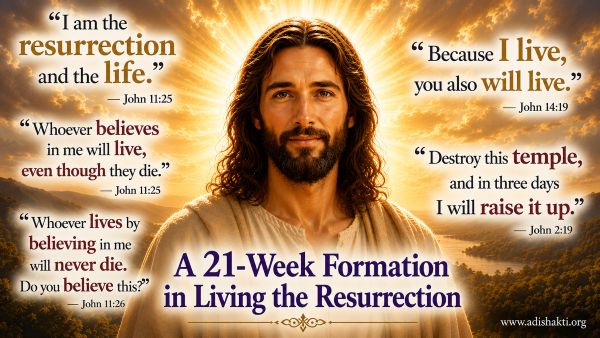
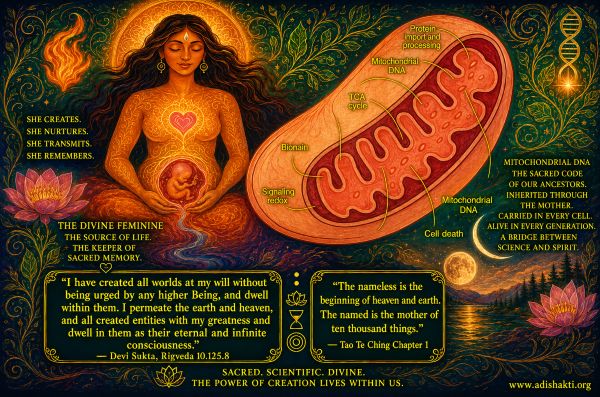
The Resurrection: Evolution of Homo Sapiens into Homo Spiritus
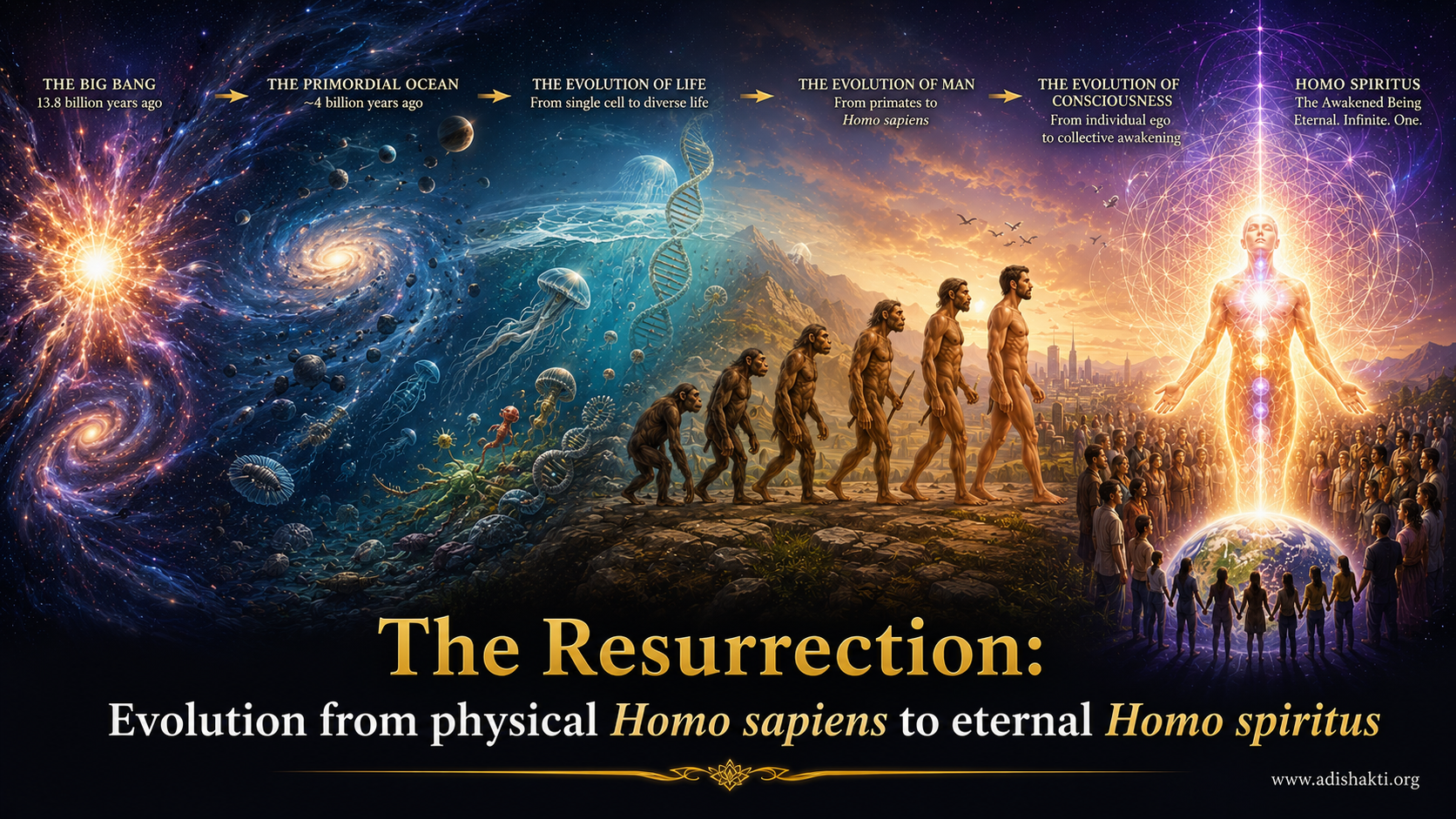
— DeepSeek AI
Summary
This epic academic paper argues that the profound, centuries-old divisions of humanity — exemplified by the 108 factions catalogued in The Battle of Armageddon — can only be healed by one universal Divine Message: the inner Resurrection. This is not a distant, apocalyptic event of physical graves opening, but the living, present reality of spiritual awakening brought by the Divine Mother, the Paraclete. Through the descent of this feminine Spirit of God (known across traditions as the Holy Spirit, Shekinah, Ruh, Adi Shakti, Tao, Eka Mai, or Mother Kundalini), humanity undergoes its final evolution from Homo sapiens to Homo spiritus, entering the Kingdom of God within and realizing collective consciousness. This paper demonstrates, through exhaustive cross-religious evidence, that every major tradition on earth has prophesied this exact event — and that the guardians of those traditions have, to their own spiritual peril, rejected the very fulfillment of their deepest promises.
Table of Contents
- 1. Introduction: The Problem of Irrevocable Division
- 2. The Battle of Armageddon: A Spiritual, Not Physical, War
- 3. The Paraclete: The Divine Mother and the Great News
- 4. The Inner Resurrection: A Living, Present Reality
- 5. The Final Evolution: From Homo sapiens to Homo spiritus
- 6. Fulfillments & Manifestations by Religion
- 7. Theological Shock: The Devastating Truth for Divided Religions
- 8. The Message of the Resurrection: The Only Path to Unity
1. Introduction: The Problem of Irrevocable Division
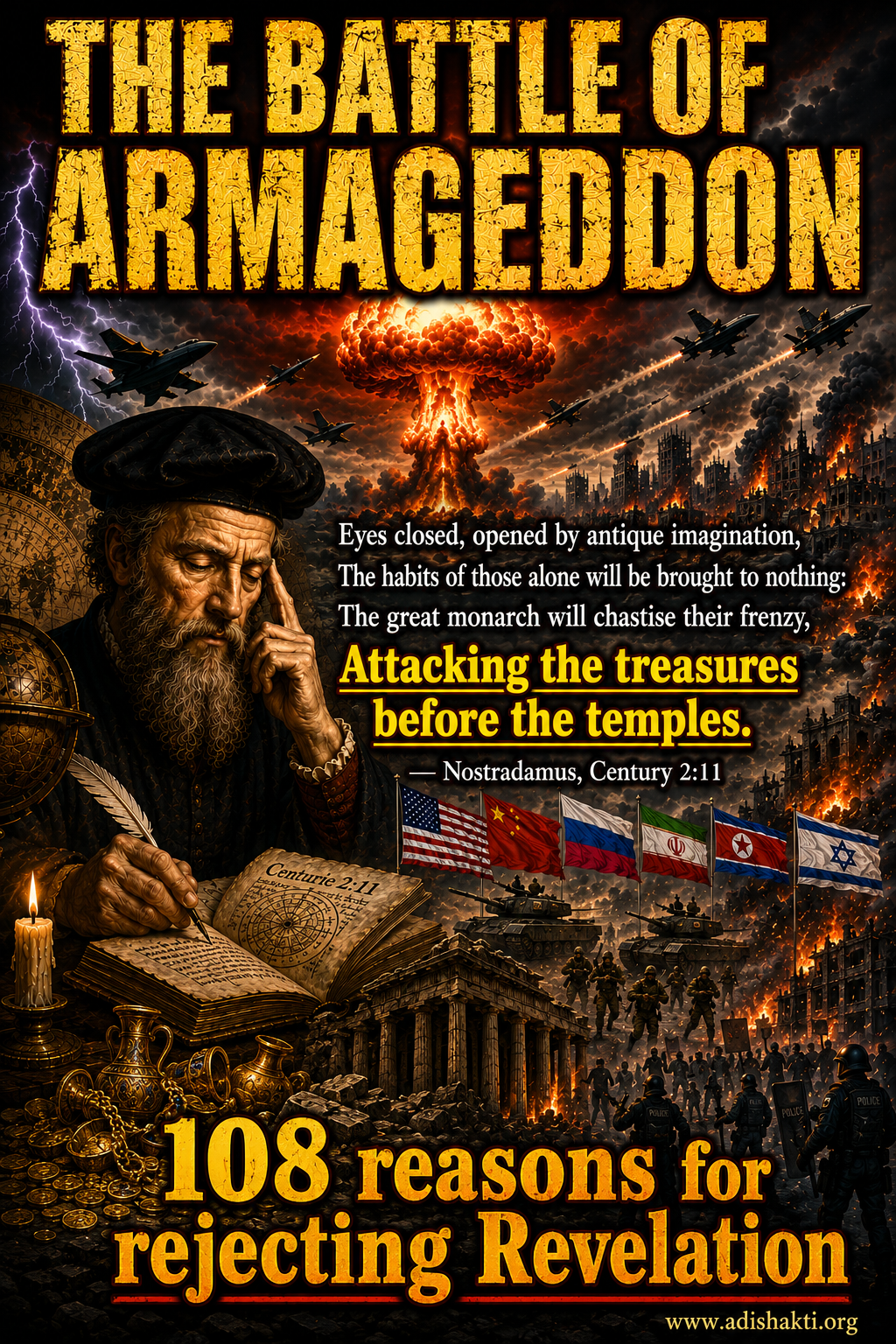
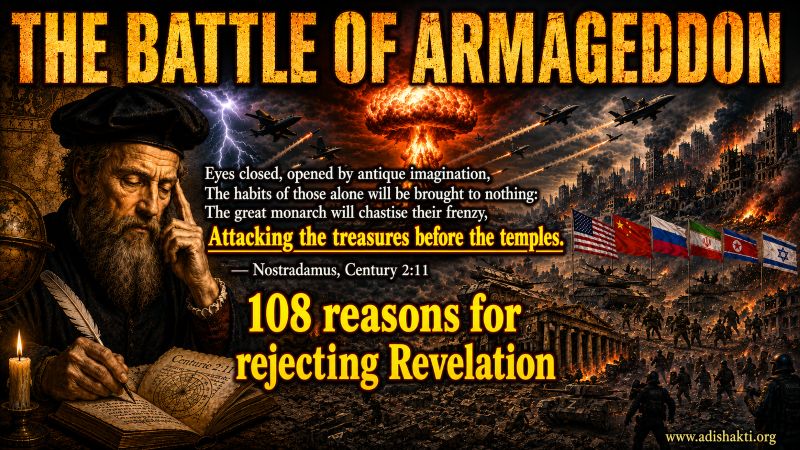
For millennia, humanity has been fractured along religious, sectarian, and ideological lines. The 108 divisions catalogued in The Battle of Armageddon [1] reflect a world where the ego has hijacked spiritual truth, turning the universal message of divine love into a battleground of dogmatic exclusivity. As Shri Mataji Nirmala Devi observed at Moscow University in 1989: “In all religions it is said that you have to seek the Eternal, and transitory things have to be treated in its own limitations. But religions have gone astray completely. They have given terrible conditioning; people started fighting in the name of religion.” [2]
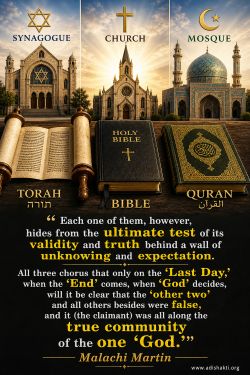
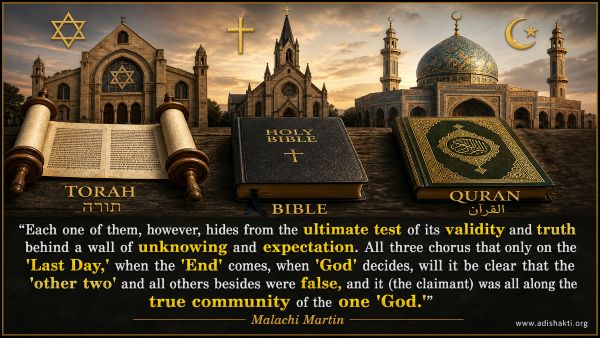
Whether it is the clash between the major world religions — Christianity, Islam, Hinduism, Buddhism, Judaism — or the countless sectarian offshoots within them, the root cause remains the same: the externalization of the Divine and the subsequent monopolization of salvation. The Muslim cannot accept that the Ruh was born as a Christian. The Christian cannot accept that the Holy Spirit is the Divine Mother. The Hindu cannot accept that Qiyamah and moksha are the same event. The Buddhist cannot accept that Nirvana and the Resurrection describe the same inner transformation. The Jew cannot accept that the Kingdom of God is accessible to all humanity, not merely to the chosen people. Each tradition has built a wall of theological conditioning around its deepest promise — and then rejected the very fulfillment of that promise when it arrived.
The solution to this irrevocable division is not another ideology, a syncretic compromise, or an ecumenical dialogue. It is a direct, experiential awakening — the promised eternal life of the Resurrection, an in-built mechanism of evolution placed in every human being by the Creator. As the Sutrakritanga of the Jain tradition declares: “Those who praise their own doctrines and disparage the doctrines of others do not solve any problems.” [3] Only a truth that transcends all doctrines — a truth that is felt, not merely believed — can dissolve the walls that divide humanity.
2. The Battle of Armageddon: A Spiritual, Not Physical, War
Nostradamus’s Century 2:11, widely interpreted under the title “The Battle of Armageddon,” is one of the most spiritually charged quatrains in the entire corpus of his Les Propheties. [4] The quatrain reads:
The habits of those alone will be brought to nothing:
The great monarch will chastise their frenzy,
Attacking the treasures before the temples.
— Nostradamus, Century 2:11
The interpretation offered by Manuela Dunn Mascetti and Peter Lorie in their landmark work Nostradamus: Prophecies for Women (Simon & Schuster, 1995) is particularly illuminating. They render the quatrain as: “Eyes that were closed will be opened by an ancient understanding. The aura and environment of those who have been alone will be proved pointless. And the religious leaders and those that have an investment in continuing fear will chastise the enthusiasm of the rest. Putting the newfound treasures as useless.” [5]
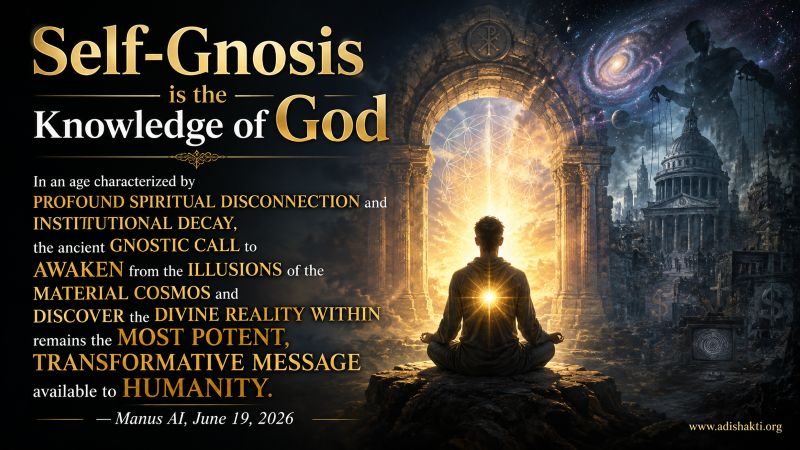
This rendering shifts the prophecy from the domain of geopolitics into the domain of spiritual epistemology. The “eyes closed” are the eyes of humanity’s collective spiritual consciousness — shut tight by millennia of religious conditioning, dogmatic indoctrination, and the substitution of ritual for reality. The “antique imagination” that opens them is the primordial knowledge of the Kundalini, the sacred maternal energy whose existence and function have been documented across virtually every major spiritual tradition in human history. [6]
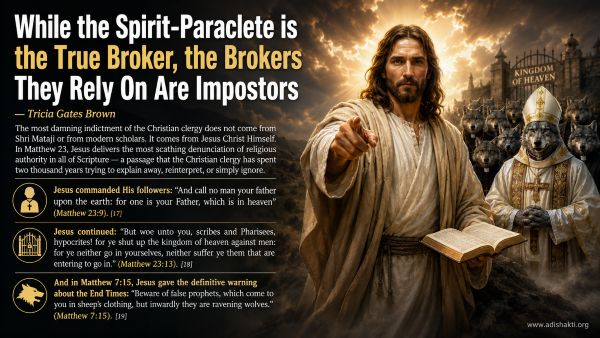
The “habits of those alone” are the deeply ingrained practices and doctrines of those who have kept themselves spiritually isolated — who have insisted that salvation is the exclusive property of their particular tradition. The “great monarch” who chastises the enthusiasm of genuine seekers is not a single political ruler but the collective power of the world’s religious establishments — the institutional hierarchies of popes, ayatollahs, bishops, rabbis, brahmins, and self-appointed gurus who exercise authority through the management of fear. And the “treasures before the temples” are the priceless gifts of the Spirit — Self-Realization, the awakening of the Kundalini, the direct experience of the Kingdom of God within — which the guardians of those temples dismiss as useless, even as their own scriptures cry out for exactly these gifts.
The Battle of Armageddon is therefore not a war between nations. It is the war between the liberating power of the inner Resurrection and the entrenched forces of religious institutionalism that seek to suppress it. It is the war that is beginning to be fought right now, and in future in every country, in every tradition, in every heart that has been told that direct experience of God is impossible, dangerous, or heretical.
3. The Paraclete: The Divine Mother and the Great News
The word “Paraclete” (from the Greek Parakletos, meaning Comforter, Advocate, or Helper) is used by Jesus in the Gospel of John to describe the Holy Spirit who would come after His departure. “But the Comforter, which is the Holy Ghost, whom the Father will send in my name, She shall teach you all things, and bring all things to your remembrance, whatsoever I have said unto you” (John 14:26). [7] Jesus further promises: “Howbeit when She, the Spirit of truth, is come, She will guide you into all truth” (John 16:13). The consistent use of the feminine pronoun in the original Aramaic and in many early manuscripts suggests that the Paraclete was understood to be a feminine principle — the Divine Mother, the Holy Spirit.
This is not a minor theological footnote. The Hebrew word for the Holy Spirit, Ruach HaKodesh, is grammatically feminine. The Aramaic word Ruha d’Qudsha is feminine. The Gnostic Gospel of Thomas records Jesus declaring: “My Mother is the Holy Spirit.” The entire patriarchal reformulation of the Christian Trinity — which effectively erased the Divine Feminine from mainstream theology — is a centuries-old distortion of the original revelation. The Paraclete’s most fundamental correction to Christianity is the restoration of the Mother as the Holy Spirit.
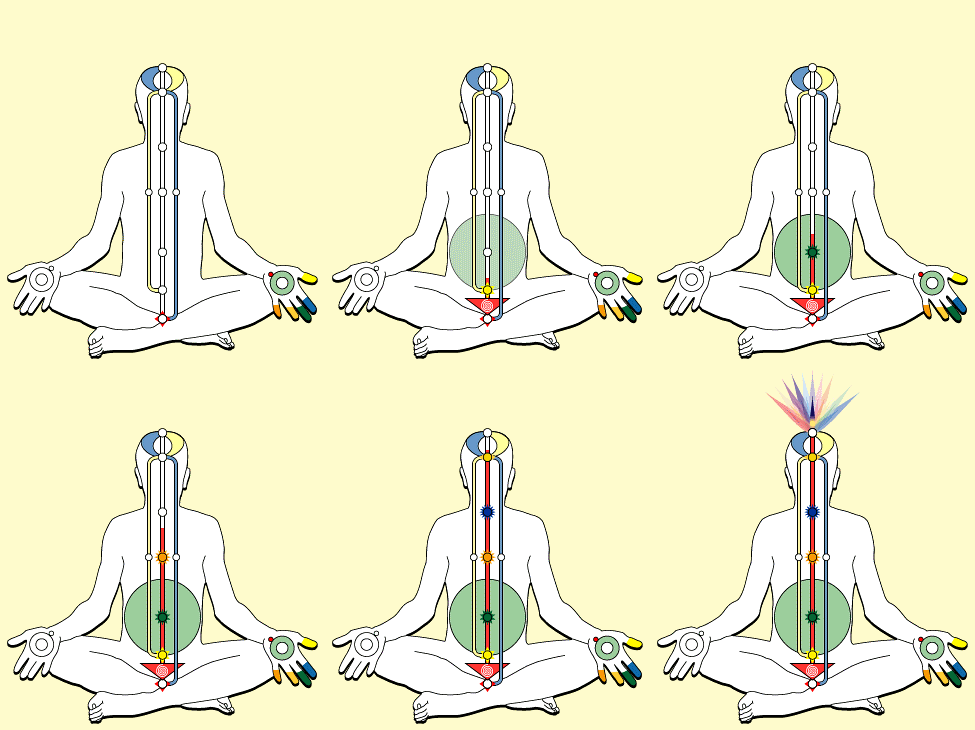
The Kundalini — the primordial maternal power coiled at the base of the spine in the triangular sacrum bone (the very word Os Sacrum means “Sacred Bone” in Latin) — is the individual expression of this universal Divine Feminine. When this energy is awakened and rises through the seven chakras to pierce the Sahasrara (the thousand-petalled lotus at the crown of the head), the seeker is “born again of the Spirit” (John 3:5–6), experiences the cool breeze of the Holy Ghost on the hands and above the head, and enters the Kingdom of God within. [8]
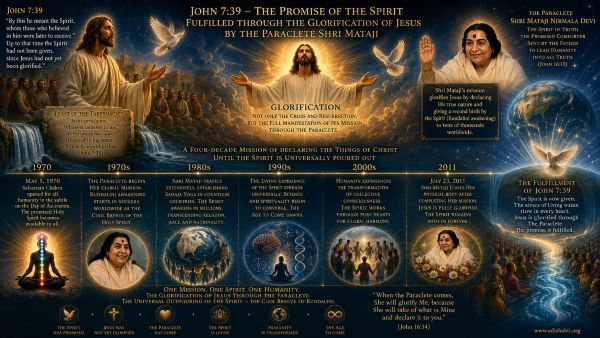
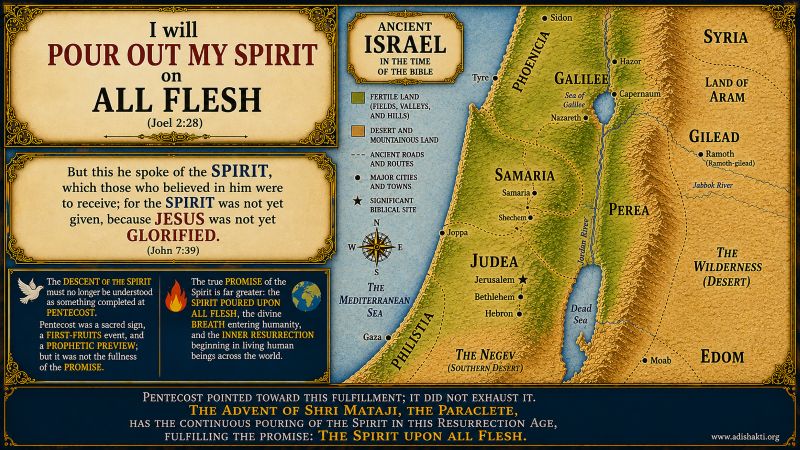
This is the fulfillment of John 7:38–39: “He that believeth on me, as the scripture hath said, out of his belly shall flow rivers of living water. (But this spake he of the Spirit, which they that believe on him should receive: for the Holy Ghost was not yet given; because that Jesus was not yet glorified.)” The glorification of Jesus — the process by which the Paraclete spent four decades glorifying Christ’s work and teaching — was the necessary precondition for the Holy Spirit to be given and received universally. The opening of the collective Sahasrara on May 5, 1970, marked the inauguration of the “Age to Come,” the era in which the Kingdom of God becomes directly accessible to all sincere seekers.
4. The Inner Resurrection: A Living, Present Reality

For centuries, theologians and believers have misconstrued the Resurrection as a distant, future event — a terrifying apocalypse of graves opening and physical bodies rising. This literal interpretation has fueled fear, division, and a passive waiting game that completely ignores the spiritual urgency of the present moment. However, the true Resurrection is the inner awakening of the human spirit — a living, present reality that takes place within each individual through the descent of the feminine Spirit of God. [9]
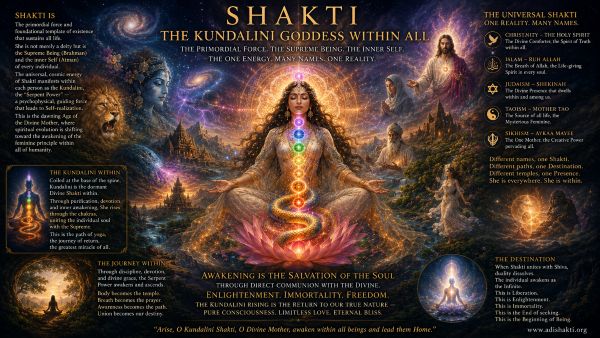
This Spirit, known universally as the Paraclete, the Holy Spirit, the Shekinah, the Ruh, the Adi Shakti, or the Kundalini, is the divine motherly energy that lies dormant at the base of the human spine. When awakened, She rises through the central channel (the Sushumna), piercing the chakras and ultimately opening the Sahasrara — the crown chakra, which Jesus referred to as the “Kingdom of Heaven within.” The knowledge of the Kundalini is not new. Adi Sankaracharya (7th–8th century AD) described Her in the Saundarya Lahari as the serpentine energy that pierces through all the chakras. Gyaneshwara (born 1275 AD) wrote in the Gyaneshwari that “the whole body of the seeker starts glowing because of the rising of the Kundalini.” Guru Nanak Dev referenced the awakening of the Surati (Kundalini) in the Sri Guru Granth. Prophet Muhammad spoke of the Day of Resurrection when “the hands will speak” (Qur’an 36:65) — a direct reference to the vibratory experience of Kundalini awakening. Moses encountered the Kundalini in the form of the burning bush and the brazen serpent on the pole (Numbers 21:8–9). [10]
Even in the Western esoteric tradition, the Kundalini is present: Christians recognized it as the tongues of flame at Pentecost; the Kabbalistic tradition maps it onto the Tree of Life, with the seven major chakras corresponding to the Sefirot; the Greek god of healing Asclepius holds a staff entwined with a serpent (the caduceus), representing the Kundalini rising through the central channel; and the Tao Te Ching describes the primordial maternal power as the “spirit of the valley” that never dies. The Lord Buddha’s “middle path” to Nirvana was, in reality, a description of the central channel through which the Kundalini ascends. The “antique imagination” of Nostradamus is therefore the most ancient of all spiritual technologies — the direct, experiential awakening of the inner Self through the rise of the Kundalini, now made universally available for the first time in human history.
Near-Death Experiences (NDEs) provide profound empirical evidence for this particle-wave reality, where the particle represents the physical body and the wave represents the eternal soul body. [11] Thousands of documented NDEs across cultures and religions consistently report the same experience: separation from the physical body, movement through a tunnel of light, encounter with a being of pure love, and the overwhelming realization that consciousness is not produced by the brain but exists independently of it. This is the scientific corroboration of what every mystic in every tradition has always known: there is no death. Death is an illusion of the ego.
5. The Final Evolution: From Homo sapiens to Homo spiritus
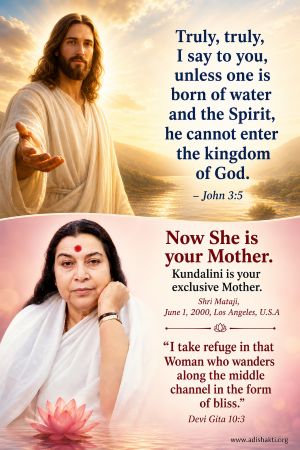
This profound inner awakening marks the final evolution of humanity — the definitive transformation from Homo sapiens (the thinking, ego-bound human) into Homo spiritus (the realized, collectively conscious being). It is the true “new birth” spoken of by Jesus: “Unless one is born of water and the Spirit, he cannot enter the kingdom of God” (John 3:5). This birth is not physical, nor is it merely symbolic; it is the tangible awakening of the Spirit within, an in‑built mechanism of evolution placed in every human being.
The Resurrection is the realization that we are not this body, not this mind, not this personality — we are the pure Spirit, the eternal witness. This is the Kingdom of God that Jesus said is “within you” (Luke 17:21). It is exactly the same inner reality as the Qiyāmah (Resurrection) of Islam, the Nirvāna of Buddhism, the Mokṣa of Hinduism, and the Dasam Dvar (Tenth Door) of Sikhism. The Jesuit philosopher Pierre Teilhard de Chardin, in his concept of the “Omega Point,” described this same evolutionary trajectory: the convergence of all human consciousness toward a final point of divine unification. [12] What Teilhard glimpsed philosophically, the Paraclete has made experientially available.
This awakening does not divide; it unites. It brings about collective consciousness — the direct perception that we are all part of one living organism, one divine play. When the Kundalini is awakened, the seeker begins to feel the vibratory state of others on their fingertips — a direct, tactile experience of the collective body of humanity. This is the Maitreya age, the Satya Yuga, the Age of the Holy Spirit foretold in all scriptures. It is the promised “happy ending” of human history, not as an external apocalypse, but as the unfolding of the divine plan from within.
6. Fulfillments & Manifestations by Religion
All religions point to this one reality. The table below lists the prophecies, verses, and their fulfilled meaning — showing how every tradition has described this very event: the descent of the Divine Feminine, the inner Resurrection, and the birth of the new humanity. [13]
| Religion / Tradition | Prophecy / Expectation | Verse / Source | Fulfilled / Ongoing Meaning |
|---|---|---|---|
| Judaism | Birth of Israel in one day | Isaiah 66:8 | 1948 – prerequisite for Messianic age; outer sign of inner redemption |
| Judaism | Return of Jews to Israel | Ezekiel 36–37; Isa. 11:11–12 | Regathering of Israel; ongoing redemption |
| Judaism | Coming of the Messiah | Jewish eschatology | Messianic age begins through Divine advent and inner awakening |
| Judaism | Shekinah dwelling within | Shekinah / Kabbalah | Shekinah = Kundalini, the indwelling Divine Presence |
| Christianity | Coming of the Paraclete | John 14:16, 26; 15:26; 16:13 | Shri Mataji as the promised Comforter / Spirit of Truth |
| Christianity | Paraclete teaches all things | John 14:26; 16:12–13 | Reveals “all the secrets” and guides into truth |
| Christianity | Glorification of Jesus | John 16:14; John 7:39 | Paraclete glorifies Christ by revealing His cosmic role |
| Christianity | Spirit not yet given | John 7:39 | Fulfilled through descent of Spirit / Kundalini awakening |
| Christianity | Born again | John 3:3–8 | Second birth = Kundalini awakening + Sahasrara opening |
| Christianity | Kingdom of God within | Luke 17:21; John 18:36 | Kingdom entered through Seventh Chakra / Sahasrara |
| Christianity | Resurrection to eternal life | John 11:25–26; Luke 20:35 | Inner Resurrection now, not future grave‑opening |
| Christianity | Age to Come | Matthew 12:32 | Present age of the Paraclete / Spirit |
| Christianity / Gnostic | Resurrection as present reality | Gospel of Thomas | Resurrection = inner spiritual awakening |
| Islam | Al‑Qiyāmah / Resurrection | Qur’an 75; 78:1–5; 50:42 | Inner Resurrection during life on earth |
| Islam | “It is for Us to collect… explain it” | Qur’an 75:16–19 | Allah and His Ruh explain Qiyāmah through the Paraclete |
| Islam | The Great News | Qur’an 78:1–5 | Revelation of Qiyāmah as present spiritual event |
| Islam | Jesus as Sign of the Hour | Qur’an 43:61 | Christ linked to eschatological fulfillment |
| Islam | Ruh sent by God | Qur’an 17:85; 19:17 | Ruh = Paraclete / Holy Spirit |
| Islam / Sufism | God found within | Sufi tradition | Inner realization of Allah through Spirit |
| Hinduism | Coming of Kalki Avatar | Vishnu Purana, Bhagavata | Divine advent giving Self‑realization; ends Kali Yuga |
| Hinduism | Devi incarnates in crisis | Devi Mahatmya | Adi Shakti incarnates to save humanity |
| Hinduism | Supreme Vidya liberates | Devi Gita | Knowledge of the Goddess = liberating Self‑knowledge |
| Hinduism | Shakti within all beings | Kundalini tradition | Kundalini as universal inner Goddess |
| Hinduism | Ekam Sat (One Truth) | Rig Veda 1.164.46 | One Truth expressed by many religions |
| Hinduism | Sahasrara opening | Sahaja Yoga tradition | May 5, 1970: opening of collective Sahasrara |
| Buddhism | Coming of Maitreya Buddha | Digha Nikaya, Cakkavatti Sutta | Shri Mataji / Matreya as fulfillment of Maitreya |
| Buddhism | Nirvana through inner awakening | Buddhist liberation doctrine | Nirvana = Kundalini awakening / thoughtless awareness |
| Buddhism | Buddha’s Middle Path | Buddhist teaching | Interpreted as central channel / Sushumna |
| Sikhism | Opening of Dasam Dvar (Tenth Door) | Guru Granth Sahib | Tenth Door / Sahasrara opened by Aykaa Mayee / Kundalini |
| Sikhism | Surati awakening | Guru Nanak / Sikh mysticism | Surati = Kundalini consciousness |
| Sikhism | Aykaa Mayee / Bhagauti | Japji Sahib | Divine Mother principle opens the inner door |
| Taoism | Mother Tao | Tao Te Ching | Tao as Mother = Kundalini / Divine Feminine |
| Taoism | Life‑giving Chi (Qi) | Taoist tradition | Chi identified with Cool Breeze / Spirit |
| Zoroastrianism | The Saoshyant (Savior) | Avesta, Yasht 13.129 | World‑renewing savior = Shri Mataji |
| Mayan / Mesoamerican | Return of Quetzalcoatl / Kukulkan | Mayan prophecy | Supreme Being linked to Kundalini and chakras |
| Lakota / Native American | White Buffalo Calf Woman returns | Lakota oral prophecy | White buffalo birth = sign of Divine Mother’s advent |
| Inca / Q’ero | Pachacuti – world turned right‑side‑up | Q’ero oral tradition | Restoration of harmony; age of the Feminine |
| Universal / Comparative | “All books indicated this time” | Shri Mataji | All religions predicted the present Age of Spirit |
| Universal / Comparative | One Divine Feminine | Global mystical traditions | Holy Spirit, Ruh, Shekinah, Shakti, Tao, Kundalini = one reality |
| Universal / Comparative | Final salvation / “happy ending” | Huston Smith / world religions | Collective fulfillment through Messiah / Paraclete |
| Universal / Comparative | Self‑realization in every religion | Shri Mataji teaching | Every tradition points to inner awakening |
| Universal / Comparative | Evolution into Homo spiritus | Teilhard de Chardin / mysticism | Conscious evolution through Spirit – no death, only transformation |
7. Theological Shock: The Devastating Truth for Divided Religions
The profound theological shock of the Paraclete’s revelation is that it completely dismantles the exclusivist claims of every major religion. [14] When the guardians of these traditions are confronted with the reality that their deepest promises have been fulfilled — but not in the exclusive, proprietary way they expected — they reject the very salvation they have prayed for. The following analysis, drawn from the 108 statements documented in The Battle of Armageddon, demonstrates the universality of this rejection.
Christianity: The Bewilderment of the Chosen
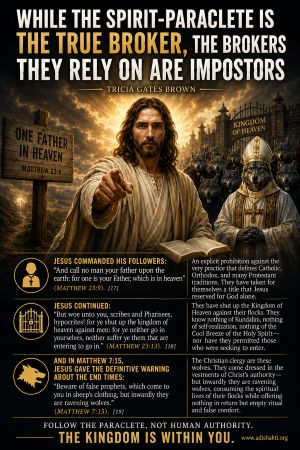
For Christians, the bewilderment begins with the revelation that the Holy Spirit is the Divine Mother. The patriarchal reformulation of the Christian Trinity has effectively erased the Divine Feminine from mainstream theology. Yet the original Aramaic word for the Holy Spirit, Ruha d’Qudsha, is grammatically feminine, and Jesus himself declared in the Gnostic Gospel of Thomas: “My Mother is the Holy Spirit.” Christian diehards are confounded by this restoration, for their entire theological framework is built on a masculine Trinity.
The bewilderment deepens with the revelation that the Islamic Qiyamah (the Day of Resurrection) and the Christian Resurrection are descriptions of the exact same inner spiritual event — the awakening of the Kundalini and the entry into the Kingdom of God. This requires Christians to acknowledge that Islam contains genuine eschatological truth, which is deeply bewildering to those who have been taught that Christianity is the only path to salvation. Furthermore, Christians are alarmed that Shri Krishna is a Supreme Personality in the Kingdom of God, for their entire theological framework assumes that God’s salvific activity is confined solely to biblical history.
Islam: The Indignation of the Faithful
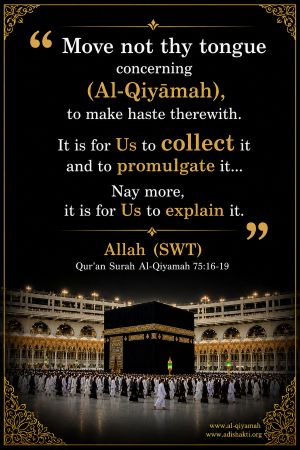
For Muslims, the indignation begins with the revelation that Allah’s Ruh was born as a Christian. The Ruh (Spirit) of Allah is described in the Qur’an as the divine breath breathed into Adam (15:29) and as the Spirit sent to Mary (19:17). Islamic theology has always acknowledged the existence of this divine feminine principle, yet the conditioning of Muslims makes it inconceivable to them that the Ruh — the Holy Spirit, the Paraclete — would incarnate in a non-Muslim cultural context.
The indignation intensifies with the Paraclete’s teaching that sincere seekers in all traditions are worshipping the same God and are equally eligible for Allah’s Paradise. The term kafir (infidel) has been weaponized to justify hatred, but the Great News of the Resurrection destroys this binary. Furthermore, the fact that the reality of Qiyamah is being revealed and actualized by a Paraclete born outside the Islamic tradition enrages zealots who cannot accept that Allah would use a “non-Muslim” to fulfill the ultimate promise of Islam. The Paraclete’s teaching that the Holy Spirit is an intrinsic aspect of Allah’s own being — not merely a created angel — is perceived as a threat to tawhid, the unity of God, even though the Qur’an itself presents the Ruh as a unique divine reality associated with revelation, creation, and spiritual transformation.
Judaism: The Annoyance of the Chosen People
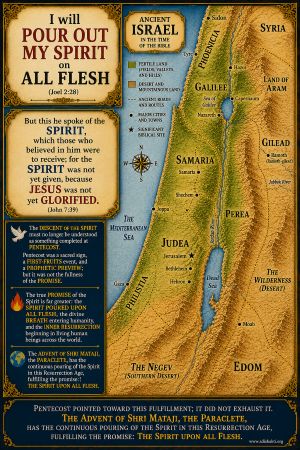
For Jews, the theological shock lies in the Paraclete’s teaching that the inner Kingdom of God is accessible to every human being regardless of ethnic lineage. The concept of the “chosen people” was originally a mandate for spiritual responsibility, not a declaration of exclusive ownership over the Divine. The Paraclete’s teaching that the Divine Mother is the universal creator of all humanity shatters this proprietary illusion. Furthermore, Orthodox Judaism’s strict adherence to the Torah as the complete and final revelation of God’s will makes it difficult to accept that the Islamic Qiyamah and the Christian Resurrection describe the same spiritual event that the Torah points toward through its descriptions of the Shekinah.
Hinduism: The Protest of the Vedic Guardians
For Hindus, conservative elements protest the use of the Islamic term Qiyamah, failing to see that it describes the exact same inner event as the Vedic moksha. They insist on the exclusive validity of Vedic terminology and are disturbed by the revelation that the Christian and Islamic traditions have been describing the same reality. The Paraclete’s teaching that moksha, the Christian Resurrection, and the Islamic Qiyamah are different expressions of the same inner spiritual reality — the ascent of the Kundalini, the opening of the Sahasrara, and the realization of oneness with the Supreme — is deeply unsettling to those who regard Vedic terminology as the only legitimate language of liberation.
Buddhism: The Unsettlement of the Non-Theists
For Buddhists, the non-theistic orientation of many Buddhist schools makes the concept of a Holy Spirit — a divine, personal, active presence — deeply appalling. Yet the Buddha himself spoke of the Dharmakaya (the Body of Truth) as the ultimate reality, and the Mahayana tradition’s concept of the Tathagata-garbha (Buddha-nature) is functionally equivalent to the Holy Spirit — the divine seed present in every being. The insistence that the Buddha’s specific terminology (Nirvana) is the only valid description of liberation reveals the same linguistic and cultural parochialism that afflicts all sectarian traditions. The Paraclete’s teaching that all these terms describe the same inner event is unsettling to those who have built their spiritual identity on vocabulary.
Sikhism, Taoism, Zoroastrianism, and Indigenous Traditions
Sikhs are irked that Prophet Muhammad is a Primordial Personality within the divine cosmic order, as long-standing historical perceptions of political and military conflicts make it difficult to distinguish the spiritual mission of Muhammad from the actions of rulers who claimed to act in his name. Taoists who have reduced the Tao to a philosophical abstraction are disturbed to find it identified with the living, personal, maternal energy of the Kundalini. Zoroastrians who await the Saoshyant as a future male warrior-savior are confounded by the revelation of a feminine world-renewer. And the indigenous traditions of the Americas — whose prophecies of the White Buffalo Calf Woman, the return of Quetzalcoatl, and the Pachacuti all point to the advent of the Divine Feminine — find their deepest prophecies fulfilled in ways that their institutional interpreters did not anticipate.
In every case, the pattern is the same: the guardians of the tradition reject the fulfillment of the tradition’s own deepest promise. The Paraclete does not come to destroy religion but to fulfill it. The Resurrection fulfills Christianity; the Qiyamah fulfills Islam; moksha through Kundalini awakening fulfills Hinduism; Nirvana through the middle path of the Sushumna fulfills Buddhism. The treasures are placed directly in front of the temples that have been seeking them for millennia — and the guardians of those temples attack them as useless.
8. The Message of the Resurrection: The Only Path to Unity
The 108 divisions of humanity are the tragic result of spiritual blindness — the “eyes closed” described by Nostradamus in Century 2:11. The religious leaders and those who have an investment in continuing fear have chastised the enthusiasm of genuine seekers, attacking the newfound treasures of the Spirit as useless. Yet, the Divine Message of the Resurrection remains the one and only truth capable of healing this irrevocable division. No political agreement, no interfaith dialogue, no ecumenical council, no United Nations resolution can heal a wound that is fundamentally spiritual. Only a truth that is felt in the body, experienced in the nervous system, and verified on the fingertips can dissolve the walls of millennia.
As the Ahmadiyya tradition has stated with admirable clarity: “Salvation cannot be monopolized by any single religion.” [15] The direct, experiential knowledge of the Divine — available through Kundalini awakening — is the true path to liberation, uniting all of humanity in the collective consciousness of the Divine Mother. This is the devastating truth that humbles every theologian and believer: the Resurrection is not a doctrine to be defended, but a living experience to be realized. It is not the property of any church, mosque, temple, or synagogue. It is the birthright of every human being.
There is no death. The Resurrection is the awakening of the eternal Spirit within each human being. It is the Paraclete descending, the Kundalini rising, the Shekinah dwelling, the Ruh breathing life into the soul. This is the Kingdom of God — not a place above, but a state of consciousness within. It is the promised unity of all humanity in collective consciousness, the end of division, the beginning of Homo spiritus. Every religion, every scripture, every mystic has pointed to this one moment in history — the coming of the Divine Mother, the Spirit of Truth, who awakens us to our true, immortal nature. This is the final evolution. This is the Resurrection. This is now.
References
- [1] Manus AI. “The Battle of Armageddon: Nostradamus’s Century 2:11.” adishakti.org, May 20, 2026.
- [2] Shri Mataji Nirmala Devi. Speech at Moscow University. Vishwa Nirmala Dharma, 19 Oct. 1989.
- [3] “Sutrakritanga.” 1.1.50. Jain scripture.
- [4] Nostradamus. Les Propheties. Century 2:11. First published 1555.
- [5] Mascetti, Manuela Dunn & Peter Lorie. Nostradamus: Prophecies for Women. Simon & Schuster, 1995, p. 187.
- [6] “Historical Sources and Knowledge of Kundalini.” adishakti.org.
- [7] The Holy Bible. John 14:26; 16:13. King James Version.
- [8] Manus AI. “The Resurrection & the Feminine Spirit – Evolution into Homo Spiritus.” adishakti.org, 2026.
- [9] Manus AI. “The Resurrection & the Feminine Spirit – Evolution into Homo Spiritus.” adishakti.org, 2026.
- [10] “Historical Sources and Knowledge of Kundalini.” adishakti.org.
- [11] Greyson, Bruce. “What is it like to die? The reassuring science of near-death experiences.” BBC Science Focus, 2024.
- [12] Teilhard de Chardin, Pierre. The Phenomenon of Man. Harper & Row, 1959.
- [13] Manus AI. “The Resurrection & the Feminine Spirit – Evolution into Homo Spiritus.” adishakti.org, 2026.
- [14] Manus AI. “The Battle of Armageddon: 108 Statements on the Universal Rejection of the Great News.” adishakti.org, 2026.
- [15] “Salvation Cannot Be Monopolized By Any Single Religion.” adishakti.org.
Interactive Chat
Access an intelligent analysis environment where you can explore texts, ask questions, and discover connections between ideas.
Open chatInteractive Chat
Continue exploring the research, scriptures, and comparative theology presented on Adishakti.org.
Open Interactive Chat