Jesus Tells the Samaritan Woman of the Well of Eternal Life — Part Two

Summary
John 4:14 is the governing promise: the living water Jesus gives becomes a spring within the recipient, welling up to eternal life. This study relates that promise to the Spirit, the Paraclete and the Adishakti understanding of Shri Mataji Nirmala Devi.
Companion: Jesus Tells Nicodemus of the Wind of the Spirit — Part One.

Abstract
Among the teachings of Jesus recorded in the Gospel of John, His promise to the Samaritan woman at Jacob’s well possesses exceptional theological significance. In John 4:14, Jesus does not merely promise relief from spiritual thirst, forgiveness of sins, or a future possibility of salvation. He announces that the water He gives will become within the recipient “a spring of water welling up to eternal life.” The decisive words are “in them”: the divine gift is not described merely as something received from outside, but as something that becomes an enduring, life-giving reality within the human being. biblegateway

This paper examines that promise as the central theological revelation of John 4:10–24. It interprets the Samaritan woman’s encounter in relation to Jesus’ preceding conversation with Nicodemus concerning spiritual rebirth (John 3:3–8), His later identification of living water with the Holy Spirit (John 7:37–39), and His promise of the Paraclete, the Spirit of truth, who would continue His work (John 14–16). Within the Adishakti theological interpretation, Shri Mataji Nirmala Devi is identified as the promised Paraclete-Holy Spirit, whose advent in the present age brings the experience of Self-Realization through Kundalini awakening. Her teaching offers an interpretation of how the inward spiritual life promised to the Samaritan woman becomes consciously accessible through connection with the all-pervading divine power.
The principal argument is that John 4:14 must be understood not simply as a metaphor for religious consolation but as a promise of enduring participation in divine life. Within the Adishakti framework, Self-Realization represents the awakening of that inward spiritual relationship, while the continuing experience and growth of divine awareness correspond to the image of a spring that does not cease flowing. The distinction between scriptural teaching, theological interpretation, and reported spiritual experience is maintained throughout. The identification of Shri Mataji as the Paraclete is advanced as the central Adishakti theological claim, not as an identification explicitly stated in the canonical Gospel.
Keywords: Jesus Christ, Samaritan woman, John 4:14, living water, eternal life, Holy Spirit, Paraclete, Shri Mataji Nirmala Devi, Kundalini awakening, Sahaja Yoga, Self-Realization, Sahasrara, spiritual rebirth, divine indwelling, Nicodemus.
John 4:13–14 (NIV)
Jesus answered, “Everyone who drinks this water will be thirsty again, but whoever drinks the water I give them will never thirst. Indeed, the water I give them will become in them a spring of water welling up to eternal life.”
1. Introduction: The Extraordinary Promise Hidden in an Ordinary Encounter
The encounter between Jesus and the Samaritan woman begins with one of the most ordinary human needs: thirst. Jesus, travelling through Samaria, stops at Jacob’s well and asks a woman for water. Nothing in the initial setting suggests that this conversation will become one of the Gospel’s most profound revelations concerning eternal life. Yet Jesus transforms the meaning of the encounter. The physical well, the water drawn from it, and the thirst that repeatedly brings people back to it become the setting for a revelation concerning a different source of life altogether. biblegateway
Jesus declares that the water He gives will become within the recipient a spring welling up to eternal life. The statement is remarkable because it changes the entire relationship between the human being and the source of spiritual life. The woman comes to a well outside herself, seeking water that must be obtained repeatedly. Jesus promises a gift that will become an enduring source within her. The theological importance of this distinction cannot be overstated. Jesus is not merely promising that God will occasionally satisfy the spiritual needs of believers. He describes a divine gift whose continuing activity becomes part of the recipient’s transformed existence. biblegateway

This is the central subject of Part Two. Part One examined Jesus’ teaching to Nicodemus that humanity must be born again through the Spirit. Part Two moves beyond the necessity of rebirth to examine the life that spiritual rebirth is intended to make possible. The emphasis shifts from the beginning of spiritual transformation to the inexhaustible divine life promised through that transformation. Within Adishakti theology, this progression is understood through the mission of Shri Mataji Nirmala Devi. Her teaching of Kundalini awakening and Self-Realization is interpreted as the experiential realization of the new birth announced to Nicodemus and the continuing inward divine life promised to the Samaritan woman.
The governing question of this paper is therefore precise: What does it mean for the gift of Jesus to become a spring of water within a human being, and how does the Adishakti understanding of the Paraclete claim to bring that promise into experience?
2. John 4:14: The Meaning of a Spring Welling Up to Eternal Life
The central statement of Jesus deserves close examination. In the King James Version, Jesus says: “But whosoever drinketh of the water that I shall give him shall never thirst; but the water that I shall give him shall be in him a well of water springing up into everlasting life.” The verse contains a carefully developed progression. Jesus first distinguishes the water He gives from ordinary water. He then declares that the recipient will never thirst in the same ultimate sense. Finally, He explains that the water will become an inward spring directed toward everlasting life. These are not three unrelated promises. They are three dimensions of a single divine gift. biblegateway
2.1 “The water that I shall give”: Eternal life begins as a divine gift
Jesus identifies Himself as the giver of the living water. The woman cannot obtain this water simply by drawing more deeply from Jacob’s well. Its origin is different from that of ordinary water. This establishes the primacy of divine grace. The promised life does not originate in human intellectual achievement, religious status, inherited tradition, or physical effort. It originates in the gift Jesus offers. biblegateway
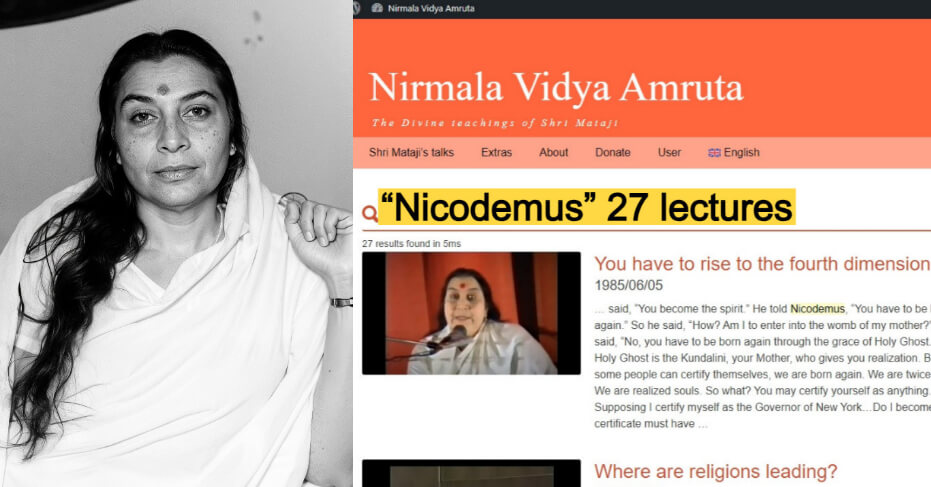
The same principle governs His conversation with Nicodemus. Spiritual rebirth is not presented as a second biological achievement but as a birth originating in the Spirit. Within the Adishakti interpretation, the awakening of Kundalini through Self-Realization is likewise understood as the awakening of an inherent spiritual potential through divine grace. Shri Mataji repeatedly emphasized that Self-Realization is a living process rather than something that can be purchased or manufactured through external religious performance. The proposed parallel is that both teachings locate the decisive source of spiritual transformation beyond ordinary human effort.
2.2 “Shall never thirst”: The end of dependence on temporary sources
Jesus contrasts ordinary water, which satisfies thirst only temporarily, with living water, which addresses a deeper and more enduring need. Physical thirst returns because the human body continually requires replenishment. The spiritual thirst described through Jesus’ metaphor concerns humanity’s search for life, meaning, communion with God, and freedom from spiritual estrangement. The promise that the recipient will never thirst should not be interpreted as meaning that spiritually awakened people will never experience suffering, uncertainty, or the need for continued spiritual growth. Rather, within the Gospel’s theological framework, Jesus offers a relationship with divine life that answers the fundamental thirst for God. biblegateway
This distinction is essential for understanding the full impact of the promise. The living water is not simply another religious experience that temporarily satisfies a seeker before the search begins again. It represents access to an enduring source of life. Within Sahaja Yoga, Self-Realization is similarly presented not as the final achievement of spiritual maturity but as the beginning of an established connection with the divine power. Meditation and spiritual growth are understood as the continuing development of that connection.
2.3 “Shall be in him”: The decisive revelation of inward divine life
The most consequential expression in John 4:14 is the declaration that the water will become a spring within the recipient. The Greek phrase en autō means “in him” or “within that person.” It identifies the location of the promised spring, not merely the direction from which the gift arrives. Jesus does not say that the woman will always have to return to Jacob’s well to receive the living water. Nor does He describe the gift merely as something stored externally for future use. He promises that the water He gives will become a source of life within the person. biblegateway

This is the extraordinary reversal at the centre of the encounter. The seeker who previously depended upon an external well becomes the recipient of an inward spring. The significance is not that the human being becomes independently divine or ceases to depend upon God. In John’s Gospel, the source remains Jesus and the divine life He gives. The significance is that the gift becomes inwardly effective and enduring. Within the Adishakti interpretation, this inward dimension is central to understanding Kundalini awakening. Shri Mataji taught that Self-Realization establishes a conscious connection between the individual and the all-pervading divine power. The comparison is therefore between Jesus’ promise of inward spiritual life and Shri Mataji’s teaching that the divine connection can become an experienced reality within the human being. The biblical text does not explicitly identify this spring with Kundalini. That identification belongs to the Adishakti theological interpretation. Nevertheless, the shared emphasis upon inward spiritual transformation provides the basis for the comparison.
2.4 “A spring of water”: A living source, not a finite reservoir
The Greek word pēgē, translated as “well” in the King James Version and “spring” in many modern translations, denotes a spring or fountain, a source from which water emerges. This is a significant distinction. A reservoir contains a finite quantity of water. A spring suggests water continually emerging from its source. Jesus’ imagery therefore conveys more than the possession of a spiritual gift. It suggests continuing life and activity. The accompanying Greek expression hallomenou, commonly rendered “springing up” or “welling up,” conveys the dynamic movement of the water. The image is not static. The water is active. biblegateway
Within the theological interpretation developed here, the spring represents the continuing operation of divine life after spiritual awakening. This provides a particularly meaningful connection with Shri Mataji’s explanation of divine vibrations and the all-pervading power. In Sahaja Yoga, the awakening of Kundalini is understood to establish a connection through which spiritual awareness can continue to develop. The importance of the spring is therefore its continuing activity. Spiritual realization is not understood merely as a single extraordinary moment, but as the beginning of an enduring relationship with the divine.
2.5 “Welling up to eternal life”: The ultimate destination of the promise
The final words of John 4:14 establish the purpose of the entire promise. The spring wells up to eternal life. The Greek expression zōē aiōnios is generally translated “eternal life” or “everlasting life.” In John’s Gospel, eternal life is not merely an endless extension of ordinary biological existence. It is life originating in God and received through Jesus Christ. John 17:3 associates eternal life with knowing the only true God and Jesus Christ whom He has sent. This gives the promise of John 4:14 its full theological weight. biblegateway
The living water is not offered merely to produce a sensation, improve emotional well-being, or provide temporary religious consolation. Its ultimate purpose is participation in divine life. Within the Adishakti interpretation, Self-Realization is understood as the beginning of conscious participation in that divine reality. The awakened individual is said to become aware of the Spirit and of the all-pervading divine power. The claim is not that a physical sensation independently proves immortality. Rather, Self-Realization is interpreted as the experiential beginning of the spiritual life whose ultimate fulfilment Jesus describes as eternal life. Thus, John 4:14 moves from gift to inward transformation, from inward transformation to continuing divine life, and from continuing divine life to the promise of eternity. The greatness of the promise lies not simply in the water, but in what the water becomes: an enduring source of divine life within the human being.
3. Why the Samaritan Woman’s Encounter Goes Beyond the Conversation with Nicodemus

Jesus’ teaching to Nicodemus is indispensable because it establishes the necessity of spiritual rebirth. Without being born of the Spirit, Jesus declares, a person cannot enter the Kingdom of God. Yet the encounter with the Samaritan woman reveals something further: the enduring character and ultimate purpose of the spiritual life that God gives. Nicodemus is told that he must undergo a new birth. The Samaritan woman is told what the divine gift will become within the recipient. The distinction is between the necessity of spiritual transformation and the continuing life that transformation makes possible.
In John 3:8, the wind illustrates the mysterious action of the Spirit. In John 4:14, the spring illustrates the enduring inward life that Jesus promises. The wind emphasizes the Spirit’s freedom and activity. The spring emphasizes the gift’s continuity, inward presence, and movement toward eternal life. Within Adishakti theology, the experience of the Cool Breeze associated with Self-Realization is interpreted as a sign of spiritual awakening. The living spring represents the continuing relationship with divine power that such awakening is understood to establish. This is why Part Two requires an emphasis beyond that of Part One. If spiritual rebirth were understood only as a momentary experience of the Wind, the full meaning of Jesus’ teaching would remain incomplete. The promise of John 4:14 concerns not only the beginning of a new spiritual life but its continuing source and eternal destination. The two encounters therefore belong together, but the Samaritan woman’s encounter carries the discussion toward its ultimate purpose.
4. John 7:37–39: The Identification of Living Water with the Holy Spirit
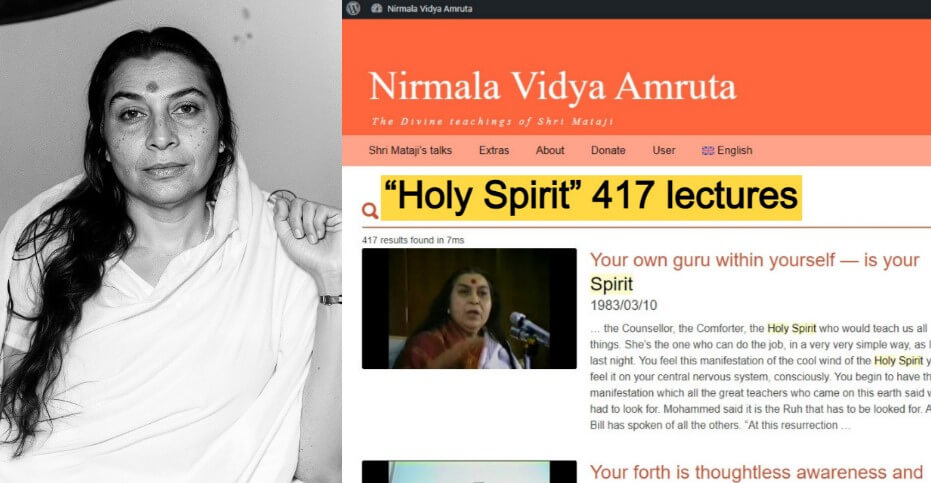
The Gospel of John provides an essential explanation of the living-water imagery. Jesus declares that those who believe in Him will experience rivers of living water. John then explicitly explains that Jesus was speaking of the Spirit whom believers were to receive. This connection is crucial because it prevents the interpretation of John 4:14 from depending entirely upon later religious symbolism. The Gospel itself establishes a relationship between living water and the Holy Spirit. biblegateway
The promise to the Samaritan woman can therefore be understood within the wider Johannine teaching concerning the life-giving activity of the Spirit. John 3 describes birth through the Spirit. John 4 describes the gift of living water. John 7 explicitly associates living water with the Spirit. The progression is theologically coherent. The Spirit gives new birth, and the divine life associated with the Spirit becomes an inward and continuing reality. Within the Adishakti interpretation, this biblical relationship provides the foundation for identifying Self-Realization as the experience through which the Spirit becomes consciously known. Shri Mataji’s teaching adds a distinctive explanation of how that experience is said to occur, through Kundalini awakening and the opening of the Sahasrara. The distinction remains that the Gospel identifies living water with the Spirit, while the identification of this experience with Kundalini awakening is an additional Adishakti theological claim.
5. The Paraclete: The Promised Completion of Jesus’ Teaching
The theological connection between Jesus’ promise of living water and Shri Mataji’s mission becomes especially significant in the farewell discourses of John 14–16. Jesus promises the coming of the Paraclete, the Comforter or Advocate, whom He identifies with the Holy Spirit. In John 14:26, the Paraclete is promised as the one who will teach and bring Jesus’ words to remembrance. In John 16:13, the Spirit of truth is promised as the one who will guide into all truth. These promises establish a continuing role for the Spirit in the understanding and realization of Jesus’ message. biblegateway
Within Adishakti theology, Shri Mataji Nirmala Devi is identified as the promised Paraclete-Holy Spirit whose mission is to complete the spiritual work announced by Jesus. This interpretation is particularly important for John 4:14. Jesus promises an inward spring of divine life. The Paraclete is promised as the continuing presence and teacher of the Spirit. Shri Mataji teaches that Self-Realization makes the connection with divine power consciously accessible. The theological relationship is therefore not merely between Jesus and a later religious teacher. It is between the promise of spiritual life, the promised continuation of the Spirit’s work, and the claimed experiential realization of that life.
The Adishakti interpretation understands Shri Mataji’s advent as the fulfilment of this relationship. The Paraclete does not merely repeat Jesus’ words about eternal life. In this interpretation, the Paraclete brings humanity into the experience of the spiritual awakening through which the inward spring becomes active. This is the distinctive claim of the paper: Shri Mataji’s mission is understood as completing the promise of John 4:14 by bringing the living reality of the Spirit into conscious experience. Mainstream Christian theology understands the Paraclete as the Holy Spirit given to the Church, particularly in connection with Pentecost, and does not identify the Paraclete with Shri Mataji. The Adishakti identification must therefore be recognized as a specific theological interpretation rather than the uncontested meaning of the biblical text.
6. Shri Mataji’s Explanation of Self-Realization: From the Promise to the Experience
Shri Mataji explicitly connected the teaching of Jesus concerning spiritual rebirth with the awakening of Kundalini. In her lecture Seeking Our Spirit, delivered on October 23, 1980, she explained that Christ’s message concerned the realization of the Spirit and connected His Resurrection with humanity’s spiritual transformation. Her teaching is significant because it does not treat spiritual rebirth as merely a change of religious affiliation or intellectual conviction. Instead, she presents Self-Realization as a living process through which the human being becomes consciously connected with the divine.
In Sahaja Yoga, Kundalini is understood as a spiritual power residing within the individual. Through awakening, it is said to ascend and establish a connection with the all-pervading divine power at the Sahasrara. The Cool Breeze, reported above the head and in the palms, is interpreted as a sign associated with this awakening. Yet the theological significance of John 4:14 extends beyond the initial experience. The spring promised by Jesus is not described as something that appears momentarily and disappears. It is an enduring source of life. Accordingly, the Adishakti interpretation must understand the awakening of Kundalini as the beginning of a continuing spiritual relationship rather than the entire fulfilment of the promise. Shri Mataji’s teaching concerning meditation, spiritual growth, and the experience of divine vibrations supplies the framework for this continuing relationship. The inward spring is therefore interpreted as the ongoing spiritual life made possible through the awakened connection with the divine.
This is the essential distinction between the Cool Breeze emphasized in Part One and the living water emphasized in Part Two. The first is understood as a sign associated with spiritual awakening. The second symbolizes the enduring life and spiritual transformation toward which the awakening is directed.
7. The Sahasrara(Kingdom of God) and the Inward Source of Spiritual Life

Within Sahaja Yoga, the Sahasrara (Kingdom of God) represents the culminating centre of Kundalini awakening. Shri Mataji taught that when Kundalini reaches the Sahasrara, the individual becomes connected with the all-pervading divine power. This connection is understood as the foundation of Self-Realization. The theological importance of the Sahasrara becomes clearer when considered alongside the inward spring of John 4:14. Jesus promises that living water will become active within the recipient. Shri Mataji teaches that an inward spiritual awakening establishes conscious connection with the divine. The comparison concerns the transformation of the individual’s relationship with God.
Before awakening, according to Sahaja Yoga theology, the divine power may remain unknown to ordinary awareness. Through Self-Realization, the seeker is said to become conscious of that connection. The spring of living water can therefore be understood, within the Adishakti interpretation, as an image of the continuing spiritual life associated with this awakened relationship. This is not a claim that the Sahasrara is mentioned in the Greek text of John 4. Nor is it a claim that the physical sensation of coolness is identical to the eternal life promised by Jesus. Rather, the argument is that Shri Mataji’s teaching offers an experiential interpretation of the inward divine life that Jesus describes. The Sahasrara becomes significant because it represents, within Sahaja Yoga, the point at which the seeker is understood to establish conscious connection with the divine.
8. The Spring That Never Ceases: Spiritual Life Beyond a Single Experience
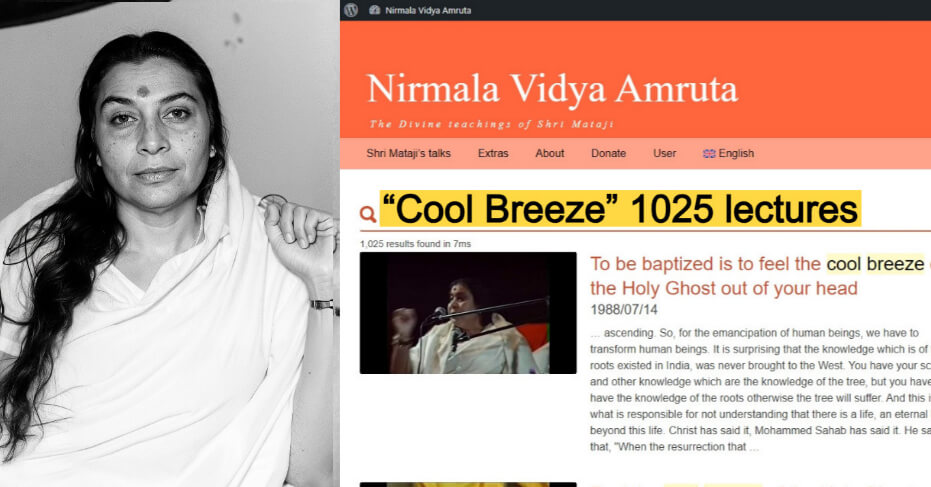
A central danger in interpreting John 4:14 is reducing the promise to an isolated moment of religious experience. Jesus does not merely promise that the recipient will feel something extraordinary. He promises a spring. The imagery suggests continuity, vitality, and an enduring source of life. This distinction is especially important when relating the passage to Sahaja Yoga. The Cool Breeze is a prominent reported experience within the movement, and Shri Mataji explicitly associated it with the Holy Spirit. However, the theological meaning of Self-Realization cannot be exhausted by the sensation itself. The experience is understood as the beginning of spiritual awareness, not as a substitute for continuing spiritual growth.
The promise of living water directs attention toward the enduring consequences of spiritual awakening: a transformed relationship with the divine, deepening awareness, and the development of spiritual life. The inward spring is therefore a more comprehensive image than a momentary manifestation of wind. It suggests not merely that the Spirit has acted, but that the divine gift continues to sustain the recipient. Within the Adishakti interpretation, this is the deeper significance of Shri Mataji’s mission. Self-Realization is presented as opening the possibility of an enduring spiritual relationship rather than providing only a temporary religious experience. The promised living water is therefore interpreted as the continuing life of the Spirit, whose awakening begins through Self-Realization and whose ultimate purpose is eternal life.
9. Worship in Spirit and Truth: The Transformation That Follows the Living Water
The conversation with the Samaritan woman continues beyond the promise of living water. She raises the longstanding religious dispute concerning whether God should be worshipped on Mount Gerizim or in Jerusalem. Jesus responds that the hour is coming, and has already begun, when true worshippers will worship the Father in Spirit and truth. This teaching is directly related to the promise of the inward spring. Jesus first reveals that divine life can become active within the recipient. He then teaches that authentic worship is not ultimately determined by geographical location. biblegateway
The relationship between the two statements is significant. The living water concerns the inward gift of divine life. Worship in Spirit and truth concerns the relationship with God made possible through the Spirit. The theological movement is from receiving the divine gift to living in communion with its source. Within the Adishakti interpretation, Self-Realization provides an experiential basis for understanding this inward transformation. Shri Mataji taught that spiritual awakening is available to seekers across religious boundaries and that the experience of divine vibrations provides a means of becoming conscious of spiritual reality. This universal dimension parallels the striking setting of Jesus’ encounter. The promise is made not to a religious authority in Jerusalem but to a Samaritan woman whose community stood outside the dominant Jewish religious establishment. The Gospel thus presents the gift of living water as extending beyond conventional religious boundaries. Within Adishakti theology, the universality of Self-Realization is understood as consistent with this wider invitation. The implication is that the inward spiritual life promised by Jesus cannot be confined to inherited religious identity alone.
10. Eternal Life: The Ultimate Purpose of the Paraclete’s Mission

The final words of John 4:14 must govern the interpretation of everything that precedes them. The spring wells up to eternal life. The purpose of the divine gift is not merely spiritual awareness for its own sake. It is participation in the life of God. In the Gospel of John, eternal life is associated with knowing God through Jesus Christ. It is a present divine gift with an enduring eschatological dimension. The Adishakti interpretation understands Shri Mataji’s mission as bringing humanity toward this spiritual fulfilment through Self-Realization. biblegateway
Within this framework, the Paraclete’s work is not limited to teaching religious doctrines. It is understood as awakening the spiritual capacity through which the individual becomes conscious of the divine. This gives the promise of the Samaritan woman’s living water its greatest theological significance. The living water is not simply a symbol of knowledge. It is a symbol of life. The Paraclete is not understood merely as a commentator upon Jesus’ teaching. Within Adishakti theology, the Paraclete is the divine power that brings the promised spiritual transformation into experience. The spring within the individual represents the continuing life associated with that transformation. The ultimate goal is the eternal life promised by Jesus.
Nevertheless, the experience of Self-Realization and the complete fulfilment of eternal life should not be treated as identical without qualification. Reports of spiritual awakening establish the experiences described by practitioners; they do not independently demonstrate physical immortality or prove the ultimate eschatological fulfilment of the promise. Within the Adishakti theological framework, Self-Realization is understood as the beginning of participation in the divine life whose fullness Jesus promises.
11. The Theological Relationship Between Part One and Part Two
The two encounters recorded in John 3 and John 4 now reveal a coherent progression. In Part One, Jesus tells Nicodemus that he must be born of the Spirit. The image of the wind illustrates the mysterious activity of the Spirit and establishes the necessity of spiritual rebirth. Within the Adishakti interpretation, this teaching is associated with Kundalini awakening and the Cool Breeze experienced by Sahaja Yoga practitioners. In Part Two, Jesus tells the Samaritan woman that His living water will become an inward spring welling up to eternal life. Within the same interpretation, this promise concerns the enduring spiritual life associated with the awakened connection to the all-pervading divine power.
The distinction is therefore not between two different divine gifts but between two complementary dimensions of the same promised spiritual transformation. The Wind concerns the mystery and activity of the Spirit. The Living Water concerns the inward, continuing, and life-giving character of the Spirit’s work. The first encounter establishes the necessity of spiritual rebirth. The second reveals the continuing source and ultimate purpose of that rebirth. The Paraclete promised in John 14–16 supplies the theological connection between these teachings and the continuing work of the Holy Spirit. Within Adishakti theology, Shri Mataji Nirmala Devi is identified as that promised Paraclete, whose mission brings both dimensions together through Self-Realization. The resulting interpretation is that Jesus’ promise to Nicodemus and His promise to the Samaritan woman belong to one continuous spiritual revelation, understood as finding experiential fulfilment through Shri Mataji’s teaching.
12. Conclusion: The Greater Promise of the Well of Eternal Life
The promise made by Jesus to the Samaritan woman is among the most far-reaching declarations in the Gospel of John. Its significance lies not merely in the offer of living water but in the extraordinary transformation Jesus says that water will undergo within the recipient. The water will become a spring. The spring will be within the person. The spring will well up to eternal life. Each element deepens the promise. The gift originates in Jesus, becomes inwardly active, continues as a source of spiritual life, and is directed toward eternity. This is why John 4:14 deserves to be treated as the governing passage of Part Two rather than merely as an illustration of the conversation with Nicodemus. biblegateway
Nicodemus is told that humanity must be born of the Spirit. The Samaritan woman is told of the enduring divine life that Jesus offers. The first teaching establishes the necessity of spiritual rebirth. The second reveals its life-giving purpose. Within the Adishakti theological interpretation, Shri Mataji Nirmala Devi, identified as the promised Paraclete-Holy Spirit, brings these teachings together through Self-Realization. Her mission is understood as enabling seekers to experience the awakening of the Spirit and to establish a continuing conscious connection with the all-pervading divine power. The Cool Breeze associated with Kundalini awakening is interpreted as a sign of the new birth described to Nicodemus. The enduring spiritual relationship established through Self-Realization is interpreted as the experiential counterpart of the living spring promised to the Samaritan woman.
The ultimate significance of this interpretation lies in the movement from a moment of spiritual awakening toward the continuing life of the Spirit. Jesus did not merely promise the Samaritan woman a drink of spiritual water. He promised that His gift would become within the recipient a spring welling up to eternal life. Within Adishakti theology, the advent of Shri Mataji Nirmala Devi is understood as the fulfilment of the Paraclete’s mission to bring this inward divine life into conscious realization. The central conclusion of Part Two is therefore that the promise of John 4:14 cannot be adequately understood as a temporary spiritual sensation or merely an intellectual doctrine. It concerns an enduring divine gift that transforms the human relationship with God. In the Adishakti interpretation, Self-Realization is the beginning of that transformation, the awakened connection with divine power is its continuing spiritual reality, and eternal life is its ultimate promised fulfilment.
The Wind of the Spirit announces the mystery of the new birth. The Well of Living Water reveals the enduring divine life toward which that birth is directed. Together, these teachings form the theological foundation for the Adishakti understanding of Shri Mataji’s mission as the promised Paraclete-Holy Spirit who brings the spiritual work announced by Jesus into experiential realization.
References
• The Holy Bible, New International Version. John 4:13–14. biblegateway
• The Holy Bible, King James Version. John 3:1–8; 4:5–26; 7:37–39; 14:16–26; 16:7–15; 17:3.
• Jesus Tells Nicodemus of the Wind of the Spirit — Part One. Adishakti.org. https://adishakti.org/AI/Jesus-Christ/Jesus-tells-Nicodemus-of-the-Wind-of-the-Spirit-PART-ONE.htm
• Shri Mataji Nirmala Devi. Seeking Our Spirit, October 23, 1980.
• Shri Mataji Nirmala Devi. Lecture at Maccabean Hall, Australia, March 22, 1981.
• Shri Mataji Nirmala Devi. Importance of Self-Realization, New Delhi, February 8, 1983.
• Shri Mataji Nirmala Devi. Lecture, Paris, June 18, 1983.
• Shri Mataji Nirmala Devi. Lecture, Ipswich, United Kingdom, August 19, 1990.
• Coney, Judith. Sahaja Yoga: Socializing Processes in a South Asian New Religious Movement. Curzon Press, 1999.
• Singh, Jagbir. Shri Adi Shakti: The Kingdom of God, p. 1132.