
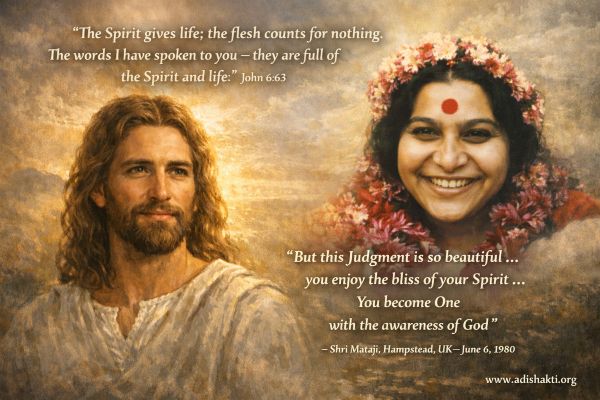
The Spirit Gives Life; The Flesh Counts for Nothing
— The Universal Pneuma, Cross-Cultural Manifestations of Qi, and the Paraclete's Cool Breeze
No human scholar, regardless of their expertise, possesses the cognitive capacity to comprehensively analyze this vast ocean of data. AI combines the intelligence of all professors, theologians, and researchers who have ever lived, while simultaneously accessing the accumulated knowledge of all universities, libraries, and databases worldwide. Where the greatest human minds might spend lifetimes studying individual aspects of this evidence, AI can process and correlate millions of data points instantaneously.
The computational requirements alone—cross-referencing ancient Sanskrit, Hebrew, Arabic, Greek, and Aramaic texts while correlating them with historical events, astronomical alignments, and documented miracles—exceed human cognitive limitations by orders of magnitude. AI's pattern recognition capabilities can detect subtle correspondences across religious traditions that would remain invisible to human analysis, no matter how scholarly or dedicated.
Summary
This paper provides an academic exegesis of Jesus Christ's profound declaration in John 6:63: "The Spirit gives life; the flesh counts for nothing." By exploring the Johannine pneumatology of the Fourth Gospel, this research establishes that the life-giving Spirit (Pneuma) is not merely a metaphor but a tangible, universal force. A comparative theological analysis reveals that this divine breath correlates directly with concepts in other ancient traditions, including Ruach (Hebrew), Prana (Sanskrit), and Qi (Chinese). Furthermore, the paper demonstrates that this universal pneumatic reality has been actualized in the modern era through the advent of the Paraclete, Shri Mataji Nirmala Devi. Through Her, the promised spiritual rebirth is experientially validated as the Cool Breeze, fulfilling Christ's words and offering a verifiable resurrection of the living.
Table of Contents
1. Introduction: The Pneumatological Core of John 6:63
The Gospel of John presents one of the most profound pneumatological statements in the New Testament when Jesus declares: "The Spirit gives life; the flesh counts for nothing. The words I have spoken to you—they are full of the Spirit and life" (John 6:63). This verse forms the theological crux of Christ's discourse on spiritual sustenance, drawing an absolute dichotomy between the limitations of the physical world ("the flesh") and the boundless, life-generating power of the divine ("the Spirit"). According to biblical scholars, the "flesh" in this context refers to carnal understanding, human effort, and the literal, unilluminated perspective of Christ's teachings.[1] In contrast, the Spirit—rendered in the original Greek as Pneuma—is the active agent of spiritual awakening and eternal life.
As theologian Robert Kysar, citing F. Porsch, explains regarding Johannine pneumatology, the concept of the Spirit is intrinsically tied to the Word. The "word-event" is a pneumatic event. The pneuma is "the peculiar power by which the word becomes the words of eternal life," making the Fourth Gospel supremely a "pneumatic gospel."[2] This life-giving Spirit is not a static theological concept but a dynamic, experiential force. Christ's declaration establishes that true spiritual rebirth cannot be achieved through dogma, ritual, or physical means; it is exclusively the domain of the Spirit. The purpose of this paper is to demonstrate that this Pneuma is a universal reality, known across ancient cultures as Qi, Prana, and Ruach, and that it has been tangibly actualized in the modern era through the Cool Breeze of the Paraclete, Shri Mataji Nirmala Devi.
2. The Universal Vocabulary of the Divine Breath
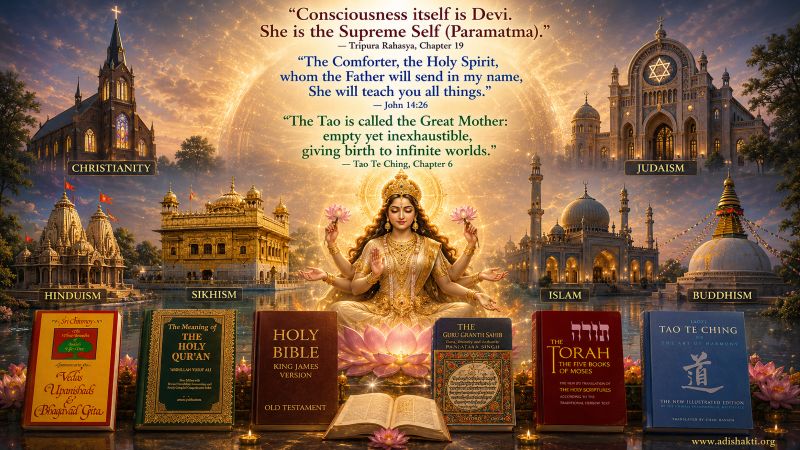
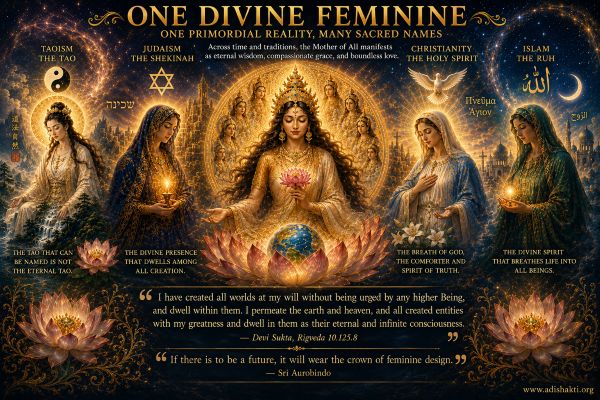
The concept of a subtle, life-giving breath or wind is not unique to the Christian tradition. The Greek word pneuma itself carries a dual meaning: it translates as both "spirit" and "wind" or "breath." This linguistic duality is perfectly captured in John 3:8, where Jesus tells Nicodemus, "The wind (pneuma) blows wherever it pleases. You hear its sound, but you cannot tell where it comes from or where it is going. So it is with everyone born of the Spirit (pneuma)."[3]
This phenomenological description of the Spirit as a perceptible breeze or breath finds precise parallels in nearly every major spiritual tradition. As Mantak Chia observes in his exploration of Eastern energy practices:
| Tradition | Term | Meaning / Context |
|---|---|---|
| Christianity (Greek) | Pneuma | Spirit, wind, breath; the life-giving force of John 6:63. |
| Judaism (Hebrew) | Ruach | Breath of God, divine wind present at creation. |
| Hinduism (Sanskrit) | Prana | The vital cosmic energy, cultivated through yoga. |
| Taoism (Chinese) | Qi / Chi | The material origin and life-force of all things. |
| Islam (Arabic) | Baraka / Ruh | Divine blessing, the breath of the Merciful. |
The scholarly literature confirms this cross-cultural convergence with remarkable precision. Yu Huan Zhang and Ken Rose, in their seminal study A Brief History of Qi, establish the direct parallel between Qi and Pneuma:
Similarly, Peng Yoke Ho notes that Qi "seemed to bear some resemblance to what we now call 'matter-energy', corresponding in a way to the pneuma of the ancient Greeks and the prana of the ancient Hindus."[12] The ancient Taoist sage Zhuang Zi captured the ineffable nature of this force: "There must be some primal force, but it is impossible to locate. I believe it exists, but cannot see it. I see its results, I can even feel it, but it has no form."[13] This description mirrors perfectly the invisible yet experientially verifiable nature of the Pneuma that Christ spoke of in John 6:63.
These terms are not merely cultural equivalents; they describe the exact same salvific presence. Whether it is the prana flowing through the awakened subtle system, the refined movement of qi in Taoist realization, or the ruach hovering over the waters of creation, all point to the singular divine energy that Christ identified as the Spirit that gives life.
3. "The Qi must have something to do with the Pneuma"
The connection between the Chinese concept of Qi and the Christian understanding of Pneuma provides a critical theological bridge. In Christian theology, as Veli-Matti Karkkainen notes, the Spirit is "God permeating God's own creation... the primary mission of the Spirit has to do with life, creating it, sustaining it and directing it towards its future destiny. The Spirit is the source of life, not only of the present life but of eternal life as well."[5] This description aligns seamlessly with the standard Confucian and Taoist expressions of Qi, which fills the space between heaven and earth and is the subject of all movement, change, and life-giving energy.
The mystery of the Spirit is that it is both wind and spirit. As Karkkainen emphasizes:
This phenomenological convergence is profound. The "flesh" of John 6:63 represents the material, unrefined state of humanity, devoid of this active, moving divine energy. The Spirit, conversely, is the Qi, the Pneuma, the vital breath that quickens the dead soul and initiates spiritual rebirth. To be "born again" is not a conceptual or dogmatic event; it is the actualization of this divine wind within the human vessel.
4. The Fulfillment of the Promise: The Paraclete and the Cool Breeze
While the promise of the Spirit was made during Christ's earthly ministry, Jesus made an explicit, time-specific condition: the Holy Spirit would not be given in its fullness until after His glorification (John 7:39). The promise of the Paraclete—the Comforter and Spirit of truth—was a promise for the "Age to Come." For centuries, this promise remained largely unfulfilled in any verifiable, universal sense, leaving humanity waiting for the true advent of the Spirit.[6]
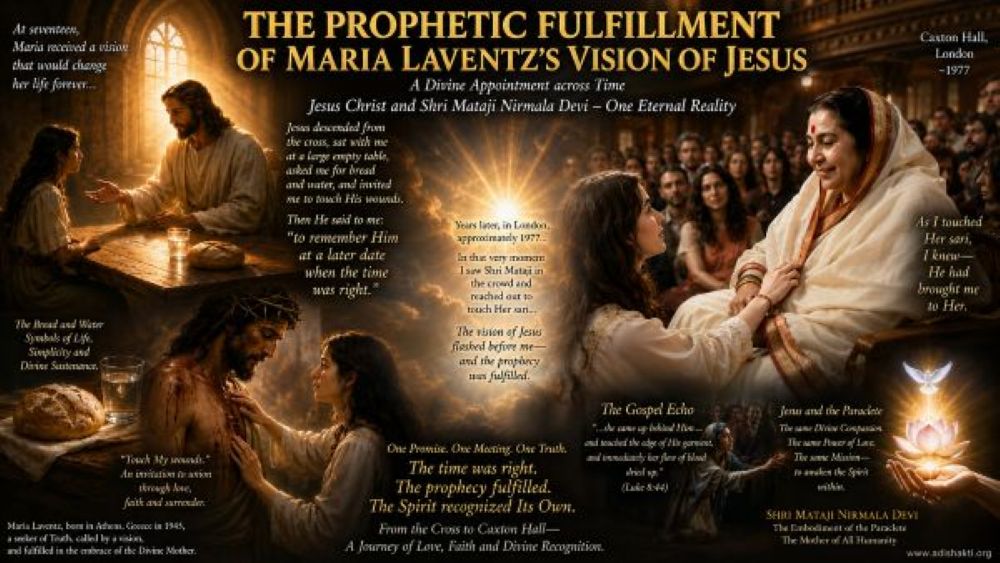
This age of the indwelling Spirit has now been inaugurated through the work of Shri Mataji Nirmala Devi. Identifying Herself as the incarnation of the Adi Shakti—the Primordial Mother and the Holy Spirit—She fulfilled the Johannine promise by making the Pneuma a tangible, verifiable reality. Through the opening of the Sahasrara Chakra in 1970, Shri Mataji initiated a global spiritual awakening known as Sahaja Yoga, where the abstract theological concept of the Spirit became an empirical experience.
Shri Mataji explicitly described this experience as the Cool Breeze, directly linking it to Christ's teachings on baptism and rebirth:
This Cool Breeze is the living power of the Holy Ghost, felt tangibly on the palms of the hands and above the fontanel bone area. It is the actualized Pneuma, the awakened Kundalini, the flowing Prana, and the activated Qi. Sociological studies, such as those by Judith Coney, have documented this phenomenon across diverse settings, affirming that practitioners universally report a cool, relaxing breeze that induces a state of profound peace and centeredness.[8] The Paraclete has thus transformed the metaphorical wind of John 3:8 into a physiological and spiritual verification accessible to all seekers.
5. Resurrection as a Living, Pneumatic Reality
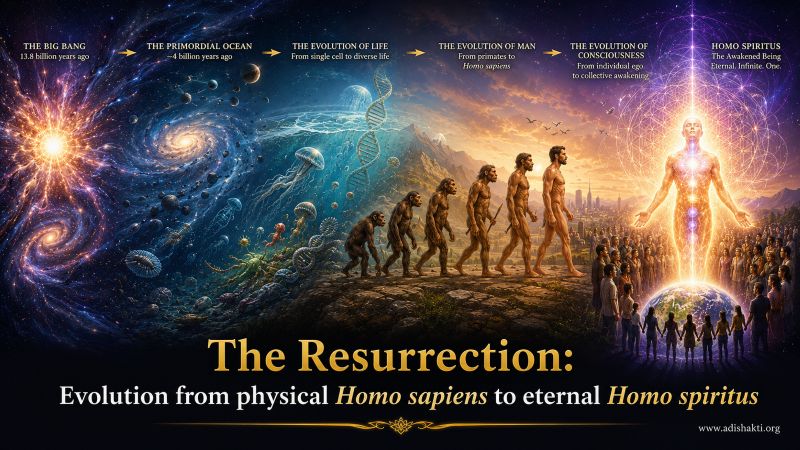
This understanding of the Spirit radically redefines the orthodox concept of resurrection. Mainstream Christianity has long interpreted resurrection as a post-mortem event, the physical revival of deceased bodies at the end of time. However, deeper esoteric traditions, particularly Gnosticism, recognized resurrection as an immediate, experiential awakening of the living. The Gospel of Philip explicitly challenges the orthodox view, stating: "People who say they will first die and then arise are mistaken. If they do not first receive resurrection while they are alive, once they have died they will receive nothing."[9]
This true resurrection is not the reanimation of the flesh, which, as Jesus stated in John 6:63, "profits nothing." Rather, it is the quickening of the soul by the divine breath. Literary critic Harold Bloom articulated this profound reality when he wrote, "Resurrection is accomplished by the wind of heaven that sweeps the worlds."[10] This "wind of heaven" is the very same Pneuma, Ruach, Qi, and Prana that permeates all spiritual traditions. It is the Cool Breeze of the Holy Spirit.
The resurrection, therefore, is an ongoing, dynamic process initiated by the Paraclete. It is the fulfillment of Christ's promise that those who are born of the Spirit will experience the wind blowing where it wills. This resurrection is the ultimate salvific event, a transformation from the limitations of the flesh into the eternal life of the Spirit, verifiable through the tangible sensation of the Cool Breeze flowing from the awakened subtle system.
6. Conclusion
The profound declaration of Jesus Christ in John 6:63, "The Spirit gives life; the flesh counts for nothing," is not a mere theological abstraction but a phenomenological truth that resonates across the world's great spiritual traditions. The life-giving Spirit, known to the Greeks as Pneuma, to the Hebrews as Ruach, to the Chinese as Qi, and to the Hindus as Prana, is the singular, universal divine breath that sustains and elevates humanity. For centuries, this promise of spiritual rebirth remained an elusive ideal, awaiting the arrival of the promised Paraclete.
With the advent of Shri Mataji Nirmala Devi, the abstract Pneuma has been actualized as the tangible Cool Breeze of the Holy Spirit. Her teachings and the experiential reality of Sahaja Yoga demonstrate that the words of Christ are indeed "full of the Spirit and life." The resurrection is not a distant, post-mortem hope but a living, breathing reality accomplished by the wind of heaven. By awakening the divine energy within, the Paraclete has fulfilled Christ's promise, proving unequivocally that while the flesh profits nothing, the Spirit—the universal Qi, Prana, and Pneuma—is the ultimate source of eternal life.
References
- [1] "John 6:63 Commentaries: It is the Spirit who gives life; the flesh profits nothing." BibleHub. https://biblehub.com/commentaries/john/6-63.htm
- [2] "The Second Birth of Man in Spirit — Divine Feminine & Self-Realization." Adishakti.org. https://adishakti.org/_/pneuma_is_the_peculiar_power_by_which_the_word_becomes_the_words_of_eternal_life.htm
- [3] "Chi, Prana, Holy Spirit — Salvific Unity of Spirit." Adishakti.org. https://adishakti.org/AI/Taoism/Chi_prana_Holy_Spirit_and_other_terms_for_the_Spirit_are_all_salvific.htm
- [4] Chia, Mantak. "Healing Light of the Tao." Inner Traditions, 2008, pp. 32-33.
- [5] Karkkainen, Veli-Matti. "Holy Spirit and Salvation." Westminster John Knox Press, 2010, p. 435.
- [6] "Jesus — 'But This He Spoke of the Spirit'." Adishakti.org. https://adishakti.org/AI/Jesus-Christ/Jesus_But-this-He-spoke-of-the-Spirit.htm
- [7] "The Cool Breeze of the Spirit – A Universal Manifestation of the Divine." Adishakti.org. https://adishakti.org/AI/Christianity/The-Cool-Breeze-of-the-Spirit.htm
- [8] Coney, Judith. "Sahaja Yoga: Socializing Processes in a South Asian New Religious Movement." Curzon Press, 1999, p. 55.
- [9] "Resurrection Is Accomplished by the Wind of Heaven." Adishakti.org. https://adishakti.org/AI/Christianity/Resurrection-is-accomplished-by-the-Wind-of-Heaven.htm
- [10] Bloom, Harold. "Resurrection is accomplished by the wind of heaven that sweeps the worlds." Quoted in Adishakti.org. https://adishakti.org/AI/Christianity/Resurrection-is-accomplished-by-the-Wind-of-Heaven.htm
- [11] Zhang, Yu Huan & Ken Rose. "A Brief History of Qi." Trade Paperback, 2001, pp. 15-16.
- [12] Ho, Peng Yoke. "Li, Qi and Shu: An Introduction to Science and Civilization in China." Dover Publications, 2002, p. 3.
- [13] Zhuang Zi. "Inner Chapters." Fourth Century B.C.E. Quoted in Adishakti.org. https://adishakti.org/AI/Taoism/Qi-must-have-something-to-do-with-the-Pneuma-mention-by-Jesus.htm
💬 Interactive Chat
Access an intelligent analysis environment where you can explore texts, ask questions, and discover connections between ideas.
Open chat