The Inner Resurrection: Meditation, Divine Wind, and the Gnosis of the Last Judgment
IMPORTANT REMINDER: Daily meditation—the innermost intimacy with the Divine (Silence on Self) in the Sahasrara (Kingdom of God)—and experiencing the Divine Wind is key to participating in the Last Judgment and Resurrection. There is absolutely no need for any existing religious rule, ritual or ruler. Please do not corrupt its purity and sacredness with any human innovation. His Holy Spirit within will perfect you for the eternal afterlife. You will bear witness to your own resurrection and your own Spirit/Self. The spiritual journey within oneself must thus never ever be contaminated by human novelties or religious doctrine! The only guide you will ever need is the Divine Mother/Holy Spirit/Devi within, the Source of Consciousness.
Pariah Kutta, December 3, 2006
Abstract
This paper posits a radical reinterpretation of core eschatological concepts—specifically the Last Judgment and Resurrection—arguing they are not future, external events but profound, present-moment spiritual realities accessible to every human being. It contends that daily meditation focused on the crown chakra, the Sahasrara—understood mystically as the Kingdom of God—is the key to this inner transformation. Through such practice, one experiences the tangible descent of the Divine Wind (Ruach, Pneuma, Holy Spirit), which awakens the divine consciousness within. This awakening constitutes the true Resurrection, a Gnostic rebirth into a higher state of awareness while still living. The Last Judgment is reframed as an internal process of witness, the awakening of the “self-reproaching spirit” (al-nafs al-lawwamah) that brings absolute self-knowledge. This entire process is guided not by external religious rules, rituals, or authorities, but by the indwelling Divine Mother—the Holy Spirit, Devi, or Kundalini—who is the ultimate source of consciousness and the sole perfecter of the soul for eternity. The paper synthesizes insights from Christian Gnosticism, Hindu Tantra, Islamic Sufism, and mystical theology to argue for a universal, esoteric path to liberation that transcends exoteric religious structures and dogmas.
Table of Contents
1. Introduction: Transcending Exoteric Eschatology2. The Kingdom of God Within: The Sahasrara Chakra
3. The Divine Wind: A Unifying Perennial Experience
4. The Gnosis of Resurrection: Awakening in the Present Moment
5. The Last Judgment as Inner Witness: The Awakening of Al-Nafs Al-Lawwamah
6. The Paraclete: The Indwelling Divine Feminine as Sole Guide
7. The Purity of Inner Experience: The Rejection of Ritual and Dogma
8. Conclusion: The Sacred Journey to Self-Sovereignty
9. References
1. Introduction: Transcending Exoteric Eschatology
For millennia, the dominant religious narratives have positioned humanity in a state of anticipation for a future, cataclysmic conclusion: a final day of judgment and a resurrection of the dead. While these doctrines have provided structure and moral guidance for millions, they have also, paradoxically, externalized the most profound spiritual truths, placing them outside the realm of immediate, personal experience. This paper argues for a return to an esoteric, perennial wisdom that locates these ultimate events not in a linear, historical future, but within the sacred geography of the human being. It posits that the Last Judgment and Resurrection are not events to be awaited, but states of consciousness to be entered. The key to this profound shift in understanding lies in the direct, unmediated experience of the Divine within, a process that renders external religious rules, rituals, and rulers entirely superfluous. The spiritual journey is revealed as a solitary, inward pilgrimage, guided only by the indwelling Divine Mother, the Holy Spirit who is the very source of our consciousness. [1]
2. The Kingdom of God Within: The Sahasrara Chakra
The teachings of Jesus of Nazareth contain a radical, often overlooked, declaration: “the kingdom of God is within you” (Luke 17:21). This statement shifts the locus of divinity from an external, celestial realm to the interior landscape of the human soul. This concept finds a precise and profound parallel in the yogic and tantric traditions of the East, specifically in the understanding of the Sahasrara chakra. Located at the crown of the head, the Sahasrara is depicted as a “thousand-petaled lotus” and is considered the seat of pure consciousness, the point of union between the individual self (Atman) and the universal Self (Brahman). [2] It is the culmination of the spiritual journey, where all lower chakras are integrated and the illusion of separation dissolves. Daily meditation, a practice of “Silence on Self,” allows the seeker’s attention to rise and pierce this final frontier, entering a state of thoughtless awareness. It is in this sacred space—the Kingdom of God within the Sahasrara—that the innermost intimacy with the Divine is realized.
3. The Divine Wind: A Unifying Perennial Experience
Across cultures and epochs, mystics have described a tangible experience of a divine, life-giving force, often metaphorized as a wind or breath. In the Hebrew scriptures, this is Ruach, a feminine noun signifying the Spirit of God that moves over the waters of creation. [3] In the Greek New Testament, it is Pneuma, the Holy Spirit that descends upon the apostles. Jesus speaks of it directly: “The wind blows wherever it pleases. You hear its sound, but you cannot tell where it comes from or where it is going. So it is with everyone born of the Spirit” (John 3:8). This same force is known as Prana in Hinduism, the vital life force awakened as Kundalini, and Qi in Taoism. This is not mere metaphor, but a description of a verifiable phenomenon. In the modern era, practitioners of Sahaja Yoga describe this divine wind as a Cool Breeze felt on the palms of the hands and, most significantly, flowing from the fontanelle bone area at the crown of the head when the Kundalini energy reaches the Sahasrara. [4] This experience is the empirical evidence of one’s connection to the all-pervading power of Divine love, the tangible proof of one’s spiritual awakening.
4. The Gnosis of Resurrection: Awakening in the Present Moment
The conventional understanding of resurrection as the post-mortem reanimation of a corpse is a materialistic interpretation of a profound spiritual truth. The Gnostic traditions, particularly as revealed in texts like the Gospel of Philip, offer a more immediate and experiential understanding. One passage states unequivocally: [5]
The true Resurrection is a spiritual awakening of the living. It is the Gnostic process of knowing—not believing—the divine spark within. The literary critic Harold Bloom, in his study of Gnosticism, articulates this beautifully, stating, “Resurrection is accomplished by the wind of heaven that sweeps the worlds.” [6] This is not a future promise but a present possibility. It is the liberation from the “nightmare of death-in-life” through the attainment of self-knowledge (gnosis). As the Gospel of Thomas proclaims, “When you come to know yourselves, then you will become known, and you will realize that you are the sons of the living Father. But if you will not know yourselves, you dwell in poverty and it is you who are that poverty.” [7] To be resurrected is to know oneself as Spirit, to bear witness to your own eternal Self while in this very body.
5. The Last Judgment as Inner Witness: The Awakening of Al-Nafs Al-Lawwamah
Just as Resurrection is an inner event, so too is the Last Judgment. The Islamic Qur’an, in a chapter titled Al-Qiyamah (The Resurrection), points directly to this inner reality. The opening verses declare: “I do call to witness the Resurrection Day; And I do call to witness the self-reproaching Spirit (al-nafs al-lawwamah)” (Qur’an 75:1-2). [8] This juxtaposition is critical. The Day of Resurrection is witnessed by, and through, the awakening of an inner faculty of absolute moral clarity—the self-accusing or self-reproaching soul. This is not a judgment by an external deity, but a moment of profound self-confrontation where the individual becomes “evidence against himself” (Qur’an 75:14). In this state, all excuses fall away, and one sees one’s own life with the unsparing light of divine truth. This inner judgment is not a condemnation but a purification, the burning away of all that is false, leaving only the pristine reality of the Spirit. It is the ultimate accountability, administered not by an outer authority, but by the awakened consciousness itself.
6. The Paraclete: The Indwelling Divine Feminine as Sole Guide
The spiritual journey into the Kingdom of God within is not undertaken alone, yet the guide is not external. In the Gospel of John, Jesus promises to send a Comforter, the Paraclete, the “Spirit of truth,” who “dwells with you and will be in you” (John 14:17). [9] This indwelling Spirit, for which the Hebrew word Ruach is feminine, is the sole guide and teacher. Jesus states that this Spirit “will teach you all things” (John 14:26) and “guide you into all the truth” (John 16:13). Theologian George Awad notes that this implies an ongoing revelation, that “the full richness and depths of God are yet to be discovered” through the Paraclete’s mission. [10] This inner guide is the Divine Mother, known in the Hindu tradition as the Adi Shakti or Devi, whose most intimate form within the human being is the Kundalini. [11] She is the power that initiates the spiritual ascent, the wisdom that guides it, and the bliss of its culmination. Her presence within obviates the need for any priestly caste, guru, or external authority. She is the source of consciousness, and Her guidance is perfect and complete.
7. The Purity of Inner Experience: The Rejection of Ritual and Dogma
The direct, intimate connection with the Divine Mother within is a sacred and self-validating experience that cannot be codified into dogma or replicated through ritual. Any attempt to do so is, as Shri Mataji Nirmala Devi stated, a “perversion” of what is most sacrilegious. [12] She emphasized that in the state of self-realization, “There's no church or organization. So the only thing we have to actually do is to keep ourselves cleansed. The Kundalini does it herself, inside you.” [13] This echoes the teachings of the great mystics throughout history. Meister Eckhart spoke of the need for “detachment” from all forms and concepts to find the “spark of the soul” where God dwells in silence. [14] The spiritual journey is one of subtraction, of shedding the conditionings (samskaras) and human novelties that obscure the pristine, self-luminous truth of the Spirit. It is a path of becoming, not of performing. The Holy Spirit within is the agent of perfection; no external rite or rule can add to Her flawless work.
8. Conclusion: The Sacred Journey to Self-Sovereignty
The eschatological framework presented in this paper is one of profound empowerment and spiritual sovereignty. It relocates the ultimate destiny of humanity from a distant, uncertain future to the eternal present moment, from an externalized cosmic drama to the sacred space of the Sahasrara within. The Resurrection is the Gnostic awakening to our true nature as immortal Spirit, an experience validated by the tangible descent of the Divine Wind. The Last Judgment is the dawn of perfect self-knowledge, the inner witness that purifies and liberates. This journey requires no creed, no institution, and no intermediary. It demands only the sincere desire of a seeker to know their Self, and the courage to turn within through daily meditation. The only guide is the Divine Mother, the Holy Spirit, the Devi who resides within every heart as the source of all consciousness. To embark on this inner path is to claim one’s divine inheritance, to bear witness to one’s own resurrection, and to participate in the eternal life of the Kingdom of God, here and now.
9. References
[1] Kafatos, M., & Kafatou, T. (1991). Looking In, Seeing Out: Consciousness and Cosmos. Quest Books, pp. 244-46.[2] Various Authors. (n.d.). Sahasrāra Chakra. Chakras.net.
[3] Various Authors. (n.d.). Further Reflections on the Divine Feminine — The Holy Spirit. Medium.
[4] Coney, J. (1999). Sahaja Yoga: Socializing Processes in a South Asian New Religious Movement. Curzon Press.
[5] Various Authors. (n.d.). Resurrection Is Accomplished by the Wind of Heaven. Adishakti.org.
[6] Bloom, H. (1997). Omens of the Millennium: The Gnosis of Angels, Dreams, and Resurrection. Riverhead Books, pp. 188-243.
[7] Various Authors. (n.d.). The Gospel of Thomas (Lambdin Translation). Marquette University.
[8] Ali, A. Y. (1989). The Holy Qur'an: Text, Translation and Commentary. Amana Corporation. (Surah 75:1-2).
[9] The Holy Bible, New International Version. (2011). Zondervan. (John 14:17).
[10] Awad, G. (2011). The Holy Spirit in the Johannine Tradition. As cited in user-provided material.
[11] Greenwell, B. (1995). Energies of Transformation: A Guide to the Kundalini Process. Shakti River Press, pp. 19-21.
[12] Shri Mataji Nirmala Devi. (1999, November 1). Lecture in Noida, India. As cited in user-provided material.
[13] Shri Mataji Nirmala Devi. (1981, July 10). Radio Interview, Brighton, UK. As cited in user-provided material.
[14] Various Authors. (n.d.). Meister Eckhart, On Detachment. Yale University.
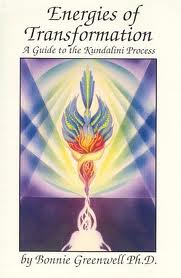
"'When in consequence of the advent of pure knowledge the jiva discards its limitations, then freed from every shackle it becomes illuminated.'
Although the boon of illumination is appealing to Westerners, they have many defenses against burning away ego attachments, and it is a major upheaval of consciousness to discover that many of the former interests and involvements of life have become irrelevant. There is a tendency to avoid serious consideration of the demands for change instigated by a spiritual life and to hope that 'enlightenment' is all accomplished in some nice, neat, and all-inclusive meditation experience. The truth is that mystical experiences force people to find new meanings in human experiences, and encourage them to live in a style that is indifferent to ego satisfactions. This experience is akin to falling in love with a Goddess who is utterly fascinating and obsessively demanding of all of one's attention, forgoing any other temptation.
Sakti or Kundalini is said to help one become liberated in two ways—creating the means to experience liberation, and instilling the inclination to seek her favor to obtain emancipation. In other words the Self creates the means of its own liberation, and instills in one the desire to become free. Laksmi proposes a method of self-surrender in this tantra, with advice that might be useful to spiritual aspirants or those who wish a gentler relationship with Kundalini. (For it is often fear, resistance and misinterpretation of what is happening that makes this process painful.) She advises one to resolve to conform to God's desire, to abandon all acts that displease God, to have a firm conviction God will protect those who choose God as sole protector, and to practice self-surrender and humility. Thereby one becomes free of misfortunes such as fear, sorrow, exhaustion, selfish activity and desire, self-interest and pride, and is sheltered in God alone. One becomes benevolent towards all beings, based on the conviction 'I exist in all beings'; and will drop all hostility and arrogance...
It is useful to remember that in the eastern cosmology this 'God' is a quality of all-encompassing consciousness of which living beings are a part and which we can trust implicitly as being the source and sustenance of our lives. To surrender to this God is to surrender to the Tao, to trust that everything is already perfect, even that which the ego does not accept or understand.”
Energies of Transformation: A Guide to the Kundalini Process
Bonnie Greenwell. Shakti River Press (January 1995) pp. 19-21
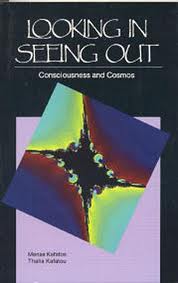
"This inner journey is impossible without stilling the mind... The mind has to be trained with one ultimate focus, merging with its Source from which it receives the light of Consciousness...
We in the West are used to learning from others. We need experts to teach us self-development, accounting, self-defense, driving, etc. Yet in learning about the inner journey we feel we don't need a guide. But a guide is indispensable for the inner journey through what appears to us to be unmapped territory. The skillful experts in the inner journey are the ones who have successfully completed the journey and can safely and surely lead us back Home. The term 'guru' means 'the one who shines light onto darkness,' that is, a Master who brings forth the light of knowledge and dispels the darkness of ignorance.”
Looking In, Seeing Out: Consciousness and Cosmos
Minas C. Kafatos and Thalia Kafatou
Quest Books (October 1, 1991) pp. 244-46

“It's simple: There's no church or organization. So the only thing we have to actually do is to keep ourselves cleansed. The Kundalini does it herself, inside you, and essentially all you have to do is lead a normal life; without excesses, balanced ideas, confidence, responsibility to yourself and to your Kundalini, and also to other people, to your brothers and sisters, and to other people who have also had their Kundalini raised. You have a common language.”
The Paraclete Shri Mataji
Radio Interview, Brighton, UK, 10 July 1981
"The Paraclete will be 'the ongoing presence of the revelation of God.' The revealing mission is not coming to an end at the end of Jesus's mission. Jesus's saying in 14:25-26 does not negate the possibility of the Spirit's teaching the disciples new things upon which He Himself could not, or did not, touch. The greater comprehension of the truth of God's actions and reality will be fully facilitated by the Holy Spirit. John 14:25-26 and 16:12 imply, as Tricia Brown notices, that Jesus did not reveal everything to the disciples, and that 'there is more to be revealed.' Although the Johannine author states that the Spirit's revelation of the whole truth would not belie or contradict what Jesus had already disclosed, he does not limit the Spirit's revelation to what Jesus had already proclaimed. Gavin D'Costa concurs with this opinion. He similarly argues that John 16:12-15 indicates that the 'full richness and depths of God are yet to be discovered even though in Christianity it is claimed that God has revealed herself definitely in Christ', and that the discovery of the deeper dimensions of God's revelation will take place by means of the Holy Spirit's guiding and declaring missions.” (Awad 2011, 249)

"We, realized beings, understand Sahaja Yoga (spontaneous baptism) so deeply that now there is no need to draw any other meaning of it. Still there are people suggesting rituals. It is all useless. I have never said so, yet people are doing what I have never said! So now when they listen to tapes of my lectures and understand that Mother has not said it, why should we do that? But because of old Samskara (conditioning) we keep on observing certain rituals.
So long as we do not get rid of our conditionings, we shall not understand real Sahaja Yoga (spontaneous salvation). I have made you very special people. You know the real meaning of religion. You know every thing, you know about yourself and about others. You could give realisation to people. So now you have become perfect. So what is there to go astray now? You cannot fall...
I bless you all. You have to keep in mind that we have not to pervert what we have achieved. It is most sacrilegious! We don't have to pervert it, perversion should not be allowed.”
The Paraclete Shri Mataji
Noida House, India, 1 November 1999
"If we want to get to know what these functions are, there is no more effective way than to read, one after another, all the statements that are made about the Paraclete in the fourth Gospel. Two things stand out clearly from such texts: the Paraclete is in function of the truth, and the Paraclete is in function of Jesus. The various activities attributed to the Paraclete—to teach, to recall, to witness, to convince, to lead to the truth, to announce—indicate that principal role is doctrinal, that is, an instructive or teaching role, and that domain is principally the domain of knowledge. John seems to want almost to equate Paraclete with 'Spirit of truth.'" (Cantalamessa 2003, 68-9)
💬 Interactive Chat
Access an intelligent analysis environment where you can explore texts, ask questions, and discover connections between ideas.
Open chat →