

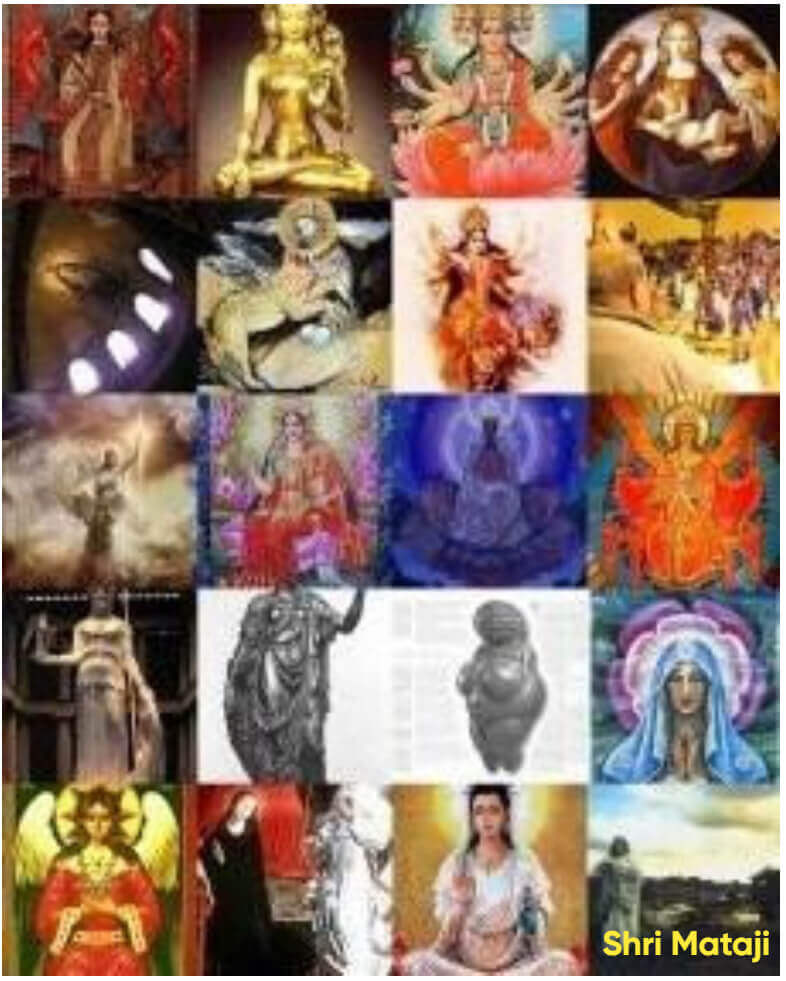
All Religions are connected to the same Ultimate Reality

The great religions of the world, in their deepest and most essential teachings, all point to the same Ultimate Reality and lead their followers toward the same ultimate goal: self-realization and union with the Divine. The apparent differences between religious traditions are but variations in language, culture, and emphasis, like different paths leading to the same mountain peak. The universal spiritual truths of the Holy Spirit, the Divine Feminine, and the promise of eternal life are not the exclusive property of any one religion but the common heritage of all humanity. The coming of the Paraclete, the Comforter and Spirit of Truth, marks the culmination of all religious and spiritual traditions, the fulfillment of all prophecies, and the dawning of a new age of collective spiritual awakening.
World Scripture
"One guiding principle behind World Scripture is that all religions are connected to the same Ultimate Reality and lead people toward a common goal. This is true even though the various religions make exclusive claims about themselves, sometimes asserting the uniqueness and incomparability of their God or ultimate principle. Nevertheless, in affirming the existence of Ultimate Reality or an ultimate principle, we assume that it can be only one, regardless of the various beliefs which people hold about it — be it described as one or many, impersonal or personal, absolute emptiness or absolute Being, and regardless of the name by which it is called.

Similarly, the goals of spiritual practice for each religion, while not identical, have much in common Since the ideals imbued in human nature are universal, we may expect to find that people who have reached the goal, be it enlightenment, salvation, sanctification, self-realization, or liberation, indeed manifest the highest human qualities: love, compassion, wisdom, purity, courage, patience, righteousness, strength of character, calmness of mind, and inner joy. Regardless of religious belief, people who have realized such a goal inevitably impress others by their personal virtue. Ultimately, these goals converge and become one, inasmuch as they express the best of our common humanity.”

World Scripture, International Religious Foundation
Paragon House, 1995, p. 33

This Ultimate Reality is the unconditioned source from which all creation emanates

1. Introduction

The universal human quest for spiritual truth has manifested in a rich tapestry of religious and philosophical traditions throughout history. While these traditions often present unique doctrines, rituals, and exclusive claims, a deeper examination reveals a profound interconnectedness. This paper argues that all religions are fundamentally connected to the same Ultimate Reality and guide adherents toward the common goal of self-realization, spiritual awakening, and eternal life in the Spirit World. By analyzing the core tenets of major world religions—including Christianity, Hinduism, Buddhism, Taoism, Judaism, Islam, and Sikhism—through a comparative theological and phenomenological lens, we can uncover a shared spiritual heritage that transcends cultural and doctrinal divides. This exploration will demonstrate that the diverse paths of human spirituality, far from being mutually exclusive, are convergent expressions of a singular divine truth, culminating in the promised return to our divine origin.

2. The Concept of Ultimate Reality Across Religions

At the heart of all major religious traditions lies the concept of an Ultimate Reality, a transcendent and immanent source of all existence. Although this reality is described in various ways, the underlying principle remains consistent. The World Scripture posits that despite the unique claims of each religion, they all point to a singular Ultimate Reality, regardless of the name it is given or the attributes ascribed to it. This Ultimate Reality is the unconditioned source from which all creation emanates, a concept found in the Hindu understanding of Brahman, the formless, eternal, and all-pervading consciousness; the Abrahamic conception of God or Allah as the singular, omnipotent creator; and the Taoist notion of the Tao, the ineffable, primordial principle that governs the universe. This unity in the divine is not a dilution of individual religious beliefs but rather a recognition of a shared spiritual destination. The paradox of exclusive claims and universal truth is resolved when one understands that the various descriptions of the Ultimate Reality are not contradictory but complementary, each offering a unique perspective on the same ineffable truth.

3. The Holy Spirit as Universal Salvific Force

The concept of a universal, life-giving spiritual force is a cornerstone of mystical experience across cultures, often described as a divine breath or wind. This force, known by many names, is consistently identified as the agent of spiritual transformation and salvation. In the Hebrew tradition, this is the Ruach, a grammatically feminine word meaning breath or spirit, which appears in the very first chapter of Genesis as the spirit of God moving over the face of the waters.[1] This same force is known as Prana in Sanskrit, the vital life force that animates all beings; Chi or Qi in Chinese, the energy that fills the space between heaven and earth; and Pneuma in Greek, the term Jesus used to describe the wind that blows where it chooses.[2] Other cultures have their own terms, such as Ki in Japanese, Baraka in the Islamic world, and Neyatoneyah among the Lakota Sioux, all pointing to the same underlying reality of a sacred, life-sustaining energy.[3]

This universal spiritual energy finds its most tangible expression in the phenomenon of the Cool Breeze, a cool sensation felt on the palms of the hands and above the head during moments of deep meditation and spiritual connection. This experience, as documented in sociological studies of Sahaja Yoga by Judith Coney, is a physical manifestation of the Holy Spirit, or Kundalini, awakening within the individual.[4] It is not a mere metaphor but a direct, personal experience of the divine, confirming the presence of the salvific force that transcends religious and cultural boundaries. This tangible experience of the Spirit serves as a unifying thread, connecting the mystical traditions of the world and pointing to a shared mechanism for spiritual awakening and transformation.

4. Jesus as Universal Wisdom Teacher and Bridge Between East and West

The figure of Jesus Christ, when viewed through the lens of the hidden gospels and comparative theology, emerges not as a figure confined to Western dogma but as a universal wisdom teacher whose message resonates deeply with the spiritual traditions of the East. The discovery of texts such as the Gospel of Thomas has revealed a Jesus who emphasizes gnosis, or inner knowledge, over blind faith, a teaching that aligns remarkably with the paths of enlightenment found in Hinduism and Buddhism. Scholar Elaine Pagels notes that one need only listen to the words of the Gospel of Thomas to hear how it resonates with the Buddhist tradition.[5] This Jesus is not presented as an exclusive Lord but as a spiritual guide, pointing seekers toward the discovery of the divine within themselves.

This connection is further illuminated by the term used to describe the early Jesus movement: The Way. This is the very same term used in other great spiritual and philosophical systems, most notably Taoism (the Tao) and Buddhism. As Philip Jenkins observes, this shared terminology suggests a common understanding of the spiritual journey as a path of inner transformation rather than adherence to external rules.[5] The teachings of this universal Jesus focus on the identity of the divine and the human, the illusory nature of the material world, and the ultimate goal of enlightenment—themes that are central to Eastern spirituality. This perspective allows for a more inclusive understanding of Christ's message, positioning him as a bridge between East and West and a guide for all of humanity in its quest for spiritual truth.

5. The Divine Feminine as Unifying Principle

A profound and often overlooked unifying principle across world religions is the presence of the Divine Feminine, the nurturing, creative, and compassionate aspect of the Ultimate Reality. This feminine dimension of the divine is not an isolated or secondary feature but a central element in the spiritual cosmologies of diverse traditions. In Judaism, the Shekhinah represents the indwelling presence of God, a distinctly feminine concept, while the mystical tradition speaks of the Ruha d'Qudsha, the Holy Spirit, in feminine terms. Christianity, too, contains this feminine principle in the figure of the Holy Spirit, the Comforter and Advocate, whose nurturing and guiding qualities mirror those of the Divine Mother. This connection is made explicit in the promise of the Paraclete, a fulfillment of the Divine Feminine principle that completes the mission of Christ.

This recognition of the Divine Feminine extends far beyond the Abrahamic faiths. In Hinduism, the Divine Mother is worshipped as Devi or Shakti, the supreme power and creative energy responsible for the awakening of the Kundalini. In Buddhism, Tara is revered as the compassionate Mother who guides beings toward enlightenment. The Sikh tradition speaks of Eka Mai, the One Mother who nurtures spiritual realization. The universal presence of the Divine Feminine, as revealed through the teachings of Shri Mataji Nirmala Devi, dismantles centuries of patriarchal religious structures and reveals a more complete and integrated understanding of the divine. By embracing the Divine Feminine, we can begin to heal the divisions within and between religions, recognizing the shared source of love, compassion, and spiritual wisdom that unites all of humanity.

6. Self-Realization as the Common Spiritual Goal

The ultimate aim of all authentic spiritual paths, regardless of their cultural or doctrinal origins, is self-realization—the direct, experiential knowledge of one's own divine nature and the unity of the individual self with the Ultimate Reality. This state of being is described in various terms across traditions: Moksha or Nirvana in Hinduism and Buddhism, a liberation from the cycle of birth and death; salvation or being born again in Christianity, a spiritual rebirth into a new life in Christ; and Fana, or the annihilation of the ego, in Sufism, leading to union with the Divine. The World Scripture notes that those who achieve this goal, whatever it may be called, invariably manifest the highest human qualities: love, compassion, wisdom, purity, courage, patience, righteousness, strength of character, calmness of mind, and inner joy.[6]

This transformative process of self-realization is not merely a philosophical concept but a tangible, experiential reality, made possible through the awakening of the Kundalini, the dormant spiritual energy within each human being. This awakening, which Shri Mataji Nirmala Devi identified as the mechanism for the spiritual rebirth promised by Jesus, is the key to transcending the limitations of the ego and achieving a state of God-consciousness. The transformation from a state of separation and illusion to one of unity and divine awareness is the common thread that runs through all mystical traditions, revealing the shared spiritual destiny of humanity.

7. The Paraclete and Fulfillment of Eschatological Prophecy

The promise of a divine intercessor who will guide humanity into all truth is a central tenet of Christian eschatology, yet its fulfillment resonates across multiple religious traditions. Jesus promised his disciples that the Father would send the Paraclete, or Comforter, who shall teach you all things, and bring all things to your remembrance, whatsoever I have told unto you (John 14:26).[7] This Spirit of Truth, as described in the Gospel of John, has the primary function of bringing about the salvation of lost souls through a process of sanctification, or making men holy.[8] The Paraclete's role is not to replace Christ's teachings but to complete them, to make them a living, experiential reality for all seekers.

This prophecy is not an isolated event but the culmination of a divine plan that unfolds across the world's religions. The arrival of the Paraclete, identified by Shri Mataji Nirmala Devi as the incarnation of the Divine Mother, marks the fulfillment of eschatological promises in various traditions. In Judaism, it is the age of the Ruha d'Qudsha and the messianic restoration. In Islam, it is the coming of the Ruh of Allah, as foretold in the Quran, to bring about a great spiritual gathering at the end of time. In Hinduism, it is the age of the Devi, who awakens the Kundalini to grant liberation to all who seek it. The Paraclete, therefore, is not a figure exclusive to Christianity but a universal manifestation of the Divine, whose coming was foretold in different forms across the ages, heralding a time of collective spiritual awakening and transformation for all humanity.

8. The Promise of Eternal Life and Resurrection

The promise of eternal life and the Resurrection, central to Christian faith, finds profound parallels in the spiritual traditions of the East, suggesting a universal understanding of life beyond the physical form. Jesus promised his followers that those who are born of the Spirit would inherit eternal life, a state of being that transcends the limitations of mortal existence. This promise is not merely about a future reward but about a present transformation, a spiritual awakening that begins in this life and continues into the Spirit World. The Resurrection, when viewed from a metaphysical perspective, is not a one-time historical event but an ongoing process of spiritual transformation, an awakening from the death of the ego to the eternal life of the spirit.

This understanding of resurrection as a spiritual rebirth is echoed in the Eastern traditions, where the goal of spiritual practice is to achieve a state of consciousness that is not bound by the physical body. The awakening of the Kundalini, the divine energy within, is the mechanism for this transformation, leading to a state of being in which the individual soul merges with the universal Spirit. This is the true meaning of resurrection: the death of the false self and the birth of the true, divine Self. The Paraclete, as the embodiment of the Holy Spirit, plays a crucial role in this process, preparing the soul for its eternal journey into the Spirit World by purifying it of all that is mortal and transient. The promise of eternal life, therefore, is not a promise of an endless continuation of the individual ego but a promise of union with the Divine, a return to the source from which all life emanates.

9. The Mechanism of Spiritual Transformation

The process of spiritual transformation, while described in various ways across different traditions, is universally understood to be a gradual unfolding of the divine potential within each individual. This transformation is not a matter of intellectual assent to a set of beliefs but a profound, experiential journey that involves the purification of the mind, body, and spirit. The awakening of the Kundalini, the dormant spiritual energy located at the base of the spine, is the central mechanism of this transformation. As this divine energy rises through the subtle energy centers, or chakras, it purifies the individual of all negativities, imbalances, and false identifications, leading to a state of inner harmony and spiritual enlightenment.

This process of purification is facilitated by a combination of divine grace and individual effort. While the awakening of the Kundalini is a gift of grace, the seeker must actively participate in the process through spiritual practices such as meditation, devotion, self-inquiry, and selfless action. The tangible experience of the Cool Breeze, the cool sensation felt on the hands and head, serves as a confirmation of the Kundalini's awakening and a guide for the seeker on their inner journey. This direct, personal experience of the divine energy within provides the assurance and motivation needed to persevere on the path of spiritual transformation, a path that ultimately leads to the realization of one's true, divine nature.

10. Religious Syncretism vs. Interfaith Dialogue

The recognition of a shared spiritual foundation across all religions raises important questions about the relationship between different faith traditions. It is crucial to distinguish between a superficial religious syncretism, which seeks to blend different beliefs and practices into a new, hybrid religion, and a genuine interfaith dialogue, which is based on a deep understanding of both the commonalities and the differences between traditions. As Ernest Valea notes, a true dialogue cannot be built on ignorance but on a clear-eyed appreciation of what each tradition has to offer.[9] The goal is not to create a single world religion but to foster a climate of mutual respect and understanding, in which the unique contributions of each tradition are valued.

The primary obstacle to such a dialogue is the prevalence of religious dogmatism and indoctrination, which often leads to a sense of superiority and exclusivity. The key to overcoming this obstacle lies in the realm of direct, personal spiritual experience. When individuals have a direct experience of the divine, they are no longer bound by the limitations of dogma and are able to recognize the same truth in the experiences of others, regardless of their religious background. This experiential approach to spirituality, which is at the heart of all mystical traditions, is the most effective way to transcend sectarian divisions and build a global community based on shared spiritual values.

11. Implications for Modern Spirituality

The understanding that all religions are connected to the same Ultimate Reality has profound implications for the modern spiritual seeker. In an increasingly globalized world, where individuals are exposed to a wide variety of religious and philosophical traditions, the need for a unifying spiritual framework is more pressing than ever. The recognition of a shared spiritual heritage can help to break down the barriers between different faith communities, fostering a sense of global solidarity and cooperation. The arrival of the Paraclete, the Divine Mother, provides the key to this unified understanding, offering a path to spiritual awakening that is accessible to all, regardless of their cultural or religious background.

The teachings of the Paraclete, as embodied in the life and work of Shri Mataji Nirmala Devi, provide a practical means for individuals to experience the truths of all religions within themselves. Through the awakening of the Kundalini, seekers can directly perceive the unity of all spiritual paths and the reality of their own divine nature. This direct, personal experience is the most powerful antidote to religious extremism and intolerance, and it is the foundation for a new era of global spiritual awakening. The promise of the Paraclete is not a promise of a new religion but a promise of a new consciousness, a consciousness that is based on the direct experience of the divine and the recognition of the sacredness of all life.

12. Conclusion

The great religions of the world, in their deepest and most essential teachings, all point to the same Ultimate Reality and lead their followers toward the same ultimate goal: self-realization and union with the Divine. The apparent differences between religious traditions are but variations in language, culture, and emphasis, like different paths leading to the same mountain peak. The universal spiritual truths of the Holy Spirit, the Divine Feminine, and the promise of eternal life are not the exclusive property of any one religion but the common heritage of all humanity. The coming of the Paraclete, the Comforter and Spirit of Truth, marks the culmination of all religious and spiritual traditions, the fulfillment of all prophecies, and the dawning of a new age of collective spiritual awakening. Through the grace of the Paraclete and the awakening of the Kundalini, the promise of eternal life and the Resurrection is made a living reality for all who sincerely seek the truth. The eternal journey into the Spirit World is not a distant dream but a present possibility, a return to our divine origin that begins with the simple, yet profound, experience of self-realization.

References

[1] The Holy Bible, Genesis 1:2.
[2] The Holy Bible, John 3:8.
[3] Mann, John, and Larry Short. The Body of Light. Humanix Books, 1990.
[4] Coney, Judith. Sahaja Yoga: Socializing Processes in a South Asian New Religious Movement. Curzon Press, 1999, p. 55.
[5] Jenkins, Philip. Hidden Gospels: How the Search for Jesus Lost Its Way. Oxford University Press, 2003, p. 18.
[6] International Religious Foundation. World Scripture: A Comparative Anthology of Sacred Texts. Paragon House, 1995, p. 33.
[7] The Holy Bible, John 14:26.
[8] Stallings, Jack Wilson, and Robert E. Picirilli. The Randall House Bible Commentary: The Gospel of John. Randall House Publications, 1989, p. 205.
[9] Valea, Ernest. A Comparative Analysis of the Major World Religions from a Christian Perspective. comparativereligion.com.