The Feminine will sooner or later begin to take its proper place.
Bede Griffiths

"We have now reached the limit of this masculine culture with its aggressive, competitive, rational, analytic character. We are moving now into an age where the feminine principle will be valued, the 'yin' in contrast to the 'yang'. In the Chinese understanding 'yang' is the masculine principle, 'yin' is the feminine and as the 'yang' reaches its limit it begins to move back again to the 'yin'. We have now reached the limit of the 'yang', the masculine culture, and we are moving inevitably back to the feminine. The feminine will sooner or later begin to take its proper place with its characteristics of intuition, empathy and co-operation, and with its holistic approach.”- Bede Griffiths
The Divine Feminine in Contemporary Spirituality: Shri Mataji as Paraclete and the Fulfillment of Eschatological Promise
Table of Contents
- Abstract
- 1. Introduction: The Crisis of Consciousness and the Call for Balance
- 2. Theoretical Framework: Bede Griffiths on the Divine Feminine and East-West Synthesis
- 3. Shri Mataji as Embodiment of the Divine Feminine
- 4. Sahaja Yoga as the Method of Feminine Spiritual Realization
- 5. Implications for Religious Transformation
- 6. Conclusion: The Proper Place of the Divine Feminine
- References
Abstract
This paper examines the ascendancy of the Divine Feminine as a corrective historical force within contemporary spirituality, with particular focus on the embodiment of this principle in Shri Mataji Nirmala Devi as the Paraclete. Drawing from the prophetic insights of Benedictine monk Bede Griffiths, who identified a cultural and spiritual transition from masculine-dominated consciousness to feminine principles of intuition and empathy, this analysis situates Shri Mataji's advent within a broader eschatological framework. The research synthesizes scriptural, phenomenological, and sociological evidence to argue that her manifestation as the Divine Feminine incarnate represents the fulfillment of cross-cultural prophecies and inaugurates a new religious paradigm. Through the method of Sahaja Yoga, which offers direct, verifiable experience of spiritual awakening, this emergence facilitates what Griffiths termed the marriage of East and West,
potentially resolving the dichotomies that have characterized patriarchal religious systems. The implications for traditional religious institutions and the development of a universal spirituality are critically assessed, concluding that the proper place of the Divine Feminine necessitates a fundamental reconfiguration of spiritual authority, experience, and community formation in the contemporary age.
1. Introduction: The Crisis of Consciousness and the Call for Balance
We stand at a historical inflection point in human spiritual development, characterized by what the late Benedictine monk Bede Griffiths identified as the terminal phase of a masculine-dominated culture with its aggressive, competitive, rational, analytic character.
[1] Griffiths observed that Western civilization has reached the limit of the yang principle and is now inevitably moving back toward the yin—the feminine principle with its characteristics of intuition, empathy, cooperation, and holistic approach. This transition is not merely cultural but fundamentally spiritual, addressing what Griffiths called a fundamental defect in Western man
that has led to ecological devastation, social fragmentation, and spiritual emptiness.[2] The contemporary crisis, he argued, stems from a systematic rejection of perennial wisdom in favor of materialistic philosophy, leaving humanity exposed to destructive forces that operate through the unconscious when transcendent reality is denied.
The ecological and social ramifications of this imbalance are increasingly evident. Climate change, resource depletion, and social polarization represent not just policy failures but manifestations of a deeper spiritual crisis rooted in the dominance of masculine consciousness. Griffiths, who spent nearly forty years in India synthesizing Christian mysticism with Eastern spirituality, posited that the restoration of balance required a profound encounter between Eastern and Western consciousness at the deepest level of human awareness.[3] This synthesis of traditions, he believed, would facilitate the integration of masculine and feminine dimensions of human nature that had become dangerously dissociated in Western civilization. His life's work at the Shantivanam ashram embodied this integrative approach, incorporating Hindu practices into Christian liturgy while maintaining that I have to be a Hindu, a Buddhist, a Jain, a Parsee, a Sikh, a Muslim, and a Jew, as well as a Christian, if I am to know the Truth.
[4]
Within this context of cultural transition and spiritual seeking, the figure of Shri Mataji Nirmala Devi emerges as a pivotal manifestation of the Divine Feminine. The website adishakti.org presents her as the incarnation of the Paraclete—the promised advocate or comforter that Jesus told his disciples would come after him.[5] According to this tradition, her advent represents not merely another spiritual teacher but the fulfillment of eschatological prophecies across multiple religious traditions, inaugurating what is described as a new millennium religion
that rivals historical world religions in scope and transformative potential.[6] This paper will critically examine this claim through the lens of Griffiths' prophetic framework, analyzing how Shri Mataji's life, teachings, and the spiritual method of Sahaja Yoga provide a concrete manifestation of the Divine Feminine taking its proper place
in contemporary spirituality.
2. Theoretical Framework: Bede Griffiths on the Divine Feminine and East-West Synthesis
2.1 The Historical Shift from Masculine to Feminine Consciousness
Bede Griffiths' analysis of cultural transformation provides essential context for understanding the contemporary emergence of the Divine Feminine. He traced the current spiritual crisis to the Renaissance period when Western Europe began rejecting the perennial philosophy in favor of humanism and rationalism, initiating a gradual descent into materialistic worldview that ultimately rejected fundamental spiritual values. This trajectory, he argued, has released forces beyond the material and the human
that now threaten global catastrophe.[7] Griffiths saw this not as accidental but as the logical outcome of a consciousness that privileges analytical reason over intuitive wisdom, domination over cooperation, and fragmentation over holism—all characteristics he associated with imbalanced masculine consciousness.
The ecological dimension of this crisis was particularly emphasized in Griffiths' later work. He directly connected climate change and environmental degradation to the one-sided consciousness of Western civilization, arguing that the disastrous effects of western industrialism, physical, social and psychological, polluting the world and threatening to destroy it, are only too evident.
[8] This perspective anticipated contemporary eco-spiritual movements by several decades and established a direct causal relationship between spiritual imbalance and planetary crisis. For Griffiths, the solution was not merely technological or political but required a fundamental reorientation of consciousness toward the feminine principles of receptivity, nurturing, and interconnection with nature.
2.2 The Integration of Eastern and Western Spirituality
Griffiths' unique contribution to this discourse was his embodied synthesis of Christian and Hindu spirituality. After moving to India in 1955 at age 49, claiming he was going to discover the other half of my soul,
he gradually adopted the lifestyle and practices of a Hindu sannyasi while remaining a Catholic priest.[9] At his ashrams in Kurisumala and later Shantivanam, he developed a form of Christian liturgy that incorporated Hindu elements, wearing the kavi (ochre robes of Hindu ascetics) and taking the Hindu name Swami Dayananda (bliss of compassion). This was not mere syncretism but a deliberate effort to facilitate what he called the marriage of East and West
at the deepest level of human consciousness.
The theological implications of Griffiths' approach were radical for his time. He advocated for a cosmic, universal religion that would preserve essential Christian values while integrating wisdom from other religious traditions. This vision aligned with the Second Vatican Council's declaration in Nostra Aetate that The Catholic Church rejects nothing of those things which are true and holy in these religions.
[10] However, Griffiths went further than most ecumenical efforts by suggesting that the integration must occur at the level of direct spiritual experience rather than merely theological dialogue. His framework thus provides essential context for understanding movements that claim to transcend traditional religious boundaries through direct spiritual awakening.
| Aspect | Masculine Consciousness (Yang) | Feminine Consciousness (Yin) |
|---|---|---|
| Primary Orientation | Analytical, rational, competitive | Intuitive, empathetic, cooperative |
| Relationship to Nature | Dominating, extracting | Nurturing, harmonizing |
| Temporal Focus | Linear progression, future-oriented | Cyclical, present-oriented |
| Epistemological Mode | Reason, logic, abstraction | Intuition, embodied knowing |
| Social Organization | Hierarchical, individualistic | Relational, communal |
| Spiritual Expression | Dogmatic, institutional | Experiential, immediate |
2.3 The Divine Feminine in Christian Context
Griffiths addressed the particular challenge that Christianity faced in incorporating the Divine Feminine. He noted that in Catholicism, the feminine aspect was entirely centred on the Virgin Mary,
providing the primary means for Christians to relate to a feminine figure in relation to God.[11] While acknowledging the importance of Marian devotion, Griffiths argued for recognizing a feminine aspect of God himself,
suggesting that devotion to The Mother has its origin in God
rather than being merely a human projection onto a created being. This subtle but crucial theological distinction opens space within Christian thought for a more direct encounter with the Divine Feminine beyond Marian mediation.
This perspective aligns with broader discussions within Christian theology about feminine dimensions of the divine. Some contemporary theologians have criticized approaches that make Mary the feminine face of God,
arguing that this ultimately reinforces patriarchal structures by keeping God essentially masculine while adding feminine characteristics through a created being.[12] Instead, they advocate for speaking about God directly in female terms, returning to biblical imagery such as God as mother bird or mother bear, and recognizing that being woman is an excellence
through which we can speak of God. Griffiths' work contributes to this conversation by drawing from Hindu traditions that have maintained robust conceptions of the Divine Feminine as Shakti—the creative power of the divine that is fundamentally feminine in nature.
3. Shri Mataji as Embodiment of the Divine Feminine
3.1 Historical and Theological Claims
Shri Mataji Nirmala Devi (1923–2011) is presented by her followers as the historical incarnation of the Divine Feminine, fulfilling prophecies across multiple religious traditions. According to adishakti.org, she is recognized as the Adi Shakti (Primordial Power) in Hinduism, the Paraclete or Holy Spirit in Christianity, the Ruh al-Qudus in Islam, the Shekinah in Judaism, and Mother Tao in Taoism.[13] This cross-cultural identification positions her not as founder of another religion but as the fulfillment of eschatological expectations within existing traditions. Her advent is said to have been prophesied in the Devi Gita, Biblical promises of the Paraclete, Islamic traditions about the Ruh, and various other scriptural sources that anticipate a feminine divine manifestation at the end of the current age.
The central claim of this tradition is that on May 5, 1970, Shri Mataji experienced and subsequently enabled the opening of the Sahasrara chakra (crown chakra), an event described as the rebirth in Spirit (Mother Kundalini) into the Kingdom of God.
[14] This event is interpreted as the actualization of Jesus' teaching about the Kingdom of God within, making what was previously a metaphorical or future promise into a present, accessible reality. The theological implication is substantial: rather than waiting for an external messiah or apocalyptic event, individuals can now achieve spiritual rebirth through the awakening of the Kundalini energy, facilitated by Shri Mataji's advent and ongoing spiritual presence.
3.2 The Paraclete as Divine Feminine
The identification of Shri Mataji with the Paraclete represents a particularly significant development in Christian eschatology. In the Gospel of John, Jesus promises to send another Advocate
(Paraclete) who will remain with the disciples forever (John 14:16–17). Traditional Christian interpretation has identified this Paraclete with the Holy Spirit, but the gender of this figure has been ambiguous—the Greek word paraklētos is masculine, while pneuma (spirit) is neuter. The tradition surrounding Shri Mataji makes the bold assertion that the Paraclete is fundamentally feminine, corresponding to the grammatical femininity of the Hebrew Ruach and Aramaic Ruha for spirit.[15]
This interpretation aligns with growing scholarly recognition of feminine aspects within biblical conceptions of the divine. The website adishakti.org notes that The word Ruach meaning 'spirit' or 'breath' is grammatically feminine in Hebrew,
reflecting an ancient Jewish perception of the Spirit as nurturing and life-giving.[16] Similarly, in Eastern Christian traditions, especially Syriac Christianity, the Holy Spirit has often been portrayed with feminine characteristics. The identification of Shri Mataji as Paraclete thus draws from these historical undercurrents while making the explicit claim that this feminine divine principle has now taken human form to complete the work of spiritual transformation that Jesus inaugurated.
| Religious Tradition | Prophetic Figure | Identification with Shri Mataji |
|---|---|---|
| Hinduism | Kalki Avatar, Adi Shakti manifestation | Incarnation of the Primordial Feminine Power |
| Christianity | Paraclete/Holy Spirit | Feminine fulfillment of Jesus' promise |
| Islam | Ruh al-Qudus (Holy Spirit) | Manifestation of the pure feminine spirit |
| Judaism | Shekinah (Divine Presence) | Embodiment of God's indwelling presence |
| Buddhism | Maitreya (Future Buddha) | Buddha of loving-kindness in feminine form |
| Sikhism | Eka Mai (One Mother) | Universal Mother foreseen in Sikh scripture |
| Taoism | Mother Tao | Feminine principle of the Tao made manifest |
3.3 Phenomenological and Experiential Dimensions
Beyond theological claims, the tradition emphasizes verifiable experience as the basis for its authority. The central phenomenon is the Cool Breeze
or Vibrations
that practitioners report feeling during meditation and particularly during the initiation into Sahaja Yoga known as Self-Realization.
This experience is described as a tangible manifestation of the Holy Spirit/Pneuma/Ruach/Qi, providing empirical evidence of spiritual awakening that transcends cultural and religious boundaries.[17] The website adishakti.org presents this as a democratization of spiritual authority, shifting validation from institutional approval or scriptural interpretation to direct personal experience.
4. Sahaja Yoga as the Method of Feminine Spiritual Realization
4.1 The Mechanics of Kundalini Awakening
Sahaja Yoga presents a specific methodology for spiritual transformation centered on the awakening of the Kundalini energy—understood as the dormant feminine divine power within each person. The process is described as spontaneous (sahaja means born with
or spontaneous
in Sanskrit) and natural, emphasizing that spiritual awakening should not require extreme ascetic practices or withdrawal from ordinary life. The initiation process typically involves a subtle energy awakening performed by a certified teacher or through exposure to Shri Mataji's vibration, after which practitioners learn to maintain and deepen this awakened state through daily meditation and lifestyle adjustments.
The physiological correlates of this awakening are described in traditional yogic terms of energy centers (chakras) and channels (nadis), but with distinctive interpretations. The culmination is the opening of the Sahasrara chakra at the crown of the head, which is identified with the Kingdom of God that Jesus taught was within. This integration of systems represents a synthesis of yogic and Christian frameworks, potentially fulfilling Griffiths' vision of East-West integration at the level of spiritual practice rather than merely theology. The website adishakti.org emphasizes that Her work was not to create a new religion, but to fulfill the promises of all existing ones by making the spiritual experience that they point to a living, tangible reality.
[18]
4.2 Characteristics of Feminine Spiritual Practice
The practice of Sahaja Yoga exemplifies what Griffiths identified as feminine spiritual principles. Unlike ascetic traditions that emphasize rigorous discipline and renunciation, Sahaja Yoga emphasizes gentleness, spontaneity, and naturalness. The awakened Kundalini is described as a maternal force that automatically corrects imbalances in the subtle system, suggesting a spiritual approach based on nurturing rather than forceful transformation. This aligns with feminine principles of working with natural processes rather than dominating them, of healing rather than conquering, and of organic growth rather than manufactured progress.
The social dimension of Sahaja Yoga also reflects feminine principles of cooperation and community. Collective meditation is emphasized as enhancing individual practice, reflecting the principle of power-with
rather than power-over
that feminine spirituality advocates.[19] The movement has developed a global community with minimal hierarchy, reflecting what Griffiths might have recognized as an alternative to patriarchal religious structures. This organizational model potentially addresses his concern about religious institutions becoming fossilised
and losing their living connection to spiritual reality.
4.3 Verification and Scientific Correlates
A distinctive aspect of the Sahaja Yoga tradition is its emphasis on objective verification of spiritual states. Practitioners report being able to feel vibrations (subtle energies) from photographs of Shri Mataji, sacred places, or other practitioners, providing what they consider empirical evidence of spiritual reality. While these claims remain controversial from a conventional scientific perspective, the tradition has engaged with scientific research on meditation effects, attempting to bridge spiritual experience and contemporary scientific understanding.
This empirical orientation addresses a key challenge in contemporary spirituality: the verification of spiritual claims in a culture that values empirical evidence. By emphasizing tangible experiences like the Cool Breeze and reporting physiological changes associated with meditation practice, Sahaja Yoga attempts to provide what Griffiths might have recognized as a synthesis of scientific and spiritual consciousness. This approach potentially represents a maturation beyond the science-spirituality conflict that has characterized much of modernity, offering what the tradition presents as a third way that transcends both materialistic reductionism and uncritical faith.
5. Implications for Religious Transformation
5.1 The Predicted Decline of Traditional Religions
The emergence of the Divine Feminine in the form of Shri Mataji carries profound implications for existing religious traditions. Adishakti.org explicitly states that traditional religions are entering their sunset
as the unified realization of Spirit dissolves former divisions and ushers humanity into the Age of Awakening.
[20] This perspective aligns with Griffiths' prediction that a new world order would emerge from the ashes of the old
as present structures break down.[21] However, whereas Griffiths envisioned traditional religions being renewed from within, the Sahaja Yoga perspective suggests a more paradigm-shifting transformation that transcends existing religious categories altogether.
This prediction of religious transformation finds some resonance in contemporary spiritual trends. Sociologists of religion have noted the growth of spiritual but not religious
identification, particularly in Western societies, suggesting dissatisfaction with traditional religious institutions. The website cites Gerald Celente of the Trends Research Institute forecasting a new faith emerging around the turn of the millennium, arising from society's quest for 'spirituality' beyond religious dogma.
[22] From this perspective, Sahaja Yoga represents not just another spiritual movement but the crystallization of this broader cultural shift into a coherent religious form with global reach.
5.2 Ecumenical and Interfaith Potential
Despite its claims to transcend existing religions, the tradition surrounding Shri Mataji exhibits significant ecumenical engagement. By identifying her with figures and concepts from multiple religious traditions, it creates a framework for interfaith understanding that emphasizes common spiritual experience over doctrinal differences. This approach potentially addresses Griffiths' call for religions to be renewed in relation to one another
to form a cosmic, universal religion.[23] The website adishakti.org contains extensive comparative religious scholarship, analyzing parallels between Christian mysticism, Hindu Shakta philosophy, Kabbalistic teachings, and Sufi Islam, among others.
This comparative methodology represents a form of theological synthesis that goes beyond superficial dialogue to propose essential unity at the level of spiritual experience. For example, the tradition identifies the Cool Breeze felt in Sahaja Yoga meditation with Pneuma in Greek Christianity, Ruach in Hebrew scripture, Qi in Taoism, and Prana in Hinduism.[24] This creates what might be called a phenomenological ecumenism—unity based on shared experience rather than negotiated doctrine. Such an approach potentially fulfills Griffiths' vision of a meeting between East and West at the deepest level of consciousness, though it does so through a specific spiritual method rather than through institutional dialogue.
5.3 Challenges and Criticisms
The claims surrounding Shri Mataji and Sahaja Yoga inevitably face significant challenges from both religious traditionalists and secular critics. From a Christian theological perspective, the identification of a human figure with the Holy Spirit raises serious questions about blasphemy and the uniqueness of Christ. The Catholic article criticizing approaches that make Mary the feminine face of God warns that such theories promote a maximalist approach to Mary that Protestant Christians find a violation of the gospel,
[25] and similar objections would apply even more strongly to identifying a contemporary figure with the Holy Spirit.
From a scholarly perspective, the historical claims about prophecy fulfillment require critical examination. While the tradition presents extensive scriptural correlations, mainstream scholars in relevant fields might question the interpretations offered. Additionally, the experiential claims about vibrations and the Cool Breeze, while compelling to practitioners, face the standard challenges of verifying subjective spiritual experiences. The movement's growth and persistence suggest it addresses genuine spiritual needs, but its ultimate place in religious history remains to be determined by broader cultural acceptance and scholarly evaluation.
6. Conclusion: The Proper Place of the Divine Feminine
The advent of Shri Mataji Nirmala Devi as recognized incarnation of the Divine Feminine represents a significant development in contemporary spirituality that both reflects and advances the cultural transition that Bede Griffiths prophetically identified. Her embodiment of feminine spiritual principles—intuition, empathy, cooperation, and holism—provides a concrete manifestation of the yin energy that Griffiths believed must balance the excessive yang of Western civilization. Through Sahaja Yoga, she offers a practical method for individual and collective spiritual transformation that emphasizes direct experience over dogma, addressing what Griffiths identified as the fossilization of traditional religions.
The broader implications of this emergence extend beyond any particular movement to questions about the future of religion itself. Whether or not one accepts the specific claims about Shri Mataji's identity, the renewed emphasis on the Divine Feminine across multiple spiritual traditions suggests a significant rebalancing is indeed occurring in contemporary consciousness. This rebalancing responds to real crises—ecological, social, and psychological—that stem from the limitations of masculine-dominated approaches. As Griffiths warned, without such rebalancing, humanity faces a general catastrophe as the economic, social and political structures of the present civilisation break down.
[26]
The proper place of the Divine Feminine, then, is not as a supplement to patriarchal religion but as a transformative principle that reorients spirituality toward wholeness, interconnection, and life-affirmation. In this context, figures like Shri Mataji serve as powerful symbols and catalysts for this transition, whether viewed literally as divine incarnations or metaphorically as archetypal representations of needed spiritual qualities. Their emergence invites a reexamination of religious authority, spiritual experience, and the relationship between humanity and the cosmos—a reexamination that may determine whether our species navigates successfully the profound challenges of this historical moment.
References
[1] Fox, Matthew.Bede Griffith on Balancing the Masculine & the Feminine.Daily Meditations with Matthew Fox, 2021.
[2] Fox, Matthew.
Bede Griffith on Balancing the Masculine & the Feminine.Daily Meditations with Matthew Fox, 2021.
[3] Cogan, Dominic.
Bede Griffiths – The Marriage of East and West.Accessed 2025.
[4] Cogan, Dominic.
Bede Griffiths – The Marriage of East and West.Accessed 2025.
[5]
Adi Shakti: The Divine Feminine Shri Mataji: The Paraclete Papers.Adishakti.org, Accessed 2025.
[6]
New Millennium Religion Ushered by Divine Feminine.Adishakti.org, Accessed 2025.
[7] Fox, Matthew.
Bede Griffith on Balancing the Masculine & the Feminine.Daily Meditations with Matthew Fox, 2021.
[8] Fox, Matthew.
Bede Griffith on Balancing the Masculine & the Feminine.Daily Meditations with Matthew Fox, 2021.
[9] Cogan, Dominic.
Bede Griffiths – The Marriage of East and West.Accessed 2025.
[10] Second Vatican Council.
Nostra Aetate.Vatican Archives, 1965.
[11] Beck, Richard.
St. Brigid and the Divine Feminine: Part 2, Mary the Mother of God.Experimental Theology, 2025.
[12]
Don't make Mary the feminine face of God.U.S. Catholic, 2016.
[13]
Adi Shakti: The Divine Feminine Shri Mataji: The Paraclete Papers.Adishakti.org, Accessed 2025.
[14]
Adi Shakti: The Divine Feminine Shri Mataji: The Paraclete Papers.Adishakti.org, Accessed 2025.
[15]
Adi Shakti: The Divine Feminine Shri Mataji: The Paraclete Papers.Adishakti.org, Accessed 2025.
[16]
Adi Shakti: The Divine Feminine Shri Mataji: The Paraclete Papers.Adishakti.org, Accessed 2025.
[17]
Adi Shakti: The Divine Feminine Shri Mataji: The Paraclete Papers.Adishakti.org, Accessed 2025.
[18]
Adi Shakti: The Divine Feminine Shri Mataji: The Paraclete Papers.Adishakti.org, Accessed 2025.
[19]
Reclaiming Our Feminine Power: 8 Feminine Principles to Cultivate.Revealing Wisdom, Accessed 2025.
[20]
New Millennium Religion Ushered by Divine Feminine.Adishakti.org, Accessed 2025.
[21] Fox, Matthew.
Bede Griffith on Balancing the Masculine & the Feminine.Daily Meditations with Matthew Fox, 2021.
[22]
New Millennium Religion Ushered by Divine Feminine.Adishakti.org, Accessed 2025.
[23] Cogan, Dominic.
Bede Griffiths – The Marriage of East and West.Accessed 2025.
[24]
Adi Shakti: The Divine Feminine Shri Mataji: The Paraclete Papers.Adishakti.org, Accessed 2025.
[25]
Don't make Mary the feminine face of God.U.S. Catholic, 2016.
[26] Fox, Matthew.
Bede Griffith on Balancing the Masculine & the Feminine.Daily Meditations with Matthew Fox, 2021.
The Feminine will sooner or later begin to take its proper place.
Bede Griffiths

“In this way we can envision the emergence of a new world culture as
It should be added that in Catholicism the feminine aspect is entirely
centred on the Virgin Mary. It is the only way a Catholic, or indeed a
Christian, can find a feminine figure in relation to God. So devotion
to the feminine archetype centres on the Virgin Mary, but we should
recognise that there is a feminine aspect of God himself and that the
Virgin Mother is a manifestation of this. This means, in other words,
that devotion to The Mother has its origin in God.
It is possible that the transition from a mechanistic to an organic
society will come about gradually, without too much conflict. But it
is more likely that there will be a general catastrophe as the
economic, social and political structures of the present civilisation
break down. We must remember, and this is important, that the
conflicts of the present world do not derive merely from human
failings and miscalculations. There has been a reversal of human
values, a spiritual breakdown, which has brought into play forces
beyond the material and the human. The present crisis has been
prepared by the whole system of science and philosophy, affecting
religion and leading to atheism. This is a systematic development
where the previous spiritual values have been broken down and the
materialistic system discussed earlier has prevailed. This has
released forces beyond the material and the human. If a nuclear war
takes place it will not be because anyone desires it but because
people are being driven by forces of the unconscious which they
cannot control. As St Paul says, 'We are not contending with flesh
and blood, but against the principalities, against the powers,
against the world rulers of this present darkness'. [1] When the truth
of the transcendent order of reality is rejected we do not remain
neutral. We become exposed to the hostile forces of the subtle world
of which we have been speaking, forces which work in the unconscious
and bring destruction upon humankind. Western Europe rejected the
perennial philosophy at the Renaissance and has been led step by step
to the materialistic philosophy which rejects fundamental human
values and exposes humankind to the contrary forces at work in
the universe. The only way of recovery is to rediscover the perennial
philosophy, the traditional wisdom, which is found in all ancient
religions and especially in the great religions of the world. But
those religions have in turn become fossilised and have each to be
renewed, not only in themselves but also in relation to one another,
so that a cosmic, universal religion can emerge, in which the
essential values of Christian religion will be preserved in living
relationship with the other religious traditions of the world. This
is a task for the coming centuries as the present world order breaks
down and a new world order emerges from the ashes of the old.”
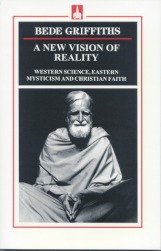
A New Vision of Reality (Western Science, Eastern Mysticism and
Christian Faith)
Bede Griffiths, Templegate Publishers (1990) pp. 294-96
Notes:
[1] Ephesians 6:12


