
Every religion tends to build up a wall of separation which divides it from the rest of humanity.
“Each Religion Springs from a Profound Experience of the Spirit” affirms that all authentic religions originate from direct encounters with the Divine. This page explores how the Adi Shakti’s revelation transcends doctrinal divisions, restoring the original essence of Self-realization and collective awakening through the Spirit. It invites seekers to rediscover the shared mystical foundation of all traditions through the living presence of the Divine Feminine.
"Jesus came to set Israel free from this bondage to the law and to open it to the new life of the Spirit. He saw himself as bringing to birth a new Israel, a new people of God, which would be the nucleus of a new humanity. There is no doubt that he saw his work in continuity with the history of Israel, as God's chosen people. When he spoke of his 'church' (Greek 'ekklesia'), he almost certainly used the Aramaic word 'qahal', which was used of the 'congregation of Israel'. He could even say, 'I was not sent but to the lost sheep of the house of Israel' (Matthew 15:24). He did not reject the law of Moses or the worship in the temple or the synagogue, but he broke down the barrier of exclusiveness which had imprisoned Israel and so opened the way to a new movement of the Spirit. There was a wall in the temple of Jerusalem which separated the holy place in which the Jews could worship from the 'court of the Gentiles', and no Gentile could pass beyond that wall. That wall was symbolic of the division of the world between Jews and Gentiles, the holy people of God from the sinful people outside. Jesus came to break down this wall of separation, as St. Paul says: "He broke down the wall of hostility...that he might create in himself one new man in place of the two, thus making peace" (Ephesians 2:14). This applies not only to the wall in Jerusalem and the separation of Jews and Gentiles, but to all those barriers, particularly of religion, which divide humanity.
Every religion tends to build up a wall of separation which divides it from the rest of humanity. In some respects this is inevitable, as a religion has to preserve its own unique values. But in doing so it has to learn to respect the values of other religions. The Christian churches have built up their own walls of separation and excluded the rest of humanity from the 'people of God', and even excluded one another from their own particular structure of religion. The Muslims also have their own wall of separation and even Hindus and Buddhists, though much more tolerant than the Semitic religions, yet have their own exclusive claims. Today we are seeking to find a way by which each religion can retain its own unique spiritual and moral values, while remaining open to the spiritual and moral values of other religions. This can only come about when we learn to recognise the relative value of the external forms of religion, their rites and dogmas. Each religion springs from a profound experience of the Spirit which is expressed in a sacred book or sacred teaching and develops its own distinctive rituals and doctrine, but behind all these outward forms there always remains the original inspiration of the Spirit. It is in the rediscovery of that original inspiration that we learn to find a living relationship with the other religions. It is by returning to the source of each tradition that we discover the basic unity which underlies all religion.
If we look for the basic inspiration which underlies Christianity, it is to be found in the life and teaching of Jesus of Nazareth. Jesus came to set Israel free from its bondage to the Law, that is, to its religious tradition, and to take it back to the source of all religion. It is clear that Jesus left behind no definite structure of religion. He chose twelve disciples, whom he called 'apostles', and by all accounts gave Peter a position of leadership among them. He also left behind a 'memorial' of his death and resurrection, the central 'mystery' of his life, but beyond that it is difficult to discern with certainty any other formal structure. What he communicated to his disciples was the gift of his Spirit, which was to lead them into all truth. The essential mystery of the Gospel is this gift of the Spirit, that is, the opening of humanity to the life of the Spirit, which had been lost at the Fall, and its return to the communion with God in which the meaning and purpose of human existence is to be found. It was this which was to lead his disciples to discern the significance of his life and teaching and to enable them to become the nucleus of a new humanity.”
Bede Griffiths, A New Vision of Reality (Western Science, Eastern Mysticism and Christian Faith)Templegate Publishers (1990) pp. 102-4
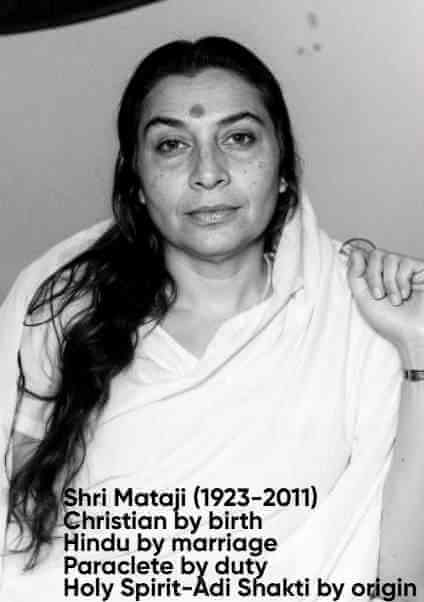
Breaking Down the Walls of Division: How Shri Mataji Nirmala Devi Unites Humanity Beyond Religious Boundaries
By Manus AI
Table of Contents
1. Introduction: The Paradox of Religious Division
The Benedictine monk and interfaith pioneer Bede Griffiths observed a fundamental paradox within the world's spiritual traditions. He wrote, "Every religion tends to build up a wall of separation which divides it from the rest of humanity" [1]. While religions often arise from a profound, universal experience of the Spirit, their external forms—their rites, dogmas, and institutions—frequently become sources of conflict and exclusion. As Griffiths further explains, "Each religion springs from a profound experience of the Spirit which is expressed in a sacred book or sacred teaching" [1]. The tragedy is that over time, followers become attached to the external expressions rather than the original spiritual experience itself. This paper will explore the validity of Griffiths' assertion by examining the mechanisms through which religions create these "walls of separation." It will then demonstrate how the teachings of Shri Mataji Nirmala Devi offer a radical and transformative solution, not by creating a new religion, but by unveiling the unifying, experiential truth that lies at the heart of all existing faiths.
2. The Walls of Separation: How Religions Create Division
Religions, in their quest to provide meaning and answer universal existential questions, paradoxically create particular, bounded identities. As scholar Pierre-Yves Brandt notes, the question "Who am I?" is central to all religious systems, but the answers are inherently exclusive [2]. In Judaism, identity is tied to being part of a chosen people; in Christianity, it is through divine filiation as a "Son of God"; in Islam, it is defined by submission (muslim) to Allah. These identity constructs, while providing a strong sense of belonging for the in-group, simultaneously create an out-group, establishing a clear "us vs. them" distinction.
This division is reinforced by what philosophers term religious exclusivism. In his analysis, Dirk-Martin Grube defines this as the alethic claim that the tenets of one's own religion are true, and any incompatible beliefs are false [3]. While holding truth claims is a natural function of language and belief, the problem arises from the how—the attitude of "epistemic overconfidence" with which these claims are held. This overconfidence transforms theological distinctions into social, cultural, and political walls, leading to historical conflicts, from the Crusades and the Wars of Religion to modern-day sectarian violence.
3. The Bridge to Unity: Shri Mataji's Universal Vision
Shri Mataji's approach, actualized through the practice of Sahaja Yoga, dismantles these walls not by attacking the structures of religion, but by providing a key to unlock the universal experience they all point towards. Her method is one of fulfillment, not replacement, based on the direct, tangible experience of spiritual awakening.
The core of her teaching is the awakening of the Kundalini, a dormant spiritual energy within every human being. This awakening, which she made a mass phenomenon after opening the universal Sahasrara (the crown chakra) on May 5, 1970, results in a state of "thoughtless awareness" and the perception of a cool breeze (Chaitanya or vibrations) on the central nervous system [4]. This experience is verifiable and transcends all religious and cultural boundaries. It is not a matter of belief, but of direct perception.
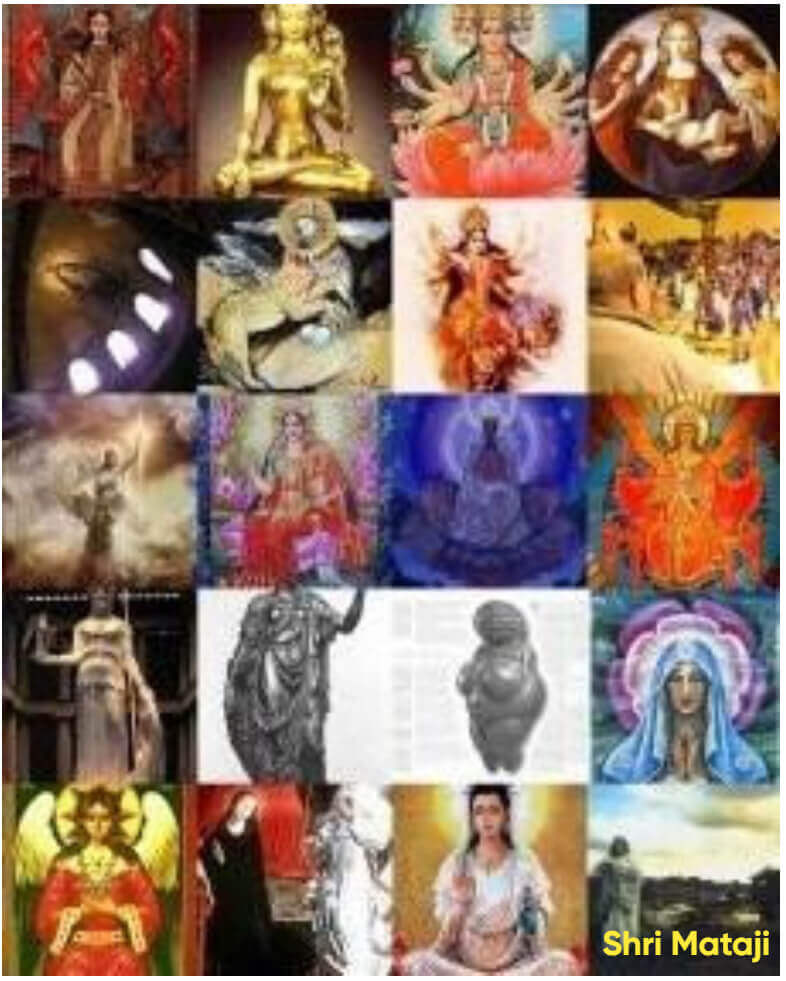
Shri Mataji identifies this universal spiritual energy with the essence of all religions. It is the Ruach Ha Kodesh of the Hebrew tradition, the Holy Spirit or Paraclete promised by Jesus, the Qi of Taoism, and the Prana of the yogic traditions [5]. By claiming to be the incarnation of this very Spirit—the Adi Shakti of the Hindu scriptures—she positions herself not as the founder of a new religion, but as the fulfiller of the prophecies of all religions [6]. She is the Comforter, the Counselor, who has come to reveal the complete truth that the prophets of the past could only allude to.
This verse, which Griffiths applies to Jesus's mission, finds a new and expanded meaning in Shri Mataji's work. She breaks down the walls between all religions by returning to the source, the original inspiration that gave them birth. Through the experience of Sahaja Yoga, a practitioner can feel the vibrations of any sacred scripture, holy place, or realized soul, providing irrefutable, experiential proof of their shared spiritual foundation. This creates a "collective consciousness" that dissolves the artificial boundaries of religious identity.
Being Born of the Spirit: The Universal Promise
The profound experience that Shri Mataji facilitates through Kundalini awakening is precisely what Jesus promised and demonstrated to Nicodemus two thousand years ago. In the Gospel of John, Jesus declares, "Verily, verily, I say unto thee, Except a man be born of water and of the Spirit, he cannot enter into the kingdom of God" (John 3:5) [7]. This was not a metaphorical statement but a description of an actual spiritual transformation—the awakening of the dormant Spirit within. Jesus emphasized that this rebirth was essential, stating, "That which is born of the flesh is flesh; and that which is born of the Spirit is spirit" (John 3:6) [7]. The mystery that confounded Nicodemus—"How can a man be born when he is old?"—is resolved in Shri Mataji's teaching: it is the awakening of the Kundalini, the primordial spiritual energy, that constitutes this second birth.
What makes Shri Mataji's work revolutionary is that she has made this experience—which was once rare and difficult to attain—accessible to the masses. The "profound experience of the Spirit" that gave birth to Christianity, Islam, Hinduism, Buddhism, and all other religions is no longer confined to the founders and a few mystics. Through Sahaja Yoga, ordinary seekers can have the same direct encounter with the Divine that Moses had at the burning bush, that Buddha had under the Bodhi tree, that Muhammad had in the cave of Hira. By facilitating this universal spiritual awakening, Shri Mataji does not ask anyone to abandon their religion; rather, she enables them to experience the living reality that their religion originally pointed toward. In this way, she fulfills the promise inherent in all sacred traditions: that humanity can be "born of the Spirit" and enter the Kingdom of God within.
4. Conclusion: A New Vision for Humanity
The tendency of religions to build walls of separation is a consequence of focusing on the external, institutional forms rather than the internal, spiritual experience. The dogmas, rituals, and exclusive truth claims, when held with epistemic overconfidence, have historically led to division and conflict. Shri Mataji Nirmala Devi offers a profound solution by providing a method for the masses to access the universal spiritual reality that underpins all faiths. By awakening the Kundalini and allowing each individual to experience the cool breeze of the Holy Spirit, she validates the core truths of every religion while transcending their man-made boundaries. Her work does not create another wall, but rather opens a gateway to a new, integrated consciousness—a "new humanity" united not by a single creed, but by a shared, verifiable experience of the Divine.
5. References
[1] Griffiths, Bede. A New Vision of Reality: Western Science, Eastern Mysticism and Christian Faith. Templegate Publishers, 1990, pp. 102-4.[2] Brandt, Pierre-Yves. "Religious and Spiritual Aspects in the Construction of Identity Modelized as a Constellation." Integrative Psychological and Behavioral Science, vol. 52, no. 1, 2018, pp. 138-157.
[3] Grube, Dirk-Martin. "What is wrong with exclusivism? Religious exclusivism between epistemic overconfidence and epistemic humility." International Journal for Philosophy of Religion, vol. 96, 2024, pp. 109-123.
[4] "Adi Shakti: The Divine Feminine." adishakti.org, Accessed 16 Nov. 2025.
[5] "Cool Breeze unites all religions and cultures." adishakti.org, Accessed 16 Nov. 2025.
[6] "Sahaja Yoga." Wikipedia, Wikimedia Foundation, Accessed 16 Nov. 2025.
[7] "John 3:1-21." The Holy Bible, King James Version.