
The Empty Font: Deconstructing Water Baptism and Reclaiming the Baptisms of Spirit and Fire
Many of us are familiar with baptism by water, but not so with the baptisms that Jesus Christ was to give, that of the Holy Spirit and of fire. We all look forward to the baptism or receipt of the Holy Spirit, but most of us know very little of the other baptism, that by fire. In order to understand what John the Baptist was referring to, a computer search of the Bible was done on baptism by water, fire and Spirit to aid in our understanding of Christ's mission.
Stepping back a few paces, what is the biblically correct form of baptism by water? Today there are churches that baptize by immersion. Other that believe the sprinkling of holy water is sufficient. Some baptize infants. Others say that only those who are capable of making a conscientious decision can or should be baptized. Is baptism a biblical requirement? Is a necessary ritual for Christ's followers to go through or for missionaries and evangelists to teach? What does the Bible say on this important topic?
Abstract: This paper argues that the contemporary Christian landscape is marked by a profound confusion regarding the true meaning and practice of baptism. A multiplicity of competing water baptism rituals exists, none of which seem to effect any real change, rendering them empty rituals far removed from the transformative baptisms of the Holy Spirit and fire that Jesus envisioned. By examining the Johannine proclamation, the disarray of modern church practices, the theological meaning of fire
and Spirit
baptisms, and early Gnostic critiques, this paper contends that the modern focus on the water ritual has obscured the more profound, transformative experiences of baptism that lie at the heart of the Christian message.
1. Introduction
At the banks of the river Jordan, a stark and urgent voice cried out, preparing the way for a new spiritual epoch. John the Baptist, a figure of radical asceticism, offered a baptism of water for repentance, a preparatory rite for the coming Messiah. Yet, his most potent message was not about his own ritual, but about the one who would follow. I baptize you with water for repentance,
he declared, But after me will come one who is more powerful than I, whose sandals I am not fit to carry. He will baptize you with the Holy Spirit and with fire
[1]. This proclamation, recorded in the Gospel of Matthew, introduces a theological triad of baptisms—water, Spirit, and fire—that has been a source of both profound spiritual pursuit and significant ecclesial confusion for two millennia. The current state of Christian baptism is one of disarray and ritualism, where varied and competing water-based ceremonies have overshadowed the true, transformative baptisms of the Holy Spirit and fire that Jesus Christ offers. This paper will deconstruct the modern church's preoccupation with the external water rite, arguing that it has become an empty font, far removed from the powerful, life-altering baptisms envisioned by Jesus. We will explore the Johannine distinction, survey the chaos of contemporary baptismal practices, delve into the theological depths of Spirit and fire baptisms, and examine ancient critiques that questioned the efficacy of water ritual from the earliest days of Christianity.
2. The Johannine Proclamation: Three Distinct Baptisms
John the Baptist's ministry was predicated on a clear distinction between his own baptism and the one his successor would bring. His water baptism was a potent symbol, an external act signifying an internal posture of repentance in anticipation of the Kingdom of God. However, he explicitly frames it as provisional and inferior. The baptisms of the Messiah would be of a different nature entirely: He will baptize you with the Holy Spirit and with fire
[2]. This phrasing immediately invites a critical question: are the baptisms of Spirit and fire
a single, unified experience, or two distinct events? Many scholars, such as the influential New Testament theologian James D.G. Dunn, have argued that the phrase should be read as a hendiadys, a figure of speech in which two words are joined by a conjunction to express a single, complex idea. In this view, there is one baptism in the Spirit-and-fire
[3]. This interpretation suggests a singular, powerful immersion into a divine reality that is both life-giving (Spirit) and purifying (fire). Others maintain that they are two separate aspects of the Messiah's work: a baptism of the Holy Spirit for believers and a baptism of fire for the unrepentant, pointing to the subsequent verse: His winnowing fork is in his hand, and he will clear his threshing floor, gathering his wheat into the barn and burning up the chaff with unquenchable fire
[1]. Regardless of the grammatical interpretation, John's proclamation establishes a fundamental hierarchy. The water ritual is the starting point, but the essential, transformative work belongs to Jesus and is accomplished through the divine elements of Spirit and fire.
3. The Troubled Waters of Ritual: A Survey of Ecclesial Disarray
The clarity of John's hierarchical distinction has been lost in a sea of denominational discord. The contemporary Christian church presents not a unified understanding of baptism but a fractured landscape of competing rituals. This disarray is a primary contributor to the perception of water baptism as an empty, ineffectual rite. The disagreements are not minor theological quibbles; they cut to the core of the ritual's meaning, mode, and subjects. As one analysis notes, these differences showcase varying interpretations of salvation, grace, and individual belief within the Christian community
[4]. The major points of contention can be summarized as follows:
| Point of Contention | Paedobaptist View (e.g., Catholic, Orthodox, Methodist) | Credobaptist View (e.g., Baptist, Pentecostal) |
|---|---|---|
| Timing of Baptism | Infant Baptism: Performed on infants as a means of removing original sin and incorporating them into the covenant community. | Believer's Baptism: Reserved for those who have reached an age of accountability and can make a personal profession of faith. |
| Mode of Baptism | Affusion (Pouring) or Aspersion (Sprinkling): Commonly practiced, especially for infants. The mode is secondary to the act itself. | Immersion: Considered the only biblically valid mode, symbolizing the death, burial, and resurrection of Christ. |
| Theology of Baptism | Sacrament: An outward sign instituted by Christ that actively conveys sanctifying grace. It is often seen as necessary for salvation. | Ordinance: A commandment of Christ to be obeyed as a public symbol of a prior conversion experience. It does not confer grace or salvation. |
This fundamental lack of consensus has led to a situation where the ritual itself is performed with vastly different intentions and expectations. For some, it is a life-saving sacrament; for others, a symbolic act of obedience. This profound disagreement undermines the ritual's power and contributes to the argument that, in practice, it often becomes a hollow tradition, devoid of the transformative power John the Baptist associated with the Messiah's baptisms.
4. The Baptism of Fire: Judgment, Purification, and the Crucifixion
The concept of a baptism by fire
is perhaps the most misunderstood element of John's prophecy. It carries a multivalent meaning, encompassing judgment, purification, and, most profoundly, the suffering of Christ himself. The immediate context in Matthew's Gospel points toward judgment, with the image of the winnowing fork separating wheat from chaff, the latter being consumed by unquenchable fire
[1]. This interpretation, favored by scholars like J.H. Thayer, sees the fire baptism as the terrible penalties of hell
for those who reject Christ [5].
However, fire in the biblical narrative is not solely an instrument of destruction; it is also a powerful agent of purification. The prophet Malachi foretold the coming of the Lord as a refiner's fire
that would purify the sons of Levi
[6]. This theme was central to the Wesleyan tradition, where John Fletcher and others equated the baptism of fire with the experience of entire sanctification, a second work of grace
that burns away the dross of sin from the believer's heart [7].
Ultimately, the most profound baptism of fire was the one endured by Jesus himself. In a moment of profound anguish, Jesus declared, I have a baptism to be baptized with, and how great is my distress until it is accomplished!
[8]. Here, Jesus is not speaking of water, but of the overwhelming ordeal of his passion and crucifixion. His death on the cross was the ultimate immersion into suffering, the fiery trial through which salvation for humanity would be secured. This baptism of suffering is the crucible in which the old self is destroyed, a necessary precursor to the new life offered in the Spirit.
5. The Baptism of the Holy Spirit: The Unifying In-dwelling
If the baptism of fire represents a death to sin and self, the baptism of the Holy Spirit represents the glorious new life that follows. This is not an external ritual but an internal, spiritual reality: the immersion of the believer into the living Body of Christ. The Apostle Paul provides the clearest definition of this experience in 1 Corinthians 12:13: For in one Spirit we were all baptized into one body—whether Jews or Greeks, slave or free—and we were all given the one Spirit to drink
[9]. This is the true, unifying baptism that transcends all social and ethnic divisions. It is the moment of spiritual regeneration, where the believer is made a part of Christ's mystical body on earth.
Paul's own ministry demonstrates the primacy of this spiritual baptism over the water ritual. In the same letter to the Corinthians, he expresses a striking ambivalence toward the physical act, stating, For Christ did not send me to baptize, but to preach the gospel
[10]. This is not a wholesale rejection of water baptism, which he himself administered on occasion, but a crucial clarification of priorities. The essential, saving work is the proclamation of the gospel and the subsequent spiritual immersion into Christ by the Holy Spirit. The water ritual is secondary, a sign that points to the greater, invisible reality. The overemphasis on the sign has, in many corners of the church, led to the neglect of the substance.
6. Ancient Doubts: The Gnostic and Pauline Critiques of Water Ritual
The contemporary critique of water baptism as an empty ritual is not a modern invention. From the earliest centuries of Christianity, there were voices that questioned its efficacy and pointed to a higher, more spiritual form of initiation. The Gnostic sects, particularly the Sethians, developed a sophisticated polemic against the water baptism practiced by the emerging orthodox church. They associated water with the flawed, created material world and viewed the ritual as a form of spiritual bondage.
As recorded in texts like the Paraphrase of Shem, the Gnostics saw the church's ritual as an imperfect baptism
promoted by a demonic power to trouble the world with a bondage of water
[11]. They argued that true salvation came not through a physical washing but through gnosis—the secret, eternal knowledge of the divine. For them, water baptism was a deception that could not take away sins. A stark warning in the Gnostic text Zostrianos encapsulates this view: do not baptize yourselves with death
[11]. While the Sethians had their own complex water rites, their critique highlights an ancient tension between external ritual and internal spiritual enlightenment. This skepticism is echoed, albeit in a different theological key, in the Apostle Paul's apparent downplaying of the rite in 1 Corinthians and what scholar Richard E. DeMaris calls the New Testament's ambiguous, even contradictory, stance toward the ritual of baptism
[12].
7. Conclusion
The Christian world remains deeply divided over the simple act of washing with water. The competing rituals of immersion, sprinkling, and pouring, performed on infants or believers, as sacrament or ordinance, have created a landscape of confusion that obscures the profound truth of John the Baptist's message. The modern church, in its focus on the font, has largely forgotten the more radical, transformative baptisms that Jesus came to give. True Christian baptism is a dual, life-altering experience. It is the baptism of fire—the purifying crucible of repentance, the dying to self, and an identification with the suffering of Christ. And it is the baptism of the Holy Spirit—the unifying immersion into the Body of Christ, the indwelling of God that makes all things new. These are not empty rituals but profound spiritual realities. It is time for the church to look beyond the troubled waters of its own devising and reclaim the powerful, world-changing baptisms of the Spirit and of fire.
References
- [1] Matthew 3:11-12 (NIV)
- [2] Luke 3:16 (NIV)
- [3] Dunn, J. D. G. (1972). Spirit-and-Fire Baptism. Novum Testamentum, 14(2), 81-92.
- [4] BibleN3rd. (2024, November 21). Understanding Baptism Across Christian Denominations.
- [5] Thayer, J. H. (1889). A Greek-English Lexicon of the New Testament.
- [6] Malachi 3:2-3 (NIV)
- [7] Wikipedia (n.d.). Baptism by fire.
- [8] Luke 12:50 (NIV)
- [9] 1 Corinthians 12:13 (NIV)
- [10] 1 Corinthians 1:17 (NIV)
- [11] Ferguson, E. (2009). Baptism in the Early Church: History, Theology, and Liturgy in the First Five Centuries. Eerdmans Publishing Co.
- [12] DeMaris, R. E. (2013). Backing Away from Baptism: Early Christian Ambivalence about Its Ritual. Journal of Ritual Studies, 27(1), 11-19.
Holy Baptism Of Fire And Water By Holy Spirit That Surpasses Heaven
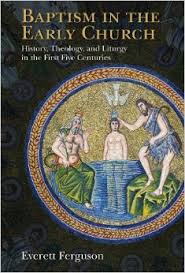
"The Gospel of the Egyptians (second or third century) says more about baptism in a section that may reflect a liturgical structure. It begins by reciting that the 'great Seth,' at the third of his appearances (identified as the flood, the conflagration, and the judgment of the rulers), for the purpose of saving the race that went astray, instituted 'baptism through a Logos-begotten body . . . in order that the saints may be begotten by the holy Spirit, . . . the holy baptism that surpasses the heaven.' Baptism is a transcendent reality instituted by the historical Jesus (Seth) that reflects an actual ritual. It effects regeneration by the Holy Spirit, gnosis (deliverance from the world), and reconciliation of the world with itself.”
“Sethian documents presuppose the descent of a savior figure in the form of Seth (or Christ) into the world comparable to the descent of the initiate into the water. Spiritual enlightenment brings an ecstatic vision and provides an ascent from the world of earthly water into the realm of light. Hence, these writings make frequent reference to baptism. Many of the references seem to be metaphorical, but that usage does not preclude a literal rite and indeed there seem to be many allusions to some sort of ritual activity involving water baptism.
The Apocalypse of Adam contains a polemic against those who say the Illuminator was born of a virgin and came to the water (baptism) of the created world which is defiled (V 78, 18-79, 18; 84, 19). The 'holy baptism' of 'living water' has been drawn into the will of the powers who rule the world (V 84, 5-20). The Illuminator's true seed, however, 'receive his name upon the water' (V 83, 4-6). Gnosis (the hidden eternal knowledge) is the holy baptism:
This is the hidden knowledge of Adam, which he gave to Seth, which is the holy baptism of those who know the eternal knowledge through those born of the word and the imperishable illuminators, who came from the holy seed. (V 85, 19-31).
The orthodox would have reversed this equation.
The polemic against Jesus' baptism and Christian baptism is explicit in the Paraphrase of Shem. 'The demon will also appear upon the river to baptize with an imperfect baptism, and to trouble the world with a bondage of water.' 'Many who wear erring flesh will go down to the harmful waters through the winds and the demons.' Water is 'frightful,' 'insignificant,' and a source of bondage, not of release.
O Shem, they are deceived by manifold demons, thinking that through baptism with the uncleanness of water, that which is dark, feeble, idle, and disturbing, he will take away the sins. And they do not know that from the water to the water there is bondage. . . . For I foretell it to those who have a heart. They will refrain from the impure baptism. And those who take heart from the light of the Spirit will not have dealings with the impure practice. . . . For if they mix with the evil ones, they become empty in the dark water. For where the water has been mentioned, there is Nature, and the oath, and the lie, and the loss. For only in the unbegotten Spirit, where the exalted Light rested, has the water not been mentioned, nor can it be mentioned.
Water was thus associated with the created order, with darkness and impurity, and cannot take away sins. To think otherwise is a demonic deception. Accordingly, near the close of Zostrianos, there is the warning, 'do not baptize yourselves with death.'
Sethians, however, had their own ritual practices, apparently including a water rite. There are traces of a ritual structure in the Trimorphic Protennoia. Reference is made to the 'water of life' with the further explication that the divine Christ descended for the sake of the spirit (or highest self) 'which has come to exist out of the water of life and out of the baptism [or bath] of the mysteries.' An invitation is given to those 'who have become worthy of the mystery' to enter the perfect light; they will be glorified, enthroned, given robes, and 'the baptists [baptizers] will baptize you.' The same items are mentioned but in a different order three pages later. After fragmentary lines that mention water and stripping from a person the thoughts associated with chaos and darkness, the text continues with the person clothed in shining light and delivered to those who bestow a robe. 'I delivered that person unto the baptists . . . to be baptized; and they washed that person in the well-spring of the water of life.' The person is next delivered to the enthroners and the glorifiers and then taken into the luminous place, and mention is made of the 'five seals.' The person who has received the five seals represents those who have 'taken off the robes of ignorance and put on shining light.' The theme of enlightenment is the point of the passage; the theme is similar to that in Justin Martyr and other orthodox writers, and like them it is connected with imparting doctrine (although with a different content), but with a stronger experiential significance. The steps of investiture, baptism, enthronement, glorification, and rapture into the realm of light may be the five seals (but see on the Gospel of the Egyptians below). This sequence is close to that in Mandaean baptism. The five seals are identified with gnosis: they destroy ignorance and deliver from the power of the world rulers. This text also provides the basis for interpreting the five seals as sacred names of five higher beings.
The Gospel of the Egyptians (second or third century) says more about baptism in a section that may reflect a liturgical structure. It begins by reciting that the 'great Seth,' at the third of his appearances (identified as the flood, the conflagration, and the judgment of the rulers), for the purpose of saving the race that went astray, instituted 'baptism through a Logos-begotten body . . . in order that the saints may be begotten by the holy Spirit, . . . the holy baptism that surpasses the heaven.' Baptism is a transcendent reality instituted by the historical Jesus (Seth) that reflects an actual ritual. It effects regeneration by the Holy Spirit, gnosis (deliverance from the world), and reconciliation of the world with itself.”
Ferguson, Everett (2009-03-29). Baptism in the Early Church: History, Theology, and Liturgy in the First Five Centuries (Kindle Locations 5981-6028). Eerdmans Publishing Co - A. Kindle Edition.
BAPTISM BY WATER, FIRE & SPIRIT
INTRODUCTION
"I baptize you with water for repentance. But after me will come one who is more powerful than I, whose sandals I am not fit to carry. He will baptize you with the Holy Spirit and with fire. His winnowing fork is in his hand, and he will clear his threshing floor, gathering his wheat into the barn and burning up the chaff with unquenchable fire.” (Matt. 3:11-13) These strong unmincing words of John the Baptist spoken at the river Jordan, stirred the hearts of his listeners. Many repented and were baptized, anticipating the soon arrival of the Messiah.
Many of us are familiar with baptism by water, but not so with the baptisms that Jesus Christ was to give, that of the Holy Spirit and of fire. We all look forward to the baptism or receipt of the Holy Spirit, but most of us know very little of the other baptism, that by fire. In order to understand what John the Baptist was referring to, a computer search of the Bible was done on baptism by water, fire and Spirit to aid in our understanding of Christ's mission.
Stepping back a few paces, what is the biblically correct form of baptism by water? Today there are churches that baptize by immersion. Other that believe the sprinkling of holy water is sufficient. Some baptize infants. Others say that only those who are capable of making a conscientious decision can or should be baptized. Is baptism a biblical requirement? Is a necessary ritual for Christ's followers to go through or for missionaries and evangelists to teach? What does the Bible say on this important topic?”
https://www.bibleplus.org/
(Retrieved April 10, 2015)
💬 Interactive Chat
Access an intelligent analysis environment where you can explore texts, ask questions, and discover connections between ideas.
Open chat