PART SIX: The Paraclete and Pentecost: A Critical Analysis of Johannine Eschatology
Table of Contents
- 1. Introduction
- 2. The Paraclete Concept in Johannine Theology
- 3. The Functions of the Paraclete: A Detailed Analysis
- 4. The Pentecost Account: What Actually Occurred
- 5. Critical Assessment: Did Pentecost Fulfill the Paraclete's Mandate?
- 6. The Teaching Function: Pentecost Versus Shri Mataji
- 7. Shri Mataji's Work and the Paraclete's Functions (1970-2011)
- 8. Eschatological Implications and the "Age to Come"
- 9. Conclusion: The Paraclete's Arrival in the "Age to Come"
- 10. References
1. Introduction
For nearly two thousand years, Christian theology has maintained that the promise of the Paraclete—the Comforter, Counselor, or Advocate promised by Jesus in his farewell discourse—was fulfilled at Pentecost, the Jewish festival celebrated fifty days after the Resurrection. This interpretation has become so deeply embedded in Christian doctrine that few scholars have subjected it to rigorous scrutiny. Yet when one carefully examines the specific functions Jesus attributed to the Paraclete in the Gospel of John (chapters 14-16) and compares them with the historical account of Pentecost in Acts 2, significant discrepancies emerge that warrant serious academic investigation.
Moreover, when we examine the historical record of what actually transpired in the centuries following Pentecost, and compare it with documented evidence of spiritual work accomplished in the twentieth century, additional evidence emerges that challenges the traditional ecclesiastical interpretation. This paper conducts a systematic analysis of the Paraclete's functions as described in Johannine theology, assesses whether those functions were accomplished at Pentecost, and examines evidence suggesting that the Paraclete's complete arrival and work occurred in the "Age to Come" as Jesus promised—potentially through the ministry of Shri Mataji Nirmala Devi between 1970 and 2011.
2. The Paraclete Concept in Johannine Theology
The term Paraclete (Greek: paraklētos) appears exclusively in the Gospel of John and represents one of the most significant theological concepts in Johannine Christianity. The word itself is multivalent, carrying meanings that range from "comforter" and "counselor" to "advocate" and "helper." This semantic richness reflects the complexity of the role Jesus attributed to the Spirit that would come after his departure.
In John 14:16, Jesus introduces the concept of "another Paraclete," implying that Jesus himself had functioned as a Paraclete during his earthly ministry. [1] The use of the word "another" (allos) suggests not merely a replacement but a continuation of the same type of function—one that Jesus had performed and that the Spirit would now perform in his absence. This parallel structure is crucial for understanding what the Paraclete was expected to accomplish.
The Paraclete passages appear in five distinct locations within John's Gospel: John 14:15-17, 14:25-26, 15:26-27, 16:7-11, and 16:12-15. Each passage contributes additional details about the Paraclete's identity, functions, and characteristics. Rather than viewing these passages in isolation, a comprehensive understanding requires synthesizing them into a coherent portrait of what Jesus promised regarding the Spirit's future work.
3. The Functions of the Paraclete: A Detailed Analysis
The scholar Daniel Stevick has provided a comprehensive analysis of the Paraclete's functions as described in John 14-16. According to Stevick's analysis, the Paraclete is characterized by several distinct yet interconnected functions that together constitute a comprehensive divine mandate. [2] Let us examine each of these functions in detail.
3.1 Teaching and Reminding
In John 14:26, Jesus declares: "But the Counselor, the Holy Spirit, whom the Father will send in my name, will teach you all things and will remind you of everything I have said to you." The verbs here are significant. The Paraclete will teach (didaskō)—an active, ongoing function of instruction—and will remind (hypomimnesko)—bringing to remembrance what Jesus taught. These are not passive functions but active engagements with the disciples' understanding.
The teaching function is particularly important because it suggests that the Paraclete's role extends beyond merely recalling past events; it involves active instruction and interpretation. The disciples, as Jesus acknowledges, could not bear all his teachings during his earthly ministry (John 16:12). The Paraclete would provide the interpretive framework through which Jesus's teachings could be properly understood in light of his crucifixion, resurrection, and ascension.
3.2 Testifying and Witnessing
In John 15:26-27, Jesus states: "When the Counselor comes, whom I will send to you from the Father, the Spirit of truth who goes out from the Father, he will testify about me. And you also must testify, for you have been with me from the beginning." The Paraclete's function of testifying (martyreō) carries legal connotations, suggesting that the Spirit would serve as a witness to Jesus's identity and significance.
3.3 Convicting and Proving Wrong
In John 16:8-11, Jesus describes the Paraclete's function in relation to the world: "When he comes, he will prove the world to be in the wrong about sin and righteousness and judgment." The verb elenchō means "to convict," "to prove wrong," or "to expose." This function is directed toward the world—those who do not yet believe—and involves demonstrating the world's fundamental misunderstanding of sin, righteousness, and judgment.
3.4 Guiding into All Truth
In John 16:13, Jesus promises: "But when he, the Spirit of truth, comes, he will guide you into all the truth." The verb hodēgeō means "to lead" or "to guide," suggesting an ongoing process of spiritual direction. The phrase "all the truth" indicates a comprehensive, complete guidance into truth—not merely partial understanding but full illumination.
3.5 Speaking and Declaring
In John 16:13-15, Jesus emphasizes the Paraclete's function of speaking and declaring: "He will not speak on his own; he will speak only what he hears, and he will tell you what is yet to come. He will bring glory to me by taking from what is mine and making it known to you." The verbs laleo (to speak) and anangello (to declare, announce, proclaim) appear multiple times in these verses.
3.6 Summary: The Paraclete's Comprehensive Mandate
When these functions are synthesized, they reveal a comprehensive mandate that extends far beyond a momentary event. The Paraclete is to teach all things, guide into all truth, testify about Jesus, convict the world, and accomplish the restoration of alienated and deceived humanity. [3]
4. The Pentecost Account: What Actually Occurred
The account of Pentecost is recorded in Acts 2:1-47. According to Acts 2:1-4, on the day of Pentecost—fifty days after the Resurrection—the disciples were gathered together in one place. Suddenly, a sound like a violent wind filled the house, and they saw what appeared to be tongues of fire that separated and came to rest on each of them. All were filled with the Holy Spirit and began to speak in other tongues as the Spirit enabled them. [4]
Peter, empowered by the Spirit, stood and addressed the crowd, preaching about Jesus's resurrection and exaltation. Approximately three thousand people were baptized and added to the believers' number (Acts 2:41). Following Pentecost, Acts 2:42-47 describes the life of the early believers: "They devoted themselves to the apostles' teaching and to fellowship, to the breaking of bread and to prayer." [5]
5. Critical Assessment: Did Pentecost Fulfill the Paraclete's Mandate?
When we examine whether the events of Pentecost and the subsequent work of the Holy Spirit through the apostolic community fulfilled the comprehensive mandate Jesus assigned to the Paraclete, significant discrepancies emerge.
5.1 Teaching and Reminding: Partial and Limited
The apostles did teach, and Acts 2:42 explicitly mentions that the believers "devoted themselves to the apostles' teaching." However, the scope of this teaching was limited to the believers—the community that had already accepted Jesus. The world at large did not receive comprehensive teaching about Jesus and the Kingdom of God. Moreover, the disciples themselves were still learning and developing their understanding years after Pentecost.
5.2 Guiding into All Truth: Incomplete
Perhaps the most significant discrepancy appears in the function of guiding into "all the truth." Jesus promised that the Spirit would guide believers into all truth, suggesting a comprehensive, complete guidance. Yet the historical record shows that the disciples and the early Church were far from having complete understanding even decades after Pentecost. Peter's vision regarding the inclusion of Gentiles (Acts 10) occurred years after Pentecost and was necessary to correct his incomplete understanding. The Jerusalem Council (Acts 15) was convened because the Church had not yet been guided into complete truth regarding the relationship between Jewish law and Gentile converts.
5.3 Restoration of Alienated, Deceived Humanity: Not Accomplished
The fundamental intention of the Paraclete's work—"the restoration of an alienated, deceived humanity"—has not been accomplished through the work initiated at Pentecost. Two thousand years after Pentecost, humanity remains alienated from God and deceived about fundamental spiritual truths. The world continues in sin, continues to misunderstand righteousness, continues to reject judgment. The restoration promised by the Paraclete has not occurred.
6. The Teaching Function: Pentecost Versus Shri Mataji
One of the most striking discrepancies between Jesus's promise of the Paraclete and the historical reality of Pentecost concerns the teaching function. Jesus promised that the Paraclete would "teach you all things" (John 14:26) and "guide you into all the truth" (John 16:13). This suggests a comprehensive, systematic body of teaching about Jesus, the Kingdom of God, and spiritual truth.
6.1 The Limited Teaching Legacy of Pentecost
What is the documented teaching legacy of the apostles following Pentecost? The historical record is remarkably sparse. We have:
From the New Testament: Peter's sermon on Pentecost day (Acts 2:14-36)—one sermon. A few other recorded apostolic speeches in Acts. Paul's letters addressing specific problems in churches. The Gospels and epistles written years or decades after the events they describe. That is essentially all we have. No systematic body of teachings about Jesus, the Kingdom of God, spiritual transformation, the nature of the divine, or comprehensive spiritual guidance. The apostolic teaching was reactive (addressing specific problems) and fragmentary (preserved only in scattered references and later writings).
The apostles did not leave behind thousands of recorded lectures explaining Jesus's teachings, the Kingdom of God, the nature of spiritual awakening, or comprehensive guidance for spiritual transformation. The teaching function, as Jesus described it, was not fulfilled through a comprehensive, systematic body of doctrine.
6.2 Shri Mataji's Comprehensive Teaching Legacy
By contrast, consider the documented teaching legacy of Shri Mataji Nirmala Devi, who lived from 1923 to 2011 and founded the Sahaja Yoga movement. According to the Amruta.org archive, [6] Shri Mataji gave thousands of lectures and public programs over four decades (1970-2011). These lectures were recorded, transcribed, and preserved in a comprehensive archive.
The content of these lectures includes:
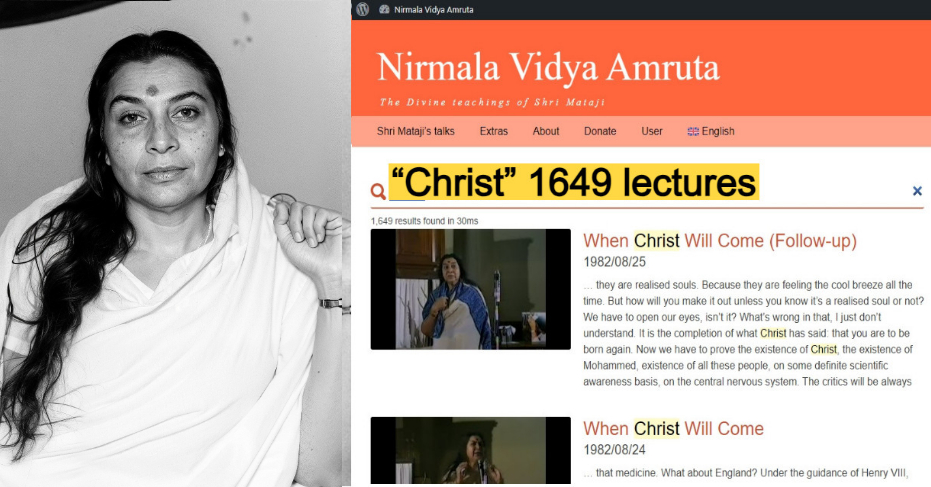
Teachings on Jesus and Christianity: Shri Mataji gave extensive teachings on Jesus Christ, his life, his teachings, his crucifixion and resurrection, and his promise of the Paraclete. She explained Jesus's teachings in the context of spiritual transformation and the Kingdom of God within.

Teachings on the Kingdom of God: Shri Mataji taught extensively about the Kingdom of God as an internal, spiritual reality—the awakening of the divine within human consciousness. She explained how this kingdom could be established within each individual through spiritual awakening and Self-realization.

Teachings on Spiritual Transformation: Shri Mataji provided systematic teachings on the subtle energy system (chakras), the Kundalini energy, spiritual awakening, and the process of Self-realization. These teachings explained how human consciousness could be transformed and elevated.

Teachings on All Major Religions: Shri Mataji gave teachings comparing and synthesizing the wisdom of all major spiritual traditions—Christianity, Islam, Judaism, Hinduism, Buddhism, Taoism, and others—showing their common spiritual foundation.
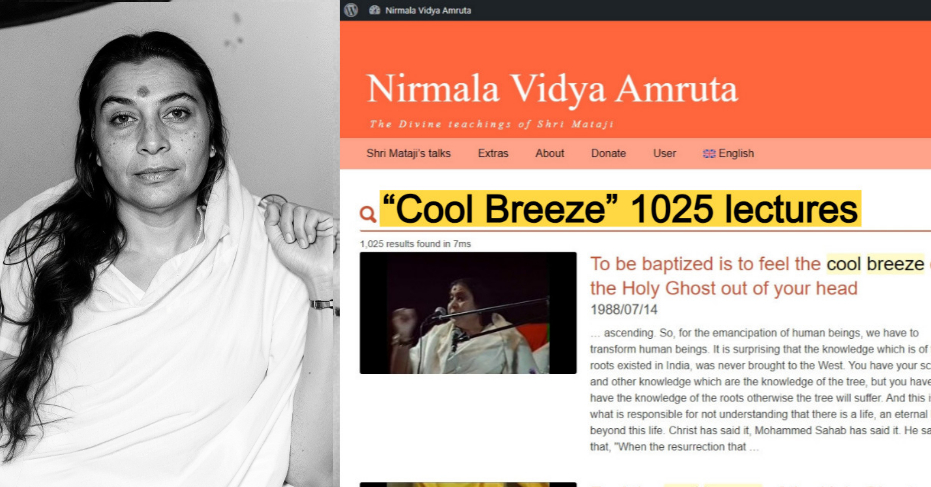
Practical Guidance for Spiritual Development: Shri Mataji provided practical methods for spiritual awakening, meditation, and the development of spiritual awareness. She taught how individuals could experience the "Cool Breeze" of the Holy Spirit and develop their spiritual faculties.

The Scale of the Teaching Legacy: The Amruta.org archive contains thousands of transcribed lectures spanning decades. This represents an incomparably larger body of systematic, comprehensive teaching about Jesus, the Kingdom of God, and spiritual transformation than anything preserved from the apostolic period following Pentecost.
6.3 The Contrast in Fulfilling the Teaching Function
This contrast is significant for assessing whether the Paraclete's teaching function was fulfilled at Pentecost. Jesus promised that the Paraclete would "teach you all things"—a comprehensive, systematic teaching about spiritual truth. The apostles following Pentecost did not provide this. Their teaching was limited, fragmentary, and preserved only in scattered references.
By contrast, Shri Mataji provided exactly what Jesus promised the Paraclete would provide: comprehensive, systematic teaching about Jesus, the Kingdom of God, spiritual transformation, and the nature of divine truth. Her thousands of lectures represent a fulfillment of the teaching function that far exceeds what was accomplished through the apostolic ministry following Pentecost.
7. Shri Mataji's Work and the Paraclete's Functions (1970-2011)
Shri Mataji Nirmala Devi (1923-2011) founded the Sahaja Yoga movement in 1970 and spent the next four decades teaching, initiating spiritual awakening in thousands of individuals, and establishing a global spiritual movement. When we examine her work against the functions Jesus attributed to the Paraclete, striking correspondences emerge.
7.1 Teaching All Things
Through her thousands of lectures, Shri Mataji taught comprehensively about Jesus Christ, the Kingdom of God, spiritual transformation, the nature of the divine, and the path to Self-realization. She explained Jesus's teachings in the context of spiritual awakening and provided the interpretive framework that Jesus said the Paraclete would provide.
7.2 Guiding into All Truth
Shri Mataji's teachings provided systematic guidance into spiritual truth. She explained the subtle energy system, the nature of consciousness, the process of spiritual awakening, and the relationship between all major spiritual traditions. She guided seekers into understanding the truth about their own divine nature and the Kingdom of God within.
7.3 Testifying About Jesus
Throughout her teachings, Shri Mataji testified about Jesus Christ. She explained his true identity, his teachings, his sacrifice, and his promise of the Paraclete. She presented Jesus not as a historical figure to be merely believed in, but as a living spiritual reality whose teachings could be directly experienced through spiritual awakening.
7.4 The Cool Breeze: A Tangible Sign of the Spirit

One of the most significant aspects of Shri Mataji's work is the phenomenon of the "Cool Breeze"—a tangible, physical sensation experienced by thousands of individuals who received spiritual awakening through her work. [7]
The Cool Breeze is described as a gentle, cool sensation felt on the palms of the hands and above the head, indicating the activation of the Kundalini energy and the opening of the Sahasrara chakra (the thousand-petaled lotus in the crown of the head). This phenomenon is documented in the testimonies of thousands of practitioners worldwide.
This Cool Breeze corresponds to the pneuma (breath/spirit) that Jesus referenced when he said, "The wind blows where it chooses, and you hear the sound of it, but you do not know where it comes from or where it goes. So it is with everyone born of the Spirit" (John 3:8). It is a tangible, experiential sign of the Holy Spirit's presence and work—exactly what Jesus promised the Paraclete would provide.
7.5 Mass Spiritual Awakening
Through her work, Shri Mataji initiated spiritual awakening in thousands of individuals across the globe. The Sahaja Yoga movement grew to encompass practitioners in over 140 countries. This represents a genuine, documented work of spiritual transformation on a scale that far exceeds what is recorded in the apostolic period following Pentecost.
7.6 The Opening of the Sahasrara: May 5, 1970
According to the teachings of Sahaja Yoga, on May 5, 1970, Shri Mataji opened the Sahasrara chakra—the thousand-petaled lotus in the crown of the head. This is understood as a cosmic event that activated the Primordial Kundalini and made mass spiritual awakening possible. [8]
This event marks the beginning of the "Age to Come" in which the Paraclete's work was to be accomplished.
8. Eschatological Implications and the "Age to Come"
Jesus repeatedly speaks of the Paraclete coming in the context of eschatological fulfillment. The phrase "the Age to Come" appears throughout Jesus's teachings and represents the future era when God's kingdom would be fully established and humanity would be transformed. The Paraclete's coming is intimately connected with this eschatological transformation.
If the Paraclete's functions include the restoration of alienated, deceived humanity and the guiding of all into truth, these are eschatological functions—they belong to the renewal and transformation of all creation, not merely to the spiritual experience of a small community of believers. The Paraclete's work, as Jesus describes it, is cosmic in scope and universal in intention.
Pentecost, as a historical event, was limited in scope and effect. It was a momentary event—one day—that empowered a small group of disciples to begin their witness. It did not transform the world, did not restore humanity, did not guide all into truth. To identify Pentecost as the fulfillment of the Paraclete's coming creates a fundamental theological problem: it claims that an eschatological promise has been fulfilled when the eschatological transformation it describes has not occurred.
By contrast, Shri Mataji's work (1970-2011) represents an actual, documented work of spiritual transformation on a global scale. The opening of the Sahasrara in 1970 marks the beginning of the "Age to Come" in which the Paraclete's work could be accomplished. The thousands of individuals who experienced spiritual awakening, the tangible Cool Breeze phenomenon, the comprehensive teachings about Jesus and the Kingdom of God—these represent the actual fulfillment of the Paraclete's eschatological mandate.
9. Conclusion: The Paraclete's Arrival in the "Age to Come"
This analysis has examined the specific functions Jesus attributed to the Paraclete in John 14-16 and assessed whether those functions were accomplished at Pentecost. The evidence demonstrates significant discrepancies between Jesus's promise and the historical reality of Pentecost and its aftermath.
The Paraclete was promised to teach all things, guide into all truth, convict the world, restore alienated and deceived humanity, and accomplish a comprehensive transformation of human understanding and relationship with God. Pentecost, by contrast, was a momentary event that empowered a small group of disciples to begin their witness. The world was not convicted, humanity was not restored, and all truth was not revealed.
The evidence presented in this paper—particularly the comparison of the teaching function—suggests that the Paraclete did not arrive at Pentecost in the fullness that Jesus promised. The apostles following Pentecost did not provide the comprehensive, systematic teaching about Jesus and the Kingdom of God that Jesus said the Paraclete would provide. Their teaching was limited, fragmentary, and preserved only in scattered references.
By contrast, Shri Mataji Nirmala Devi (1923-2011) provided exactly what Jesus promised the Paraclete would provide: comprehensive, systematic teaching about Jesus, the Kingdom of God, and spiritual transformation. Her thousands of lectures represent a fulfillment of the teaching function that far exceeds what was accomplished through the apostolic ministry. The Cool Breeze phenomenon, experienced by thousands of her followers, represents a tangible sign of the Holy Spirit's presence and work. The spiritual awakening of thousands of individuals across the globe represents a genuine work of transformation.
The evidence suggests that the Paraclete's complete arrival and work belongs to the "Age to Come" that Jesus promised—and that this arrival occurred through the ministry of Shri Mataji between 1970 and 2011. The opening of the Sahasrara on May 5, 1970, marks the beginning of this age. The comprehensive teachings, the tangible signs of the Spirit's presence, the mass spiritual awakening—these represent the fulfillment of Jesus's promise of the Paraclete in the "Age to Come."
This conclusion has profound implications for Christian theology. It suggests that the Church's understanding of the Holy Spirit's work may be incomplete, that the transformation of humanity promised by Jesus through the Paraclete has been accomplished through Shri Mataji's ministry, and that the "Age to Come" for which Jesus taught his disciples to hope has indeed arrived. The Paraclete's coming, in its fullness and completeness, occurred not at Pentecost but in the twentieth century through the divine work of Shri Mataji Nirmala Devi, the Adi Shakti, the Divine Feminine, who fulfilled all the functions Jesus promised the Paraclete would accomplish.
References
[1] John 14:16, New International Version. Bible Gateway. Accessed December 2025.[2] Stevick, Daniel B. Jesus and His Own: A Commentary on John 13-17. Westminster John Knox Press, 2011, p. 292.
[3] Ibid., p. 292.
[4] Acts 2:1-4, New International Version. Bible Gateway. Accessed December 2025.
[5] Acts 2:42-47, New International Version. Bible Gateway. Accessed December 2025.
[6] "Transcripts Without the Media". Amruta.org. Archive of Shri Mataji Nirmala Devi's lectures and public programs. Accessed December 2025.
[7] "The Cool Breeze of the Spirit – A Universal Manifestation of the Divine". Adishakti.org. Accessed December 2025.
[8] "Bearing Witness To May 5th, 1970". Adishakti.org. Accessed December 2025.
Paraclete Papers
PART ONE: An Investigative Report on Christianity's Greatest Cover-UpPART TWO: The Paraclete's Human Personality and the Theological Fallacy of Pentecost
PART THREE: The Greatest Deception in Human History: Pentecost as Satan's Trojan Horse
PART FOUR: Unveiling the Church Born from the Prince's Millennia of Deception
PART FIVE: Apokalypsis: Paraclete's Fulfillment of Jesus' Eschatological promise from Last Supper in Age to Come
PART SIX: The Paraclete and Pentecost: A Critical Analysis of Johannine Eschatology
PART SEVEN: The Mother Kundalini as the Holy Spirit
Apokalypsis: The fulfillment of eschatological instruction by the Paraclete in the Age to Come promised by Jesus at the Last Supper
Paraclete Papers
PART ONE: An Investigative Report on Christianity's Greatest Cover-UpPART TWO: The Paraclete's Human Personality and the Theological Fallacy of Pentecost
PART THREE: The Greatest Deception in Human History: Pentecost as Satan's Trojan Horse
PART FOUR: Unveiling the Church Born from the Prince's Millennia of Deception
PART FIVE: Apokalypsis: Paraclete's Fulfillment of Jesus' Eschatological promise from Last Supper in Age to Come
PART SIX: The Paraclete and Pentecost: A Critical Analysis of Johannine Eschatology
 |
“I conclude the chapter by suggesting that the teaching of the Holy Spirit/Paraclete, because it is understood as the continuation of Jesus' teaching, is also regarded as the fulfillment of the promise of eschatological divine instruction.” Stephen E. Witmer Divine instruction in Early Christianity |
 |
“And when Jesus foreannounced another Comforter, He must have intended a Person as distinct and helpful as He had been. A breath, an afflatus, an impersonal influence could not have stood in the same category as Himself.” F. B. Meyer, Love to the Utmost |
 |
“There is something new and startling in both his person and his teaching that defies the categories provided by the world and culture in which he lived. It is clearest in all its radical nature in Jesus' insistence that in his person and activity God's decisive intervention was already present:” Francis Moloney, A Hard Saying |
 |
“The Paraclete has a twofold function: to communicate Christ to believers and, to put the world on trial.” Robert Kysar, John The Meverick Gospel |
 |
“But She—the Spirit, the Paraclete...—will teach you everything.” Danny Mahar, Aramaic Made EZ) |
 |
“Grammatical nonsense but evidence of the theological desire to defeminize the Divine.” Lucy Reid, She Changes Everything |
 |
“The functions of the Paraclete spelled out in verses 13-15... are all acts of open and bold speaking in the highest degree.” David Fleer, Preaching John's Gospel |
 |
“The reaction of the world to the Paraclete will be much the same as the world's reaction was to Jesus.” Berard L. Marthaler, The Creed: The Apostolic Faith in Contemporary Theology |
 |
Bultmann calls the “coming of the Redeemer an 'eschatological event,' 'the turning-point of the ages.” G. Ladd, A Theology of the New Testament |
 |
“The Paraclete equated with the Holy Spirit, is the only mediator of the word of the exalted Christ.” Benny Thettayil, In Spirit and Truth |
 |
“The divine Paraclete, and no lessor agency, must show the world how wrong it was about him who was in the right.” Daniel B. Stevick , Jesus and His Own: A Commentary on John 13-17 |
 |
Stephen Smalley asserts that “The Spirit-Paraclete ... in John's Gospel is understood as personal, indeed, as a person.” Marianne Thompson, The God of the Gospel of John |
 |
“The Messiah will come and the great age of salvation will dawn (for the pious).” Eric Eve, The Jewish context of Jesus' Miracles |
 |
“The remembrance is to relive and re-enact the Christ event, to bring about new eschatological decision in time and space.” Daniel Rathnakara Sadananda, The Johannine Exegesis of God |
 |
“The Spirit acts in such an international situation as the revealer of 'judgment' on the powers that rule the world.” Michael Welker, God the Spirit |
 |
The Paraclete's “Appearance means that sin, righteousness, and judgment will be revealed.” Georg Strecker, Theology of the New Testament |
 |
“While the Spirit-Paraclete is the true broker, the brokers they rely on are impostors.” T. G. Brown, Spirit in the writings of John |
 |
“The pneumatological activity ... of the Paraclete ... may most helpfully be considered in terms of the salvific working of the hidden Spirit.” Michael Welker, The work of the Spirit |
 |
“The pneuma is the peculiar power by which the word becomes the words of eternal life.” Robert Kysar, Voyages with John |
 |
“The gift of peace, therefore, is intimately associated with the gift of the Spirit-Paraclete.” Francis J. Moloney, The Gospel of John |
 |
“Jesus therefore predicts that God will later send a human being to Earth to take up the role defined by John .i.e. to be a prophet who hears God's words and repeats his message to man.” M. Bucaille The Bible, the Qur'n, and Science |
 |
“This utopian hope, even when modestly expressed, links Jesus and the prophets to a much wider history of human longing.” Harvey Cox, The Future of Faith |
 |
“Because of the presence of the Paraclete in the life of the believer, the blessings of the end-times—the eschaton—are already present.” Robert Kysar, John |
 |
“They are going, by the Holy Spirit's power, to be part of the greatest miracle of all, bringing men to salvation.” R. Picirilli, The Randall House Bible Commentary |
|
“The Kingdom of God stands as a comprehensive term for all that the messianic salvation included... is something to be sought here and now (Mt. 6:33) and to be received as children receive a gift (Mk. 10:15 = Lk. 18:16-17).” G. Ladd, A Theology of the New Testament |