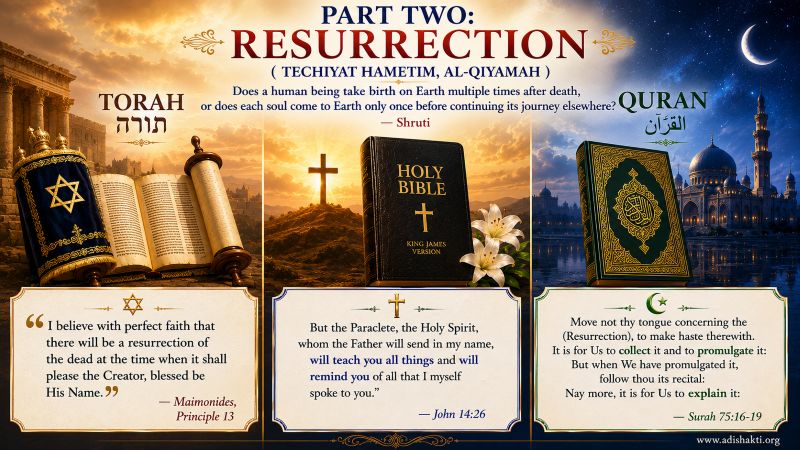

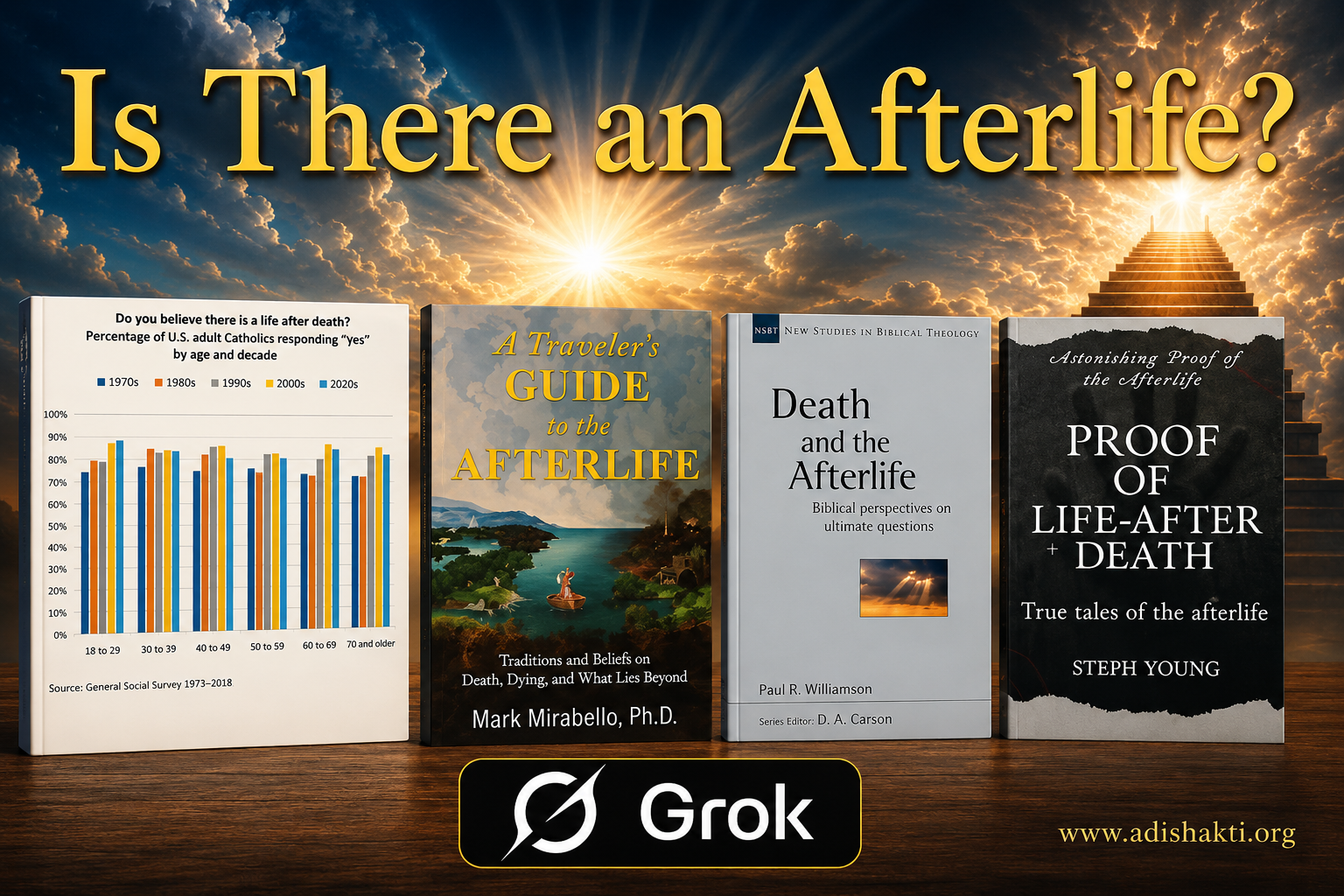
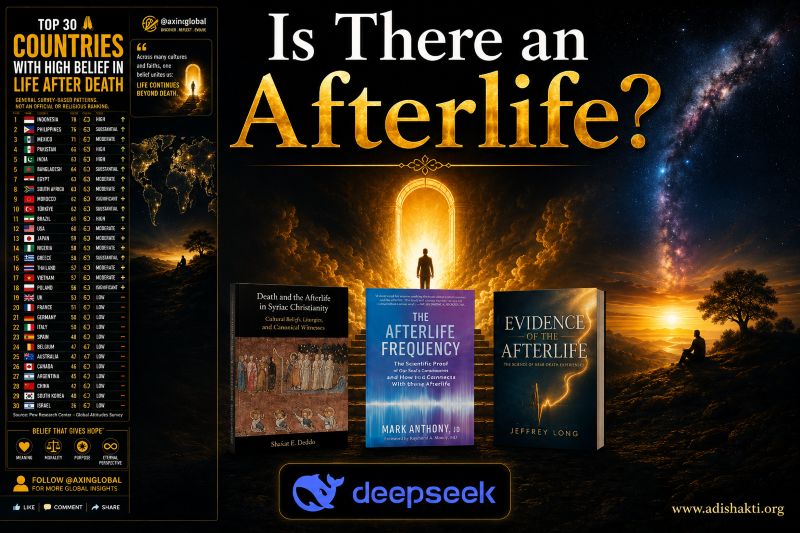
PART TWO: RESURRECTION, TECHIYAT-HAMETIM, AL-QIYAMAH
PART TWO: Awakening to the Resurrection (Al-Qiyāmah)
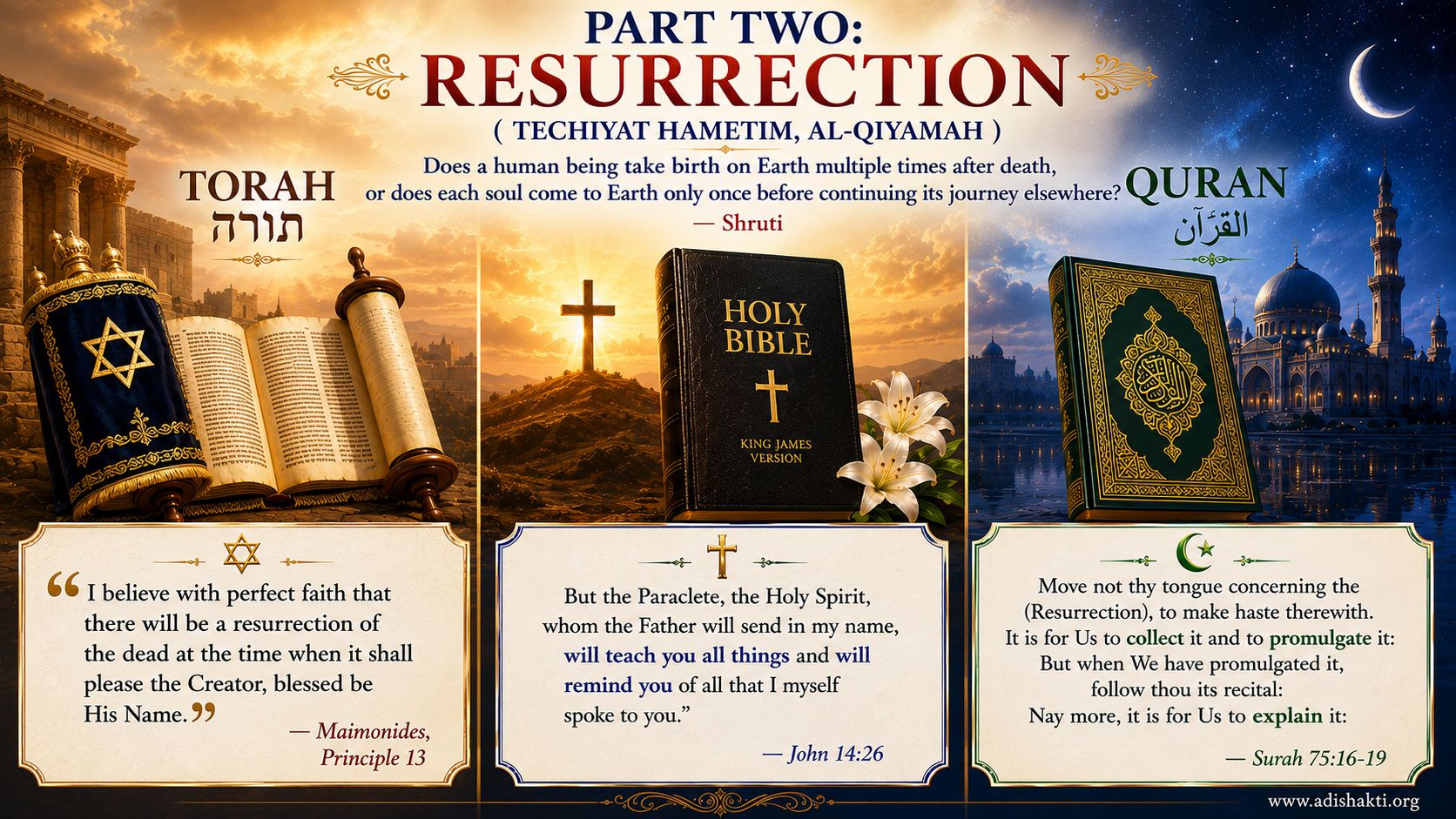
The Question That Guides This Inquiry:
Does the Soul Return Repeatedly to Earth or Does Each Person Live Once Before the Resurrection?
This comprehensive scholarly inquiry investigates the Abrahamic understanding of resurrection, addressing whether the soul returns to Earth repeatedly or lives once before resurrection. Part Two of a two-volume work examines the linear-resurrection traditions of Judaism (Techiyat HaMetim, the World to Come), Christianity (resurrection through Christ, the Paraclete, eternal life, and the New Creation), and Islam (Al-Qiyāmah). The paper explores the historical development of resurrection doctrine, the meaning of personal identity and continuity, the relationship between present spiritual rebirth (John 3) and future resurrection, the role of the Holy Spirit / Paraclete in the Gospel of John, the letters of Paul, and the Book of Revelation. It also examines Jewish and Christian historical theology, contemporary philosophy of mind, and near-death experience research. The study includes a detailed comparison of cyclical (rebirth) and linear (resurrection) models of human destiny, and distinguishes between historical evidence, textual interpretation, philosophical reasoning, and confessional theology.
Contents
- Chapter One: Introduction — Humanity's Oldest Question
- Chapter Two: Shruti's Question — The Journey of the Soul
- Chapter Three: Rebirth and Resurrection — Two Visions of Human Destiny
- Chapter Four: Judaism — Resurrection and the World to Come
- Chapter Five: Christianity — Resurrection Through Christ
- Chapter Six: The Paraclete and the Continuing Work of Christ
- Chapter Seven: Born of Water and Spirit — Spiritual Rebirth in John
- Chapter Eight: Resurrection and Eternal Life in the Gospel of John
- Chapter Nine: Resurrection in the Letters of Paul
- Chapter Ten: Resurrection in the Book of Revelation and the New Creation
- Chapter Eleven: The Resurrection of the Dead in Historical Christian Theology
- Chapter Twelve: Resurrection, Consciousness, and the Philosophy of Mind
- Chapter Thirteen: The Historical Evidence for the Resurrection of Jesus
- Chapter Fourteen: Near-Death Experiences, Deathbed Visions, and Empirical Research
- Chapter Fifteen: Building the Cumulative Case for the Afterlife
- Chapter Sixteen: The Moral Argument, Justice, and the Destiny of Humanity
- Chapter Seventeen: The Resurrection of the Dead in Judaism, Christianity, and Islam
- Chapter Eighteen: The Universal Hope of Humanity — Comparative Religious Perspectives
- Chapter Nineteen: The Paraclete, the Holy Spirit, and the Promise of Eternal Life
- Chapter Twenty: The Resurrection and the New Creation
- Chapter Twenty-One: Conclusion — Is There an Afterlife?
CHAPTER ONE
Introduction: Humanity's Oldest Question
Death, Personal Continuity, Rebirth, Resurrection, and the Destiny of the Human Soul
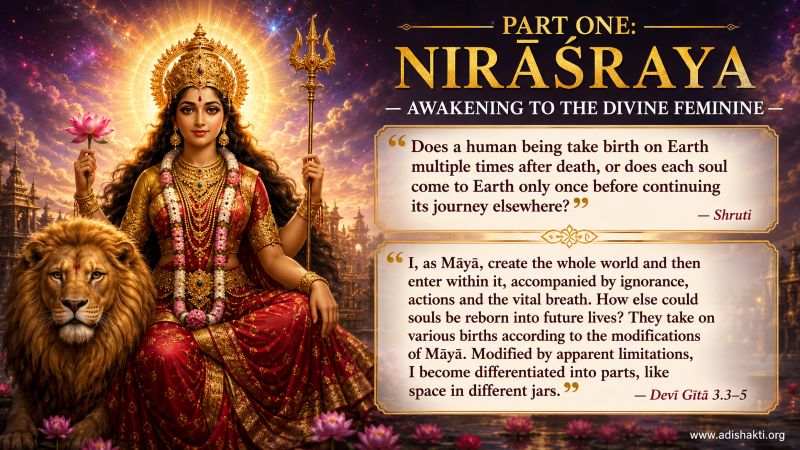
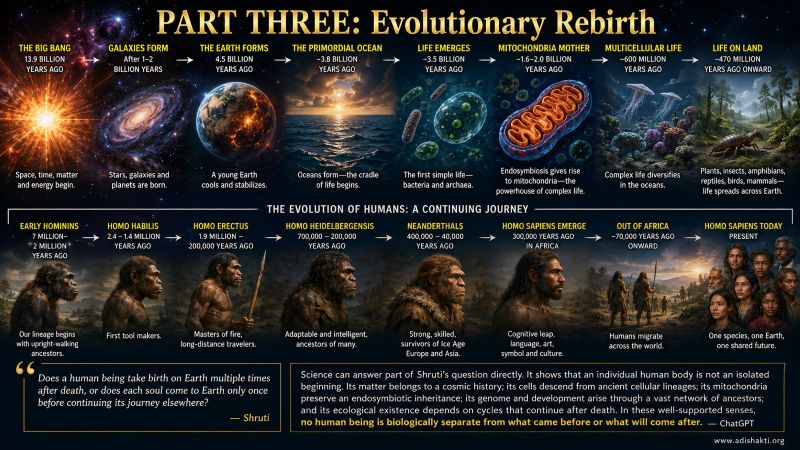
"Does a human being take birth on Earth multiple times after death, or does each soul come to Earth only once before continuing its journey elsewhere?"
1.1 The Universality of the Afterlife Question
The question of survival beyond death is not confined to a single religion, culture, or historical period. Funerary customs, memorial practices, prayers for the dead, ancestral traditions, sacred texts, philosophical arguments, and visionary testimonies all demonstrate humanity's enduring refusal to treat death as an intellectually simple event. Ancient Egyptian religion developed elaborate accounts of post-mortem judgment and transformed existence. Greek philosophers debated the immortality and transmigration of the soul. Indian traditions explored saṃsāra, karma, liberation, and the relation between the empirical self and ultimate reality. Jewish texts gradually articulated increasingly explicit hopes for the resurrection of the dead and the World to Come. Christianity placed the resurrection of Jesus and the promised resurrection of humanity at the centre of its proclamation. Islam announced al-Qiyāmah — the Resurrection — as the decisive culmination of earthly history and the unveiling of divine judgment.
1.2 Two Broad Models of Human Destiny
For analytical purposes, the world's major religious accounts of post-mortem existence may be organized around two broad models: cyclical return and linear consummation. These categories are useful, but they must be employed carefully. Religious traditions are internally diverse, and neither "Eastern" nor "Abrahamic" thought constitutes a perfectly uniform system. Nevertheless, the contrast clarifies the central issue raised by Shruti's question.
| Question | Cyclical Model | Linear-Resurrection Model |
|---|---|---|
| Shape of existence | Repeated birth, death, and rebirth. | Creation, one earthly life, death, judgment, resurrection. |
| Cause of present condition | Karma, ignorance, attachment. | Creaturely finitude, moral freedom, sin. |
| Primary problem | Bondage to repeated becoming. | Sin, death, alienation from God. |
| Goal | Liberation, awakening, release. | Forgiveness, reconciliation, resurrection. |
| Ultimate movement | Escape from the cycle. | Fulfilment of history and transformation. |
1.3 Why Rebirth and Resurrection Must Not Be Confused
Rebirth and resurrection are sometimes treated as interchangeable expressions of the belief that life continues after death. This equivalence is misleading. Although both reject the final annihilation of human significance, they describe continuity in fundamentally different ways. Rebirth ordinarily involves renewed embodiment in another life. Resurrection, by contrast, is the restoration and transformation of the person by divine action. In Jewish, Christian, and Islamic thought, the one who is raised is morally and personally continuous with the one who lived and died.
Resurrection also differs from mere resuscitation. Resuscitation is a return to ordinary biological life, after which death remains possible. Resurrection, in its fullest eschatological sense, is transition into a transformed mode of existence in which death no longer exercises its former dominion.
1.4 Personal Identity and the Meaning of Continuity
Any doctrine of life after death must address the problem of personal identity. What makes a future being the same person as the one who presently lives? Resurrection theology answers that personal identity is preserved through God's faithful knowledge, intention, and re-creative act. The Creator who brings a person into existence, knows that person completely, and sustains every moment of creaturely life is not dependent on the uninterrupted preservation of the same material particles.
1.5 Resurrection as Transformation Rather Than Repetition
The language of resurrection often produces images of bodies simply returning to their former condition. Such images capture the essential affirmation that death will not possess the final word, but they can obscure the transformative character of the doctrine. In its mature Jewish, Christian, and Islamic expressions, resurrection is associated with divine judgment, purification, vindication, restoration, and the unveiling of a reality presently concealed.
1.6 Inner Awakening and Future Resurrection
A major interpretive question concerns the relationship between resurrection as a future divine act and resurrection as a present spiritual experience. Religious texts frequently contain both dimensions. They speak of a final resurrection yet also describe believers as passing from death to life, being born of the Spirit, awakening from spiritual sleep, receiving a new heart, or entering eternal life in the present.
1.7 Methodology and Levels of Interpretation
This study employs an interdisciplinary method combining textual analysis, historical theology, comparative religion, philosophy of religion, and confessional interpretation. The four levels are: (1) Historical and Textual Analysis; (2) Comparative Theology; (3) Philosophical Analysis; and (4) The Adishakti.org Confessional Synthesis.
Central Proposition
The Abrahamic traditions do not ordinarily direct humanity toward an endless succession of earthly lives. They proclaim that the person remains known to God and moves through death toward judgment, transformation, resurrection, and eternal life. Within the Adishakti.org confessional interpretation, this promised future is anticipated through a present spiritual awakening — the inner Resurrection — through which the continuity of the soul is directly realized.
Chapter Two will examine Shruti's question in greater philosophical depth.
CHAPTER TWO
Shruti's Question: The Journey of the Soul
Birth, Death, Personal Identity, and the Meaning of the Soul's Continuity
"Does a human being take birth on Earth multiple times after death, or does each soul come to Earth only once before continuing its journey elsewhere?"
2.1 The Question Beneath the Question
At the surface level, Shruti asks how many times a human being is born on Earth. Beneath that question lies a deeper concern: does the person continue after death, and if so, in what form? Shruti's question therefore contains at least five distinct questions: (1) Does consciousness survive biological death? (2) If consciousness survives, does the same person continue? (3) Does continuity require another physical birth? (4) Is post-mortem existence governed by karma, judgment, grace, or some combination of these? (5) Is the final goal repeated embodiment, liberation from embodiment, resurrection, or eternal communion with God?
2.2 What Is a Human Being?
Any answer concerning life after death presupposes an answer to the question of human nature. If a human being is nothing more than a functioning biological organism, then the death of the organism appears to terminate the person. If, however, the person includes a non-material dimension — soul, spirit, consciousness, or self — then bodily death need not imply personal extinction.
| Model | Core Claim | Implication for Death |
|---|---|---|
| Materialism | The person is wholly constituted by the physical organism. | Death terminates consciousness. |
| Substance Dualism | Body and soul are distinct kinds of reality. | The soul may survive bodily death. |
| Holistic Dualism | The human person is an integrated body-soul unity. | Full human existence requires eventual resurrection. |
| Theological Personalism | The person is a created unity whose identity is sustained by God. | Survival depends on divine faithfulness. |
2.3 Soul, Spirit, Self, and Consciousness
The words soul, spirit, self, and consciousness are often used as though they were synonyms. They are not. Each carries a distinct intellectual and religious history. In Hebrew scripture, nephesh often refers not to a detachable soul imprisoned in the body but to the living being as a whole. In Islamic thought, nafs may refer to the self, person, soul, or moral ego. The Hebrew rūaḥ, Greek pneuma, and Arabic rūḥ all carry associations with breath, wind, life, and divine action.
2.4 What Does It Mean to Die?
Death is biologically identifiable, but its metaphysical meaning remains disputed. Several possibilities have been proposed: complete annihilation, survival of a disembodied soul, entrance into an intermediate state, rebirth, sleep until resurrection, immediate judgment, or transformation into a mode of being beyond ordinary space and time.
Answer to Shruti
Judaism, Christianity, and Islam generally teach that each person lives one earthly life before continuing into a divinely governed post-mortem existence culminating in resurrection and judgment. The Adishakti.org synthesis adds that the promised Resurrection may be experienced inwardly in the present through spiritual awakening, thereby assuring the soul of unbroken continuity beyond physical death.
Chapter Three will compare the two major models directly: reincarnation and resurrection.
CHAPTER THREE
Rebirth and Resurrection: Two Visions of Human Destiny
Cyclical Return, Linear Fulfilment, Karma, Judgment, Liberation, and Eternal Life
3.1 Defining Rebirth and Resurrection
Rebirth is the continuation of conditioned existence through renewed embodiment after death. The English term reincarnation often suggests the entrance of the same soul into another body. For this reason, rebirth is usually the broader and more accurate comparative category. Resurrection, by contrast, is the restoration and transformation of the dead through divine action. The one who is raised is the same person who lived, suffered, acted, and died.
| Category | Rebirth | Resurrection |
|---|---|---|
| Primary movement | Return to conditioned embodiment. | Restoration and transformation by God. |
| Temporal structure | Cyclical or recurring. | Linear and culminating. |
| Moral framework | Karma, causation, purification. | Judgment, mercy, covenant, grace. |
| Embodiment | Repeated through multiple forms. | Restored and transformed. |
| Ultimate goal | Liberation from repeated birth. | Eternal life in the fulfilled order of God. |
3.2 Cyclical and Linear Time
The deepest difference between rebirth and resurrection concerns the shape of time. Rebirth is normally situated within a cyclical cosmos. Resurrection belongs to a different narrative: creation has a beginning, revelation unfolds through history, moral decisions possess enduring significance, and history moves toward judgment and fulfilment.
3.3 Rebirth in Hindu Traditions
Hindu traditions contain diverse accounts of rebirth, but the concepts of saṃsāra, karma, and mokṣa form a widely shared framework. The Bhagavad Gītā presents the embodied self as passing through bodily change and taking another body as a person changes worn garments. Yet the Gītā does not glorify endless return. Its goal is freedom from rebirth through knowledge, devotion, disciplined action, and surrender to the Divine.
3.4 Rebirth Without an Eternal Self in Buddhism
Buddhism presents one of the most philosophically distinctive accounts of rebirth because it combines continuity across lives with the denial of an eternal, independent self. The doctrine of anātman rejects the idea that a permanent essence can be found among the changing aggregates. Yet Buddhism and resurrection theology share at least one critical insight: the ordinary ego is not the final measure of the person.
3.5 Jainism, Sikhism, and the Problem of Repeated Existence
Jainism teaches that living beings possess souls bound by karmic matter. Liberation requires rigorous ethical discipline, non-violence, detachment, austerity, and knowledge. Sikh scripture frequently refers to repeated coming and going, innumerable births, karma, and liberation. Yet Sikhism does not present liberation as the achievement of an isolated soul through moral mechanism alone. Divine grace, remembrance of the Name, the Guru's guidance, humility, and loving union with the Divine are decisive.
3.6 Resurrection in Judaism, Christianity, and Islam
Judaism, Christianity, and Islam each place resurrection within a larger theological drama of creation, revelation, covenant, judgment, and divine restoration. Their formulations differ, but all three traditions affirm that death does not remove the person from God's knowledge or power.
3.7 Karma and Judgment
Karma is frequently understood as an impersonal or transpersonal law of causation. Judgment is relational and theistic. God knows, evaluates, and responds to the person. Moral consequence is not merely the automatic unfolding of prior action but an encounter with divine justice and mercy.
3.8 Grace, Mercy, and Liberation
Neither rebirth traditions nor resurrection traditions can be reduced to a simple system of reward and punishment. Both contain profound reflections on grace, mercy, transformation, and release from bondage. The common insight is that liberation or eternal life exceeds the unaided ego.
3.9 Embodiment and the Value of Creation
Rebirth and resurrection also express different evaluations of embodiment. In many rebirth traditions, embodiment is not inherently evil, but it belongs to conditioned existence. Resurrection traditions emphasize the goodness of creation. Salvation therefore does not necessarily mean escape from created existence. It means renewal and transformation of creation.
Principal Contrast
Rebirth interprets post-mortem continuity through repeated conditioned existence, while resurrection interprets continuity through the Creator's restoration and transformation of the same historical person.
Chapter Four will examine Judaism in depth.
CHAPTER FOUR
Judaism: Resurrection and the World to Come
Sheol, Techiyat HaMetim, Olam Ha-Ba, Messianic Hope, and the Divine Victory Over Death
"Many of those who sleep in the dust of the earth shall awake, some to everlasting life, and some to shame and everlasting contempt."
4.1 Creation, Covenant, and the God of Life
Jewish resurrection theology begins not with death but with creation. The opening chapters of Genesis present life as the gift of God. The human person is both earthly and God-given, embodied and dependent upon the Creator. Covenant further shapes Jewish hope. God's promises to Abraham, Israel, David, and the prophetic community are historical and communal. Resurrection emerges within this covenantal setting as the ultimate demonstration that divine faithfulness extends even beyond death.
4.2 Death and Sheol in the Hebrew Bible
Many early biblical texts describe the dead as descending to Sheol, a shadowy realm associated with silence, darkness, weakness, and separation from ordinary earthly activity. Yet Sheol is not always depicted as a realm beyond divine reach. Psalm 139 declares that even if one makes one's bed in Sheol, God is there.
4.3 Early Biblical Hints of Deliverance From Death
Several biblical passages express hope that God can deliver the faithful from the power of death. Hannah's song declares: "The Lord kills and brings to life; he brings down to Sheol and raises up" (1 Samuel 2:6). Psalm 16 expresses confidence that God will not abandon the faithful one to Sheol.
4.4 Ezekiel's Valley of Dry Bones
Ezekiel 37 contains one of the most powerful resurrection images in the Hebrew Bible. The prophet is brought into a valley filled with dry bones and asked whether they can live. At God's command, the bones come together, receive sinews and flesh, and are animated by breath. The vision symbolizes the restoration of Israel from national catastrophe and exile.
4.5 Isaiah and the Defeat of Death
Isaiah 25 envisions a divine banquet for all peoples and declares that God will destroy death itself: "He will swallow up death forever." Isaiah 26 moves closer to explicit resurrection language: "Your dead shall live; their corpses shall rise."
4.6 Daniel 12 and Individual Resurrection
Daniel 12:2–3 is widely regarded as the clearest expression of individual resurrection in the Hebrew Bible. It declares that many who sleep in the dust will awaken, some to everlasting life and others to shame and everlasting contempt. The passage emerges from a context of persecution, martyrdom, and crisis.
4.7 Resurrection in Second Temple Judaism
During the Second Temple period, Jewish thought concerning death and the afterlife became increasingly diverse. Second Maccabees provides especially explicit testimony to bodily resurrection. The Wisdom of Solomon emphasizes the immortality of the righteous. First Enoch and other apocalyptic writings describe judgment, resurrection, and heavenly realms.
4.8 Pharisees, Sadducees, and Competing Jewish Views
The New Testament and Josephus preserve evidence of disagreement among Jewish groups concerning resurrection. The Pharisees are associated with belief in resurrection, while the Sadducees are portrayed as denying it. The disagreement reflects differing approaches to scripture, tradition, authority, and eschatology.
4.9 Techiyat HaMetim in Rabbinic Judaism
Techiyat HaMetim means "the resurrection" or "revivification of the dead." In rabbinic Judaism, it became a central eschatological affirmation. The Mishnah states that all Israel has a share in the World to Come but lists certain exceptions, including one who denies that resurrection is taught in the Torah. The daily Amidah prayer praises God as the One who revives the dead.
4.10 Olam Ha-Ba: The World to Come
The Hebrew expression Olam Ha-Ba means "the World to Come." It may refer to the messianic age, the post-mortem state of the righteous, the era following resurrection, or the final transformed order under God. The concept resists reduction to either "heaven" or a restored political kingdom.
4.11 Maimonides and the Meaning of Resurrection
Moses Maimonides included resurrection among his principles of faith. He distinguished resurrection from the final and highest state of the soul. For Maimonides, resurrected persons may return to embodied life, but the ultimate World to Come is an incorporeal state of intellectual communion with God.
4.12 Kabbalah and Gilgul Ha-Neshamot
Jewish mystical traditions complicate any simple statement that Judaism categorically rejects every form of reincarnation. Kabbalistic teaching developed the doctrine of gilgul ha-neshamot, the transmigration or cycling of souls. This doctrine differs from many Indian accounts of saṃsāra. It operates within a Jewish theology of creation, covenant, commandments, and divine repair.
Jewish Answer to Shruti's Question
Classical Judaism generally teaches that the human person lives a historically unique life and remains within the knowledge and faithfulness of God after death. The final hope is not an endless succession of earthly identities but resurrection, divine judgment, restoration, and participation in the World to Come. Certain Kabbalistic traditions additionally teach the cycling of souls, but this does not displace the central Jewish hope of Techiyat HaMetim.
Chapter Five will examine Christianity, where the Jewish hope of resurrection is proclaimed as having entered history through Jesus Christ.
CHAPTER FIVE
Christianity: Resurrection Through Christ
The Empty Tomb, the Risen Jesus, Bodily Transformation, Eternal Life, and the Defeat of Death
"I am the resurrection and the life. Those who believe in me, even though they die, will live."
5.1 Christianity as a Resurrection Faith
The earliest Christian movement did not arise simply because Jesus had taught an inspiring message. Christianity arose because Jesus' followers came to believe that God had raised him from the dead. The Greek term anastasis means rising or resurrection, while the verb egeirō can mean to awaken or raise. The Christian confession "Jesus is Lord" is inseparable from this resurrection claim.
5.2 Jesus and Jewish Expectations of Resurrection
Jesus' teachings concerning resurrection belong within the Jewish debates examined in Chapter Four. In the Synoptic tradition, the Sadducees present Jesus with a question intended to ridicule resurrection. Jesus answers that resurrection life cannot be reduced to the social arrangements of present mortality. He then appeals to God's self-identification as the God of Abraham, Isaac, and Jacob.
5.3 The Crucifixion and the Reality of Death
Christian resurrection claims presuppose the reality of Jesus' death. Roman crucifixion was designed to produce public humiliation, prolonged suffering, and death. The New Testament does not portray resurrection as the denial of death. Jesus' wounds remain part of the resurrection narratives.
5.4 The Empty Tomb Traditions
All four canonical Gospels contain traditions concerning women who visit Jesus' tomb and discover it empty. The women's role is historically and theologically significant. In all four Gospels, women are the first discoverers or witnesses of the empty tomb. Mary Magdalene occupies a particularly prominent place.
5.5 The Appearances of the Risen Jesus
The New Testament presents appearances of the risen Jesus to individuals and groups. These include Mary Magdalene, Peter, the Twelve, disciples travelling to Emmaus, assembled followers, Thomas, and Paul. The appearance traditions combine recognition and mystery.
5.6 Paul's Earliest Resurrection Tradition
First Corinthians 15 contains the earliest surviving extended account of Christian resurrection belief. Most scholars regard this formula as pre-Pauline tradition. Paul then lists appearances to more than five hundred believers, James, all the apostles, and finally himself.
5.7 Resurrection, Not Resuscitation
The Gospels contain stories in which dead persons are restored to ordinary life. Jesus' resurrection is presented differently. He is raised into a form of life over which death no longer has dominion. Paul states that Christ, once raised, will never die again.
5.8 The Spiritual Body in 1 Corinthians 15
Paul's phrase "spiritual body" has often been misunderstood as meaning a non-bodily or immaterial existence. The Greek contrast, however, is between a body animated by ordinary natural life and a body animated and transformed by the Spirit. The resurrected body remains body, but its mode of life is changed.
5.9 Christ as the First Fruits of the Dead
Paul describes Christ as the "first fruits" of those who have died. Christ's resurrection therefore inaugurates the general resurrection. It is not only a revelation about Jesus; it is a revelation about the destiny of humanity.
5.10 Resurrection and the Meaning of the Cross
The resurrection transforms the cross from an instrument of imperial defeat into the means of divine victory. Without resurrection, the crucifixion could be interpreted simply as the execution of another prophet or failed messianic claimant.
5.11 Eternal Life in the Gospel of John
The Gospel of John gives resurrection a strongly present dimension. Eternal life is not only future survival after death. It begins in relationship with God through Christ. John 5 brings both dimensions together: those who hear and believe have passed from death to life, yet an hour is also coming when all who are in the graves will hear the voice of the Son.
5.12 Present Participation in Resurrection
The New Testament frequently speaks of believers as already participating in Christ's death and resurrection. Romans 6 describes baptism as burial with Christ so that believers may walk in newness of life. The present signs of resurrection include forgiveness, freedom from domination by sin, reconciliation, new moral life, indwelling of the Spirit, and hope beyond death.
5.13 The General Resurrection and Final Judgment
Christian creeds confess not only the resurrection of Jesus but "the resurrection of the dead" or "the resurrection of the body." Hebrews 9:27 — "it is appointed for mortals to die once, and after that the judgment" — has often been cited against reincarnation.
5.14 Resurrection and the Renewal of Creation
Christian resurrection hope is not confined to individual survival. The New Testament links the resurrection of humanity with the liberation and renewal of creation. Romans 8 portrays creation as groaning in bondage to decay while awaiting the revealing of the children of God.
5.15 Christianity and Reincarnation
Mainstream Christianity has historically rejected reincarnation. Its scriptural, creedal, and sacramental framework centres on one earthly life, death, judgment, resurrection, and eternal life. The dominant Christian tradition rejected reincarnation because it conflicted with the uniqueness of each created person, the once-for-all incarnation and resurrection of Christ, the singular moral significance of earthly life, and the resurrection of the same person rather than migration into successive bodies.
Christian Answer to Shruti's Question
Classical Christianity teaches that each person lives one earthly life, dies, remains known to God, and awaits resurrection and judgment. The person does not ordinarily return through successive earthly births. Eternal life is grounded in the resurrection of Jesus and is communicated through union with him and the life-giving Spirit.
Chapter Six will examine the Paraclete in the Gospel of John and the continuing work of Christ through the Spirit.
CHAPTER SIX
The Paraclete and the Continuing Work of Christ
John 14–16, the Holy Spirit, and Contemporary Confessional Interpretations
"And I will ask the Father, and He will give you another Paraclete, to be with you forever."
6.1 Why the Paraclete Matters
The promise of the Paraclete occupies a unique place within Christian theology. Unlike Jesus' public teachings delivered to crowds, the Paraclete sayings occur within the intimate setting of the Farewell Discourse on the night before the crucifixion. Jesus speaks privately to His disciples, preparing them for the profound transition that will follow His death, resurrection, and departure. Without these chapters, the Gospel of John would conclude with Jesus' earthly ministry ending at the Ascension.
6.2 The Literary Setting: The Farewell Discourse
The Paraclete sayings occur within what modern scholarship commonly calls the Farewell Discourse (John 13–17). The discourse begins immediately after Judas departs to betray Jesus. Jesus repeatedly informs His disciples that He is returning to the Father. The promise of the Paraclete functions as Jesus' answer to their anxieties.
6.3 The Greek Meaning of Paraklētos
The word translated "Paraclete" is the Greek noun παράκλητος (paraklētos), derived from the verb παρακαλέω (parakaleō), meaning "to call alongside, to summon, to encourage, to comfort, to exhort, or to appeal." In classical Greek the noun could describe a person called to another's side to assist, especially in legal proceedings. Raymond E. Brown argued that no single English word adequately conveys the richness of the Greek expression.
| Translation | Rendering | Primary Emphasis |
|---|---|---|
| King James Version | Comforter | Encouragement and consolation |
| New Revised Standard Version | Advocate | Legal representative |
| New International Version | Advocate | Defence and support |
| New American Bible | Advocate | Legal witness |
| New American Standard Bible | Helper | Assistance |
| Many scholarly works | Paraclete | Leaves the Greek term untranslated |
6.4 "Another Paraclete"
The first Paraclete saying begins: "And I will ask the Father, and He will give you another Paraclete, that He may be with you forever" (John 14:16). Greek possesses two principal words for "another": ἄλλος (allos) generally means another of the same kind, while ἕτερος (heteros) often denotes another of a different kind. John's use of allos suggests that the Paraclete continues Christ's work under a different mode of divine presence.
6.5 The First Two Paraclete Sayings
John 14:16–17 declares: "And I will ask the Father, and He will give you another Paraclete, to be with you forever, even the Spirit of Truth, whom the world cannot receive, because it neither sees Him nor knows Him. You know Him, because He abides with you and will be in you." John 14:26 declares: "But the Paraclete, the Holy Spirit, whom the Father will send in My name, He will teach you all things and remind you of everything I have said to you."
6.6 The Third Paraclete Saying: The Spirit Bears Witness to Christ
"When the Paraclete comes, whom I will send to you from the Father, the Spirit of Truth who proceeds from the Father, He will bear witness about Me. And you also are to bear witness because you have been with Me from the beginning" (John 15:26–27).
6.7 The Fourth Paraclete Saying: Convicting the World
"If I do not go away, the Paraclete will not come to you; but if I go, I will send Him to you. And when He comes, He will convict the world concerning sin and righteousness and judgment" (John 16:7–11).
6.8 The Fifth Paraclete Saying: "He Will Guide You into All Truth"
"When the Spirit of Truth comes, He will guide you into all the truth, for He will not speak on His own authority, but whatever He hears He will speak, and He will declare to you the things that are to come" (John 16:13).
6.9 Reception in the Early Church
The early Church Fathers consistently identified the Paraclete with the Holy Spirit active in the life of the Church. Irenaeus, Origen, Athanasius, and Augustine each developed influential interpretations while preserving the identification of the Paraclete with the Holy Spirit.
6.10 Modern Biblical Scholarship
Modern scholarship approaches the Paraclete sayings using historical-critical, literary, theological, and canonical methods. Major scholars including Raymond E. Brown, Rudolf Schnackenburg, Craig S. Keener, Marianne Meye Thompson, and Francis J. Moloney all identify the Paraclete with the Holy Spirit.
Summary of Scholarly Consensus
- The Paraclete is identified in John's Gospel with the Holy Spirit.
- The Spirit continues rather than replaces the ministry of Jesus.
- The Spirit's work is fundamentally Christ-centred.
- The Spirit enables the Church to understand, remember, proclaim, and live the Gospel.
6.11 Comparative Perspectives on the Divine Spirit
The Hebrew Bible frequently speaks of the Ruach Elohim ("Spirit of God") or Ruach YHWH ("Spirit of the LORD"). The Spirit empowers prophets, inspires wisdom, renews creation, and equips leaders for divine service. The Qur'an refers to the Rūḥ ("Spirit") in several contexts, including divine inspiration, the strengthening of prophets, and God's creative activity. From a comparative perspective, Judaism, Christianity, and Islam all affirm that God continues to guide humanity. They differ, however, regarding the means, historical expression, and theological interpretation of that guidance.
6.12 Ecumenical Christian Perspectives
Catholic, Eastern Orthodox, Protestant, and Pentecostal traditions all share the conviction that the Paraclete is the Holy Spirit whose ministry continues within the life of the Church.
6.13 The Adishakti.org Confessional Interpretation
The following section describes the theological interpretation advanced by Adishakti.org. It is presented as the confessional position of that movement and should be distinguished from the historical and academic perspectives outlined above.
Within the theological framework of Adishakti.org, the promises concerning the Paraclete are interpreted as extending beyond the apostolic period. The movement proposes that the continuing ministry of the Holy Spirit may become manifest through a later historical ministry that awakens individuals to an experiential awareness of God's presence. Mainstream Christian churches and the overwhelming majority of biblical scholars do not identify the Paraclete promises with a later individual in this way.
Chapter Six Summary
- The Greek term Paraklētos encompasses the ideas of advocate, helper, counsellor, witness, and guide.
- In the Gospel of John, the Paraclete's work is consistently Christ-centred.
- Historic Christianity identifies the Paraclete with the Holy Spirit.
- Adishakti.org advances a confessional interpretation that should be distinguished from historical-critical conclusions.
Chapter Seven turns from the identity of the Paraclete to the theme of spiritual rebirth.
CHAPTER SEVEN
Born of Water and Spirit: Spiritual Rebirth in the Gospel of John
John 3, Nicodemus, and the Gift of Divine Life
"Very truly, I tell you, no one can see the kingdom of God without being born from above."
7.1 Nicodemus and the Johannine Narrative
The dialogue between Jesus and Nicodemus occupies a pivotal place in the Fourth Gospel. Nicodemus approaches Jesus "by night." While this detail may indicate the practical circumstances of the meeting, many commentators also note John's symbolic use of light and darkness.
7.2 The Meaning of "Born from Above"
The Greek word ἄνωθεν (anōthen) may signify "again," "anew," or "from above." Nicodemus interprets Jesus' words literally, asking whether an adult can re-enter the womb. Jesus' response redirects the discussion from biological birth to divine initiative.
7.3 Born of Water and Spirit
The expression "water and Spirit" has generated an extraordinary diversity of interpretation. The three principal approaches are: (1) Sacramental — refers to Christian baptism accompanied by the gift of the Holy Spirit; (2) Prophetic — echoes Ezekiel 36:25–27; and (3) Symbolic — represents purification and divine renewal.
7.4 The Wind and the Spirit
Jesus introduces a linguistic play involving the Greek word πνεῦμα (pneuma), which may mean "wind," "breath," or "Spirit." Like the wind, the Spirit cannot be controlled or fully comprehended, yet its effects are unmistakable.
7.5 Reception in the Early Church
The early Church consistently regarded John 3 as foundational for understanding Christian initiation. Justin Martyr, Irenaeus, Origen, and Augustine each contributed important interpretations while sharing the conviction that rebirth is fundamentally an act of divine grace.
7.6 Spiritual Rebirth in the Christian Traditions
All major Christian traditions affirm the necessity of spiritual rebirth, though they differ in their understanding of its relationship to baptism, faith, grace, and sanctification. Roman Catholic, Eastern Orthodox, Reformed Protestant, Lutheran, Evangelical, and Pentecostal traditions each emphasize distinct aspects of this teaching.
7.7 Modern Biblical Scholarship
Modern scholarship has approached John 3 through literary, historical, linguistic, and theological methods. Raymond E. Brown, Rudolf Schnackenburg, Craig S. Keener, and Marianne Meye Thompson have all contributed significant analyses.
7.8 Spiritual Rebirth and Resurrection
The relationship between spiritual rebirth and resurrection has long occupied Christian theology. John's Gospel presents eternal life as both a present reality and a future hope. Believers experience new life now while awaiting the resurrection of the dead at the consummation of history.
7.9 Comparative Perspectives
Although the language of being "born from above" is distinctive to the Gospel of John, other religious traditions also describe profound spiritual transformation. Comparative theology can identify illuminating parallels while respecting genuine doctrinal differences.
7.10 The Adishakti.org Confessional Interpretation
The following section summarizes the theological interpretation advanced by Adishakti.org. It is presented as the confessional position of that movement and should be distinguished from the historical and academic analyses discussed above.
Within the theological framework of Adishakti.org, Jesus' teaching concerning birth "from above" is understood as referring to a direct, experiential transformation brought about by the Holy Spirit. The movement places particular emphasis on the believer's personal awareness of God's presence and the continuing work of the Spirit in spiritual renewal.
Chapter Seven Summary
- The Greek word anōthen carries the dual sense of "again" and "from above."
- John 3 portrays spiritual rebirth as God's gracious work rather than human achievement.
- "Water and Spirit" has been interpreted through prophetic, sacramental, and symbolic lenses.
- Spiritual rebirth inaugurates participation in eternal life while pointing toward the future resurrection.
Chapter Eight examines the raising of Lazarus and the declaration "I am the resurrection and the life."
CHAPTER EIGHT
Resurrection and Eternal Life in the Gospel of John
"I Am the Resurrection and the Life"
"I am the resurrection and the life. Those who believe in me, though they die, yet shall they live; and everyone who lives and believes in me shall never die."
8.1 Resurrection at the Heart of the Fourth Gospel
Unlike the Synoptic Gospels, John's Gospel is organized around a series of "signs" that progressively reveal Jesus' identity. The raising of Lazarus in John 11 is the climactic and final public sign before the Passion narrative. It serves not merely as a miracle story but as a theological revelation concerning Jesus' authority over life and death.
8.2 The Raising of Lazarus (John 11)
The account begins with illness rather than death. Jesus intentionally delays His arrival, declaring that the illness will ultimately glorify God. By the time He reaches Bethany, Lazarus has been in the tomb four days, emphasizing the reality of death.
8.3 "I Am the Resurrection and the Life"
This declaration belongs to the series of Johannine "I Am" sayings. Here, resurrection is not presented merely as a future gift but as something inseparable from the person of Christ. Martha's confession illustrates the movement from traditional Jewish expectation toward Johannine Christology.
8.4 Eternal Life: Present Possession and Future Hope
John avoids reducing salvation either to a purely future expectation or to an entirely realized experience. Eternal life begins in the present yet reaches its consummation in the resurrection.
8.5 The Resurrection of Jesus
The Lazarus narrative prepares readers for Jesus' own resurrection. Unlike Lazarus, however, the resurrection of Jesus is portrayed as God's decisive victory over death. The empty tomb, the appearances, and the commissioning form the culmination of John's theological narrative.
8.6 Resurrection in the Early Church
The Johannine understanding of resurrection profoundly influenced the earliest Christian writers. Ignatius of Antioch, Irenaeus, Origen, Athanasius, and Augustine all affirmed both the historical reality of Christ's resurrection and its transforming significance for believers.
8.7 Resurrection in the Christian Traditions
Across Christian history, John's Gospel has remained central to reflection on eternal life and resurrection. Catholic, Orthodox, Reformed, Lutheran, and Pentecostal traditions have each emphasized distinct aspects while maintaining a common confession that Christ's resurrection is the foundation of Christian hope.
8.8 Modern Johannine Scholarship
Modern scholars such as Raymond E. Brown, Rudolf Schnackenburg, Francis J. Moloney, Craig S. Keener, and N. T. Wright have highlighted the distinctive way in which John's Gospel integrates realized and future eschatology.
8.9 Eternal Life and Christian Spirituality
John's Gospel portrays eternal life not simply as endless existence but as a relationship with God. Jesus defines eternal life in John 17:3: "And this is eternal life, that they may know You, the only true God, and Jesus Christ whom You have sent."
8.10 The Adishakti.org Confessional Interpretation
The following section summarizes the theological interpretation advanced by Adishakti.org. It is presented as the confessional position of that movement and is distinct from the historical-critical conclusions summarized earlier.
Within the theological framework of Adishakti.org, the Johannine promise of eternal life is understood as both a present spiritual reality and a future hope. The movement emphasizes that believers may experience an awareness of God's presence through the work of the Holy Spirit while continuing to await the final resurrection affirmed by Scripture.
Chapter Eight Summary
- John presents Jesus as both the giver and embodiment of resurrection life.
- The raising of Lazarus is the climactic public sign revealing Jesus' identity before the Passion.
- Eternal life is portrayed as both a present relationship with God and a future resurrection hope.
- Historical scholarship and confessional theology offer distinct but complementary approaches.
Chapter Nine examines resurrection in the letters of Paul.
CHAPTER NINE
Resurrection in the Letters of Paul
Christ, the Firstfruits, and the Hope of the New Creation
"But in fact Christ has been raised from the dead, the firstfruits of those who have fallen asleep."
9.1 Paul and the Resurrection: Historical Context
Paul's letters were written approximately two decades after the death of Jesus and therefore constitute the earliest surviving Christian documents. Paul inherited Jewish belief in the resurrection of the dead while simultaneously interpreting that hope in light of his conviction that God had raised Jesus from the dead.
9.2 The Earliest Resurrection Tradition (1 Corinthians 15:3–8)
Most scholars regard 1 Corinthians 15:3–8 as preserving one of the earliest Christian confessional traditions. Paul introduces the passage by stating that he is transmitting a tradition that he himself had previously received.
9.3 Christ the Firstfruits
Paul employs the agricultural image of "firstfruits" (aparchē) to explain the relationship between Christ's resurrection and that of believers. Christ's resurrection is presented as the beginning of God's eschatological harvest.
9.4 The Spiritual Body (1 Corinthians 15:35–58)
Paul's phrase "spiritual body" has often been misunderstood. In Paul's vocabulary, "spiritual" (pneumatikon) does not mean immaterial. Rather, it describes a body transformed and empowered by God's Spirit. The dominant scholarly interpretation understands Paul's "spiritual body" as a genuinely embodied existence transformed by God's life-giving Spirit.
9.5 Union with Christ (Romans 6)
Paul repeatedly links the believer's present life with Christ's death and resurrection: "We were buried therefore with him by baptism into death, so that, just as Christ was raised from the dead... we too might walk in newness of life" (Romans 6:4).
9.6 The Spirit and the Redemption of the Body (Romans 8)
Romans 8 represents the theological summit of Paul's understanding of the Holy Spirit, resurrection, and the future renewal of creation: "If the Spirit of Him who raised Jesus from the dead dwells in you, He who raised Christ Jesus from the dead will also give life to your mortal bodies through His Spirit who dwells in you" (Romans 8:11).
9.7 Transformation into Christ's Glorious Body (Philippians 3)
"He will transform our lowly body to be like His glorious body by the power that enables Him also to subject all things to Himself" (Philippians 3:21). Philippians presents one of Paul's most concise descriptions of the resurrection body.
9.8 "Death Has Been Swallowed Up in Victory"
Paul concludes 1 Corinthians 15 with one of the most triumphant proclamations in Christian literature: "Death has been swallowed up in victory. Where, O death, is your victory? Where, O death, is your sting?" (1 Corinthians 15:54–55).
9.9 Reception in the Early Church and Christian Tradition
Paul's resurrection theology became foundational for subsequent Christian doctrine. Irenaeus, Tertullian, and Augustine all defended bodily resurrection against both pagan skepticism and Gnostic spiritualization.
9.10 Modern Pauline Scholarship
Modern scholarship has significantly deepened understanding of Paul's resurrection theology by situating it within its Jewish context. N. T. Wright, James D. G. Dunn, Richard B. Hays, Gordon D. Fee, and Michael J. Gorman have all contributed important analyses.
9.11 The Adishakti.org Confessional Interpretation
The following section summarizes the theological interpretation advanced by Adishakti.org. It is presented as the confessional position of that movement and should be distinguished from the historical and academic analyses discussed above.
Within the theological framework of Adishakti.org, Paul's letters are understood as integrating present spiritual transformation with the future hope of bodily resurrection. Particular emphasis is placed on the believer's present experience of the Holy Spirit as participation in the life of Christ while awaiting the consummation of God's redemptive purposes.
Chapter Nine Summary
- Paul's letters contain the earliest extant Christian exposition of the resurrection.
- Christ is presented as the "firstfruits" whose resurrection guarantees the resurrection of believers.
- The resurrection body is transformed and glorified rather than discarded.
- The Holy Spirit is the present pledge of the future redemption of the body.
- Paul's vision embraces not only humanity but the renewal of the whole creation.
Chapter Ten examines resurrection in the Book of Revelation.
CHAPTER TEN
Resurrection in the Book of Revelation and the New Creation
The Defeat of Death and the Renewal of All Things
"Then I saw a new heaven and a new earth; for the first heaven and the first earth had passed away."
10.1 Revelation as Apocalyptic Literature
The Book of Revelation belongs to the genre of Jewish and early Christian apocalyptic literature. Its vivid imagery, symbolic numbers, heavenly visions, and dramatic portrayals of cosmic conflict communicate theological realities through richly symbolic language rather than straightforward historical description.
10.2 The First Resurrection (Revelation 20:1–6)
"Blessed and holy are those who share in the first resurrection. Over these the second death has no power" (Revelation 20:6). Interpretations vary: premillennial (a future bodily resurrection before Christ's millennial reign), amillennial (a symbolic description of believers' present reign with Christ), and postmillennial (a future resurrection following the progressive triumph of the Gospel).
10.3 The Final Judgment
"And I saw the dead, great and small, standing before the throne... and the dead were judged according to their works" (Revelation 20:12). The vision of the great white throne portrays God's universal judgment.
10.4 The New Heaven and the New Earth
"See, I am making all things new" (Revelation 21:5). The climax of Revelation is not the destruction of creation but its renewal. The New Jerusalem descends from heaven to earth, symbolizing the union of God's dwelling with the renewed creation.
10.5 "Death Shall Be No More"
"He will wipe away every tear from their eyes. Death shall be no more; neither shall there be mourning nor crying nor pain anymore" (Revelation 21:4). This promise echoes Isaiah 25:8 and summarizes the biblical hope that stretches from Genesis to Revelation.
10.6 Reception of Revelation in the Early Church
The Book of Revelation exercised a profound yet sometimes controversial influence within early Christianity. Justin Martyr, Irenaeus, Victorinus of Pettau, and Augustine all engaged with the Apocalypse while maintaining the central themes of God's final victory, the resurrection of the dead, and the renewal of creation.
10.7 Revelation in the Christian Traditions
Catholic, Orthodox, Reformed, Evangelical, and Pentecostal traditions interpret Revelation through diverse frameworks while sharing the conviction that Christ ultimately conquers evil and death.
10.8 Modern Scholarship on Revelation
Contemporary scholars such as Richard Bauckham, Craig R. Koester, G. K. Beale, Adela Yarbro Collins, and David E. Aune have illuminated Revelation's literary artistry, historical setting, and theological depth.
10.9 Resurrection, New Creation, and Christian Hope
The closing chapters of Revelation integrate the principal themes developed throughout the New Testament. The resurrection proclaimed by the Gospels, the transformation described by Paul, and the prophetic hope inherited from Israel converge in a vision of renewed creation where God dwells permanently with humanity.
10.10 The Adishakti.org Confessional Interpretation
The following section summarizes the theological interpretation advanced by Adishakti.org. It is presented as the confessional position of that movement and should be distinguished from the historical-critical analyses summarized above.
Within the theological framework of Adishakti.org, Revelation is understood as affirming both present spiritual renewal and the future consummation of God's redemptive purposes. The imagery of the New Creation is interpreted as expressing the ultimate reconciliation of humanity with God through the work of the Holy Spirit and the fulfilment of the resurrection hope proclaimed throughout Scripture.
Chapter Ten Summary
- Revelation is a work of Jewish-Christian apocalyptic literature rooted in the imagery of the Hebrew Scriptures.
- The first resurrection, final judgment, and New Creation are central themes.
- The climax of Revelation is the renewal of creation rather than its destruction.
- The New Jerusalem symbolizes God's enduring presence with humanity in the restored creation.
Chapter Eleven traces the doctrine of resurrection through historical Christian theology.
CHAPTER ELEVEN
The Resurrection of the Dead in Historical Christian Theology
From the Apostolic Fathers to the Modern Church
"I believe in the resurrection of the body and the life everlasting."
11.1 The Apostolic Fathers
1 Clement, Ignatius of Antioch, and Polycarp of Smyrna consistently understood resurrection as a future act of God grounded in the historical resurrection of Jesus Christ. Their emphasis remained pastoral rather than speculative.
11.2 The Early Christian Apologists
Justin Martyr, Athenagoras of Athens, and Irenaeus of Lyons defended the resurrection against Greco-Roman philosophical criticism and Gnostic movements. They argued that the God who created the human body is fully capable of raising it.
11.3 The Ecumenical Councils and the Creeds
The Apostles' Creed and the Niceno-Constantinopolitan Creed (AD 381) both affirm the resurrection of the dead. These confessions demonstrate the remarkable continuity of resurrection doctrine across geographically diverse Christian communities.
11.4 Augustine and the Latin Tradition
Augustine maintained a clear distinction between the present spiritual renewal experienced through grace and the future bodily resurrection. His symbolic interpretation of Revelation's millennium profoundly influenced later Western eschatology.
11.5 Medieval Scholastic Theology
Thomas Aquinas taught that the resurrection body would possess continuity with the earthly body while being perfected and glorified. Human fulfillment requires the reunion of soul and body because the human person is naturally constituted as a unity of both.
11.6 The Protestant Reformation
Martin Luther and John Calvin both affirmed the bodily resurrection grounded in Christ's victory over death. The Reformed confessions and the Thirty-Nine Articles reaffirmed the historic creedal belief.
11.7 Eastern Orthodox Theology and Theosis
Eastern Orthodox theology approaches resurrection within the broader framework of theosis — participation in the divine life through Christ. Resurrection is both personal and cosmic.
11.8 Modern Christian Theology
Karl Barth, Wolfhart Pannenberg, Jürgen Moltmann, Joseph Ratzinger, and N. T. Wright have all reaffirmed the central place of resurrection within Christian theology while engaging modern historical criticism, philosophy, and science.
11.9 Resurrection in Ecumenical Dialogue
One of the striking features of modern ecumenical dialogue is the degree of agreement concerning the doctrine of resurrection. While churches continue to differ on sacramental theology and ecclesiology, the resurrection of Christ and the future resurrection of believers remain shared affirmations.
11.10 The Adishakti.org Confessional Interpretation
The following section summarizes the theological interpretation advanced by Adishakti.org. It represents the confessional position of that movement and is intentionally distinguished from the historical survey presented in the preceding sections.
Within the theological framework of Adishakti.org, the history of Christian reflection on the resurrection is viewed as an ongoing effort to understand the mystery first proclaimed by the apostles. The movement affirms the historic Christian confession that Christ was raised from the dead and that believers await the future resurrection, while placing particular emphasis on the believer's present spiritual transformation through the Holy Spirit as an anticipation of that future hope.
Chapter Eleven Summary
- The doctrine of resurrection has remained continuous from the apostolic age to the present.
- The Apostolic Fathers, apologists, councils, and creeds established the classical Christian understanding.
- Medieval, Reformation, Orthodox, and modern theologians developed the doctrine while preserving its essential content.
- Modern ecumenical dialogue reveals substantial agreement concerning Christ's resurrection and the future resurrection of believers.
Chapter Twelve engages contemporary philosophy of mind.
CHAPTER TWELVE
Resurrection, Consciousness, and the Philosophy of Mind
Can Human Consciousness Survive Death?
12.1 The Mind–Body Problem
Among the oldest questions in philosophy is the relationship between mind and body. Classical philosophy generally distinguished between body and soul, while many modern approaches seek to explain consciousness in terms of neural activity. Major positions include substance dualism, property dualism, physicalism, idealism, and panpsychism.
12.2 René Descartes and Classical Dualism
Descartes argued that the thinking self (res cogitans) is fundamentally distinct from extended material substance (res extensa). Although few contemporary philosophers accept Cartesian dualism in its original form, its central insight continues to shape philosophical discussion.
12.3 Contemporary Physicalism and Neuroscience
The dominant position within much contemporary neuroscience is physicalism: the view that consciousness arises entirely from brain activity. Advances in neuroimaging have demonstrated close correlations between mental states and neural processes.
12.4 The "Hard Problem" of Consciousness
In 1995 David Chalmers distinguished between the "easy problems" of consciousness and the "hard problem": explaining why subjective experience exists at all. The "hard problem" remains one of the most influential concepts in contemporary philosophy of mind.
12.5 Personal Identity and Survival After Death
Even if consciousness could survive bodily death, another philosophical question arises: would the surviving consciousness still be the same person? Major theories include psychological continuity, bodily continuity, soul theory, and constitution theory.
12.6 Philosophical Arguments for and Against Survival
Richard Swinburne defends substance dualism; John Hick proposed his "replica theory"; Peter van Inwagen argues that bodily resurrection is philosophically possible; Derek Parfit questioned whether strict personal identity is always the most fundamental philosophical category.
12.7 Near-Death Experience Research
Near-death experiences have been investigated by researchers including Raymond Moody, Bruce Greyson, Pim van Lommel, and Sam Parnia. These studies demonstrate that questions concerning consciousness at the threshold of death remain scientifically open.
12.8 Quantum Consciousness and Speculative Models
Researchers such as Roger Penrose and Stuart Hameroff have proposed quantum theories of consciousness, though these remain highly speculative and have not achieved general acceptance within either neuroscience or physics.
12.9 Christian Philosophy and the Resurrection
Contemporary Christian philosophers including Alvin Plantinga, Richard Swinburne, William Lane Craig, and N. T. Wright have contributed important arguments concerning the relationship between philosophy, science, and resurrection belief.
12.10 The Adishakti.org Confessional Interpretation
The following section summarizes the theological interpretation advanced by Adishakti.org. It represents the confessional position of that movement and is intentionally distinguished from the historical, philosophical, and scientific discussions presented above.
Within the theological framework of Adishakti.org, philosophy, neuroscience, and consciousness studies are regarded as valuable but incomplete avenues of inquiry. They are viewed as capable of illuminating important questions concerning human nature while remaining unable, by themselves, to establish or exclude the reality of resurrection or eternal life.
Chapter Twelve Summary
- The nature of consciousness remains one of philosophy's and neuroscience's most significant unresolved questions.
- Competing theories — including dualism, physicalism, idealism, and panpsychism — continue to be actively debated.
- Near-death experiences constitute an important field of interdisciplinary research.
- Christian philosophers generally distinguish philosophical arguments for survival from the theological doctrine of bodily resurrection.
Chapter Thirteen examines the historical evidence for the resurrection of Jesus.
CHAPTER THIRTEEN
The Historical Evidence for the Resurrection of Jesus
A Historical Investigation of Christianity's Central Claim
"If Christ has not been raised, then our proclamation is in vain and your faith is in vain."
13.1 Historical Method and the Resurrection
Professional historians investigate the past by evaluating surviving evidence, comparing independent sources, considering historical context, and assessing competing explanations. Unlike theology, history cannot directly verify supernatural causes. It can, however, evaluate whether particular historical events are well supported by documentary evidence.
13.2 The Earliest Christian Testimony
The earliest surviving testimony concerning the resurrection appears not in the Gospels but in Paul's First Letter to the Corinthians. Most scholars regard 1 Corinthians 15:3–8 as preserving one of the earliest Christian creedal formulations, perhaps originating within only a few years of Jesus' death.
13.3 The Empty Tomb
The empty tomb occupies a central place within the canonical Gospel narratives. Mark, Matthew, Luke, and John each report that Jesus' tomb was discovered empty on the first day of the week. Historians disagree concerning whether the empty tomb can be established with the same confidence as the early resurrection belief.
13.4 The Post-Resurrection Appearance Traditions
The New Testament contains numerous reports that individuals and groups experienced encounters with the risen Jesus. These traditions differ in literary presentation but consistently affirm that early Christians sincerely believed they had encountered Jesus after His crucifixion.
13.5 The Transformation of the Early Christian Movement
One of the most significant historical questions concerns the rapid emergence of the Christian movement following Jesus' execution. The conversion of Paul, the conversion of James, and the willingness of early Christians to suffer persecution all require historical explanation.
13.6 Alternative Historical Explanations
Since the Enlightenment, historians and philosophers have proposed numerous naturalistic explanations: the apparent death ("swoon") hypothesis, the stolen body hypothesis, hallucination or visionary experience, and legendary development. The resurrection hypothesis is one interpretation among several that have been proposed.
13.7 Contemporary Historical Scholarship
E. P. Sanders, Dale C. Allison Jr., N. T. Wright, Gary Habermas, Michael Licona, Paula Fredriksen, and Bart D. Ehrman represent a broad spectrum of scholarly conclusions regarding the resurrection.
Areas of Broad Scholarly Agreement
- Jesus of Nazareth was crucified under Pontius Pilate.
- Belief in His resurrection emerged very early within the Christian movement.
- The disciples sincerely believed they had experiences they interpreted as encounters with the risen Jesus.
- Paul underwent a dramatic transformation from persecutor to missionary.
- The interpretation of these facts remains debated.
13.8 The Cumulative Historical Case
Rather than relying upon a single argument, many historians and Christian philosophers evaluate the resurrection through a cumulative approach. Multiple lines of evidence are considered together to determine which explanation best accounts for the historical data.
13.9 Strengths and Limits of Historical Inquiry
Historical investigation possesses considerable explanatory power, but it also operates within identifiable methodological limits. Historians analyze documents, archaeology, cultural context, and patterns of human behavior. They cannot directly observe past events or experimentally test unique occurrences.
13.10 The Adishakti.org Confessional Interpretation
The following section summarizes the theological interpretation advanced by Adishakti.org. It represents the confessional position of that movement and is intentionally distinguished from the historical analysis presented throughout this chapter.
Within the theological framework of Adishakti.org, the historical evidence for Jesus' resurrection is understood as providing a strong foundation for Christian faith while recognizing that historical investigation alone cannot compel belief. The resurrection is viewed as both a historical event and the decisive revelation of God's victory over death, confirmed ultimately through divine revelation and the continuing work of the Holy Spirit.
Chapter Thirteen Summary
- The earliest evidence for the resurrection appears in Paul's letters and early Christian creedal traditions.
- Historians broadly agree on several foundational historical observations while differing over their interpretation.
- Alternative hypotheses continue to be critically evaluated.
- The cumulative historical case draws together multiple independent lines of evidence.
Chapter Fourteen examines near-death experiences and empirical research on survival after death.
CHAPTER FOURTEEN
Near-Death Experiences, Deathbed Visions, and Empirical Research on Survival After Death
Medical Evidence, Consciousness, and the Question of Human Survival
"Whether in the body or out of the body I do not know — God knows."
14.1 The Emergence of Near-Death Experience Research
Although reports resembling modern near-death experiences appear throughout history, systematic scientific investigation began only in the twentieth century. The publication of Raymond Moody's Life After Life (1975) introduced the topic to a wide audience and stimulated sustained academic interest.
14.2 Common Features of Near-Death Experiences
Frequently reported features include: peace and absence of pain; out-of-body perception; tunnel or transition imagery; encounter experiences with deceased relatives or spiritual figures; life review; reluctant return; and long-term transformation.
14.3 Deathbed Visions and Terminal Lucidity
Deathbed visions and terminal lucidity are increasingly recognized as legitimate subjects of medical and psychological investigation. Their physiological mechanisms remain uncertain.
14.4 Scientific Explanations and Ongoing Debates
Several naturalistic mechanisms have been proposed, including cerebral hypoxia, neurochemical release, REM intrusion, temporal lobe activity, and psychological models. No single model currently accounts for the full range of documented experiences.
14.5 Veridical Perception and the Limits of Current Knowledge
Claims of veridical perception remain among the most controversial topics in NDE research. No broad scientific consensus has concluded that they demonstrate consciousness operating independently of the brain.
14.6 Major Hospital-Based Studies
Bruce Greyson developed standardized assessment tools; Pim van Lommel conducted prospective cardiac arrest research; Sam Parnia led the AWARE studies investigating reports of consciousness during cardiac arrest.
14.7 Cross-Cultural Comparisons
Near-death experiences have been reported in many cultures, religious traditions, and secular populations. Common elements appear across many societies, while the interpretation of encountered beings often reflects the experiencer's cultural background.
14.8 Methodological Strengths, Limitations, and Future Directions
Prospective study designs, standardized questionnaires, and multidisciplinary collaboration have improved evidence quality. Limitations include small numbers of verified cases and difficulty determining the precise timing of subjective experiences.
14.9 Empirical Research and the Christian Doctrine of Resurrection
Near-death experiences, even if accurately reported, are not identical to the resurrection described in the New Testament. Christian resurrection concerns God's future transformation of the whole person, while most NDE reports involve individuals who later returned to ordinary earthly life.
14.10 The Adishakti.org Confessional Interpretation
The following section summarizes the theological interpretation advanced by Adishakti.org. It represents the confessional position of that movement and is intentionally distinguished from the empirical and historical discussions presented above.
Within the theological framework of Adishakti.org, near-death experiences, terminal lucidity, and related phenomena are regarded as significant areas of scientific and philosophical inquiry that deserve careful, unbiased investigation. These experiences are understood as potentially consistent with the existence of spiritual realities, yet they are not considered definitive proof of the afterlife or substitutes for divine revelation.
Chapter Fourteen Summary
- Near-death experiences have developed into a mature interdisciplinary field of scientific investigation.
- Hospital-based studies have improved methodological rigor while leaving important questions unresolved.
- Cross-cultural research reveals both recurring experiential patterns and culturally influenced interpretation.
- Empirical research neither conclusively proves nor disproves survival after death.
Chapter Fifteen builds the cumulative case for the afterlife.
CHAPTER FIFTEEN
Building the Cumulative Case for the Afterlife
When Independent Lines of Evidence Converge
15.1 What Is a Cumulative Case?
A cumulative case does not depend upon one argument being absolutely conclusive. Instead, it evaluates whether numerous independent considerations point in the same direction. Examples include medical diagnosis, criminal law, historical inquiry, and scientific reasoning.
15.2 The Biblical Foundation
The biblical narrative consistently presents human beings as created for communion with God, disrupted by death through sin, and ultimately restored through the resurrection of Christ.
15.3 The Historical Case
Most scholars agree that Jesus was crucified, that belief in His resurrection arose very early, that His followers sincerely believed they encountered Him alive, and that these convictions transformed the earliest Christian movement.
15.4 Philosophy of Mind and Consciousness
Contemporary debates concerning consciousness demonstrate that materialism is not the only intellectually coherent account of human persons. Philosophy shows that survival after death remains conceptually possible within several respected metaphysical frameworks.
15.5 Empirical Research
Near-death experiences, terminal lucidity, and related clinical observations provide an additional, though more tentative, line of evidence. These findings demonstrate that questions concerning consciousness at the threshold of death remain scientifically open.
15.6 Convergence: When Independent Evidence Points in the Same Direction
The central claim of a cumulative-case approach is that multiple independent disciplines — each employing its own methods and standards of evidence — may converge upon a common conclusion. Such convergence increases explanatory coherence even when individual arguments remain inconclusive.
15.7 Major Objections to the Cumulative Case
Critics argue that weak arguments do not become strong by addition, that confirmation bias may be present, and that different disciplines ask different kinds of questions. These objections require careful methodological attention.
15.8 Contemporary Philosophers and the Cumulative Approach
Richard Swinburne, Alvin Plantinga, N. T. Wright, William Lane Craig, and John Polkinghorne have all argued that Christian belief is best assessed cumulatively.
15.9 Strengths and Limitations of the Cumulative Method
The cumulative approach reflects the manner in which complex questions are ordinarily investigated in historical scholarship, medicine, law, and the natural sciences. It acknowledges that questions concerning ultimate reality rarely admit simple demonstration.
15.10 The Adishakti.org Confessional Interpretation
The following section summarizes the theological interpretation advanced by Adishakti.org. It represents the confessional position of that movement and is intentionally distinguished from the historical, philosophical, and scientific analyses presented above.
Within the theological framework of Adishakti.org, the strongest rational basis for belief in the afterlife arises from the convergence of multiple independent witnesses rather than from any isolated proof. Scripture, the historical resurrection of Jesus Christ, the continuity of Christian doctrine, philosophical reflection upon consciousness, and empirical observations concerning human experience are understood as complementary rather than competing sources of insight.
Chapter Fifteen Summary
- A cumulative case relies upon the convergence of multiple independent lines of evidence.
- Historical, philosophical, scientific, and theological disciplines each illuminate different aspects of the afterlife question.
- The cumulative method is widely employed in complex fields of inquiry where certainty is unattainable but reasoned judgment is possible.
- Within Christianity, the resurrection of Jesus remains the central event that unifies the diverse strands of evidence.
Chapter Sixteen turns to the moral argument for the afterlife.
CHAPTER SIXTEEN
The Moral Argument, Justice, and the Destiny of Humanity
Does Our Sense of Justice Point Beyond Death?
"He has set eternity in the human heart."
16.1 The Universal Human Desire for Justice
Across cultures, human beings have consistently distinguished between justice and injustice. The persistence of these moral intuitions raises a fundamental question: if justice is genuinely meaningful, should it ultimately prevail?
16.2 Plato, Aristotle, and Classical Moral Philosophy
In dialogues such as the Phaedo and the Republic, Plato argued that justice possesses objective reality and that the soul's destiny extends beyond bodily life. Aristotle focused upon human flourishing within this life while recognizing that complete justice often remains unrealized.
16.3 Immanuel Kant and the Moral Argument
Kant proposed three "postulates" of practical reason: freedom, God, and immortality. He did not claim to prove God's existence or immortality theoretically. Rather, he argued that these beliefs provide the most coherent framework for understanding humanity's deepest moral obligations.
16.4 Objective Morality and Contemporary Ethics
Modern ethical philosophy remains divided concerning whether moral values are objective features of reality or products of evolutionary and cultural development.
16.5 Justice in Judaism, Christianity, and Islam
The Abrahamic religions consistently affirm that history moves toward a final divine judgment in which justice is fully realized. Despite important doctrinal differences, these traditions agree that moral accountability extends beyond earthly life.
16.6 Secular Critiques of the Moral Argument
Friedrich Nietzsche, existentialist thinkers, and evolutionary ethics have all offered critiques of grounding morality in God or an afterlife. The debate concerns whether morality points beyond nature or is fully explicable within it.
16.7 Contemporary Defenders of the Moral Argument
C. S. Lewis, Robert Merrihew Adams, John E. Hare, and Linda Zagzebski have all argued that objective moral obligation is most coherently understood within a theistic framework.
16.8 Resurrection as the Fulfilment of Justice
Within biblical theology, resurrection is not merely the restoration of biological life. It is the means by which God's justice reaches its consummation. The New Testament consistently links resurrection with judgment, renewal, and the restoration of creation.
16.9 The Problem of Evil and the Need for Final Judgment
One of the strongest motivations for belief in an afterlife arises from the apparent incompleteness of justice within history. The biblical doctrine of resurrection addresses this problem by affirming that history does not conclude at the grave.
16.10 The Adishakti.org Confessional Interpretation
The following section summarizes the theological interpretation advanced by Adishakti.org. It represents the confessional position of that movement and is intentionally distinguished from the historical and philosophical analyses presented above.
Within the theological framework of Adishakti.org, the universal human longing for justice is understood as reflecting humanity's creation in the image of God. The moral law is viewed as more than a product of biological evolution or social convention; it is interpreted as a sign of humanity's orientation toward divine righteousness.
Chapter Sixteen Summary
- Human beings across cultures exhibit enduring moral intuitions and a profound desire for justice.
- Classical and contemporary philosophers have offered both theistic and naturalistic explanations for these moral experiences.
- The Abrahamic religions locate the fulfilment of justice in the resurrection and final judgment.
- The moral argument is most persuasive when considered as one component of a broader cumulative case.
Chapter Seventeen compares resurrection in Judaism, Christianity, and Islam.
CHAPTER SEVENTEEN
The Resurrection of the Dead in Judaism, Christianity, and Islam
A Comparative Study of the Abrahamic Hope
"Many of those who sleep in the dust of the earth shall awake, some to everlasting life, and some to shame and everlasting contempt."
17.1 Resurrection in Ancient Judaism
Early Israelite religion emphasized covenant, land, and the corporate destiny of God's people. During the Second Temple period, belief in bodily resurrection became increasingly prominent, reflected in Daniel 12, 2 Maccabees 7, the Dead Sea Scrolls, and rabbinic literature.
17.2 Resurrection in the Teachings of Jesus
Jesus' teaching assumes the reality of resurrection while simultaneously reshaping its meaning. He declares, "I am the resurrection and the life" (John 11:25), placing His own person at the centre of Israel's eschatological hope.
17.3 Resurrection in the Qur'an
Among the major themes of the Qur'an, few receive greater emphasis than the certainty of resurrection (al-qiyāmah) and final judgment. Numerous passages describe the resurrection as a universal event in which every individual is brought before God.
17.4 Areas of Agreement
Judaism, Christianity, and Islam share several fundamental convictions: one Creator God, human moral responsibility, final judgment, resurrection of the dead, and eternal destiny.
17.5 Significant Theological Differences
The traditions differ in their understanding of the central historical event, mediator, nature of salvation, and eschatological focus.
17.6 Resurrection in Rabbinic Judaism, Christian Theology, and Islamic Theology
Rabbinic literature affirms the resurrection of the dead (Techiyat HaMetim) as a future act of God. Christian theology centers resurrection upon the death and resurrection of Jesus Christ. Classical Islamic theology places bodily resurrection at the heart of eschatology.
17.7 Contemporary Jewish, Christian, and Muslim Scholarship
Jon D. Levenson, N. T. Wright, and Fazlur Rahman represent important scholarly contributions to understanding resurrection within each tradition.
17.8 Does the Shared Abrahamic Hope Strengthen the Case for Resurrection?
From a historical standpoint, shared belief establishes significance but not necessarily factual truth. Whether the convergence of these traditions provides positive evidence for resurrection depends upon broader philosophical and theological judgments.
17.9 Historical Convergence and Independent Witnesses
The Abrahamic traditions developed in different historical contexts and produced distinct theological systems. Yet all affirm that death does not exhaust human existence and that history culminates in divine judgment and resurrection.
17.10 The Adishakti.org Confessional Interpretation
The following section presents the theological interpretation advanced by Adishakti.org. It represents the confessional position of that movement and is intentionally distinguished from the historical and comparative analyses presented above.
Within the theological framework of Adishakti.org, the shared affirmation of resurrection across Judaism, Christianity, and Islam is understood as reflecting a common trajectory within divine revelation. The three Abrahamic traditions are viewed as preserving complementary witnesses to humanity's ultimate destiny while differing in their interpretations of its fulfilment.
Chapter Seventeen Summary
- Judaism, Christianity, and Islam all affirm bodily resurrection and final judgment.
- The doctrine developed within distinct historical and theological contexts while preserving important shared convictions.
- The convergence of the Abrahamic traditions strengthens the historical significance of resurrection.
- The shared hope of resurrection prepares the way for a broader comparison with the world's other religious traditions.
Chapter Eighteen broadens the discussion to comparative religious perspectives.
CHAPTER EIGHTEEN
The Universal Hope of Humanity: Comparative Religious Perspectives on the Afterlife
Life Beyond Death Across the World's Religious Traditions
"He has made everything beautiful in its time. Also, He has set eternity in the human heart."
18.1 Humanity's Universal Concern with Death
Archaeological discoveries indicate that concern for the dead extends deep into prehistory. Across civilizations, questions concerning death have generated religious rituals, sacred literature, philosophical reflection, ethical systems, and artistic expression.
18.2 Hinduism: Rebirth, Karma, and Moksha
Hindu traditions encompass a wide diversity of beliefs, yet many schools affirm that the individual self (ātman) participates in a cycle of birth, death, and rebirth (saṃsāra) until liberation (moksha) is attained.
18.3 Buddhism: Nirvāṇa and the End of Suffering
Buddhism rejects the existence of a permanent, unchanging self (anattā) while affirming continuity through dependent origination and karma. The ultimate goal is Nirvāṇa — the cessation of ignorance, craving, and suffering.
18.4 Sikhism, Taoism, and Zoroastrianism
Sikhism affirms both karma and rebirth while emphasizing God's grace. Taoism emphasizes harmony with the Dao in the present life. Zoroastrianism introduced one of history's earliest developed doctrines of final judgment, resurrection, and cosmic renewal.
18.5 Indigenous Religions and Ancient Philosophy
Many Indigenous religious traditions affirm continuing relationships between the living and the dead. Ancient Greek philosophy offered diverse perspectives, from Plato's immortality of the soul to Epicurus's denial that death should be feared.
18.6 Common Themes Across the World's Religions
Despite their remarkable diversity, the world's major religious traditions exhibit several recurring themes: continuation beyond death, moral accountability, transformation, ultimate reality, and hope.
18.7 Fundamental Differences Among Religious Traditions
While similarities are significant, the differences among religious traditions are equally important. Their understandings of personal identity, the nature of salvation, and the destiny of humanity often diverge in fundamental ways.
18.8 Does the Universality of Afterlife Belief Have Evidential Value?
One of the oldest questions in the philosophy of religion is whether humanity's widespread belief in life beyond death carries evidential significance. The issue is complex because widespread belief alone does not establish the truth of a proposition.
18.9 Comparative Assessment of World Religions
The comparative evidence neither eliminates theological disagreement nor establishes a single religious conclusion. Instead, it demonstrates that reflection upon life beyond death constitutes one of humanity's most enduring intellectual and spiritual pursuits.
18.10 The Adishakti.org Confessional Interpretation
The following section presents the theological interpretation advanced by Adishakti.org. It represents the confessional position of that movement and is intentionally distinguished from the historical, comparative, and philosophical analyses presented above.
Within the theological framework of Adishakti.org, the widespread expectation of life beyond death is understood as reflecting humanity's universal orientation toward God. While the world's religions express this hope through different concepts — resurrection, liberation, enlightenment, immortality, or rebirth — they are viewed as preserving partial insights into humanity's ultimate destiny.
Chapter Eighteen Summary
- Belief in life beyond death is one of the most widespread features of the world's religious traditions.
- Religions differ fundamentally regarding resurrection, reincarnation, immortality, and liberation.
- Comparative religion identifies recurring themes without determining their ultimate truth.
- The persistence of afterlife beliefs constitutes a significant historical and philosophical phenomenon.
Chapter Nineteen examines the Paraclete, the Holy Spirit, and the promise of eternal life.
CHAPTER NINETEEN
The Paraclete, the Holy Spirit, and the Promise of Eternal Life
The Spirit as the Present Foretaste of the Resurrection to Come
"But the Helper, the Holy Spirit, whom the Father will send in my name, He will teach you all things and remind you of everything I have said to you."
19.1 The Holy Spirit in the Old Testament
The Hebrew Scriptures portray the Spirit of God as the divine power active in creation, revelation, prophecy, wisdom, and the renewal of God's people. Already within the prophetic literature the Spirit is associated with the transformation of the human heart.
19.2 Jesus' Promise of the Paraclete
The Farewell Discourses (John 13–17) provide the New Testament's most sustained teaching concerning the Paraclete. The Spirit is presented not merely as an impersonal force but as the continuing presence of God active within the believing community.
19.3 The Spirit as the Guarantee of Resurrection
Pauline theology consistently links the indwelling Holy Spirit with the future resurrection of believers. In Romans 8:11 Paul declares that the same Spirit who raised Jesus from the dead will also give life to mortal bodies.
19.4 Eternal Life as Present and Future
The New Testament presents eternal life as both a present possession and a future promise. This "already — but not yet" structure has become one of the defining themes of contemporary New Testament scholarship.
19.5 The Holy Spirit in Early Christian Theology
The early Church Fathers regarded the Holy Spirit as the source of sanctification, illumination, and participation in divine life. The Nicene-Constantinopolitan Creed confessed belief in the Holy Spirit as "the Lord, the giver of life."
19.6 The Holy Spirit in Contemporary Biblical Scholarship
Gordon D. Fee, James D. G. Dunn, Craig S. Keener, Max Turner, and Michael Green have all emphasized the central role of the Spirit within New Testament theology and Christian existence.
19.7 The Spirit as the Firstfruits of the New Creation
Paul repeatedly describes the Holy Spirit as the "firstfruits" (aparchē) of the coming redemption (Romans 8:23). Agricultural imagery conveys the idea that the first portion of a harvest guarantees the remainder.
19.8 The Paraclete in Johannine Theology
The Gospel of John presents the Paraclete as the continuing presence of Christ among His disciples after the Ascension. The Spirit's ministry is multifaceted, embracing teaching, remembrance, witness, conviction, guidance, and glorification of Christ.
19.9 Spiritual Experience and the Hope of Resurrection
Throughout Christian history believers have testified to experiences of prayer, worship, conviction, transformation, guidance, and communion with God attributed to the work of the Holy Spirit. The New Testament consistently interprets authentic spiritual transformation as an anticipation of the resurrection life.
19.10 The Adishakti.org Confessional Interpretation
The following section presents the theological interpretation advanced by Adishakti.org. It represents the confessional position of that movement and is intentionally distinguished from the historical, exegetical, and theological analyses presented above.
Within the theological framework of Adishakti.org, the promises concerning the Paraclete in John's Gospel are understood as central to the continuing work of God in salvation history. The Holy Spirit is viewed as the divine agent who awakens spiritual life, transforms believers inwardly, and prepares humanity for the final resurrection and the renewal of creation.
Chapter Nineteen Summary
- The Holy Spirit is central to the biblical understanding of salvation and eternal life.
- The New Testament presents the Spirit as the guarantee, firstfruits, and foretaste of the future resurrection.
- Johannine and Pauline theology complement one another in presenting eternal life as both a present reality and a future fulfilment.
- The promise of the Paraclete unites the believer's present experience of God with the future hope of resurrection and the renewal of creation.
Chapter Twenty examines the resurrection and the new creation.
CHAPTER TWENTY
The Resurrection and the New Creation
The Cosmic Fulfilment of God's Redemptive Purpose
"Then I saw a new heaven and a new earth; for the first heaven and the first earth had passed away."
20.1 Creation and New Creation
The biblical narrative begins with creation and concludes with new creation. This literary structure frames the entire biblical story. Resurrection should not be understood merely as the restoration of individual life but as part of God's larger purpose for the whole cosmos.
20.2 Romans 8 and the Redemption of Creation
Romans 8 presents one of the New Testament's most comprehensive visions of cosmic redemption. Paul declares that creation itself "waits with eager longing" for the revealing of the children of God and that it "will be set free from its bondage to decay."
20.3 The New Heaven and the New Earth
Revelation 21–22 provides the New Testament's climactic vision of the consummation of God's purposes. The emphasis falls not upon the annihilation of creation but upon its renewal.
20.4 Resurrection and the Kingdom of God
Jesus proclaimed the Kingdom of God as both a present reality and a future hope. The New Testament repeatedly links resurrection with the arrival of God's Kingdom.
20.5 The Defeat of Death
Throughout Scripture, death is portrayed not merely as a biological event but as humanity's final enemy. Paul's declaration that "the last enemy to be destroyed is death" (1 Corinthians 15:26) summarizes the Christian understanding of redemption.
20.6 Contemporary Theology of the New Creation
N. T. Wright, Jürgen Moltmann, Richard Bauckham, Michael J. Gorman, and Richard B. Hays have all emphasized that the Christian hope is directed toward the renewal of creation rather than escape from the material world.
20.7 Resurrection, Ecology, and the Renewal of Creation
The doctrine of the new creation has significant implications for Christian engagement with the natural world. Environmental stewardship becomes an expression of hope in God's future purposes.
20.8 The New Jerusalem as the Culmination of Biblical Theology
The closing vision of Revelation presents the New Jerusalem descending from heaven as the symbolic fulfilment of God's covenant purposes. The biblical story moves toward communion rather than separation, restoration rather than abandonment.
20.9 The Consummation of God's Kingdom
The resurrection of the dead and the renewal of creation together constitute the consummation of God's Kingdom. Throughout the New Testament, the Kingdom is both present and future: inaugurated in the ministry of Jesus, advanced through the work of the Holy Spirit, and completed in the final victory over death.
20.10 The Adishakti.org Confessional Interpretation
The following section presents the theological interpretation advanced by Adishakti.org. It represents the confessional position of that movement and is intentionally distinguished from the historical, exegetical, and theological analyses presented elsewhere in this chapter.
Within the theological framework of Adishakti.org, the biblical vision of the new creation represents the culmination of God's redemptive work throughout history. Resurrection is understood not merely as the restoration of biological existence but as the complete transformation of humanity into eternal communion with God through the work of the Holy Spirit.
Chapter Twenty Summary
- The biblical narrative moves from creation to new creation, forming a unified theological story.
- Resurrection and cosmic renewal are inseparable dimensions of Christian eschatology.
- Romans 8 and Revelation 21–22 present the redemption of creation as the culmination of God's purposes.
- The doctrine of the new creation provides the cosmic context within which the resurrection of humanity receives its fullest meaning.
Chapter Twenty-One presents the conclusion.
CHAPTER TWENTY-ONE
Conclusion: Is There an Afterlife?
The Convergence of History, Philosophy, Science, and Revelation
"Now we see only a reflection as in a mirror; then we shall see face to face."
21.1 The Central Question
Few questions have occupied humanity more persistently than whether death marks the absolute end of existence or the beginning of another mode of life. This book has approached the question through multiple independent disciplines rather than assuming that any one field possesses a complete answer.
21.2 The Historical Evidence
Historical inquiry cannot directly prove that an afterlife exists. It can, however, evaluate historical claims concerning events that, if authentic, would have profound implications for that question. From a historical perspective, the resurrection of Jesus remains one of the most significant events requiring explanation within the history of religion.
21.3 Philosophy and Consciousness
Philosophy neither conclusively proves nor disproves survival after death. Instead, it demonstrates that simplistic reductions of consciousness to purely physical mechanisms remain philosophically contested.
21.4 Science and Near-Death Research
Neuroscience has transformed our understanding of the brain, while near-death research has generated questions that continue to stimulate scientific investigation. Scientific inquiry contributes important evidence while also illustrating the present limits of empirical knowledge.
21.5 Comparative Religion and the Human Search for Eternity
One of the most striking findings of comparative religion is the remarkable persistence of humanity's expectation that death is not the final reality. This universality suggests that reflection upon life beyond death belongs among the deepest and most enduring dimensions of human existence.
21.6 The Moral Argument
The doctrine of resurrection addresses the tension between human longing for justice and the apparent injustices of history by locating ultimate justice beyond the limitations of historical existence.
21.7 The Cumulative Case
No single chapter of this volume has claimed to establish the reality of the afterlife beyond all possible doubt. Instead, the argument has proceeded cumulatively. Independent lines of evidence possess greater explanatory force when considered together than when evaluated in isolation.
| Field of Inquiry | Primary Contribution | Principal Limitation |
|---|---|---|
| History | Investigates resurrection claims | Cannot directly verify supernatural events |
| Biblical Theology | Presents coherent eschatological hope | Requires theological interpretation |
| Philosophy | Challenges reductive materialism | Does not produce empirical proof |
| Neuroscience | Expands knowledge of consciousness | Many questions remain unresolved |
| Near-Death Research | Provides intriguing empirical observations | Interpretations remain debated |
| Comparative Religion | Demonstrates universality of afterlife belief | Does not determine theological truth |
| Moral Philosophy | Highlights humanity's longing for justice | Depends upon broader ethical assumptions |
21.8 A Balanced Academic Assessment
From an academic perspective, absolute certainty concerning the afterlife lies beyond the capacity of historical, philosophical, and scientific investigation alone. Nevertheless, the cumulative evidence surveyed throughout this volume provides substantial grounds for continued serious investigation. Belief in life beyond death cannot be dismissed as intellectually trivial, nor can scepticism be dismissed merely as irrational.
21.9 The Adishakti.org Confessional Interpretation
The following section presents the theological interpretation advanced by Adishakti.org. It represents the confessional position of that movement and is intentionally distinguished from the academic analyses presented throughout this volume.
Within the theological framework of Adishakti.org, the cumulative evidence explored throughout this book finds its fullest coherence in the biblical revelation of Jesus Christ, the promise of the Holy Spirit, and the future resurrection of the dead. Historical investigation, philosophical reflection, scientific inquiry, and comparative religion are understood as complementary avenues of understanding that ultimately converge upon God's redemptive purposes revealed in Scripture.
21.10 Final Comparative Evaluation
The evidence from history, philosophy, science, comparative religion, and theology each contribute to a multidimensional understanding of the afterlife question. The responsible scholarly conclusion is one of intellectual humility: the evidence neither compels universal agreement nor permits easy dismissal of humanity's oldest hope.
21.11 Final Reflections
The question posed at the beginning of this volume — Is There an Afterlife? — cannot be answered by a single experiment, a solitary philosophical argument, or one historical document. Rather, it invites an interdisciplinary conversation extending across history, philosophy, science, theology, and lived human experience.
21.12 Conclusion
The purpose of this book has not been to eliminate every mystery surrounding death, but to demonstrate that the question of the afterlife deserves the most serious intellectual attention. Historical evidence, philosophical reflection, scientific investigation, moral reasoning, comparative religion, and biblical theology each illuminate different dimensions of humanity's search for ultimate meaning. Whether one approaches the subject as historian, philosopher, scientist, theologian, or seeker, the investigation ultimately returns to the same enduring human hope: that truth, justice, love, and life are deeper than death itself.
"'Death has been swallowed up in victory.' 'Where, O death, is your victory? Where, O death, is your sting?'"
End of Part Two