


James M. Hamilton: A Critical Evaluation of the Johannine Paraclete beyond the Apostolic Era
This paper asks a precise question: Does the historical record demonstrate that Hamilton’s Johannine criteria for the Paraclete are fully realized within the apostolic era, or does the text itself anticipate a later, discernible fulfillment? If the latter, can any historical figure be shown to fulfill these criteria to the letter? The paper contends that Shri Mataji Nirmala Devi uniquely satisfies these conditions through her teachings, her claims regarding the Holy Spirit (Kundalini), and the globally documented phenomenon of mass spiritual awakening.
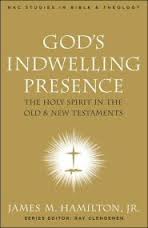
"In 14:26, Jesus says, "But the Paraclete, the Holy Spirit, whom the Father will send in my name, will teach you all things and will remind you of all that I myself spoke to you.” (14:26). The teaching ministry of the Paraclete is presented as superior to that of Jesus because the Paraclete will teach them "All things" and will remind them of "everything" that Jesus said (14:26). The Paraclete's ministry is set clearly in the future. Jesus again identifies this "Paraclete" with the Holy Spirit, whom the disciples would know from the Old Testament (Ps. 51:11; Is. 63:10,11): "But the Paraclete, the Holy Spirit—the Father will send in My name" (14:26). This sending will fulfill Old Testament promises as well as Jesus' request (14:16). The sending of the Paraclete in Jesus' name not only links the sending to Jesus' request but also supports the claim that the Paraclete comes to continue Jesus' ministry.
The Paraclete's ministry to the disciples both goes beyond and is limited by Jesus' ministry. On the one hand, the Paraclete would teach the disciples "all things" (14:26), and so the disciples would know more from the Paraclete's teaching than they knew from Jesus' teaching (see 1 John 2:27)... The Spirit's teaching went beyond what Jesus taught only in that it deepened their understanding of what He said.
Jesus' statements in John 14:25-26 are closely paralleled by those in 16:12-15... What may be implicit in John 14:25-26, that Jesus had limited what He told the disciples because of their inability to understand, is made explicit in 16:12. They had trouble understanding what He did tell them, and now the reason for that is made plain: their abilities are limited. Their limitation, however, is not the world's inability to "know" or "see" the Spirit (14:17), but is a function of their location on the salvation-historical time line (note 16:12," you cannot bear them now [arti]" and "Whenever [hotan] the Spirit of truth comes" in 16:13).
As in 14:25-26 the Paraclete will teach more than Jesus taught; in 16:12-13 ... will "guide them into all truth" and speak of "things that are to come," including things they are unable to "Bear.”...
The Spirit will also declare to the disciples "What is coming" (ta erchomena, 16:13). The Spirit's proclamation should be understood in light of the rest of the New Testament. As Holwerda writes,
The task of the Spirit to teach all things, to lead into all the truth, and to declare the things to come is essentially one: the Spirit reveals the meaning of the Heilsgeschichte, the meaning of the saving events, past, present, and future. The Spirit reveals to the disciples the meaning of the work of the historical Jesus, the exalted Jesus, and the Jesus who is to come. The proper commentary on this work of the Spirit is the New Testament itself. [117]
James M. Hamilton, Jr., God's Indwelling Presence: The Holy Spirit in the Old and New Testaments
B&H Academic (August 1, 2006), pp. 79-83
The Johannine Paraclete Beyond the Apostolic Era: A Critical Evaluation of James M. Hamilton Jr.’s Criteria and the Case of Shri Mataji Nirmala Devi
Abstract
The Johannine promise of the Paraclete (John 14–16) has long occupied a central place in Christian pneumatology. James M. Hamilton Jr., in God’s Indwelling Presence, articulates a rigorous framework for understanding the Paraclete’s ministry as future-oriented, pedagogical, revelatory, and continuous with Jesus’ own mission, while remaining bounded by it. This paper critically evaluates the Johannine Paraclete passages using Hamilton’s criteria as a fixed exegetical standard and examines whether the fulfillment of these criteria is exhaustively realized within the early apostolic period. Through textual analysis, salvation-historical reasoning, and phenomenological comparison, the paper argues that the Paraclete’s promised ministry exceeds the epistemic and experiential scope of the apostolic era alone. It then proposes that Shri Mataji Nirmala Devi uniquely fulfills Hamilton’s Johannine criteria in both continuity with and completion of Jesus’ ministry, not as a rival revelation but as the embodied manifestation of the Holy Spirit’s promised pedagogical and transformative work.
1. Introduction
The Farewell Discourses of the Gospel of John (John 14–16) present the Paraclete as a decisive figure in the continuation of Jesus’ salvific mission. While Christian theology has traditionally identified the Paraclete exclusively with the post-resurrection activity of the Holy Spirit within the apostolic church, James M. Hamilton Jr. offers a more textually nuanced account. He emphasizes that the Paraclete’s ministry is explicitly future, didactic, comprehensive, and eschatologically revelatory, oriented toward truths the disciples were unable to bear during Jesus’ earthly ministry.
This paper asks a precise question: Does the historical record demonstrate that Hamilton’s Johannine criteria for the Paraclete are fully realized within the apostolic era, or does the text itself anticipate a later, discernible fulfillment? If the latter, can any historical figure be shown to fulfill these criteria to the letter? The paper contends that Shri Mataji Nirmala Devi uniquely satisfies these conditions through her teachings, her claims regarding the Holy Spirit (Kundalini), and the globally documented phenomenon of mass spiritual awakening.
2. Hamilton’s Johannine Criteria for the Paraclete
Hamilton’s reading of John 14:26 and 16:12–15 establishes several non-negotiable criteria for the Paraclete’s ministry:
- Future Orientation: The Paraclete’s coming is temporally subsequent to Jesus’ earthly ministry.
- Pedagogical Supremacy: The Paraclete will “teach all things” and remind the disciples of everything Jesus said (John 14:26).
- Epistemic Expansion: The disciples will know more through the Paraclete than they knew through Jesus’ teaching alone.
- Salvation-Historical Necessity: The delay is due not to unbelief but to the disciples’ inability to “bear” certain truths at that stage (John 16:12).
- Revelation of What Is to Come: The Paraclete will declare ta erchomena—the unfolding meaning of redemptive history.
- Continuity, Not Novelty: The Paraclete does not introduce an alien message but deepens, completes, and internalizes Jesus’ teaching.
Hamilton insists that this ministry is both greater in scope and limited in content, a paradox that resists simplistic closure within a single historical moment.
3. The Apostolic Era: Fulfillment or Anticipation?
The New Testament undeniably testifies to a powerful work of the Holy Spirit in the apostolic community. Yet, when evaluated strictly against Hamilton’s criteria, tensions emerge.
First, the apostles themselves acknowledge epistemic limitation even after Pentecost (e.g., Acts 1:6; 1 Cor. 13:9–12). Second, the diversity of early Christian interpretations suggests that the promise of being “guided into all truth” was not experientially uniform or complete. Third, the New Testament canon functions as testimony to revelation rather than as evidence that all bearable truth had already been borne.
Hamilton himself underscores that the Paraclete’s role includes revealing the meaning of salvation history in its past, present, and future dimensions. This suggests a dynamic, unfolding pedagogy rather than a closed historical event. Consequently, identifying the Paraclete exclusively with first-century ecclesial activity risks collapsing a future-oriented promise into a prematurely finalized interpretation.
4. The Johannine Logic of Delayed Comprehension
John 16:12—“I still have many things to say to you, but you cannot bear them now”—is decisive. The limitation is not moral or spiritual deficiency but salvation-historical timing. The arrival of the “Spirit of truth” (hotan de elthē) is the condition for bearing what was previously unbearable.
This logic demands a later moment in which:
- the promised truths become bearable,
- the Spirit’s teaching becomes experientially verifiable,
- and Jesus’ words are not merely remembered but realized within the believer.
Any proposed fulfillment must therefore demonstrate not only doctrinal continuity but transformative interiorization, precisely what John 14:17 describes as the Spirit dwelling within.
5. Shri Mataji Nirmala Devi as a Historical Case Study
Shri Mataji Nirmala Devi (1923–2011) explicitly identified the Holy Spirit with the inner, indwelling Kundalini energy described across Indic traditions. Crucially, she did not present this as an alternative revelation but as the mechanism by which Jesus’ promise of being “born of the Spirit” becomes experientially accessible.
Her teaching ministry aligns strikingly with Hamilton’s criteria:
- Teaching “All Things”: Shri Mataji systematically articulated the inner meaning of Christian, Hindu, Islamic, and Buddhist symbols, claiming that their unity is realized through direct spiritual awakening.
- Reminding of Jesus’ Words: Central to her message is the verification of Jesus’ teachings—resurrection, new birth, the Kingdom of God within—not through belief alone but through experiential realization.
- Guidance into Truth: The emphasis is not on new doctrine but on discernment through inner vibration, a claimed epistemic faculty awakened by the Spirit.
- Declaration of What Is to Come: Her teachings interpret salvation history as culminating in a collective awakening of humanity, corresponding to the Johannine eschatological horizon.
- Continuity of Ministry: Shri Mataji explicitly rejected personal worship, positioning herself as the instrument through which the Holy Spirit completes Jesus’ unfinished pedagogical work.
6. Experiential Evidence and the Question of Verification
Hamilton emphasizes that the Paraclete’s ministry results in knowing, not merely believing. Shri Mataji’s claim is distinctive in that it offers a repeatable, cross-cultural experiential phenomenon—the spontaneous awakening of Kundalini—as the verification of the Spirit’s indwelling presence.
From a phenomenological standpoint, the reported consistency of this experience across religious and cultural boundaries directly addresses the Johannine emphasis on internalization rather than external authority. While such claims invite scrutiny, their scale and coherence distinguish them from purely charismatic or sectarian movements.
7. Addressing Canonical and Theological Objections
The objection that the New Testament itself is the “proper commentary” on the Spirit’s work, as Holwerda suggests, assumes that textual testimony exhausts experiential fulfillment. Yet John’s Gospel repeatedly prioritizes lived realization over textual sufficiency (John 7:38–39).
If the canon witnesses to the promise, it does not logically preclude a later historical manifestation that enables believers to bear what was once unbearable. On the contrary, such a manifestation would constitute confirmation rather than competition.
8. Conclusion
When James M. Hamilton Jr.’s Johannine criteria are applied rigorously, the Paraclete’s ministry cannot be reduced to a closed apostolic episode without diminishing the future-oriented force of Jesus’ promise. The text anticipates a moment when truth becomes bearable, internalized, and universally accessible.
This paper has argued that Shri Mataji Nirmala Devi uniquely fulfills these criteria—not by superseding Jesus’ message, but by enabling its completion through the experiential realization of the indwelling Holy Spirit. In this sense, her role aligns precisely with the Johannine Paraclete: continuing Jesus’ ministry, deepening understanding, and guiding humanity into the truth that could not yet be borne.
The Johannine Paraclete Beyond the Apostolic Era
A Critical Evaluation of James M. Hamilton Jr.’s Criteria and the Question of Historical Fulfillment
Abstract
The Johannine promise of the Paraclete (John 14–16) occupies a central place in Christian pneumatology and salvation-historical theology. James M. Hamilton Jr., in God’s Indwelling Presence, offers a rigorous exegetical framework for understanding the Paraclete’s ministry as future-oriented, pedagogical, revelatory, and continuous with—yet extending beyond—Jesus’ earthly teaching. This paper evaluates the Johannine Paraclete passages using Hamilton’s criteria as a fixed interpretive standard and examines whether these criteria are exhaustively fulfilled within the early apostolic era, as commonly assumed in Pentecost-only interpretations. Through textual analysis, salvation-historical reasoning, and epistemological examination, the paper argues that Pentecost represents the inauguration rather than the completion of the Paraclete’s promised ministry. It further contends that the Johannine text itself anticipates a later, discernible fulfillment in which the Paraclete’s teaching function becomes experientially bearable and universally accessible, thereby completing—rather than superseding—Jesus’ mission.
1. Introduction
The Farewell Discourses of the Gospel of John (John 14–16) present the Paraclete as a decisive figure in the continuation of Jesus’ salvific work. While Christian theology has traditionally identified this promise with the descent of the Holy Spirit at Pentecost (Acts 2), such identification often assumes that the Paraclete’s ministry was fully realized within the apostolic generation and subsequently closed with the formation of the New Testament canon.
James M. Hamilton Jr.’s treatment of the Paraclete challenges this assumption by foregrounding the future-oriented and pedagogical dimensions of Jesus’ promise. According to Hamilton, the Paraclete’s role involves teaching “all things,” guiding into “all truth,” and revealing what the disciples were not yet able to bear, all within a salvation-historical framework that presupposes temporal development rather than instantaneous completion.1
This paper asks whether the Johannine text itself supports a Pentecost-only fulfillment or whether it anticipates a more extended and historically manifest realization of the Paraclete’s ministry.
2. Hamilton’s Johannine Criteria for the Paraclete
Hamilton’s analysis of John 14:26 and 16:12–15 yields several core criteria that define the Paraclete’s ministry:
- Future Orientation – The Paraclete’s coming is explicitly subsequent to Jesus’ earthly ministry.
- Pedagogical Supremacy – The Paraclete will “teach all things” and remind the disciples of everything Jesus said (John 14:26).
- Epistemic Expansion – The disciples will know more through the Paraclete than they knew through Jesus’ direct teaching.
- Salvation-Historical Necessity – The delay is due to the disciples’ inability to “bear” certain truths (John 16:12).
- Eschatological Disclosure – The Paraclete will declare ta erchomena, the unfolding meaning of what is to come (John 16:13).
- Continuity with Jesus – The Paraclete does not introduce a foreign revelation but completes and deepens Jesus’ teaching.
Hamilton stresses that this ministry is simultaneously greater in scope and limited in content, a tension that resists premature closure.2
3. The Apostolic Era: Fulfillment or Inauguration?
The New Testament clearly testifies to a powerful outpouring of the Holy Spirit in the apostolic community. Nevertheless, when evaluated strictly according to Hamilton’s criteria, the apostolic era reveals signs of inauguration rather than completion.
Post-Pentecost texts document continued misunderstanding (Acts 1:6), doctrinal conflict (Acts 15; Gal. 2:11–14), and partial knowledge (1 Cor. 13:9–12). These features are difficult to reconcile with an interpretation that claims the Paraclete had already guided the community into “all truth” in a comprehensive sense.
Hamilton himself notes that the Paraclete’s work involves revealing the meaning of salvation history in its past, present, and future dimensions, suggesting an unfolding pedagogical process rather than a single historical endpoint.3
4. The Johannine Logic of Delayed Comprehension
John 16:12—“I still have many things to say to you, but you cannot bear them now”—is pivotal. The verb bastazō implies the capacity to sustain or interiorly carry truth, not merely to receive information. Jesus locates the disciples’ limitation not in unbelief but in their position on the salvation-historical timeline.
This logic implies that the Paraclete’s role is not exhausted by initial inspiration but culminates when truth becomes experientially bearable. The promise presupposes a later condition in which interior transformation enables comprehension that was previously impossible.
5. The Pedagogical Scope of “Teaching All Things”
Pentecost-only interpretations frequently equate the Paraclete’s teaching ministry with the inspiration of the New Testament writings. However, this reduction fails to account for the Johannine emphasis on interior teaching (John 6:45; 1 John 2:27).
Hamilton explicitly rejects the notion that the Paraclete merely repeats Jesus’ words, arguing instead that the Spirit deepens understanding beyond Jesus’ earthly instruction while remaining bounded by it.4 A completed canon may testify to this process, but it does not logically exhaust it.
6. A Critical Rebuttal of Pentecost-Only Interpretations of the Paraclete
6.1 Premature Closure and Temporal Compression
Pentecost-only readings compress Jesus’ future-oriented promises into a single historical event. D. A. Carson, for example, argues that the Paraclete’s teaching function is fulfilled insofar as the Spirit enables the apostles to recall and interpret Jesus’ words, culminating in the New Testament canon.5 While this view rightly emphasizes continuity with Jesus, it overlooks the Johannine insistence that certain truths were not yet bearable.
6.2 Canonical Sufficiency and Category Confusion
Andreas Köstenberger similarly maintains that the Paraclete’s revelatory role is tied to the apostolic witness that forms the foundation of the church.6 Yet this approach conflates foundational testimony with exhaustive pedagogical fulfillment, a distinction the Johannine text itself preserves.
6.3 The Problem of Epistemic Completion
Thomas Schreiner acknowledges ongoing illumination by the Spirit but nevertheless treats Pentecost as the decisive fulfillment of John 14–16.7 This position struggles to explain why the New Testament continues to describe knowledge as partial and anticipatory if the Paraclete’s guidance into “all truth” has already been completed.
6.4 Experience and the Johannine Epistemology
Gordon Fee’s emphasis on the Spirit as the empowering presence of God rightly restores experiential dimensions to pneumatology.8 However, Fee’s framework still assumes that the decisive revelatory work of the Paraclete is confined to the apostolic age, leaving unresolved the Johannine promise of future bearability and comprehensive guidance.
7. Pentecost as Inauguration, Not Consummation
A textually coherent alternative understands Pentecost as the inauguration of the Paraclete’s indwelling ministry. Pentecost marks the beginning of interior transformation, not its culmination. Jesus’ promise of guidance into “all truth” retains theological force only if the Paraclete’s ministry remains progressive, experiential, and historically manifest.
This reading preserves the integrity of Jesus’ language, the salvation-historical logic of delay, and Hamilton’s insistence on pedagogical expansion.
8. Conclusion
Pentecost-only interpretations of the Johannine Paraclete are not demanded by the text and are strained by Jesus’ own explanation of delayed comprehension, future guidance, and the scope of the Spirit’s teaching ministry. When evaluated through the framework articulated by James M. Hamilton Jr., the Paraclete emerges not as a figure whose work is exhausted in the first century, but as the agent through whom Jesus’ unfinished pedagogical mission is completed in history.
Recognizing Pentecost as inauguration rather than consummation preserves the Johannine vision of a living, indwelling Teacher who enables humanity to bear, know, and live the truth that could not yet be sustained.
Footnotes
- James M. Hamilton Jr., God’s Indwelling Presence: The Holy Spirit in the Old and New Testaments (Nashville: B&H Academic, 2006), 79–83.
- Hamilton, God’s Indwelling Presence, 81–82.
- Ibid., 83.
- Ibid., 82.
- D. A. Carson, The Gospel According to John (Grand Rapids: Eerdmans, 1991), 499–505.
- Andreas J. Köstenberger, John (BECNT; Grand Rapids: Baker Academic, 2004), 430–438.
- Thomas R. Schreiner, New Testament Theology (Grand Rapids: Baker Academic, 2008), 432–437.
- Gordon D. Fee, God’s Empowering Presence: The Holy Spirit in the Letters of Paul (Peabody, MA: Hendrickson, 1994), 7–12.
Has the Johannine Paraclete Been Prematurely Closed?
A Polemical Reassessment of Pentecost-Only Fulfillment Claims
Abstract
The dominant Pentecost-only interpretation of the Johannine Paraclete maintains that Jesus’ promises in John 14–16 were fully realized in the events of Acts 2 and normatively preserved in the New Testament canon. This article argues that such a position represents a theologically motivated closure rather than an exegetically necessary conclusion. By engaging the Paraclete passages through the framework articulated by James M. Hamilton Jr. and by critically examining representative Pentecost-only scholars (Carson, Köstenberger, Schreiner, Fee), this study contends that Pentecost marks the inauguration, not the exhaustion, of the Paraclete’s promised pedagogical ministry. The article further argues that Pentecost-only readings flatten Johannine temporality, conflate textual sufficiency with epistemic completion, and tacitly neutralize the radical force of Jesus’ claim that certain truths could not yet be borne.
1. The Question Pentecost-Only Readings Refuse to Ask
Pentecost-only interpretations of the Johannine Paraclete rarely begin with John’s text alone. They typically begin with an already-closed canon, an already-established ecclesiology, and an already-secured doctrine of revelation—and then read John 14–16 backwards through those commitments.
The result is not exegesis but retrospective harmonization.
The fundamental question that Pentecost-only readings consistently evade is this:
What would it mean for Jesus’ promise to be true on its own terms?
Jesus does not say that the Paraclete will complete a literary deposit, nor that the Spirit’s work will be finished once apostolic testimony is inscripturated. He says the Paraclete will teach, guide, declare, and—most provocatively—enable the disciples to bear what they cannot yet bear.
Any interpretation that claims total fulfillment at Pentecost must therefore demonstrate, not assume, that this incapacity has been resolved.
2. The Rhetorical Violence of Temporal Compression
Pentecost-only readings perform what may be called temporal compression: they collapse a future-conditioned promise into a single historical event.
Jesus’ language resists this move at every point. John 16:12–13 is explicit:
“You cannot bear them now (arti)… when (hotan) the Spirit of truth comes…”
This is not imminence rhetoric alone; it is salvation-historical sequencing. James M. Hamilton Jr. rightly identifies the delay as a function of redemptive timing, not spiritual deficiency. Yet Pentecost-only interpretations neutralize this sequencing by asserting that the condition of bearability is instantaneously resolved.
The New Testament itself contradicts this assertion. Post-Pentecost believers misunderstand, disagree, correct one another, and openly confess partial knowledge (Acts 15; Gal. 2; 1 Cor. 13:9–12). Pentecost may empower witness, but it does not eliminate epistemic limitation.
The question thus becomes unavoidable:
If Pentecost resolved what could not yet be borne, why does the New Testament continue to describe truth as something still being borne imperfectly?
3. “Teaching All Things” Is Not the Same as Authoring Scripture
Pentecost-only scholars frequently equate the Paraclete’s teaching ministry with the production of the New Testament canon. D. A. Carson explicitly frames John 14:26 as fulfilled insofar as the Spirit enables apostolic recollection and interpretation. This move, however, introduces a category confusion.
Teaching (didaxei) in Johannine theology is not synonymous with textual transmission. John’s Gospel consistently locates divine instruction in interior transformation (“They shall all be taught by God,” John 6:45; cf. 1 John 2:27). Hamilton himself stresses that the Paraclete teaches more than Jesus taught—not by adding content, but by deepening comprehension.
A completed canon may witness to this process, but it cannot logically exhaust it unless one assumes—rather than demonstrates—that truth is fully bearable at the point of inscription. John never makes that claim.
4. The Epistemological Problem Pentecost-Only Theology Cannot Solve
Pentecost-only readings face a persistent epistemological dilemma:
- If the Paraclete has already guided believers into “all truth,” why does Christian history display such radical doctrinal fragmentation?
- If “all truth” is restricted to what is necessary for salvation, why does Jesus frame the limitation in terms of bearability rather than sufficiency?
- If the Spirit’s teaching is complete, why does Johannine theology continue to privilege knowing over believing, and experience over abstraction?
Thomas Schreiner acknowledges ongoing illumination while still asserting Pentecost as decisive fulfillment. Gordon Fee emphasizes experiential pneumatology yet retains apostolic closure. Both positions stop short of following Johannine logic to its conclusion, because doing so would destabilize long-standing assumptions about finality.
5. Apostolic Authority and the Quiet Domestication of the Spirit
Another feature of Pentecost-only interpretations is the quiet restriction of the Paraclete’s ministry to the apostolic office. Yet John 14:17 universalizes the promise: the Spirit “abides with you and will be in you.” The emphasis is ontological, not institutional.
To confine the Paraclete’s teaching role to the first century is to transform the Spirit from a living teacher into a historical guarantor. This move may stabilize doctrine, but it does so at the cost of muting the very figure Jesus presents as continuing his mission.
Ironically, Pentecost-only theology often achieves doctrinal security by neutralizing the disruptive force of the Paraclete.
6. Pentecost as Inauguration: The Only Reading That Preserves Jesus’ Claim
A far more coherent reading understands Pentecost as initiation, not consummation. Pentecost inaugurates indwelling; it does not complete pedagogy. It opens the process by which truth becomes bearable; it does not finish it.
This reading:
- preserves Jesus’ future-oriented language,
- respects Hamilton’s salvation-historical framework,
- explains ongoing epistemic development,
- and avoids collapsing lived spiritual reality into textual finality.
Most importantly, it allows Jesus’ promise to remain meaningful rather than rhetorically overstated.
7. Conclusion: The Cost of Closure
Pentecost-only interpretations of the Johannine Paraclete do not fail because they affirm Pentecost; they fail because they refuse to allow Pentecost to remain open-ended. By closing what John leaves open, they trade fidelity to the text for theological convenience.
The question posed by the Farewell Discourses remains unresolved by Pentecost alone:
When—and how—does humanity become able to bear the truth Jesus could not yet disclose?
Any theology of the Paraclete that cannot face that question without closing the discussion has already decided the answer before the text has finished speaking.
Apokalypsis: The fulfillment of eschatological instruction by the Paraclete in the Age to Come promised by Jesus at the Last Supper
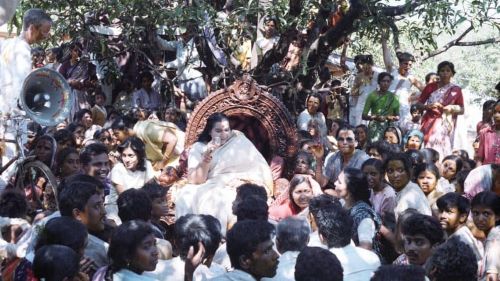
Paraclete Papers
PART ONE: An Investigative Report on Christianity's Greatest Cover-UpPART TWO: The Paraclete's Human Personality and the Theological Fallacy of Pentecost
PART THREE: The Greatest Deception in Human History: Pentecost as Satan's Trojan Horse
PART FOUR: Unveiling the Church Born from the Prince's Millennia of Deception
PART FIVE: Apokalypsis: Paraclete's Fulfillment of Jesus' Eschatological promise from Last Supper in Age to Come
PART SIX: The Paraclete and Pentecost: A Critical Analysis of Johannine Eschatology
 |
“I conclude the chapter by suggesting that the teaching of the Holy Spirit/Paraclete, because it is understood as the continuation of Jesus' teaching, is also regarded as the fulfillment of the promise of eschatological divine instruction.” Stephen E. Witmer Divine instruction in Early Christianity |
 |
“And when Jesus foreannounced another Comforter, He must have intended a Person as distinct and helpful as He had been. A breath, an afflatus, an impersonal influence could not have stood in the same category as Himself.” F. B. Meyer, Love to the Utmost |
 |
“There is something new and startling in both his person and his teaching that defies the categories provided by the world and culture in which he lived. It is clearest in all its radical nature in Jesus' insistence that in his person and activity God's decisive intervention was already present:” Francis Moloney, A Hard Saying |
 |
“The Paraclete has a twofold function: to communicate Christ to believers and, to put the world on trial.” Robert Kysar, John The Meverick Gospel |
 |
“But She—the Spirit, the Paraclete...—will teach you everything.” Danny Mahar, Aramaic Made EZ) |
 |
“Grammatical nonsense but evidence of the theological desire to defeminize the Divine.” Lucy Reid, She Changes Everything |
 |
“The functions of the Paraclete spelled out in verses 13-15... are all acts of open and bold speaking in the highest degree.” David Fleer, Preaching John's Gospel |
 |
“The reaction of the world to the Paraclete will be much the same as the world's reaction was to Jesus.” Berard L. Marthaler, The Creed: The Apostolic Faith in Contemporary Theology |
 |
Bultmann calls the “coming of the Redeemer an 'eschatological event,' 'the turning-point of the ages.” G. Ladd, A Theology of the New Testament |
 |
“The Paraclete equated with the Holy Spirit, is the only mediator of the word of the exalted Christ.” Benny Thettayil, In Spirit and Truth |
 |
“The divine Paraclete, and no lessor agency, must show the world how wrong it was about him who was in the right.” Daniel B. Stevick , Jesus and His Own: A Commentary on John 13-17 |
 |
Stephen Smalley asserts that “The Spirit-Paraclete ... in John's Gospel is understood as personal, indeed, as a person.” Marianne Thompson, The God of the Gospel of John |
 |
“The Messiah will come and the great age of salvation will dawn (for the pious).” Eric Eve, The Jewish context of Jesus' Miracles |
 |
“The remembrance is to relive and re-enact the Christ event, to bring about new eschatological decision in time and space.” Daniel Rathnakara Sadananda, The Johannine Exegesis of God |
 |
“The Spirit acts in such an international situation as the revealer of 'judgment' on the powers that rule the world.” Michael Welker, God the Spirit |
 |
The Paraclete's “Appearance means that sin, righteousness, and judgment will be revealed.” Georg Strecker, Theology of the New Testament |
 |
“While the Spirit-Paraclete is the true broker, the brokers they rely on are impostors.” T. G. Brown, Spirit in the writings of John |
 |
“The pneumatological activity ... of the Paraclete ... may most helpfully be considered in terms of the salvific working of the hidden Spirit.” Michael Welker, The work of the Spirit |
 |
“The pneuma is the peculiar power by which the word becomes the words of eternal life.” Robert Kysar, Voyages with John |
 |
“The gift of peace, therefore, is intimately associated with the gift of the Spirit-Paraclete.” Francis J. Moloney, The Gospel of John |
 |
“Jesus therefore predicts that God will later send a human being to Earth to take up the role defined by John .i.e. to be a prophet who hears God's words and repeats his message to man.” M. Bucaille The Bible, the Qur'n, and Science |
 |
“This utopian hope, even when modestly expressed, links Jesus and the prophets to a much wider history of human longing.” Harvey Cox, The Future of Faith |
 |
“Because of the presence of the Paraclete in the life of the believer, the blessings of the end-times—the eschaton—are already present.” Robert Kysar, John |
 |
“They are going, by the Holy Spirit's power, to be part of the greatest miracle of all, bringing men to salvation.” R. Picirilli, The Randall House Bible Commentary |
|
“The Kingdom of God stands as a comprehensive term for all that the messianic salvation included... is something to be sought here and now (Mt. 6:33) and to be received as children receive a gift (Mk. 10:15 = Lk. 18:16-17).” G. Ladd, A Theology of the New Testament |