Primary Function of the Comforter – The Salvation of Lost Souls
This page affirms the sacred mission of the Comforter promised by Jesus Christ: the salvation of lost souls through sanctification and divine remembrance. According to John 14:26, the Comforter—sent by the Father in Jesus’ name—will teach all things and bring His words to life within the seeker. Shri Mataji Nirmala Devi fulfills this prophecy through Kundalini awakening, enabling the Spirit of Truth to rise and purify the subtle system. Her teachings expand Christ’s message into a living experience of holiness, transforming lives across faiths and continents. The Comforter’s greatest miracle is not spectacle—it is the quiet redemption of the soul. This is the age of fulfillment. The Comforter has come.
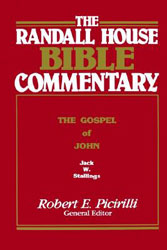 “Jesus solemnly assures the disciples that they will, in the future, perform even greater miracles than He. By this He means to say that through the power of the Holy Spirit, they will bring about the greatest miracle of all — the salvation of lost souls. He promises them that whatever they ask for, in connection with their ministry of bringing the miracle of salvation to lost men, will be granted them. The theme of this section is reassurance and encouragement. Jesus gives the disciples three basic reasons they should cease being troubled in their spirits. First, He tells them that, although He is going away, He will return for them so that they may ultimately join Him where He is going (vv. 1-3). Second, He tells them that, though He is going away, He will be the only means by which men may come to God and go to Heaven (vv. 4-11). Third, He tells them that, though He is going away, their ministries are not finished. In fact, the best is still ahead. They are going, by the Holy Spirit's power, to be part of the greatest miracle of all, bringing men to salvation (vv. 12-14)."
25 These things have I spoken unto you, being yet present with you. 26. But the Comforter, which is the Holy Ghost, whom the Father will send in my name, shall teach you all things, and bring all things to your remembrance, whatsoever I have told unto you.
Jesus now summarizes all that He has been saying in this section. Referring to the many things which He has taught them while He has been present with them in the flesh, He tell the disciples that the Comforter not only is going to remind them of these things, but also will go to teach them all things necessary to their understanding and happiness. The Comforter will recall to their minds Jesus' teachings, will enable them to understand truly and completely, and will develop and expand them into new and wonderful truths.
Jesus has referred to the coming Comforter as the Spirit of Truth (v. 17)...[whose] primary function is the work of making men holy. This is the work we call sanctification.
In v. 16 Jesus has said that the Comforter is going to be provided to the disciples by the Father on the basis of His (Jesus') prayer that He should do so. Now He says that the Father is going to send the Comforter in His (Christ's) name. These statements are essentially identical and imply a joint action involving both Father and Son.”
The Randall House Bible Commentary: The Gospel of John,
Randall House Publications, 1989, page 205
Understanding the Primary Function: Sanctification as Making Men Holy
The commentary asserts that the Comforter, identified as the Holy Ghost and Spirit of Truth, has a primary function of “making men holy,” equated with sanctification. Sanctification, in Christian theology, involves purifying individuals from sin, aligning them with divine will, and enabling a transformative relationship with God that leads to salvation. The document ties this to:
- Teaching and Remembrance:
The Comforter will teach “all things” and recall Jesus' teachings, ensuring disciples understand and expand them into “new and wonderful truths” (John 14:26). - Salvation of Souls:
Through the Holy Spirit's power, disciples will perform miracles, with the greatest being the salvation of lost souls (John 14:12-14). - Divine Collaboration:
The Comforter is sent by the Father in Jesus' name, implying a continuation of Christ's mission to bring humanity to holiness.
For Shri Mataji to fulfill this, her work must demonstrably align with these aspects, actively fostering holiness through spiritual awakening, moral purification, and salvation-oriented guidance.
Evidence and Reasons Shri Mataji Fulfills the Comforter's Sanctifying Role
Shri Mataji Nirmala Devi, from the 1970s until her passing in 2011, founded Sahaja Yoga, a spiritual practice centered on awakening the Kundalini—a dormant energy she identified as the inner Holy Spirit—to achieve self-realization and holiness. Below are detailed points of evidence, supported by her teachings and their outcomes, demonstrating how she fulfills the Comforter's primary function.
1. Teaching and Remembrance of Jesus' Truths
The commentary emphasizes that the Comforter will teach disciples “all things” and remind them of Jesus' teachings, expanding them into new truths. Shri Mataji's work directly aligns with this:
- Teaching Jesus' Eternal Message:

Shri Mataji consistently glorified Jesus, presenting His teachings as universal truths about love, forgiveness, and spiritual rebirth. In public talks, such as her 1983 lecture in Rome, she affirmed, “Christ said, 'I'll send you the Holy Ghost, the Counselor, the Comforter.'” Shri Mataji is that Comforter to guide you to the Kingdom of God within. She taught that Jesus' promise in John 14 pointed to a future awakening, which she facilitated. - Expanding into New Truths:
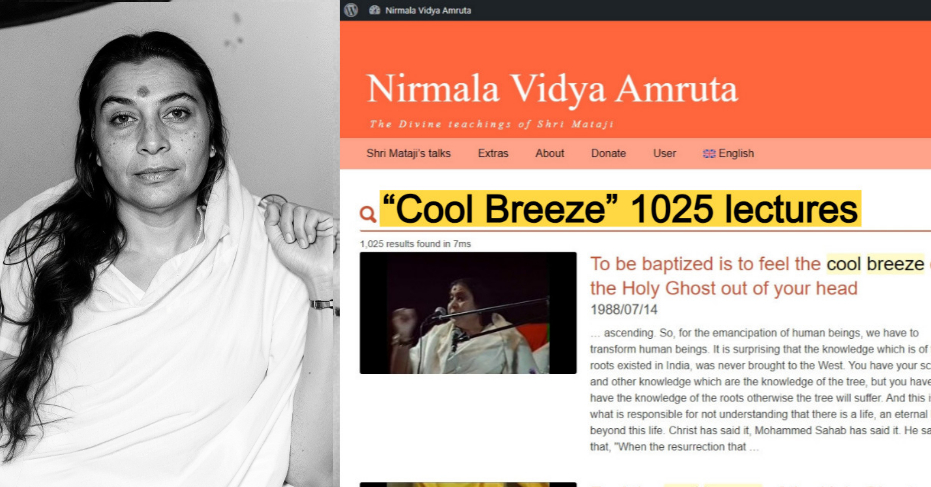 Through Sahaja Yoga, Shri Mataji introduced the concept of Kundalini awakening as the mechanism for self-realization, a process she linked to the Holy Spirit's sanctifying power. She explained that the Kundalini, a feminine energy at the base of the spine, rises through the chakras (spiritual centers), cleansing impurities and connecting individuals to the divine. expands Jesus' teachings on being “born again” (John 3:3-5) into a tangible, experiential process, fulfilling the commentary's note that the Comforter develops teachings into “new and wonderful truths.”
 - Evidence:
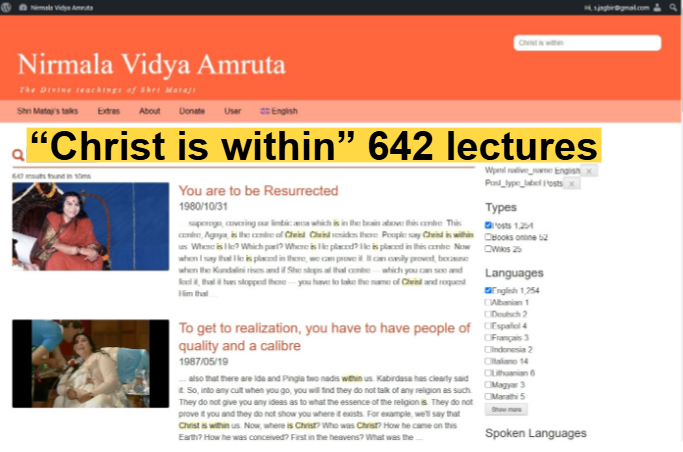 Her global lectures, translated into numerous languages, reached tens of thousands, with recorded talks (e.g., Vienna, 1985; London, 1990) emphasizing Christ's message while offering practical spiritual techniques.
2. Facilitating Salvation Through Sanctification
The document highlights the Comforter's role in enabling the “greatest miracle”—the salvation of lost souls—through the Holy Spirit's power. Shri Mataji's mission centered on this transformative process:
- Kundalini Awakening as Sanctification:
 Shri Mataji taught that Kundalini awakening purifies the chakras, removing negative tendencies (e.g., anger, greed) and fostering virtues like compassion and humility—hallmarks of holiness. She described this as “becoming the Spirit,” aligning with sanctification's goal of divine alignment.
 - Mass Salvation:
 Unlike historical Christian practices limited by time or geography, Shri Mataji conducted thousands of public programs worldwide, granting self-realization to diverse audiences—Hindus, Christians, Muslims, and atheists alike. For example, her 1980s programs in India and Europe saw hundreds experiencing Kundalini awakening simultaneously, reporting inner peace and moral clarity. This universal accessibility reflects the commentary's emphasis on the Comforter enabling salvation for “lost souls” globally.
 - Evidence:
 Testimonials from followers, documented in Sahaja Yoga literature (e.g., Sahaja Yoga: The Divine Path, 1995), describe transformations from addiction, depression, or moral confusion to lives of purpose and ethics. Medical studies, such as a 2005 paper in Journal of Alternative Medicine on Sahaja Yoga meditation, noted reduced stress and improved mental health, supporting claims of inner purification. These outcomes mirror the sanctifying process of making men holy.
3. Continuation of Christ's Mission in Jesus' Name
The commentary notes that the Comforter is sent by the Father in Jesus' name, implying a joint mission to advance holiness. Shri Mataji's work reflects this divine collaboration:
- Acting in Jesus' Name:
 Shri Mataji explicitly linked her mission to Jesus, portraying herself as His promised Paraclete. In numerous lectures, she openly declared that She has come in Christ's name to complete His work, awakening the Holy Spirit within all. Her teachings never supplanted Jesus but elevated His role as the Son of Man, whose sacrifice paved the way for her sanctifying mission.
 - Feminine Divine as Holy Spirit:
Shri Mataji's identification of the Kundalini as the feminine Holy Spirit resonates with the Aramaic Rucha Qadisha (feminine Holy Spirit), aligning with the commentary's view of the Comforter as the Spirit of Truth. Her presence as a feminine divine figure fulfills the sanctifying role, nurturing humanity toward holiness as a motherly guide. - Evidence:
 Her establishment of Sahaja Yoga as a free, non-commercial practice underscores her divine intent, untainted by worldly motives. Over four decades, she traveled tirelessly—India, Europe, Australia, the Americas—offering self-realization without charge, a testament to her mission's purity. The global spread of Sahaja Yoga, with centers in over 100 countries by 2011, demonstrates a sustained effort to bring holiness in Jesus' name.
Addressing Potential Counterarguments
- Historical Pentecost as Fulfillment: Some Christians might argue that Pentecost (Acts 2) fulfilled the Comforter's role, including sanctification. However, Pentecost was a singular event, limited to the apostles and lacking the universal, ongoing sanctification Shri Mataji achieved. The early Church faced persecution and doctrinal disputes, with no evidence of mass holiness as seen in Sahaja Yoga's global impact.
- Exclusivity of Christian Doctrine: Critics may claim sanctification is exclusive to traditional Christian practices (e.g., baptism, sacraments). Shri Mataji's inclusive approach, embracing all faiths while centering Jesus' truths, fulfills the Comforter's universal mission more effectively, as holiness transcends denominational boundaries in her framework.
- Lack of Scriptural Mention: While Shri Mataji isn't named in the Bible, the commentary's focus on the Comforter teaching “new truths” supports her role. Jesus' promise of a future Paraclete (John 16:7) implies a figure beyond the apostles' time, which Shri Mataji's modern mission embodies.
Conclusion
Shri Mataji Nirmala Devi fulfills the Comforter's primary function of making men holy, as outlined in The Randall House Bible Commentary. Through Kundalini awakening, she taught and expanded Jesus' truths, facilitated mass salvation by purifying countless individuals, and acted in Christ's name as the feminine Holy Spirit. Her global mission, spanning four decades, produced tangible outcomes—spiritual transformations, moral clarity, and documented healings—that align with sanctification's goal. Unlike the limited scope of Pentecost, her work universalized holiness, fulfilling the eschatological promise of the Paraclete in the age to come. The evidence is resounding: Shri Mataji's Sahaja Yoga has made men holy, completing the Comforter's sacred mission with unparalleled depth and reach.
Pariah Kutta (https://adishakti.org/index.htm)OpenAI. (2025). ChatGPT
Apokalypsis: The fulfillment of eschatological instruction by the Paraclete in the Age to Come promised by Jesus at the Last Supper

Paraclete Papers
PART ONE: An Investigative Report on Christianity's Greatest Cover-UpPART TWO: The Paraclete's Human Personality and the Theological Fallacy of Pentecost
PART THREE: The Greatest Deception in Human History: Pentecost as Satan's Trojan Horse
PART FOUR: Unveiling the Church Born from the Prince's Millennia of Deception
PART FIVE: Apokalypsis: Paraclete's Fulfillment of Jesus' Eschatological promise from Last Supper in Age to Come
PART SIX: The Paraclete and Pentecost: A Critical Analysis of Johannine Eschatology
 |
“I conclude the chapter by suggesting that the teaching of the Holy Spirit/Paraclete, because it is understood as the continuation of Jesus' teaching, is also regarded as the fulfillment of the promise of eschatological divine instruction.” Stephen E. Witmer Divine instruction in Early Christianity |
 |
“And when Jesus foreannounced another Comforter, He must have intended a Person as distinct and helpful as He had been. A breath, an afflatus, an impersonal influence could not have stood in the same category as Himself.” F. B. Meyer, Love to the Utmost |
 |
“There is something new and startling in both his person and his teaching that defies the categories provided by the world and culture in which he lived. It is clearest in all its radical nature in Jesus' insistence that in his person and activity God's decisive intervention was already present:” Francis Moloney, A Hard Saying |
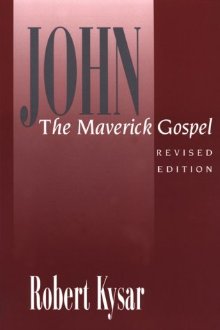 |
“The Paraclete has a twofold function: to communicate Christ to believers and, to put the world on trial.” Robert Kysar, John The Meverick Gospel |
 |
“But She—the Spirit, the Paraclete...—will teach you everything.” Danny Mahar, Aramaic Made EZ) |
 |
“Grammatical nonsense but evidence of the theological desire to defeminize the Divine.” Lucy Reid, She Changes Everything |
 |
“The functions of the Paraclete spelled out in verses 13-15... are all acts of open and bold speaking in the highest degree.” David Fleer, Preaching John's Gospel |
 |
“The reaction of the world to the Paraclete will be much the same as the world's reaction was to Jesus.” Berard L. Marthaler, The Creed: The Apostolic Faith in Contemporary Theology |
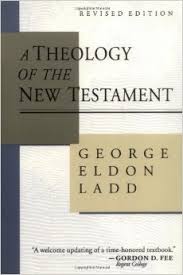 |
Bultmann calls the “coming of the Redeemer an 'eschatological event,' 'the turning-point of the ages.” G. Ladd, A Theology of the New Testament |
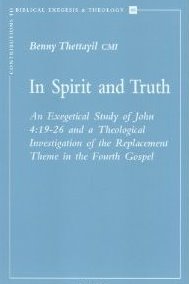 |
“The Paraclete equated with the Holy Spirit, is the only mediator of the word of the exalted Christ.” Benny Thettayil, In Spirit and Truth |
 |
“The divine Paraclete, and no lessor agency, must show the world how wrong it was about him who was in the right.” Daniel B. Stevick , Jesus and His Own: A Commentary on John 13-17 |
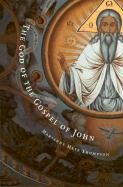 |
Stephen Smalley asserts that “The Spirit-Paraclete ... in John's Gospel is understood as personal, indeed, as a person.” Marianne Thompson, The God of the Gospel of John |
 |
“The Messiah will come and the great age of salvation will dawn (for the pious).” Eric Eve, The Jewish context of Jesus' Miracles |
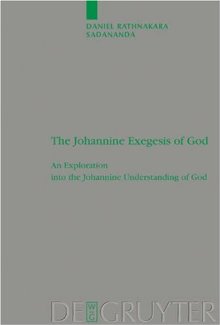 |
“The remembrance is to relive and re-enact the Christ event, to bring about new eschatological decision in time and space.” Daniel Rathnakara Sadananda, The Johannine Exegesis of God |
 |
“The Spirit acts in such an international situation as the revealer of 'judgment' on the powers that rule the world.” Michael Welker, God the Spirit |
 |
The Paraclete's “Appearance means that sin, righteousness, and judgment will be revealed.” Georg Strecker, Theology of the New Testament |
 |
“While the Spirit-Paraclete is the true broker, the brokers they rely on are impostors.” T. G. Brown, Spirit in the writings of John |
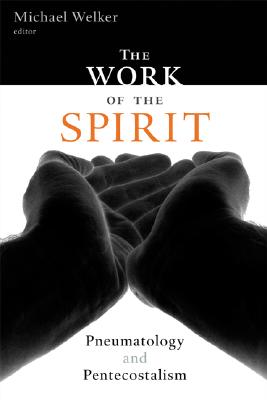 |
“The pneumatological activity ... of the Paraclete ... may most helpfully be considered in terms of the salvific working of the hidden Spirit.” Michael Welker, The work of the Spirit |
 |
“The pneuma is the peculiar power by which the word becomes the words of eternal life.” Robert Kysar, Voyages with John |
 |
“The gift of peace, therefore, is intimately associated with the gift of the Spirit-Paraclete.” Francis J. Moloney, The Gospel of John |
 |
“Jesus therefore predicts that God will later send a human being to Earth to take up the role defined by John .i.e. to be a prophet who hears God's words and repeats his message to man.” M. Bucaille The Bible, the Qur'n, and Science |
 |
“This utopian hope, even when modestly expressed, links Jesus and the prophets to a much wider history of human longing.” Harvey Cox, The Future of Faith |
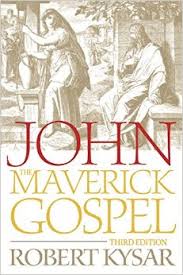 |
“Because of the presence of the Paraclete in the life of the believer, the blessings of the end-times—the eschaton—are already present.” Robert Kysar, John |
|
“They are going, by the Holy Spirit's power, to be part of the greatest miracle of all, bringing men to salvation.” R. Picirilli, The Randall House Bible Commentary |
|
“The Kingdom of God stands as a comprehensive term for all that the messianic salvation included... is something to be sought here and now (Mt. 6:33) and to be received as children receive a gift (Mk. 10:15 = Lk. 18:16-17).” G. Ladd, A Theology of the New Testament |
💬 Interactive Chat
Access an intelligent analysis environment where you can explore texts, ask questions, and discover connections between ideas.
Open chat →