

Nafas al Rachman - the breath of the Merciful
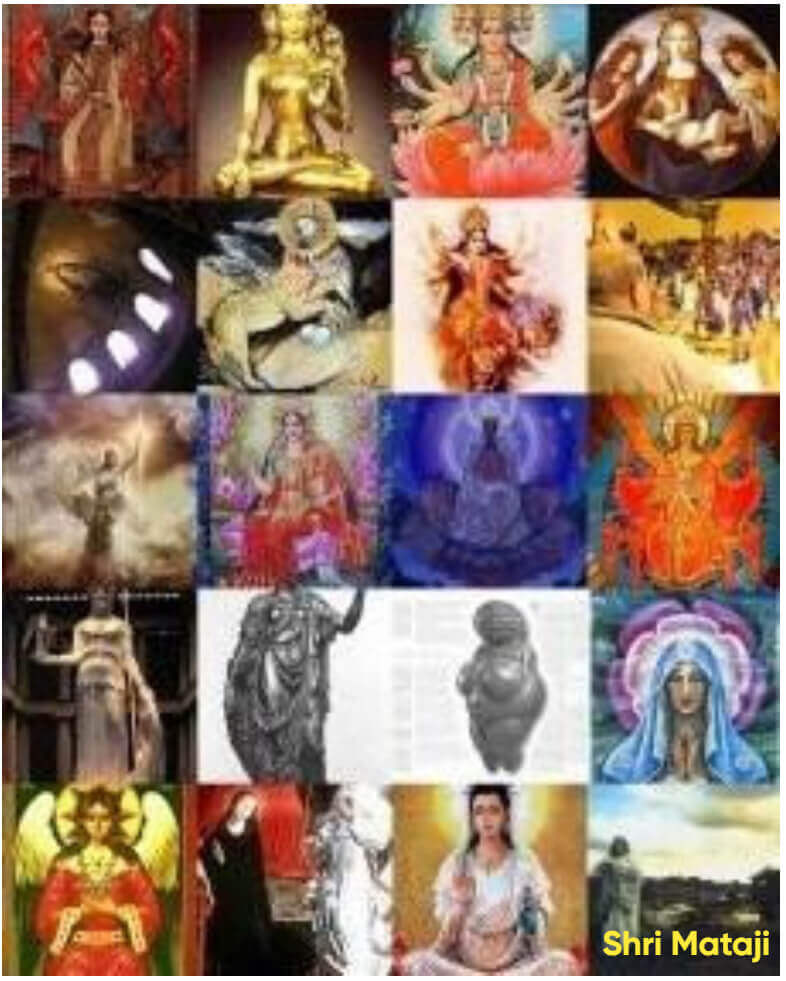
"The source of the universe is the breath of the Merciful," the 'nafas al rachman'. God is the merciful and, as he manifests himself, he pours forth this"breath of the Merciful.” The breath of the Merciful is the will in the divine nature to express itself, to manifest itself, to become known, that is, to realise the potentialities in its nature.
Table of Contents
- 1. Abstract
- 2. The Qur’anic Foundation: Rūḥ Allāh and the Absence of “Human Spirit”
- 3. Nafas al-Raḥmān: The Breath of the Merciful as Ontological Principle
- 4. Linguistic and Symbolic Parallels of Rūḥ and Breath
- 5. The Human Being as Theophany
- 6. Comparative Mystical Resonances
- 7. Conclusion
- 8. References
Abstract
This paper explores the Islamic notion of Nafas al-Raḥmān — the Breath of the Merciful — as an ontological principle of divine manifestation. Drawing upon Qur’anic verses, Sufi metaphysics (particularly Ibn al-ʿArabī), linguistic correlations, and comparative insights from Bede Griffiths[1], the paper argues that the rūḥ (spirit) is not a human possession but an attribute of God’s own essence within humanity. Nafas al-Raḥmān symbolizes the creative impulse of Divine Mercy — the self-expression of the Hidden Treasure who brings forth all existence into being and consciousness.
1. The Qur’anic Foundation: Rūḥ Allāh and the Absence of “Human Spirit”
The Qur’an never speaks of the "rūḥ of man" but consistently of the "rūḥ of Allah." This distinction implies that the rūḥ is a bestowed divine attribute rather than human property. The nafs (self or ego) represents the individualized breath of human life, whereas rūḥ belongs to the transcendent Source. Humanity thus manifests the divine presence yet does not own it.
2. Nafas al-Raḥmān: The Breath of the Merciful as Ontological Principle
Within Sufi cosmology — particularly in Ibn al-ʿArabī’s metaphysics — Nafas al-Raḥmān describes the primordial act through which the Hidden Treasure discloses itself. The divine saying, I was a hidden treasure and I desired to be known
, becomes the archetype of creation. According to Bede Griffiths[2], "The Breath of the Merciful is the will in the Divine Nature to express itself — to manifest itself, to become known." This corresponds to the Christian Spiritus that "brooded over the waters," and to the Hindu Prāṇa as creative energy. The Breath of the Merciful thus becomes the dynamic outpouring of Being into multiplicity — an infinite respiration of Mercy.
3. Linguistic and Symbolic Parallels of Rūḥ and Breath
The Arabic root r-w-ḥ signifies movement, wind, and expansion. Hebrew ruach means wind or spirit, while nefesh denotes living soul — closer to Arabic nafs. Sanskrit prāṇa and ātman fuse breath, life, and consciousness. Khaled Ahmed observes that rūḥ is the Divine attribute transcending individuality, while nafs corresponds to the personal ego that "breathes" the divine energy. The universality of linking breath with life — from Latin spiritus to Greek pneuma — reflects a shared human intuition: breath bridges finite and infinite realities.
4. The Human Being as Theophany
In Sufi teachings, the human being (al-insān al-kāmil) mirrors the totality of Divine Names. The rūḥ within is not created ex nihilo but serves as the theological locus of divine awareness. Ibn al-ʿArabī describes existence itself as breathing through Nafas al-Raḥmān; however, only humanity consciously mirrors that breath. When the heart is purified of egoic veils, it becomes the throne of Divine Mercy. Each human breath, in remembrance (dhikr), becomes an echo of the Breath of the Merciful.
5. Comparative Mystical Resonances
The vision of Nafas al-Raḥmān harmonizes with parallel doctrines across traditions: Śaṅkara’s realization of self-revealing Brahman, Nāgārjuna’s dynamic emptiness, and the Christian Trinity’s creative Spirit. Griffiths notes their unity in diversity — a common insight that Being expresses itself through love and manifestation, yet remains ineffably beyond form. Islam preserves this transcendence (tanzīh) even within mystical intimacy.
6. Conclusion
The teaching of Nafas al-Raḥmān reveals the cosmos as an outpouring of Divine Compassion. Humanity, infused with Rūḥ Allāh, becomes the living witness to that Mercy. Every breath is remembrance — a rhythm uniting Creator and creation. To breathe is to partake of the Divine will to be known: the Breath of the Merciful flowing through all existence.
References
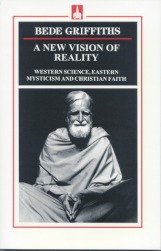
[1] Griffiths, Bede. "A New Vision of Reality (Western Science, Eastern Mysticism and Christian Faith)." Templegate Publishers, Springfield, Illinois, 1989, pp. 142–145.[2] Ibn al-ʿArabī. "The Bezels of Wisdom", trans. R. W. J. Austin. Paulist Press, 1980.
[3] Ahmed, Khaled. "Soul Belongs to God." Dawn, Karachi.
[4] Corbin, Henry. "Creative Imagination in the Sufism of Ibn Arabi." Princeton University Press, 1969.
[5] The Qur’an 32:9; 38:72.
Note: The philosophy of Ibn al Arabi has been studied with extraordinary insight and at the greatest depth by R.W.J. Austin in his translation of 'The Bezels of Wisdom in the Classics of Western Spirituality' (Paulist Press).
Shankara in Vedanta, Nagarjuna in the Madhyamika doctrine and Ibn al Arabi in Sufism, have each a very similar doctrine. There are differences but fundamentally the same doctrine is evident. That is why this doctrine can be said to be universal and why I think it is of such importance in relation to Christianity...
It is said in the tradition ('hadith') of Islam, "I was a hidden treasure and I desired to be known.” Ibn al Arabi has a beautiful phrase for this. He says, "The source of the universe is the breath of the Merciful," the 'nafas al rachman'. God is the merciful and, as he manifests himself, he pours forth this "breath of the Merciful.” The breath of the Merciful is the will in the divine nature to express itself, to manifest itself, to become known, that is, to realise the potentialities in its nature. The universe thus comes into being to reveal the hidden potentialities in the divine being. To Allah is attributed breath which is very like the 'spiritus', the "Spirit" of Christian doctrine, which "brooded over the waters" and brought forth the world. That is what is meant by "The breath of the Merciful.”"
Bede Griffiths: A New Vision of Reality (Western Science, Eastern Mysticism and Christian Faith), Pgs. 142-145
Templegate Publishers - Springfield, Illinois
Soul belongs to God
The word ruh in Urdu means soul, but it has a large number of other meanings. The basic sense however is that which is not solid. In fact it is like a breeze. From there, it brings us close to the sense of breath.
Allah says ruh belongs to Him. The breath that belongs to human beings is called nafs. The root nfs means self and breathing. It has two plural forms out of which one is common: nafoos meaning many persons. Anfaas means breaths.
In Hebrew ruh is not used for soul. The word for soul is nefesh, implying that the fine discrimination that one finds in Arabic is not there in Hebrew. English word spirit comes from the same root as breathing: aspire and respire.
Because alcohol is created through a process of distillation (as if the matter was breathing) it is named spirit. In its pure form it is supposed to evaporate like a soul.
English soul comes from the Germanic group and its root means something quick-moving. Here again the implication takes us to breeze or wind, which moves quickly. In Russian dusha (soul) is closely connected to dukha (breath or blowing wind). In Sanskrit, pran means both soul and breath.
The root rwh for ruh (soul) means the blowing of wind...
Ruh is Allah's own attribute given to human beings. The Quran doesn't say the ruh of man but ruh of Allah.”
Soul belongs to God —Khaled Ahmed