The Book Of Enlightenment
Of the many divine revelations July 23, 1994 stands out. On that day Kash asked, “Shri Mataji, what was Your original name?” The eternal, stunningly beautiful Mother replied: “Shri Lalita Devi”.“Now the name Nirmala itself means immaculate; means the one who is the cleansing power and the name of the Goddess also. My actual sign name is Lalita who is the name of the Primordial Mother. That is the name of the Primordial Mother.”
Shri Mataji, New York, USA, 30 September 1981
Sri Lalita Sahasranama 601-700
603) Sri Gurumurtih
— Of the Form of Guru.
— Leads devotee to Highest state of Liberation.
Sri Lalita Sahasranama
C. S. Murthy, Associate Advertisers and Printers, 1989
"Satchidananda alone is the Guru. If a man in the form of a guru awakens spiritual consciousness in you, then know for certain that it is God the Absolute who has assumed that human form for your sake. The guru is like a companion who leads you by the hand. After realizing God, one loses the distinction between the guru and the disciple. The relationship between them remains as long as the disciple does not see God.”
Sri Ramakrishna, The Gospel of Sri Ramakrishna, 1958, p. 253.
Dakshinamûrti, The Silent Guru Of Gurus
(by Adi Sankara).
vishvam darpanadrushyamananagarithulyam nijantargatam
pashyannatmani mayaya bahirivodbhootam yatha nidraya|
yah sakshat kurutê prabôdhasamayê swatmanamêvadvayam
tasmai sri gurumûrtayê nama idam sri dakshinamûrthayê ||
I offer my salutations to that beneficent Being who is incarnate as the Preceptor (Guru).
He, the Atman, appearing as the individual soul through the power of ignorance, sees (in the waking state) — as one does in sleep — the Universe,
Which in reality exists within himself, as something external, like a city seen reflected in a mirror.
But in his enlightened state he realises his own self, the one without a second.
yasyaiva sphuranam sadatmakamastakalparthakam bhasatê
sakshat tatvamasiti vêdavachasa yô bodhayatyashritan |
yat sakshat karanadbhavênna punaravrittirbhavambhônidhau
tasmai sri gurumûrtayê nama idam sri dakshinamûrtayê ||
I offer my salutations to that beneficent Being who is incarnate as the Preceptor (Guru),
The light of whose absolute existence shines forth in the world of appearance,
Who imparts to the disciple the holy teaching 'That Thou Art',
Upon realising which the soul never again returns to the ocean of birth and death.”
Swami Yatishwarananda, Universal Prayers
Ramakrishna on Guru
Ramakrishna was one of the greatest mystics to grace the Indian subcontinent in recent times. He taught more by his life than by words. In the following passages he describes the traits of a true teacher in his characteristic and inimitable style of making analogies with everyday events.
Who is a True Teacher?
He alone is a true teacher who is illuminated by the light of true knowledge. As many people have merely heard of ice but not seen it, so many religious preachers have only read in books about the attributes of God, but not realised them for themselves. And as many others have seen ice but not tasted it, so many religious teachers have obtained only a glimpse of divine glory but have not understood its real essence. Only he who has tasted the ice can say what it is like. Similarly, he alone can describe the attributes of God, who has associated with him and his different aspects in the relationship of a servant, a friend and a lover, and has realised his oneness with him in complete absorption in him...
Conception of the Guru
Who is whose Guru (spiritual guide and teacher)? God alone is the guide and Guru of the Universe.
He who considers his Guru to be merely human, what good can he derive from his prayers and devotions? We should not consider our Guru to be a mere man. Before the disciples see the Deity, he sees the Guru in the first vision of Divine illumination. And it is the Guru who afterwards shows the Deity, being himself mysteriously transformed into the form of the Deity. Then the disciple sees the Guru and the Deity as one and the same. Whatever boon the disciple asks, the deified Guru gives him all, yea, the Guru even takes him to the highest bliss of Nirvana (the state of extinction of individuality in God). Or, the disciple may choose to remain in a dualistic state of consciousness, maintaining the relation of the worshiper and the worshipped. Whatever he asks, his Guru vouchsafes him.
The human Guru whispers the sacred formula (mantra) in the ear; the divine Guru breathes the spirit into the soul.
The Guru is a mediator. He brings man and God together, even as a match-maker brings together the lover and the beloved.
A Guru is like the mighty Ganges. Men throw all filth and refuse into the Ganges, but the holiness of the river is not diminished by thereby. So is the Guru above all petty insult and censure...
Necessity of having a Guru
What is the necessity of calling a particular man our Guru instead of calling everyone who teaches us something by that designation?
When going to a strange country, one must abide by the directions of the guide, who knows the way. Taking the advice of many would lead to utter confusion. So in trying to reach God one must implicitly follow the advice of one single Guru who knows the way to God.
At a game of chess, the on-lookers can tell what the correct move is, better than the players themselves. Men of the world think that they are very clever, but they are attached to the things of the world — money, honours, sense pleasures, etc. As they are actually engaged in the play, it is hard for them to hit upon the right move. Holy men who have given up the world are not attached to the worldly objects. They are like the on-lookers at a game of chess. They see things in their true light and can judge better than the men of the world. Hence in living the holy life, one must put faith only in the words of those who meditate upon God and who have realised Him. If you seek legal advice, will you not consult lawyers who are in the profession? Surely, you will not take the advice of a man in the street.
If you are in right earnest to learn the mysteries of God, He will send you the Sadguru, the right teacher. You need not trouble yourself about finding out a Guru. He who can himself approach God with sincerity, earnest prayer and deep longing, needs no Guru. But such deep yearning soul is very rare; hence the necessity of a Guru.”
Sayings of Sri Ramakrishna, Sri Ramakrishna Math, Madras
607) Sri Devesi
— Queen of Devas i.e. Divine Forces.
Sri Lalita Sahasranama
C. S. Murthy, Associate Advertisers and Printers, 1989
615) Sri Adi-Shaktih
— Primal Power.
— The First Cause.
Sri Lalita Sahasranama
C. S. Murthy, Associate Advertisers and Printers, 1989
I pay homage to the Perfection of Wisdom!
She is worthy of homage.
She is unstained, the entire world cannot stain her.
She is a source of light, and from everyone in the triple world she removes darkness,
And she leads away from the blinding darkness
Caused by the defilements and by wrong views.
In her we can find shelter.
Most excellent are her works.
She makes us seek the safety of the wings of Enlightenment.
She brings light to the blind, she brings light
So that all fear and distress may be forsaken....
She is The Mother of the Bodhisattvas,
On account of the emptiness of her own marks.
As the donor of the jewel of all the Buddha- dharmas
She brings about the ten powers.
She cannot be crushed.
She protects the unprotected, with the help of the four grounds of self-confidence.
She is the antidote to birth-and-death.
She has a clear knowledge of the own-being of all dharmas,
For she does not stray away from it.
The Perfection of Wisdom of the Buddhas, the Lords, sets in motion the Wheel of the Law.
Perfection of Wisdom in Eight Thousand Lines 7.1
616) Sri Ameya
— Immeasurable.
Sri Lalita Sahasranama
C. S. Murthy, Associate Advertisers and Printers, 1989
617) Sri Atma
— She Who Is The Self In All
Sri Lalita Sahasranama
C. S. Murthy, Associate Advertisers and Printers, 1989
"According to Indian Philosophy, there are three levels in the mind: conscious, the subconscious and the superconscious (also called unconscious), working respectively in waking state, in dream state and dreamless sleep. In the last state, the mind and the senses, both are sleeping and therefore senses do not play any part. The mind is one with the non-material stuff of the universe.. In this state distinction between the subject and the object of the seer and the seen, disappears. The object merges into the subject itself and becomes one with it. The nature of the subject is that of consciousness. The subject is self or pure consciousness, eternal and changeless, nondual and Absolute. Here the soul merges into the mind. This nondual self or Atma of the third stage is described as of the nature of the pure existence or consciousness and bliss called sat-chit-anand. All this universe is this Self. So God is Universal Consciousness and Spirit of which the consciousness and spirit of each individual is a tiny part. Spake Guru Nanak: —"God is ever Truth, Beauty, Consciousness and Bliss.” (P. 4, A.D.)
The self of man is a part of God, the Supreme Spirit which is all pervasive in living and nonliving things. It is the infinite background of all the energies of the universe. This Supreme Spirit merges into the Universal Consciousness pervading in the minds of the individuals. Thus the Supreme Spirit and pure Super- consciousness both pervade the whole universe. This Immanent spirit is God and therefore we can say that God is Supreme Spirit and Universal Consciousness, the one ultimate of the whole universe, the Truth.”
Pritam Singh Gill, The Trinity of Sikhism
New Academic Publishing Co., Jullundur, India, 1990, p. 71.)
620) Sri Aneka-koti-brahmanda-Janani
— Mother of all Universes.
— Her mind creates Universes at Will.
Sri Lalita Sahasranama
C. S. Murthy, Associate Advertisers and Printers, 1989
621) Sri Divya-vigraha
— Represents the Battle of the Divine Forces against Evil.
Sri Lalita Sahasranama
C. S. Murthy, Associate Advertisers and Printers, 1989
Allah has decreed: "It is I and My messengers (of Al-Qiyamah) who must prevail":
For Allah is One full of strength, able to enforce His Will.
Thou will not find any people who believe in Allah and the Last Day,
Loving those who resist Allah and His Messenger,
Even though they were their fathers or their sons, or their brothers or their kindred.
For such He has written Faith in their hearts,
And strengthened them with a Spirit from Himself.
And he will admit them to Gardens, beneath which Rivers flow, to dwell therein (forever.)
Allah will be well pleased with them, and they with Him.
They are the Party of Allah.
Truly it is the Party of Allah that will achieve Felicity.
surah 58:21-22 Al Mujadidah, (The Woman Who Pleads)
637) Sri Visva-Garbha
— Mother of the Universe.
— Entire Universe within Her.
Sri Lalita Sahasranama
C. S. Murthy, Associate Advertisers and Printers, 1989
"He who is the Lord of the Universe will teach everyone.
He alone will teach us, who has created this universe ...
The Lord has done so many things —
Will He not show people the way to worship Him?
If they need teaching, then He will be the Teacher. He is our Inner Guide.”
Sri Ramakrishna, The Gospel of Sri Ramakrishna
Ramakrishna-Vivekananda Center, 1958, p. 125.
642) Sri Aparicchedya
— Indivisible.
Sri Lalita Sahasranama
C. S. Murthy, Associate Advertisers and Printers, 1989
646) Sri Satyananda-svarupini
— Of the Nature of Truth and Bliss.
Sri Lalita Sahasranama
C. S. Murthy, Associate Advertisers and Printers, 1989
"And here it will be fitting to introduce the sages' defination of the term truth. It has been earlier demonstrated that without such a defination men wander in a dry wilderness of hollow fancies, unfounded opinions, worthless theories and hypostatized words. This defination may sound quite simple, but it implications are most profound. It should be graven deeply on the heart. Here it is: TRUTH is that which is beyond all contradiction and free from all doubt; which is indeed beyond the very possibility of both contradiction and doubt; beyond the changes and alternations of time and vicissitude; forever one and the same, unalterable and unaltering; universal and therefore independent of all human ideation.”
Paul Brunton, Ph.D., The Hidden Teaching Beyond Yoga
E. P. Dutton & Co., Inc., 1966, p. 194.
"All things in the phenomenal world are endowed with five characteristics: existence, cognizability (that which makes one aware of the existence of a thing), attraction, form, and name. Of these, the first three (corresponding to Sat, Chit, and Anand, or Existence, Knowledge, and Bliss) belong to Brahman, which is the basis of everything and the other two, to the relative world. The characteristics of Existence, Knowledge, and Bliss are equally present in all material elements, animals, men, angels, and gods. These constitute their unchanging basis. It is the illusory name and form that make one thing appear to be different from another... It may be contended that there is a real difference between the Lord and the individual soul, and between the different souls themselves; so how can one establish the non-duality of Brahman? The answer: the difference is not real, but due to illusory superimposition.”
Swami Nikhilananda, Self-Knowledge [Atmabodha], 1989, p. 126-27.
"When confronted with himself, when beginning to enter into the poised state of contemplation, when at peace with himself and at the threshold of realization, Man has this tremendous desire to be this and that, to become this and that, to be involved in every process and to be present everywhere. It is not so much the hankering for power which drives Man, as some moralists would have us believe, much less a simply hedonistic urge; on the contrary, it is this existential desire to be and thus to be everything and, in the last instance, to Be, not just to share a part or to be present in a corner of the banquet of life and existence, but to be active at the very core of reality, in the divine center itself whence all emerges and is directed.”Let me have a self!"Is another refrain. The wise Man, described time and again in the shruti, is not the escapist and unfriendly solitary, but the full Man who, having realized his own limitations, knows how to enter into the infinite ocean of sat, cit, and ananda, of being, consciousness, and joy.”
Professor Raimundo Panikkar, The Vedic Experience
651) Sri Vijnatri
— Source of All Knowledge.
Sri Lalita Sahasranama
C. S. Murthy, Associate Advertisers and Printers, 1989
"CULTIVATION OF KNOWLEDGE CULTIVATION OF WISDOM
O mad man, you have not obtained spiritual wisdom and meditation. You have wasted this human life, and lost (sggs 793).
Forgetting the Naam, one rots away in egotistical pride. Without the Naam, what is the use of spiritual wisdom and meditation? (sggs 904).
Spiritual wisdom wells up, and evil- mindedness departs; the nucleus of the mind sky is drenched with Ambrosial Nectar. One who knows the secret of this device, meets the Supreme Divine Guru (sggs 974).
Apply the ointment of spiritual wisdom to your eyes. The Shabad is the lamp which illuminates the three worlds; it slaughters the five demons (sggs 1113).
One must be in light to know the darkness. Similarly, we must be established in spiritual wisdom to know the ignorance (mental conditioning, ego, etc.). Under the spell of ignorance, we have adorned our soul and inert body with the clothing of concepts and conditioning. Until they are removed, we will be unable to see our Beloved Lord. Accordingly, scriptures roar us to jump into the fire of knowledge. This fire will burn all.
Gurmukh hovai so giaan tat beechaarai hayumai Shabad jalaae: One who becomes Gurmukh contemplates the essence of spiritual wisdom; through the Shabad, he burns away his egotism (sggs 946).
To remain established in Self-Knowledge is Jeevan Mukti (liberation). When this state of wisdom is disturbed or agitated by distraction, there arise egotism and bondage. This leads to the question: How can one ascend to this state of the essence of spiritual wisdom? The Gurbani (Sri Guru Granth Sahib, SGGS) describes us steps for its attainment; knowing them one can free himself from delusion. These steps include:
Pure yearning for wisdom
Vichaar or practice of inquiry
Mental subtlety
Abiding in truth
Total detachment
Cessation of the perception of duality
Going beyond all these
As the saying goes: "We are what we think.”If our heart is filled with pure yearning or intention for attaining wisdom, it will manifest. If we don't, it will not happen. It's that simple. This is the first step. The mind will always do what it is trained to do. Our body is like a chariot, and the mind is the driver. For example, if one tells this mind to take him to a spiritual assembly (Satsang), it will take him there. On the other hand, if one asks this driver to take him to a liquor house, he will end up in a liquor bar or pub! Therefore, with pure wish or intention, we must yearn for freedom from ego and bondage. Otherwise, mental delusion is guaranteed!
Jehee mansaa kar laagai tehaa phal paaye: As is the aspiration, so is the rewards (sggs 116).
Jit laago man baasnaa ant saayee pragtaanee: That desire, to which the mind is attached, becomes manifest at the end (sggs 242).
Shabad Vichaar or inquiry of the Self is the love with the Self. Accordingly, the Gurbani has laid utmost importance and emphasis on Vichaar or Self-Inquiry (i.e., discussion, reflection, contemplation, deliberation, direct observation, etc.). Intuitive Shabad Vichaar cleanses one's mind by removing doubts, thereby, making it fit for receiving spiritual wisdom and intuitive understanding of the Word, Waheguru. Therefore, like our natural act of breathing that continues until our last breath, we must constantly be engaged in Vichaar every moment of our life.
Uttam karnee Shabad beechaar: The ultimate action is Shabad Vichaar (sggs 158).
Nanak Shabad vichaariai paayiai guni nidhaan: Nanak, by Shabad Vichaar, one obtains the treasure of spiritual wisdom (sggs 59)
Saache raatee Gur Shabad veechaar. Amrit peevai nirmal dhaar: By engaging in Guru's Shabad Vichaar, one becomes Imbued with Truth, and drinks in the immaculate stream of Ambrosial Nectar within (sggs 158).
Aatam Ram Ram hai aatam Hari paayeeyai Shabad veechaaraa hai: The soul is the Lord, and the Lord is the soul; by engaging in the Shabad Vichaar, the Lord is found (sggs 1030).
With the sincere practice of the preceding two steps, one develops dispassion for material attachment. As a result, the mind becomes subtle and transparent. Without gaining such intuitive balance of the mind, as the Gurbani says, we will render ourselves spiritually blind in this world.
Pareeyai guneeyai Naam sabh suneeyai anabhayu bhaayu na darsai: People read, hear and reflect upon all the Names of God; but without the intuitional realization, they can not see the Lord, the embodiment of love (sggs 973)
When all these three are well practiced, the seeker naturally turns away from the sense pleasures. With the natural turning away from these sense pleasures comes mind's natural dwelling in the truth; the Lord's Name. The so-called impurity or contamination of the mind is nothing but its attachment to sense pleasures. All the pleasures of Maya are tasteless and insipid. In the end, they all fade away. Power, wealth, various pleasures, and enjoyments, all are just like the shadow of a tree. We run around in many directions in hope to capture this shadow, but all of our pursuits are useless because everything we desire appears transitory. Except for the Lord of the Universe, everything is untrue and have no place in the pure Consciousness.
Baroo bheet banaayee rach pach rahat nahee din chaar.....: Like a wall of sand, built up and plastered with great care, which does not last even a few days, just so are the pleasures of Maya. Why are you entangled in them, you ignorant fool? Understand this today it is not yet too late! Chant and vibrate the Name of the Lord. Says Nanak, this is the subtle wisdom of the Holy Saints, which I proclaim out loud to you (sggs 633).
Saad kar samdhaa trishnaa ghiyu tel. Kaam krodh agnee siyu mel: Let your taste for pleasures be the firewood, let your greed be the ghee, and your sexual desire and anger the cooking oil; burn them in the fire of Divine knowledge (sggs 1257).
Geet naad harakh chaturaayee: Songs, sounds, pleasures and clever tricks; joy, love and the power to command; fine clothes and food these have no place in ones consciousness. True intuitive peace and poise rest in the Naam (sggs 133).
With the practice of these four comes the total detachment (complete control of mind). With the detachment from the falsehood arises the conviction of the true nature of the Absolute Truth. In other words, detachment from Maya (un-Real) constitutes attachment to Supreme Reality (Truth).
Bin bairaag na shootas maya: Without developing detachment to mundane objects, one can not escape Maya (sggs 329).
Man bairage gee. Khojti darsaar: Seeking the lord's vision, my mind has become detached (sggs 1230). Man kaa subhayu sadaa bairaagee: The mind's true nature is ever to remain detached (sggs 1128).
With the mastery over these five comes the cessation of the perception of duality and diversity within and outside. Then one abides and rejoices in one's own Self. This is the direct spiritual experience.
Koor gaye dubiddhaa nasee pooran sach bhare: Falsehood has vanished, duality has been erased, and they are totally overflowing with Truth (sggs 136).
Gurmukh hove so ekas siyu chit laaye. Doojaa bharam gurshabad jalaaye: One who becomes Gurmukh embraces love for the One. Doubt and duality are burned away by the Gurus Shabad (sggs 115).
After cessation of duality, only the Pure Consciousness remains. All other supports, divisions, or diversities cease to be. The spontaneous, natural and unbroken knowledge of the Self shines forth. This is the state of Jeevan Mukata; living liberated while incarnated in this body. This is the transcendental state. By ascending these seven steps, one attains the essence of spiritual wisdom, and becomes a holy person. This state of highest consciousness (Turiyaa Avasthaa) can be attained by all, for it involves only the rise of spiritual wisdom.
Dekho bhaayee gaan kee aayee andhee......: Behold, O brother, the storm of spiritual wisdom has come. It has totally blown away the thatched huts of doubt, and torn apart the bonds of Maya. The two pillars of double-mindedness have fallen, and the beams of emotional attachment have come crashing down. The thatched roof of greed has caved in, and the pitcher of evil-mindedness has been broken (sggs 331).
One may read about wisdom, one may talk about wisdom, one may even externally look wise; but in reality, he may be just cultivating ignorance instead! For example, a painted pot of nectar can not be nectar, a painted flame can not be fire, and a painting of a person can not be a person. Similarly, wise words are mere words unless they are substantiated by the inner transformation. This leads to a question: What is the proof of wisdom? The real proof of wisdom is the absence of desire for sense gratification or evil-mindedness ( i.e., lust, anger, greed, attachment, pride, and enviousness).
Nangaa giaan nahee mukh baatayu. anik jugat sastar kari bhaatayu. giaanee soyi jaakai drir soyoo. kahat sunat kashoo yog na hoyoo: Spiritual wisdom is not obtained by mere words of mouth. It is not obtained through the various debates of the Shaastras and scriptures. They alone are spiritually wise, whose minds are firmly fixed on the Lord. By just hearing and telling stories, no one attains Yoga (sggs 251).
The true nature of our soul is pure wisdom. As such, the wisdom is always present within all beings. However, it becomes dormant due to mental conditioning. The spiritual practice such as contemplation on Shabad or Naam helps awaken this dormant condition.
Giaan dhyaan Gurshabad hai meethaa: Spiritual wisdom and meditation come to those unto whom the Gurus Shabad is sweet (sggs 162).”
Tara Singh, Reflections on Gurbaniwww.gurbani.org/webart6)
652) Sri Vedya-Varjita
— The Knower and the Known.
— Nothing for Her to know.
Sri Lalita Sahasranama
C. S. Murthy, Associate Advertisers and Printers, 1989
654) Sri Yogada
— One who gives Union of individual soul with Cosmic Spirit.
Sri Lalita Sahasranama
C. S. Murthy, Associate Advertisers and Printers, 1989
"What Is the Nature of the Yoga Pada?
Yoga is internalized worship which leads to union with God. It is the regular practice of meditation, detachment and austerities under the guidance of a satguru through whose grace we attain the realization of Parashiva. Aum.
Yoga," union," is the process of uniting with God within oneself, a stage arrived at through perfecting charya and kriya. As God is now like a friend to us, yoga is known as the sakha marga. This system of inner discovery begins with asana-sitting quietly in yogic posture-and pranayama, breath control. Pratyahara, sense withdrawal, brings awareness into dharana, concentration, then into dhyana, meditation. Over the years, under ideal conditions, the kundalini fire of consciousness ascends to the higher chakras, burning the dross of ignorance and past karmas. Dhyana finally leads to enstasy-first to savikalpa samadhi, the contemplative experience of Satchidananda, and ultimately to nirvikalpa samadhi, Parashiva. Truly a living satguru is needed as a steady guide to traverse this path. When yoga is practiced by one perfected in kriya, the Gods receive the yogi into their midst through his awakened, fiery kundalini. The Vedas enjoin the yogi," With earnest effort hold the senses in check. Controlling the breath, regulate the vital activities. As a charioteer holds back his restive horses, so does a persevering aspirant restrain his mind.” "
Satguru Sivaya Subramuniyaswami (Himalayan Academy, 1998)
"The word Atman is generally rendered here as"Soul"or"Self.”The Sanskrit word really cannot be translated. Atman is the deathless, birthless, eternal, and real Substance in every individual. It is the unchanging Reality behind the changing body, sense-organs, mind, and ego. It is Spirit, which is Pure Consciousness and is unaffected by time, space, and causality; therefore It is limitless and One without a second. As the unchanging Reality in the individual is called Atman, so the unchanging Reality in the universe is called Brahman. Brahman, too, is beyond time, space, and causality and is all-pervading Spirit. Vedanta states that Brahman and Atman are one and the same. The knowledge of this identity or non-difference is called Self-Knowledge, which confers upon man the boon of liberation from the bondage and suffering of the world.
Atman — as the jiva, or embodied soul — derives Its experience in the relative world through three states of consciousness. In the waking state It experiences the gross objects of the outside world; in the dream state It experiences subtle impressions, purely mental in nature and created by the experiences of the waking state; and in deep sleep It enjoys peace and remains as the witness of the absence of the activities of mind and senses. In this last state It is close to Its real nature and the subject-object relationship is absent; yet even here the Knowledge of the Self is obscured by the veiling-power of ignorance. There is the fourth state, called Turiya, which in reality is not a state; then Atman is realized as Pure Consciousness without any subject-object relationship. Turiya pervades all the three states and forms their substratum.”
Swami Nikhilananda, Self-Knowledge [Atmabodha], 1989, p. 118.
658) Sri Icchasakti-Jnana-Sakti-Kriya-Sakti-Svarupini
— The Power of Will, Knowledge and Action.
— The Force that Creates and Moves the Universe.
Sri Lalita Sahasranama
C. S. Murthy, Associate Advertisers and Printers, 1989
"Icha. There is a beautiful saying in the Shiva tradition that God created the world out of"His sweet will," which was gifted into Shakti's hands. The Sanskrit word for will is icha, which also means"desire"or"Intention.”Will is the next level to emerge from bliss, because when you are full of joy, anything you intend or desire must be aligned with the divine. At this level there is no question of wrong desires or willful behavior that can harm yourself or anyone else. God can be compared to someone looking in a mirror that surrounds her on all sides, so that everywhere she gazes she sees her own reflection. There is nothing outside this to see, therefore anything God creates is just a modified form of Her own bliss. Icha is like the bow that shoots life outward, giving it a loving purpose and direction.
Gyana. Knowledge about God is of two kinds, direct and indirect. Indirectly we can read scriptures, listen to sermons, consult authorities, and from these sources build a reasonable case that God exists. But such a God transmits no love to earth. Therefore nothing substitutes for gyana, which is direct knowledge of the divine. Instead of having thoughts about God, you share God's own thoughts. Her thoughts can only be about Herself. This isn't cosmic self-centeredness, however. It confirms the fact that spiritual knowledge is essential; truth; trust; devotion, and love are inside our thoughts. Gyana is the mind in communion with spirit.
Kriya. The last Shakti is the most visible. When God acted She brought the material world into existence. Although both words mean"Action," kriya is not the same as karma. Karma is action born of cause and effect; it is action that reinforces separation. Kriya is action inspired by spirit; it abolishes separation and brings communion. In India a holy person who has entered a trance would be exhibiting a kriya; the inspired words from his mouth, his hand gestures, facial expressions, even breathing would also be kriyas. Vedic scriptures contain thousands of descriptions detailing exactly which inward state is signified by which kriya (the smile of the Buddha and his uplifted thumb and forefinger touching are just two examples.) But in a broader sense the change of behavior exhibited by someone who has realized God, turning from violence to peace, from conflict to serenity, from egoism to altruism, is taking place in the realm of kriya. This is the last cascade of the divine into creation. The stillness of pure awareness cascade into bliss, bliss into will, will into knowledge, and finally knowledge into action. The fivefold nature of Shakti has revealed itself completely.”
Deepak Chopra, The Path of Love
Random House,1977, p. 241-42.
659) Sri Sarvadhara
— The Basis of All.
Sri Lalita Sahasranama
C. S. Murthy, Associate Advertisers and Printers, 1989
661) Sri Sadasad-rupadharini
— The Form of Existence and Non-existence.
— The Source of Reality and Unreality.
Sri Lalita Sahasranama
C. S. Murthy, Associate Advertisers and Printers, 1989
664) Sri Loka-yatra-vidhayini
— The One who determines the Life-Cycle of the Universe.
Sri Lalita Sahasranama
C. S. Murthy, Associate Advertisers and Printers, 1989
665) Sri Ekakini
— Alone.
Sri Lalita Sahasranama
C. S. Murthy, Associate Advertisers and Printers, 1989
668) Sri Dvaita-varjita
— The Ultimate Reality beyond All Duality.
Sri Lalita Sahasranama
C. S. Murthy, Associate Advertisers and Printers, 1989
"God is Noumenon (Nam): God is the ultimate Reality or Truth, which is neither material nor mental but it is Universal Consciousness and Supreme Spirit merged together. The universe is the manifestation of the Supreme Spirit. Further God or the Supreme Spirit is Noumenon (Nam.) Noumenon means inner spirit. It is an unknown and unknowable substance or a thing as it is in itself. It is opposed to phenomenon or the form through which it becomes known to the senses or the understanding. So God is that spirit or essence which is called Nam.
In the history of man God has been given several names due to the difference in languages and the concepts of the people of particular sections or places such as Allah, Ishwar, Ram, Narayan, Bhagwan etc. It becomes difficult to depict the real nature of God by adopting any one of these names because the words used give different meanings. Different religions are not unanimous over the attributes of God as depicted by those names. Ishwar, for example, is the Determinate (Nirguna.) So the word 'Ishwar' does not convey the attributes of God as believed by Sikhism i.e. God as Nirguna as well as Sarguna. So Guru Nanak left all these names and called Him as Noumenon, Essence or Spirit that can not be known to the senses and that is to be kept in view while remembering Him. So Nam is the name of the essence and spirit of the Reality or God. The essence is always different from the apparent. It does not create controversies over the name.”
Pritam Singh Gill, The Trinity of Sikhism, 1990, p. 73-4.
669) Sri Annada
— The Giver of Food.
— Sustains Life and Consciousness.
Sri Lalita Sahasranama
C. S. Murthy, Associate Advertisers and Printers, 1989
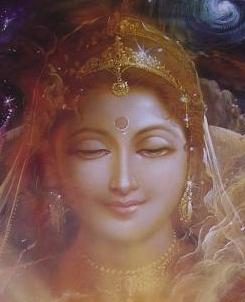
Mahadevi or"Great Goddess"Is a term
used to denote the Goddess or Devi that
is the sum of all other Devis. (Wikipedia)
[The Goddess distinguishes between nonconscious Maya and her own true Self as pure consciousness.]
2.11. [cont.] Since Maya is something we can perceive, it has the nature of nonconscious matter; since knowledge destroys it, it is not truly existent.
2.12. Consciousness is not something we can perceive; what we perceive is indeed nonconscious.
Consciousness is self-luminous; nothing else illuminates it.
2.13. It does not even illuminate itself, for that would lead to the fallacy of infinite regress.
As an agent and the object acted upon are distinct entities, so consciousness itself, like a lamp,
2.14. While shining brightly, illuminates what is other than itself. Know this, O Mountain,
For thus have I demonstrated that consciousness, belonging to my own nature, is eternal.
2.15. The visible world appears and disappears constantly in the various states of waking, dream, and deep sleep.
Pure consciousness never experiences such fluctuations.
2.16. Even if this consciousness itself became an object of perception, then the witness
Of that perception would abide as the real pure consciousness, as before.
2.17. And so those versed in religious treatises regarding the real declare consciousness to be eternal.
Its nature is bliss, for it is the object of supreme love.
2.18. The feeling, 'Let me not cease to be; let me exist forever,' is rooted in love for the Self.
Certainly there is no actual relation between me and all else, since all else is false.
2.19. Therefore I am regarded truly as an undivided whole.
And that consciousness is not an attribute of the Self,
for then the Self would be like an object.
2.20. In consciousness no possible trace of the object state can be found.
And so consciousness also has no attributes; consciousness is not a quality separate from consciousness itself.
2.21. Therefore the Self in essence is consciousness, and bliss as well, always.
It is the real and complete, beyond all relation, and free from the illusion of duality.
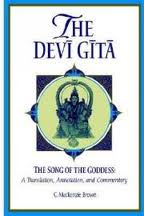
Comment
In the Sakta view, Maya is not simply an insentient force but a conscious and willful facet of the Goddess' personality. Somewhat paradoxically, it is the nondualist school of Advaita, emphasizing an acosmic view of reality and characterizing the realm of Maya as false, that often stresses the greatest difference between Maya and the supreme. Advaita objectifies Maya, viewing it as inert and insentient (jada), over against the supreme, conscious subject that is Brahman (or Atman). By way of contrast, the Devi-Bhagavata, more often than not presenting a Sakta viewpoint, asserts that Maya is"The very essence of the supreme Brahman (maya-para-brahma-svarupani)," and that"The world without Maya would ever be unconscious and inert (jada).”
The Goddess in the above verses of the Devi-Gita ignores for the moment the Sakta perspective, adopting a radical Advaita interpretation by drawing a sharp distinction between herself and Maya. This distinction as characterized here is somewhat at odds with the earlier notion of"difference and nondifference' as suggested by the substance/attribute analogies of verse 5. The Goddess now denies the"nondifference," utilizing standard Advaita visual images and metaphors that stress the"difference.”As the pure subject or consciousness (variously called caitanya, samvit, jnana, and cit), she likens herself to a lamp that is self-illuminating, revealing the visible realm that is Maya, the realm of inert, material objects (referred to as drsya," the seen," and as jada," inert, dull, insentient"). Pure consciousness itself is never an object of perception or knowledge, but is instead the eternal seer or witness (saksin), observing the ephemeral and false identities of empirical existence.
The Goddess here also denies that consciousness is an attribute of the Self-or herself-in accord with Advaitic principles affirming the radical oneness of the supreme subject, beyond all qualification or attribution (neti, neti). Only objects have qualities or attributes. Thus the Goddess does not possess consciousness but rather is consciousness.
C. MacKenzie Brown, The Devi Gita: The Song of the Goddess
State University of New York Press (September 1998) pp. 91-3

Andrew Cohen We, the Unbelievers
by Andrew Cohen
Enlightenment for the 21st Century
A couple of years ago, I discovered something shocking, extraordinary, and completely obvious: Most of us simply don't believe in the evolution of consciousness. And I don't just mean those who are convinced that God created the world in six days. I mean those of us who accept the theory of evolution and who are, at least to some degree, aware of the multidimensional nature of its manifestation all around us. We believe in cosmological evolution and understand that we live not in a static universe but in one that is part and parcel of a deep-time developmental process. We don't doubt that the universe was born many billions of years ago in a blinding flash of light and energy. We believe in biological evolution and have little difficulty comprehending how life itself has evolved from lower levels of development like worms and butterflies to higher ones like dolphins and humans. And many of us even recognize that culture evolves over time and see that development as the expression, at a collective level, of our human capacity for greater and greater complexity and integration. We believe in the evolutionary process because in so, so many ways we can see it all around us: moving, stretching, changing, reaching, from life to death to new life. But when it comes to consciousness—especially our own—I have discovered that our conviction in that same process is often nowhere to be found.
We believe in evolution as an objective fact of life and of the creative process but not necessarily as a living potential inherent in our own subjective experience. It stunned me when I first realized that even many of us who are already dedicated seekers never consider that our very own consciousness, our deepest sense and experience of our self, could actually evolve and develop. It must be because it is such a quantum leap for the subject to become the object—for consciousness to become the object of its own attention and intention. I'm not just speaking about awakening to the experience or fact of consciousness at the level of pure subjectivity, which is what the spiritual experience is typically all about. I'm pointing to something even more difficult to grasp, which is the living potential inherent in consciousness itself for development and growth.
So what does this mean? It means that the feeling/knowing experience of being ourselves can evolve, change, and develop in ways we simply cannot imagine. What is it like for consciousness to evolve? We cannot picture it in the eye of our mind because such development is a journey from the gross to the subtle and is unreachable with thought. How can we possibly imagine that which we cannot conceptualize?
We can imagine our own development as long as we can objectify it with thought. For example, we can imagine ourselves losing weight and building muscle. We can imagine ourselves learning algebra, Chinese, or how to play the guitar. We can even imagine ourselves becoming less selfish and more compassionate. But we simply cannot imagine our own self evolving at the level of consciousness itself. It is important to recognize what an alien concept this actually is in our culture. We are almost never encouraged to grapple with our own evolutionary potential at such a fundamental level, and as a result, most of us have never even considered it. Think about it, just for a moment: What would it be like for my self to evolve in its very essence? What would it be like to develop and grow at a level so profound that I would never be able to see it and yet others would be able to recognize its expression? If we can even begin to look deeply into this question, mysteriously, we will already be participating in the very evolution of consciousness I've been speaking about. And if we pursue it wholeheartedly, we will be helping to make conscious a miraculous process that was born many billions of years ago in a flash of light and energy and is only now beginning to awaken to itself, through us.
Andrew Cohen, founder and editor-in-chief of What Is Enlightenment? has been a spiritual teacher since 1986 and is the author of numerous books, including Living Enlightenment and Embracing Heaven & Earth.
Dennis Choptiany, Markham, Canada:"It can be argued that the most profound creation that humans have made is God. With it came the formation of a vast number of religions and their destructive divisions and conflicts. In your opinion, why do people have an apparent 'need' for religion and why have religions flourished even today when there is more and more evidence of the validity of agnostic and atheist views?”

Deepak Chopra:"Religions have an appeal because human beings have the fear of mortality. All religions promise eternal life. In the absence of profound knowledge of the workings of the universe, we rely on so-called religious authority to answer the deepest questions of our existence: who am I, where did I come from, what's the meaning and purpose of existence, do I have a soul, what happens to me after I die, does God exist, and if God exists does God care about me personally.
Unfortunately, religious ideology, dogma and belief systems are no longer congruent with what we know about the workings of the universe. They are inconsistent with our insights from modern cosmology, evolution, biology and the sciences. Hence, religious based on primitive belief (and unfortunately, all of them are based on primitive beliefs) have become quarrelsome, divisive and frequently idiotic.
However, consciousness still remains a mystery. Is our consciousness an emergent property of our biology or is consciousness the ground of existence that differentiates itself and projects itself as reality? This is not a settled issue. The current atheists and agnostics, such as Richard Dawkins, for example, are espousing an old fashioned 19th century atheism. The god they attack can not be defended. My hope is that as science progresses and looks at the mystery of consciousness we will see the emergence of a new spirituality that is secular and scientific and still addresses our deepest longings and our most important existential dilemmas.”
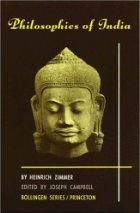
"For where dwell the gods to whom we can uplift our hands, send forth our prayers, and make oblation? Beyond the Milky Way are only island universes, galaxy beyond galaxy in the infinitudes of space — no realm of angels, no heavenly mansions, no choirs of the blessed surrounding a divine throne of the Father, revolving in beatific consciousness about the axial mystery of the Trinity. Is there any region left in all these great reaches where the soul on its quest might expect to arrive at the feet of God, having become divested of its own material coil? Or must we now turn rather inward, seek the divine internally, in the deepest vault, beneath the floor; hearken within for the secret voice that is both commanding and consoling; draw from inside the grace which passeth all understanding?”
Heinrich Zimmer, Philosophies of India
Princeton University Press, 1974, p. 13
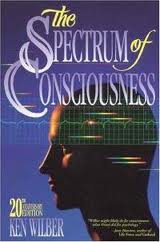
"It has been almost twenty years since I wrote Spectrum, and the intervening two decades have convinced me more than ever of the correctness of its essential message: being and consciousness exist as a spectrum, reaching from matter to body to mind to soul to Spirit. And although Spirit is, in a certain sense, the highest dimension or level of the spectrum of existence, it is also the ground or condition of the entire spectrum. It is as if Spirit were both the highest rung on the ladder of existence and the wood out of which the entire ladder is made — Spirit is both totally and completely immanent (as the wood) and totally and completely transcendent (as the highest rung.) Spirit is both Ground and Goal ... The realization of our Supreme Identity with Spirit dawns only after much growth, much development, much evolution, and much inner work ... only then do we understand that the Supreme Identity was there, from the beginning, perfectly given in its fullness.”
Ken Wilber, The Spectrum of Consciousness
Quest Books, 1993, p. xvi.
Vedanta and Consciousness
The Vedantic concept of consciousness is somewhat different from the every-day, Western concept. In the West, what usually is referred to as consciousness is more likely to be called awareness. In Vedanta consciousness is omnipresent and objectless. There is consciousness behind everything — be it a human, an animal or a stone — but a stone has no awareness and the awareness of an animal is very limited. Likewise, the awareness of humans can be more or less limited. Consciousness is static and forever unchanging, but awareness is dynamic and may undergo changes. Consciousness is the same in all humans and interconnects all humanity. While consciousness is undivided and without limits, awareness may be limited and differ from person to person.
The Ultimate Reality is characterized by three concepts — absolute being, absolute consciousness and absolute bliss. Nevertheless, the Ultimate Reality is beyond these and any other human conceptions — It is objectless, omnipresent, all-pervasive, eternal, infinite, unchanging, motionless and without any form. Often, the Ultimate Reality is referred to as a cosmic ocean of consciousness.”
Steen Ingemann, Guide to Ultimate Reality (www.rishi.dk/guide/)
4) Sri Cidagni-Kunda-sambhuta
— Born from the Pit of the Fire of Consciousness.
— Burns out ignorance and confers Immortality.
— She who rose from the fire of knowledge and is the ultimate truth.
68) Sri Chakra-raja-ratha-rudha-sarvayudha-pariskrta
— Mounted on Sri Chakra inside body with all weapons i.e. Powers.
— Enlightens mind to realise Ultimate Reality as an All Pervading-Consciousness.
207) Sri Manonmani
— Highest state of Consciousness.
— Secret name of Sri Durga.
367) Sri Pratyak-Chiti-Rupa
— Inner Consciousness or Knowledge.
404) Sri Bhakta-harda-tamo-bheda-bhanumad-bhanu- santaih
— Effulgence of the Sun; dispels Darkness of Ignorance.
— Giver of the Vision of the Ocean of Consciousness.
573) Sri Prajnana Ghana-rupini
— Supreme Wisdom
— State of Consciousness where nothing else is experienced except Self. —"Like the taste of salt in the sea (It) is everywhere; Prajnana is All Pervasive.”Brahadaranyaka Upanisad
669) Sri Annada
— The Giver of Food.
— Sustains Life and Consciousness.
739) Sri Layakari
—The Fifth State beyond Turiya.
—The State where individual and Cosmic Consciousness merge.
807) Sri Param-dhama
— The Ultimate Light.
— The Ultimate Status
— 'Yadgatva na nivartante taddhama paramam mama'
"The State of Consciousness from which there is no return is My Ultimate State.” (Bha. Gi. 16-6)
854) Sri Gambhira
— The Bottomless Lake.
—"The Ultimate Mother is to be visualised as a great and deep lake of Consciousness, uncomprehended by Space and Time.”Siva Sutra 1.23
858) Sri Kalpana-rahita
— Pure Consciousness.
907) Sri Tattvamayi
— The Mother of the Ultimate State of Consciousness.
Sri Lalita Sahasranama,
C. S. Murthy, Assoc. Advertisers and Printers, 1989.
671) Sri Vrddha
— The Oldest.
Sri Lalita Sahasranama
C. S. Murthy, Associate Advertisers and Printers, 1989
673) Sri Brhati
— The Immense Truth.
Sri Lalita Sahasranama
C. S. Murthy, Associate Advertisers and Printers, 1989
"Mystical theology, both in the East and in the West, has sometimes been divided over the issue whether the union with the divine is the result of one's unaided effort or supernatural grace.
The approaches to the divine or sacred are various rather than uniform. Moving through physical, intellectual, devotional, and symbolic rituals and disciplines, it moves toward the ultimate goal: the annihilation of the self, unio mystica ("mystical union") in Western Christianity, moksa ("salvation") in Hinduism, Nirvana (the State of Bliss) in Buddhism, and fana ("The snuffing out of self") in Islam. Though the words differ, the experiences are perhaps allied, if not the same. In a Sufi (Islamic mystical) poem the divine voice speaks exultantly:
Annihilate yourself gloriously and joyously in Me,
And in Me you shall find yourself;
So long as you do not realize your nothingness,
You will never reach the heights of immortality.”
Britannica Online (1994-1998 Encyclopaedia Britannica, Inc.)
674) Sri Brahmi
— Wife of Sri Brahma i.e. Sri Saraswati, the Goddess of Speech.
Sri Lalita Sahasranama
C. S. Murthy, Associate Advertisers and Printers, 1989
678) Sri Bhasa-rupa
— In the Form of Languages.
Sri Lalita Sahasranama
C. S. Murthy, Associate Advertisers and Printers, 1989
We have sent it down as an Arabic Qur'n, in order that ye may learn wisdom.
We do relate unto thee the most beautiful of stories, in that We reveal to thee this Qur'n:
Before this, thou too was among those who knew it not.
surah 12:2-3 Yusuf (Joseph)
(Abdullah Yusuf Ali, The Holy Qur'an, 1989.)
Thus we have revealed it to be a judgement of authority in Arabic.1859
Were thou to follow their (vain) desires after the knowledge which hath reached thee,
Then wouldst thou find neither protector nor defender against Allah.
surah 13:37 Al Ra'd (The Thunder)
"1859. The Qur'an is in Arabic; therefore the Arabs, among whom it was promulgated, could have no difficulty in understanding its percepts and using it in judging of right and wrong in all their affairs. But it is also universal: therefore no one should give preference in his own vain fancies against the authoritative declaration.”
Abdullah Yusuf Ali, The Holy Qur'an
681) Sri Sukharadhya
— Easily worshipped without putting body to strain.
— Internally worshipped.
Sri Lalita Sahasranama
C. S. Murthy, Associate Advertisers and Printers, 1989
682) Sri Subhakari
— The Beneficent.
Sri Lalita Sahasranama
C. S. Murthy, Associate Advertisers and Printers, 1989
683) Sri Sobhana-sulabha-gatih
— The Easiest Path to Self-Realization.
Sri Lalita Sahasranama
C. S. Murthy, Associate Advertisers and Printers, 1989
"The word Atman is generally rendered here as"Soul"or"Self.”The Sanskrit word really cannot be translated. Atman is the deathless, birthless, eternal, and real Substance in every individual. It is the unchanging Reality behind the changing body, sense-organs, mind, and ego. It is Spirit, which is Pure Consciousness and is unaffected by time, space, and casuality; therefore it is limitless and One without a second As the unchanging Reality in the individual is called Atman, so the unchanging Reality in the universe is called Brahman. Brahman, too, is beyond time, space, and casuality and is all pervading Spirit. Vedanta states that Brahman and Atman are one and the same. The knowledge of this identity or non-difference is called Self-Knowledge, which confers upon a man the boon of liberation from the bondage and suffering of the world.”
Swami Nikhilananda, Self-Knowledge (Atmabodha), 1989, p. 118.)
684) Sri Rajarajesvari
— The Ruler of the Overlords.
— The Ruler of the Trimurtis: Sri Brahma, Visnu and Mahesvara.
Sri Lalita Sahasranama
C. S. Murthy, Associate Advertisers and Printers, 1989
686) Sri Rajyavalabha
— The Bestower of Spiritual Dominions.
Sri Lalita Sahasranama
C. S. Murthy, Associate Advertisers and Printers, 1989
687) Sri Rajyavalabha
— Effulgent with Kindness.
Sri Lalita Sahasranama
C. S. Murthy, Associate Advertisers and Printers, 1989
688) Sri Raja-pitha-nivesita-nijasrita
— Her devotees placed on Thrones of Heaven and Earth.
Sri Lalita Sahasranama
C. S. Murthy, Associate Advertisers and Printers, 1989
692) Sri Samrajya-dayini
— The Giver of Empires.
— Bestower of the Empire of Liberation.
Sri Lalita Sahasranama
C. S. Murthy, Associate Advertisers and Printers, 1989
"The state of Liberation cannot be comprehended by our relative minds. The term existence and non-existent, as we understand them, cannot be applied to a liberated soul. All that can be said about such a person is that he is forever freed from the spell of ignorance. He has entered into the realm of Light, compared to which even the highest knowledge of the relative world is sheer darkness. He no longer dreams, but is fully awake. He no longer enjoys the shadows of the phenomenal world. It is often asked how long the embodied soul must practise discipline in the relative world before attaining Liberation. The concept of time cannot be applied to the Knowledge of Brahman. Time is a relative thing, dependent upon the state of the mind. Many years spent in the dream world may be only a few minutes from the waking standpoint. The passage of the soul from the realm of relativity to the Absolute is dependent upon the Knowledge of Reality, and not upon any period of time; it is instantaneous, like lightning.”
Swami Nikhilananda, Self-Knowledge (Atmabodha), 1989, p. 109.)
700) Sri Saccidananda-rupini
— The Truth, Knowledge and Bliss unconditioned by Time and Space.
— The basic components of the Ultimate.
Sri Lalita Sahasranama
C. S. Murthy, Associate Advertisers and Printers, 1989
"The Ultimate Reality and the Universe
At the beginning, only the Ultimate Reality exists. From this source emerges the cosmic energy or force (maya, prakriti) which is the substance of which the physical universe is formed. The cosmic energy is composed of three distinct forces (gunas) named sattva (existence), rajas (flaring up) and tamas (darkness). Each of the gunas stands for a distinct aspect of the physical reality — sattva signifies whatever is pure and fine, rajas signifies whatever is active and tamas signifies whatever is stolid and offers resistance. Viewed as forces, sattva appears as the wheeling tendency, rajas appears as the scattering tendency and tamas appears as the compressing tendency. As long as the three gunas are in equilibrium, the universe is unmanifested, but in the very moment one of the gunas predominates, the universe comes into existence. By virtue of the gunas, the five elements are formed — akasha, air, fire, water and earth. These terms are just symbolic names which should not be taken literally. Essentially, the latter four elements merely represent a first division of akasha.
The diversity of appearances in the universe is owed to the variety of mixtures and interactions of the gunas. Whether the cosmic energy appears as a human mind, as a galaxy or as electromagnetic force, depends solely on the gunas. While the Ultimate Reality is the source which remains forever unchanged, the universe or maya is continuously fluctuating due to the play of the gunas. Thoughts come and go and atoms are dynamic systems by virtue of the gunas. Even the four forces, which physicists regard as elementary, are certain mixtures of the gunas. Vedanta does not tell much about the details of the physical world that surrounds us. For these details the reader is referred to the quantum physics section of this site. There you will learn, among other things, that Vedantas concept of akasha, mentioned above, is identical to the Quantum Field Theoretical concept of vacuum energy-field — except that Quantum Field Theory is in lack of an explanation of the origin of the vacuum field. However, as the vacuum energy-field is believed to be the source and essential substance of every physical phenomenon in the universe — so is akasha from some point off. Nevertheless, according to Vedanta, the most fundamental physical substance is not akasha but the gunas.
Nothing comes from nothing, so — since only the Ultimate Reality existed at the beginning and nothing has entered the universe since then — the Ultimate Reality is indeed the only source and true reality of everything. According to Vedanta, the present universe is just part of a beginningless and endless cycle. When the current cosmic evolution has reached its maximum, involution will set in until, once again, only the Ultimate Reality exists. Then a brand-new universe will emerge — and so forth. Time defines the beginning of a universe, space defines its existence and causation defines its end. The sequence of phenomena is time, their co-existence is space and their movement or change is causation. Time, space and causation are just conceptions of the mind and have no separate existence. The mind and its activities are part of this universe but the Ultimate Reality is not. Thus, the concepts of time, space and causation do not apply to the Ultimate Reality — Indeed, the Ultimate Reality is truly ultimate.”
Steen Ingemann, Guide to Ultimate Reality, www.rishi.dk/guide/)
601. Dharandholitha deergakshi - She who has long eyes which have slight movement.
602. Dharahasojwalanmukhi - She who has face that glitters with her smile.
603. Guru moorthi - She who is the teacher.
604. Guna nidhi - She who is the treasure house of good qualities.
605. Gomatha - She who is The Mother cow.
606. Guhajanma bhoo - She who is the birth place of Lord Subrahmanya.
607. Deveshi - She who is the goddess of Gods.
608. Dhanda neethistha - She who judges and punishes.
609. Dhaharakasa roopini - She who is of the form of wide sky.
610. Prathi panmukhya rakantha thidhi mandala poojitha - She who is being worshipped on all the fifteen days from full moon to new moon.
611. Kalathmika - She who is the soul of arts.
612. Kala nadha - She who is the chief of arts.
613. Kavya labha vimodhini - She who enjoys being described in epics.
614. Sachamara rama vani savya dhakshina sevitha - She who is being fanned by Lakshmi the goddess of wealth and Saraswathi the goddess of knowledge.
615. Adishakthi - She who is the primeval force.
616. Ameya - She who cannot be measured.
617. Atma - She who is the soul.
618. Parama - She who is better than all others.
619. Pavana krithi - She who is personification of purity.
620. Aneka koti Bramanda janani - She who is The Mother of several billions of universes.
621. Divya Vigraha - She who is beautifully made.
622. Klim karee - She who is the shape of"Klim.”
623. Kevalaa - She who is she herself.
624. Guhya - She who is secret.
625. Kaivalya Padha dhayini - She who gives redemption as well as position.
626. Tripura - She who lives everything in three aspects.
627. Trijagat vandhya - She who is worshipped by all in three worlds.
628. Trimurthi - She who is the trinity.
629. Tri daseswari - She who is the goddess for all gods.
630. Tryakshya - She who is of the form of three letters.
631. Divya Gandhadya - She who has godly smell.
632. Sindhura thila kanchidha - She who wears the sindhoora dot in her forehead.
633. Uma - She who is in"om.”
634. Sailendra Thanaya - She who is the daughter of the king of mountains.
635. Gowri - She who is white coloured.
636. Gandharwa Sevitha - She who is worshipped by gandharwas.
637. Viswa Grabha - She who carries the universe in her belly.
638. Swarna Garbha - She who is personification of gold.
639. Avaradha - She who punishes bad people.
640. Vagadeeswaree - She who is the goddess of words.
641. Dhyanagamya - She who can be attained by meditation.
642. Aparichedya - She who cannot be predicted to be in a certain place.
643. Gnadha - She who gives out knowledge.
644. Gnana Vigraha - She who is personification of knowledge.
645. Sarva vedhantha samvedya - She who can be known by all Upanishads.
646. Satyananda swaroopini - She who is personification of truth and happiness.
647. Lopa mudrarchitha - She who is worshipped by Lopa Mudhra the wife of Agasthya.
648. Leela kluptha brahmanda mandala - She who creates the different universes by simple play.
649. Adurshya - She who cannot be seen.
650. Drusya rahitha - She who does not see things differently.
651. Vignathree - She who knows all sciences.
652. Vedhya varjitha - She who does not have any need to know anything.
653. Yogini - She who is personification of Yoga.
654. Yogadha - She who gives knowledge and experience of yoga.
655. Yogya - She who can be reached by yoga.
656. Yogananda - She who gets pleasure out of yoga.
657. Yugandhara - She who wears the yuga (Division of eons of time).
658. Iccha shakthi-Gnana shakthi-Kriya shakthi swaroopini -"She who has desire as her head, Knowledge as her body and work as her feet.”
659. Sarvaadhara - She who is the basis of everything.
660. Suprathishta - She who is the best place of stay.
661. Sada sadroopa dharini - She who always has truth in her.
662. Ashta moorthy - She who has eight forms.
663. Aja jethree - She who has won over ignorance .
664. Loka yathra vidahyini - She who makes the world rotate (travel).
665. Ekakini - She who is only herself and alone.
666. Bhooma roopa -"She who is what we see, hear and understand.”
667. Nirdwaitha - She who makes everything as one.
668. Dwaitha varjitha - She who is away from"more than one.”
669. Annadha - She who gives food.
670. Vasudha - She who gives wealth.
671. Vriddha - She who is old.
672. Brhmatmykya swaroopini - She who merges herself in brahma-the ultimate truth.
673. Brihathi - She who is big.
674. Brahmani - She who is the wife of easwara.
675. Brahmi - She who has one aspect of Brhma.
676. Brahmananda - She who is the ultimate happiness.
677. Bali priya - She who likes the strong.
678. Bhasha roopa - She who is personification of language.
679. Brihat sena - She who has big army.
680. Bhavabhava vivarjitha - She who does not have birth or death.
681. Sukharadhya - She who can be worshipped with pleasure.
682. Shubhakaree - She who does good.
683. Shobhana sulabha gathi - She who is easy to attain and does only good.
684. Raja rajeswari -"She who is goddess to king of kings like Devaraja, Yaksha raja, , Brahma, Vishnu and Rudra.”
685. Rajya Dhayini -"She who gives kingdoms like Vaikunta, kailasa etc.”
686. Rajya vallabha - She who likes such kingdoms.
687. Rajat krupa - She whose mercy shines everywhere.
688. Raja peetha nivesitha nijasritha - She who makes people approaching her as kings.
689. Rajya lakshmi - She who is the wealth of kingdoms.
690. Kosa natha - She who protects the treasury.
691. Chathuranga baleswai -"She who is the leader of the four fold army (Mind, brain, thought and ego).”
692. Samrajya Dhayini - She who makes you emperor.
693. Sathya Sandha - She who is truthful.
694. Sagara Mekhala - She who is the earth surrounded by the sea.
695. Deekshitha - She who gives the right to do fire sacrifice.
696. Dhaitya Shamani - She who controls anti gods.
697. Sarva loka vasam kari - She who keeps all the world within her control.
698. Sarvartha Dhatri - She who gives all wealth.
699. Savithri - She who is shines like the sun.
700. Sachidananda roopini - She who is personification of the ultimate truth.
www.starsai.com/lalithambigai-goddess-lalithasahasranamam.html
“The characteristics of the liberated man, the one"released while living (jivan-mukta), are stated in many texts of the Vedantic school. The represent the supreme ideal of the"divine man on earth"As envisioned in the penitential groves — an image of human majesty and serenity that has inspired India for centuries...
One who has experienced the Universal Self (brahman) as the core and substance (atman) of his own nature would be released from the spheres of phenomenality, which are woven of ignorance and shroud the Self in layered veils, were it not that a momentum derived from past actions (both from the present and earlier lifetimes) carries him along, maintaining for a time his phenomenal appearance as a body and its"Individual.”This karmic momentum fades gradually during the course of his final years; its seed turn into fruits, becoming the experiences and happenings that affects what remains of the phenomenal individual; yet the released one's consciousness, abiding as it does in the Self, remains unconcerned. Though still associated with a body and its faculties, he is undisturbed by shadows of ignorance. He continues to move along the shape and events of time but abides forever in peace. When the moment arrives for his ultimate liberation — his supreme isolation (kaivalya), his"bodiless liberation" (videha-mukti) — and this vestigial shell of his earlier false impression of himself drops away, nothing takes place in the sphere of eternity in which he really dwells — and in which, if we but knew, we all really dwell.”
Heinrich Zimmer, Philosophies of India
“Esotericism - What Is It?
The word 'esoteric' simply means that which is inner, contrasted with that which is outer or 'exoteric'. Esotericism is therefore the body of knowledge or wisdom about all aspects of life which are within, behind, or beyond the outer appearance, form, or expression of life's many aspects.
True knowledge or wisdom is not something we can acquire solely by using our minds and brains, learning it in an academic way. It can only be gained by experience. Experience does not imply doing something physically, but rather necessitates a direct contact between one's consciousness and a state of energy. For example, if you meet someone who has just suffered a severe loss and you attune to that person, feeling what they feel, you have an experience that can make you a wiser person, knowing more about the nature of loss and its consequent pain. If, however, you are able to experience that person at a deeper level of being, you will gain the wisdom of knowing the real purpose of the loss and its meaning in that person's life.”
Andrew Schneider, www.innerself.com
“According to many of the masters and mystics, prophets and philosophers whose teachings are re-examined in this volume (Revelation: Wisdom of the Ages), we are now living on the threshold of another such stage of evolution, a New Age which could decide the destiny of humanity for future millennia.
It is a moment of crisis, but also of unprecedented opportunity. Whether we grasp that opportunity or turn our backs on it will depend upon whether or not we can free ourselves from our false sense of the separateness of all life as well as misconceptions about our own mortality.
In the last decade, we have witnessed the collapse of communism, the prospect of peace in the Middle East and Northern Ireland, the end of apartheid in South Africa and the development of cures for diseases and disabilities which had previously been considered incurable.
As if to balance these achievements, new conflicts have erupted. A world-wide economic recession has brought crippling unemployment, rising crime, a widening rift between rich and poor and a loss of dignity, self-worth and sense of purpose for those discarded in its wake.
The specter of an, as yet, incurable new disease, AIDS, reminds us of our own mortality, while the destructive power of nature continues to rage unabated, often unpredictable and certainly out of control. On the eve of the new millennium, it appears that we have mastered neither our surroundings nor ourselves.
Although we have both the technology and the resources to combat drought, famine and disease, we seem to lack the will or vision to do so. The concept of"One World"Appears to be as remote as ever.
How are we to make sense of all this apparent chaos and confusion? Science cannot offer any answers — the world's greatest brains are still coming up with new questions. Technology has expanded our horizons, but we seem reluctant to expand our minds to take it all in. The basic mysteries of Life remain a mystery, while the paradoxes posed by the actions of the smallest particles in the Universe continue to defy the laws of science and baffle the scientists.
Albert Einstein once remarked that," Religion without science is blind and science without religion is lame ... The most beautiful and most profound emotion we can experience is the sensation of the mystical. It is the sower of all true science. He to whom this emotion is a stranger, who can no longer wonder and stand rapt in awe, is as good as dead. To know that what is impenetrable to us really exists, manifesting itself as the highest wisdom and the most radiant beauty which our dull faculties can comprehend only in their primitive forms — this knowledge, this feeling is at the centre of true religiousness.
Organized religion appears to have lost this simple spirituality. Consequently, religious observances seems increasingly irrelevant. Faith alone is no longer enough. The more we know, the less we believe. Now that most of us of the"civilized world"no longer believe in a Devil, whom can we blame for our own failings, we are going through a crisis of conscience
Throughout history, there have been individuals who have sought and attained insight into simple Cosmic Truths which changed their lives and shaped the course of entire civilizations. These basic truths, which explain the origins of existence and our purpose in the Universe, have been known by many names. The philosophers of ancient China knew it as Tao," The Way", mystics and oculists in the West have called it the"Ageless Wisdom"or the Perennial Philosophy. The philosopher Leibniz called it the"Perennial Wisdom"And concluded that all religions have an element of the truth, but no single tradition had all the answers.”
Paul Roland, Revelation: Wisdom of the Ages, Ulysses Press, 1995, p. 7
Disclaimer: Our material may be copied, printed and distributed by referring to this site. This site also contains copyrighted material the use of which has not always been specifically authorized by the copyright owner. We are making such material available to our readers under the education and research provisions of "fair use" in an effort to advance freedom of inquiry for a better understanding of religious, spiritual and inter-faith issues. The material on this site is distributed without profit. If you wish to use copyrighted material for purposes other than "fair use" you must request permission from the copyright owner.
 SHRI LALITA SAHASRANAMA 601-700