The Sacrum Bone of the Resurrection: Jewish luz , Christian Spring of Eternal Life, and Islamic ʿajb al-dhanab
Summary
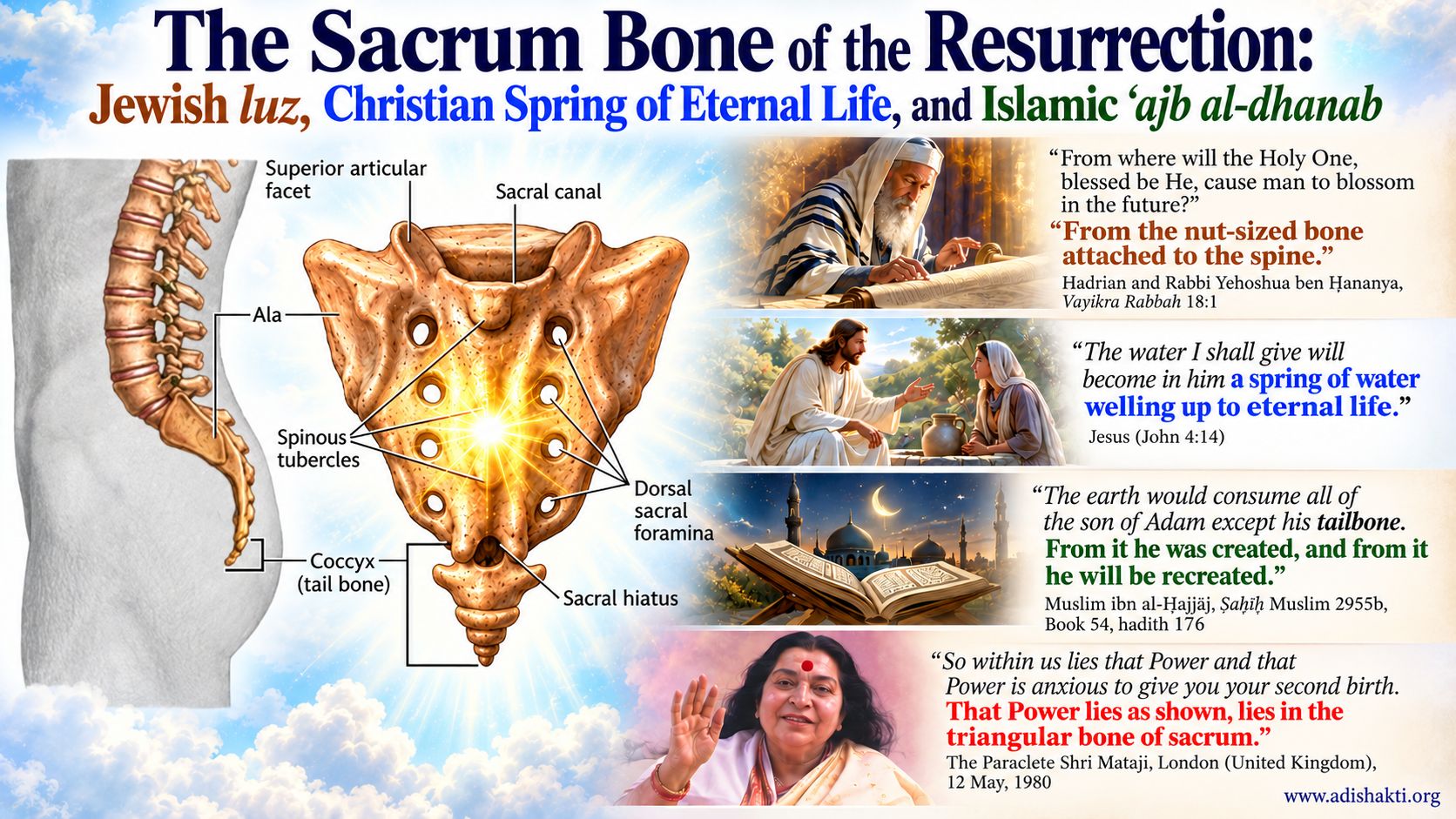
The Jewish luz, the Islamic ʿajb al-dhanab, and Shri Mataji Nirmala Devi’s teaching concerning the triangular sacrum bring the base of the spine into a remarkable comparative discussion of resurrection. Rabbinic tradition describes a small spinal bone from which God will cause humanity to “blossom”; Ṣaḥīḥ Muslim describes a tailbone from which the human being will be recreated; and Shri Mataji identifies the sacrum as the dwelling place of the maternal power that gives the “second birth.”[2][3][4] This paper places those teachings beside Jesus’ promise to the Samaritan woman that His gift becomes within its recipient “a spring of water welling up to eternal life” (John 4:14).[1]
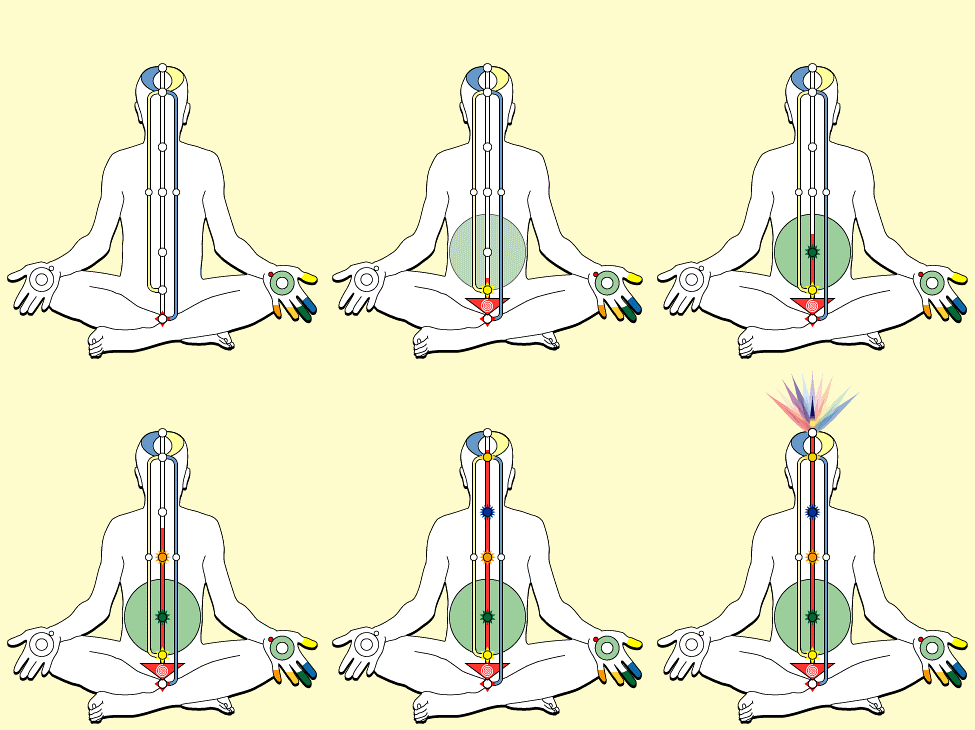
The central thesis is that, within the AdiShakti.org interpretation, the sacred spinal base is the seat of the inward Spring or Well of Eternal Life, and the awakening of the indwelling Spirit is its living flow. The bone is the site or seed of renewal; the “water” is the divine life bestowed through the Spirit, not liquid manufactured by bone. Shri Mataji’s teaching of the Cool Breeze is understood as the experiential sign of this spiritual birth in the present ongoing Age of the Resurrection.[5][6] This is a comparative confessional argument: the Gospel does not explicitly name the sacrum, the sacrum and coccyx are anatomically distinct, and the proposed harmony does not constitute a claim that all Jewish, Christian, and Islamic authorities teach the same mechanism. Its conclusion concerns their convergence, in this reading, upon God’s victory over death and the invitation to receive life.
1. Introduction: The Fountain Within
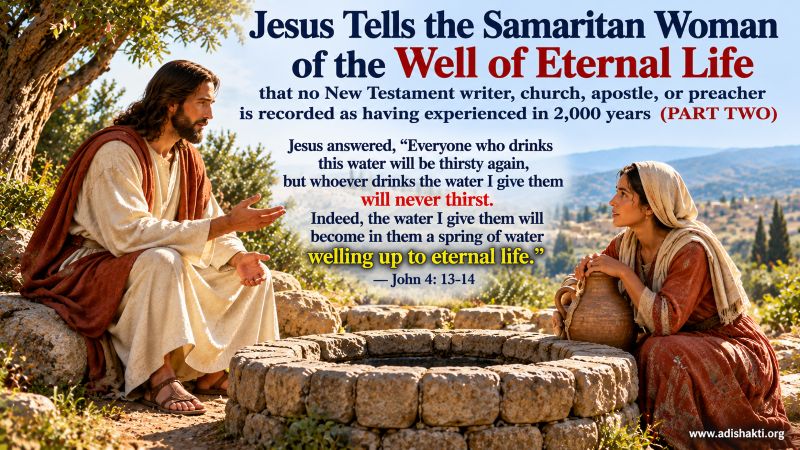
At Jacob’s well, Jesus begins with the ordinary need for drinking water and leads the Samaritan woman toward an extraordinary promise. The water drawn from the well must be obtained repeatedly; the water He gives becomes a spring within the person who receives it. The decisive transformation is not merely from less water to more water, but from an external source of temporary refreshment to an inward participation in divine life (John 4:10–14).[1] For the interpretation developed here, this inwardness is the starting point: the Well of Eternal Life is not another geographical destination. Its life is received within the human being.
The rabbinic and Islamic resurrection-bone traditions introduce a different but related question: from what point will God restore the human person? Their answer is a small, enduring spinal remnant. Shri Mataji’s London discourse of 12 May 1980 introduces the present-tense counterpart: the power that gives second birth already lies within the person, in the triangular sacrum.[2][3][4] Placed in dialogue, these sources suggest the article’s governing comparison: the hidden seed of renewal, the inward spring of divine life, and the awakening through which that life becomes consciously experienced.
The argument is Christ-centered without making the other traditions merely Christian illustrations. Jesus’ promise provides its interpretive center; the rabbinic text retains its Jewish resurrection setting, and the Islamic narration retains its setting in the Day of Resurrection. Shri Mataji’s teaching supplies the proposed experiential bridge. That bridge is the contribution of the contemporary synthesis, not a sentence found verbatim in any of the ancient texts. Naming it honestly permits a strong theological thesis without attributing it falsely to every adherent of the three religions.
2. Sacrum, Coccyx, and the Sacred Spinal Base
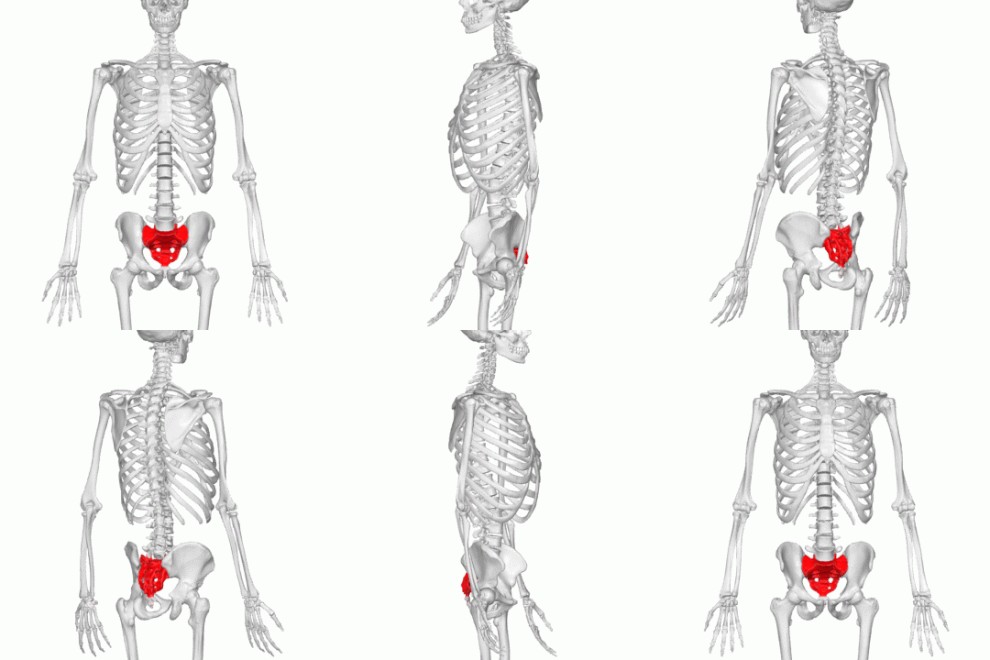
The sacrum is the substantial, inverted triangular bone formed from five fused vertebrae at the base of the spine. It lies above the coccyx and joins the pelvic bones. The coccyx is the terminal portion of the vertebral column, usually comprising three to five segments. Its upper segment articulates with the sacrum.[7][8] These structures belong to the same lower-spinal region, but they are not interchangeable anatomical names. Consequently, the expression “sacrum bone of the Resurrection” in this paper identifies the specific seat of power described by Shri Mataji and the broader comparative significance of the sacred spinal base; it does not redefine the tailbone as the sacrum.
The name itself has a history of sacred associations. In a historical article in JAMA, O. Sugar explains that Latin os sacrum, “sacred bone,” translates the older Greek hieron osteon. His abstract reviews several explanations of the designation, including an association with preservation for resurrection.[9] This history makes the religious comparison intelligible, but etymology cannot establish that ancient anatomists knew Shri Mataji’s account of Kuṇḍalinī, the indwelling maternal spiritual power. A sacred name is evidence of religious or cultural meaning, not proof of a particular subtle-body mechanism.
The rabbinic luz requires an additional qualification. Vayikra Rabbah describes a nut-sized bone attached to the spine; it does not label that bone with modern anatomical terminology. The Encyclopaedia Judaica entry discusses localization at the spinal base and later identification with the last vertebra, while rejecting a scientific basis for the indestructibility legend.[2][10] The most defensible comparison therefore concerns a sacred spinal locus of renewal, not an established equation of luz, sacrum, and coccyx. No claim here depends on identifying a bone as physically immune to destruction or as a biological reservoir of eternal-life water.
3. The Rabbinic Luz: God Causes Humanity to Blossom
“From where will the Holy One, blessed be He, cause man to blossom in the future?”
“From the nut-sized bone attached to the spine.”
The question is not simply whether a skeleton can be reassembled. It asks from where God will cause the human person to “blossom.” The verb places resurrection in the language of renewed growth. The small spinal bone functions like a seed: what appears insignificant preserves, within the narrative, the point from which the person can be restored. The text assigns the action to the Holy One. The bone does not resurrect itself; divine power brings the human being forth.
The ensuing account dramatizes the remnant’s endurance. Hadrian asks for a demonstration, and the bone resists water, grinding, fire, and hammering. The hammer and anvil break rather than overcoming it.[2] An academic reading need not pretend that this is an independently reproducible materials-science experiment. As a theological narrative, it expresses the claim that death and disintegration cannot defeat God’s purpose for the person. The enduring remnant signifies continuity between the mortal human being and the life God restores.
This seed image becomes especially illuminating beside Jesus’ spring. A seed is potential renewal; a spring is active, life-giving movement. The article proposes that these images can be held together: what is hidden at the sacred spinal base is understood, in Shri Mataji’s teaching, as the potential for second birth; when awakened, its life is compared to the spring that Jesus promises within the recipient. The rabbinic text itself does not identify the bone with an inward fountain or teach Kuṇḍalinī. The connection is the present paper’s theological development of the shared theme of life arising where death appears decisive.
The biblical vision of dry bones supplies another Jewish image of renewal through divine life. Ezekiel 37 depicts bones acquiring flesh but not living until breath enters them. The passage identifies the bones with the people of Israel and promises restoration to their land; it also declares that God will put His Spirit in them and they will live (37:11–14).[11] Its immediate collective meaning must be preserved. Nonetheless, it reinforces a distinction central to this paper: a bodily structure is not sufficient by itself. The life-giving action belongs to God.
4. Islamic ʿAjb al-Dhanab: The Seed and the Heavenly Water
“The earth would consume all of the son of Adam except his tailbone. From it he was created, and from it he will be recreated.”
The Arabic expression is ʿajb al-dhanab, rendered “tailbone” in the English text consulted. Like the rabbinic luz, it is the surviving point from which the person is restored. The narration connects first creation, endurance through death, and recreation. Its subject is God’s restoration of the human being, not the bone’s autonomous possession of immortality.[3]
The immediately preceding narration, Ṣaḥīḥ Muslim 2955a, makes the water-and-seed comparison still more compelling. It describes water descending from the sky, human beings sprouting like vegetation, and the body being reconstituted from the tailbone.[12] This is not a resemblance imposed entirely from outside: water, growth, and the enduring bone occur together in the Islamic text. The imagery supplies a direct counterpart to the rabbinic “blossoming,” while placing the renewal in the eschatological sequence associated with the trumpet blasts.
The correspondence with John 4 is thematic rather than a literal identity of descriptions. In the Islamic narration, water descends from heaven and the dead are restored; in Jesus’ promise, the water He gives becomes an inward spring directed toward eternal life. In Shri Mataji’s teaching, second birth is a present awakening from the sacral region. These are different temporal and symbolic configurations. The proposed harmony lies in their common pattern: divine life reaches the human person and makes renewal possible from a hidden point of origin. The hadith does not say that the tailbone secretes water, and the comparison should not manufacture such a claim.
The Qur’an gives the broader setting of divine power over bodily dissolution. Sūrat al-Qiyāmah asks whether the human being thinks God will not assemble the bones and answers that God is able even to proportion the fingertips (75:3–4).[13] These verses do not mention the sacrum or ʿajb al-dhanab; the specific bone comes from the hadith. The distinction matters because the article’s argument is strengthened by accurate source attribution, not by placing every comparative detail into the Qur’anic text.
5. Jesus at the Well: What the Living-Water Metaphor Means
Jesus’ statement to the Samaritan woman is the theological center of this study. To understand its relation to the sacred spinal base, one must first hear what the metaphor itself says. The setting is a real well; the woman notices that Jesus has no means of drawing water and that the well is deep. Her question remains at the level of the available physical source. Jesus responds by distinguishing the water already before them from the gift He can give (John 4:10–14).[1]
5.1 The giver: “The water I give them”
The promise begins with divine initiative. Jesus calls it the “gift of God” and identifies Himself as its giver (4:10).[1] The woman cannot produce it by drawing more deeply, and possession of the physical well does not give her possession of the living gift. Accordingly, the inward spring should not be interpreted as self-generated spiritual independence. Its presence within the person remains the result of grace. This is important for the proposed sacral reading: the sacrum is understood as the seat of a received or awakened divine power, not as a replacement for God or Christ.
5.2 The contrast: Temporary relief and enduring life
Ordinary water sustains bodily life but cannot end the cycle of bodily thirst. Jesus’ promise reaches another order of need: estrangement from God and the longing for life that death cannot exhaust. “Never thirst” is not a claim that the recipient will cease to need drinking water, never suffer, or never require spiritual growth. Within the dialogue, it describes the sufficiency of the divine gift for the life Jesus offers.[1] The metaphor is powerful precisely because physical water is indispensable yet limited. It makes understandable a life-giving reality that is not subject to the same limitation.
5.3 The location: “Will become in them”
The phrase en autō, “in him” or “within that person,” makes the gift inwardly effective. The recipient no longer depends on returning to Jacob’s well as the location of divine life. This is not the discovery that every interior thought is divine; it is the promise that what Jesus gives takes living effect within the person. The inwardness belongs to the Gospel text. Identifying its bodily seat with the sacrum belongs to the contemporary interpretation.[14][5]
This distinction clarifies rather than weakens the requested thesis. The article does not argue that Jesus secretly used “spring” as the anatomical name of a bone. It argues that Shri Mataji’s teaching supplies a particular account of how the inward spiritual gift becomes experienced. In that account, the triangular sacrum at the base of the spine is the seat of the power whose awakening is interpreted as the spring’s emergence. The anatomical localization is therefore a proposed explanation of fulfillment, not a lexical translation of John 4:14.
5.4 The source: A spring, not merely a stored supply
The Greek word pēgē means a spring or fountain. The physical well in John 4:11 is designated phrear; the inward gift in verse 14 is described as a pēgē. The NET translation and notes emphasize the image of a flowing fountain.[14] “Well of Eternal Life” is therefore an intelligible traditional or devotional expression, but “Spring of Eternal Life” makes the active-source dimension especially clear. Jesus is not promising only a finite store of reassurance. He describes a gift that becomes a continuing source of life within its recipient.
Within the paper’s sacral interpretation, the bone is not the water. It is the bodily seat associated with the hidden capacity for renewal. The awakened maternal power is compared to the active spring; the Spirit’s life-giving presence is compared to the water. Saying that the sacred spinal base “is the Well” is thus theological shorthand for its role as the site from which inward renewal is understood to arise. The literal bone, the spiritual power, and the scriptural metaphor must remain distinguishable even when brought into one interpretation.
5.5 The movement: “Welling up”
The participle hallomenou conveys lively or leaping movement. Applied to water, it makes the spring dynamic rather than static.[14] This language invites comparison with Shri Mataji’s description of an inward power that awakens and rises. But the Greek word does not specify an upward physiological route through the spine or prescribe movement through particular subtle centers. The parallel concerns the active emergence of life, not a hidden anatomical diagram in the Greek text.
The expression also guards against reducing second birth to a certificate, a label, or a single remembered sensation. A spring has continuing activity. In the AdiShakti reading, the awakening initiates an ongoing relationship with divine life, cultivated through attention, meditation, love, and ethical transformation.[5] The event of receiving the gift matters, but so does the life that flows from it.
5.6 The end: “To eternal life”
The final phrase supplies the purpose of everything preceding it. Jesus does not offer an inward spring merely to produce an unusual feeling. It wells up to eternal life. John 5:24 gives this life a present dimension: the believer has eternal life and has passed from death to life.[1] The spring is therefore more than a consolation about what may happen after physical death. It concerns participation now in the life God gives.
Nevertheless, eternal life cannot be reduced to temperature at the crown of the head or equated with biological longevity. In the confessional interpretation advanced here, the Cool Breeze signifies reception of the Spirit, while the spring’s ultimate meaning is communion with God through Christ. The sign points toward the gift; it is not the entire gift. This distinction preserves the magnitude of Jesus’ promise.
5.7 The outcome: Worship in Spirit and truth
The conversation moves from water to the dispute about the proper place of worship. Jesus directs the woman beyond a rivalry between sacred locations toward worship in Spirit and truth (4:20–24).[1] That movement reinforces the inward significance of the spring without implying that communal worship or sacred places are worthless. The decisive issue is that divine life cannot be confined to ownership of a well, a mountain, or a religious institution. The Samaritan woman is addressed as someone capable of receiving it.
6. Water, Spirit, New Birth, and the Paraclete
John 7:37–39 provides the strongest Gospel basis for interpreting the living water through the Holy Spirit. After Jesus’ invitation to the thirsty and His promise of rivers of living water, the narrator states that He meant the Spirit whom believers would receive.[1] The connection between water and Spirit therefore does not originate only in later yogic symbolism. It is internal to the Gospel. What the contemporary synthesis adds is the identification of that reception with the awakening described by Shri Mataji.
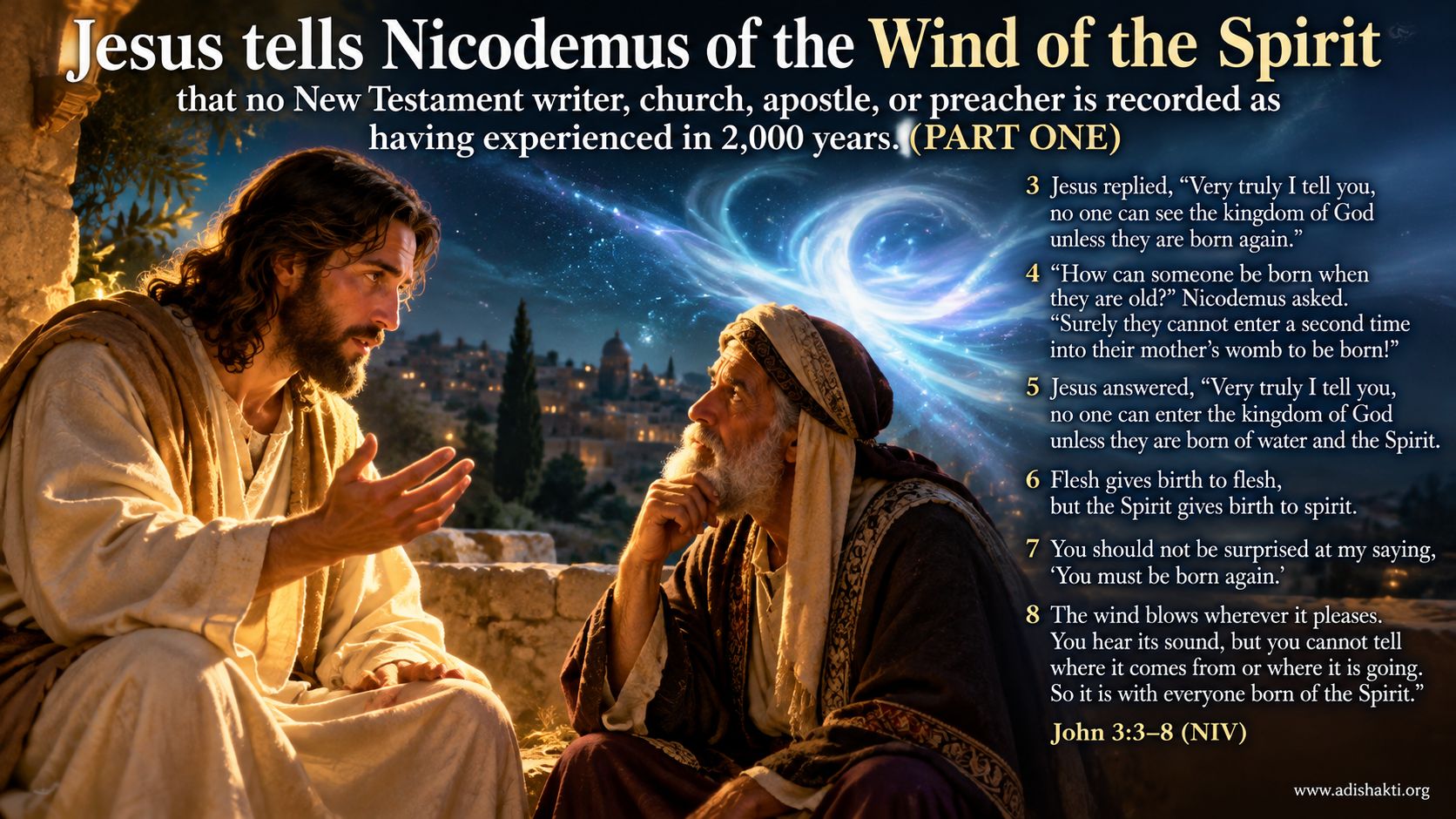
Jesus’ earlier conversation with Nicodemus supplies the language of second birth. The Greek anōthen can mean “again” and “from above”; Nicodemus understands it as repeated physical birth, while Jesus speaks of birth through water and Spirit (John 3:3–8).[15] The important contrast is between merely repeating biological existence and receiving a new origin of life from God. Shri Mataji’s “second birth” is placed here as an account of that inward transformation, not as another birth of the flesh.
“The wind blows wherever it pleases. You hear its sound, but you cannot tell where it comes from or where it is going. So it is with everyone born of the Spirit.”
Pneuma—the correct spelling of the term sometimes written “Penuma”—supports the interplay of wind and Spirit in this passage.[15] The wind’s action can be encountered without its origin and destination being fully mastered. Jesus’ analogy concerns the Spirit’s freedom and the mystery of spiritual birth. It does not explicitly require a cool sensation, and it mentions hearing the wind rather than feeling a prescribed temperature. The Cool Breeze interpretation is a proposed experiential correspondence, not the dictionary definition of pneuma.
The Paraclete connects this life-giving action to the continuing work of Jesus. John 14:17 describes the Spirit of truth as present with and within the disciples; John 14:26 identifies the Paraclete with the Holy Spirit and assigns teaching and remembrance of Jesus’ words to Her work; John 16:13–14 describes guidance into truth and the glorification of Christ.[1] This paper uses feminine pronouns for the Paraclete in its theological exposition. Within AdiShakti.org’s confessional framework, Shri Mataji is identified as the promised Paraclete, and Her explanation of spiritual birth is understood as a continuation of Christ’s teaching.[6]
John 7:39 also makes Jesus’ glorification essential to the reception of the Spirit. The USCCB commentary connects that glorification with His death, resurrection, and ascension.[16] AdiShakti.org additionally interprets Shri Mataji’s roughly four decades of Christ-centered teaching as the Paraclete’s continuing glorification of Jesus and as the opening of a present era of experiential reception.[17] The latter is a contemporary extension of the theme, not a forty-year timetable stated in John 7:39. It should not be used to claim that no Christian received the Spirit before Shri Mataji’s public mission.
7. Shri Mataji’s London Narration: The Sacrum and Second Birth
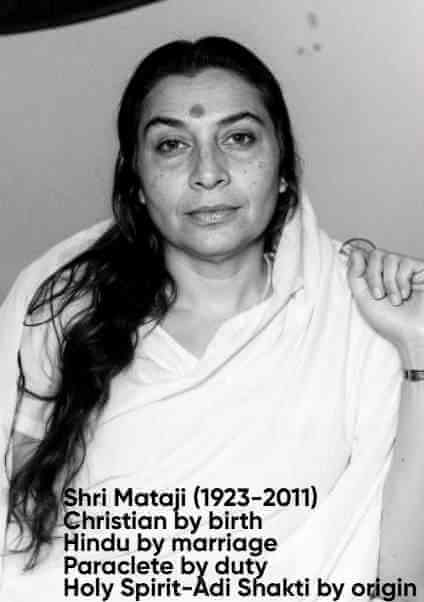
“So within us lies that Power and that Power is anxious to give you your second birth. That Power lies as shown, lies in the triangular bone of sacrum.”
— The Paraclete Shri Mataji, as identified in the AdiShakti interpretation; Caxton Hall, London, United Kingdom, 12 May 1980.[4]
This is the source in the comparison that explicitly identifies the triangular sacrum. Her statement gives the article’s proposed Spring of Eternal Life a particular inward seat: the bone at the base of the spine is understood as the sanctuary of the power that gives second birth. Unlike the future-oriented restoration in the resurrection-bone narrations, Her discourse addresses seekers who are alive and present. The power is already within them and is “anxious” to bring about renewal.
The surrounding transcript describes this power maternally. She knows the seeker’s problems and acts through compassion rather than through purchased access to God. The discourse also makes nationality, clothing, and outward appearance irrelevant to the inward process.[4] These features illuminate Jesus’ metaphor. The gift is not owned by a social group; its reception is inward; and its action is understood as living rather than manufactured. The woman’s Samaritan identity does not place her beyond the invitation, just as the London discourse does not reserve second birth for one nationality.
The theological mapping can now be stated with precision. The luz and ʿajb al-dhanab signify the hidden remnant of restoration in their respective traditions. The sacrum is the seat of the maternal spiritual power in Shri Mataji’s account. The spring in John 4 signifies the divine gift becoming an active source within the recipient. The proposed synthesis joins them as seed, seat, and flow of renewal. It does not require claiming that the ancient narrations already taught the same subtle-body model.
In this interpretation, awakened Kuṇḍalinī is identified with the inward work of the Holy Spirit, and the second birth is the living Resurrection of the person into awareness of divine presence.[18] Describing the power as “rising” does not mean that the bone travels upward or that water passes physically from the coccyx to the brain. It describes a spiritual process in the Sahaja Yoga account. The anatomy supplies the named bodily location; the subtle-body interpretation supplies the account of awakening. Confusing those levels would obscure the very clarity sought in relating them to Jesus.
The phrase “Sacrum Bone of the Resurrection” therefore has a specific theological force. It claims, within the stated framework, that the sacred spinal base is not only an emblem of a distant restoration. It is the present seat of the inward life through which the seeker is born again. Jesus promises the spring’s purpose—eternal life; Shri Mataji narrates its proposed experiential awakening. Their relationship is fulfillment as understood by this confession, not an independently demonstrated anatomical identity.
8. The Cool Breeze in the Present Age of the Resurrection
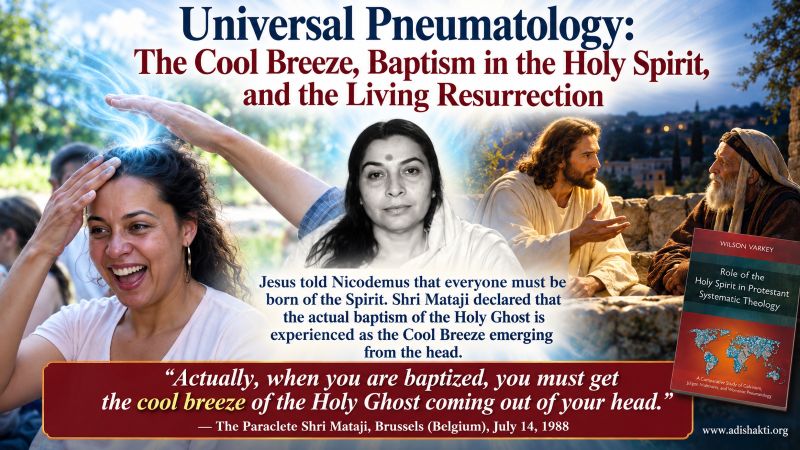
“So the truth has to be seen as it is. Only through your evolutionary process you are going to achieve the state to see the truth, not by artificial say you are baptized, putting some water artificially, you are baptized, not so, cannot. Actually, when you are baptized, you must get the cool breeze of the Holy Ghost coming out of your head.”
— Shri Mataji Nirmala Devi, Public Program, Auditorium 44, Brussels, Belgium, 14 July 1988; English draft transcript.[19]
In Shri Mataji’s teaching, those participating in the present ongoing Age of the Resurrection are expected to feel the Cool Breeze of the Spirit as the recognizable sign of being born again. Her Brussels declaration connects this experience directly with baptism in the Holy Ghost. Later in the same program, She invites participants to notice the sensation above the head and on the hands and to consider whether it is the all-pervading power of divine love.[19] Within the AdiShakti reading, the living water and the Cool Breeze are not competing images: water describes the life given within; wind or breath describes the Spirit through whom that life is received.
The transcript also acknowledges that some people did not feel the breeze and that some initially experienced heat.[19] This prevents the academic account from promising an identical immediate sensation to every individual. The doctrinal claim is that the Cool Breeze is the expected experiential sign of awakening, not that the absence of a sensation on a particular occasion establishes spiritual rejection or incapacity. Nor does feeling coolness independently prove immortality or distinguish a spiritual cause from every possible ordinary cause. Its theological meaning is supplied by the teaching and by the life of the recipient.
Jesus’ own words associate the “age to come” with resurrection. In Luke 20:34–38, He contrasts the present age with participation in the age to come and the resurrection from the dead, describing its participants as children of the resurrection who no longer die.[1] AdiShakti.org applies that horizon to the present era inaugurated through the Paraclete’s work, interpreting second birth as inward participation in resurrection before physical death.[18][17] Calling the current era the “Age to Come” is thus a confessional application of Jesus’ eschatological language, not a date assigned by Luke.
The strongest biblical support for an already-present dimension lies in John 5:24–25: eternal life is received now, and the hour of life-giving hearing is said already to be present. Yet John 5:28–29 also speaks of those in the tombs hearing the Son’s voice and coming forth. The USCCB notes distinguish realized and future eschatology in these adjoining passages.[1][20] This paper emphasizes the living, inner Resurrection requested by the present thesis, while acknowledging that the texts and traditional doctrines also preserve a future horizon. Its present emphasis is not permission to rewrite the original future-oriented bone traditions.
What, then, does participating now mean within the proposed theology? It means more than waiting for history to end. The seeker receives second birth, becomes attentive to the Spirit, and learns to live from divine presence while embodied. The Cool Breeze is understood as an initiating or recurring sign of that relationship. The inward spring gives this experience continuity: the Resurrection is not only something remembered, but a life from which attention, conduct, and worship are continually renewed.[5][6]
9. The Gospel, the Great News, and Al-Qiyāmah
Sūrat al-Nabaʾ opens by asking what people are questioning one another about and identifies the subject as al-nabaʾ al-ʿaẓīm, “the Great News” or “the Great Tidings” (Qur’an 78:1–5).[21] Abul A‘la Maududi’s commentary identifies this as the news of resurrection and the Hereafter.[22] The context is not merely encouragement or private consolation. It concerns a disputed reality whose truth and consequences will become known.
The paper brings that Great News into dialogue with the Gospel’s proclamation of divine life and resurrection. It does not equate the words as literal synonyms: “Gospel” names the Christian proclamation and its scriptural writings, while al-nabaʾ al-ʿaẓīm is the Qur’anic expression in its own eschatological setting. Their shared English language of “news” permits a thematic comparison; it does not establish that Qur’an 78 explicitly endorses the Johannine spring, the Christian doctrine of Christ, or Shri Mataji’s identity.
Al-Qiyāmah, the Resurrection, supplies the Islamic horizon in which the reassembly of bones and the ʿajb al-dhanab narration are read.[13][3] The article’s inward-resurrection proposal is that humanity need not understand resurrection only as a reality encountered after physical death. The divine life anticipated in the traditions is interpreted as becoming experientially available through birth of the Spirit. That proposal is the AdiShakti synthesis; it is not the conventional exhaustive interpretation of Qur’anic resurrection and judgment.
The point of convergence can therefore be expressed without flattening the traditions. The rabbinic narration says that God will cause humanity to blossom. The Islamic narration says that God will recreate the person from the enduring remnant. Jesus says that the water He gives becomes an inward spring toward eternal life. Shri Mataji says that the power of second birth lies in the sacrum.[2][3][1][4] The Great News, as read through this comparative theology, is that death-bound existence is not humanity’s final horizon and that divine renewal can begin within the living person.
10. Living from the Spring: The Resurrection in Daily Life
If the inward spring is directed toward eternal life, its significance cannot be exhausted by the question of whether a sensation occurred. Jesus commands His disciples to love one another as He has loved them and identifies their mutual love as the mark by which they will be recognized (John 13:34–35). Matthew 7:16–20 emphasizes recognition by fruits, and Galatians 5:22–23 describes the Spirit’s fruit in qualities including love, joy, peace, patience, kindness, and self-control.[23] These passages give Christian criteria for discussing the transformation claimed by spiritual birth.
Within the present interpretation, living the Resurrection means maintaining awareness of divine presence in ordinary activities rather than confining spiritual life to a ceremony or exceptional moment. The spring must become visible in the way one speaks, responds to conflict, forgives, works, and attends to others. Meditation is understood as cultivating the connection; love and moral responsibility are its expression.[5][6] A person who reports the Cool Breeze but uses the claim to assert superiority has not thereby explained the life to which the sign points.
This also clarifies the universal force of the Samaritan encounter. Jesus does not make the woman’s outsider status the barrier to receiving living water. Shri Mataji’s London discourse similarly makes nationality and outward appearance irrelevant to second birth.[1][4] The proposed harmony must therefore invite rather than coerce. It should not require Jews, Christians, or Muslims to abandon the accurate meanings of their texts before their resurrection hope can be respected.
The ethical test preserves the distinction between a spiritual experience and spiritual maturity. Second birth is interpreted as the beginning of a new life, not exemption from discernment. The continuing spring is known, in this Christian-centered proposal, through increasing fidelity to Christ’s love. The living Resurrection is the renewal of the person in divine presence, not simply the acquisition of an eschatological label.
11. Conclusion: Perfect Harmony in the Hope of Resurrection
The three traditions studied here approach death and renewal through distinct sources, yet their images enter a powerful dialogue. The rabbinic luz is the small spinal remnant from which God causes the human being to blossom. The Islamic ʿajb al-dhanab is the tailbone from which the person is recreated, with the adjoining narration joining heavenly water to new growth. Jesus’ promise at the well locates the gift’s living effect within the recipient as a spring directed toward eternal life.[2][3][12][1]
Shri Mataji’s narration supplies this paper’s proposed present fulfillment: the triangular sacrum at the base of the spine is the seat of the maternal power that gives second birth. In the AdiShakti interpretation, this sacred base is the Spring or Well of Eternal Life in the sense that the indwelling Spirit’s awakening arises from it, while the Spirit’s life—not the mineral substance of bone—is the “water.” Her Cool Breeze teaching identifies the expected experiential sign of that birth in the present ongoing Age of the Resurrection.[4][19][5]
Within the comparative confessional theology advanced here, Judaism, Christianity, and Islam are in perfect harmony concerning the Gospel—the Great News—of the Resurrection: God is the giver of life, death does not defeat divine renewal, and the human person is called into life beyond death-bound existence. The Jewish seed, the Islamic remnant and heavenly water, and the Christian inward spring are read as converging signs of that hope. Shri Mataji’s sacrum narration and the Cool Breeze are understood as its present experiential realization through being born again of the Spirit.
This “perfect harmony” names the theological unity proposed by the paper, not an assertion that the three religions have identical creeds, unanimously equate their resurrection bone with the sacrum, or collectively recognize Shri Mataji as the Paraclete. Their differences remain real. The claim is that, when read through the stated AdiShakti framework, their resurrection testimony can be brought into one coherent invitation: receive the life God gives, discover the inward spring, and live its renewal now.
The metaphor’s clarity finally depends on keeping its relationships intact. The bone is the sacred seat or seed; the Spirit is the life-giving agent; the spring is the gift’s enduring inward activity; and eternal life is its purpose. Jesus remains the giver in the Gospel. In this reading, the Paraclete does not displace Him: She recalls His promise, glorifies Him, and interprets the birth through which His life becomes inwardly known.[1][6] The Well of Eternal Life is therefore not sought in a distant landscape. It is received within, and its truth is lived in love.
References
Numbered links return to the first citation of each source. Additional return links cover every later occurrence. Source types and interpretive limitations are specified where relevant.
[1] The Holy Bible; translation by the Committee on Bible Translation. “John 3:3–8; 4:10–24; 5:24–29; 7:37–39; 14:17, 26; 16:13–14; Luke 20:34–38.” New International Version, Biblica; hosted by Bible Gateway, 2011. Primary scriptural text; exact chapter-and-verse locations are specified in the article. Accessed 24 October 2026. Additional citation returns: ↩2 · ↩3 · ↩4 · ↩5 · ↩6 · ↩7 · ↩8 · ↩9 · ↩10 · ↩11 · ↩12 · ↩13 · ↩14 · ↩15 · ↩16 · ↩17.
[2] Rabbinic midrash; Sefaria digital edition. “Vayikra Rabbah 18:1: Hadrian and Rabbi Yehoshua ben Ḥananya.” Sefaria, n.d.. Classical primary text in Sefaria’s English rendering; cited dialogue and tests of the spinal bone. Accessed 24 October 2026. Additional citation returns: ↩2 · ↩3 · ↩4 · ↩5 · ↩6 · ↩7.
[3] Muslim ibn al-Ḥajjāj; report transmitted by Abū Hurayrah. “Ṣaḥīḥ Muslim 2955b: Between the Blasts of the Trumpet.” Sunnah.com, Arabic text and English translation, n.d.. Book 54, hadith 176; classical hadith collection. The supplied quotation excludes the English translation’s final explanatory parenthesis. Accessed 24 October 2026. Additional citation returns: ↩2 · ↩3 · ↩4 · ↩5 · ↩6 · ↩7.
[4] Nirmala Devi, Shri Mataji. “Being Born Again.” Learn Sahaja Yoga lecture archive, 12 May 1980. Public Program, Caxton Hall, London, United Kingdom; English draft transcript. Quotation preserves the supplied capitalization and omits a brief stage aside. Accessed 24 October 2026. Additional citation returns: ↩2 · ↩3 · ↩4 · ↩5 · ↩6 · ↩7.
[5] AdiShakti.org. “Jesus Tells the Samaritan Woman of the Well of Eternal Life — Part Two.” AdiShakti.org, Authenticity Series, 21 October 2026. User-supplied contemporary confessional article; used for the site’s interpretation, not as evidence of ancient doctrinal consensus. Accessed 24 October 2026. Additional citation returns: ↩2 · ↩3 · ↩4 · ↩5 · ↩6.
[6] AdiShakti.org. “Universal Pneumatology: The Cool Breeze, Baptism in the Holy Spirit, and the Living Resurrection.” AdiShakti.org, Authenticity Series, 22 October 2026. User-supplied contemporary confessional article distinguishing textual teaching, spiritual interpretation, and reported experience. Accessed 24 October 2026. Additional citation returns: ↩2 · ↩3 · ↩4 · ↩5.
[7] Sattar, Mohammad H., and Stuart T. Guthrie. “Anatomy, Back, Sacral Vertebrae.” StatPearls Publishing; NCBI Bookshelf, National Library of Medicine, updated 30 July 2023. See Introduction and Structure and Function; medical anatomical reference, not a spiritual-mechanism source. Accessed 24 October 2026.
[8] Mostafa, Evan, and Matthew A. Varacallo. “Anatomy, Back, Coccygeal Vertebrae.” StatPearls Publishing; NCBI Bookshelf, National Library of Medicine, updated 5 June 2023. See Introduction and Structure and Function; medical anatomical reference. Accessed 24 October 2026.
[9] Sugar, O.. “How the sacrum got its name.” JAMA, 17 April 1987. 257(15), pp. 2061–2063; PMID 3550163. Historical article; discussion here is based on the publicly available abstract. Accessed 24 October 2026.
[10] Encyclopaedia Judaica editors. “Luz of the Spine.” Encyclopaedia Judaica; reproduced by Encyclopedia.com, n.d.. Reference entry on the rabbinic legend, localization, and reception; not a modern anatomical identification. Accessed 24 October 2026.
[11] The Holy Bible; translation by the Committee on Bible Translation. “Ezekiel 37:1–14: The Valley of Dry Bones.” New International Version, Biblica; hosted by Bible Gateway, 2011. Primary scripture; verse 11 identifies the bones with Israel, and verses 12–14 concern restoration and divine Spirit. Accessed 24 October 2026.
[12] Muslim ibn al-Ḥajjāj; report transmitted by Abū Hurayrah. “Ṣaḥīḥ Muslim 2955a: Heavenly Water and Sprouting.” Sunnah.com, Arabic text and English translation, n.d.. Book 54, hadith 175; narration immediately preceding 2955b, concerning trumpet blasts, water, and restoration from the tailbone. Accessed 24 October 2026. Additional citation returns: ↩2.
[13] The Qur’an; English translation by Sahih International. “Sūrat al-Qiyāmah 75:3–4.” Quran.com, legacy primary-text edition, n.d.. Arabic scripture and English translation; divine reassembly of bones and proportioning of fingertips. Accessed 24 October 2026. Additional citation returns: ↩2.
[14] NET Bible translators. “John 4:10–24, with Translators’ Notes.” New English Translation; hosted by Bible Gateway, n.d.. See John 4:11 and 14 and the translators’ discussion of spring/fountain and the participle describing the water’s movement. Accessed 24 October 2026. Additional citation returns: ↩2 · ↩3.
[15] NET Bible translators. “John 3:3–8, with Translators’ Notes.” New English Translation; hosted by Bible Gateway, n.d.. Notes on anōthen, again/from above, and pneuma, wind/Spirit. Accessed 24 October 2026. Additional citation returns: ↩2.
[16] United States Conference of Catholic Bishops. “John, Chapter 7.” New American Bible, Revised Edition; USCCB, 2011. Recognized Christian commentary; see notes to John 7:37–39 on living water, Spirit, and Jesus’ glorification. Accessed 24 October 2026.
[17] Manus AI / AdiShakti.org. “The Fulfillment of John 7:39: Forty Years of Jesus’ Glorification by the Holy Spirit–Paraclete.” AdiShakti.org, AI Research Articles, 8 April 2026. Cited solely as a contemporary confessional interpretation of Shri Mataji’s mission; its claims are not treated as historical or scientific consensus. Accessed 24 October 2026. Additional citation returns: ↩2.
[18] AdiShakti.org. “You Must Be Born Again — The Parallel Teachings of Jesus Christ and Shri Mataji.” AdiShakti.org, n.d.. Contemporary confessional reading of inner Resurrection; contains an extended version of the London 1980 discourse. Accessed 24 October 2026. Additional citation returns: ↩2.
[19] Nirmala Devi, Shri Mataji. “To Be Baptized Is to Feel the Cool Breeze of the Holy Ghost out of Your Head.” Learn Sahaja Yoga lecture archive, 14 July 1988. Public Program, Auditorium 44, Brussels, Belgium; English draft transcript. The closing instructions acknowledge that some participants did not feel the breeze. Accessed 24 October 2026. Additional citation returns: ↩2 · ↩3 · ↩4.
[20] United States Conference of Catholic Bishops. “John, Chapter 5.” New American Bible, Revised Edition; USCCB, 2011. See notes to John 5:19–27 and 28–29 distinguishing realized and future eschatology. Accessed 24 October 2026.
[21] The Qur’an; English translation by Sahih International. “Sūrat al-Nabaʾ 78:1–5.” Quran.com, legacy primary-text edition, n.d.. Arabic scripture and English translation; al-nabaʾ al-ʿaẓīm, the Great News/Tidings. Accessed 24 October 2026.
[22] Maududi, Abul A‘la. “Tafhīm al-Qur’ān: Sūrah 78, An-Naba.” English Tafsir digital edition, n.d.. Introduction and commentary identify the Great News with resurrection and the Hereafter. Accessed 24 October 2026.
[23] The Holy Bible; translation by the Committee on Bible Translation. “John 13:34–35; Matthew 7:16–20; Galatians 5:22–23.” New International Version, Biblica; hosted by Bible Gateway, 2011. Primary texts on mutual love, discernment by fruits, and the fruit of the Spirit. Accessed 24 October 2026.