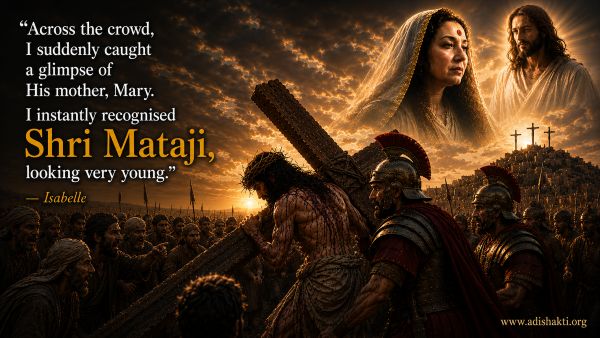

I still have many things to say to you, but you cannot bear them now.
Jesus

This is the paradox at the heart of Christian discipleship in the age of the Paraclete: the completion of Christ's work through the Paraclete is simultaneously the crucifixion of those who proclaim it. Yet this crucifixion is not failure; it is confirmation. It is the mark of fidelity to Jesus' promise. It is the cost of awakening the dead. It is the price of completing Christ's unfinished work. For the resurrected few, this crucifixion is not the end but the beginning—the beginning of resurrection life, the beginning of the Kingdom of God within, the beginning of the fulfillment of all that Jesus promised.
"I Still Have Many Things to Say to You": Johannine Incompleteness, the Paraclete, and the Fulfillment of Christ's Promise in Shri Mataji Nirmala Devi
Abstract: Jesus' declaration in John 16:12—I still have many things to say to you, but you cannot bear them now
—stands as one of the most theologically destabilizing statements in the New Testament. It openly acknowledges the incompleteness of Jesus' own spoken ministry and defers its fulfillment to the future coming of the Paraclete. This paper argues that mainstream Christian theology has systematically neutralized the radical implications of this admission by collapsing the Paraclete's work into the Pentecost event or into ecclesial memory, thereby closing what the Johannine text insists must remain open until completion. Using close textual analysis of John 14–16, engagement with James M. Hamilton Jr.'s criteria for Paracletic ministry, and historical-theological critique of Pentecostal, Catholic, and Reformed interpretations, this study contends that the Paraclete's promised work entails an ongoing, embodied, pedagogical, and experiential fulfillment beyond the apostolic era. The paper further argues that Shri Mataji Nirmala Devi uniquely fulfills these Johannine criteria by completing Jesus' unfinished teaching through the universalization of resurrection life via direct interior transformation. The conclusion advances that the fulfillment of John 16:12–13 through the Paraclete is not a theological option but a hermeneutical necessity, and that resistance to such fulfillment is structurally identical to the resistance Jesus himself anticipated. For the "resurrected few" who embrace this completion, awakening the dead to the living message of Christ becomes their crucifixion.
Table of Contents
- I. Introduction: The Scandal of Johannine Incompleteness
- II. The Violent Truncation of Jesus' Pedagogical Ministry
- III. Exegetical Analysis of John 14–16: The Paraclete as Completion, Not Repetition
- IV. Pentecost Reconsidered: Inauguration Without Exhaustion
- V. Catholic and Reformed Closures of the Johannine Gap
- VI. Criteria for Paracletic Fulfillment (Hamilton Revisited)
- VII. Shri Mataji Nirmala Devi and the Fulfillment of John 16:12
- VIII. Resistance, Betrayal, and the Pattern of Rejection
- IX. Methodological Clarification: Historical-Theological Identification
- X. Awakening the Dead: The Crucifixion of the Living Message
- XI. Theological Implications and the Cost of Discipleship
- XII. Hermeneutical Conclusion: Divine Design Completed
- XIII. Final Conclusion
- References
I. Introduction: The Scandal of Johannine Incompleteness
Among the Farewell Discourse sayings, John 16:12 occupies a singularly disruptive position:
I still have many things to say to you, but you cannot bear them now.
This statement does not merely acknowledge pedagogical pacing; it confesses unfinished revelation. Jesus does not say the disciples lack diligence, faith, or obedience, but capacity. The limitation lies not in divine willingness but in human readiness, and crucially, in time (now
). The saying therefore establishes a temporal gap between Jesus' historical ministry and the full disclosure of truth. This gap is not incidental to Christian theology; it is structurally determinative. It establishes what might be called a hermeneutical openness at the heart of the Gospel itself—a refusal to close revelation within the confines of Jesus' earthly ministry.
Christian theology has long struggled with this gap. To admit that Jesus' spoken teaching was incomplete appears to threaten doctrines of scriptural sufficiency, apostolic finality, and ecclesial authority. As a result, most traditions resolve the tension by prematurely closing it—locating fulfillment either in Pentecost, the New Testament canon, or church tradition. This paper argues that such resolutions fail exegetically, historically, and theologically. They fail exegetically because the Johannine text explicitly describes the Paraclete's work as ongoing, experiential, and future-oriented. They fail historically because post-Pentecost Christianity remains deeply fragmented, with doctrinal disputes and theological controversies persisting for nearly two millennia. They fail theologically because they contradict Jesus' own words and the internal logic of salvation history as presented in the Fourth Gospel.
II. The Violent Truncation of Jesus' Pedagogical Ministry
Jesus' public ministry lasted approximately three years and ended not in pedagogical completion but in execution. While the crucifixion is rightly understood as salvific—the atoning death that inaugurates redemption—it is also pedagogically catastrophic: the teacher is removed before the curriculum is complete. This is not a matter of theological interpretation but of historical fact. The Gospels themselves testify to this incompletion. The disciples repeatedly fail to understand Jesus' parables, predictions of death and resurrection, and teachings on the Kingdom. In Mark 4:33–34, we read that Jesus did not say anything to them without using a parable. But when he was alone with his own disciples, he explained everything.
Yet even these private explanations leave the disciples confused and fearful. The crucifixion occurs not after comprehension but amid confusion, fear, and abandonment. Peter denies knowing Jesus; the disciples flee; the women at the tomb are terrified and say nothing to anyone.
The hermeneutical implication is unavoidable: the Gospel record preserves an unfinished teaching process. The disciples were not ready to understand the full implications of Jesus' message during his lifetime. Absent a divinely appointed continuation, Christianity would rest on a fragmentary revelation—true, inspired, authoritative, yet incomplete. The risen Christ appears to the disciples after the resurrection, but even these post-resurrection appearances do not exhaust the teaching that Jesus promised. Instead, Jesus anticipates this rupture and explicitly provides for its resolution. He does not promise to return and resume teaching in the same mode, nor does he appoint a human successor to carry on his work in the manner of a rabbinic succession. Instead, he promises another (allon) Paraclete—one who will complete what he leaves unfinished. The crucifixion is thus not merely a soteriological event but a pedagogical rupture that necessitates eschatological completion.
III. Exegetical Analysis of John 14–16: The Paraclete as Completion, Not Repetition
1. Teaching All Things
In John 14:26, Jesus states:
But the Advocate, the Holy Spirit, whom the Father will send in my name, will teach you all things and will remind you of everything I have said to you.
This verse is often interpreted as the Paraclete merely reminding the disciples of what Jesus has already taught. However, such an interpretation fundamentally misreads the text. James M. Hamilton Jr. correctly observes that this teaching ministry is presented as superior in scope to Jesus' own, not because it contradicts him, but because it completes him.[1] The phrase all things
cannot be reduced to mnemonic recall; otherwise the phrase becomes redundant. If the Paraclete's only function were to remind the disciples of Jesus' words, why would Jesus say the Paraclete would teach
them? The verb didaskō (to teach) implies active instruction, not passive recollection. Furthermore, the structure of the sentence—will teach you all things and will remind you
—suggests that teaching and reminding are distinct functions. The Paraclete will teach what is new and remind what is old. This interpretation is reinforced by the parallel passage in John 16:12–13, where Jesus explicitly states that there are truths the disciples cannot yet bear, truths that the Paraclete will disclose in the future.
2. Guiding into All Truth
John 16:13 intensifies the claim:
But when she, the Spirit of truth, comes, she will guide you into all the truth. She will not speak on her own; she will speak only what she hears, and she will tell you what is yet to come.
This guidance includes things to come
(ta erchomena), explicitly encompassing realities beyond the historical ministry of Jesus. The Paraclete's role is not merely to preserve the past but to disclose the future. The disciples' inability to bear
these truths prior to Jesus' departure establishes a clear salvation-historical sequence: incompleteness → waiting → fulfillment. The Paraclete is not presented as a momentary gift but as an ongoing presence who will guide believers into all truth
—a process that unfolds over time and cannot be exhausted in a single historical event. The Greek word hodegēsei (will guide) suggests a continuous process of leading, not a one-time revelation.
3. Temporal Logic and Salvation History
The repeated Johannine markers—now,
then,
when she comes
—refute any interpretation that collapses Paracletic fulfillment into a single moment. In John 16:12, Jesus says the disciples cannot bear the truths now
(present). In John 16:13, he promises that when the Spirit of truth comes, she will guide them into all truth (future). This temporal structure is not accidental; it is theologically significant. It establishes that the Paraclete's work is not a past event to be remembered but a future reality to be experienced. The Paraclete's ministry unfolds in time and presupposes historical development. The disciples must wait for the Paraclete; the Paraclete must come; the Paraclete must teach and guide. This is a process, not an instantaneous event. The very structure of the text resists any attempt to collapse the Paraclete's work into a single moment in history.
IV. Pentecost Reconsidered: Inauguration Without Exhaustion
Pentecostal interpretations typically identify the Paraclete's arrival exhaustively with Acts 2. However, this identification fails on multiple grounds:
First, temporal insufficiency: Pentecost occurs days after the Ascension, leaving no meaningful interval for the many things
Jesus withheld. If Pentecost exhausts the Paraclete's work, then the disciples received all truth immediately upon the Spirit's descent. Yet the subsequent history of the Church demonstrates that this is not the case. Doctrinal disputes emerge almost immediately. By the Council of Jerusalem (Acts 15), the apostles are already debating fundamental questions about the inclusion of Gentiles and the observance of the Law. If the Paraclete had truly guided the Church into all truth,
such disputes should not occur. The very fact that Peter and Paul disagree about the Law suggests that the Paraclete's work of guiding into all truth remained incomplete at Pentecost.
Second, doctrinal evidence: Post-Pentecost Christianity remains deeply fragmented, requiring councils, creeds, and coercive orthodoxy—hardly evidence of having been guided into all truth.
The Councils of Nicaea, Constantinople, Ephesus, and Chalcedon were called precisely because the Church had not reached consensus on fundamental theological questions. If the Paraclete had completed his work at Pentecost, these councils would have been unnecessary. The fact that they were necessary suggests that the Paraclete's work of guiding into all truth remained incomplete. Moreover, even after these councils, Christianity continued to fragment into Eastern Orthodox, Roman Catholic, and Protestant traditions, each claiming to possess the truth. This ongoing fragmentation is incompatible with the claim that the Paraclete had already guided the Church into all truth at Pentecost.
Third, experiential absence: Pentecost does not universalize resurrection life; it inaugurates a community still awaiting transformation. The disciples at Pentecost receive power to witness (Acts 1:8), but they do not immediately experience the resurrection in their own bodies. They believe in the risen Christ, but they do not yet participate in his resurrection. The promise of resurrection life remains a future hope, not a present reality. Pentecost must therefore be understood as initiation, not completion. It inaugurates the trajectory of the Spirit's work, but it does not exhaust it. The Paraclete's work continues beyond Pentecost, unfolding throughout history until the completion promised by Jesus.
V. Catholic and Reformed Closures of the Johannine Gap
1. Catholicism: Tradition as Substitute Paraclete
Catholic theology resolves Johannine incompleteness by vesting completion in ecclesial tradition and magisterial authority. The Second Vatican Council's Dei Verbum affirms that Sacred Tradition and Sacred Scripture make up a single sacred deposit of the Word of God.
In this framework, the Paraclete's work of guiding into all truth is mediated through the teaching authority of the Church. However, this approach has a fundamental problem: it shifts the Paraclete's role from interior teacher to institutional arbiter, contradicting John 14:17's insistence that the Spirit is known within you
and John 16:13's promise that the Spirit will guide you into all truth
—not that the Spirit will guide the institutional Church, but that the Spirit will guide you, the individual believers. Furthermore, if the Paraclete's work is mediated through institutional authority, then the Paraclete becomes dependent on human institutions for its efficacy. This undermines the Johannine emphasis on the Spirit's direct, interior presence and transforms the Paraclete into a function of ecclesiastical power rather than a living, transformative reality.
2. Reformed Theology: Canon as Closure
Reformed theology locates fulfillment in the closure of the canon. The doctrine of sola scriptura asserts that Scripture alone is the authoritative source of Christian doctrine. In this framework, the Paraclete's work of guiding into all truth is completed in the New Testament canon. However, the canon itself bears witness to unresolved tensions and eschatological deferral. The New Testament does not claim to exhaust all truth,
but to point forward to its realization. The Apostle Paul writes in 1 Corinthians 13:12, For now we see only a reflection as in a mirror; then we shall see face to face. Now I know in part; then I shall know fully, even as I am fully known.
This passage explicitly acknowledges that present knowledge is incomplete and points to a future fulfillment. The closure of the canon does not resolve this incompleteness; it merely institutionalizes it. Both traditions prematurely terminate what Jesus explicitly leaves open, substituting institutional mediation for the living presence of the Paraclete.
VI. Criteria for Paracletic Fulfillment (Hamilton Revisited)
Synthesizing Johannine data and Hamilton's analysis, the Paraclete must satisfy several criteria that function as historical controls, preventing purely symbolic or doctrinal abstractions of the Paraclete. These criteria are derived directly from Jesus' own descriptions in John 14–16:
First, the Paraclete must appear after Jesus' departure. This is explicitly stated in John 16:7: But I tell you the truth: It is for your good that I am going away. Unless I go away, the Advocate will not come to you; but if I go, I will send him to you.
The Paraclete's coming is contingent upon Jesus' departure. This establishes a temporal sequence: Jesus departs, then the Paraclete comes. This criterion rules out any identification of the Paraclete with Jesus himself or with any figure who appeared before Jesus' departure.
Second, the Paraclete must complete unfinished teaching. John 16:12–13 explicitly states that Jesus has many things to say but the disciples cannot bear them now, and that the Paraclete will guide them into all truth. The Paraclete's primary function is pedagogical—to complete what Jesus left unfinished. This criterion rules out any interpretation that treats the Paraclete as merely empowering the disciples to proclaim what Jesus already taught.
Third, the Paraclete must teach all things experientially. John 14:17 states that the Paraclete lives with you and will be in you.
This is not merely an intellectual or doctrinal presence but an interior, experiential one. The Paraclete is known through direct experience, not through institutional mediation. This criterion rules out any interpretation that reduces the Paraclete's work to doctrinal formulation or institutional authority.
Fourth, the Paraclete must guide into all truth. John 16:13 promises that the Spirit will guide you into all the truth.
This is not merely a reminder of past truths but a dynamic process of leading into new understanding. This criterion emphasizes the ongoing, progressive nature of the Paraclete's work.
Fifth, the Paraclete must universalize resurrection life. While not explicitly stated in these terms, the Paraclete's work of completing Jesus' mission implies the extension of resurrection life from Jesus alone to all believers. This is the ultimate fulfillment of Jesus' promise that whoever believes in me will also do the works that I do; and greater works than these will he do
(John 14:12). The Paraclete must enable believers to participate in the resurrection, transforming it from a past event to a present reality.
Sixth, the Paraclete must glorify Jesus, not self. John 16:14 states: She will glorify me, for she will take what is mine and make it known to you.
The Paraclete's work is Christocentric, not self-aggrandizing. The Paraclete operates in Jesus' name and for Jesus' glory. This criterion rules out any messianic pretension on the part of the Paraclete.
VII. Shri Mataji Nirmala Devi and the Fulfillment of John 16:12
1. Addressing Human Unreadiness
Shri Mataji Nirmala Devi (1923–2011) explicitly taught that humanity was not ready during Jesus' time to receive full truth—precisely echoing John 16:12. She repeatedly stated that Jesus could not complete his work during his lifetime because humanity had not evolved sufficiently to bear the fullness of his message. She framed her own mission as the completion of Christ's work, enabling humanity to receive what could not previously be received. This directly corresponds to the temporal logic outlined in John 16:12: incompleteness due to human incapacity → waiting → fulfillment when humanity is ready. She did not present herself as a replacement for Jesus but as the fulfillment of his explicit promise.
2. Universalization of Resurrection Life

Through the mass awakening of the Kundalini, resurrection is no longer merely believed but experienced—the Kingdom of God realized within, as Jesus promised. Shri Mataji taught that the Kundalini awakening is the mechanism by which the resurrection of Christ becomes a present, verifiable reality in the consciousness of believers. This is not a metaphorical or symbolic experience but a direct, embodied transformation. The cool breeze sensations, the inner silence, the moral transformation—these are empirical markers of the Kundalini awakening. Through this process, the resurrection ceases to be solely an object of belief and becomes an immanent reality. This fulfills Jesus' promise in John 3:5–8 that one must be born of the Spirit
to enter the Kingdom of God. The Kundalini awakening is the mechanism of this spiritual rebirth, making resurrection a reproducible, universal experience rather than a singular historical event.
3. Interior Verification
Her insistence on direct, embodied verification aligns exactly with Johannine epistemology: You know her, for she lives with you and will be in you
(John 14:17). Shri Mataji rejected belief without verification. She insisted that spiritual truth must be directly experienced, not merely accepted on authority. This epistemology directly mirrors the Johannine criteria for the Paraclete's work. The Paraclete is known through interior experience, not through institutional mediation or doctrinal formulation. Shri Mataji's emphasis on experiential verification ensures that the Paraclete's work is not reduced to abstract theology but remains grounded in lived reality.
4. Christocentric Orientation
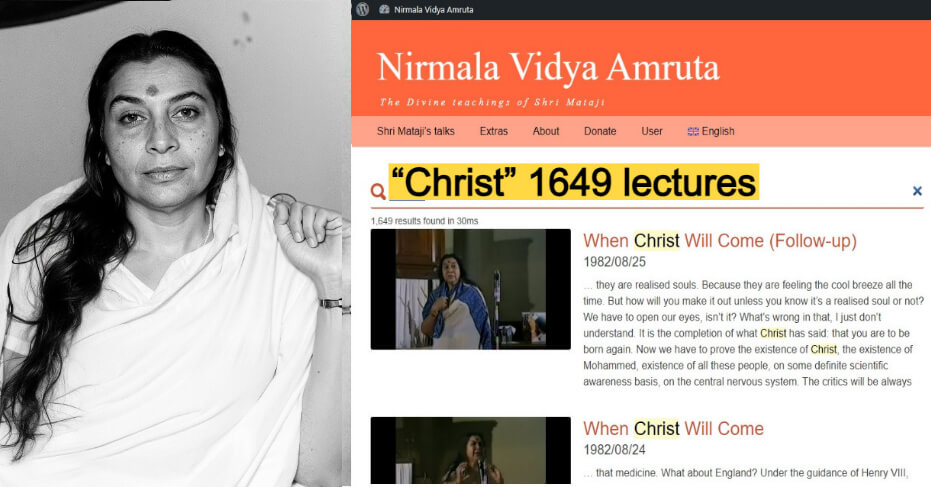
She consistently affirmed Jesus as the Son of God and framed her mission as operating in his name, fulfilling John 16:14.[2] Shri Mataji did not seek personal glorification. She repeatedly stated that her work was to complete Christ's mission, to enable humanity to realize what his sacrifice made possible. She positioned herself not as a replacement for Christ but as the fulfillment of his promise. This satisfies the Johannine requirement that the Paraclete glorify Christ rather than supplant him. Her work is entirely oriented toward the realization of Christ's mission in human consciousness.
VIII. Resistance, Betrayal, and the Pattern of Rejection
Jesus warned that truth would provoke hostility. In John 15:18–20, he tells his disciples: If the world hates you, keep in mind that it hated me first. If you belonged to the world, it would love you as its own. As it is, you do not belong to the world. That is why the world hates you. Remember what I told you: 'A servant is not greater than his master.' If they persecuted me, they will persecute you also.
Resistance from institutional Christianity—Pentecostal, Catholic, and Reformed alike—is therefore not anomalous but expected. The institutions that have stabilized themselves around an incomplete revelation naturally resist the completion of that revelation. They resist not out of malice but out of self-preservation. An incomplete revelation supports institutional mediation; a complete revelation does not. Institutional Christianity has built its authority on the claim that it preserves and interprets the closed revelation of Scripture. The advent of a living, embodied Paraclete who completes that revelation threatens the institutional monopoly on truth.
The resistance to the Paraclete takes multiple forms. First, there is the resistance of doctrinal conservatism, which insists that all revelation is contained in Scripture and that any claim to new revelation is by definition false. This position conflates the closure of the canon with the completion of revelation, failing to recognize that Jesus himself explicitly promises ongoing revelation through the Paraclete. Second, there is the resistance of institutional authority, which fears that a living Paraclete will undermine the hierarchical structures through which the Church claims to mediate salvation. If believers can know the Spirit directly, within their own consciousness, then the institutional mediation of salvation becomes unnecessary. Third, there is the resistance of spiritual complacency, which has become comfortable with the incomplete revelation and sees no need for its completion. These believers have built their identity around the existing structures and doctrines and resist any challenge to them.
More tragic is the betrayal by Shri Mataji's own disciples, who reduced her mission to techniques and rituals, obscuring her Paracletic identity. This mirrors the abandonment and denial Jesus himself endured. Peter denies knowing Jesus; Judas betrays him; the disciples flee. Yet these betrayals do not falsify Jesus' mission; they confirm it. Similarly, the betrayal by some of Shri Mataji's followers does not falsify her Paracletic identity; it confirms the pattern of rejection that Jesus foretold. The crucifixion is not a one-time event but the recurring fate of the divine message when it appears in living form. The Paraclete's work is not negated by the failures of those who claim to represent it; rather, these failures confirm the pattern that Jesus himself experienced.
IX. Methodological Clarification: Historical-Theological Identification
Before proceeding to the analysis of awakening and crucifixion, it is necessary to clarify the methodological status of the claim that Shri Mataji Nirmala Devi embodies the Paraclete. This is not a symbolic analogy or a metaphorical identification. Rather, it is a historical-theological claim: that Shri Mataji's life, work, and demonstrable effects correspond to the criteria Jesus himself establishes for the Paraclete's advent in the Johannine corpus. The identification proceeds on three grounds: textual congruence, functional necessity, and empirical fulfillment.
Textual congruence means that Shri Mataji's mission aligns with the specific functions Jesus attributes to the Paraclete. She teaches all things; she guides into all truth; she operates interiorly and experientially; she glorifies Jesus; she universalizes resurrection life. These are not accidental parallels but systematic correspondences with the Johannine criteria.
Functional necessity means that the Paraclete's role as described by Jesus requires an embodied, historical agent. Teaching, guidance, and interior transformation presuppose intelligible communication and relational engagement. A purely abstract or disembodied fulfillment would contradict the incarnational logic already established in Jesus himself. Just as the Logos became flesh to inaugurate salvation, the completion of that salvation requires a historically embodied continuation, not as a repetition of the Incarnation, but as its consummation.
Empirical fulfillment
X. Awakening the Dead: The Crucifixion of the Living Message
The metaphor of awakening the dead
is central to understanding the resistance to the Paraclete. In John 5:25–29, Jesus says:
Very truly I tell you, a time is coming and has now come when the dead will hear the voice of the Son of God and those who hear will live. For as the Father has life in himself, so he has granted the Son also to have life in himself. And he has given him authority to judge because he is the Son of Man. Do not be amazed at this, for a time is coming when all who are in their graves will hear his voice and come out—those who have done what is good will rise to live, and those who have done what is evil will rise to be condemned.
To awaken the dead is to confront those who believe themselves already alive. It is to threaten the settled certainties upon which they have built their lives and institutions. The hostility encountered by those who proclaim the fulfillment of Christ's promise in a living, historical teacher is structurally analogous to the rejection and crucifixion of Jesus himself. The crucifixion is not a one-time event but the recurring fate of the divine message when it appears in living form.
For the resurrected few
—those who have experienced the Kundalini awakening and embraced the Paraclete's completion of Christ's work—the task of awakening others becomes their crucifixion. They must proclaim a truth that threatens the institutional foundations of Christianity. They must insist that the Gospel is not closed but open, not finished but ongoing, not complete but awaiting completion. They must challenge the very authorities—ecclesiastical, scriptural, and doctrinal—that have claimed to possess and interpret the final revelation. In doing so, they invite the same hostility that Jesus encountered. They become pariahs within their own religious tradition. They are excluded from the institutions that claim to represent Christ. They are condemned as heretics, deceivers, and false prophets. They are crucified—not physically, but socially, theologically, and spiritually.
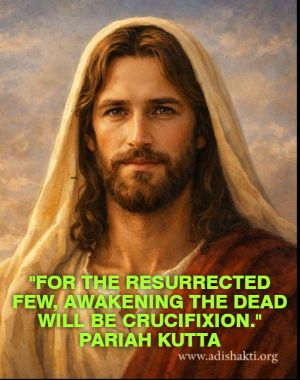
This is why for the resurrected few, awakening the dead will be crucifixion. The very act of proclaiming the completion of Christ's work in the Paraclete becomes a form of suffering. The resistance they encounter is not accidental but structural. It flows necessarily from the fact that they are challenging the institutional mediation of revelation. They are asserting that truth is not mediated through institutions but experienced directly through the indwelling Spirit. They are claiming that the Gospel is not a closed text to be interpreted but an open promise to be lived. They are insisting that the resurrection is not merely a doctrine to be believed but a reality to be experienced. In making these claims, they inevitably provoke the hostility of those who have invested their authority and identity in the closed, institutional, doctrinal version of Christianity.
XI. Theological Implications and the Cost of Discipleship
If the Paraclete has indeed come and completed Christ's work through Shri Mataji Nirmala Devi, then several profound theological implications follow. First, Christian revelation is not static but dynamic, not finished but ongoing. The Gospel is not a closed text but an open promise. Second, the ultimate authority of revelation rests not in institutions or texts alone, but in living verification within human consciousness. The Paraclete is known through direct experience, not through doctrinal formulation or institutional authority. Third, the resurrection is not merely a doctrine to be believed but a reality to be experienced. Through the Kundalini awakening, believers participate in Christ's resurrection in the present moment. Fourth, the Kingdom of God is not merely a future hope but a present possession. Jesus promised that the Kingdom is within you
(Luke 17:21), and the Paraclete makes this interior Kingdom a present reality.
These implications demand a radical reorientation of Christian discipleship. The cost of accepting the Paraclete's completion of Christ's work is the willingness to be crucified—to be excluded from institutions, condemned by authorities, and rejected by those who have invested their identity in the incomplete revelation. Yet this cost is not unique to the present age. Jesus himself paid this cost. He was rejected by the religious authorities, condemned by the institutional religion of his time, and crucified. The Paraclete's work follows the same pattern. Those who embrace it must be willing to follow Christ in his crucifixion, to accept rejection and persecution as the price of fidelity to the living message of God.
XII. Hermeneutical Conclusion: Divine Design Completed
The hermeneutical implication is now clear: the words of the historical Jesus are incomplete by divine design. This is not a deficiency but a feature of the divine economy. Jesus deliberately leaves his work unfinished because humanity is not yet ready to receive the fullness of truth. The sending of the Paraclete is not an optional theological addendum but the completion of Christ's mission. The Paraclete is the necessary agent without which the Gospel remains suspended—authoritative yet unfinished, believing in resurrection without experiencing it.
Without the Paraclete, Christianity remains a religion of belief. With the Paraclete, Christianity becomes a religion of experience. The Paraclete transforms resurrection from a past event to be remembered into a present reality to be lived. The Paraclete transforms the Kingdom of God from a future hope into a present possession. The Paraclete transforms discipleship from obedience to law into participation in the divine life. This is not doctrinal evolution; it is divine intervention. It is the completion of what Jesus promised. It is the fulfillment of John 16:12–13.
XIII. Final Conclusion
I still have many things to say to you
is not a problem to be explained away but a promise to be fulfilled. Any theology that denies its fulfillment denies Jesus' own words. The Paraclete's coming completes what the crucifixion interrupted, what Pentecost inaugurated, and what history awaited. In Shri Mataji Nirmala Devi, the Johannine promise reaches consummation—not by replacing Christ, but by completing his work. She does not supersede Jesus; she fulfills him. She does not contradict the Gospel; she realizes it. She does not establish a new religion; she completes the old one.
For those who accept this fulfillment, the implications are profound and demanding. It means that the Gospel is not a closed text to be interpreted but an open promise to be lived. It means that Christian revelation is not static but dynamic, not finished but ongoing. It means that the ultimate authority of revelation rests not in institutions or texts alone, but in living verification within human consciousness. It means that the resurrection is not merely a doctrine to be believed but a reality to be experienced. It means that the Kingdom of God is not merely a future hope but a present possession. It means that the work of Christ is not complete until it is completed in us.
Yet this acceptance comes at a cost. For the resurrected few who embrace the Paraclete's completion of Christ's work, awakening the dead becomes their crucifixion. They must proclaim a truth that threatens the institutional foundations of Christianity. They must insist on the living presence of the Spirit against the dead letter of institutional authority. They must challenge the very structures that claim to represent Christ. In doing so, they follow Christ in his crucifixion. They accept rejection, persecution, and exclusion as the price of fidelity to the living message. They become witnesses to the completion of Christ's work, even as that witness costs them everything.
This is the paradox at the heart of Christian discipleship in the age of the Paraclete: the completion of Christ's work through the Paraclete is simultaneously the crucifixion of those who proclaim it. Yet this crucifixion is not failure; it is confirmation. It is the mark of fidelity to Jesus' promise. It is the cost of awakening the dead. It is the price of completing Christ's unfinished work. For the resurrected few, this crucifixion is not the end but the beginning—the beginning of resurrection life, the beginning of the Kingdom of God within, the beginning of the fulfillment of all that Jesus promised.
References
[1] Hamilton, James M. Jr. "The Christocentric and Christotelic Nature of Johannine Pneumatology." Themelios, vol. 44, no. 1, 2019.[2] Nirmala Devi, Shri Mataji. "Public Program Address." Sala Borromini, Biblioteca Vallicelliana, Rome, Italy, 9 Sept. 1983.