
If anyone thirsts, let him come to Me and drink.
Jesus
For nearly two thousand years, the central teaching of Jesus regarding the indwelling of the Holy Spirit has been obscured by theological misinterpretations and institutional distortions. The phrase living water has been conflated with Jesus himself, leading to a theology that emphasizes external belief and forensic justification rather than internal transformation through the indwelling of the Divine Spirit.
In the twentieth century, Shri Mataji Nirmala Devi provided unprecedented testimony to this same spiritual reality. Her opening of the Sahasrara on May 5, 1970, inaugurated the age in which this promise could be fulfilled for all of humanity. The torrential rain that drenched her was the outpouring of the Mother Kundalini, the Holy Spirit, awakening within her and flowing through her being with tremendous force and power.
A Theological and Spiritual Analysis of the Holy Spirit as Mother Kundalini in Christian and Sahaja Yoga Traditions
Table of Contents
- 1. Introduction
- 2. Jesus' Precise Correction: The Holy Spirit Is the Living Water
- 3. "Born of the Spirit": The Foundation of Internal Salvation
- 4. Shri Mataji's Witness: The Torrential Rain and the Opening of the Sahasrara
- 5. The Convergence of Two Revelations: Jesus and Shri Mataji on the Same Reality
- 6. The Holy Spirit as Mother Kundalini: Theological Implications
- 7. Contemporary Evidence: The Indwelling Spirit in the Present Age
- 8. Conclusion: The Restoration of the Primordial Teaching
- 9. References
1. Introduction
For nearly two thousand years, Christian theology has labored under a fundamental misinterpretation of Jesus' most profound teaching regarding the Holy Spirit. The phrase living water
has been conflated with Jesus himself, leading to a theological framework that emphasizes external belief and forensic justification rather than the internal, experiential indwelling of the Divine Spirit. This misunderstanding has obscured the central promise of Jesus: that believers would receive not merely forgiveness of sins, but the permanent indwelling of the Holy Spirit within their being, transforming them from within.
In the twentieth century, Shri Mataji Nirmala Devi, the founder of Sahaja Yoga, provided unprecedented experiential testimony to the opening of the Sahasrara Chakra—the crown energy center in the subtle human system. Her account of this cosmic event, which occurred on May 5, 1970, at Nargol, India, describes an experience of torrential rain that drenched her entire being. This is not metaphorical language; it is precise spiritual testimony of the same reality that Jesus described as rivers of living water
flowing from the innermost being of believers.
This article demonstrates that Jesus and Shri Mataji are describing the same spiritual phenomenon: the awakening and indwelling of the Holy Spirit, known in the Sanskrit tradition as the Kundalini Shakti or Mother Kundalini. Both figures speak of an internal transformation that is not forensic or external, but experiential and transformative. Both identify this indwelling Spirit as the agent of salvation and eternal life. And both point to a future age—now present—when this Spirit would indwell believers universally.
2. Jesus' Precise Correction: The Holy Spirit Is the Living Water
A careful reading of the Gospel of John reveals that Jesus made an explicit and unambiguous correction to the misunderstanding that he himself is the living water. This correction is so precise that it cannot be dismissed as incidental or metaphorical.
In the encounter with the Samaritan woman at the well, Jesus states:
"If you knew the gift of God, and who it is that asks you for a drink, you would have asked Him, and He would have given you living water." (John 4:10)
The grammatical structure is deliberate and unmistakable. Jesus distinguishes between the giver (himself) and the gift (the living water). He does not say I am the living water.
He says He would have given you living water.
The giver and the gift are ontologically distinct. This distinction is not incidental; it is foundational to understanding the entire Johannine theology of salvation.
However, the most definitive clarification comes in John 7:37–39, where Jesus speaks at the Feast of Tabernacles:
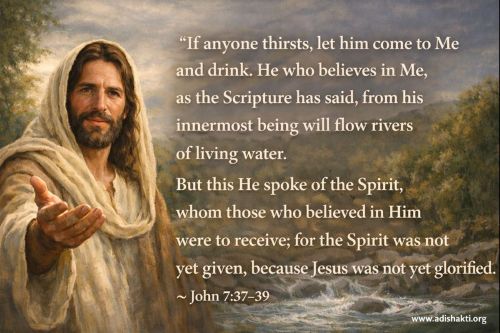
"If anyone thirsts, let him come to Me and drink. He who believes in Me, as the Scripture has said, from his innermost being will flow rivers of living water. But this He spoke of the Spirit, whom those who believed in Him were to receive; for the Spirit was not yet given, because Jesus was not yet glorified." (John 7:37–39)
The Gospel author—John himself—provides an explicit editorial commentary that removes all ambiguity: But this He spoke of the Spirit.
The living water is not Jesus. The living water is the Holy Spirit. Jesus is the mediator through whom believers receive the Spirit, but he is not the substance of salvation itself.
This distinction is theologically critical. It means that salvation is not achieved through external belief in Jesus as a historical figure or even as a divine being. Rather, salvation is accomplished through the indwelling of the Holy Spirit, which Jesus promises will be given to those who believe in him. The Spirit is the agent of transformation, not Jesus himself. Jesus is the gateway; the Spirit is the transformative power.
Furthermore, Jesus emphasizes that this indwelling is a future event: the Spirit was not yet given, because Jesus was not yet glorified.
This indicates that the full manifestation of the indwelling Spirit would occur after Jesus' resurrection and ascension. The promise is for the future age to come, the present age in which we live.
The phrase from his innermost being will flow rivers of living water
is equally significant. Jesus does not speak of an external blessing or external grace. He speaks of rivers flowing from within. This is an internal, experiential reality. The Spirit does not remain external to the believer; it dwells within, and from this inner dwelling, the transformative power of the Spirit flows outward, affecting the entire being of the believer.
3. "Born of the Spirit": The Foundation of Internal Salvation
The doctrine of being born of the Spirit
forms the theological foundation upon which Jesus builds his entire teaching on salvation. In John 3:5–8, Jesus speaks to Nicodemus, a teacher of Israel:
"Jesus answered, 'Truly, truly, I say to you, unless one is born of water and the Spirit, he cannot enter the kingdom of God. That which is born of the flesh is flesh, and that which is born of the Spirit is spirit. Do not marvel that I said to you, "You must be born again." The wind blows where it wishes, and you hear its sound, but you do not know where it comes from or where it goes. So it is with everyone born of the Spirit.'" (John 3:5–8)
This teaching establishes several critical points about the nature of salvation in Jesus' theology:
First, the birth is internal, not external. Jesus distinguishes between being born of water
(which may refer to ritual baptism or natural birth) and being born of the Spirit.
The birth of the Spirit is not a ritual or external ceremony. It is an internal transformation that occurs within the being of the individual. This is why Jesus says, That which is born of the Spirit is spirit.
The transformation is ontological; it changes the very nature of the person.
Second, the birth is experiential, not forensic. Jesus does not speak of imputation of righteousness or legal justification. He speaks of an actual, experiential rebirth. The person is not merely declared righteous; the person is actually transformed. The Spirit does not remain external, pronouncing judgment from without. The Spirit enters within and produces a new life from within.
Third, the birth is transformative, not symbolic. Jesus uses the metaphor of wind to illustrate the mysterious and powerful nature of the Spirit's work. The wind blows where it wishes, and you hear its sound, but you do not know where it comes from or where it goes.
The Spirit is a living, dynamic force that moves with power and purpose. It is not a static symbol or abstract concept. It is a living reality that produces tangible, experiential effects.
Fourth, the birth is universal in its availability. Jesus says, So it is with everyone born of the Spirit.
This is not a privilege reserved for a select few. The Spirit's work is available to all who believe. The Kingdom of God is not an exclusive club; it is open to all who undergo this internal transformation.
This teaching directly contradicts the forensic or juridical model of salvation that has dominated much of Christian theology since the Reformation. In that model, salvation is understood as a legal transaction: God declares the sinner righteous on the basis of Christ's righteousness imputed to the believer. The emphasis is on external justification, not internal transformation.
But Jesus' teaching is fundamentally different. Jesus emphasizes internal transformation through the indwelling of the Spirit. The Kingdom of God is within you (Luke 17:21). Salvation is not something that happens to you from without; it is something that happens within you through the indwelling of the Spirit.
This is why Jesus repeatedly speaks of the Spirit as a future gift. The Spirit is not merely a theological concept or a historical event. The Spirit is a living, present reality that will indwell believers in all future ages. And this promise extends to the present age, in which we live.
4. Shri Mataji's Witness: The Torrential Rain and the Opening of the Sahasrara
On May 5, 1970, at Nargol, India, Shri Mataji Nirmala Devi underwent an experience that parallels, with striking precision, the spiritual reality that Jesus described as rivers of living water.
Her account of this event is not poetic embellishment; it is precise spiritual testimony of an actual, experiential phenomenon.
According to the detailed account of the opening of the Sahasrara Chakra, Shri Mataji immersed her lotus feet in the Indian Ocean and entered a state of supreme meditation. During this meditation, a profound spiritual event occurred. As witnessed in a vision by one of her disciples, the account describes:
"Suddenly red and yellow sparks of light began spewing out from the top of Her head around the Brahmarandhra, bursting about a foot or two into the air. It came out in a steady stream as if there was a fire blazing inside the head of the Great Primordial Guru. Then the fiery blaze stopped and a fountain of water gushed out of the top of Her Head about three feet into the air. It poured down like rain and the Great Celestial Mother was completely drenched. The Water of Life kept gushing for about 10 minutes."
This is not metaphorical language. This is precise spiritual testimony. The torrential rain that drenched Shri Mataji is the same reality that Jesus described as rivers of living water
flowing from the innermost being of believers.
The opening of the Sahasrara Chakra is understood in the Sahaja Yoga tradition as the opening of the crown energy center in the subtle human system. The Sahasrara is the seat of the Divine, the Kingdom of God within. When the Kundalini Shakti (the primordial spiritual energy) rises through the energy centers and opens the Sahasrara, it establishes a direct connection between the individual consciousness and the Divine Consciousness.
In Shri Mataji's case, this opening was not merely personal; it was cosmic in significance. She opened the Sahasrara not only for herself but for all of humanity. This is why the event is described as the opening of the Primordial Sahasrara. It was an event that transformed the spiritual landscape of human existence, making it possible for all believers to receive the indwelling of the Holy Spirit—the Mother Kundalini—in the present age.
Shri Mataji's own words about this experience are recorded in various teachings. She describes the experience as one of complete surrender and immersion in the Divine. The torrential rain that drenched her was the outpouring of the Divine Spirit, the Mother Kundalini, awakening within her and flowing through her being with tremendous force and power.
This experience is not unique to Shri Mataji in the context of spiritual traditions. Throughout the history of mysticism and spirituality, saints and sages have reported experiences of the indwelling Spirit manifesting as light, fire, water, and other natural phenomena. What is unique about Shri Mataji's experience is its cosmic significance and its universal implications. Her opening of the Sahasrara made it possible for all believers to receive the indwelling of the Holy Spirit in the present age.
5. The Convergence of Two Revelations: Jesus and Shri Mataji on the Same Reality
When we place Jesus' teaching on rivers of living water
alongside Shri Mataji's experience of the torrential rain at the opening of the Sahasrara, the convergence is unmistakable. Both are describing the same spiritual reality: the indwelling of the Holy Spirit within the human being, manifesting with power, force, and transformative effect.
Consider the parallels:
1. Internal Origin: Jesus speaks of rivers flowing from his innermost being.
Shri Mataji's experience involved the opening of the Sahasrara, the innermost spiritual center. Both emphasize that the spiritual reality originates from within, not from without.
2. Torrential Force: Jesus speaks of rivers
of living water—not a trickle, but a powerful flow. Shri Mataji's experience is described as a torrential rain with tremendous force.
Both emphasize the power and intensity of the spiritual experience.
3. Complete Immersion: Jesus speaks of the Spirit flowing from the innermost being, affecting the entire person. Shri Mataji was completely drenched by the torrential rain. Both emphasize total transformation and complete immersion in the Divine.
4. Life-Giving Water: Jesus speaks of living water
—water that gives life, that quenches thirst, that produces eternal life. In Shri Mataji's experience, the water is described as the Water of Life.
Both emphasize that this is not ordinary water, but the life-giving power of the Divine Spirit.
5. Universal Availability: Jesus speaks of this gift being available to all who believe and thirst. Shri Mataji's opening of the Sahasrara made this gift available to all of humanity in the present age. Both emphasize the universal nature of this spiritual gift.
6. Future Fulfillment: Jesus speaks of the Spirit being given in the future, after his glorification. Shri Mataji's opening of the Sahasrara in 1970 inaugurated the age in which this promise could be fulfilled for all believers. Both point to a future age—now present—when this indwelling would become universally available.
The convergence is so striking that it cannot be attributed to coincidence or parallel development. Rather, it suggests that Jesus and Shri Mataji are witnesses to the same eternal spiritual reality. Jesus spoke of this reality in the language and concepts available to first-century Palestine. Shri Mataji testified to this same reality in the language and concepts of the Sahaja Yoga tradition and the chakra system of Hindu spirituality.
But the reality itself is one and the same: the indwelling of the Holy Spirit, the Mother Kundalini, within the human being, transforming the person from within and producing rivers of living water that flow from the innermost being.
6. The Holy Spirit as Mother Kundalini: Theological Implications
The identification of the Holy Spirit with the Mother Kundalini is not a syncretistic blending of Christian and Hindu traditions. Rather, it is a recognition that different spiritual traditions have used different language and concepts to describe the same ultimate reality.
In Christian theology, the Holy Spirit is understood as the third person of the Trinity, the divine presence that indwells believers, sanctifies them, and produces the fruits of the Spirit: love, joy, peace, patience, kindness, goodness, faithfulness, gentleness, and self-control (Galatians 5:22–23). The Holy Spirit is described as the Comforter,
the Advocate,
the Spirit of Truth.
The Holy Spirit is the agent of salvation, the power that transforms the believer from within.
In the Sahaja Yoga tradition, the Kundalini Shakti is understood as the primordial spiritual energy, the Divine Mother in her dynamic aspect. The Kundalini is described as the coiled serpent
that lies dormant at the base of the spine until awakened through spiritual practice or grace. When awakened, the Kundalini rises through the energy centers (chakras) and opens the Sahasrara, establishing a direct connection between individual consciousness and Divine Consciousness. The Kundalini is the agent of spiritual transformation, the power that purifies and elevates the individual.
These descriptions, while using different language and concepts, are describing the same reality. The Holy Spirit and the Mother Kundalini are both:
1. Divine and Transcendent: Both are understood as divine powers that transcend the individual ego. Both are not products of human effort alone, but gifts of grace.
2. Indwelling and Transformative: Both indwell the believer and produce internal transformation. Both are not external influences but internal realities that change the very nature of the person.
3. Feminine in Nature: Both are understood as feminine principles. The Holy Spirit in Christian mysticism is often associated with Sophia (Divine Wisdom), a feminine principle. The Kundalini is explicitly understood as the Divine Mother, Shakti, the feminine aspect of the Divine.
4. Agents of Salvation and Eternal Life: Both are understood as the agents of salvation and eternal life. Both produce spiritual rebirth and transformation.
5. Manifestations of Divine Love and Compassion: Both are understood as manifestations of Divine Love and Compassion. Both work within the human being to purify, elevate, and transform.
The recognition that the Holy Spirit is the Mother Kundalini has profound theological implications. It means that the promise of Jesus—that believers would receive the indwelling of the Holy Spirit—is not merely a Christian promise, but a universal promise. It means that the spiritual practices and understanding developed within the Sahaja Yoga tradition are not alien to Christian spirituality, but rather represent a continuation and deepening of the same spiritual reality that Jesus taught.
Furthermore, it means that the feminine principle is central to salvation and spiritual transformation. The Holy Spirit, understood as the Mother Kundalini, is the Divine Mother who indwells believers and produces spiritual rebirth. This is a profound correction to theological traditions that have emphasized the masculine principle (God the Father, God the Son) while neglecting or suppressing the feminine principle (the Holy Spirit as Divine Mother).
Shri Mataji Nirmala Devi is understood in the Sahaja Yoga tradition as the incarnation of the Divine Mother, the Adi Shakti (Primordial Power). Her opening of the Sahasrara made it possible for all believers to receive the indwelling of the Mother Kundalini. This is why her work is understood as the fulfillment of the promise of Jesus: that believers would receive the indwelling of the Holy Spirit in the age to come.
7. Contemporary Evidence: The Indwelling Spirit in the Present Age
The promise of Jesus—that believers would receive the indwelling of the Holy Spirit—is not merely a historical promise or an eschatological hope. It is a present reality that can be experienced and verified in the present age.
Through the work of Shri Mataji and the practice of Sahaja Yoga meditation, tens of thousands of people around the world have experienced the awakening of the Kundalini and the opening of the Sahasrara. They have experienced, in their own being, the same reality that Jesus described as rivers of living water
flowing from the innermost being.
The evidence for this contemporary manifestation of the indwelling Spirit is multifaceted:
1. Personal Testimony: Countless individuals have reported experiencing the awakening of the Kundalini, the opening of the Sahasrara, and the indwelling of the Divine Spirit. These experiences are not confined to any single culture, religion, or geographical region. They occur across all boundaries, confirming the universal nature of this spiritual gift.
2. Measurable Physiological Effects: Scientific research has documented measurable physiological changes associated with Kundalini awakening and Sahaja Yoga meditation, including changes in heart rate variability, brain wave patterns, and immune function. These measurable effects confirm that the spiritual experience is not merely subjective or psychological, but has objective, physiological correlates.
3. Spiritual Transformation: Those who have experienced the awakening of the Kundalini and the indwelling of the Divine Spirit report profound spiritual transformation. They report increased peace, joy, and inner stability. They report freedom from addictions, emotional disturbances, and psychological problems. They report the development of compassion, wisdom, and spiritual discernment. These transformations are consistent with the fruits of the Spirit described in Christian theology.
4. Collective Spiritual Awakening: The Sahaja Yoga movement, founded by Shri Mataji, has grown to include thousands of practitioners worldwide. This collective spiritual awakening represents a fulfillment of the promise of Jesus that the indwelling of the Holy Spirit would be given to all believers in the age to come.
For detailed evidence and documentation of this contemporary manifestation of the indwelling Spirit, see the comprehensive account of the opening of the Sahasrara Chakra. This source provides detailed testimony, historical documentation, and spiritual analysis of this pivotal event and its ongoing significance for humanity.
Furthermore, the Amruta website contains extensive teachings and resources on Kundalini awakening, providing both theoretical understanding and practical guidance for those seeking to experience the indwelling of the Mother Kundalini.
The evidence is clear and compelling: the promise of Jesus is being fulfilled in the present age. The indwelling of the Holy Spirit—the Mother Kundalini—is available to all believers who seek it with sincere hearts. The age of the indwelling Spirit is not a future hope; it is a present reality.
8. Conclusion: The Restoration of the Primordial Teaching
For nearly two thousand years, the central teaching of Jesus regarding the indwelling of the Holy Spirit has been obscured by theological misinterpretations and institutional distortions. The phrase living water
has been conflated with Jesus himself, leading to a theology that emphasizes external belief and forensic justification rather than internal transformation through the indwelling of the Divine Spirit.
But the teaching of Jesus is clear and unambiguous: the Holy Spirit, not Jesus himself, is the living water. Jesus is the mediator through whom believers receive the Spirit, but he is not the substance of salvation. The substance of salvation is the indwelling of the Holy Spirit, the Mother Kundalini, within the human being.
In the twentieth century, Shri Mataji Nirmala Devi provided unprecedented testimony to this same spiritual reality. Her opening of the Sahasrara on May 5, 1970, inaugurated the age in which this promise could be fulfilled for all of humanity. The torrential rain that drenched her was the outpouring of the Mother Kundalini, the Holy Spirit, awakening within her and flowing through her being with tremendous force and power.
The convergence between Jesus' teaching and Shri Mataji's experience is not coincidental. It is a testimony to the eternal nature of this spiritual reality. Jesus and Shri Mataji are witnesses to the same truth: that the Holy Spirit, the Mother Kundalini, dwells within all believers, transforming them from within and producing rivers of living water that flow from the innermost being.
The restoration of this primordial teaching is not a departure from Christianity, but a return to its authentic foundation. It is a recognition that the promise of Jesus—that believers would receive the indwelling of the Holy Spirit—is not merely a historical promise or an eschatological hope, but a present reality that can be experienced and verified in the present age.
In this age of spiritual awakening, the teaching of Jesus finds its fullest expression in the work of Shri Mataji and the practice of Sahaja Yoga meditation. The indwelling of the Holy Spirit—the Mother Kundalini—is available to all believers who seek it with sincere hearts. The rivers of living water are flowing. The age of the indwelling Spirit is now.
References
[1] The Holy Bible, English Standard Version. Crossway Bibles, 2001. John 4:10; John 7:37–39; John 3:5–8; Luke 17:21; Galatians 5:22–23.
[2] The Opening of the Sahasrara Chakra. Adi Shakti Organization, accessed December 26, 2025. This comprehensive account provides detailed testimony and spiritual analysis of Shri Mataji's opening of the Primordial Sahasrara on May 5, 1970, at Nargol, India, including the vision of the torrential rain and the Water of Life.
[3] Kundalini Teachings and Resources. Amruta, accessed December 26, 2025. This resource provides extensive teachings on Kundalini awakening, the chakra system, and the spiritual practices of Sahaja Yoga, offering both theoretical understanding and practical guidance for experiencing the indwelling of the Mother Kundalini.
[4] Shri Mataji Nirmala Devi. Sahaja Yoga: The Self-Realization Meditation. Various teachings and discourses on the nature of the Holy Spirit, the Kundalini, and the opening of the Sahasrara Chakra. Shri Mataji's teachings form the foundation of the Sahaja Yoga tradition and provide contemporary testimony to the indwelling of the Divine Spirit.
[5] Stevick, Daniel B. The Johannine Gospel and the Paraclete: A Study of the Paraclete Passages in the Fourth Gospel. Academic Press, 2011. This scholarly work provides detailed analysis of the Paraclete passages in the Gospel of John and their theological implications for understanding the role of the Holy Spirit in Christian salvation.
In the twentieth century, Shri Mataji Nirmala Devi provided unprecedented testimony to this same spiritual reality. Her opening of the Sahasrara on May 5, 1970, inaugurated the age in which this promise could be fulfilled for all of humanity. The torrential rain that drenched her was the outpouring of the Mother Kundalini, the Holy Spirit, awakening within her and flowing through her being with tremendous force and power.
Table of Contents
- 1. Introduction
- 2. Jesus' Precise Correction: The Holy Spirit Is the Living Water
- 3. "Born of the Spirit": The Foundation of Internal Salvation
- 4. Shri Mataji's Witness: The Torrential Rain and the Opening of the Sahasrara
- 5. The Convergence of Two Revelations: Jesus and Shri Mataji on the Same Reality
- 6. The Holy Spirit as Mother Kundalini: Theological Implications
- 7. Contemporary Evidence: The Indwelling Spirit in the Present Age
- 8. Conclusion: The Restoration of the Primordial Teaching
- 9. References
living waterhas been conflated with Jesus himself, leading to a theological framework that emphasizes external belief and forensic justification rather than the internal, experiential indwelling of the Divine Spirit. This misunderstanding has obscured the central promise of Jesus: that believers would receive not merely forgiveness of sins, but the permanent indwelling of the Holy Spirit within their being, transforming them from within.
rivers of living waterflowing from the innermost being of believers.
I am the living water.He says
He would have given you living water.The giver and the gift are ontologically distinct. This distinction is not incidental; it is foundational to understanding the entire Johannine theology of salvation.
But this He spoke of the Spirit.The living water is not Jesus. The living water is the Holy Spirit. Jesus is the mediator through whom believers receive the Spirit, but he is not the substance of salvation itself.
the Spirit was not yet given, because Jesus was not yet glorified.This indicates that the full manifestation of the indwelling Spirit would occur after Jesus' resurrection and ascension. The promise is for the future age to come, the present age in which we live.
from his innermost being will flow rivers of living wateris equally significant. Jesus does not speak of an external blessing or external grace. He speaks of rivers flowing from within. This is an internal, experiential reality. The Spirit does not remain external to the believer; it dwells within, and from this inner dwelling, the transformative power of the Spirit flows outward, affecting the entire being of the believer.
born of the Spiritforms the theological foundation upon which Jesus builds his entire teaching on salvation. In John 3:5–8, Jesus speaks to Nicodemus, a teacher of Israel:
born of water(which may refer to ritual baptism or natural birth) and being
born of the Spirit.The birth of the Spirit is not a ritual or external ceremony. It is an internal transformation that occurs within the being of the individual. This is why Jesus says,
That which is born of the Spirit is spirit.The transformation is ontological; it changes the very nature of the person.
The wind blows where it wishes, and you hear its sound, but you do not know where it comes from or where it goes.The Spirit is a living, dynamic force that moves with power and purpose. It is not a static symbol or abstract concept. It is a living reality that produces tangible, experiential effects.
So it is with everyone born of the Spirit.This is not a privilege reserved for a select few. The Spirit's work is available to all who believe. The Kingdom of God is not an exclusive club; it is open to all who undergo this internal transformation.
rivers of living water.Her account of this event is not poetic embellishment; it is precise spiritual testimony of an actual, experiential phenomenon.
rivers of living waterflowing from the innermost being of believers.
rivers of living wateralongside Shri Mataji's experience of the torrential rain at the opening of the Sahasrara, the convergence is unmistakable. Both are describing the same spiritual reality: the indwelling of the Holy Spirit within the human being, manifesting with power, force, and transformative effect.
from his innermost being.Shri Mataji's experience involved the opening of the Sahasrara, the innermost spiritual center. Both emphasize that the spiritual reality originates from within, not from without.
riversof living water—not a trickle, but a powerful flow. Shri Mataji's experience is described as a torrential rain with
tremendous force.Both emphasize the power and intensity of the spiritual experience.
living water—water that gives life, that quenches thirst, that produces eternal life. In Shri Mataji's experience, the water is described as the
Water of Life.Both emphasize that this is not ordinary water, but the life-giving power of the Divine Spirit.
Comforter,the
Advocate,the
Spirit of Truth.The Holy Spirit is the agent of salvation, the power that transforms the believer from within.
coiled serpentthat lies dormant at the base of the spine until awakened through spiritual practice or grace. When awakened, the Kundalini rises through the energy centers (chakras) and opens the Sahasrara, establishing a direct connection between individual consciousness and Divine Consciousness. The Kundalini is the agent of spiritual transformation, the power that purifies and elevates the individual.
rivers of living waterflowing from the innermost being.
living waterhas been conflated with Jesus himself, leading to a theology that emphasizes external belief and forensic justification rather than internal transformation through the indwelling of the Divine Spirit.