

What is difference between TM and Sahaja Yoga?
1. Introduction: The Seeker’s Dilemma
In the contemporary spiritual marketplace, individuals and institutions are often presented with a multitude of practices, all promising enhanced well‑being, reduced stress, and inner peace. A common query, as illustrated by a Sahaja Yogi seeking to introduce his practice into a workplace where Transcendental Meditation (TM) is already established, is: "What is the difference, and how is one better than the other?" (Vats, personal communication). This seemingly simple question opens a window into the complex landscape of modern religious and spiritual movements (NRMs). While both TM and Sahaja Yoga share superficial similarities—both are modern, guru‑led movements with roots in Indian traditions—a deeper investigation reveals a chasm in their core philosophies and ultimate aims. This article argues that the difference between TM and Sahaja Yoga is one of kind, not merely degree, with TM positioned as a pragmatic, technique‑based psychospiritual practice and Sahaja Yoga presenting itself as a unique, divine intervention in human evolution.
2. Transcendental Meditation: A Technique for Individual Potential
Transcendental Meditation, introduced by Maharishi Mahesh Yogi in the mid‑20th century, is perhaps the archetypal example of a modern, secularized spiritual practice. Its presentation is carefully crafted for global appeal, emphasizing scientific validation and practical benefits.
Core Philosophy and Practice
TM is a simple, natural, effortless mental technique practiced for 15–20 minutes twice daily while sitting comfortably with eyes closed. Its foundation is the Vedantic understanding of a field of pure consciousness at the source of all thought. The practice involves the use of a personally assigned mantra, a meaningless sound, to allow the mind to settle inward, transcending thought to experience a state of "restful alertness."
Goals and Outcomes
The primary stated goals of TM are pragmatic and individualistic. Research funded by the movement has extensively promoted its benefits for stress reduction, improved cardiovascular health, enhanced cognitive function, and increased self‑actualization (Rosenthal, 2011). The ultimate aim, while framed in Vedantic terms as the realization of one's full potential, is presented in the public sphere as a means to improve one's life, relationships, and effectiveness in the world. It is a technology of consciousness for individual betterment, easily integrated into a secular lifestyle. The movement's institutional arm operates globally with a structure akin to an educational or non‑profit organization.
3. Sahaja Yoga: The “Mahayoga” of Collective Evolution
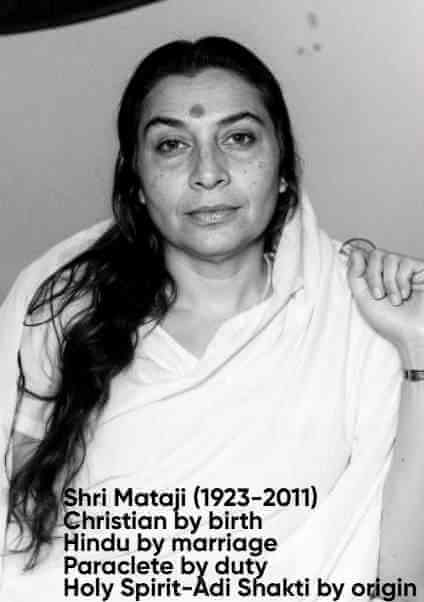
Sahaja Yoga, founded by Shri Mataji Nirmala Devi in 1970, operates from an entirely different epistemological and ontological foundation. While it, too, offers "stress reduction" and "inner peace" in its outward‑facing materials, these are presented as epiphenomena of a much grander, non‑negotiable spiritual reality.
Core Philosophy and Practice
The central, non‑negotiable tenet of Sahaja Yoga is the experience of Self‑realization, or Kundalini awakening. Shri Mataji taught that every human possesses a latent energy (Kundalini) residing in the sacrum bone, which, when awakened, rises through a subtle system of energy centers (chakras) and channels (nadis) to pierce the fontanelle bone area (the "brahmarandhra") and establish a state of "thoughtless awareness" (Nirvichara Samadhi). This experience is the entry point, not the goal. The practice involves meditation, but also a set of behaviors and rituals (e.g., foot‑soaking, bandhan) designed to maintain the cleanliness of the subtle system and protect the practitioner.
The Uniqueness Claim
As articulated in the internal communication that frames this analysis, the "unadulterated original Sahaja Yoga" makes an unprecedented claim: it is not merely a yoga, but the yoga for this age, or Yuga Dharma. Shri Mataji explicitly stated, "Today, Sahaja Yoga has reached the state of Mahayoga, which is en‑masse evolution manifested through it... It is the way the Last Judgment is taking place" (Shri Mataji, quoted in jagbir, personal communication). This elevates Sahaja Yoga from a personal practice to a cosmic event. The "Last Judgment" is reinterpreted not as a future cataclysm, but as the collective, inner transformation made possible now through Kundalini awakening. The goal is not just a better, less stressed individual, but a transformed individual capable of participating in a new, collective reality.
“I will quote a previous post that will help you form your own conclusion. [...] And I can tell you that the edited official version of Sahaja Yoga is as different from other yogas as peas in a pod. And the unadulterated original Sahaja Yoga of Shri Mataji is as different and distant from other yogas as heaven is from earth.”
“So Saarthak, there is no way you can convince your office authorities that the official Sahaja Yoga is better than TM because the official edited version is mainly about the subtle system - chakras, nadis, kundalini, treatments and other petty rituals - that Shri Mataji regards as ‘one little fish and two eggs for ten people with one chili to say that it is Sahaja Yoga.’”
4. Comparative Analysis: Beyond Technique to Teleology
The fundamental differences between the two movements can be analyzed across several key dimensions.
4.1 Mechanism vs. Being
TM is a technique. It is a mechanical process that, if practiced correctly, yields predictable results. It is content‑neutral and can be learned and practiced by anyone, regardless of their belief system. Sahaja Yoga, in its authentic form, is not a technique but an experience of Being. The awakening of the Kundalini is an act of grace, facilitated by a living guru (Shri Mataji), which grants the practitioner a new dimension of perception—a "collective consciousness"—that allows them to feel the state of their own and others' subtle systems. It is not something one "does," but something that one "becomes."
4.2 Individual vs. Collective Goal
TM’s ultimate horizon is the fully actualized individual. Its benefits, even its concept of world peace (through the Maharishi Effect), are aggregated from the peace of individuals. Sahaja Yoga’s goal is explicitly collective. As the phrase "en‑masse evolution" indicates, the transformation is social and global. The individual is not the endpoint but the unit of a new, spiritually conscious humanity. To present Sahaja Yoga solely as a path to "improved family life" or "increased self‑esteem," while true, is to entirely miss its eschatological claim.
4.3 Pragmatic Benefits vs. Divine Imperative
The internal critique provided in the opening correspondence sharply highlights this tension. The author laments that the "official edited version" of Sahaja Yoga has been reduced to marketing points like "stress reduction" and "personal growth," making it indistinguishable from a product like TM. The author insists, citing Shri Mataji, that Sahaja Yoga must be presented in its full, uncompromising glory as the "Kingdom of God" and the means of the "Last Judgment." From this perspective, to compare Sahaja Yoga to TM on the grounds of which offers better stress relief is a category error. It is akin to comparing a hospital's pharmacy with a divine revelation on the grounds that both can make a person feel better.
5. Conclusion: The Incommensurability of Paradigms
In answering the seeker's question, "What is the difference?", one must move beyond a simple bullet‑point comparison of benefits. The distinction between Transcendental Meditation and Sahaja Yoga is paradigmatic. TM operates within a modern, scientific, and individualistic paradigm, offering a reliable technique for enhancing human potential. Sahaja Yoga, particularly as articulated by its founder and understood by its more traditional adherents, operates within a prophetic, eschatological paradigm, positioning itself not as a technique for self‑improvement but as the very mechanism of humanity's collective spiritual destiny.
For the individual practitioner or institution evaluating these paths, the choice is not between two similar stress‑reduction programs. It is a choice between two fundamentally different worldviews: one seeking to optimize the individual within the existing world, and another claiming to offer the means for the world itself to be remade through the collective transformation of human consciousness. Any attempt to "balance" or "understate" this core claim, as the internal critic warns, risks transforming Sahaja Yoga into a pale imitation of the very systems it claims to supersede, losing its unique and radical spiritual message in the process.
References
- Rosenthal, N. E. (2011). Transcendence: Healing and Transformation Through Transcendental Meditation. TarcherPerigee.
- Shri Mataji Nirmala Devi. (Various dates). Public lectures.
- Vats, S. (Personal communication, reproduced in jagbir, personal communication).
- jagbir. (Personal communication to the Sahaja Yoga community).
- Vanamali. (2008). Shakti: Realm of the Divine Mother. Inner Traditions. (referenced in the original inspiration article).
What is the difference between TM and Sahaja Yoga?
—- In adishakti_sahaja_yoga@yahoogroups.com," Saarthak Vats"
Jai Shri Mataji Everyone, I am in a company where already TM is going on for 3+ years, for the employees.... When I went to the authorities, regarding the permission for organizing the Realization Program, I was asked that - What is the difference between TM and Sahaj Yoga..? How is Sahaj Yoga different/better than TM...? So... like we had a discussion about Reiki and got to know about it, I would like to reach out to a Sahaj Yogi who used to do TM before coming to Sahaj and get more information about comparison between the two, advantages of Sahaj Yoga over TM... so that I could talk to my office authorities and convince them that Sahaj Yoga is anyway better than TM. Waiting for a reply. With thanks Dear Saarthak, I will quote a previous post that will help you form your own conclusion. "I've had some experiences where i have tried to explain Sy to a lot of 'busy' ppl. who have been to so many diff. types of yoga and diff. types of guru and obviously are fatigued from it...they all claim to raise kundalini...cure black magic...protect from evil...even show miracles..... Not only that, they have also met existing Sy's in their area and describe them as enthusiastic and over-zealous...in promoting Sy...but becoz of their fatigue they are 1- reluctant to join 'Yet another' form of yoga claiming to be 'The YOGA.'....2 - think they all are the same and prefer to stick to their current form of yoga whichever that is cauz they are all 'more or less the same' And they don't have time to learn and try out yet another 'mumbo jumbo' I have tried to even tell them to read www.sahajayoga.org ...to gain more info and perhaps be convinced in some way..but ...for a newcomer...the sahajayoga website does not seem much diff. than yet another one..." And I can tell you that the edited official version of Sahaja Yoga is as different from other yogas as peas in a pod. And the unadulterated original Sahaja Yoga of Shri Mataji is as different and distant from other yogas as heaven is from earth. So Saarthak, there is no way you can convince your office authorities that the official Sahaja Yoga is better than TM because the official edited version is mainly about the subtle system - chakras, nadis, kundalini, treatments and other petty rituals - that Shri Mataji regards as “one little fish and two eggs for ten people with one chili to say that it is Sahaja Yoga.” “So you better say what you've found out, in a big way. And tell them in a big way, of course loving and gentle manner but tell them, the concern should be there. Alright?... I don't say you aggress but don't say anything less, understatement is not needed. There should not be any balancing in that. Those people who'll be appeased by that will not be good Sahaja Yogis. They cannot come in the Kingdom of God. We don't have to be begging of them but we have to honour them, we have to respect them, we have to be kind to them, but we have to give them what we have.” Sahaja Yoga is not about the officially advertised benefits: Sahaja Yoga is exactly what Shri Mataji has always publicly announced to all seekers of the truth: “Today, Sahaja Yoga has reached the state of Mahayoga, which is en-masse evolution manifested through it. It is this day's Yuga Dharma. It is the way the Last Judgment is taking place. Announce it to all the seekers of truth, to all the nations of the world, so that nobody misses the blessings of the Divine to achieve their meaning, their absolute, their spirit.” “The main thing that one has to understand is that the time has come for you to get all that is promised in the scriptures, not only in the Bible but all the scriptures of the world. The time has come today that you have to become a Christian, a Brahmin, a Pir, through your Kundalini awakening only. There is no other way. And that your Last Judgment is also now.” So you better say what you've found out, in a big way, Saarthak. There should not be any balancing in that because those people who'll be appeased by stress reduction, inner peace, improved emotional and mental balance will not be good Sahaja Yogis. Shri Mataji has been proven correct time and again, year after year, since the early 1980's when She begun urging SYs to tell the truth in a big way. She spoke in clear, precise, easily understood English that left absolutely no room for ambiguity, deviant reading, auditory corruption, dereliction of duty or any other innovative excuse to understate Her Message. So if you want to say anything less or are compelled by whatever reason to understate what you know who Shri Mataji is and what is Her Divine Message it is better you refrain from spreading Sahaja Yoga because people who'll be appeased by that will not be good Sahaja Yogis. Moreover, a clear, clean conscience is vital for Self-realization and spiritual growth. So Saarthak, just wait till you have the confidence and courage to do exactly as She has asked SYs to do since the 1980s ..... and I am not trying to insult or belittle you in any way Saarthak. You are not responsible for the brilliant SY leadership brainstorms that have made so immensely difficult the spreading of Sahaja Yoga today.
Saarthak
jagbir