
Spirituality of Rabindranath Tagore, Ramakrishna and Vivekananda
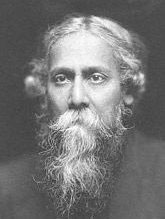
Rabindranath Tagore
Rabindranath Tagore's spirituality, focused on the indwelling
presence of God," leads human existence from partiality to fullness.”
In"The Spirituality of Rabindranath Tagore: 'The Religion of an
Artist,'"Sitansu Sekhar Chakravarti explores the spiritual dimension
of one who has been a poet, a novelist, an educator, and a social
reformer. According to Chakravarti, spirituality for Rabindranath
Tagore is the dynamic principle that touches every aspect of life and
is the guiding principle that"leads human existence from partiality
to fullness.”Life's journey, for Tagore, achieves its fulfillment
through the creative interaction of an artist or a poet, and not
through renunciation of the world. He characterizes his spirituality
as that of an artist. This implies a change in one's attitude to the
world; one should move away from an egoistic appropriation of the
world, which results in experiences of the world as a source of
suffering and happiness, to an artistic experience of the world,
where it is the source of unconditional joy (ananda). Tagore writes,
"Joy flows through the universe, / The sun and moon drink of it / A full
measure. / The light of the joy of goodness / Stays ever
effulgent... Why are you all by yourself, confined to / Your own ego?”
Integral to the spirituality of Tagore is the Upanishad notion that
everything is Brahman, and Brahman is blissful. Tagore was also
influenced by the Vaisnava and Baul traditions, which focused on the
indwelling presence of God. Thus, in many of his writings Tagore
stresses the need to respond to the call from within, from"The man
of the heart.”The relationship between the man of the heart and the
individual is very intimate. The intimacy is often described as the
relationship of the lover and the beloved. It is this inner intimacy
that also enables one to experience unity with the external world.
According to Chakravati, it is this unitive experience of the inner
and the outer that characterizes the religion of an artist, and this
is indeed the very core of the spirituality of Rabindranath Tagore.”
Hindu Spirituality (Vol.II): Post Classical and Modern, pages xxvi
K R Sundarajan and Bithika Mukerji
Motilal Banarsidass Publishers Pvt. Ltd. 2003
ISBN: 8120819373
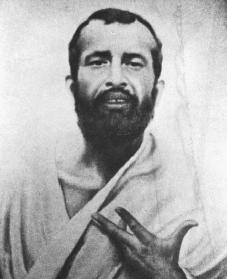
Ramakrishna Ramakrishna, convinced that"Brahman and Sakti are identical", invites us all to participate in the divine play with spontaneity and joy as Her children.
"In chapter 15," Sri Ramakrishna: At Play in His Mother's Mansion," Walter Neevel explores the spiritual dimensions of a mystic from Bengal who has remained highly influential in the modern and contemporary phases of Hindu self-understanding. Neevel focuses on the"mother-child"relationship as the very core of Ramakrishna's mystical dimension, when this relationship, instead of becoming "regressive or pathological," remains a source of"creative experiencing," which is"seen most clearly in the spontaneous and joyful play of a young child while her or his mother is close at hand.”The notion of Divine Mother is an essential aspect of the spirituality of Ramakrishna. Ramakrishna's mystical experiences seem to authenticate both"Brahman with attributes" (saguna Brahman) and"Brahman without attributes" (nirguna Brahman), a point that has divided the followers of different Vedantic schools.”The eternal, unchanging, formless Brahman ... is real, but so is the dynamic Sakti at play.”Ramakrishna says: "Brahman and Sakti are identical. If you accept the one, you must accept the other. It is like fire and its power to burn.... One cannot think of the Absolute without the Relative, or the Relative without the Absolute.”According to Neeval, Ramakrishna's ideal was not jnani but vijnana, or"full knowledge," which realizes the reality of both Brahman and Sakti, of both the eternal (nitya) and the Play (lila) aspects of the one that becomes all. It is in the affirmation of non-dual Brahman and the affirmation of the reality of the manifold world as creative expressions of Sakti that we find Ramakrishna moving away from the traditional Vedantic formulations. Highlighting the theme of creation as the Play (lila) of the Divine Mother (Sakti), Ramakrishna seems to invite us all to participate in the divine play with spontaneity and joy as Her children.”
Hindu Spirituality (Vol.II): Post Classical and Modern, pages xxvi-xxv
K R Sundarajan and Bithika Mukerji
Motilal Banarsidass Publishers Pvt. Ltd. 2003
ISBN: 8120819373
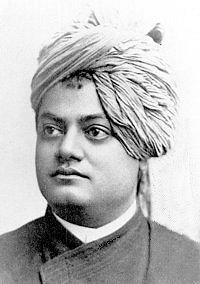
Vivekananda For Vivekananda, one of the central features of Hindu religion is its emphasis on"direct experience"of the ultimate Reality
"In the chapter on the spirituality of Swami Vivekananda, Anantanand Rambachan explores the spiritual dimensions of one of the most influential interpreters of Hindu tradition in recent times. "Vivekananda was the first to offer to the Western world a detailed and systematic exposition of some of the central claims of the Hindu tradition.”His participation in the 1893 Parliament of the World's Religions constitutes one of the landmarks in the history of modern Hinduism; at this time Hinduism came to assume a mission for the world with a spiritual message of universal relevance and meaning. For Vivekananda, one of the central features of Hindu religion is its emphasis on"direct experience"of the ultimate Reality. Religion is to be realized, not simply to be heard or repeated like a parrot, and there is a diversity of spiritual paths to direct, personal experience of the ultimate Reality... On the theme of diversity of religions, Vivekananda holds the view that all religions are true and meaningful since they are diverse expressions of the same Reality and appropriations of one Ultimate Truth. The goal of all religions, Vivekananda points out, is a"final unitive experience," which for him is highlighted in the Hindu philosophical school of Advaita Vedanta. Thus, for Swami Vivekananda, the advaitic experience (nondualistic experience) is the final goal toward which all religions are progressing, representing different points along the journey, a"staircase model"by which he is able to advocate tolerance, reject claims of exclusivism, and affirm the relative importance of various religious traditions of the world. The important contribution of Vivekananda is that in the face of the Christian exclusivism of his times, he affirmed that Hinduism included a variety of independent ways of liberation, and that Hindu spirituality, especially in its Advaitic form, had global significance and relevance.”
Hindu Spirituality (Vol.II): Post Classical and Modern, pages xxv-xxvi
K R Sundarajan and Bithika Mukerji
Motilal Banarsidass Publishers Pvt. Ltd. 2003
ISBN: 8120819373
Shri Mataji: “What Christ said, what Krishna said, and what Muhammad said is nothing but Advaita, that you have to become One with God.”
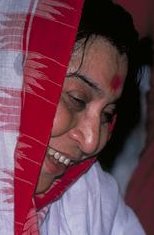
But this Judgment is so beautiful that when you are judged you get powers of your own, of your love; you enjoy the bliss of your Spirit; you become so peaceful, all the tensions disappear; you become so dynamic and the blessings of all the well-beings come on you. As Krishna has said "Yogakshema.” First the yoga then the kshema. Kshema is well-being. If you have not achieved your yoga the kshema is not bothered.
People say I am preaching Advaita of Shankaracharya. Of course, it is the same, whether it is Shri Sankaracharya or anybody. I am doing that. Only he was preaching, I am doing it.
What Christ said, what Krishna said, and what Muhammad said is nothing but Advaita, that"you have to become One with God.” But there are many who do not like it, they want to have dvaita, they want to keep their personalities, so-called, with them. I asked the other day one gentleman who was a minister and all that. I said"What do you want to keep that? What, which part?”He said"Not my ego.”I said"What is it then? It is that only. You want to keep back your ego.”
Unless and until you become big you cannot evolve. And how do you become big? — by becoming the Ocean yourself. A small drop becomes an ocean, as long as he becomes One with the Ocean. You become One with the awareness of God. This is what Christ has said," You have to be born again.”Is said by everyone. Moses has said it, everyone has said it but people are telling you"No, no, no, no. That should not be done"because these middle agencies will be losing their income. How will they exist without it?
Try to see these points. Achieve your own powers of Love; achieve your Self, become your Self. If you want it you can have it, but if you don't want nobody can force this. Nobody can take away your freedom. If you want to remain as you are, you are left with that; then you face it up and live with it.
But if you want the ultimate, the absolute, it is there. That's the only way you can get rid of your confusions and get rid of all your ideas of relative existence — political, economic and everything can be only dissolved through achievement of your absolute. Because after realization you can feel, you can ask any absolute question. For example, if you want to ask the question"Is there God?”, immediately the Cool Breeze starts coming out. Tremendous! The answer comes as if like a computer you start working out because you are put to the mains.
So it is necessary for the whole humanity to pay attention today because the time is coming when the sorting out will take place. That time nobody is going to persuade, or tell you and fill the halls and request you. The sorting out will be there. Better get it now and establish it. Whole humanity has to be saved. No use doing patchwork. Do something substantial. Substantial is only possible if you go to the roots of this Tree of Life and nourish it, enlighten it. That is the only way one can work it out. May God bless you all.”
The Paraclete Shri Mataji Achieving Truth, May 25, 1980

The Paraclete Shri Mataji V3.15 May.83.p10

The Paraclete Shri Mataji Y.1.v.2 March 81 p6
Related Articles:
The Divine Feminine in Biblical Wisdom Literature
The Divine Mother by Ricky Hoyt
The Divine Feminine In China
The Feminine Spirit: Recapturing The Heart Of Scripture
The Divine Feminine: The Great Mother
Searching for the Divine Feminine
Tao Te Ching: "Doorway of the Mysterious Female is there within us"
The Shekinah: Image of the Divine Feminine
The Shekinah is the Cosmic Womb
Shekinah: The Voice of Wisdom
On the Nature of the Divine Mother or Holy Spirit?
The Holy Spirit: The Feminine Aspect Of the Godhead
She is the holiest and most secret inwardness of Allah
The Indian Religion of the Goddess Shakti
The Divine Feminine is deeply embedded in us
Jesus finally restores all things to God
Divine Feminine will sooner or later begin to take its proper place
Yogic Secrets of the Dark Goddess by Shambhavi Chopra
After showering the first few raindrops I know She will continue
Kali as the Yuga Shakti: The Power to Create a New World Age
Chidagni: The Goddess as the Fire of Consciousness
And they asked him in amazement: "Who is our Mother?
Feminine Gender of the Holy Spirit
The Great Mother is Sri Veda-Janani — Mother of the Vedas
The spirituality of Rabindranath Tagore, Ramakrishna and Vivekananda
Disclaimer: Our material may be copied, printed and distributed by referring to this site. This site also contains copyrighted material the use of which has not always been specifically authorized by the copyright owner. We are making such material available to our readers under the education and research provisions of "fair use" in an effort to advance freedom of inquiry for a better understanding of religious, spiritual and inter-faith issues. The material on this site is distributed without profit. If you wish to use copyrighted material for purposes other than “fair use” you must request permission from the copyright owner.

