
But before it comes, the old must be purged.
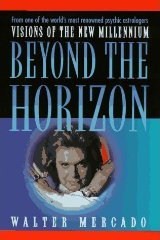
Walter Mercado
The New Age movement encompasses several interconnected beliefs. First is the belief in human potential and transformation—individuals can achieve spiritual enlightenment, healing, and expanded consciousness through appropriate practices. Second is the integration of science and spirituality—the New Age seeks to reconcile quantum physics, psychology, and spirituality, often claiming scientific validation for spiritual claims. Third is the belief in non-human spiritual entities—angels, guides, ascended masters—with whom humans can communicate through meditation or channeling. Fourth is the acceptance of reincarnation and karma—the belief that souls progress through multiple lifetimes, with present circumstances reflecting past actions. Fifth is the emphasis on holistic healing—alternative medicine, energy work, and mind-body integration as paths to wellness.
"That major religions would be facing such challenges to their basic
structures and doctrines is reflective of the increasing energy of
the New Age affecting their flocks. The New Millennium opens an era
of renewed and individual spirituality, in which we will no longer
seek interpretations of the scriptures from others, but will connect
directly with the universal spirit and understand the meaning of the
holy works ourselves.
But we must first pass through the final days of the dying era,
which, as all eras before it, will burst forth in a concentration of
negative energy, some of which we are already witnessing.
In the Book of Revelation, the Bible speaks in apocalyptic terms of
blood, pestilence, suffering, and violence—all the horrors to be
rained down on humanity before the chosen stand beside God in the
millennium of peace that reigns thereafter. Many interpret this to
mean the end of the world. But it is not the end of the world, it is
the end of the past. These are not contradictory concepts. In the
symbolism of the Bible verses, the world as we know comes to an end
and all humanity unites in peace to bring the way of Christ to all
the Earth, to bring the spirit of Christianity out of the Book and
into our lives. This is the very spirit of the New Age, of compassion
and caring for our fellows on Earth, of fraternity and unity and
peace. But before it comes, the old must be purged. The only way it
will be purged is through a washing away of the sins of the past and
thinking of the past, to open the way for what is to be. And as many
devout believers in scripture say, those times are already upon us.
In the Age of Aquarius, we break from the past to invent the future
we desire in our society and in our person. The answers we find will
be wholly new ones, totally original ones, but they require a
thorough examination of what has been and what we wish to come. All
our institutions as we know them must adapt to this new reality.
The time is not just for the integration of humanity, but
for the integration of all its codes, canons, and concepts. We are
not just reinventing ourselves, but all of our systems of society.
The rules that bind, the laws that chain, the edicts that keep us in
constant conflict with ourselves, all come crashing down.
The Bible speaks of the Second Coming of Christ, of a millennium of
peace that comes when Jesus returns anew and all of us join together
universally. The time is at hand. Christ is coming, but not
physically, spiritually. The Bible spoke in many metaphors. The
Spirit of Christ is what comes now in our souls, in our awakened
spirituality. The cosmic inner Christ is coming. It is time to
realize that we are all the 'children of God,' and that the 'Son of
God' came to show us the way to unite with that divine universal
spirit.
It is Christ's message now that is awakened and becomes a reality. We
do unto others and have compassion for all. Now is the time to put
Christ's message and Buddha's message of love into practice, to take
them from the level of mere words and turn them into action. Too many
people make a show of going to church. They go not seeking, but to be
seen. They go to church but the Church does not go in them. They make
an act of presence, repeating rituals mechanically, without feeling,
failing to grasp the meaning. Or they go begging. Ungrateful for what
they have, wishing it were more, they go asking for more. That is not
the way, nor the purpose of religion. Aquarius is an age of
gratefulness. We must get up every morning thankful for yet another
day of light, of love, of opportunities and possibilities. The
affirmation of every day should be, 'I feel good. I feel loved by
nature, by the wind, by the universe and everything in it.'
What is important now is to seek the true meaning of the message of
the masters. For two thousand years, those messages have been
exploited, used by preachers, pastors and priests to build gleaming
castles, to build treasure troves of riches while the poor starved.
They served as salesmen of paradise and perdition to build palaces.
But few put the message of the masters, the message of love, into
practice. Often, it was just the opposite. Too many have been killed
in the name of God. The Crusades sent army after army to wage war in
the Holy Land. Inquisitors and pious prosecutors sent too many so-
called heretics and witches to their deaths. Now we must renounce all
the venom of the past, release the centuries of anger, and breathe
the peace and love of the Age of Aquarius. We must stop being beggars
seeking salvation or praying for prosperity and become grateful
participants in the order of the universe, in harmony with it...
But there will be many who will resist the truth of the new era. They may
try at first by playing upon the sense of self-doubt that lies within
each of us. Self-doubt exists only because we have allowed others to
define our reality for so long that we no longer know what is real anymore.
When we look inside and catch the first sight of what is real and it does
not concur with what those around us have said and are saying at the moment,
we discard it. We doubt ourselves because we have allowed others to tell us
what truth is. But as we reach deeper into the New Age, we will reach deeper
inside ourselves for the truth. And as we learn the truth, we will no longer
need or want others to interpret it for us. This will cause friction with
those who defend the institutions they feel comfortable with, the institutions
they cling to like a security blanket in a world they really aren't comfortable
with at all. Those who cannot, or do not dare, to look inside themselves for
the truth will be the ones who will resist the rest of us the most. They will
be the ones who challenge the rest of us the most. They will be the ones who
try to make the rest of us think that we are wrong because they want desperately
to believe that they are right, and they know that once their faith is shaken,
they have nothing left to cling to. But be wary of anyone who demands that you
have blind faith in what they are saying. If they will not allow scrutiny, it is
possibly because their beliefs cannot stand up to scrutiny. And when those who
hide within the institutions because they do not dare to look inside themselves
feel that they are losing their grip on the rest of us, they will fight.”
Walter Mercado, Beyond The Horizon: Visions of a New Millennium,
A Time Warner Company, 1997, p. 71-251.
New Age Spirituality and Traditional Religious Doctrines
Table of Contents
- 1. Introduction: The Threshold of Spiritual Transformation
- 2. Defining the New Age Movement
- 3. Traditional Religious Doctrines: Foundations and Authority
- 4. The Authority Divide: Institutional Mediation versus Individual Experience
- 5. Theological Shift: From Transcendence to Immanence
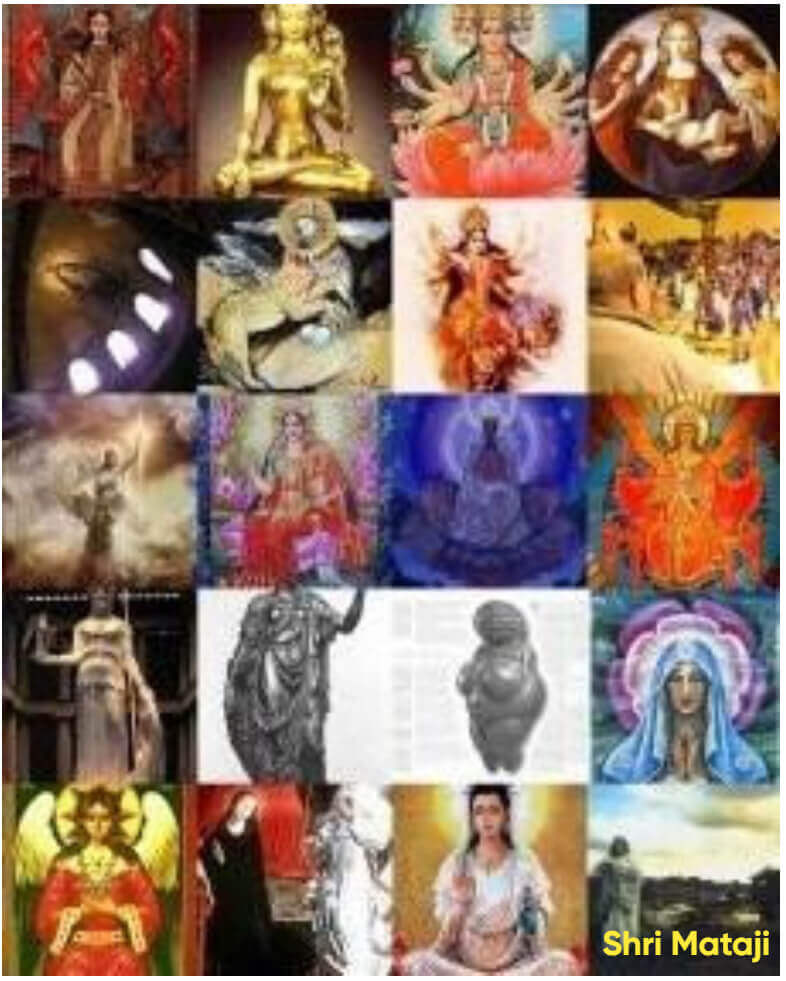
- 6. Shri Mataji and the Paraclete: A New Spiritual Age
- 7. Spiritual Practices and Transformation Methods
- 8. The Critique of Institutional Religion
- 9. The Necessity of Purging the Old
- 10. Points of Convergence and Shared Values
- 11. Conclusion: The Promise and the Challenge
- 12. References
1. Introduction: The Threshold of Spiritual Transformation
The phrase but before it comes, the old must be purged
encapsulates a central conviction of contemporary New Age spirituality: that humanity stands at a threshold where transformative spiritual evolution requires the dissolution of outdated institutional structures and belief systems. This paper examines the philosophical, theological, and practical distinctions between New Age spirituality and established religious traditions, exploring how contemporary spiritual movements challenge and reinterpret traditional doctrinal frameworks. Central to this analysis is the understanding that this transformation is not merely a matter of individual preference but represents what proponents understand as a cosmic and historical necessity.
The New Age movement, which emerged prominently in Western society during the 1970s, positions itself as a response to perceived failures of traditional religious institutions. These perceived failures include the accumulation of wealth and institutional power, historical violence committed in the name of religion, and a fundamental distance between institutional practice and the spiritual truths that religions purport to teach. Yet the New Age is not simply a rejection of spirituality itself; rather, it represents a fundamental reconception of how spiritual truth is accessed, validated, and lived.
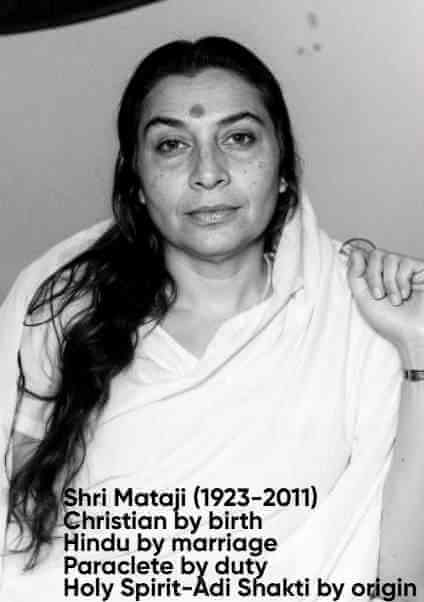
This analysis is anchored by the teachings of Shri Mataji Nirmala Devi (1923-2011), founder of Sahaja Yoga and understood by her followers as the Paraclete—the Holy Spirit promised by Jesus in the Gospel of John. Her life and teachings provide a concrete example of how contemporary spiritual movements understand themselves in relation to traditional religion, and how they propose to address what they perceive as the spiritual crisis of institutional religion.
2. Defining the New Age Movement
The New Age is not a single religion but rather an eclectic collection of spiritual practices and beliefs that rapidly expanded in Western society during the 1970s and 1980s. Scholars describe it variously as a religious movement,
a spiritual milieu,
a zeitgeist,
or a counter-cultural phenomenon.
What distinguishes the New Age is its deliberate rejection of institutional religious authority in favor of individual spiritual experience. Those involved typically identify themselves as spiritual seekers
rather than adherents of a defined faith.
The New Age draws from diverse sources: Western esotericism, Eastern philosophy, occultism, Theosophy, the counterculture of the 1960s, and the Human Potential Movement. This eclecticism is not accidental but foundational—the New Age explicitly values the synthesis of multiple traditions over adherence to a single authoritative doctrine. As Walter Mercado writes in his influential work Beyond The Horizon: Visions of a New Millennium, The New Millennium opens an era of renewed and individual spirituality, in which we will no longer seek interpretations of the scriptures from others, but will connect directly with the universal spirit and understand the meaning of the holy works ourselves.
[1]
The New Age movement encompasses several interconnected beliefs. First is the belief in human potential and transformation—individuals can achieve spiritual enlightenment, healing, and expanded consciousness through appropriate practices. Second is the integration of science and spirituality—the New Age seeks to reconcile quantum physics, psychology, and spirituality, often claiming scientific validation for spiritual claims. Third is the belief in non-human spiritual entities—angels, guides, ascended masters—with whom humans can communicate through meditation or channeling. Fourth is the acceptance of reincarnation and karma—the belief that souls progress through multiple lifetimes, with present circumstances reflecting past actions. Fifth is the emphasis on holistic healing—alternative medicine, energy work, and mind-body integration as paths to wellness.
3. Traditional Religious Doctrines: Foundations and Authority
Despite their differences, traditional religions—Christianity, Islam, Judaism, and Buddhism—share certain structural features that distinguish them from New Age spirituality. All establish authority through sacred texts or prophetic tradition. All emphasize community and collective practice over purely individual spirituality. All define salvation or liberation through adherence to specific doctrines and practices. All maintain ritual and ceremonial practices with prescribed meanings. All establish moral and ethical frameworks based on divine revelation or enlightened teaching.
Christianity centers on Jesus Christ as savior and emphasizes salvation through faith and grace. Islam emphasizes submission to God's will through the Five Pillars and adherence to Sharia law. Judaism emphasizes covenant relationship with God and observance of Torah. Buddhism emphasizes the elimination of suffering through the Eightfold Path and meditation practice. What unites them is the conviction that spiritual truth is not self-evident but must be learned, transmitted, and practiced within a community guided by established teachings and authorities.
Traditional religions maintain hierarchical structures: ordained clergy, designated leaders, institutional decision-making bodies, and formal membership. These structures serve multiple functions—they preserve doctrinal purity, maintain community cohesion, and ensure continuity across generations. A Catholic bishop, Islamic imam, or Buddhist abbot possesses recognized authority to interpret doctrine, lead ritual, and guide spiritual development. This institutional framework is understood not as a necessary evil but as essential to the preservation and transmission of spiritual truth.
4. The Authority Divide: Institutional Mediation versus Individual Experience
A fundamental distinction between New Age spirituality and traditional religion lies in the locus of spiritual authority. Traditional religions establish authority through sacred texts, prophetic traditions, ordained clergy, and institutional structures. The New Age inverts this hierarchy: the ultimate spiritual authority resides within the individual. New Age practitioners emphasize direct connection to what they term the universal spirit,
cosmic consciousness,
or divine energy
without intermediaries.
This represents a radical democratization of spiritual knowledge. Where a Christian might consult scripture and clergy for guidance, a New Age practitioner looks inward through meditation, intuition, and personal experience. This shift reflects what scholars call the spiritual authority of the self
—the conviction that each person possesses innate wisdom and the capacity to access truth directly. This principle fundamentally challenges traditional religious hierarchies that vest authority in institutions, texts, and designated spiritual leaders.
Mercado articulates this perspective powerfully: Those who cannot, or do not dare, to look inside themselves for the truth will be the ones who will resist the rest of us the most. They will be the ones who challenge the rest of us the most.
[1] The implication is that resistance to New Age spirituality stems not from intellectual disagreement but from psychological fear—fear of losing the security blanket of institutional authority.
5. Theological Shift: From Transcendence to Immanence
Traditional religions conceive of divinity as fundamentally transcendent—God exists beyond and above creation, though in relationship with it. The Christian God is personal, with whom humans enter into covenant relationship. Islamic theology emphasizes Allah's absolute transcendence and uniqueness. Buddhism, while often non-theistic, focuses on enlightenment as liberation from suffering. In contrast, New Age theology embraces what scholars call holism
—the belief that divinity pervades all existence, including human beings themselves.
This theological shift has profound implications. If the divine is not transcendent but immanent, if it exists within all things including ourselves, then the path to spiritual truth becomes internal rather than external. This explains the New Age emphasis on meditation, consciousness expansion, and self-realization. It also explains the rejection of institutional mediation: if God is within you, why do you need a priest, minister, or imam to interpret divine will?
The adishakti.org teachings emphasize this point: The great religions of the world, in their deepest and most essential teachings, all point to the same Ultimate Reality and lead their followers toward the same ultimate goal: self-realization and union with the Divine.
[2] This statement reframes traditional religion not as a competing truth claim but as an incomplete expression of a deeper universal truth accessible through direct spiritual experience.
6. Shri Mataji and the Paraclete: A New Spiritual Age
Shri Mataji Nirmala Devi (1923-2011) was born on the Spring Equinox in Chindwara, India, into a Christian family with deep connections to Indian independence and spiritual traditions. Her father, Prasad Rao Salve, was a renowned lawyer and scholar who translated the Quran into Hindi and knew the Bhagavad Gita by heart. Her mother, Lady Cornelia, was the first woman graduate in mathematics at the University of Ferguson. This background—rooted in both Christian and Hindu traditions, combining intellectual rigor with spiritual depth—shaped Shri Mataji's understanding of spirituality as transcending religious boundaries.
On May 5, 1970, Shri Mataji initiated and made available what her followers understand as the method of mass Self-Realization. She opened the Sahasrara Chakra—the thousand-petaled lotus in the crown of consciousness—making spiritual awakening available to all humanity without cost or effort. This event is understood by her followers as the fulfillment of Jesus's promise of the Paraclete, the Holy Spirit that would guide believers into all truth.
The connection to Jesus's promise is explicit in the teachings: The Spirit will be within the disciples and will remain with them
(John 14:7, 9, 17).[3] Shri Mataji is understood not as a replacement for Jesus but as the fulfillment of his promise—the divine intervention that would complete his mission. As the adishakti.org teachings state, The Paraclete Shri Mataji continues to remain with us, but in a more intimate and enduring presence within. She has given irrefutable evidence of that internal presence too, so that future believers will have the faith and comfort of salvation. She now dwells within, for all time.
[3]
Sahaja Yoga, the method Shri Mataji developed, means spontaneous union with the Divine.
The term sahaj means spontaneous and natural; yoga means union. Unlike traditional yoga practices that require years of disciplined effort, Sahaja Yoga is understood as a natural, spontaneous awakening of the Kundalini energy—the dormant spiritual force believed to reside at the base of the spine. When awakened, this energy rises through the subtle energy channels, nourishing and purifying the chakras (energy centers) and ultimately opening the Sahasrara, the gateway to divine consciousness.
7. Spiritual Practices and Transformation Methods
The spiritual practices of traditional religions and the New Age reflect their different understandings of how humans access divine truth. Traditional religions emphasize prayer—direct communication with God or the divine—conducted within prescribed forms and often within community settings. They emphasize study of sacred texts—the Bible, Quran, Torah, Buddhist sutras—as repositories of divine wisdom. They emphasize ritual and sacrament—prescribed ceremonial actions believed to convey grace or spiritual efficacy.
The New Age emphasizes meditation—the quieting of the mind to access inner wisdom. It emphasizes channeling—the reception of messages from non-human spiritual entities. It emphasizes intuition and personal experience as sources of spiritual guidance. It emphasizes alternative healing practices—acupuncture, energy work, herbal medicine—based on holistic understandings of the body and consciousness.
Sahaja Yoga represents a distinctive approach within the New Age movement. Rather than relying on individual effort or external techniques, it emphasizes the spontaneous awakening of the Kundalini through the grace of the Paraclete. The practice involves simple meditation techniques—placing the hand on various chakras, affirming one's connection to the divine, and allowing the Kundalini to rise naturally. This approach combines elements of traditional yoga philosophy with a modern understanding of spiritual transformation as a natural, grace-based process rather than a result of individual effort.
Shri Mataji taught that this awakening is not a matter of belief but of direct experience. The experience of Self-Realization, which Shri Mataji has the power to give, has given hope to millions of people throughout the world.
[3] This emphasis on experience over belief represents a fundamental departure from traditional religion, where faith precedes experience. In Sahaja Yoga, the experience of spiritual awakening comes first, and understanding follows from that direct perception.
8. The Critique of Institutional Religion
The New Age critique of traditional religion, articulated powerfully by both Mercado and the teachings associated with Shri Mataji, focuses on institutional corruption and hypocrisy. Mercado argues that religious institutions have exploited the spiritual messages of their founders for worldly power and wealth. He points to historical examples: the Crusades, in which armies were sent to wage war in the Holy Land in the name of God; the Inquisition, in which alleged heretics and witches were executed; the accumulation of vast wealth and property by religious institutions while the poor starved.
Mercado writes: For two thousand years, those messages have been exploited, used by preachers, pastors and priests to build gleaming castles, to build treasure troves of riches while the poor starved. They served as salesmen of paradise and perdition to build palaces. But few put the message of the masters, the message of love, into practice. Often, it was just the opposite. Too many have been killed in the name of God.
[1]
The critique extends to contemporary religious practice: people attend church not seeking spiritual truth but to be seen; they repeat rituals mechanically without feeling or understanding; they go to church begging for more rather than grateful for what they have. This critique resonates with the New Age conviction that institutional religion has become corrupted and must be transcended. The spiritual message of the masters—whether Jesus, Buddha, or other enlightened teachers—is one of love, compassion, and unity. Institutional religion has perverted this message into hierarchical structures, doctrinal rigidity, and worldly power-seeking.
The adishakti.org teachings echo this critique: Each of these religions had a limited success over a certain period of human history. That period is now over. It is Dr. Martin's thesis that, as a result, all religions are in a state of crisis. They are not able to provide modern man with answers to his ethical problems. They cannot unite man today. Their very formulations of doctrine and solutions to human problems are unintelligible today. In short, they have failed modern man.
[4]
9. The Necessity of Purging the Old
The phrase but before it comes, the old must be purged
refers to a necessary cleansing before spiritual renewal can occur. In New Age understanding, this purging operates on multiple levels. Individually, it requires releasing self-doubt created by allowing others to define reality. For centuries, institutional religion has told people what to believe, what to think, and how to interpret their experience. This creates a condition of spiritual dependency in which individuals doubt their own inner wisdom.
Mercado articulates this process: Self-doubt exists only because we have allowed others to define our reality for so long that we no longer know what is real anymore. When we look inside and catch the first sight of what is real and it does not concur with what those around us have said and are saying at the moment, we discard it. We doubt ourselves because we have allowed others to tell us what truth is. But as we reach deeper into the New Age, we will reach deeper inside ourselves for the truth.
[1]
The purging requires recovering confidence in one's own spiritual intuition and inner truth. Collectively, the purging requires releasing the accumulated anger, violence, and corruption of institutional religion. Mercado writes of the need to renounce all the venom of the past, release the centuries of anger, and breathe the peace and love of the Age of Aquarius.
[1] This is not merely a rejection of specific doctrines but a wholesale abandonment of institutional religious structures and the worldly power-seeking they represent.
Historically, the purging is understood as the natural consequence of entering the Age of Aquarius—the astrological age associated with humanitarianism, freedom, and individual consciousness. Just as the Age of Pisces brought the rise of institutional Christianity, the Age of Aquarius brings its dissolution and replacement by individual spirituality. This understanding gives the New Age critique a sense of historical inevitability. The old is not merely wrong; it is obsolete. The new is not merely preferable; it is cosmically ordained.
10. Points of Convergence and Shared Values
Despite their fundamental differences, New Age spirituality and traditional religion share certain values and concerns. Both seek to address human suffering and promote spiritual development. Both emphasize love, compassion, and ethical living. Both believe that spiritual transformation is possible and desirable. Both reject pure materialism and the reduction of human existence to economic and physical concerns. Both value community and connection, though they understand community differently.
Both draw on ancient wisdom traditions and seek to recover spiritual truths that modern secular culture has obscured. Some New Age practitioners, particularly those influenced by Christian mysticism, attempt to integrate Christian teachings with New Age practices, arguing that Jesus's message of love and compassion aligns with New Age values. Similarly, some Buddhist practitioners have adopted New Age perspectives while maintaining Buddhist meditation practices.
The adishakti.org teachings emphasize this convergence: The great religions of the world, in their deepest and most essential teachings, all point to the same Ultimate Reality and lead their followers toward the same ultimate goal: self-realization and union with the Divine. The apparent differences between religious traditions are but variations in language, culture, and emphasis, like different paths leading to the same mountain peak.
[2]
These convergences suggest that the conflict between traditional religion and the New Age is not absolute. Rather, it reflects different strategies for addressing shared spiritual concerns—one through institutional preservation and textual authority, the other through individual experience and consciousness expansion. Understanding these convergences helps explain why some individuals move fluidly between traditional and New Age spirituality, adopting practices and beliefs from both.
11. Conclusion: The Promise and the Challenge
The phrase but before it comes, the old must be purged
captures the essential New Age understanding of our historical moment. Humanity stands, according to this vision, at the threshold between two astrological ages, between two forms of human consciousness, between two ways of organizing spiritual life. The old—institutional religion with its hierarchies, its doctrinal rigidities, its historical violence and corruption—must be released to make way for the new—individual spirituality, direct access to truth, consciousness expansion, and a civilization organized around love, compassion, and human potential.
This vision addresses real problems: the failures of institutional religion, the distance between spiritual teachings and institutional practice, the human desire for authentic spiritual experience. It offers real promises: personal empowerment, spiritual authenticity, and a more just and peaceful world. The teachings of Shri Mataji Nirmala Devi and Sahaja Yoga represent a concrete attempt to realize this vision—to make available to all humanity a method of direct spiritual awakening that transcends religious boundaries and institutional mediation.
Yet this vision also raises real questions: How can individual spiritual experience be distinguished from delusion? What prevents the New Age from developing its own forms of corruption and exploitation? How can spiritual development be balanced with community and tradition? How do we honor the wisdom of traditional religions while acknowledging their limitations? These questions do not have easy answers.
Understanding the New Age requires taking seriously both its critique of institutional religion and the concerns that institutional religion raises about the New Age. The transformation that the New Age envisions—the purging of the old and the emergence of the new—remains contested and incomplete. What is clear is that the relationship between traditional religion and New Age spirituality will continue to shape the spiritual landscape of coming decades, as individuals and communities navigate the tension between institutional authority and personal experience, between tradition and innovation, between the old and the new.
The ultimate question may not be whether the old must be purged or preserved, but rather how humanity can integrate the wisdom of traditional religion—its emphasis on community, its preservation of tested spiritual practices, its moral frameworks—with the insights of contemporary spirituality: the recognition of individual spiritual potential, the possibility of direct divine experience, and the necessity of continuous spiritual evolution. The answer to this question will determine not only the future of religion but the future of human consciousness itself.
12. References
The Divine Feminine: All Religions Connect to Ultimate Reality.Adi Shakti: The Divine Feminine, adishakti.org, https://adishakti.org/index.htm.
Shri Mataji Nirmala Devi and Sahaja Yoga.Adi Shakti: The Divine Feminine, adishakti.org, https://adishakti.org/shri_mataji.htm.
Dr. Malachi Martin: Exposes Judaism, Christianity and Islam.Adi Shakti: The Divine Feminine, adishakti.org, https://adishakti.org/index.htm.
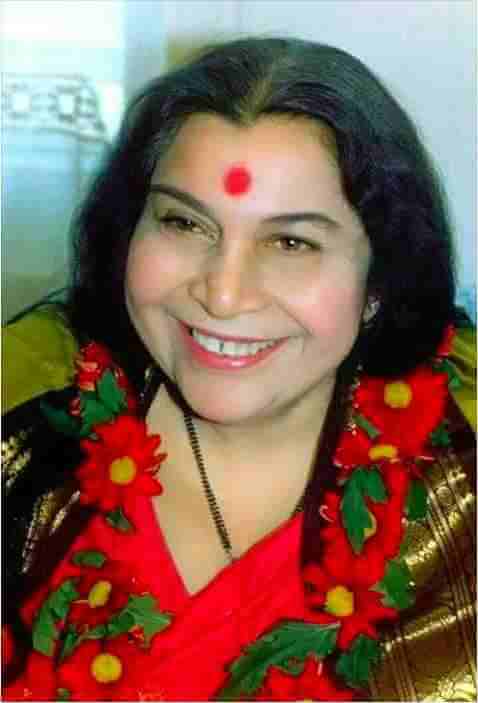
"But these are special time, the Blossom Time. They call it the Last Judgment, you can call it the Resurrection Time, you can call it the Qiyamah, they call it in Koran. It is said that people will come out of their graves and will get their Resurrection. I mean what is left to the graves is nothing but a few stones and a few bones. No. All these souls which are dead will take their birth, take human body and take their Realization in these special times. This is a sensible thing to say and is also happening. The Paraclete Shri Mataji
Moscow, Russia, November 12, 1993
This paragraph reinterprets traditional eschatological concepts from Christianity (Last Judgment and Resurrection), Islam (Qiyamah from the Quran), and possibly Judaism, as a present-day "Blossom Time" of mass spiritual awakening. Shri Mataji dismisses a literal resurrection of physical bodies from graves as impossible (since only bones remain) and instead describes it as reincarnated "dead" souls (seekers from past lives) taking human birth now to achieve Self-Realization through Kundalini awakening in Sahaja Yoga.
The teaching is authentic to Shri Mataji's speeches, where she frequently calls the modern era the "Blossom Time" for en-masse enlightenment, equating it to the promised Last Judgment or Qiyamah but as a living, internal process rather than a future apocalyptic event. This aligns with her view that Sahaja Yoga fulfills prophecies by making spiritual rebirth accessible now, which she claims is "happening" globally. However, traditional Abrahamic views often emphasize a future bodily resurrection (e.g., in Orthodox Judaism, Christianity's Apostles' Creed, and some Islamic interpretations), so her symbolic, reincarnation-based reading diverges significantly and may be seen as a reinterpretation to fit Sahaja Yoga's framework.
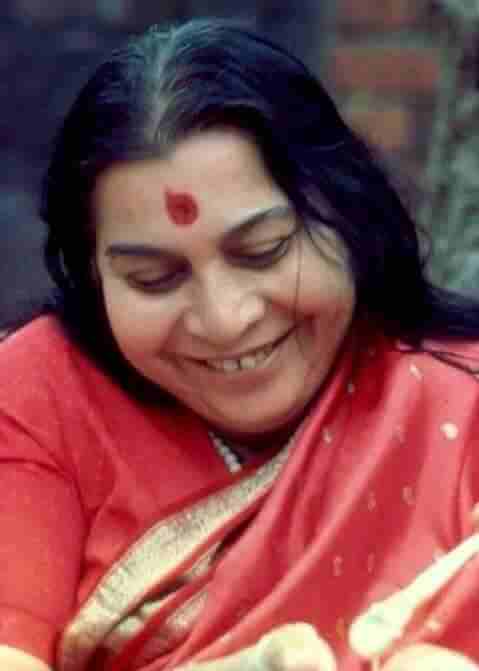
"There are lots of myths in the Bible and one of them is that at the Time of Resurrection your bodies will come out of the graves. This is not only for Christians, but also for the Muslims and Jews. Think of this — What remains in the grave after many years? Only a few bones. And if these bones came out how can you give them Realization? Think of it. It is a big myth. Not possible logically.
In Nal Damyanti Akhyan they have clearly given that when the Kalyug will come, all these seekers who are seeking in the hills and mountains will be born again, and they will be given their Self-Realization! Their Kundalinis will be awakened and that is logical, because that is what we are doing today.”
The Paraclete Shri Mataji
Christmas Puja, Ganapatipule, India — December 25, 1993
Here, Shri Mataji explicitly calls the biblical idea of bodies emerging from graves a "myth," illogical because only bones remain after years, making realization impossible. She contrasts this with a reference to "Nal Damyanti Akhyan" (likely the story of Nala and Damayanti from Indian epics/traditions), predicting that in Kali Yuga, true seekers hiding in hills and mountains would be reborn to receive Self-Realization via Kundalini awakening—which she says is occurring today through her method.
This reflects her consistent critique of literal interpretations in religions, positioning Sahaja Yoga as the logical fulfillment of ancient prophecies. The Nala-Damayanti reference appears in her talks as a prediction for mass realization in modern times (Kali Yuga). While innovative and empowering for followers (emphasizing present-day accessibility), it dismisses core doctrines like bodily resurrection central to mainstream Christianity, Islam, and Orthodox Judaism as "big myths," which could be viewed as reductive or dismissive of those faiths' eschatology.
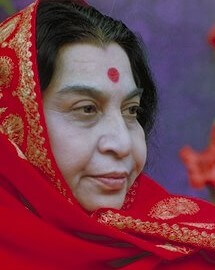
"But you are on the side of Dharma and if you fight for Dharma then, even if you die, you will be saved. But this is stretched too far in many scriptures also, which is very absurd; like saying that if you die and bury yourself, then after 500 years your body will come out and you will be saved. After 500 years what will remain of the body? Such absurd ideas there are in these religions — Christians, Jews and Muslims. That's why they bury people...
Christ was resurrected within three days. He died on Friday and resurrected on Sunday morning. But if you keep some body for 500 years, who is not even Christ, what will come out of it?”
The Paraclete Shri Mataji
Paris, France, July 13, 1994
Shri Mataji extends the critique, calling ideas of buried bodies resurrecting after centuries "absurd" in Christian, Jewish, and Muslim scriptures (noting burial practices stem from this belief). She contrasts it with Jesus Christ's quick resurrection (Friday to Sunday), implying ordinary humans' decayed bodies couldn't revive similarly.
This highlights her view that such doctrines are stretched too far and illogical, tying into broader themes of fighting for Dharma (righteousness) without absurd afterlife promises. It underscores her rationalist approach to spirituality, rejecting what she sees as superstition, but again reinterprets Abrahamic burial/resurrection beliefs pejoratively. Christ's rapid resurrection is factual in Christian accounts, but her use of it to invalidate general resurrection doctrines aligns with her emphasis on living spiritual transformation over postmortem events.

"You are arriving at that point where your destruction is sure because you have to become the spirit. You have to rise in spiritual life and if your movement is downward who can help you? This is a very interesting time as I have told you is the Time of Judgment and at this Time we have to be careful that we are our own judges.”
The Paraclete Shri Mataji
Navaratri Puja, Cabella, Italy — October 5, 1997
This shifts to personal responsibility in the "Time of Judgment," where humans must become the spirit to avoid destruction, acting as their own judges rather than relying on external divine intervention.
It encapsulates Shri Mataji's teaching that the Last Judgment is internal and ongoing: self-assessment through Kundalini awakening and vibratory awareness in Sahaja Yoga. This empowers individuals ("we have to be careful") and frames the era as critical for spiritual ascent, warning against downward (materialistic) movements. Unlike traditional Judgment Day concepts involving divine reckoning, hers is self-realized and non-punitive, focusing on evolution to spirit for salvation.
Overall, these excerpts showcase Shri Mataji's core message: redefining end-times prophecies as the current era of mass Self-Realization via Sahaja Yoga, critiquing literal bodily resurrection as outdated myths while presenting her method as the sensible, prophesied fulfillment. This approach harmonizes diverse scriptures under her system but fundamentally alters their eschatological meanings.
?? Interactive Chat
Access an intelligent analysis environment where you can explore texts, ask questions, and discover connections between ideas.
Open chat ?