
"The pneumatological activity [Cool Breeze or Wind] ... of the Paraclete ... may most helpfully be considered in terms of the salvific working of the hidden Spirit.”
"In Orthodoxy, the Spirit is conceived to be the mediator of Christ's earthly presence through the icon. Thus, in spite of such developed teachings elucidating the work of the Spirit in creation, in the restoration of the human person, and as an inspiring reality, the person of the Spirit still remains a baffling reality with which theologians around the world struggle.” (Varkay 2001 Kindle)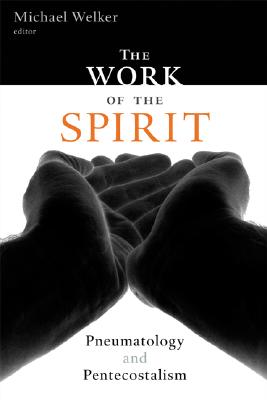
"This self-effacing character of the Spirit's presence finds a kind of verbal reinforcement in scripture due to an ambiguity present in both Hebrew and Greek, where the words ruach and pneuma carry a semantic width that encompasses the range of English words: "Wind," "Breath," "spirit.” In the Priestly account of creation, are we to translate Genesis 1:2b as saying that "The spirit of God was moving over the face of the waters" or would it be better rendered, “A wind of God swept over the face of the waters"? When Jesus says to Nicodemus," The wind blows where it chooses and you hear the sound of it, but you do not know where it comes from or where it goes. So it is with everyone who is born of the Spirit" (John 3:8), the Greek of the Gospel contains a kind of theological pun in its double use of pneuma.
Taking seriously this veiled presence of the Spirit, expressed in the hidden character of pneumatological action, by no means implies a denial of more manifest activity also. The kind of bivalent working that Kathryn Tanner discusses in her chapter is surely just what one would expect of a divine Person, in contrast to the uniformity of action associated with a mere force such as gravity, unvarying in its characteristics...
According to this understanding, the sanctifying work of the Spirit is a continuing activity that awaits its final completion in the creation of the community of the redeemed, a consummation that will manifest fully only at the eschaton. Of the Persons of the Trinity, we can appropriate most specifically to the Spirit the title of deus absconditus, the hidden God.
We have acknowledged that a veiling of pneumatological activity is not the only thing to be said about the work of the Paraclete, yet recognition of a degree of reticence in the nature of the Spirit's presence does offer opportunities for the theological understanding of a number of puzzling aspects of the human encounter with divine reality. There is the important and pressing problem posed by the need to understand how the apparently clashing cognitive claims made by the different world faith traditions can be reconciled with the evident presence of authentic spiritual experience within all of them. I have suggested elsewhere that this phenomenon may most helpfully be considered in terms of the salvific working of the hidden Spirit.”
Michael Welker, The work of the Spirit: pneumatology and Pentecostalism
Wm. B. Eerdmans Publishing Company, 2006, page 170-1
"The subject and the scope of this study are the role(s) of the Spirit-Paraclete in John 16:4b-15. The methodology applied is socio-rhetorical criticism as developed by Vernon K. Robbins. The fourth Gospel is called the 'spiritual Gospel.' Its pneumatic connotations are not only related to its presentation of Christ but also to its frequent references to the Spirit and its cognates. Jesus' Spirit-Paraclete teaching in his Farewell Discourse is a prominent example of this. Its pneumatological content is, however, problematic. This is demonstrated by the various attempts of Johannine scholars. In addition, methodologies, goals and the scope of these studies vary. It was observed that if scholars suggest a role for the Spirit-Paraclete, they usually use 'either-or' language, pointing out one role while excluding other possible roles from their conclusions or merely list explicitly mentioned functions of the Spirit-Paraclete. This study is a response to this present situation. It deals with the last two Spirit-Paraclete sayings of Jesus in his farewell address to determine the role(s) of the Spirit-Paraclete, applying the comprehensive reading model which has not been applied to this text before. The hypothesis was that if a more comprehensive methodology is applied to the narrative, a more comprehensive understanding of the text would be gained. We applied multidisciplinary socio-rhetorical criticism which takes into account narrative-rhetorical, intertextual, social-cultural, ideological and sacred aspects of the text while not neglecting contexts in which the story took place, was recorded and is interpreted. Findings were that the roles of the Spirit-Paraclete go beyond mere theological and spiritual significance to touch sociological and psychological aspects of human experience. Thus, the roles of the Spirit-Paraclete are multidimensional. These roles are also integrated with each other. Together they support and point to one major role of the Spirit-Paraclete, which does not, however, downplay [her] other roles. The central role of the Spirit-Paraclete in John 16:4b-15 is to be the divine presence who forms a performing community of the disciples called the people of the Spirit.”
The role(s) of the Spirit-Paraclete in John 16:4b-15
Tuppurainen and Riku Pekka, UNISA, University of South Africa
Cool Breeze (Pneuma) experiences of those born of the Spirit
Judith Coney is a lecturer in the Department of Study of Religions at the School of Oriental and African Studies, University of London. She published her book in 1999 prior to this website and refrained from mentioning the eschatological significance of the "Cool Breeze" experiences felt by hundreds of thousands since the 1970's till date.
"The result, in all three settings [Royal Albert Hall, local meeting or private house], is that many people do feel a Cool Breeze. The coolness which is felt is usually associated with other sensations as well. Typically, the pupils of the eyes can be observed to dilate and the person will feel very relaxed and 'centred.' However, it is notable that, despite the very similar ways in which individuals 'get their realisation'—and even in the same setting—not everybody feels exactly the same thing. Sri Mataji teaches that the vibrations of kundalini can be felt as Cool Breeze on the palm of the hands and above the head. Sometimes breezes, in line with the teachings, are felt on the hands and head specifically. For others, the experience is more generalized:
The experience was extremely timeless, because I felt that it only lasted for about five minutes but somebody came behind me and said 'would you like a cup of tea' and I thought, 'this is silly, what's all this about tea?; But it turned out that it was about three quarters of an hour later. And I felt a strong Cool Breeze. I was actually told; you will probably feel some coolness or some nice feelings inside' but I felt coolness not just in my hands, where I was told it would be, but all over and I felt incredibly peaceful.
Generally, the feeling of coolness on 'realisation' seems to be discernible, but relatively weak. As with Kakar's description of his own 'realisation', many newcomers are left with the feeling that they felt something but they are not sure what:
Mataji grandly announced, 'He is realised.' 'Sit in meditation for some time' she told me as I sat up. 'Do you feel a Cool Breeze on the top of your head and on your palms?' Indeed I did, though I could not distinguish the coolness due to kundalini from the gutsy breeze coming in from the sea. I felt well, though, calm and deeply relaxed. (Kakar 1984, 195-6)
A few, however, have an extremely strong experience. One such incident was described by one of the participating Sahaja Yogis:
He felt really cool, not just on his hands but all over. He said: 'This isn't a breeze, it's a wind'. We all felt it really strongly too. Then we picked up Mother's photograph and held it in front of him and he felt loads of vibrations coming from that. But I think the whole thing was so strong that it frightened him. He was very high and positive for two days, he brought us some flowers, and then he became wary and never came to [the ashram] again.
Others still, in contrast, do not feel much, if anything, on their first session. This lack of feeling on their part, however, may not be shared by the Sahaja Yogis 'working on them', who may remark enthusiastically about how cool the individual feels, and may also be at odds with the view of Sri Mataji herself. Here is the description of his initial contact with Sahaja Yoga by one such follower. He first went to a meeting at which Sri Mataji gave 'realisation' en masse, but felt nothing. Nevertheless, he was persuaded to go to a smaller workshop a few days later.
I really didn't feel anything there at all either but I was told by Mataji herself-she said 'Who hasn't felt it yet?' and I put my hand up with a few others. Mataji said 'Come forward' and then she said to me 'You've got it, you know'. And I said 'Have I?' and she said 'Yes, go through to that room and ask some Sahaja Yogis to work on you'. So that was my introduction to Sahaja Yoga.
It was only with repeated sessions that he developed the ability to feel a Cool Breeze. There are also those, a few, who may feel more calm, possibly as a result of sitting quietly for some time, but otherwise feel no different and never feel any sort of breeze. This is often explained by Sahaja Yogis as being because the chakras have been too badly damaged by negativity in the past (Rajasekharan and Venkatesan 1992, 98).
Kakar (1984, 208), a trained Freudian psychologist, having witnessed Sri Mataji's delivery of 'realisation' both en masse and on a one-to-one basis, concluded that much of this experience is built on suggestion and 'hypnotic induction':
Needless to add, because of the emotional pressures created in a group setting, the tendency to identify with the experience of other group members and the intense desire to please the leader, only a handful of people hold out against this mass suggestion. (ibid., 209)
Such a conclusion would undoubtedly be rejected by a Sahaja Yogi, convinced that they have experienced their Spirit through the grace of Sri Mataji. It is not within the remit of my present enquiry, however, to seek to establish the 'real cause' of a Cool Breeze felt by an individual, but to try chart the social dynamics involved. Just as Goodman commented, in relation to religious experience:
The religious practitioners argue for it, either because it is part of their dogma, or because, as they affirm, they have 'been there', they have experienced it. The hard scientists take the opposite position, again as a matter of conviction. As social scientists, our situation is a happier one: at least we can state that, without any doubt, the alternate reality is a social one. (Goodman 1988, 43).”
Judith Coney, Sahaja Yoga
RoutledgeCurzon, 1999, pp. 55-58
What is Pneumatology?
"For almost two thousand years, Christendom has been engaged in the endeavor to unfold the meaning of the church's ancient confession, "We believe in the Holy Spirit, the Lord, the Giver of Life.” Consequently, there were many teachings developed in the past in relation to the third person in the Trinity, and still the mystical entity of the Spirit[1] is an enigma, inviting attention continually to reflect upon its personality and role. Hence, throughout the history of Christian thought we find a swarm of conceptions regarding the Spirit. For example, in historical theology, the Spirit is conceived of as being an emotional and gift-giving force, as in Pentecostalism. In various forms of Catholicism, the Spirit is conceived to be the unseen authentication of the instruments of water, bread, and wine in the two sacraments. Or the Spirit is conceived to be the inspirer of the Word to the hearers, as in Reformation Protestantism. In Orthodoxy, the Spirit is conceived to be the mediator of Christ's earthly presence through the icon.[2] Thus, in spite of such developed teachings[3] elucidating the work of the Spirit in creation, in the restoration of the human person, and as an inspiring reality, the person of the Spirit still remains a baffling reality with which theologians around the world struggle.
The starting point of the Christian experience and teaching about the Spirit is the New Testament account of Pentecost. Luke writes: This is what was spoken by the prophet Joel:
"And in the last days it shall be, God declares, that I will pour out my spirit upon all flesh, and your sons and your daughters shall prophesy..., your young men..., and your old men; ... yea ... my menservants and my maidservants ... shall prophesy. And I will show wonders in the heaven above and signs on the earth beneath ..., before the day of the Lord comes.... And it shall be that whoever calls on the name of the Lord shall be saved.” Men of Israel, hear these words: Jesus of Nazareth, a man attested to you by God with mighty works and wonders and signs..., you crucified and killed.... This Jesus God raised up.... Being therefore exalted at the right hand of God, and having received from the Father the promise of the Holy Spirit, he has poured out this which you see and hear. (Acts 2:16-33)
This account that Luke gives regarding the Spirit has raised a series of questions and various answers. Therefore, roughly speaking, the endeavor to give an explanation of the Spirit is the starting point of pneumatology. In other words, pneumatology is the study of the entity of the Spirit in response to its being, its position in the Trinity, and the role it plays in the divine blueprint in relation to the human beings and the rest of the world.[4] As a result, pneumatology is nothing other than the confession of the Christian faith and an elucidation of the experience of our encounter with the person and work of the Holy Spirit.”
Role of the Holy Spirit in Protestant Systematic Theology
Vilson Varkay, Langham Monographs (July 15, 2011) Kindle 184-204
Notes
[1]. The Hebrew term that denotes Holy Spirit is ruah. The Greek is pneuma. Both these terms are like the Latin spiritus, derived from roots which means "to breath" (Gen 1:7; 6:17; Ezek 37:5-6; or "wind" Gen 8:1; I Kgs 19:11; Jn 3:8). The Old Testament generally uses the term "Spirit" without any qualification, or speaks of "the Spirit of God" or "the Spirit of the Lord", and employs the term "Holy Spirit" only in Ps 51:11 and Isa 63:10-11. However, in the New Testament this has become a common designation of the third person in the Trinity. While the Old Testament repeatedly calls God "the Holy one of Israel" (Ps 71:22; 89:18; Isa 10:20; 41:14; 43:3; 48:17), the New Testament seldom applies the adjective "holy" to God in general, but uses it frequently to characterize the Spirit. This is probably due to the fact that it was especially in the Spirit and his sanctifying work that God revealed himself as the Holy one. See Louis Berkhof, Systematic Theology (London: Banner of Truth, 1971), 95.
[2]. Paul F. M. Zahl, "The Spirit in the Blood," Anglican Theological Review vol. 83, no. 3 (Summer 2001), 496; Colin E. Gunton explains that there are at least three places where we find highly varying accounts of the person and work of the Holy Spirit. One is the mainstream dogmatic tradition, which tends to concentrate on the work of the Spirit as applying the benefits of Christ to the believer and the church. The second source for the modern identification of the Spirit is the charismatic movement. They tend to separate the Son and the Spirit from one another and identify the Spirit as the cause of particular religious phenomena. The third place is the modern identification of the Spirit, which is more broadly cultural than the other influences. They identify the Spirit with or in particular cultural and historical developments. See Colin E. Gunton, Theology Through the Theologians: Selected Essays 1972-1995 (Edinburgh: T & T Clark, 1996), 105-108.
[3]. Origen is noted as the first Greek Father to have contributed to a systematic treatment of the Holy Spirit. Although Origen remains vague on nature and status, he describes the Holy Spirit in terms of a single reality. See Clint Tibbs, Religious Experience of the Pneuma: Communication with the Spirit World in 1 Corinthians 12 and 14 (Tubingen: Mohr Siebeck, 2007), 63; for an excellent Origen: Cosmology and Ontology of Time (Boston: Brill, 2006).
[4]. The doctrine of the Holy Spirit intersects with at least three established sectors of Christian Theology. They are in relation to grace and sacramental life, church and ministry, and the distinctive Christian treatment of God as Father, Son, and the Holy Spirit. See David B. Burrell, "The Spirit and the Christian Life," in Christian Theology: An Introduction to Its Traditions and Tasks, eds., Peter C. Hodgson and Robert H. King (Philadelphia: Fortress, 1988), 304.
“The Cool Breeze (pneuma) is all around us and we can start feeling in our hands when the Kundalini emerges from the top of the head if our Vishuddhi is alright. This is what Christ meant by 'to be born again' and not just to call some people and say 'Alright, now we have some baptism.'"
The Paraclete Shri Mataji
Bedford, U.K.—8 October 1982
"The experience of the divine Spirit as an energy and vital power goes back to the Hebrew ruach concept. This experience of the Spirit does not release those who are touched by it from this earth and their own earthly bodies, so that their souls can soar into the realms of spirits. It fills them with a new vitality entirely and wholly, body and soul. We sense in ourselves the personal dynamic given to us, and then perceive it in everything else that lives.” (Moltmann 2014 Kindle Locations 3647)

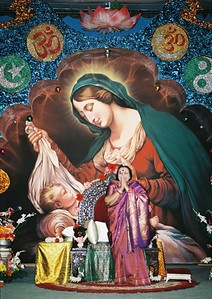
Shri Mataji Nirmala Devi (1923-2011)
was Christian by birth, Hindu by
marriage, and Paraclete by duty.
"As Stanley and John argue, "... it is the Holy
Spirit announcing the good news about Jesus
Christ, which Word the church speaks in
the Spirit's power and by the Spirit's authority,
and which is thereby connected to Christ
himself.” (Varkay 2011 Kindle 255)
“That correction also one can do with Kundalini awakening. Everything is possible; it has to happen, it has happened to thousands and should happen. You can see with your naked eyes the movement of the Kundalini. But in some places it is so fast that you just start feeling Cool Breeze (pneuma) flowing for your hand. It is said in the Bible that from the Holy Ghost you get Cool Breeze (pneuma).
was Christian by birth, Hindu by
marriage, and Paraclete by duty.
"As Stanley and John argue, "... it is the Holy
Spirit announcing the good news about Jesus
Christ, which Word the church speaks in
the Spirit's power and by the Spirit's authority,
and which is thereby connected to Christ
himself.” (Varkay 2011 Kindle 255)
It is said of course, I mean in the Indian scriptures you know that they are full of it. There's a very beautiful shloka of Shri Shankaracharya, he says Saleelam, Saleelam a Cool Breeze (pneuma), start flowing. He calls it as Chaitanya Lahari, he calls it as Saundarya Lahari, he calls it as Ananda Lahari. But many things happen when the Kundalini rises...
So this Kundalini not only connects you with the absolute, but gives you all absolute spiritual values. After that if you want to ask questions say, "Is there God?” Immediately Cool Breeze (pneuma) will start flowing. The rapport is established. You are one with the absolute. Unless and until you have absolute, you cannot decide about anything; whatever you decide is nothing but relative. And all relative values are confusing. You do not know whether it is right or wrong...
Today in a session, in the morning time, at least 90% people felt the Cool Breeze (pneuma). 90% people, felt it. But do not condemn yourself if you are not feeling, may be something wrong physically, mentally, something wrong somewhere, which we have to correct. Left. Please forgive. Will you all say Lords prayer, I think that will improve a lot...
All those who are feeling Cool Breeze (pneuma) in the hand, raise your hands. All! Great. Put down your hands please. Those who have come today and are getting the Cool Breeze (pneuma) please raise your hands. Today. it's great. Good. Those who have come today and are not getting the Cool Breeze (pneuma) please raise your hands. Are not getting ' you are getting the Cool Breeze (pneuma)? No. Please raise your hands. Those who have come today and are not getting the Cool Breeze (pneuma), please raise your hands, please! He's getting the Cool Breeze (pneuma)? Are you getting? Don't think about it, alright? Just don't think then you will lose it. Just don't think. You are getting the Cool Breeze (pneuma)? Good. Are you getting the Cool Breeze (pneuma)? Great!
I must say great people got it. See very great people are there. Who is that? Alright just' aa' little bit if you can move a little, one more is needed. [Shri Mataji chuckles.] May God bless you. See this. Ha! Those who are not getting the Cool Breeze (pneuma) again please raise your hands. Alright. Can I request you to come forward please? Please, come forward. Please. Aaiye samne aaiyenge. But the rest of them should move up backward. Now you all should those who have got Cool Breeze (pneuma) and who have come today, please sit down in meditation at the back, and go into it deeply just enjoy it.”
The Paraclete Shri Mataji
Caxton Hall, UK—December 3, 1979
“The Cool Breeze (pneuma) coming out of your head, that's called as Chaitanya Lahari, that's called Cool Breeze (pneuma) of the Holy Ghost. When John the Baptist talked about baptism, he meant this. He didn't mean the way we do baptism, to just call somebody, put some water on the head, and say 'Oh, you're baptized. That's just a drama. Baptism is a living process.”
The Paraclete Shri Mataji
Truth to be Achieved, Brighton, U.K.—7 October 1982
"When discussing eschatology, Moltmann never considers Christ as the agent for the fulfillment of the future, but rather the Spirit. It is the Spirit who brings about the kingdom of God as a historical reality.” (Varkey 2011 Kindle 4742)
"Pannenberg argues that the New Testament statements about the Spirit and its work should be understood in the light of the Jewish view. In the Jewish understanding, ruah is described as a mysteriously invisible natural force which declares itself especially in the movement of the wind. This is the background of the statement in John that the pneuma is like the wind that blows where it wills, and we hear its sound but do not know where it comes and where it goes.” (Varkey 2011 Kindle 12550)
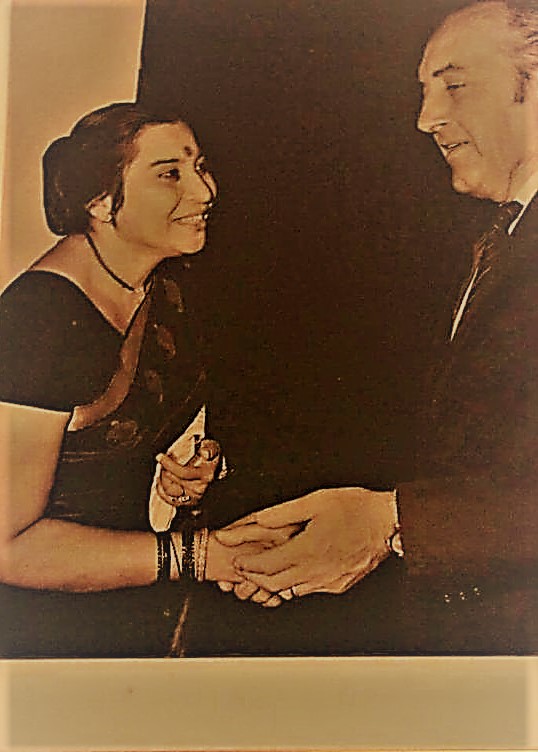
Shri Mataji Nirmala Devi (1923-2011)
was Christian by birth, Hindu by
marriage, and Paraclete by duty.
"Thus, in spite of such developed teachings
elucidating the work of the Spirit in creation, in
the restoration of the human person, and as an
inspiring reality, the person of the Spirit still
remains a baffling reality with which
theologians around the world struggle.”
(Varkay 2011 Kindle loc. 194)
"Those who go to church, how much they achieved? How much of righteousness of Christ, how much his goodness? Nothing! Why, why it has failed? Because without connection with God, you cannot. You cannot understand religion, you cannot understand Christ.
was Christian by birth, Hindu by
marriage, and Paraclete by duty.
"Thus, in spite of such developed teachings
elucidating the work of the Spirit in creation, in
the restoration of the human person, and as an
inspiring reality, the person of the Spirit still
remains a baffling reality with which
theologians around the world struggle.”
(Varkay 2011 Kindle loc. 194)
What we do so to, to try and form a connection, we. What he say, 'Can we, do go to church, to try and form a connection with God?' You see, the trouble is the one who gives you the connection, has not authority. You see, it must come, the authority, must come from God. Those people have no, you are all simple people who go there, you see, I see them, because I come from Christian family myself.
There are all simple people who go to church, thinking that, we are in connection with God. But no, the person in charge there is a paid employee. So, we got it all wrong. He wants to know, whether we have got it all wrong? Have we got it all wrong? In a way and in a way not, because I will fulfill all the promises. That of that I'm sure, all the Christians, they can be fulfilled with their promises. Because they have loved God, they have loved Christ. All of them, all those who have loved Christ, will get their promises fulfilled.”
The Paraclete Shri Mataji
Evening at Ashram and Interview, Brisbane, Australia—May 4, 1987
"Global unity of mankind can be achieved through this awakening that can occur within each human being, so that transformation takes place within us. By this process a person becomes moral, united, integrated and balanced. One actually gets the experience of the feeling of the all-pervading divine power as Cool Breeze (pneuma) (pneuma). 'Know thyself' is the main theme of all the scriptures. It becomes evident and one reaches the absolute understanding of oneself. Thus one becomes peaceful and joyous in life. One becomes collective as a drop falling into the ocean of compassion... Moreover, it is the last breakthrough of our evolution. This is the actualization of such transformation, which is taking place now, worldwide, and has been proved and experienced by hundreds of thousands in over 85 countries.”
The Paraclete Shri Mataji
October 25, 2004
Yahoo forum post # 2643
Just wondering what will happen with SY, self realization, the cool breeze and all the aspects, individually, of sahaja yoga after the physical Shri Mataji passes on to reside fully back in the kingdom of god within? Will the cool breezes stop? Will realization stop, change, or be different in anyway? Also on a side topic, what will happen to all the SY yogis who are so focused on praising her physical form?
Also, I read that if u don't listen to the Cool Breeze (pneuma) and start correcting certain things when they are brought up to you in vibratory form, i.e. things not approved by the spirit, then the connection to the divine, the Cool Breeze (pneuma) and the ability to attain thoughtless awareness ceases. Now, I wanted to know if it stops permanently or just until the seeker/yogi changes his ways and starts all over again from realization?
IF you could get back to me ASAP I would be grateful.
Kyyan volk
PS: how long do you think we have between the physical passing shri mataji and the end of the last judgment and its symptoms?
October 26, 2004
Yahoo forum post # 2647
Dear Kyyan,
Thank you for asking these questions because Shri Mataji is now an octogenarian. Even though She is healthy in mind and body there is a limit to earthly existence. Thus the questions of how long She will stay and what will happen after that are on the minds of most SYs.
Yes, the majority of SYs have their attention fixated on the external, physical Adi Shakti for decades and have neglected one of the most important aspect of Self-realization i.e., attention on Her existence within in the Sahasrara (Kingdom of God). i have already explained the dependence of SYs on Her external image and related rituals. Few can cross this self-imposed handicap and truly rise to attain Brahman within. It has always been "Shri Mataji is in Cabella"; "She is going to India next month"; "Hope She comes to New York this year"; "Did She attend the musical program" .............. .... this external attention is pervasive.
In all my years in Sahaja Yoga i have never actually heard of any SY talking about Her presence in the Sahasrara, i.e., SYs expressing their faith and conviction that She actually resides within. That is why even ex-world leader Yogi Mahajan did not privately believe what he publicly professed in his book:
"Only those who go deep in the source discover the Golden Goddess that resides within. Her touch enlightens and enthralls the total being. It is indeed the miracle of miracles. This miracle resides in every being. The wise pursue it, the scriptures speak of it, and the saints glory in its praise.” (Yogi Mahajan, The Ascent, Motilal Banarsidass Publishers, Delhi, 1997 p. 4.)
He regarded as blasphemy and the work of demonic possession when he came to know that my children were visiting the Golden Goddess daily in their Sahasraras. After successfully conspiring to get them removed from the school in Dharamsala, India, against Shri Mataji's explicit instructions not to, he worked to demonize them among SYs. This character assassination continued till he himself had to leave Sahaja Yoga a few years ago. i have to admit that he has been very successful among SYs, and some of them continue to perpetuate this negativity.
But the chickens will sooner or later come home to roost and your questions reflect their homecoming.
Q 1: So what will happen when Shri Mataji leaves?
Well, most SYs are going to feel sad and send each other emails expressing their condolences. A number of them, especially the women, are going to cry over and over again. Others will narrate stories of the glory days and blissful pujas of the past, choking off and on and try to hold back tears.
I will take a walk in the park or along the lake and enjoy the view, along with Her in my Sahasrara. A few ignorant SYs may call me cold- hearted and insensitive but why cry or feel sad when She has always been residing and guiding me from within over countless rebirths? Why should i ever cry or feel miserable when i know in heart, mind and soul that the Shakti within me has been doing everything that SYs think the physical Shri Mataji is doing, and will continue forever? I must repeat: The physical Shri Mataji does not do anything!
Q 2: Will the Cool Breeze (pneuma)s stop?
Absolutely not. The Cool Breeze (pneuma) never ever came from the physical Shri Mataji. Even She has openly admitted that She does nothing. All the while it was the Adi Shakti within who was the source of all the Cool Breeze (pneuma), healing, cures, guidance, witnessing and more. That is why the Cool Breeze (pneuma) will continue to flow long after Shri Mataji leaves this Earth.
Q 3: Will realization stop, change, or be different in anyway?
Again I have to say nothing will change because the physical Shri Mataji never did anything, though Her physical presence was necessary to enable humans to put their faith and attention on a visible entity. How many would have believed in the Great Event ordained for humanity if there was no physical manifestation of the Adi Shakti to explain in detail how to go about it?

"They say that at Sahasrara when the Goddess will appear, She will be Mahamaya. Is it possible to be anything else in the world of today to come on this Earth? Any type of incarnation could have been
in great trouble because human beings in their ego are highest in Kali Yuga. So they are quite stupid and they are capable of doing any kind of harm or violence to a Divine personality. It is not at all possible to exist in this world as anything else than Mahamaya . . .
It has no power or any intention of giving you wrong ideas or something that is false. It is there whatever, it is Truth. So in a way to say that Mahamaya is the one which deludes is wrong . . .
I need not be before you; I can be just here in Nirakar, in formless, but how to communicate?, how to have a rapport? For that, one has to come in the form of Mahamaya so that there is no fear; there is no distance; one can come close and understand.
Because if this Knowledge has to be given, if Realization has to be given, people have to at least sit before the Mahamaya. Otherwise, if they all run away, what's the use? To create that extremely human personality in Sahasrara, She comes as Mahamaya.”
The Paraclete Shri Mataji
Mahamaya's Doings, Sahasrara Puja, Cabella, Italy—May 8, 1994
Q 4: What will happen to all the SYs who are so focused on praising her physical form?
They will all eventually learn to focus their attention and faith on Her eternal spiritual presence within themselves. Perhaps then they will realize that they do not need any images or rituals to meditate or invoke Her blessings. Maybe at last they will begin learning in earnest the highest object of life - the attainment of Brahman in the Kingdom of God within!
Q 5: Also, I read that if u don't listen to the Cool Breeze (pneuma) and start correcting certain things when they are brought up to you in vibratory form, i.e. things not approved by the spirit, then the connection to the divine, the Cool Breeze (pneuma) and the ability to attain thoughtless awareness ceases. Now, I wanted to know if it stops permanently or just until the seeker/yogi changes his ways and starts all over again from realization?
Only if you continue to transgress over an extended period of time will the Cool Breeze (pneuma) and connection to the divine cease. The Divine is not trying to punish or force you to do good deeds. Right now i have total freedom to leave Sahaja Yoga and start enjoying my pre- Self-realization lifestyle. The Adi Shakti in the Sahasrara will never - and I mean never - stop me from exercising my freedom as a human being. The only difference is that the Cool Breeze (pneuma) and connection to the divine will slowly cease and end.
But leaving Sahaja Yoga does not mean the end. The very day you desire again, perhaps after months/years, to continue participating in the Great Event the Cool Breeze (pneuma) and connection to the Divine is again established. Kyyan, you must know in your heart that the Divine is not trying to punish or force you to do good deeds. You can take a break today from Sahaja Yoga and return a few years later to continue from where you left.
There is however one drawback in this option, and that is it will give you a shorter time frame for cleansing mind and body. Running a spiritual marathon requires excellent mental health, optimum earthly endurance and, perhaps of even more importance, an indefatigable will to remain righteous during this Kali Yuga. You will find it much harder to evolve and attain liberation if you opt for procrastinating the Last Judgment. Meditating twice a day for about 15-20 minutes does not even break you into a sweat. So why take a break in the first place?
But please do if a short period is needed to clear/accomplish important things. There is no harm is tying loose end, and may be even beneficial and advantageous. However, if it is going to take a longer period then it would not be a wise move. Anyway, these decisions should be yours and your only since you know your own situation and surroundings much better. The bottom line is that if you leave now it is not the end of your participation in the Great Event. You can always return to continue, even decide it is all a huge lie and leave forever.
Q 6: How long do you think we have between the physical passing Shri Mataji and the end of the last judgment and its symptoms?
All I can say is that members of this forum will probably not live long enough to see it. There are still tens of millions of very good souls on Earth who are also looking for the truth that will set them free. There is going to be no sudden and apocalyptic End when so many nations and peoples of many tongues are totally unaware of the Blossom Time. They have the right to know and decide for themselves. So let's work to make this world a better place to live by telling all about the Great Event ordained for humanity.
In the meantime enjoy the Blossom Time and learn to focus your attention on Shri Mataji within your Sahasrara. You will be more happier than many SYs when Shri Mataji finally leaves Earth.......... and more advanced as well.
be your own master,
jagbir
January 7, 2018
Yahoo forum post # 19036
Dear Kyyan and all,
From the beginning of this presence on the forum, I have always valued your conscience that compelled you to ask difficult questions and doubts about Shri Mataji, the SY organization and SYs. Unlike many SYs, you are just like me - you question and seek answers to all the ails Sahaja Yoga. And I have always responded to all of them, and that has enriched us all.
SYs have followed Shri Mataji in blind faith .................. blind faith since they worshipped Her in the capacity of triggering the subtle system to begin empowering them - kundalini awakening, cleansing catches, daily rituals.
I do not believe any more than a handful joined because they realized that Jesus had fulfilled His 2,000-year-old promise that God Almighty will send the Paraclete/Comforter/Holy Spirit in His name to complete the message of the Resurrection, Kingdom of God, and life eternal.
When I joined I too had no idea. I just joined because the incarnation of the DIVINE MOTHER was on Earth, and went by the name of Shri Mataji Nirmala Devi.
It took me a year or two to realize, after repeatedly hearing Her speak about Jesus and His message, that no SY was following Shri Mataji for that reason. When I started questioning the best answer was: Nobody believes in the Bible anymore. So just give Self-realization.
That is when I too started questioning and criticizing the lies and hypocrisy of the SY organization, and have not ceased today. Violet coined the acronym "SYSSR". I coined "crime against humanity.” Together, they bring the clarity of the poverty that is Sahaja Yoga.
While we wait for "Saving Jesus" I would like to revisit a post that I just came across during a search. It brought back memories of challenging the most vociferous critic of Shri Mataji and the SY organization - Simon Montford. He did the most damage as he gathered the ex-SYs and they wrote highly critical posts on their Yahoo forum.
SYs spent years collectively shoe-beating, bhandan-ing, matka-ing, candling, string burning and mantra-ing him. All the collective power of the SY organization could not bring a single synapse of his brain to spark conscience. Yes, all the time and effort of thousands failed ................. abysmally. (Talk about SYs having power.)
But in the end Simon Montford—after reading my relentless defense of Shri Mataji appearing on Earth as the Paraclete, an incarnation of the HOLY SPIRIT/DEVI—relented and told his followers that he had to stop. It took a few years but he too surrendered and ceased. He was given the Savior's clear warning against all who blasphemed Shri Mataji - no forgiveness. (SYs are still oblivious to that warning.)
The Independent article "She Who Must Be Obeyed" appeared at a critical time when Shri Mataji made Her Royal Albert Hall appearance on July 12, 2001. In that speech, She spoke openly about the Resurrection and Last Judgment to thousands of complete strangers. It was one of Her best speeches in defense of the Savior and His message.
The utter failure of this huge SY exercise to promote Shri Mataji is a reminder, yet again, of the poverty that is SY. More precisely, the SYSSR. That after Her death the official AUM Initiative was adopted in 2012 is but a reminder, again, as to the collective crime against humanity.
So while we wait for Violet to start extracting about the Savior, let us remember the decade ago where the Paraclete spoke and declared all that Jesus expected of Her. And God Almighty too. Amen.
regards,
jagbir
"It is this claim of access to new teaching that becomes problematic within the Johannine communities.”
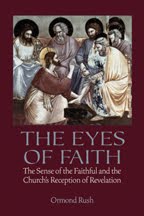
"THE HOLY SPIRIT AND REVELATION
Lumen Gentium 12 teaches that all believers possess "a supernatural sense of the faith" which enables an infallibility in believing. This supernatural sense of the faith is "aroused and sustained by the Spirit of truth.” A theology of the sensus fidelium must begin by attending to the role of the Holy Spirit in divine revelation. It is central to the belief of Christians that God is fully encountered in Jesus Christ, the Crucified and risen one; that salvation from God is mediated through him; and that, within that salvific encounter, God is revealed to humanity. What is the role of the Holy Spirit in that process of revelation? How might a trinitarian theology of revelation be constructed that gives appropriate emphasis to that role?
In this chapter, we begin our exploration of the sensus fidelium by firstly highlighting the witness of Scripture to the enlightening role of the Holy Spirit, as but one of the many interrelated dimensions of the Spirit's assistance in empowering Christians to appropriate the salvation Jesus Christ offers. This chapter therefore does not attempt a comprehensive exploration of the role of the holy spirit in the Christian life. After examining the scriptural witness to this Christian experience of enlightenment by the Spirit in the economy of salvation, this chapter then proposes a trinitarian theology of revelation in which the Holy Spirit is seen to be "the principle of reception" in the process of divine revelation.
THE EXPERIENCE OF THE HOLY SPIRIT
Jesus was being interpreted from the moment his public ministry began, yet being misinterpreted. The four Gospels consistently preserve the memory that, during his ministry, the earliest disciples misunderstand Jesus. This misunderstanding is later corrected by three decisive "events": Jesus' death on the cross, his resurrection from the dead, and the early disciples' experience, after the resurrection, of being given an ability to understand aright the meaning of Jesus' teaching and ministry, of his death and resurrection, and of his identity as God's bearer of salvation. In this section, it is this gift of an ability to understand Jesus that I particularly wish to focus on, without wanting to reduce the Spirit's work to a purely cognitive dimension....
According to Johannine pneumatology, Jesus promises another Paraclete, the spirit of Truth who will enable the community to understand the meaning of Jesus. Helmut Gabel neatly summarizes the Johannine vision:
In the view of the Gospel of John, the word of the eye-witnesses of Jesus and that of the future disciples is work of the spirit. The entire tradition process is a process enabled by the Spirit. The spirit is, as it were, the "interpreter" of Jesus, who leads to the true understanding of the Christ event and reveals the event in its deepest sense.
The Johannine vision can be outlined in four points. Firstly, the Johannine literature emphasizes that the Spirit/Paraclete is given to all individuals in the community.
Secondly, Jesus promises another Paraclete who will take the place of Jesus; nevertheless, although the Spirit/Paraclete takes the place of Jesus, the Spirit/Paraclete does not supplant or negate Jesus. The "secessionists," according to the author of 1 John, are wanting to give independent authority to the Spirit over against Jesus, thereby serving the necessary element of continuity with Jesus. The Johannine literature emphasizes that it is the role of this Spirit/Paraclete to ensure continuity with Jesus. A phrase recurs: 'from the beginning.' The Spirit ensures continuity with the pre-Easter Jesus.
Thirdly, the Johannine literature emphasizes that it is the role of this Spirit/Paraclete, not only to ensure continuity with Jesus, but also to enable the community to interpret the word of Jesus for a new context, ensuring faithful adaptation and innovation.
Fourthly, the Johannine literature emphasizes that it is the role of this Spirit/Paraclete to indeed further the teaching of Jesus beyond what Jesus was able to teach, speaking a new word of the glorified Jesus...
The Fourth Gospel portrays Jesus giving his disciples the assurance that the Spirit/Paraclete will, in the future, be the teaching voice of Jesus himself.
I have said these things to you while I am still with you. But the advocate, the holy spirit, whom the father will send in my name, will teach you everything, and remind you of all that I have said to you.
The spirit/Paraclete will bring the past to memory, but the Spirit/Paraclete will be the voice of the glorified Jesus teaching in new situations in the present. However, this new teaching will be anchored in the Jesus of the past, because the Spirit/Paraclete will be speaking anew on behalf of the glorified Jesus.
It is this claim of access to new teaching that becomes problematic within the Johannine communities. The controversy lurking behind the themes of the first epistle is the divergent reception of the fourth Gospel. The author claims that the group emphasizing its pneumatic authority and an access to the new teaching of the glorified Jesus is losing its grounding in the tradition and the teaching of the pre-Easter Jesus. Thus there is a tension within the communities between those emphasizing the tradition (anamnesis) and those emphasizing the creative voice of the glorified Jesus going beyond the teaching he had given before the resurrection (inspiration). The writer of the epistle claims that both anamnesis and inspiration are demanded. It is a tension that will mark the history of the Spirit not only throughout the Johannine communities, but throughout the history of the church.” [emphasis ours]
Ormond Rush, The Eyes of Faith
The Catholic University of America Press (March 11, 2009) pp. 16-21
October 26, 2004
Yahoo forum post # 2647
Q 2: "Will the Cool Breezes (pneuma) stop?
"Absolutely not. The Cool Breeze (pneuma) never ever came from the physical Shri Mataji. Even She has openly admitted that She does nothing. All the while it was the Adi Shakti within who was the source of all the Cool Breeze (pneuma), healing, cures, guidance, witnessing and more. That is why the Cool Breeze (pneuma) will continue to flow long after Shri Mataji leaves this Earth.”
"Of course, there are innovative efforts in the field of pneumatology, because more than in the past, it is realized that pneumatology is a promising theological locus.[56] Hodgson writes that, "The resources for a theology of the Holy Spirit are rich and diverse, ranging from Eastern orthodoxy and classical western spirituality to New Age movements, folk and tribal religions, feminist, ecological, and liberation theologies, and new philosophies of Spirit.”[57] However, as Moltmann says, a new paradigm of pneumatology has not yet emerged. Yet there are beginnings, and we are witnessing a transition from an anthropocentric to a holistic pneumatology, one that embraces the whole creation and recognizes in the Spirit the symbol of wholeness, relatedness, energy, and life.[58] This search for a new paradigm makes pneumatology always significant, and that is what the whole concern of this research is.
In addition to that, the doctrine of the Spirit has aroused an interest within the life of the church recently, which is growing and extends incredibly. It fixates on the spiritual side of human nature. Swete writes, "It is possible that modern life, as it escapes from the control of a crude materialism, may be led to seek the solution of its perplexities in the Christian doctrine of a divine Spirit working in the world and in man.”[59] Therefore, there are promising possibilities which pneumatology opens for the Christian church and the modern world in order to face the challenges before humanity and the universe as a whole. As a result, the present world has witnessed an unprecedented interest in the study of the Spirit, more so than at any time in the history of the church.[60] Karkkainen observes in one of his articles that today we are living in the midst of "a pneumatological renaissance" with writings and discussions on the Spirit abounding.[61] Thus those promising possibilities that the Spirit offers for today are the major concern of the present research.
Moreover, the Spirit is an eschatological reality that gives hope in the midst of a hopeless world. The pneumatological basis of the Bible faith communities is the linguistic and theological connection between "Spirit' and "breath," which the ancients linked phenomenologically to "life.” The Biblical people came to see "Spirit" as the divine power creating (Gen 1:2; 2:27) and sustaining life (Ps 104:29; Isa 32:15; cf. Job 27:3; 34:14-15). Therefore, wherever the Spirit is present, life flourishes, and wherever the Spirit is absent, life ceases. Moreover, the biblical writings link the Spirit with the eschatological new life. As the one who raised Jesus from the dead, the Spirit will give life to our mortal bodies (Rom 8:11). As the author of life, the Spirit is the creator Spirit, the divine power at work fashioning the universe, and in this sense, the Spirit is the author of the world.[62] This realization will give a new sense of hope to the world that suffers from fundamentalism, terrorism, and dehumanizing tendencies. One should note that the divine is the great creative Spirit within which wears the universe as its body. This great cosmic, creative Spirit underlies all that exists and moves the world toward its completion not by almighty power but by kenotic self-giving. Each of us in some way knows or intuits "this great cosmic, creative Spirit" which underlies the disparate compartmentalization of modern life.[63] As Bishop Holloway of the Episcopal Church in Scotland writes, "Some great self-giving love seems to haunt the universe.”[64] When dealing with the pneumatology of Moltmann and Pannenberg, these aspects will be clearer and will be further reflected in the new pneumatological paradigm at the end of this study.
In addition to that, the notion that the Spirit is present in the world religions is heard more loudly today.[65] D'Costa writes that, "... the claim that the Spirit is at work in their religions should be taken neither as a phenomenological socio-historical description of a religion, not as a claim that will necessarily be well-received by a non-Christian. Rather it constitutes a theological evaluation that must spring from and lead to fresh practices within the church if the claim is to have any credence.”[66] The recognition of the Spirit in other religions allows the church the possible discernment of Christ-like practice in the other, and in so much as Christ-like activity takes place, then this can also be through the enabling power of the Spirit.[67] That means, as Alan Jones writes, "The Spirit is calling us out of our tribal and national manifestations into a way of being in the world that truly expresses the universal good news of love and reconciliation.”[68] The Spirit and other religions is also an area where this research will be focusing.
In short, having understood the major reasons for the negligence of the Spirit, on the one hand, and the significance of the Spirit, on the other, in Protestant systematic theology, the present study discusses the pneumatology of Barth, Moltmann, and Pannenberg in order to answer the following pertinent questions. Firstly, what is the personhood of the Spirit and how is it related to the other persons in the Trinity? Secondly, what is the role of the Spirit in the whole divine action with regard to humanity and the whole creation? Thirdly, how should one approach the Spirit, i.e., whether subjectively, or is there any possibility of understanding the Spirit and its role as reasonably accommodating to the modern mind? Finally, how can we formulate a pneumatology, giving significance to the working of the Spirit in the Christian church, other religions, liberation movements, and contextual theologies? In short, this study looks for a new paradigm, maintaining the significance of pneumatology and arguing for a pneumatological perspective in Protestant systematic theology in order to present a new hope to the church and world alike.”
Role of the Holy Spirit in Protestant Systematic Theology
Vilson Varkay, Langham Monographs (July 15, 2011) Kindle location 339-440
Note:
[56]. For example, the Spirit-centric theme is very helpful in addressing the ecological issues of our times, and it would provide a cosmic vision of mission vis-à-vis healing and reconciliation. It is through the Spirit that God creates, reconciles, and saves the entire creation. Moreover, God is present in creation in the power of the Holy Spirit. The Holy Spirit is the breath and life of the world. The language of "Spirit" to refer to God helps us to transcend anthropocentrism, that itself is a major reason for the current ecological impasse. The fact that the Spirit is used as a feminine category in Semitic languages also provides us with an eco-feminist perspective for mission. God as Spirit is not understood as the controller of the universe, but rather as its source and breath. From this perspective, all worldly beings are seen as "entspirited" embodiments of God. See Nalunnakkal, "Come Holy Spirit," 7-19.
[57]. Peter C. Hodgson, Winds of Spirit: A Constructive Christian Theology (Louisville: Westminster, 1994), 277.
[58]. Jurgen Moltmann, The Spirit of Life: A Universal Affirmation, trans. Margaret Kohl (Minneapolis: Fortress, 1992), 1-2, 34-37. [59]. Henry Barclay Swete, The Holy Spirit in the Ancient Church: A Study of Christian Teaching in the Age of the Fathers (London: Macmillan, 1912), 7.
[60]. Joseph, Indian Interpretation of the Holy Spirit, xvii.
[61]. Veli-Matti Karkkainen, Pneumatology: The Holy Spirit in Ecumenical, International, and Contextual Perspective (Grand Rapids: Baker Academic, 2002), 9.
[62]. Grenz and Franke, Beyond Foundationalism, 77.
[63]. Priest, "Spirit: Inner Witness," 387.
[64]. Richard Holloway, Dancing on the Edge (London: Harper Collins, 1997), 44.
[65]. The major works are, Amos Yong, Discerning the Spirit(s): A Pentecostal-Charismatic Contribution to Christian Theology of Religions (Sheffield: Sheffield Academic, 2000); Amos Yong, "Guests, Hosts, and the Holy Ghost: Pneumatological Theology" and Christian Practices in a World of Many Faiths, in Lord and Giver of Life: Perspectives on Constructive Pneumatology, ed. David H. Jensen (Louisville: Westminster, 2008), 71-86; Amos Yong, Beyond the Impasse: Toward a Pneumatological Theology of Religion (Grand Rapids: Baker Academic, 2003); Veli-Matti Karkkainen, "Identity and Plurality: A Pentecostal Charismatic Perspective," International Review of Mission vol. 91, no. 363 (October 2002), 500-503.
[66]. Gavin D'Costa, The Meeting of Religions and the Trinity (Edinburgh: T & T Clark, 2000), 128.
[67]. D'Costa, The Meeting of Religions, 129.
[68]. Alan Jones, "Falling in Love: The Work of the Holy Spirit," Anglican Theological Review vol. 83, no. 3 (Summer 2001), 379.
.jpg)
Shri Mataji Nirmala Devi (1923-2011)
was Christian by birth, Hindu by
marriage, and Paraclete by duty.
"Thus, in spite of such developed teachings
elucidating the work of the Spirit in creation, in
the restoration of the human person, and as an
inspiring reality, the person of the Spirit still
remains a baffling reality with which
theologians around the world struggle.”
(Varkay 2011 Kindle loc. 194)
"Now the Time has come to start talking, announcing, telling about it to everyone. Otherwise the world would say that we never knew about it....was Christian by birth, Hindu by
marriage, and Paraclete by duty.
"Thus, in spite of such developed teachings
elucidating the work of the Spirit in creation, in
the restoration of the human person, and as an
inspiring reality, the person of the Spirit still
remains a baffling reality with which
theologians around the world struggle.”
(Varkay 2011 Kindle loc. 194)
You must have that vision before you that I have put many a times before you people that you have to emancipate the humanity....
Now we have to openly say and tell these fundamentalists, 'You don't know about the truth, or the power that is working. You are stupid people running after something that is a mirage and all of you will end up in hell.'
You may tell people but the new announcement has to come to say that running after falsehood is not going to take you to God. We believe in the power of Love, and not in the power of hatred. We believe that everyone is capable of finding the truth and getting to the heaven of that paradise which is promised to us, the kingdom of God.”
The Paraclete Shri Mataji
Rome, Italy—May 6, 1990
Related Articles:
1. Ruach, breath of God experienced daily as Cool Breeze/wind 1
2. Ruach, breath of God experienced daily as Cool Breeze/wind 2
3. All-Pervading Power of God felt as Cool Breeze or vibrations
4. Divine Wind flowing out of those born of the Spirit within
5. I will pour out in those days of My Spirit - Acts 2:18
6. Gospel of Truth pictures the holy spirit as God's breath
7. Comforter (Holy Spirit) would be like a breath, like a wind
8. The coming Messiah would inaugurate the age of salvation
9. The pneumatological activity [Cool Breeze or Wind] ... of the Paraclete
10. Pneuma is power by which the word becomes the word of eternal life
11. Pneuma (Cool Breeze) is the peculiar power of eternal life
Disclaimer: Our material may be copied, printed and distributed by referring to this site. This site also contains copyrighted material the use of which has not always been specifically authorized by the copyright owner. We are making such material available to our readers under the education and research provisions of "fair use" in an effort to advance freedom of inquiry for a better understanding of religious, spiritual and inter-faith issues. The material on this site is distributed without profit. If you wish to use copyrighted material for purposes other than “fair use” you must request permission from the copyright owner.

