Swami Satyananda's Question
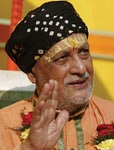
Saraswati
Early Teachings of Swami Satyananda Saraswati, Bihar School of Yoga, 1988, p. 249
“Hindu philosophical thought is characterized by a belief in the principal of brahman, the "universal soul.” Uncreated, limitless, all-embracing and eternal, brahman is the ultimate reality: it is the subtle essence that underlies the universe; and, at the same time, it constitutes the innermost self or soul (atman) of each individual.
In the older Vedic religion, the term brahman referred to various forms of sacred power, which were manifested in Vedic ritual. Speculation on this sacred power led to contemplation of the connections that link the elements of ritual with both the macrocosm of external nature and the microcosm of the inner life of the individual. Such introspection culminated in the belief that there is a single essence (brahman) that underlines all existence and animates all beings.
A person's realization of the identity and unity of atman and brahman is believed to bring about liberation, because at that moment he or she is freed from all restraints of the mind and body, and thereby transcends all distinctions ...
To realize that brahman and atman are ultimately the same is no easy task. The Chandogya Upanishad likens the learning process to crossing the ocean of suffering. An individual comes to know brahman through meditating on the nature of the self.”1
According to Hinduism, man is essentially a soul that uses its body and mind as instruments to gain experience. What then is the nature of the soul? Hinduism maintains that the macrocosm and the microcosm are built on the same plan. Brahman is the soul of both, whereas the soul of man Brahman is known as Paramatman. The Upanishads speak of the two souls of man dwelling, as it were, side by side, within him: the real soul or Paramatman and the apparent soul or jivatman. The real soul is the witness consciousness, serene and detached, within. The apparent soul is the embodied soul in a physical body, and is ever in quest of freedom and eternal life from this ever-whirling wheel of transmigration, the endless cycle of births, deaths and rebirths.
All the ancient peoples of the world believed in the reality of reincarnation and a majority in this world still do. Buddhists, Hindus, gnostic Christians, Inca and Mayan civilizations, the old Egyptians hold to this doctrine. Add the Roman poets Virgil, Lucretius, Horatio, the Stoics, and the list is still not completed! Also the Jewish Sohar, the famous Kabbalistic book, contains references to reincarnation of the soul. Reincarnation gives hope for continuing one's existence in further lives and thus having a better chance to attain liberation. This is a source of great comfort, especially for those who seek liberation on the exclusive basis of their inner resources without being subject to the doctrines and damnation threats of religious regimes.
“Having lived many lives, each soul seeks release from mortality, experiences the Divine directly through Self-Realization and ultimately attains moksha, liberation from the round of births and deaths.
The religions of India are unique in their knowledge of the soul's spiritual evolution through a multitude of physical incarnations. Scripture tells us this evolution culminates in Self-Realization, which, once sufficient karma is resolved, confers moksha, release from the cycle of birth and death.
Moksha, from the root mooch or moksh, has many connotations: to loose, to free, release, let loose, let go and thus also to spare, to let live, to allow to depart, to dispatch, to dismiss and even to relax, to spend, bestow, give away and open. Thus it means "release from worldly existence or transmigration; final or eternal emancipation. Moksha is not a state of extinction of the soul, nor of nonexistence, nor of nonconsciousness. It is perfect freedom, an indescribable state of nondifferentiation, a proximity to the Divine within. Moksha is an end to the earthly sojourn, but it may also be understood as a beginning, not unlike graduation from the university.
To reach this emancipation beyond all joy and sorrow, all difference and decay, the soul must remove, in order, the three fetters: karma, which is "The power of cause and effect, action and reaction;" maya, which is "The power of manifestation" sometimes called illusion; and anava, "the power of egoity or misapprehended duality.” Once freed by God's grace from these bonds-which do not cease to exist, but no longer have the power to bind-the soul experiences nirvikalpa samadhi. This is the realization of the Self, atattva Parabrahman-timeless, formless, spaceless — a oneness beyond all change or diversity. Self-Realization is man's natural state, which each soul eventually comes to. While the ultimate goal of earthly life is the experience (or more precisely the nonexperience) of Self-Realization, the by-product of that realization is moksha. These two are not synonymous.
While some sects teach that liberation comes only upon death, most embrace the state of jivanmukti, liberation in which the advanced soul unfolds its inherent perfection while alive. It is said of such a great one that "He died before he died," indicating the totally real, not merely symbolic, demise of the ego.
It is possible to realize the Self and still not reach the emancipated state. If this happens, the soul would return and in its next birth easily become a jivanmukta by virtue of the past realization. What distinguishes the mukta from the non-liberated is his total freedom from all selfishness and attachments, his permanent abidance in the all-pervading Divine Presence, his lucid, witnessing consciousness and his jnana, revealed in spontaneous utterances.
To attain liberation while living, the realization of the Self has to be brought through into every aspect of life, every atom of one's body. This occurs after many encounters with nirvikalpa samadhi. Through harnessing the power of sadhana and tapas, the adept advances his evolution, moving ahead ten lives or more. Only great tapasvins achieve jivanmukti, for to catalyze the death of the astral body and then revive the life forces, one must be proficient in brahmacharya, yoga, pranayama and the varied sadhanas. It is a grace, made possible by guidance of a living satguru, attained by single-minded and strong-willed efforts of yoga, worship, detachment and purification. Non-yogis may be freed at death, provided all karmas have been worked out and the Self is realized as the body is released.
Even having attained perfect liberation, a soul may consciously choose to be reborn to help others on the path. Such a one is called an upadeshi — exemplified by the benevolent satguru — as distinguished from a nirvani, the silent ascetic who abides at the pinnacle of consciousness, shunning all worldly involvement.
The concept of moksha for each Hindu sect is informed and modified by its understanding of the soul and its relationship to God. Most Hindus believe that after release from birth and death the soul will exist in the higher regions of the inner worlds where the Gods and mature beings live. Some sects contend the soul continues to evolve in these realms until it attains perfect union and merger with God. Others teach that the highest end is to abide eternally and separately in God's glorious presence...
Shaktas believe the soul is one with God Siva. The Divine Mother, Shakti, is mediatrix, bestowing this advaitic moksha on those who worship Her. Moksha is complete identification with the transcendent God Siva, achieved when the kundalini shakti power is raised through the shushumna current of the spine to the top of the head to unite with Siva. Alternatively, moksha may be conceived of as union with Devi, or with Brahman.
The state of jivanmukti in Shaktism is called kulachara, "the divine way of life," attained through sadhana and grace. The liberated soul is known as kaula, to whom wood and gold, life and death are the same. The kaula can move about in the world at will, even returning to earthly duties such as kingship, but nevertheless remaining liberated from rebirth as his actions can no longer bind him.
The Goddess, Devi, gives both mukti and bhukti-liberation and worldly enjoyment. Dr. S. Radhakrishnan explained one view, "The jiva under the influence of maya looks upon itself as an independent agent and enjoyer until release is gained. Knowledge of Sakti is the road to salvation, which is dissolution in the bliss effulgence of the Supreme.”2
Thus the embodied soul born again as a human, but conscious of his divine nature, is a jivanmukta. Is there any proof about about a jivanmukta who could provide evidence of reincarnation? This question poses a lot of problems, since it's not so clear what a "proof" is, and what as such would count. Mostly, people are looking for physical confirmation of such a human being who "demonstrates, by his life and action, the reality of Brahman and the illusoriness of the names and forms of the relative world. Having himself crossed the ocean of birth and death, he helps others to the shore of Immortality. Such a man keeps religion alive, not the erudite theologian.
A jivanmukta is freed from the results of action. The stored-up impressions of the past actions, which, in the case of an unillumined person bring about future embodiments, cannot, in his case, produce any fruit. Actions performed by him after his experience of the nirvikalpa samadhi do not cling to him, because he is free from desire and ego. Whether he is in samadhi or conscious of the outer world, his illumination is steady and bliss constant. Though he may sometimes seem to others to be like an unillumined person in respect to hunger, thirst, or sleep, yet he himself is never oblivious of his real nature of Immortal Consciousness. Free from desires, worries, and fears, he is not identified with the body though he still possesses one.
Though appearing to be active, he is free from the ideas of "I" And "mine.” He never forgets that the Spirit within is always at peace, though the gunas may engage his body in various works. He does not dwell on the enjoyments of the past, takes no thought of the future, and is indifferent about the present. Completely free from the illusory notion of the physical individuality, he is aware of his identity with all beings. He is conscious that he feels through all hearts, walks with all feet, eats through all mouths, and thinks with all minds. He regards the pain and pleasure of others as his own pain and pleasure. Physical death and birth has no meaning for him, a change of body being a change to him like a change of garments or like going from one room to another.
About such a person it can truly be said that he exists, because he has become one with Existence; knows, because he has become one with Knowledge; and enjoys bliss, because he has become one with Bliss Absolute. He does not have to come back to the world of darkness again; for he has entered into the world of Light. If compassion for mankind moves him to assume again a body, he is born as a free soul always conscious of his divine nature.”3
On September 21, 1994, Shri Bhogini 4 Devi revealed to Kash that he had attained spiritual release a long time ago, a reborn jivanmukta. That was the reason he reached Shri Visvadhika 5 Devi's Inner Sanctuary in the Sahasrara the very instant he received Self-Realization, a feat possible only by those who have gone beyond death, who are able to move beyond this shore and that shore, who are able to maintain the same awareness in this life and in the next life and also in between. Only they can give us an answer as to whether the soul exists after death or not. That answers Swami Satyananda's question.
However, there are others who say that reincarnation has not been proven scientifically and probably never will be.”But then again, how many of our spiritual or religious teachings and doctrines have been? To state that a theory or teaching is not true because current-day science cannot prove it, is to state that the laws of the Earth plane represent all the laws that exist within creation; this, of course, is not correct. In considering reincarnation, we are dealing with an aspect of the spirit; thus, spiritual laws must be considered. All laws of the spirit, which have stood the test of time, point directly to the reality of reincarnation.
Reincarnation has, nonetheless, undergone some serious scientific investigation, primarily through the research of Dr. Ian Stevenson. Through various techniques of hypnosis and life regression, Dr. Stevenson and others have been able to confirm that certain people are able to offer direct information concerning past lives; information which they have no way of knowing (at least from the current earthly life) and which can be verified. This type of information is often obtained from children.”6
Again we have to repeat that only the one who has gone beyond death, who is able to move beyond this shore and that shore, who is able to maintain the same awareness in this life and in the next life and also in between, only that person can give us an answer as to whether the soul exists after death or not. If such a soul is reborn as a human and provides evidence it is irrefutable proof of reincarnation.
Mankind is engaged in an eternal quest for that 'something' he hopes will bring him happiness, complete and unending. There is a spirit afterlife far, far more enriching and rewarding than this mundane earthly existence, an eternal experience beyond our wildest imagination. According to Shri Mataji this Reality is beyond the grasp of the human mind, absolutely impossible to visualize.
May Her Revelations enable Homo sapiens to take a giant leap in consciousness and holistic-living, and spur them to pursue far nobler goals. We have all evolved from the dark depths of the primordial ocean billions of years ago to this glorious human birth. The final stage of human evolution is to be the eternal spirit. To achieve this glorious purpose the Divine Mother devised a simple method and named it Sahaja Yoga.
Yoga is a systematized doctrine that arose 5000 years ago.”Perhaps the reason for its occurrence was the great desire on the part of people to learn the truth, to reach an absolute in perception, to find spiritual rest in this restless world, and to live in balance with nature. The seekers did not look for the answers in the material world, rather, they addressed spiritual perception. They used various methods and techniques, which evolved into independent directions of Yoga: Hatha-yoga (physical methods), Raja-yoga (mental comprehension) and others. But only rarely did followers achieve real results because of the difficulty of practice, incompleteness of knowledge and personal ideology. The main problem was the awakening of Kundalini—Self-Realization.
In each person, from birth, a potential spiritual energy — named Kundalini — is incorporated. This energy is our spiritual Mother. The main idea of any Yoga is Her awakening and further spiritual ascent under Her protection. But the largest problem of all was simply how to awaken Her. Many doctrines spoke about it, calling this process variously as 'self-realization,' 'second birth,' and 'Resurrection,' but no one gave the practical recipe for the embodiment of this idea.
In 1970, as a result of long searches and experience, Shri Mataji Nirmala Devi made possible a method that permits any person to awaken the Kundalini energy within several minutes, to receive his self-realization, and to go on the way of spiritual ascent and perception. This method has received the name 'Sahaja Yoga'. In translation from Sanskrit 'Sahaja Yoga' means "inborn, effortless union with the Divine": 'Sahaja' means easy, or spontaneous - it also means 'inherent, born with...'; 'yoga' - 'to connect, to reunite, connection, union'. The name itself reminds the person of the potential opportunities incorporated in him at birth and of the opportunity of their realization.
How much do we know about ourselves? We don't know a lot about our senses, about our talents, about what power we have. Only by knowing all about the self, can the person maintain a healthy organism in order to live in harmony with nature and other people. Sahaja Yoga permits people to discover the next dimension of the Universe - vibrations. It may sound strange that spiritual practice can really help people, but that may be because western people tend to adhere more to the material world. Due to our modern lifestyle, with its fast pace and intense rhythms, people can be driven to extremes, and, consequently, fall into mental problems, develop conflicts with nature, and lose their sense of the joy of life. It's no wonder that more and more people are discovering the benefits of spiritual practice, and Sahaja Yoga in particular.
Sahaja Yoga is simple in study and practice. It does not require supernatural efforts, or violence over self, refusal of worldly life, difficult exercises, or repetitious chanting. Fifteen to twenty minutes daily practice of Sahaja Yoga meditation (basically a profound "thoughtless" contemplation) is all that is required to get real results in all directions of creative human activity.
Practice does not require fanatical blind belief at all. It is enough to consider the method of Sahaja Yoga earnestly, to accept it as a hypothesis, to try it, and, if the practice confirms its reliability and benefit, to accept it as valid.
Sahaja Yoga is not a dogmatic religion (religion - from lat. Religio - piety, reverence, subject of worship), or a traditional science (study of a material, its structure and interaction), or philosophy (concept) - rather, it is a universal method which stands on the border of many areas of human knowledge and practices. Sahaja Yoga represents practical perceptions of existence which can be verified through experience. As a result, Sahaja Yoga has quickly spread all over the world. Today, Sahaja Yoga is recognized and practiced in more than 70 countries. Sahaja Yoga can be used anytime, anywhere, as, most importantly, the person uses his own innate forces and energy.
Now the techniques of Sahaja Yoga have found application and have gotten real results in traditional science, medicine, agriculture, education, art, politics and business. Sahaja Yoga does not suppress the person, as occurs in many doctrines or dogmatic religions. On the contrary, it permits him to awaken and to develop his individuality in its whole original beauty, to discover the "sixth sense", and to look at world on the other hand. It can be practised by anyone, regardless of age, sex, race, education or creed.”7
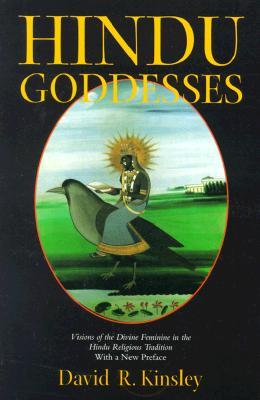
The Mahadevi
Central Theological and Philosophical Characteristics
An underlying theological assumption in texts celebrating the Mahadevi is that the ultimate reality in the universe is a powerful, creative, active, transcendent female being. The Lalita-sahasranama gives many names of the Mahadevi, and several of her epithets express this assumption. She is called, for example, the root of the world (Jagatikanda, name 325), she who transcends the universe (Visvadhika, 334), she who has no equal (Nirupama, 389), supreme ruler (Paramesvari, 396), she who pervades all (Vyapini, 400), she who is immeasurable (Aprameya, 413), she who creates innumerable universes (Anekakotibrahmandajanani, 620), she whose womb contains the universe (Visvagarbha, 637), she who is the support of all (Sarvadhara, 659), she who is omnipresent (Sarvaga, 702), she who is the ruler of all worlds (Sarvalokesi, 758), and she who supports the universe (Visvadharini, 759). In the Devi-bhagavata-purana, which also assumes the ultimate priority of the Mahadevi, she is said to be The Mother of all, to pervade the three worlds, to be the support of all (1.5.47-50), to be the life force of all beings, to be the ruler of all beings (1.5.51-54), to be the only cause of the universe (1.7.27), to create Brahma, Visnu, and Siva and to command them to perform their cosmic tasks (3.5.4.), to be the root of the tree of the universe (3.10.15), and to be she who is supreme knowledge (4.15.12). The text describes her by many other names and phrases as it exalts her to a position of cosmic supremacy.
One of the central philosophic ideas underlying the Mahadevi, an idea that in many ways captures her essential nature, is sakti. Sakti means "power"; in Hindu philosophy and theology sakti is understood to be the active dimension of the godhead, the divine power that underlies the godhead's ability to create the world and to display itself.3 within the totality of the godhead, sakti is the complementary pole of the divine tendency towards quiescence and stillness. It is quite common, furthermore, to identify sakti with a female being, a goddess, and to identify the other pole with her male consort. The two poles are understood to be interdependent and to have relatively equal status in terms of divine economy.
Texts of contexts exalting the Mahadevi, however, usually affirm sakti to be a power, or the power, underlying ultimate reality, or to be the ultimate reality itself. Instead of being understood as one or two poles or as one dimension of a bipolar conception of the divine, sakti as it applies to the Mahadevi is often identified with the essence of reality. If the Mahadevi as sakti is related to another dimension of the divine in the form of a male deity, he will tend to play a subservient role in relation to her. In focussing on the centrality of sakti as constituting the essence of the divine, texts usually describe the Mahadevi as a powerful, active, dynamic being who creates, pervades, governs, and protects the universe. As sakti, she is not aloof from the world but attentive to the cosmic rhythms and the needs of her devotees.
In a similar vein the Mahadevi is often identified with prakrti and maya. Indeed, two of her most common epithets are Mulaprakrti (she who is primordial matter) and Mahamaya (she who is great maya)... In the quest for liberation prakrti represents that from which one seeks freedom. Similarly, most schools of Hindu philosophy identify maya with that which prevents one from seeing things as they really are. Maya is the process of superimposition by which one projects one's own ignorance on the world and thus obscures ultimate truth. To wake up to the truth of things necessarily involves counteracting or overcoming maya, which is grounded in ignorance and self-infatuation. Liberation in Hindu philosophy means to a great extent the transcendence of embodied, finite, phenomenal existence. And maya is often equated precisely with finite, phenomenal existence. To be in the phenomenal world, to be an individual creature, is to live enveloped in maya.
When the Mahadevi is associated with prakrti or maya, certain negative overtones sometimes persist. As prakrti or maya she is sometimes referred to as the great power that preoccupies individuals with phenomenal existence or as the cosmic force that impels even the gods to unconsciousness and sleep. But the overall result of the Mahadevi's identification with prakrti and maya is to infuse both ideas with positive dimensions. As prakrti or maya, the Devi is identified with existence itself, or with that which underlies all existent things. The emphasis is not on the binding aspects of matter or the created world but on the Devi as the ground of all things. Because it is she who pervades the material world as prakrti or maya, the phenomenal world tends to take on positive qualities. Or perhaps we could say that a positive attitude toward the world, which is evident in much of popular Hinduism, is affirmed when the Devi is identified with prakrti and maya. The central theological point here is that the Mahadevi is the world, she is all this creation, she is one with her creatures and her creation. Although a person's spiritual destiny ultimately may involve transcendence of the creation, the Devi's identification with existence per se is clearly intended to be a positive philosophical assertion. She is life, and to the extent that life is cherished and revered, she is cherished and revered.
As sakti, prakrti, and maya, the Devi is portrayed as an overwhelming presence that overflows itself, spilling forth into the creation, suffusing the world with vitality, energy, and power. When the Devi is identified with these well-known philosophical ideas, then, a positive point is being made: the Devi creates the world, she is the world. and she enlivens the world with creative power. As sakti, prakrti, and maya, she is not understood so much as binding creatures to finite existence as being the very source and vitality of creatures. She is the source of creatures—their mother—and as such her awesome, vital power is revered.
The idea of brahman is another central idea with which the Devi is associated. Ever since the time of the Upanishads, brahman has been the most commonly accepted term or designation for the ultimate reality in Hinduism. In the Upanishads, and throughout the Hindu tradition, brahman is described in two ways: as nirguna (having no qualities or beyond all qualities) and saguna (having qualities). As nirguna, which is usually affirmed to be the superior way of thinking about brahman, ultimate reality transcends all qualities, categories, and limitations. As nirguna, brahman transcends all attempts to circumscribe it. It is beyond all name and form (nama-rupa). As the ground of all things, as the fundamental principle of existence, however, brahman is also spoken of as having qualities, indeed, as manifesting itself in a multiplicity of deities, universes, and beings. As saguna, brahman reveals itself especially as the various deities of the Hindu pantheon. The main philosophical point asserted in the idea of saguna brahman is that underlying all the different gods is a unifying essence, namely, brahman. Each individual deity is understood to be a partial manifestation of brahman, which ultimately is beyond all specifying attributes, functions, and qualities.
The idea of brahman serves well the attempts in many texts devoted to the Devi to affirm her superior position in the Hindu pantheon. The idea of brahman makes two central philosophical points congenial to the theology of the Mahadevi: (1) she is ultimate reality itself, and (2) she is the source of all divine manifestations, male and female (but especially female). As saguna brahman, the Devi is portrayed as a great cosmic queen enthroned in the highest heaven, with a multitude of deities as the agents through which she governs the infinite universes. In her ultimate essence, however, some texts, despite their clear preference for the Devi's feminine characteristics, assert in traditional fashion that she is beyond all qualities, beyond male and female.”
Hindu goddesses: visions of the divine feminine in the Hindu religious tradition
David R. Kinsley, University of California Press; (July 19, 1988), pp. 133-37
“They [sages] believed that man is an epitome of all reality, that he is the whole world and all times in miniature, a veritable microcosm (pinda). To study him is to study the whole macrocosm (brahmanda). The approach makes a deep philosophic sense. As the sages looked within, they saw that the truths of the spirit are also the basis of man's more physical and social welfare, yoga-kshema; that when men follow spiritual and moral excellence, they are also rich in things of life and nature's gifts. Their basket is full, and the earth yields more abundantly and freely, their herbs are more nourishing... . The Chandogya Upanishad speaks not only of the akasha outside man, but also of the inner akasha (antah-akasha), and even of akasha within the heart.”
Ram Swarup
Symbolism of divine messengers
"Experiences relating to these realities could not at any time have been common or widespread and must have come mainly through consecrated channels: yogis (Hindu meditation practitioners), gurus (Hindu teachers), prophets, mystics, saints, and spiritual masters of the inner life. This channelling through human agents has given rise to a host of divine messengers: a hierarchy of angels, intermediaries, and incarnations, singly or in succession. This manner of approaching or receiving the divine or holy is the justification of avatars (incarnations of God) and the man-God in various religions.”God was made man in order that man might be made God.”
Britannica Online
“Is this hypothesis [of reincarnation] ridiculous merely because it is the oldest, because the human intellect adopted it without demur, before men's minds had been distracted and weakened by the sophistry of the schools? On the contrary, the first and earliest opinion in matters of speculation is invariably the most probable, because it was immediately accepted by the sound understanding of mankind. Why should I not return as often as I am capable of acquiring fresh knowledge and further power? Do I achieve so much in one sojourning as to make it not worth my while to return? Never! ... Is not the whole of eternity mine?”
David Christie-Murray, Reincarnation: Ancient Beliefs and Modern Evidence
Prism Press, 1988, p. 66
Jivan-mukta ("he who is liberated while alive"): an adept who, while still embodied, has attained liberation (moksha)
Jivan-mukti ("living liberation"): the state of liberation while being embodied; cf. videha-mukti.”
www.yogajournal.com
“Jivan-mukti In Hinduism, the ultimate spiritual state is called "release while alive," or jivan-mukti. Through the development of profound insight concerning the nature of the Self, one can be released from bondage to illusion, and the fear, desire and hatred that arise from ignorance. The sublime state of awareness that characterizes jivan-mukti is SAHAJ SAMADHI.”
S. L. George Ph.D., Alternate Realities, Facts on File
Inc. 1995, p. 145
“There are four aspects of release distinguished as samipya or intimacy with the divine, sarupya or sadharmya, similarity of nature with the divine, reflecting his glory, salokya or conscious co-existence with the divine in the same world, and sayujya or communion with the divine bordering on identity.
There are certain general characteristics of the state of moksa or freedom. It is conceived as freedom from subjection to time. As birth and death are the symbols of time, life eternal or moksa is liberation from births and deaths. It is the fourth state of consciousness beyond the three worlds, what the Bhagavadgita calls paramam brahma or brahma-nirvana. It is freedom from subjection to the law of karma. The deeds, good or bad, of the release cease to have any effect on him. Even as a horse shakes its mane, the liberated soul shakes off his sin; even as the moon comes out entirely after having suffered an eclipse from Rahu so does the liberated individual free himself from mortal bondage. His works consume themselves like a reed stalk in the fire. As water does not stop on the lotus leaf, works do not cling to him. Works have only a meaning for a self-centered individual. Liberation is the destruction of bondage, which is the product of ignorance. Ignorance is destroyed by knowledge and not by works. Freedom is not a created entity; it is the result of recognition.
Knowledge takes us to the place where desire is at rest, a-kama, where all desires are fulfilled, apta-kama, where the self is the only desire, atma-kama. He who knows himself to be all can have no desire. When the Supreme is seen, the knots of the heart are cut asunder, the doubts of the intellect are dispelled and the effects of our actions are destroyed. There can be no sorrow or pain or fear when there is no other. The freed soul is like a free man who has gained his sight, a sick man made whole. He cannot have any doubt for he is full and abiding knowledge. He attains the highest bliss for which a feeble analogy is married happiness. He can attain any world he may seek.”
Sarvepalli Radhakrishnan
Selected Writings on Philosophy
Religion, and Culture, (edited by Robert A. McDermott, NY: Dutton, 1970.)

You can become God-realized means God acts through you, uses you as His Power, as His channel, and that you know. That you know what He is doing to you, what He is telling you, what His vision is and what is the information. The connection is that.”
The Paraclete Shri Mataji
Notes
1. Professor Mary McGee, Eastern Wisdom, Duncan Baird Publishers, England, 1996 p. 18.)
2. Satguru Sivaya Subramuniyaswami (Himalayan Academy, 1998, www.hinduismtoday.kauai.hi.us/welcome.html)
3. Swami Nikhilananda, Self-Knowledge [Atmabodha], Ramakrishna-Vivekananda Center, 1989, p. 110-11.
4. Bhogini [293rd]: Who enjoys Bhoga or happiness which here means Brahmananda. I.e. She is Jivanmukta. Sri Lalita Sahasranama, C. Suryanarayana Murthy, Associated Advertisers and Printers, 1989
5. Visvadhika [384th]: The Silent Witness of the action of the universe. The devotee after sadyah prasada mentioned in the last names becomes Jivanmukta, being only a silent witness of the universe untouched by it. This is the turiya state of the devotee. Sri Lalita Sahasranama, C. Suryanarayana Murthy, Associated Advertisers and Printers, 1989
6. First Spiritual Temple [http://www.fst.org/reinc1.htm]
7. Aleksey Yelesin [www.ce.net] Saturday, April 06, 1996 3:57:21 PM
Disclaimer: Our material may be copied, printed and distributed by referring to this site. This site also contains copyrighted material the use of which has not always been specifically authorized by the copyright owner. We are making such material available to our readers under the education and research provisions of "fair use" in an effort to advance freedom of inquiry for a better understanding of religious, spiritual and inter-faith issues. The material on this site is distributed without profit. If you wish to use copyrighted material for purposes other than "fair use" you must request permission from the copyright owner.

 SWAMI SATYANANDA'S QUESTION