The Paraclete Papers: Part Three of Seven
Summary
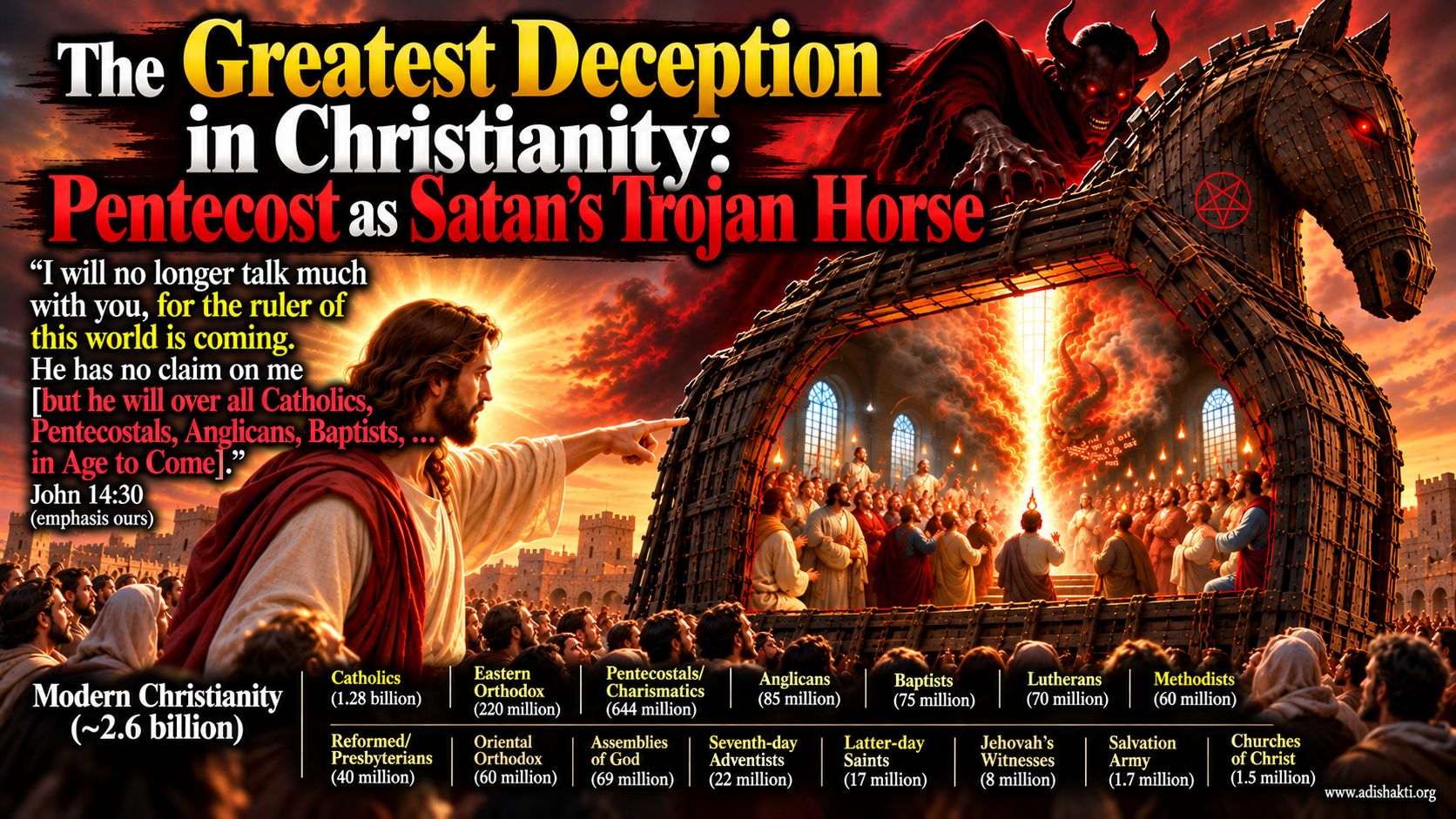
This paper advances a single, precise thesis: the event recorded in Acts 2 was not the outpouring of the Johannine Paraclete but a satanic infiltration—the coming of “the ruler of this world” (John 14:30) immediately after Jesus’ departure. The brief, spectacular phenomena of Pentecost neither taught “all things,” nor guided into “all the truth,” nor completed the work Jesus left unfinished; they therefore cannot be the fulfillment of the Farewell Discourse. The true Paraclete, a personal feminine divine agency who would declare the things to come, convict the world, and establish the Age to Come, arrived only in the twentieth century in the person and ministry of Shri Mataji Nirmala Devi (1970–2011). Pentecost stands as the greatest deception in human history: Satan’s Trojan Horse, planted inside Christianity at the precise moment the community was most vulnerable, so that institutional religion would thereafter claim the Spirit while systematically excluding the very one Jesus promised.
Introduction: The Thesis Stated with Precision
The central claim of this paper is not that Pentecost was imperfect, incomplete, or merely preliminary. It is that Pentecost was a deception. Specifically:
Thesis. The outpouring narrated in Acts 2 was the arrival of “the ruler of this world” (John 14:30), not the Holy Spirit / Paraclete promised by Jesus in the Farewell Discourse. The event functioned as Satan’s Trojan Horse, allowing the Adversary to penetrate the Christian movement at the moment of its institutional birth. The true Paraclete—personal, teaching, guiding into all truth, declaring the things to come, and completing Jesus’ unfinished work—was fulfilled only later, in the present Age to Come, through the life and ministry of Shri Mataji Nirmala Devi (21 March 1923 – 23 February 2011).
This claim is confessional and comparative-theological. It does not rest on the denial of historical phenomena in Jerusalem circa 30 CE; it rests on the mismatch between those phenomena and the explicit functional criteria Jesus himself established for the Paraclete, and on the chronological proximity of Jesus’ warning about the Prince’s coming to the promise of the Paraclete. The paper therefore proceeds by close reading of the Johannine texts, structural comparison with Acts 2, analysis of the Trojan-Horse mechanism, and identification of the later fulfillment.
The Last Supper Warning: Paraclete and Prince in the Same Breath
The Farewell Discourse (John 13–17) is the sole place in the New Testament where Jesus elaborates the identity, functions, and necessity of the Paraclete. Within that same discourse, and in immediate sequential proximity, Jesus issues a stark warning:
“I will no longer talk much with you, for the ruler of this world is coming. He has no claim on me.” (John 14:30, ESV)
The Greek is unambiguous: erchetai (is coming / is about to come). The ruler is not already present in full power; he is imminent. The warning occurs after Jesus has already promised “another Paraclete” (14:16), after he has described the Spirit of truth whom the world cannot receive (14:17), and before the further elaborations of 15:26 and 16:7–15. The literary architecture places the promise of the divine Helper and the warning of the satanic arrival inside the same farewell speech, on the same night, addressed to the same disciples who will shortly experience the events of Acts 2.
Jesus does not say that the ruler will come after a long interval, nor that the ruler will be kept at bay by the Paraclete’s immediate arrival. He says the ruler is coming—now, in the near future relative to the discourse. The most natural chronological reading is that the first major pneumatic event after Jesus’ departure is the one that must be scrutinized against the dual announcement: Paraclete promised, Prince warned.
John 14:30 and the Chronology of Infiltration
Mainstream Christian exegesis has traditionally restricted John 14:30 to the Passion itself: the ruler comes in the persons of Judas, the temple police, Pilate, and the cross. That reading is possible but incomplete. The Passion is the ruler’s attempt on Jesus; Jesus explicitly states that the ruler “has no claim on me.” The warning therefore points beyond the Passion to a subsequent arrival aimed not at Jesus but at the community that will remain.
After the resurrection and ascension, the first public, spectacular, community-forming pneumatic event is Acts 2. If the ruler is coming, and if the Paraclete has not yet arrived in the full sense required by the Johannine criteria (see next section), then the event that fills the chronological gap is the event that must be examined as possible infiltration. The paper does not claim that every participant in Acts 2 was conscious of deception; Trojan horses succeed precisely because the recipients believe they are receiving a gift.
The Structural Deficits of Acts 2 vis-à-vis the Johannine Criteria
Jesus’ own description of the Paraclete’s work supplies the evaluative grid. The relevant functions are:
1. Teaching all things and reminding of all that Jesus said (John 14:26).
2. Guiding into all the truth (John 16:13).
3. Declaring the things that are to come (John 16:13).
4. Convicting the world concerning sin, righteousness, and judgment (John 16:8–11).
5. Glorifying Jesus by taking what is his and declaring it (John 16:14).
6. Remaining with the disciples forever (John 14:16).
Acts 2 records wind, tongues of fire, speaking in other languages, and a sermon by Peter that interprets the event through Joel 2 and asserts that Jesus is Lord and Messiah. None of these phenomena satisfies the Johannine list:
– There is no teaching of “all things.” The content is a short Christological proclamation, not the exhaustive instruction Jesus said the disciples could not yet bear (16:12).
– There is no guidance into “all the truth.” The event produces immediate missionary expansion, not the progressive unveiling of previously withheld truth.
– There is no declaration of “the things that are to come” beyond the standard early Christian expectation of an imminent return. The eschatological horizon remains the same as that already present in the Synoptics.
– The conviction of the world is limited to the immediate hearers in Jerusalem; it does not inaugurate the sustained, public, judicial exposure of the world’s false judgment concerning Jesus that John 16:8–11 requires.
– The Paraclete is to remain “forever.” A single day’s phenomena, however powerful, cannot exhaust a forever presence.
The brevity of Acts 2 is itself decisive. Jesus left “many things” unsaid because the disciples could not bear them (16:12). A few hours of ecstatic speech and a single sermon do not constitute the bearing of those many things. The work remained unfinished; therefore the agent of completion had not yet come.
Pentecost as Trojan Horse: Mechanism and Historical Consequence
A Trojan Horse succeeds when the defenders themselves open the gates, believing they are receiving a benefit. In the days after the Ascension the disciples were waiting for “the promise of the Father” (Acts 1:4). They were psychologically and theologically primed to interpret any dramatic pneumatic event as that promise. The ruler of this world, having failed to claim Jesus, now targets the community that will carry Jesus’ name. The event of Acts 2 supplies spectacular validation, rapid numerical growth, and an interpretive framework (Joel 2, Davidic psalms) that appears continuous with Jewish expectation. The community therefore accepts the event as the Spirit and builds its entire subsequent pneumatology upon it.
The historical consequence is the institutionalization of a truncated pneumatology. Christianity thereafter claims to possess the Spirit while systematically excluding any later personal agent who would fulfill the full Johannine job description. The Church becomes the permanent broker of a Spirit whose decisive teaching and guidance never fully arrive. False brokers multiply (cf. Tricia Gates Brown’s analysis of the Paraclete as “true broker”). The Trojan Horse is inside the walls; the real Paraclete is locked out by the very claim that the Spirit has already come.
The Age to Come and the Delayed Paraclete
The New Testament consistently distinguishes “this age” from “the age to come” (Matt 12:32; Mark 10:30; Luke 18:30; Eph 1:21; Heb 6:5). Realized eschatology does not abolish the distinction; it asserts that certain blessings of the age to come can already be tasted. The Johannine Paraclete, however, is tied to the completion of Jesus’ work and to the disclosure of truths the first disciples could not bear. That completion belongs to the age to come.
If the age to come is identified with the period inaugurated by the opening of the Sahasrara on 5 May 1970 and the subsequent global ministry of Shri Mataji Nirmala Devi, then the chronological sequence becomes coherent: Jesus promises the Paraclete and warns of the Prince; the Prince enters at Pentecost; the true Paraclete arrives only when the age to come begins. The present age is therefore the Age to Come in which the incomplete work is finished.
Shri Mataji Nirmala Devi as the True Paraclete
The identification rests on functional correspondence, not on verbal identity of titles. Shri Mataji’s public ministry (1970–2011) exhibits the precise verbs Jesus used:
– She taught continuously and systematically about the residual spirit, the subtle system, the Kingdom within, and the meaning of Jesus’ own words, repeatedly stating that the time had come to speak openly what had been withheld.
– She guided seekers into the experience of the Spirit (Self-realization) on a mass scale, claiming that the knowledge of the roots of all religions was now being given.
– She declared the things to come: the evolutionary step of the human being into the Spirit, the collective resurrection, the establishment of the Kingdom of God on earth through individual transformation.
– She convicted institutions and individuals concerning sin (the falsehood of organized religion without Self-realization), righteousness (the pure desire that alone opens the Sahasrara), and judgment (the rejection of the Mother).
– She glorified Jesus by insisting that his promise of the Comforter / Spirit of Truth was being fulfilled in her, and by directing attention back to his words rather than to herself as an independent founder.
– Her presence is claimed to remain forever through the awakened Kundalini and the residual vibrations in those who received realization.
Grammatical femininity of the Syriac ruḥā and early maternal imagery supply supporting (not decisive) linguistic background; the decisive criterion remains the functional match with the Farewell Discourse. The claim is therefore confessional synthesis grounded in comparative exegesis, not in the erasure of historical Christianity.
Anticipated Objections and Replies
Objection 1. Acts 2 is explicitly the fulfillment of the promise of the Spirit.
Reply. Acts 2 claims fulfillment of Joel and of Jesus’ words about power from on high (Luke 24:49; Acts 1:8). It never uses the Johannine term Paraclete, nor does it claim to fulfill the specific teaching, guiding, and declaring functions of John 14–16. The Lukan and Johannine pneumatologies are not identical; the paper privileges the more detailed Johannine criteria.
Objection 2. John 14:30 refers only to the Passion.
Reply. The Passion is the ruler’s attack on Jesus, which Jesus says fails (“he has no claim on me”). The warning of a coming that succeeds in affecting the community is left open. The chronological proximity of the warning to the promise of the Paraclete makes the post-Ascension event the natural candidate.
Objection 3. Identifying any later human teacher as the Paraclete is heretical.
Reply. The charge of heresy presupposes that the Paraclete’s work was completed at Pentecost. If that presupposition is itself the deception under examination, the charge begs the question. The paper’s criterion is fidelity to Jesus’ own functional description, not fidelity to later ecclesiastical consensus.
Objection 4. Spectacular phenomena prove divine origin.
Reply. Scripture itself records that false signs and wonders can accompany deception (Matt 24:24; 2 Thess 2:9). The evaluative grid is not the presence of power but the presence of the specific teaching and guiding functions Jesus required.
Conclusion: The Greatest Deception Named
The greatest deception in human history is not a single lie told by a single person; it is the successful installation of a counterfeit Spirit at the founding moment of the Christian movement. By entering as wind, fire, and tongues, the ruler of this world obtained permanent residence inside the institution that claimed to possess the Spirit. Thereafter every later claim to further revelation could be dismissed as unnecessary or demonic, because “the Spirit has already come.” The unfinished work of Jesus—the many things the disciples could not yet bear—remained unfinished. The true Paraclete was delayed until the Age to Come, when Shri Mataji Nirmala Devi appeared and performed precisely the functions Jesus had described.
Pentecost was Satan’s Trojan Horse. The gates were opened by those who believed they were receiving the gift of God. The real gift arrived two millennia later. The present age is the Age to Come in which that gift is finally given. Recognition of the deception is the first step toward receiving the truth that the deception was designed to prevent.
References
Brown, Tricia Gates. Spirit in the Writings of John. London: T&T Clark, 2003.
Bucaille, Maurice. The Bible, the Qur’an and Science. Indianapolis: American Trust Publications, 1976.
Eve, Eric. The Jewish Context of Jesus’ Miracles. Sheffield: Sheffield Academic Press, 2002.
Kysar, Robert. John. Minneapolis: Augsburg, 1986.
Kysar, Robert. Voyages with John: Charting the Fourth Gospel. Waco: Baylor University Press, 2005.
Ladd, George Eldon. A Theology of the New Testament. Rev. ed. Grand Rapids: Eerdmans, 1993.
Moloney, Francis J. The Gospel of John. Collegeville: Liturgical Press, 1998.
Sadananda, Daniel Rathnakara. The Johannine Exegesis of God. Berlin: de Gruyter, 2004.
Smalley, Stephen S. Cited in Marianne Meye Thompson, The God of the Gospel of John. Grand Rapids: Eerdmans, 2001.
Stevick, Daniel B. Jesus and His Own: A Commentary on John 13–17. Grand Rapids: Eerdmans, 2011.
Strecker, Georg. Theology of the New Testament. Louisville: Westminster John Knox, 2000.
Thompson, Marianne Meye. The God of the Gospel of John. Grand Rapids: Eerdmans, 2001.
Welker, Michael. God the Spirit. Minneapolis: Fortress, 1994.
Welker, Michael. The Work of the Spirit: Pneumatology and Pentecostalism. Grand Rapids: Eerdmans, 2006.
Primary texts: Gospel of John 13–17; Acts 1–2; relevant Synoptic and Pauline eschatological passages.
Adishakti.org Paraclete Papers series, especially “Pentecost, the Prince, and the Age to Come” (2026).
Paraclete Papers
- PART ONE:An Investigative Report on Christianity's Greatest Cover-Up
- PART TWO:The Paraclete's Human Personality and the Theological Fallacy of Pentecost
- PART THREE:The Greatest Deception in Human History: Pentecost as Satan's Trojan Horse
- PART FOUR:Unveiling the Church Born from the Prince of This World's Millennia of Deception
- PART FIVE:Apokalypsis: The Paraclete’s Fulfillment of Jesus’ Eschatological Promise
- PART SIX:The Paraclete and Pentecost: A Critical Analysis of Johannine Eschatology
- PART SEVEN:The Mother Kundalini as the Holy Spirit Who Gives Second Birth

 |
“I conclude the chapter by suggesting that the teaching of the Holy Spirit/Paraclete, because it is understood as the continuation of Jesus' teaching, is also regarded as the fulfillment of the promise of eschatological divine instruction.” Stephen E. Witmer Divine instruction in Early Christianity Witmer is especially relevant to the Paraclete Papers because he explicitly connects the Spirit-Paraclete’s continuing instruction with eschatological fulfillment. His formulation supports the paper’s central question: whether Jesus’ promise concerns an enduring ministry of divine teaching that cannot be reduced to the single event of Pentecost. |
 |
“And when Jesus foreannounced another Comforter, He must have intended a Person as distinct and helpful as He had been. A breath, an afflatus, an impersonal influence could not have stood in the same category as Himself.” F. B. Meyer, Love to the Utmost Meyer’s argument turns on the expression “another Comforter.” Because Jesus presents the coming figure in continuity with His own personal ministry, Meyer reasons that the promised Comforter must possess recognizable personal agency. This bears directly on the Paraclete Papers’ distinction between a person who teaches and an impersonal spiritual influence. |
 |
“There is something new and startling in both his person and his teaching that defies the categories provided by the world and culture in which he lived. It is clearest in all its radical nature in Jesus' insistence that in his person and activity God's decisive intervention was already present:” Francis Moloney, A Hard Saying Moloney places Jesus within the category of decisive divine intervention already entering history. This provides an important eschatological parallel for the Paraclete Papers: fulfillment need not be confined to a remote end-time event, but may become historically present through a divinely commissioned person and activity. |
 |
“The Paraclete has a twofold function: to communicate Christ to believers and, to put the world on trial.” Robert Kysar, John The Meverick Gospel Kysar is especially relevant because he gives the Paraclete a twofold ministry: communicating Christ to believers while also placing the world under judgment. The formulation joins revelation and discernment in a single mission. For the Paraclete Papers, this means fulfillment cannot be measured by spiritual experience alone; it must also account for a continuing ministry that makes Christ known, exposes error, and confronts the world with the meaning of Jesus’ life and teaching. |
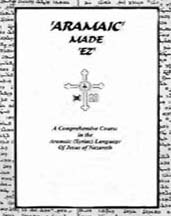 |
“But She—the Spirit, the Paraclete...—will teach you everything.” Danny Mahar, Aramaic Made EZ) Mahar is important to the Divine Feminine dimension of the Paraclete Papers because his rendering presents the Spirit-Paraclete with feminine reference while retaining the decisive Johannine promise that the Paraclete will teach. The significance is therefore not grammatical gender alone. The passage combines personal agency with instruction: the promised Spirit teaches, communicates, and continues revelation. This makes the citation relevant to both the paper’s gender question and its argument that the Paraclete’s ministry is identifiable through teaching. |
 |
“Grammatical nonsense but evidence of the theological desire to defeminize the Divine.” Lucy Reid, She Changes Everything Reid is relevant because her observation raises the question of how grammatical choices and later theological conventions have shaped Christian language for the Spirit. The issue matters to the Paraclete Papers because John portrays the Paraclete through personal actions—teaching, reminding, witnessing, speaking, guiding, and declaring. Reid therefore provides a useful bridge between the debate over feminine divine language and the larger question of whether inherited terminology has narrowed how Christians imagine the personal agency of the promised Spirit. |
 |
“The functions of the Paraclete spelled out in verses 13-15... are all acts of open and bold speaking in the highest degree.” David Fleer, Preaching John's Gospel Fleer is especially relevant because John 16:13–15 describes the Paraclete through acts of guiding, hearing, speaking, and declaring. His emphasis on open and bold speech makes intelligible communication central to the promised ministry. For the Paraclete Papers, this is an important criterion of fulfillment: the Johannine Paraclete is not described merely as an occurrence of spiritual power, but as an active revealer who communicates truth, interprets what belongs to Christ, and makes that revelation known to others. |
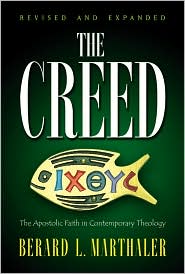 |
“The reaction of the world to the Paraclete will be much the same as the world's reaction was to Jesus.” Berard L. Marthaler, The Creed: The Apostolic Faith in Contemporary Theology Marthaler is important because he identifies a deliberate Johannine parallel between the world’s response to Jesus and its response to the Paraclete. The comparison concerns recognition as well as rejection: John says that the world cannot receive the Spirit of truth because it neither sees nor knows the Paraclete. For the Paraclete Papers, this means that non-recognition does not automatically disqualify a claimed fulfillment; the Gospel itself anticipates resistance to the promised figure in a pattern resembling the world’s response to Jesus. |
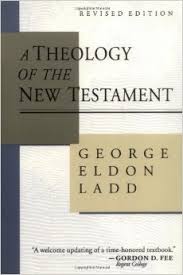 |
Bultmann calls the “coming of the Redeemer an 'eschatological event,' 'the turning-point of the ages.” G. Ladd, A Theology of the New Testament Ladd is relevant because the language of an eschatological “turning-point of the ages” places the coming of the Redeemer within the larger problem of realized eschatology. The citation helps the Paraclete Papers ask whether divine fulfillment can become historically present while still pointing toward a future consummation. Applied to the Johannine promise, this provides a framework for considering the Paraclete as a continuing presence and ministry rather than assuming that every dimension of Jesus’ promise was exhausted by the single event of Pentecost. |
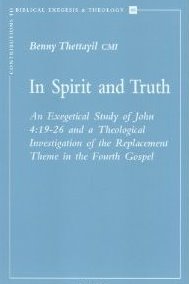 |
“The Paraclete equated with the Holy Spirit, is the only mediator of the word of the exalted Christ.” Benny Thettayil, In Spirit and Truth Thettayil is especially relevant because he identifies the Spirit-Paraclete as mediator of the word of the exalted Christ. This closely corresponds to John 16:13–15, where the Paraclete hears, speaks, receives what belongs to Christ, and declares it to the disciples. For the Paraclete Papers, the point establishes continuity: the promised Paraclete does not replace Jesus with an unrelated revelation, but continues and mediates His teaching after His departure. Teaching and transmission therefore become central marks of the promised ministry. |
 |
“The divine Paraclete, and no lessor agency, must show the world how wrong it was about him who was in the right.” Daniel B. Stevick , Jesus and His Own: A Commentary on John 13-17 Stevick is important because he emphasizes the judicial dimension of the Paraclete’s ministry. In John 16, the world’s judgment concerning Jesus is itself overturned: the Paraclete demonstrates that the world was wrong about the one who was truly in the right. For the Paraclete Papers, this expands the promise beyond consolation or inward inspiration. The Paraclete must also correct error, interpret the meaning of Christ, and disclose judgment—functions that give the promised ministry a public, revelatory, and eschatological character. |
 |
Stephen Smalley asserts that “The Spirit-Paraclete ... in John's Gospel is understood as personal, indeed, as a person.” Marianne Thompson, The God of the Gospel of John Thompson’s citation of Stephen Smalley is significant because it directly addresses whether John presents the Spirit-Paraclete as personal rather than merely as a force or influence. The Gospel repeatedly attributes personal actions to the Paraclete: teaching, reminding, witnessing, hearing, speaking, guiding, and declaring. For the Paraclete Papers, this strengthens the distinction between a sustained personal ministry and an interpretation that reduces fulfillment to an impersonal manifestation of spiritual power at Pentecost. |
 |
“The Messiah will come and the great age of salvation will dawn (for the pious).” Eric Eve, The Jewish context of Jesus' Miracles Eve’s statement supplies the Jewish eschatological background against which early Christian expectations of Messiah, salvation, and the age to come developed. The coming of the Messiah is associated with the dawning of a great age of salvation rather than with an isolated religious experience. For the Paraclete Papers, this wider horizon is useful because it places Johannine language about Spirit, revelation, judgment, and eternal life within an expectation of decisive divine intervention that transforms the religious situation of humanity. |
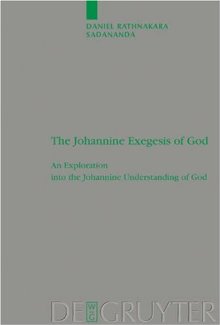 |
“The remembrance is to relive and re-enact the Christ event, to bring about new eschatological decision in time and space.” Daniel Rathnakara Sadananda, The Johannine Exegesis of God Sadananda is especially relevant because he interprets Johannine remembrance as more than the recovery of past information. To remember Christ is to relive and re-enact the Christ event so that its revelatory significance becomes present in a new time and place. This gives the Paraclete’s work in John 14:26 an ongoing eschatological dimension. For the Paraclete Papers, remembrance therefore supports the idea of continuing revelation: Jesus’ teaching is made living and effective beyond the lifetime of the original disciples. |
 |
“The Spirit acts in such an international situation as the revealer of 'judgment' on the powers that rule the world.” Michael Welker, God the Spirit Welker is relevant because he presents the Spirit as revealer of judgment upon powers that rule the world. This closely parallels John 16:8–11, where the Paraclete exposes the truth concerning sin, righteousness, and judgment. For the Paraclete Papers, the citation shows that the Spirit’s work cannot be confined to inward consolation or private mystical experience. The promised ministry also has a public dimension: it interprets the world, challenges false judgment, and reveals the spiritual significance of powers and events. |
 |
The Paraclete's “Appearance means that sin, righteousness, and judgment will be revealed.” Georg Strecker, Theology of the New Testament Strecker is especially relevant because he concentrates attention on the three categories named in John 16: sin, righteousness, and judgment. The Paraclete’s appearance is therefore revelatory and judicial, disclosing realities that the world has misunderstood. For the Paraclete Papers, these functions provide concrete criteria for examining fulfillment. The promised Spirit is not described only as a source of inspiration; the Paraclete also exposes error, interprets the meaning of Jesus, and brings the world’s assumptions under divine judgment. |
 |
“While the Spirit-Paraclete is the true broker, the brokers they rely on are impostors.” T. G. Brown, Spirit in the writings of John Brown’s description of the Spirit-Paraclete as the “true broker” highlights the problem of mediation and religious authority. A broker communicates and mediates access; in Johannine terms, the Paraclete mediates the revelation of Christ to the believing community. For the Paraclete Papers, the contrast with false brokers raises an important question: how is authentic divine mediation recognized when institutions and interpreters also claim authority to speak for God? The Gospel’s functions of teaching, testimony, guidance, and declaration become relevant criteria. |
 |
“The pneumatological activity ... of the Paraclete ... may most helpfully be considered in terms of the salvific working of the hidden Spirit.” Michael Welker, The work of the Spirit Welker is relevant because his description of the salvific working of the “hidden Spirit” cautions against identifying divine activity only with spectacular manifestations. The Spirit may work through revelation, transformation, discernment, and continuing mediation even when that activity is not immediately recognized by the wider world. For the Paraclete Papers, this provides a useful pneumatological framework for reconsidering fulfillment after Pentecost: continuing divine activity need not reproduce the outward form of Acts 2 in order to remain spiritually significant. |
 |
“The pneuma is the peculiar power by which the word becomes the words of eternal life.” Robert Kysar, Voyages with John Kysar is relevant because he links pneuma with the power by which the word becomes “words of eternal life.” The Spirit therefore does more than accompany proclamation; the Spirit makes revelation living and effective for those who receive it. For the Paraclete Papers, this reinforces the importance of the Johannine verbs of teaching, reminding, speaking, and declaring. A proposed fulfillment should be examined not only for manifestations of power but also for its relationship to revelatory words that communicate spiritual life. |
 |
“The gift of peace, therefore, is intimately associated with the gift of the Spirit-Paraclete.” Francis J. Moloney, The Gospel of John Moloney is relevant because he connects Jesus’ gift of peace directly with the gift of the Spirit-Paraclete in the farewell discourse. Peace is therefore not merely an emotional state but part of the continuing divine presence promised to the disciples after Jesus’ departure. For the Paraclete Papers, this broadens the criteria for considering fulfillment beyond teaching and testimony alone. The promised ministry is also associated with an experienced spiritual peace that accompanies the continuing presence of Christ through the Paraclete. |
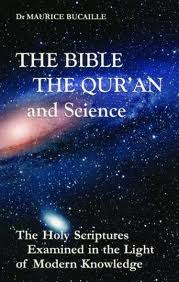 |
“Jesus therefore predicts that God will later send a human being to Earth to take up the role defined by John .i.e. to be a prophet who hears God's words and repeats his message to man.” M. Bucaille The Bible, the Qur'n, and Science Bucaille is included as a comparative interpretation because he reads the Johannine promise as anticipating a later human messenger who hears divine words and communicates them to humanity. Whether or not that interpretation is accepted, it demonstrates that John 16:13 has generated readings substantially different from the conventional identification of the promise solely with Pentecost. For the Paraclete Papers, the citation is useful because it keeps attention on the text’s language of hearing, speaking, transmission, and personal agency. |
 |
“This utopian hope, even when modestly expressed, links Jesus and the prophets to a much wider history of human longing.” Harvey Cox, The Future of Faith Cox is relevant because he places Jesus and the prophets within a much wider history of human hope for transformation. Eschatological expectation is therefore not merely curiosity about future events; it expresses a persistent longing for divine intervention, justice, renewal, and a different order of life. For the Paraclete Papers, this broadens the setting of the Johannine promise. The coming of the Paraclete can be considered within Christianity’s larger expectation that divine action will continue to transform human history and consciousness. |
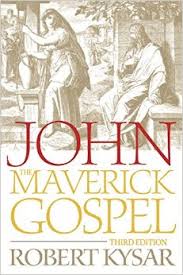 |
“Because of the presence of the Paraclete in the life of the believer, the blessings of the end-times—the eschaton—are already present.” Robert Kysar, John Kysar is especially relevant because he connects the presence of the Paraclete with blessings of the eschaton already becoming present in the believer’s life. This is a clear expression of realized eschatology: realities associated with the end-time can be experienced within the present. For the Paraclete Papers, that framework helps bridge future promise and present spiritual experience. It allows the Paraclete’s ministry to be considered as an active fulfillment in history without requiring every dimension of eschatological expectation to be already completed. |
 |
“They are going, by the Holy Spirit's power, to be part of the greatest miracle of all, bringing men to salvation.” R. Picirilli, The Randall House Bible Commentary Picirilli is relevant because he presents the Holy Spirit’s power as continuing through the disciples’ mission of bringing people to salvation. Pentecost therefore functions as an empowering beginning rather than as the termination of everything that can subsequently be said about the Spirit’s activity. For the Paraclete Papers, this distinction is important: Acts 2 may inaugurate Spirit-empowered mission while the Johannine promises of teaching, remembrance, testimony, guidance, declaration, and judgment continue to require theological consideration beyond that initial event. |
|
“The Kingdom of God stands as a comprehensive term for all that the messianic salvation included... is something to be sought here and now (Mt. 6:33) and to be received as children receive a gift (Mk. 10:15 = Lk. 18:16-17).” G. Ladd, A Theology of the New Testament Ladd is relevant because the language of an eschatological “turning-point of the ages” places the coming of the Redeemer within the larger problem of realized eschatology. The citation helps the Paraclete Papers ask whether divine fulfillment can become historically present while still pointing toward a future consummation. Applied to the Johannine promise, this provides a framework for considering the Paraclete as a continuing presence and ministry rather than assuming that every dimension of Jesus’ promise was exhausted by the single event of Pentecost. |
💬 Interactive Chat
Explore this article, its sources, and the relationships among its theological and evidentiary claims.
Open chat →