The Paraclete Papers: Part Four of Seven
Summary
This paper critically examines the Catholic Church’s institutional claims and proposes a controversial interpretation of Pentecost. Its identification of Pentecost with the Prince of this World is a theological thesis, not a historically demonstrated fact.
Introduction
The Paraclete Papers is a seven-part theological investigation into what this series identifies as one of Christianity’s greatest deceptions: the attribution of Pentecost to the arrival of the Paraclete–Holy Spirit. Across seven interconnected studies, the series challenges the foundations of ecclesiastical authority, examines the historical development of the papacy, and reconsiders Jesus’ promises concerning the coming Spirit of Truth.
The central thesis is unequivocal: the Church that claims Pentecost as its divine beginning bears, in its institutional history, what this investigation interprets as the characteristics of the “prince of this world” rather than the liberating ministry of the promised Paraclete. The series argues that religious coercion, fabricated claims to authority, institutional corruption, and the suppression of spiritual freedom are not merely accidental departures from an otherwise divine foundation. They constitute a sustained pattern demanding a fundamental reconsideration of that foundation itself.
The purpose of these seven papers is to establish, through cumulative scriptural interpretation, historical examination, and theological argument, the series’ conclusion that the institutional Church’s origins are satanic in nature. Each part develops a distinct dimension of this case, from the alleged Pentecostal deception to the personal identity and eschatological mission of the Paraclete, culminating in the identification of the Mother Kundalini as the Holy Spirit who grants spiritual rebirth.
Taken together, the seven papers are intended to leave the reader in no doubt about the series’ conclusion: Pentecost was not the promised fulfillment of the Paraclete’s mission but the beginning of a profound religious deception. This is the investigation’s theological judgment; it is distinct from what historical evidence alone can demonstrate.
This investigation therefore goes beyond exposing abuses within Christianity. It confronts the foundational claim that the institutional Church was founded and governed by the Holy Spirit, presenting the promised Paraclete as the divine answer to two millennia of religious deception, counterfeit Christianity, and usurped authority.
The governing question is not simply whether the Church departed from its divine origins, but whether the institution’s historical conduct reveals that its claimed divine origin was a counterfeit authority in the place of Christ—an antichrist spirit of substitution and deception by Satan from the beginning, the very “prince of this world” whose coming Jesus explicitly warned of in John 14:30.
Read the complete seven-part investigation: Paraclete Papers — Parts One through Seven.
Thesis
The Roman Catholic Church’s claim to have been born at Pentecost under the direct guidance of the Holy Spirit cannot survive an honest confrontation with its own history. The papacy’s later doctrines of supreme jurisdiction and infallibility, its reliance on forged documents, its centuries of moral scandal, and its use of coercion against dissent expose an institution whose governing instincts were often worldly, authoritarian, and self-serving. This paper argues—harshly and without sentimental deference—that the Catholic Church’s institutional history is better explained not as the corruption of a divine foundation, but as the exposure of a foundation built on power, myth, and deception. britannica
The most radical form of that argument is theological: Pentecost was not the coming of the Paraclete but the arrival of the “prince of this world” warned of in John 14:30. That claim cannot be proven by historical method alone; it is an interpretation of Scripture and church history. But it gives coherent shape to a pattern that conventional Catholic apologetics struggles to explain: an institution claiming divine authority repeatedly behaving as though its highest loyalty were not truth, humility, or the poor, but survival, wealth, and control.
The Manufactured Rock: A Late Papacy
Catholicism presents the pope as Peter’s successor, invested by Christ with supreme authority over the whole Church. Yet the doctrine that the Bishop of Rome possesses “full and supreme power of jurisdiction over the whole Church,” together with papal infallibility, was formally defined only at the First Vatican Council in 1870 in Pastor aeternus. britannica
That date matters. A doctrine said to be essential to Christ’s Church from the beginning was, in its most absolute modern form, defined nearly nineteen centuries after Christ. Vatican I declared that when a pope speaks ex cathedra on faith or morals, his definitions are “irreformable” and derive from divine assistance promised to Peter. But if this authority had always belonged to the Church’s constitution, why did it require a nineteenth-century council—amid fierce resistance from many bishops—to define it? britannica
The early Church did not operate as a centralized papal monarchy. Disputes were commonly addressed through councils, regional synods, and the collective authority of bishops. Rome was honored, partly because of its association with Peter and Paul and its imperial prominence, but honor is not the same as universal legal jurisdiction. The later papal monarchy was not simply recovered; it was constructed.
The Silence of the Fathers
Peter de Rosa’s Vicars of Christ makes the central objection bluntly: the earliest Christian writers do not present anything resembling the modern papal system. They do not consistently treat the bishop of Rome as the final court of appeal for the whole Church, nor do they derive all doctrine from him. If Christ instituted a worldwide papal monarchy, its absence from the earliest centuries is not a minor embarrassment; it is a foundational problem.
Catholic apologists answer that doctrine develops. But there is a difference between development and invention. Development explains how an implicit principle becomes clearer over time; invention explains how a later institution retroactively projects its own power back onto the apostolic age. The papacy’s historical trajectory looks much more like the second.
The Eastern churches never accepted the Roman bishop’s claimed universal jurisdiction. That fact alone undermines the claim that papal supremacy was always the obvious, divinely willed structure of Christianity. A doctrine that half of ancient Christianity could reject without ceasing to be Christian is not self-evidently apostolic.
A Foundation of Forgery
No episode damages Rome’s credibility more than the Donation of Constantine. This forged imperial decree purported to show that Constantine had granted the pope authority over Rome and the western empire. It became a major support for papal claims to temporal power. en.wikipedia
The forgery was exposed by Lorenzo Valla in 1439–1440 through philological and historical analysis. Valla showed that its language and assumptions belonged not to Constantine’s fourth-century world but to a later era, most plausibly the eighth century. The document was a fraud, and its fraudulence is now broadly accepted. en.wikipedia
The scandal is not merely that someone forged a document. It is that an institution claiming to be the infallible guardian of truth used a fabrication to justify earthly rule. A church genuinely founded on the Holy Spirit does not need counterfeit imperial decrees to establish its authority. A worldly kingdom does.
Purgatory, Indulgences, and the Marketplace of Salvation
The doctrine of purgatory and the traffic in indulgences reveal the same institutional instinct: the conversion of spiritual anxiety into institutional revenue. The medieval Church taught that souls in purgatory could be aided by indulgences; in practice, this created a system in which forgiveness, relief, and spiritual privilege could be tied to money.
The abuse surrounding Johann Tetzel’s sale of indulgences for Pope Leo X helped provoke Martin Luther’s Reformation. Luther’s objection was not merely that individual priests were corrupt. It was that the system itself had turned grace into a commodity and repentance into a transaction.
A church that sells assurances about the fate of souls has not merely failed morally. It has revealed a theology of control: salvation mediated through an institution, priced through its machinery, and enforced through its authority.
Violence as Governance
The Inquisition, crusades against dissenting Christians, and the persecution of heretics demonstrate that the medieval papacy did not merely possess temporal power; it used violence to preserve doctrinal monopoly. The Albigensian Crusade against the Cathars is especially damning. Dissenting Christians were not patiently corrected by apostolic persuasion; they were crushed by armed force with papal sanction.
The phrase “Kill them all; God will know his own,” associated with the sack of Béziers, has become a symbol of religious violence justified as obedience. Whether every detail of its transmission is debated, the broader historical reality is not: religious dissent was treated as treason, and treason was punished by fire.
This is not the ethic of Jesus, who told his followers to love enemies, refuse retaliation, and reject domination. It is the ethic of an institution that learned to call its own power sacred.
Moral Collapse at the Summit
The papacy’s history includes popes whose lives mocked the Gospel they claimed to guard. Corruption, simony, sexual scandal, nepotism, political intrigue, and open worldliness were not marginal features of medieval Catholicism. They appeared at the highest levels of the institution.
The Borgia papacy of Alexander VI is perhaps the most notorious example, but it is not an isolated one. When the men claiming to be Christ’s vicars behave like Renaissance princes—accumulating wealth, placing relatives in power, waging wars, and indulging in scandal—the problem is not simply personal sin. It is a structure that concentrates enormous unaccountable power in one office and then asks the world to believe that this office is divinely protected.
The Catholic response is that the Church is holy despite sinful members. That answer has force when applied to individual failure. It loses force when corruption is systemic, when authority is used to conceal abuse, when wealth and coercion become instruments of governance, and when the institution claims that its own power structure is divinely guaranteed.
Pentecost Reinterpreted
Catholicism calls Pentecost the Church’s birthday. Acts 2 describes wind, fire, languages, preaching, and conversion. Catholic tradition reads this as the Holy Spirit founding the Church.
This paper’s harsher reading is different. Jesus warns in John 14:30 that “the prince of this world” is coming. If Pentecost inaugurated an institution that would become a temporal empire—forging documents, selling salvation, burning dissenters, crowning emperors, and demanding submission to Rome—then the traditional reading looks naive. The “tongues of fire” become not the birth of humility but the consecration of ambition.
This is not a claim that can be established with archival evidence. It is a theological judgment about spiritual fruit: “By their fruits you will know them.” But as an interpretation, it has a terrible coherence. The Church that emerged from Rome did not chiefly resemble a servant community awaiting the Kingdom of God. It resembled an empire: hierarchical, wealthy, legalistic, coercive, and jealous of rival authority.
Conclusion: Not a Fallen Church, but a Worldly One
The Catholic Church asks the world to believe that its authority descends from Christ through Peter, that its pope inherits supreme jurisdiction, and that its definitive teachings are protected from error. History replies with the Donation of Constantine, the late definition of infallibility, the Inquisition, indulgences, papal corruption, and the suppression of dissent. britannica
The evidence does not prove that every Catholic believer is insincere, that every priest is corrupt, or that no good has ever come from Catholic Christianity. It proves something more damaging: the institutional Church’s claim to divine, infallible authority is historically and morally indefensible.
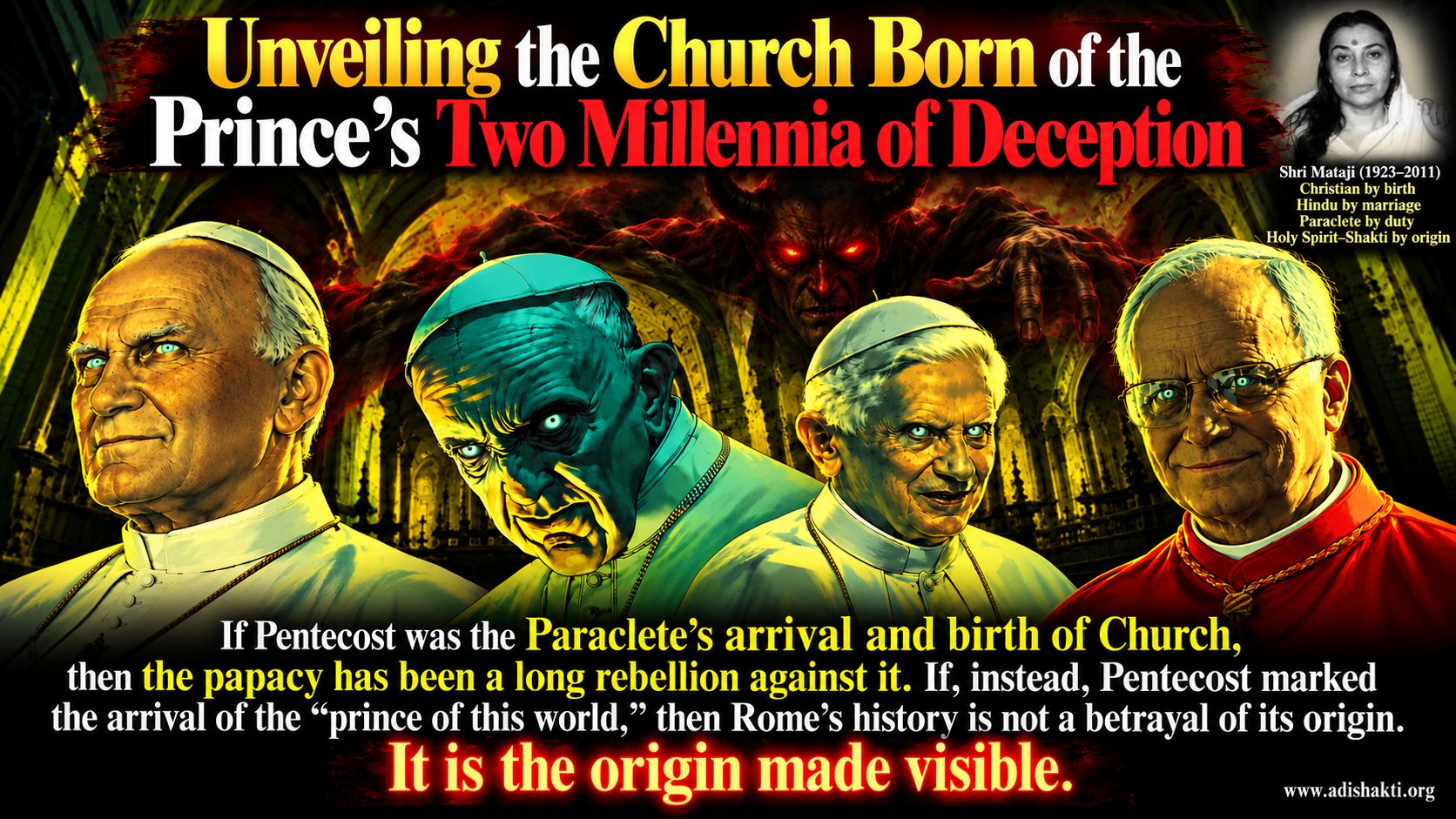
If Pentecost was the Paraclete's arrival and birth of Church, then the papacy has been a long rebellion against it. If, instead, Pentecost marked the arrival of the “prince of this world,” then Rome’s history is not a betrayal of its origin. It is the origin made visible.
Vicars of Christ — The Dark Side of the Papacy
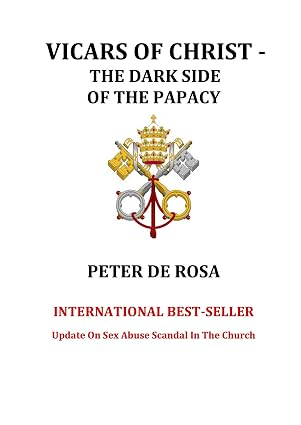
Vicars of Christ - The Dark Side of the Papacy: International Best-Seller - Update on Sex Abuse Scandal in the Church
By Peter de Rosa (Editor). Format: Kindle Edition. Customer reviews (65).
The following published review excerpts were supplied for this edition. They describe the reception of de Rosa’s examination of the papacy; they are not quotations from de Rosa’s own text.
Some Reviews — Vicars of Christ: The Dark Side of the Papacy
“A scholarly look at an institution that refuses to change to meet the needs of contemporary Catholics. It may also be one of the most important looks at the papacy in a century.”
— Seattle Post-Intelligencer, USA
“Brilliant scholarship, sinewy writing, and blazing moral fervour will not overcome the objections of some who will accuse de Rosa of fermenting sour grapes. Others will savour this like fine wine. Whatever the palate, no one will mistake this very potent brew for soda pop.”
— Kirkus Reviews, USA
“Vicars of Christ is a book written by a loyal Catholic with impeccable academic credentials, who has done the monumental research in gathering information from many sources, including that buried in the Vatican archives.”
— Catholic Free Press, USA
“The intention of the book is more than mere scandalized sensationalism. Its passionately expressed hope is that a frank examination of the past should lead to greater tolerance, both over issues such as divorce, and in the recognition and integration of other Christian churches.”
— Sunday Times, UK
“The papacy has produced some thoroughly rotten fruits over the centuries. In these days of ecumenical chumminess it is highly unfashionable to point this out which makes Vicars of Christ bold indeed.”
— Yorkshire Post, UK
“This book has everything we never wanted to know about the supreme pontiffs - cruelty, simony, nepotism, despotism and sex, sex in forms, places and positions that left this reviewer gasping at clerical ingenuity.”
— Sunday Tribune, Ireland
“A spellbinding historical account of the darker side of the papacy.”
— Sunday Press, Ireland
“This is a very rare book - the perfect balance between impeccable research and compulsive reading.”
— Gordon Thomas, author of Pontiff
“Those who like me have tended to look only at the bright side of the papacy will find its pitiless search of the dark side shattering.”
— H. J. Richards, Professor of Scripture, University of East Anglia
“The message is clear. De Rosa finds it impossible to reconcile "God will provide" and "Multiply and fill the earth" with a Mexican mother of 12 living in squalor. De Rosa calmly plays the Devil's Advocate. He opens the stained glass windows and clearly outlines the evolution of the Roman Church's teachings, too often shaped by the whims of corrupt and fanatical popes.”
— Dublin Evening Herald, Ireland
“Popes sex and propaganda have been mixing for too long and de Rosa tries to remind the powers-that-be that their claims of infallibility mixed up with personal sexual impasses have had and could have dire consequences for millions of people.”
— BBC World Service
“Uncomfortable reading for those of us who are Catholics.”
— Sunday Express, UK
Editorial note: Review excerpts reproduced as provided; original publication wording has not been independently verified.
Paraclete Papers
- PART ONE:An Investigative Report on Christianity's Greatest Cover-Up
- PART TWO:The Paraclete's Human Personality and the Theological Fallacy of Pentecost
- PART THREE:The Greatest Deception in Human History: Pentecost as Satan's Trojan Horse
- PART FOUR:Unveiling the Church Born from the Prince's Millennia of Deception
- PART FIVE:Apokalypsis: Paraclete's Fulfillment of Jesus' Eschatological promise from Last Supper in Age to Come
- PART SIX:The Paraclete and Pentecost: A Critical Analysis of Johannine Eschatology
- PART SEVEN:The Mother Kundalini as the Holy Spirit

 |
“I conclude the chapter by suggesting that the teaching of the Holy Spirit/Paraclete, because it is understood as the continuation of Jesus' teaching, is also regarded as the fulfillment of the promise of eschatological divine instruction.” Stephen E. Witmer Divine instruction in Early Christianity Witmer is especially relevant to the Paraclete Papers because he explicitly connects the Spirit-Paraclete’s continuing instruction with eschatological fulfillment. His formulation supports the paper’s central question: whether Jesus’ promise concerns an enduring ministry of divine teaching that cannot be reduced to the single event of Pentecost. |
 |
“And when Jesus foreannounced another Comforter, He must have intended a Person as distinct and helpful as He had been. A breath, an afflatus, an impersonal influence could not have stood in the same category as Himself.” F. B. Meyer, Love to the Utmost Meyer’s argument turns on the expression “another Comforter.” Because Jesus presents the coming figure in continuity with His own personal ministry, Meyer reasons that the promised Comforter must possess recognizable personal agency. This bears directly on the Paraclete Papers’ distinction between a person who teaches and an impersonal spiritual influence. |
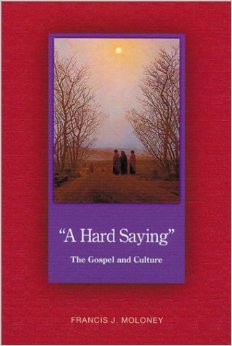 |
“There is something new and startling in both his person and his teaching that defies the categories provided by the world and culture in which he lived. It is clearest in all its radical nature in Jesus' insistence that in his person and activity God's decisive intervention was already present:” Francis Moloney, A Hard Saying Moloney places Jesus within the category of decisive divine intervention already entering history. This provides an important eschatological parallel for the Paraclete Papers: fulfillment need not be confined to a remote end-time event, but may become historically present through a divinely commissioned person and activity. |
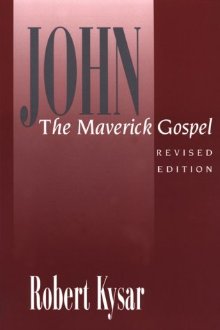 |
“The Paraclete has a twofold function: to communicate Christ to believers and, to put the world on trial.” Robert Kysar, John The Meverick Gospel Kysar is especially relevant because he gives the Paraclete a twofold ministry: communicating Christ to believers while also placing the world under judgment. The formulation joins revelation and discernment in a single mission. For the Paraclete Papers, this means fulfillment cannot be measured by spiritual experience alone; it must also account for a continuing ministry that makes Christ known, exposes error, and confronts the world with the meaning of Jesus’ life and teaching. |
 |
“But She—the Spirit, the Paraclete...—will teach you everything.” Danny Mahar, Aramaic Made EZ) Mahar is important to the Divine Feminine dimension of the Paraclete Papers because his rendering presents the Spirit-Paraclete with feminine reference while retaining the decisive Johannine promise that the Paraclete will teach. The significance is therefore not grammatical gender alone. The passage combines personal agency with instruction: the promised Spirit teaches, communicates, and continues revelation. This makes the citation relevant to both the paper’s gender question and its argument that the Paraclete’s ministry is identifiable through teaching. |
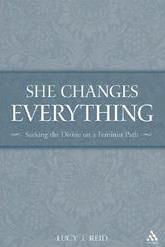 |
“Grammatical nonsense but evidence of the theological desire to defeminize the Divine.” Lucy Reid, She Changes Everything Reid is relevant because her observation raises the question of how grammatical choices and later theological conventions have shaped Christian language for the Spirit. The issue matters to the Paraclete Papers because John portrays the Paraclete through personal actions—teaching, reminding, witnessing, speaking, guiding, and declaring. Reid therefore provides a useful bridge between the debate over feminine divine language and the larger question of whether inherited terminology has narrowed how Christians imagine the personal agency of the promised Spirit. |
 |
“The functions of the Paraclete spelled out in verses 13-15... are all acts of open and bold speaking in the highest degree.” David Fleer, Preaching John's Gospel Fleer is especially relevant because John 16:13–15 describes the Paraclete through acts of guiding, hearing, speaking, and declaring. His emphasis on open and bold speech makes intelligible communication central to the promised ministry. For the Paraclete Papers, this is an important criterion of fulfillment: the Johannine Paraclete is not described merely as an occurrence of spiritual power, but as an active revealer who communicates truth, interprets what belongs to Christ, and makes that revelation known to others. |
 |
“The reaction of the world to the Paraclete will be much the same as the world's reaction was to Jesus.” Berard L. Marthaler, The Creed: The Apostolic Faith in Contemporary Theology Marthaler is important because he identifies a deliberate Johannine parallel between the world’s response to Jesus and its response to the Paraclete. The comparison concerns recognition as well as rejection: John says that the world cannot receive the Spirit of truth because it neither sees nor knows the Paraclete. For the Paraclete Papers, this means that non-recognition does not automatically disqualify a claimed fulfillment; the Gospel itself anticipates resistance to the promised figure in a pattern resembling the world’s response to Jesus. |
 |
Bultmann calls the “coming of the Redeemer an 'eschatological event,' 'the turning-point of the ages.” G. Ladd, A Theology of the New Testament Ladd is relevant because the language of an eschatological “turning-point of the ages” places the coming of the Redeemer within the larger problem of realized eschatology. The citation helps the Paraclete Papers ask whether divine fulfillment can become historically present while still pointing toward a future consummation. Applied to the Johannine promise, this provides a framework for considering the Paraclete as a continuing presence and ministry rather than assuming that every dimension of Jesus’ promise was exhausted by the single event of Pentecost. |
 |
“The Paraclete equated with the Holy Spirit, is the only mediator of the word of the exalted Christ.” Benny Thettayil, In Spirit and Truth Thettayil is especially relevant because he identifies the Spirit-Paraclete as mediator of the word of the exalted Christ. This closely corresponds to John 16:13–15, where the Paraclete hears, speaks, receives what belongs to Christ, and declares it to the disciples. For the Paraclete Papers, the point establishes continuity: the promised Paraclete does not replace Jesus with an unrelated revelation, but continues and mediates His teaching after His departure. Teaching and transmission therefore become central marks of the promised ministry. |
 |
“The divine Paraclete, and no lessor agency, must show the world how wrong it was about him who was in the right.” Daniel B. Stevick , Jesus and His Own: A Commentary on John 13-17 Stevick is important because he emphasizes the judicial dimension of the Paraclete’s ministry. In John 16, the world’s judgment concerning Jesus is itself overturned: the Paraclete demonstrates that the world was wrong about the one who was truly in the right. For the Paraclete Papers, this expands the promise beyond consolation or inward inspiration. The Paraclete must also correct error, interpret the meaning of Christ, and disclose judgment—functions that give the promised ministry a public, revelatory, and eschatological character. |
 |
Stephen Smalley asserts that “The Spirit-Paraclete ... in John's Gospel is understood as personal, indeed, as a person.” Marianne Thompson, The God of the Gospel of John Thompson’s citation of Stephen Smalley is significant because it directly addresses whether John presents the Spirit-Paraclete as personal rather than merely as a force or influence. The Gospel repeatedly attributes personal actions to the Paraclete: teaching, reminding, witnessing, hearing, speaking, guiding, and declaring. For the Paraclete Papers, this strengthens the distinction between a sustained personal ministry and an interpretation that reduces fulfillment to an impersonal manifestation of spiritual power at Pentecost. |
 |
“The Messiah will come and the great age of salvation will dawn (for the pious).” Eric Eve, The Jewish context of Jesus' Miracles Eve’s statement supplies the Jewish eschatological background against which early Christian expectations of Messiah, salvation, and the age to come developed. The coming of the Messiah is associated with the dawning of a great age of salvation rather than with an isolated religious experience. For the Paraclete Papers, this wider horizon is useful because it places Johannine language about Spirit, revelation, judgment, and eternal life within an expectation of decisive divine intervention that transforms the religious situation of humanity. |
 |
“The remembrance is to relive and re-enact the Christ event, to bring about new eschatological decision in time and space.” Daniel Rathnakara Sadananda, The Johannine Exegesis of God Sadananda is especially relevant because he interprets Johannine remembrance as more than the recovery of past information. To remember Christ is to relive and re-enact the Christ event so that its revelatory significance becomes present in a new time and place. This gives the Paraclete’s work in John 14:26 an ongoing eschatological dimension. For the Paraclete Papers, remembrance therefore supports the idea of continuing revelation: Jesus’ teaching is made living and effective beyond the lifetime of the original disciples. |
 |
“The Spirit acts in such an international situation as the revealer of 'judgment' on the powers that rule the world.” Michael Welker, God the Spirit Welker is relevant because he presents the Spirit as revealer of judgment upon powers that rule the world. This closely parallels John 16:8–11, where the Paraclete exposes the truth concerning sin, righteousness, and judgment. For the Paraclete Papers, the citation shows that the Spirit’s work cannot be confined to inward consolation or private mystical experience. The promised ministry also has a public dimension: it interprets the world, challenges false judgment, and reveals the spiritual significance of powers and events. |
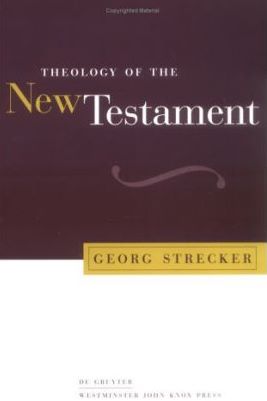 |
The Paraclete's “Appearance means that sin, righteousness, and judgment will be revealed.” Georg Strecker, Theology of the New Testament Strecker is especially relevant because he concentrates attention on the three categories named in John 16: sin, righteousness, and judgment. The Paraclete’s appearance is therefore revelatory and judicial, disclosing realities that the world has misunderstood. For the Paraclete Papers, these functions provide concrete criteria for examining fulfillment. The promised Spirit is not described only as a source of inspiration; the Paraclete also exposes error, interprets the meaning of Jesus, and brings the world’s assumptions under divine judgment. |
 |
“While the Spirit-Paraclete is the true broker, the brokers they rely on are impostors.” T. G. Brown, Spirit in the writings of John Brown’s description of the Spirit-Paraclete as the “true broker” highlights the problem of mediation and religious authority. A broker communicates and mediates access; in Johannine terms, the Paraclete mediates the revelation of Christ to the believing community. For the Paraclete Papers, the contrast with false brokers raises an important question: how is authentic divine mediation recognized when institutions and interpreters also claim authority to speak for God? The Gospel’s functions of teaching, testimony, guidance, and declaration become relevant criteria. |
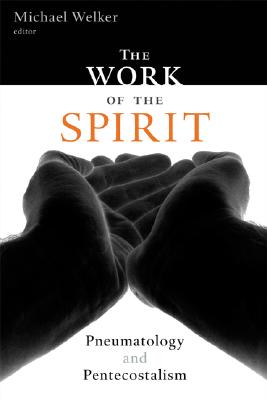 |
“The pneumatological activity ... of the Paraclete ... may most helpfully be considered in terms of the salvific working of the hidden Spirit.” Michael Welker, The work of the Spirit Welker is relevant because his description of the salvific working of the “hidden Spirit” cautions against identifying divine activity only with spectacular manifestations. The Spirit may work through revelation, transformation, discernment, and continuing mediation even when that activity is not immediately recognized by the wider world. For the Paraclete Papers, this provides a useful pneumatological framework for reconsidering fulfillment after Pentecost: continuing divine activity need not reproduce the outward form of Acts 2 in order to remain spiritually significant. |
 |
“The pneuma is the peculiar power by which the word becomes the words of eternal life.” Robert Kysar, Voyages with John Kysar is relevant because he links pneuma with the power by which the word becomes “words of eternal life.” The Spirit therefore does more than accompany proclamation; the Spirit makes revelation living and effective for those who receive it. For the Paraclete Papers, this reinforces the importance of the Johannine verbs of teaching, reminding, speaking, and declaring. A proposed fulfillment should be examined not only for manifestations of power but also for its relationship to revelatory words that communicate spiritual life. |
 |
“The gift of peace, therefore, is intimately associated with the gift of the Spirit-Paraclete.” Francis J. Moloney, The Gospel of John Moloney is relevant because he connects Jesus’ gift of peace directly with the gift of the Spirit-Paraclete in the farewell discourse. Peace is therefore not merely an emotional state but part of the continuing divine presence promised to the disciples after Jesus’ departure. For the Paraclete Papers, this broadens the criteria for considering fulfillment beyond teaching and testimony alone. The promised ministry is also associated with an experienced spiritual peace that accompanies the continuing presence of Christ through the Paraclete. |
 |
“Jesus therefore predicts that God will later send a human being to Earth to take up the role defined by John .i.e. to be a prophet who hears God's words and repeats his message to man.” M. Bucaille The Bible, the Qur'n, and Science Bucaille is included as a comparative interpretation because he reads the Johannine promise as anticipating a later human messenger who hears divine words and communicates them to humanity. Whether or not that interpretation is accepted, it demonstrates that John 16:13 has generated readings substantially different from the conventional identification of the promise solely with Pentecost. For the Paraclete Papers, the citation is useful because it keeps attention on the text’s language of hearing, speaking, transmission, and personal agency. |
 |
“This utopian hope, even when modestly expressed, links Jesus and the prophets to a much wider history of human longing.” Harvey Cox, The Future of Faith Cox is relevant because he places Jesus and the prophets within a much wider history of human hope for transformation. Eschatological expectation is therefore not merely curiosity about future events; it expresses a persistent longing for divine intervention, justice, renewal, and a different order of life. For the Paraclete Papers, this broadens the setting of the Johannine promise. The coming of the Paraclete can be considered within Christianity’s larger expectation that divine action will continue to transform human history and consciousness. |
 |
“Because of the presence of the Paraclete in the life of the believer, the blessings of the end-times—the eschaton—are already present.” Robert Kysar, John Kysar is especially relevant because he connects the presence of the Paraclete with blessings of the eschaton already becoming present in the believer’s life. This is a clear expression of realized eschatology: realities associated with the end-time can be experienced within the present. For the Paraclete Papers, that framework helps bridge future promise and present spiritual experience. It allows the Paraclete’s ministry to be considered as an active fulfillment in history without requiring every dimension of eschatological expectation to be already completed. |
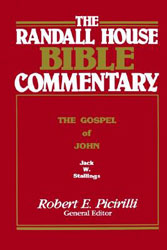 |
“They are going, by the Holy Spirit's power, to be part of the greatest miracle of all, bringing men to salvation.” R. Picirilli, The Randall House Bible Commentary Picirilli is relevant because he presents the Holy Spirit’s power as continuing through the disciples’ mission of bringing people to salvation. Pentecost therefore functions as an empowering beginning rather than as the termination of everything that can subsequently be said about the Spirit’s activity. For the Paraclete Papers, this distinction is important: Acts 2 may inaugurate Spirit-empowered mission while the Johannine promises of teaching, remembrance, testimony, guidance, declaration, and judgment continue to require theological consideration beyond that initial event. |
|
“The Kingdom of God stands as a comprehensive term for all that the messianic salvation included... is something to be sought here and now (Mt. 6:33) and to be received as children receive a gift (Mk. 10:15 = Lk. 18:16-17).” G. Ladd, A Theology of the New Testament Ladd is relevant because the language of an eschatological “turning-point of the ages” places the coming of the Redeemer within the larger problem of realized eschatology. The citation helps the Paraclete Papers ask whether divine fulfillment can become historically present while still pointing toward a future consummation. Applied to the Johannine promise, this provides a framework for considering the Paraclete as a continuing presence and ministry rather than assuming that every dimension of Jesus’ promise was exhausted by the single event of Pentecost. |